- Motorcycle
- Indian (1 offer)
Buy Indian Motorcycle
Since 1901, Indian has defined American motorcycling with machines that are now highly prized by British collectors. From the agile Scout to the majestic Chief, find your piece of Springfield history on Classic Trader.
Search results
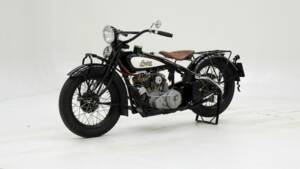
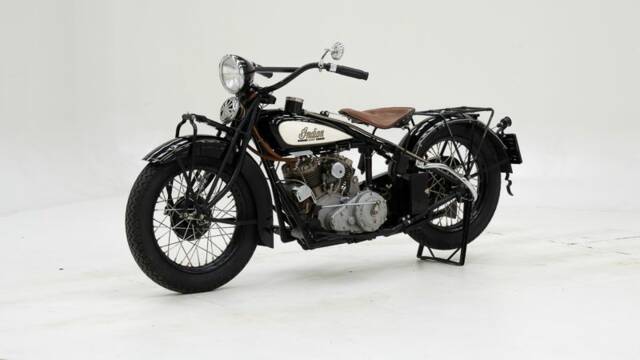
1929 | Indian Scout 101
1929 Indian Scout 101 '29

Indian listing references from Classic Trader
Below you will find listings related to your search that are no longer available on Classic Trader. Use this information to gain insight into availability, value trends, and current pricing for a "Indian" to make a more informed purchasing decision.
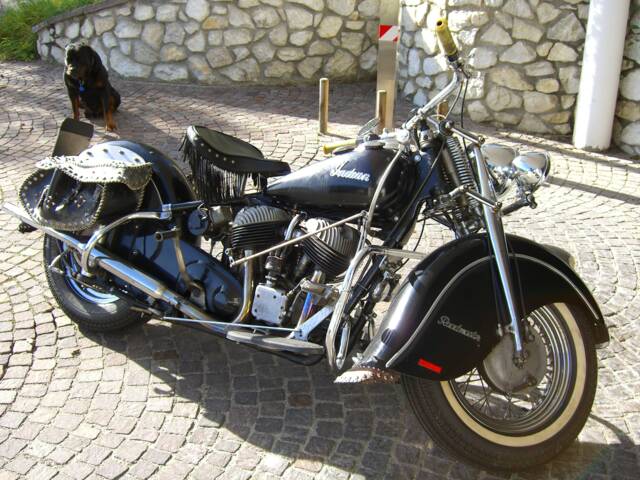
1948 | Indian Chief 74
Indian Chief 348 – Built in 1948 – Roadworthy – Restored

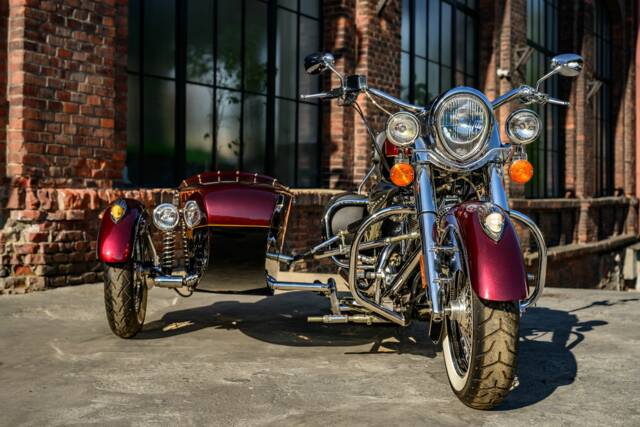
2002 | Indian Chief Roadmaster
Indian Chief Roadmaster 100 sidecar

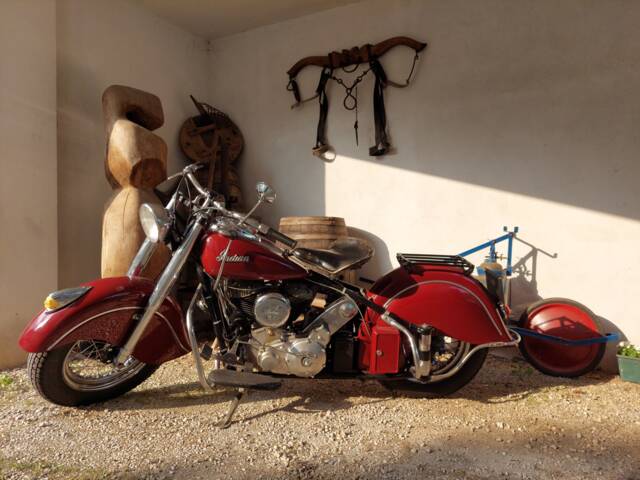
1951 | Indian Chief Blackhawk
– 1951 Indian Chief 1350cc– Museum-Grade, Matching Numbers
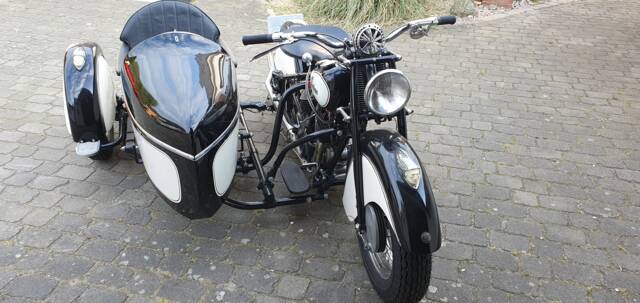
1947 | Indian Chief 74
Indian Chief

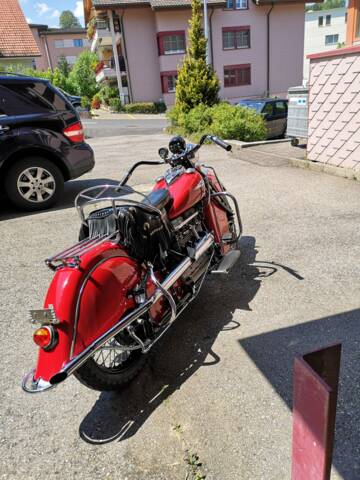
1940 | Indian Four II
Top Liebhaber Modell für Sammler und Historiker

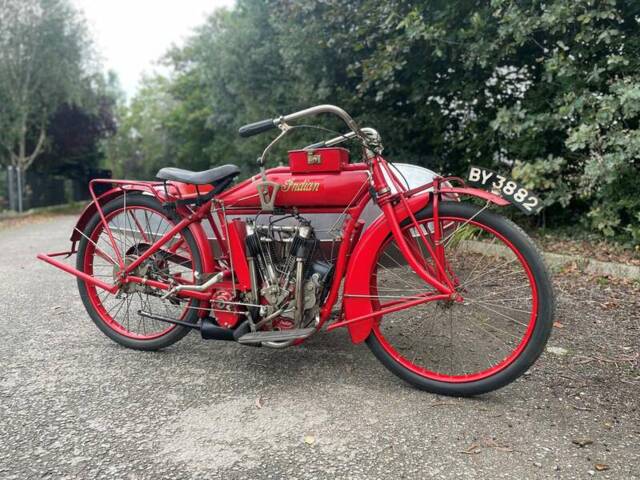
1915 | Indian V-Twin
1915 Indian Model G 'Little Twin' Combination 684cc

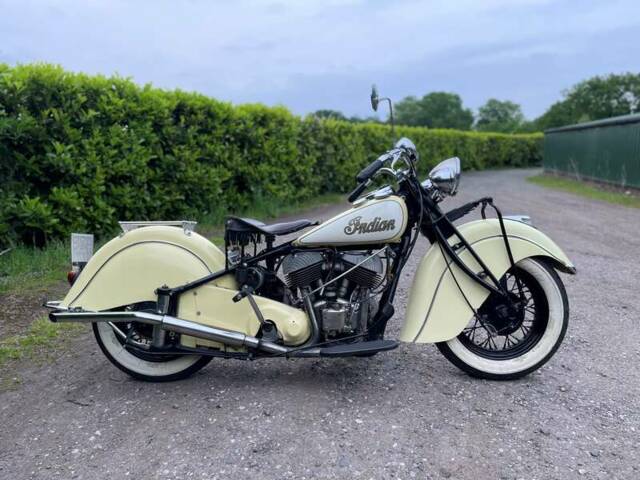
1945 | Indian Chief III
1945 Indian Chief 340 1,200cc
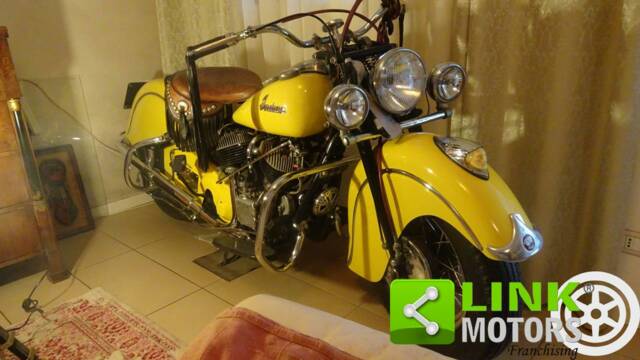
1948 | Indian Chief 74
INDIAN Chief Classic TARGA ORO ASI
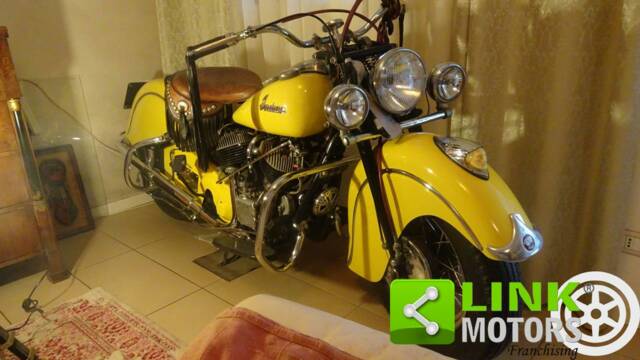
1948 | Indian Chief 74
INDIAN Chief Classic TARGA ORO ASI
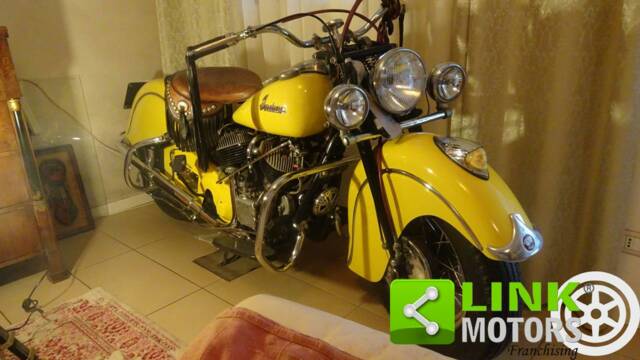
1948 | Indian Chief III
INDIAN Chief Classic TARGA ORO ASI
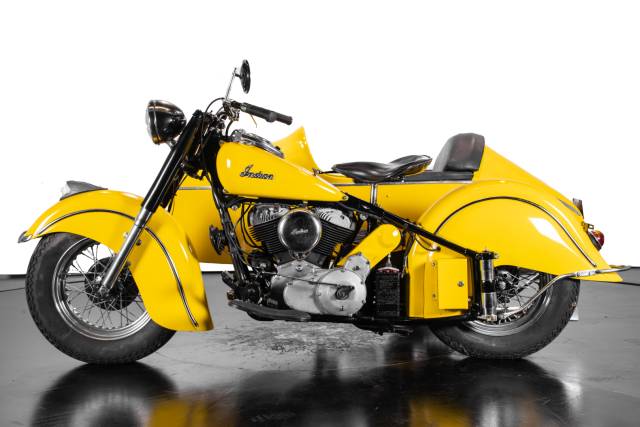
1950 | Indian Chief Roadmaster
-
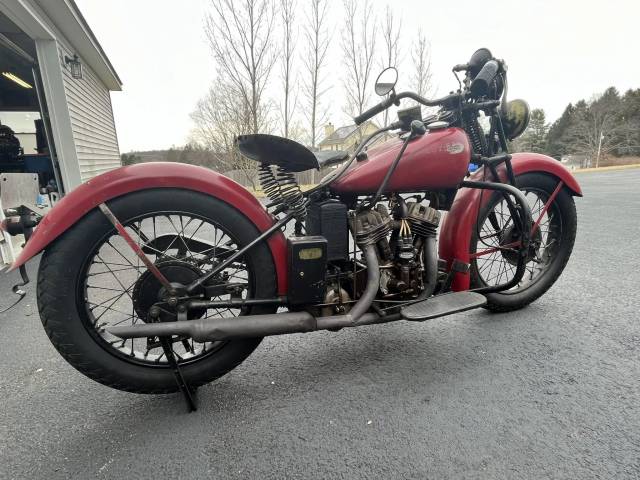
1941 | Indian Junior Scout
1941 Indian Junior Scout

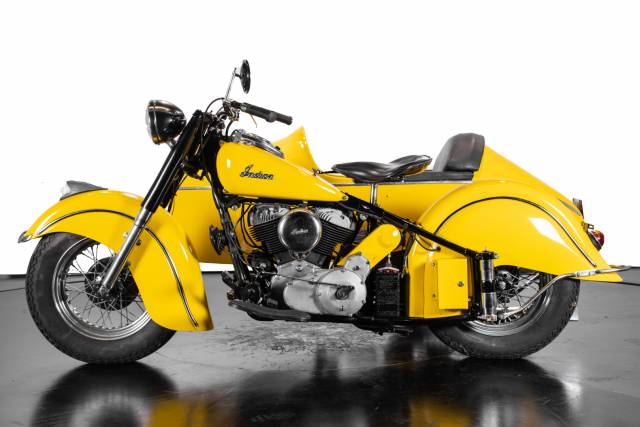
1950 | Indian Chief Roadmaster
-
The History of the Indian Motocycle Company
The story of Indian – officially the Indian Motocycle Company (always spelled without the "r") – is the epic tale of America's first great motorcycle manufacturer. Founded in 1901 in Springfield, Massachusetts, by George M. Hendee and Oscar Hedstrom, the company predates its main rival, Harley-Davidson, by two years. Hendee, a former bicycle racing champion, and Hedstrom, a brilliant engineer, combined their talents to create a brand that would dominate the early 20th-century motorcycling landscape.
In its first year, Indian produced just three prototypes, but by 1902, sales had reached 143 units. By 1906, production had soared to nearly 4,000 motorcycles. Indian was a pioneer of technical innovation, introducing the twist-grip throttle in 1904 and the swingarm rear suspension as early as 1913. The early "Camelback" models, so named because the fuel tank was mounted over the rear mudguard, are today among the most sought-after machines in the vintage motorcycle world.
For British enthusiasts, Indian holds a special place in history due to its success at the Isle of Man TT. In 1911, Indian achieved a historic 1-2-3 finish in the Senior TT, a feat that stunned the British motorcycle industry and established Indian as a world-class performance brand. This victory cemented the brand's reputation for speed and reliability across the Atlantic.
The 1920s saw the introduction of Indian's most famous models: the Scout (1920) and the Chief (1922). These V-twin machines became the backbone of the company and defined the American cruiser aesthetic. In 1927, Indian acquired the Ace Motor Corporation, leading to the production of the Indian Four, a luxury four-cylinder motorcycle that remains a pinnacle of pre-war engineering.
Despite its technical prowess, Indian struggled financially after World War II. Management missteps and a failed attempt to compete with lightweight European imports led to the company's bankruptcy in 1953. While the brand has been revived in modern times, it is the original Springfield-built machines from 1901 to 1953 that capture the hearts of serious collectors in the UK and beyond.
Highlights & Key Models
Indian Scout (1920–1949)
The Indian Scout is often cited as the best motorcycle Indian ever built. Lighter and more agile than the Chief, it was the choice of racers and sport-minded riders. The 101 Scout (1928–1931) is particularly revered for its exceptional handling, thanks to a lower seat height and longer wheelbase. It remains a favourite for vintage racing and "Wall of Death" performers.
During the 1930s, the Sport Scout continued this legacy with a lighter frame and improved engine performance. In the UK, many Scouts arrived during World War II as the 741 Military model, serving with Allied forces. These military machines are a popular entry point for British collectors today, offering a robust and relatively accessible way to own a vintage Indian.
Indian Chief (1922–1953)
The Indian Chief was the brand's flagship touring machine. Built for long-distance comfort and effortless torque, it featured V-twin engines ranging from 1,000cc (61 ci) to 1,200cc (74 ci). The Chief's most iconic design element – the deeply valanced mudguards – was introduced in 1940 and has since become the visual signature of the brand.
The Chief was the preferred mount for US police departments and remained in production until the company's demise in 1953. Post-war models, especially those from 1946 to 1948 with the girder fork, are highly desirable for their classic "skirted" look and improved reliability.
Indian Four (1927–1942)
The Indian Four represents the ultimate in pre-war luxury. Its longitudinal four-cylinder engine provided a level of smoothness and prestige that no V-twin could match. The "Upside-Down" Four of 1936-37 is a unique technical curiosity, while the later models with skirted fenders are considered some of the most beautiful motorcycles ever made. Due to their rarity and complexity, Indian Fours are among the most expensive American motorcycles at auction today.
Military Models (1940–1945)
The Indian 741 Scout (500cc) and 641 were the primary models used by Allied forces during World War II. While less powerful than the Harley-Davidson WLA, the 741 was praised for its durability and ease of maintenance. Many of these bikes remained in Europe after the war, making them a common sight at British vintage shows and military re-enactments.
Technical Specifications
Indian Scout 101 (1929)
Indian Chief (1947)
Market Overview & Buying Tips for the UK
Price Trends and Market Value
The UK market for classic Indians is buoyant, with strong demand for well-documented machines. Prices are often influenced by major auctions such as Bonhams at Stafford or H&H Classics at the National Motorcycle Museum.
- Entry Level (£12,000 – £20,000): This bracket typically includes the 741 Military Scout. These are often older restorations or "oily rag" survivors. They are excellent for riders who want a usable vintage American bike without the six-figure price tag.
- Mid-Range (£25,000 – £45,000): Here you will find post-war Indian Chiefs (1946–1953) and zivilian Scouts from the 1930s. Machines with UK registration and a known history in the British vintage scene command a premium.
- High-End (£50,000 – £100,000+): This category is reserved for the Indian Four, rare pre-1920 models, and concours-standard 101 Scouts. A 1937 Indian Four recently sold in the UK for over £95,000, highlighting the investment potential of these machines.
What to Look for When Buying
Buying a vintage Indian requires a keen eye for detail. Here are the essential points to check:
- Matching Numbers: Verify that the engine and frame numbers are correct for the year and model. While Indian's record-keeping wasn't always perfect, matching numbers are crucial for long-term value.
- Originality vs. Reproduction: Many Indians have been kept on the road with reproduction parts. While high-quality repro parts are acceptable for a "rider," a high-end collector bike should have as many original components as possible, especially the carburettor (Linkert), magneto, and tinware.
- Frame Integrity: Inspect the frame, particularly on rigid models, for signs of stress cracks or poor repairs. The heavy V-twin engines and decades of use can take their toll on the steel tubing.
- Mechanical Condition: A test run is vital. Listen for excessive mechanical noise and check for heavy oil leaks. While all vintage Indians "mark their territory," excessive leaking can indicate worn bearings or cracked cases.
- Documentation: In the UK, a V5C logbook and any historical paperwork (old MOTs, buff logbooks) add significant value and peace of mind.
Parts & Maintenance in the UK
While the majority of Indian specialists are based in the USA (e.g., Starklite, Greer's), there is a dedicated community of Indian owners in the UK. Parts can be imported relatively easily, though shipping and import duties must be factored into the maintenance budget. Specialist workshops in the UK can handle everything from routine servicing to full engine rebuilds, but expect to pay a premium for their expertise.
The Riding Experience: A Mechanical Symphony
Riding a vintage Indian is a visceral experience that engages all the senses. It begins with the starting ritual: retard the ignition, prime the carburettor, and give the long kickstart lever a determined swing. When the V-twin fires, the sound is deep and rhythmic – a "potato-potato" cadence that is distinct from its Milwaukee rivals.
On the road, an Indian requires your full attention. The foot clutch and hand shift (often called a "suicide clutch" by the uninitiated) require a different set of muscle memories. Shifting gears involves taking a hand off the bars, a move that feels daring on modern roads but becomes second nature with practice.
The leaf spring fork provides a surprisingly smooth ride over minor undulations, though it can be overwhelmed by larger potholes. A Scout feels light and flickable, making it a joy on British B-roads. The Chief, by contrast, is a majestic cruiser that excels on long, sweeping curves. Its low centre of gravity and heavy flywheel make for a stable, locomotive-like feel.
Braking is a lesson in physics. The drum brakes of the era are best described as "speed retarders" rather than stoppers. Anticipation is key. However, the reward for mastering these controls is a connection to the machine that modern motorcycles simply cannot replicate.
Design & Aesthetics: Art on Wheels
Indian motorcycles are widely regarded as some of the most beautiful machines ever produced. Their design language evolved from functional simplicity to Art-Deco opulence.
- The Skirted Fenders: Introduced in 1940, these valanced mudguards are the defining feature of the classic Indian look. They give the bike a sense of motion even when standing still.
- Colour Schemes: Indian was famous for its vibrant colours. While Indian Red is the most famous, the two-tone schemes of the 1940s – such as Seafoam Blue and White or Black and Red – are stunning examples of mid-century design.
- The War Bonnet: The Indian head logo, often found as a lighted ornament on the front fender, is a symbol of the brand's heritage and pride.
- The Four-Cylinder Engine: On the Indian Four, the engine itself is the star. The long, finned cylinder block and the four exhaust pipes exiting the side create a technical aesthetic that is both powerful and elegant.
Indian in Racing & Pop Culture
Indian's racing heritage is legendary. Beyond the 1911 Isle of Man TT success, Indian dominated American Board Track and Dirt Track racing for decades. Riders like "Cannonball" Baker used Indians to set cross-country records, proving the brand's durability.
In pop culture, the Indian Scout was immortalised in the film "The World's Fastest Indian," starring Anthony Hopkins as Burt Munro. Munro's lifelong quest to set speed records on his 1920 Scout at Bonneville is a testament to the engineering potential of these early machines. This film, along with countless appearances in vintage photography and film, has ensured that the Indian name remains a symbol of American freedom and ingenuity.
Summary: Why Buy an Indian in the UK?
Owning a vintage Indian in the UK is about more than just having a classic motorcycle; it's about owning a piece of industrial art. For the British collector, an Indian offers a unique alternative to the home-grown Triumphs and Nortons, providing a different mechanical character and a bold aesthetic.
While they require a higher level of investment and maintenance than many other classics, the rewards are significant. Prices for top-tier Indians continue to rise, making them a solid investment for those with the passion and the means.
Whether you are drawn to the racing pedigree of the Scout, the touring majesty of the Chief, or the engineering excellence of the Four, an Indian is a machine that will always turn heads and spark conversations. On Classic Trader, you can find a range of Indians from across the decades. Start your journey today and discover why the spirit of Springfield still burns brightly in the UK.
Find your Indian motorcycle on Classic Trader today and experience the legend for yourself.