- Motorcycle
- Čezeta (1 offer)
Buy Čezeta Scooters
A torpedo-shaped rarity from 1950s Czechoslovakia, the Čezeta scooter remains one of Europe's most distinctive two-wheelers. With over 115,000 units built between 1957 and 1964, it symbolised Eastern Bloc modernity—yet stayed virtually unknown in the West until collectors rediscovered its retro-futuristic charm.
Search results
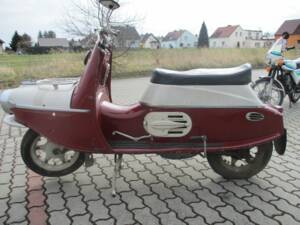
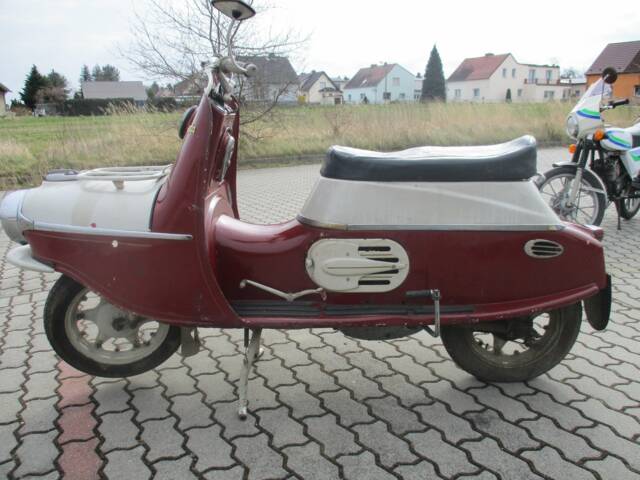
1962 | Čezeta 502
Jawa Tatran Roller Cezeta 501

Čezeta listing references from Classic Trader
Below you will find listings related to your search that are no longer available on Classic Trader. Use this information to gain insight into availability, value trends, and current pricing for a "Čezeta" to make a more informed purchasing decision.
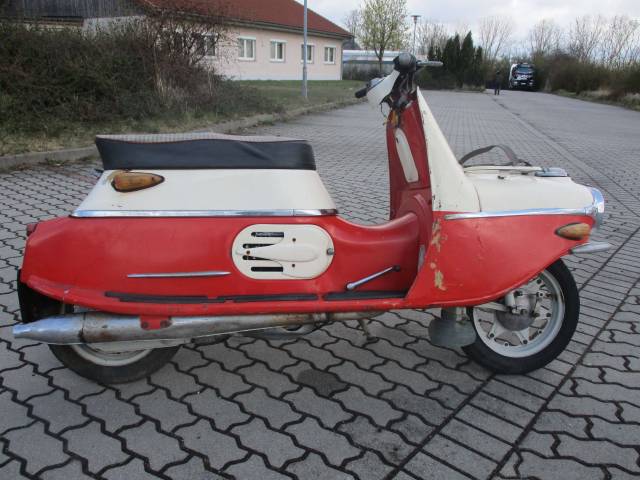
1962 | Čezeta 502
Jawa Tatran Roller Cezeta 502
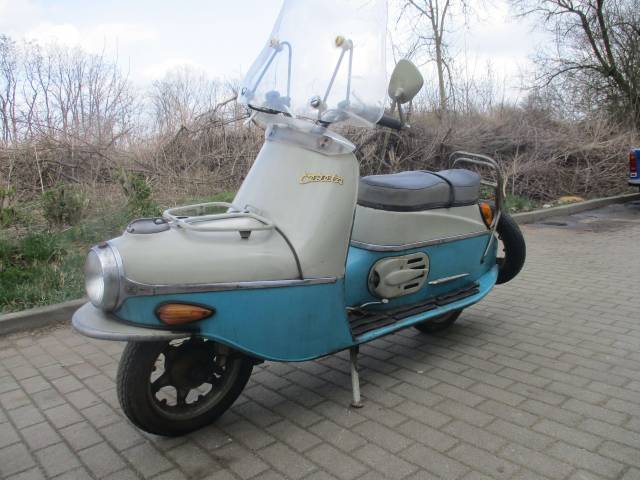
1962 | Čezeta 502
Jawa Tatran Roller Cezeta 502
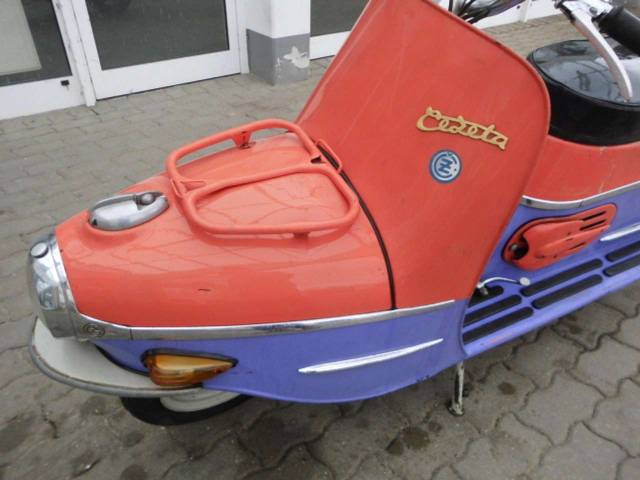
1962 | Čezeta 502
Jawa Tatran Roller Cezeta 502
History & Heritage
The Čezeta story begins not with Italian elegance, but with Czechoslovak pragmatism. Česká Zbrojovka Strakonice (ČZ), founded in 1919 as an arms manufacturer, pivoted to motorcycles after 1945. By 1957, designer Jaroslav František Koch—a racing engineer with vision—created something unprecedented: the Type 501, a 175 cc two-stroke scooter that looked like a rocket ship on two wheels.
Koch's design was radical. At exactly 2 metres long, the Čezeta was the longest scooter ever built. Its torpedo-shaped monocoque steel body, inspired by Sputnik and the Space Age euphoria sweeping Europe, made it instantly recognisable. The form wasn't merely aesthetic; it was functional. The extended bodywork provided weather protection, a full-length running board for two passengers, and a cavernous luggage compartment hidden beneath the seat—a feature that set it apart from Italian competitors like Vespa and Lambretta.
The Type 501 debuted in 1957 with a modest 175 cc single-cylinder two-stroke engine producing 7 PS. It wasn't powerful, but it was reliable. The Czechoslovak government needed affordable mobility for the masses, and the Čezeta delivered: cheaper than a motorcycle, more practical than a bicycle, and more stylish than either. Production ramped quickly. By 1963, the improved Type 502 arrived with a four-speed gearbox (up from three), refined electrics, and 8 PS—enough for 85 km/h (53 mph).
Between 1957 and 1964, approximately 115,000 Čezetas rolled off the Strakonice assembly line. The scooter became a symbol of Eastern Bloc youth culture—featured in Czechoslovak films, ridden by young people across Poland, Hungary, and the Soviet Union. Yet in the West, the Čezeta remained invisible. Vespa and Lambretta dominated the British and European markets. The Iron Curtain kept the Čezeta hidden from Western eyes.
Production ended in 1964, but the story didn't. Manufacturing tools were exported to New Zealand, where the NZeta continued production into the 1970s. A three-wheeled cargo variant, the "Rickshaw," found success in Asia. The original Čezeta faded into obscurity—until 2017, when British entrepreneur Neil Eamonn Smith revived the brand with the electric Type 506, honouring the original's retro-futuristic spirit with 21st-century technology.
Highlights & Distinctive Features
The Čezeta's monocoque construction sets it apart from every other scooter. Rather than a tubular steel frame, the entire bodywork is self-supporting—a single welded steel shell that encloses the engine, transmission, and fuel tank. This approach saved weight (the Type 502 weighs just 95 kg dry) but made repairs challenging. Dents and rust require specialist metalwork; replacement panels must be fabricated or sourced from Czech suppliers.
The 175 cc two-stroke engine is characterful. It runs on a petrol-oil mixture (typically 1:25 to 1:33 ratio), breathes through a Jikov carburettor, and ignites via Bosch magneto. The result is a distinctive knocking, rattling sound—nothing like the refined hum of a Vespa four-stroke. Acceleration is leisurely: 0–50 km/h takes roughly 10 seconds. Top speed hovers around 85 km/h, with fuel consumption around 4–5 litres per 100 km. The 12-litre fuel tank provides a range of approximately 250 km.
The four-speed gearbox (Type 502) operates via a left-hand foot lever—unusual for riders accustomed to right-hand Vespa controls. The clutch is a hand lever on the left. Gear changes from second onwards are semi-automatic, assisted by a centrifugal clutch. The transmission runs in an oil bath; regular servicing every 3,000 km is essential.
The 2-metre length was revolutionary. Modern scooters are cramped; the Čezeta offers a long, comfortable seat for two, full-length running boards, and genuine luggage space. The extended wheelbase (1,400 mm) provides stability at speed, though the scooter is sluggish in tight turns. Sidewind is noticeable due to the light weight and tall profile.
Braking relies on drum brakes front and rear—adequate but not powerful. Wet-weather stopping distances are noticeably longer than modern standards. Upgrading to sintered-metal brake pads (available from Czech suppliers) improves performance.
The design philosophy was distinctly Eastern Bloc modernism. No chrome excess, no Italian curves—just clean lines, functional beauty, and a colour palette of pastels: aqua blue, cream, grey, and red. The Čezeta represented Czechoslovak industrial pride and the promise of a modern communist future.
Technical Specifications
Key Notes: Kickstarter on right side. Gearbox oil change every 3,000 km mandatory. Lubrication points: swing-arm pivots, steering head, chain. No electric starter; magneto ignition requires no battery for starting (though a 6-volt system powers lights).
Market Overview & Buying Guide
Čezeta scooters are rare in the UK market. Most examples are imported from Continental Europe or Eastern Europe. Prices vary significantly by condition and provenance.
Price Ranges (2024–2025, GBP)
- Project basis, non-running, rust damage, engine overhaul needed: £1,200–£2,200
- Running, cosmetically aged, usable, MOT possible: £2,500–£4,500
- Good condition, partially restored, fresh paint, engine overhauled, minimal rust: £5,000–£8,000
- Concours condition, full restoration, original parts, documented history: £9,000–£13,000
Type 502 commands higher prices than Type 501 due to superior gearbox and slightly better performance. NZeta (New Zealand-built variants) fetch similar prices to Type 502 examples.
What to Inspect
Bodywork: The monocoque steel shell is the Čezeta's Achilles heel. Rust typically appears at:
- Underside of running boards (water pooling)
- Swing-arm mounting points (moisture ingress)
- Fuel tank seams (corrosion from inside)
- Headlight and tail-light bezels (water entry)
Rust perforation requires panel replacement—expensive and time-consuming. Original panels are unobtainable; Czech suppliers offer reproductions (£300–£600 per panel). Inspect carefully with a magnet and by tapping with a hammer (hollow sound = rust).
Paint: Original factory paint is rare and increases value. Repaints are identifiable by colour variation at welds and fasteners. Typical original colours: aqua blue, cream, grey, red. Faded original is preferable to poor-quality respray.
Engine: The two-stroke is robust if maintained correctly. Check:
- Compression via kickstarter resistance (should require firm effort). Compression test: aim for 7–8 bar.
- Spark plug condition (Bosch W240 or equivalent). Electrode gap: 0.5–0.6 mm.
- Carburettor for varnish and blockage (common after storage). Cleaning or replacement necessary.
- Piston rings for wear (indicated by blue smoke on cold start). Replacement: £80–£120 from Czech suppliers.
Gearbox: Listen for grinding or crunching when shifting. Smooth, quiet changes indicate good condition. Rough shifts suggest worn synchros or damaged teeth. Gearbox oil should be changed immediately upon purchase (SAE 80 mineral oil).
Electrics: The 6-volt magneto system is simple but ageing. Check:
- Lighting (headlight, tail light, indicators). Bulbs are standard; wiring often brittle.
- Magneto coils in the engine cover (prone to burnout). Replacement: £100–£180 from Czech sources.
- Complete wiring harness replacement available (£200–£300) if original is corroded.
Suspension: Telescopic fork seals wear; oil leakage is common. Replacement seals (SKF standard) cost £30–£50. Rear shocks often corroded or leaking; Polish and Czech suppliers offer replacements (£120–£200 per pair).
Brakes: Drum brakes are adequate but require adjustment. Check for smooth lever action and even pad wear. Sintered-metal pads improve stopping power (£40–£60 per set).
Parts Availability
Czech Republic is the primary source. Key suppliers:
- Čezeta Club (www.cezeta.cz) – reproduction panels, gasket sets, carburettor parts
- ČZ Ersatzteilhändler – engine components, transmission parts
- Polish suppliers – shock absorbers, brake components
Typical costs:
- Gasket set: £40–£60
- Piston & rings: £80–£120
- Carburettor (complete): £150–£250
- Wiring harness: £200–£300
- Shock absorbers (pair): £120–£200
Shipping: 1–3 weeks to UK; EU customs clearance straightforward (Czech Republic = EU member).
Restoration Costs
Full restoration typically costs:
- Engine overhaul: £600–£1,200
- Repainting: £800–£1,500
- Bodywork repair (rust): £500–£1,500
- Suspension rebuild: £300–£600
- Electrical rewiring: £200–£400
Total: £2,400–£5,200. Economically justified only for rare colour variants or documented historical significance.
Registration & Legal Status
In the UK, the Čezeta is classified as a motorcycle (not a moped) due to its 175 cc displacement. Riders require:
- Category A1 licence (minimum age 16, max 11 kW / 15 PS)
- Category A licence (minimum age 24, unrestricted)
MOT: Required annually from age 40 years (pre-1984 Čezetas are MOT-exempt). Testers may flag:
- Inadequate braking performance
- Lighting defects
- Steering play
- Tyre condition
Insurance: Specialist classic motorcycle insurers (e.g., Footman James, Carole Nash) offer agreed-value policies. Expect £150–£300 annually for a fully restored example.
Import: If importing from EU, VAT and import duty apply. Budget an additional 20% on purchase price.
Riding Experience & Character
The Čezeta is not a modern scooter. It is a time machine.
Mounting the machine, you sit upright and relaxed. The long seat accommodates two comfortably; the running boards are genuinely spacious. The handlebars are wide and low, the riding position almost recumbent. There is no wind protection—the fairing is purely aesthetic—so at 80 km/h, wind buffets your chest and shoulders.
Kickstarting the engine requires a firm, confident stroke. The magneto ignition fires immediately (no battery needed). The two-stroke bursts to life with a characteristic knocking, rattling sound—nothing refined, but honest and mechanical. The engine settles into an idle that sounds like a sewing machine with attitude.
Engaging first gear via the left foot lever, you twist the right-hand throttle. The clutch engages smoothly (the oil-bath design is forgiving). Acceleration is leisurely. The Čezeta doesn't rush; it ambles. 0–50 km/h takes roughly 10 seconds. The engine note rises from a knock to a rasp as revs climb.
Second gear arrives via another foot-shift. The semi-automatic clutch assists; you don't need to fully disengage. Third and fourth follow. By fourth gear, the engine settles into a steady rhythm. The Čezeta cruises at 70–80 km/h with ease.
Handling is stable but ponderous. The 1,400 mm wheelbase and 2-metre length mean the scooter tracks straight and true on motorways and A-roads. Cornering is slow and deliberate—no flicking or darting. Lean angles are modest; the scooter feels planted and safe. Sidewind is noticeable due to the light weight and tall profile, but not alarming.
Braking is progressive. The drum brakes require firm lever pressure but respond predictably. Wet-weather stopping distances are noticeably longer than modern standards. Emergency stops are possible but not panic-stop material.
The riding position is comfortable for short journeys (20–30 km). For longer rides, the upright posture and lack of wind protection become fatiguing. The seat, whilst spacious, lacks padding; vibration from the two-stroke transmits through the frame. The engine is loud—hearing protection recommended.
Fuel consumption is excellent: 4–5 litres per 100 km means the 12-litre tank provides 250 km range. Refuelling is straightforward; the fuel cap is under the seat.
In summary: The Čezeta is a scooter for enthusiasts, not pragmatists. It rewards smooth, patient riding. It is slow, loud, and charmingly inefficient. It turns heads everywhere. Riding one is an act of time travel.
Design Philosophy & Cultural Context
The Čezeta emerged from a specific historical moment: the late 1950s, when the Space Age seemed imminent. Sputnik orbited Earth in 1957; Gagarin flew in 1961. The future was arriving, and it looked like a rocket ship.
Designer Jaroslav František Koch captured this optimism in steel. The torpedo-shaped body, the streamlined fairing, the absence of unnecessary ornamentation—all spoke to a vision of modernity. The Čezeta was not Italian elegance; it was Eastern Bloc futurism. It represented Czechoslovak industrial capability and the promise of a modern communist state.
The monocoque construction was technically advanced for 1957. Rather than a tubular frame, the entire bodywork was self-supporting—a technique borrowed from aircraft design. This approach was efficient, lightweight, and visually distinctive. No other scooter looked like the Čezeta.
The colour palette reinforced the modernist aesthetic. Pastel shades—aqua blue, cream, grey, red—were fashionable in the 1950s. Chrome accents on the headlight, mirrors, and bumpers added visual interest without excess. The overall effect was clean, purposeful, and unmistakably of its era.
In Eastern Europe, the Čezeta became a symbol of youth and freedom. It appeared in Czechoslovak films, ridden by young people who embodied the optimism of the post-war generation. The scooter represented mobility, independence, and modernity—values that resonated across the Eastern Bloc.
In the West, the Čezeta remained unknown. Vespa and Lambretta dominated the market and the cultural imagination. The Mod movement of 1960s Britain, with its obsession with Italian scooters, Italian suits, and Italian style, had no room for a Czech machine. The Čezeta was too foreign, too unfamiliar, too Eastern.
This obscurity is precisely what makes the Čezeta valuable today. It is a genuine alternative to the ubiquitous Vespa and Lambretta. It represents a parallel history of scooter design—one that was suppressed by the Cold War but never erased. Owning a Čezeta is owning a piece of hidden European history.
Cultural Significance & Rarity
The Čezeta occupies a unique position in scooter history. It is neither Italian nor Japanese; it is Eastern European. This distinction matters.
In the 1950s and 1960s, the Iron Curtain divided Europe. Western consumers had access to Vespa and Lambretta; Eastern consumers had Čezeta, Jawa, and other domestic brands. The Čezeta was never exported to Britain, America, or Western Europe in significant numbers. A handful of examples may have reached the West via diplomatic channels or private import, but the scooter remained virtually unknown.
The Mod movement of 1960s Britain was built on Italian scooters. Vespa and Lambretta were not merely transport; they were symbols of style, rebellion, and modernity. The Mod aesthetic—sharp suits, Italian shoes, Italian scooters—was a deliberate rejection of post-war austerity and a embrace of Continental sophistication. The Čezeta, with its Eastern Bloc origins and unfamiliar design, had no place in this narrative.
Today, the Čezeta appeals to a different kind of enthusiast. Collectors and riders who appreciate design history, Cold War nostalgia, and genuine rarity are drawn to the machine. It is not a Vespa; it is not trying to be. It is authentically, unapologetically Czech.
Film & Pop Culture: The Čezeta appeared in Czechoslovak films of the 1960s and 1970s, including works by director Miloš Forman. These appearances cemented the scooter's status as a symbol of Eastern Bloc youth culture. In the West, the Čezeta has appeared in recent films and documentaries exploring Cold War history and design.
Export Markets: The Čezeta was exported to communist allies: the Soviet Union, Poland, Hungary, East Germany, Vietnam, Cuba, and Mongolia. In Cuba, a handful of examples still operate, relics of Soviet-era trade. In New Zealand, the NZeta variant was produced and exported to Australia and Asia.
Collector Status: Original Čezetas are increasingly sought by collectors. Prices have risen steadily since 2010. Concours-condition examples command £10,000–£13,000. The scooter's rarity, distinctive design, and historical significance ensure continued appreciation.
Modern Revival: The 2017 electric Type 506 introduced the Čezeta to a new generation. Whilst the electric version is a modern machine, it honours the original's retro-futuristic aesthetic. Limited production (600 units) and a price of approximately £11,000 (at launch) positioned it as a premium collector's item.
Summary & Conclusion
The Čezeta is not a scooter for everyone. It is slow, loud, and requires patience and mechanical sympathy. Parts are sourced from Czech suppliers; restoration is time-consuming and expensive. Modern riders accustomed to reliable, efficient machines may find the Čezeta frustrating.
But for enthusiasts, the Čezeta offers something irreplaceable: a genuine alternative to the ubiquitous Vespa and Lambretta. It is a piece of hidden European history—a machine that symbolised Eastern Bloc modernity and was suppressed by the Cold War. Owning and riding a Čezeta is an act of historical recovery.
Prices remain reasonable: £2,500–£4,500 for a running, usable example; £5,000–£8,000 for a well-restored machine. These figures are modest compared to equivalent Vespas or Lambrettas. The Čezeta offers genuine rarity and distinctive design at a fraction of the cost.
The riding experience is unique: The 2-metre length, the two-stroke engine, the foot-shift gearbox, the drum brakes—all combine to create a machine that feels genuinely different. It is slow, but it is honest. It is loud, but it is characterful. It is a time machine on two wheels.
The design is timeless: The torpedo-shaped body, the monocoque construction, the pastel colours—all speak to a specific historical moment (the late 1950s) but transcend it. The Čezeta looks neither dated nor retro-futuristic; it simply looks like itself.
If you seek a Vespa or Lambretta, you will find thousands. If you seek a Čezeta, you will find a rarity—a machine with a story, a history, and a character all its own. The Čezeta rewards patience, mechanical knowledge, and a willingness to embrace imperfection. For those willing to invest time and care, the Čezeta offers an unparalleled riding experience and a tangible connection to a hidden chapter of European design history.
Find your Čezeta on Classic Trader today. Discover now.