- Motorcycle
- Aermacchi Harley-Davidson (0 offers)
Buy Aermacchi Harley-Davidson Motorcycle
From Italian seaplanes to Grand Prix glory, Aermacchi Harley-Davidson represents a unique chapter in motorcycling history. These horizontal singles offer aeronautical precision, a legendary racing pedigree on British circuits, and a distinctive character that bridges the gap between Varese and Milwaukee.
Search results
Currently, there are no matching listings for your search.
Create search alert
Let yourself be notified as soon as a listing is published that matches your search filters.
Create listing
Do you have a Aermacchi Harley-Davidson that you want to sell? Then create a listing now.
Create listingAermacchi Harley-Davidson listing references from Classic Trader
Below you will find listings related to your search that are no longer available on Classic Trader. Use this information to gain insight into availability, value trends, and current pricing for a "Aermacchi Harley-Davidson" to make a more informed purchasing decision.
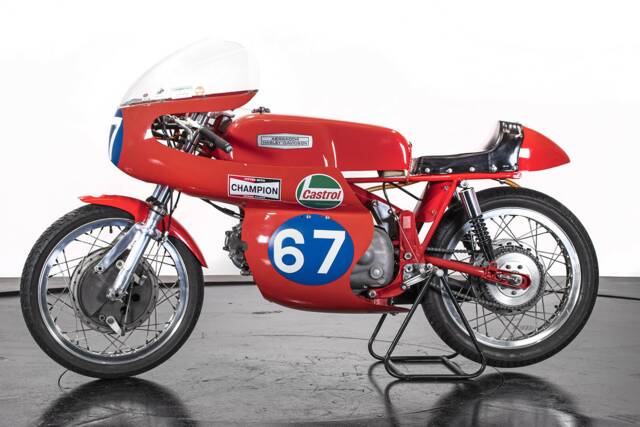
1969 | Aermacchi Harley-Davidson Ala d'oro 350
Aermacchi - Harley Davidson 350 Ala d'oro

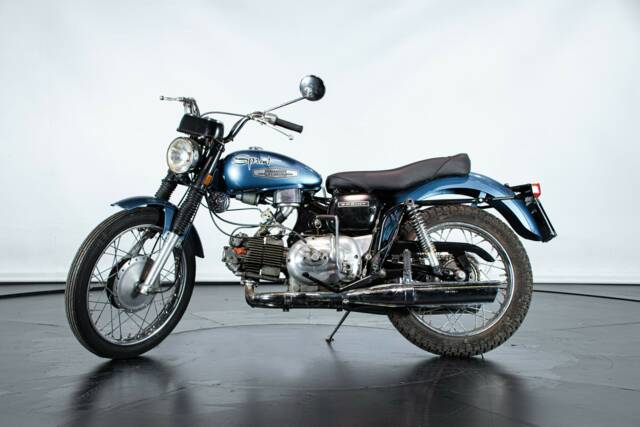
1971 | Aermacchi Harley-Davidson 350 GT Sprint
2025-05-13 14:42:20 | Aermacchi - Harley Davidson 350 SPRINT
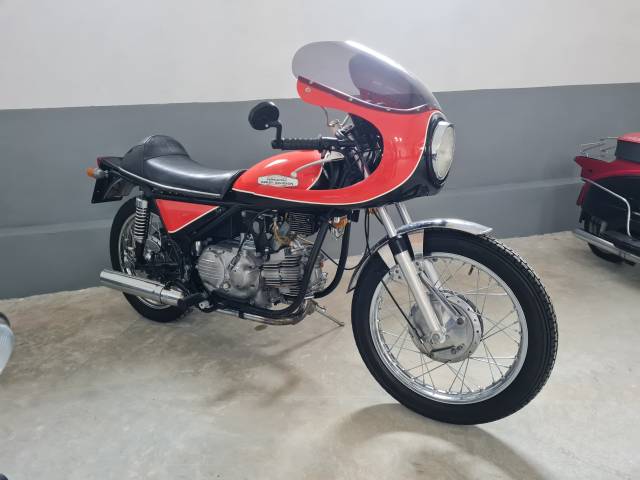
1973 | Aermacchi Harley-Davidson 350 GT Sprint
Harley-Davidson Aermacchi 350 SS NE

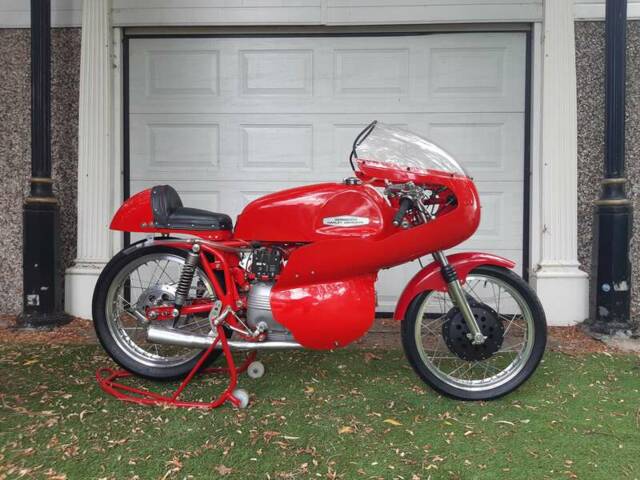
1965 | Aermacchi Harley-Davidson Ala d'oro 250
c.1963 Aermacchi Harley-Davidson Ala D'oro 250cc

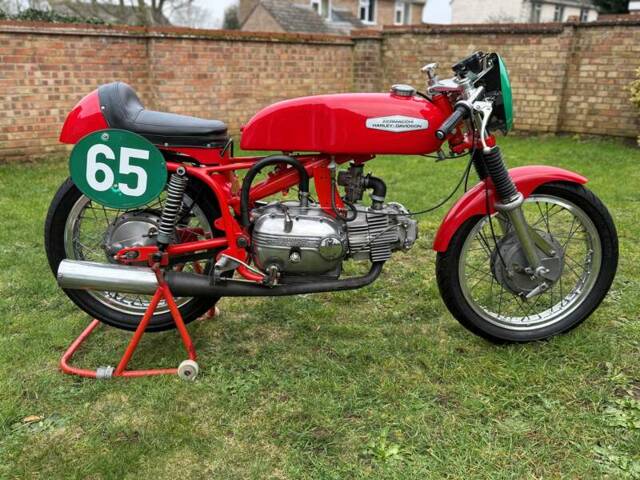
1962 | Aermacchi Harley-Davidson Ala d'oro 250
1962 Aermacchi Harley-Davidson Ala d'Oro 248cc
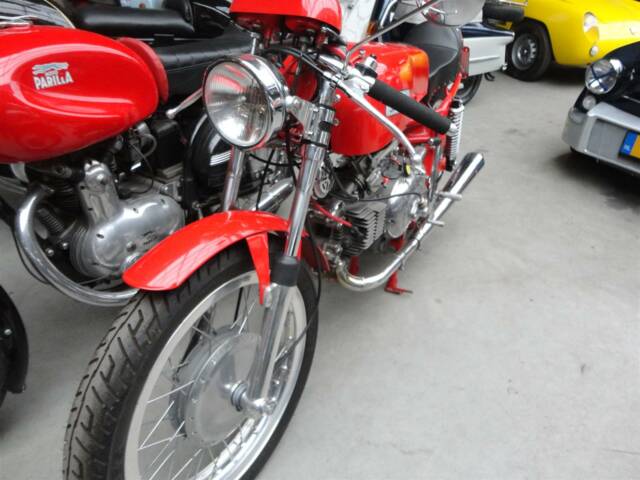
1971 | Aermacchi Harley-Davidson 350 GT Sprint
Aermacchi 350GTS

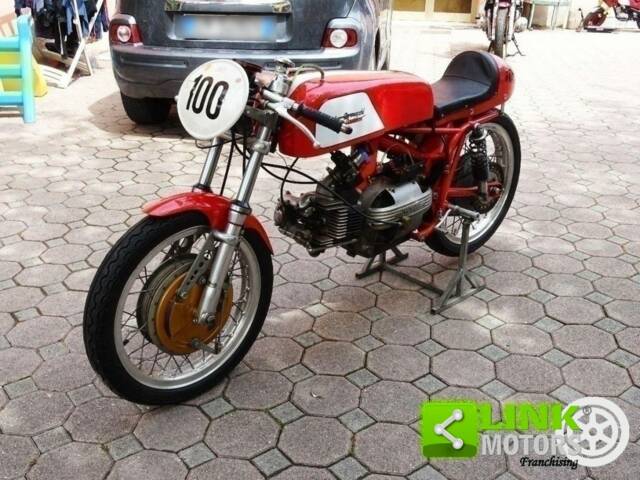
1965 | Aermacchi Harley-Davidson Ala d'oro 250
AERMACCHI Aermacchi-Harley-Davidson-ANNO-1965-5-MARCE
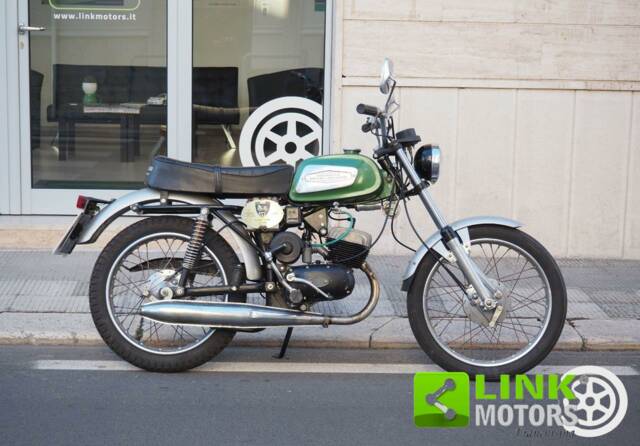
1974 | Aermacchi Harley-Davidson De Luxe 125
AERMACCHI -HARLEY DAVIDSON 125 DE LUXE
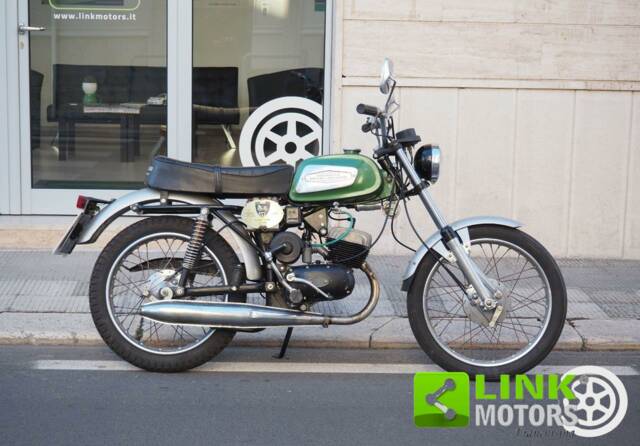
1974 | Aermacchi Harley-Davidson De Luxe 125
AERMACCHI -HARLEY DAVIDSON 125 DE LUXE
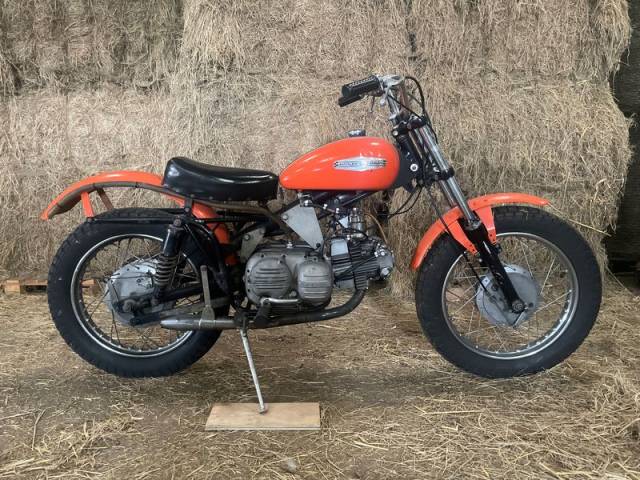
1968 | Aermacchi Harley-Davidson Ala d'oro 250
1968 Harley-Davidson Aermacchi Sprint ERS 350cc
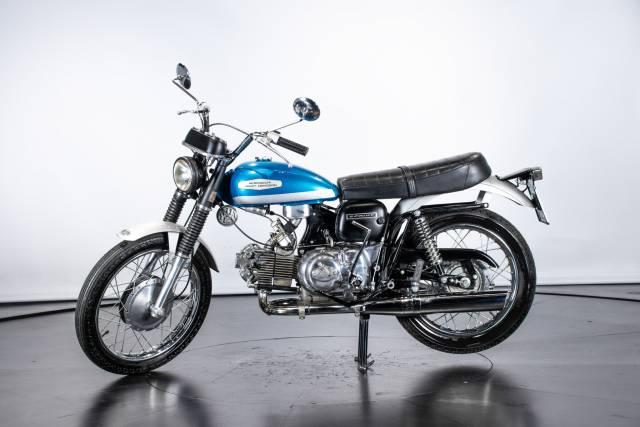
1972 | Aermacchi Harley-Davidson 350 GT Sprint
-
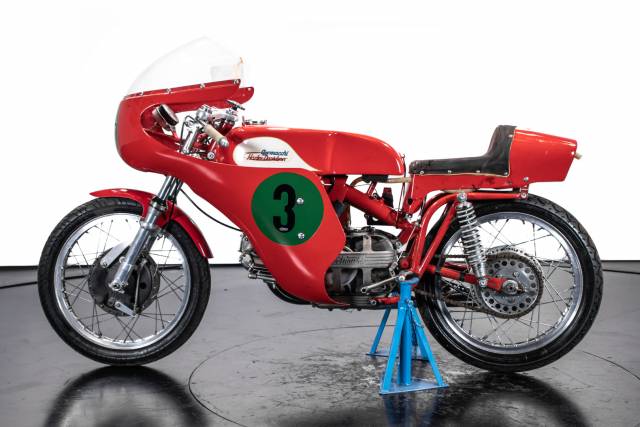
1963 | Aermacchi Harley-Davidson Ala d'oro 250
-
Create search alert
Let yourself be notified as soon as a listing is published that matches your search filters.
Create listing
Do you have a Aermacchi Harley-Davidson that you want to sell? Then create a listing now.
Create listingHistory & Heritage
The story of Aermacchi Harley-Davidson is one of the most unlikely and fascinating alliances in the motorcycle world. It is a tale that begins not in a workshop in Wisconsin, but on the shores of Lake Varese in Northern Italy. Aeronautica Macchi, founded in 1912 by Giulio Macchi, was originally one of the world’s premier aircraft manufacturers. During the 1930s, their MC.72 seaplane set a world speed record for piston-powered aircraft—709 km/h—that remains unbeaten to this day. This heritage of high-speed engineering and aerodynamic efficiency would later become the DNA of every Aermacchi motorcycle.
After the Second World War, Italy was prohibited from manufacturing aircraft. Like Piaggio and Innocenti, Aermacchi turned to transport to survive. Their first efforts in 1951 included scooters like the Cigno, but the real breakthrough came in 1956 with the Chimera 175. Designed by the brilliant Alfredo Bianchi, the Chimera featured a horizontal OHV single-cylinder engine and futuristic, fully enclosed bodywork. While the styling was polarizing, the engine layout was a masterstroke: the horizontal cylinder provided a low centre of gravity, excellent cooling, and a slim profile—attributes that would define the brand for decades.
In 1960, the Harley-Davidson Motor Company was facing a crisis. Japanese manufacturers like Honda and Yamaha were flooding the US market with small, reliable lightweights, and Harley had nothing to compete. In a move that shocked the industry, Harley-Davidson purchased 50% of Aermacchi’s motorcycle division. The goal was to use the Italian factory to produce small-capacity bikes that would be sold through Harley’s massive US dealer network. The first fruit of this partnership was the Sprint C 250, which was essentially an Aermacchi Ala Azzurra rebranded with Harley-Davidson logos for the American market.
The 1960s were the golden era of the partnership. In Varese, they produced some of the finest single-cylinder sports bikes of the age, such as the Ala Verde 250 (Green Wing). In the UK, these bikes became a cult favourite. While British riders were used to vertical singles from BSA and Norton, the Aermacchi’s horizontal layout and sharp handling offered something entirely different. The Ala d'Oro (Gold Wing) racing version became the weapon of choice for privateers on short circuits and at the Isle of Man TT. Riders like Kel Carruthers, Renzo Pasolini, and later Walter Villa took the little singles to the very top of the podium.
In 1974, AMF (which then owned Harley-Davidson) took full control of the Varese factory. However, the rise of multi-cylinder Japanese bikes and changing market tastes made the partnership increasingly difficult to sustain. By 1978, Harley-Davidson decided to exit the small-bike market and sold the Varese operations to the Castiglioni brothers, who transformed it into Cagiva. Thus, the legacy of Aermacchi lived on, eventually leading to the revival of Ducati and MV Agusta under the Cagiva umbrella. For collectors today, an Aermacchi Harley-Davidson is more than just a bike; it is a piece of industrial art that represents the pinnacle of Italian engineering during a time of global transition.
Highlights & Features
What sets Aermacchi Harley-Davidson apart from its contemporaries is the absolute commitment to aeronautical principles. In an era where many motorcycles were built with heavy castings and simple frames, Aermacchi’s engineers treated every component as if it were destined for flight.
The centrepiece of the brand is the horizontal OHV single. By laying the cylinder flat, Bianchi achieved two critical goals. First, the mass of the engine was placed as low as possible, resulting in exceptional stability and cornering prowess. Second, the cylinder head sat directly in the airflow, ensuring consistent cooling even under the stresses of racing. This layout also allowed for a very narrow frontal area, reducing drag—a direct lesson from the wind tunnels of Varese.
The Ala Verde 250 (1959–1972) is perhaps the most celebrated road model. It was a true "giant killer," weighing only 115kg dry but producing up to 25hp in its later forms. It featured a five-speed gearbox (from the mid-60s) and a level of finish that was vastly superior to many British bikes of the time. For a UK rider in 1965, switching from a vibrating vertical single to the smooth, precise Aermacchi was a revelation.
The Sprint 350 SS (1968–1974) represents the most powerful road-going version of the horizontal single. With nearly 30hp and a top speed of 90mph, it was a legitimate middleweight contender. In the UK, these were often seen as sophisticated alternatives to the 350cc offerings from the British "Big Three." They combined the ruggedness required for the American market (where they were sold as Harleys) with the delicacy of Italian suspension and braking.
For the pure enthusiast, the Ala d'Oro 250 and 350 production racers are the holy grail. These were not mere road bikes with clip-ons; they were purpose-built racing machines. They featured magnesium engine casings, close-ratio gearboxes, and massive Dell'Orto carburettors. The Ala d'Oro was so successful that it remained competitive in Grand Prix racing long after most manufacturers had switched to multi-cylinder engines or two-strokes.
In the final years of the partnership, the factory shifted focus towards two-stroke models like the SS 250 and the SX 175 to meet the demand for off-road and entry-level machines. While these lacked the iconic horizontal engine, they were robust and capable bikes that found success in the American enduro scene. Today, they offer an affordable entry point into the world of Aermacchi ownership.
Technical Data
The technical evolution of Aermacchi moved from the avant-garde Chimera to the refined Ala Verde and finally to the world-beating RR two-stroke racers. Below are the key specifications for the most sought-after models in the UK market.
Key Technical Characteristics (Four-Stroke Models):
- Engine Design: Air-cooled, horizontal single-cylinder with overhead valves operated by pushrods. The engine acts as a stressed member of the frame in many models.
- Fueling: Dell'Orto carburettors (typically 24mm to 30mm for road bikes, up to 34mm-38mm for racers).
- Transmission: 4-speed on early models, transitioning to a robust 5-speed unit by the mid-1960s. Note that many models used a right-side gear change (one up, four down).
- Chassis: Steel tube backbone or duplex frames. The Chimera used a unique central-tube design.
- Suspension: Telescopic front forks (often by Ceriani or Marzocchi) and twin rear shock absorbers.
- Braking: Drum brakes front and rear as standard, with the late SST 350 featuring a front disc brake.
Market Overview & Buying Tips
The market for Aermacchi Harley-Davidson in the UK is currently in a very interesting phase. For many years, these bikes were overshadowed by the big British twins and the more famous Italian marques like Ducati. However, as prices for Desmo singles have soared, collectors have rediscovered the exceptional value and engineering quality of the Aermacchi.
Ala Verde 250 (1959–1972)
This is the "blue chip" road model for UK collectors. It offers the perfect balance of classic style and usable performance. A decent, rideable example can be found between £5,000 and £8,500. Exceptional, concours-level restorations can fetch over £12,000. At the Bonhams Stafford Sale in 2024, a 1963 Ala Verde sold for £5,750, illustrating that good value is still available for those who know where to look. When buying, check for originality; many road bikes have been crudely converted into race replicas, which can hurt the long-term value.
Ala d'Oro 250/350 (1961–1970)
Genuine production racers are rare and highly sought after for historic racing. Prices vary significantly based on provenance and specification. A genuine Ala d'Oro with a documented racing history can command between £15,000 and £30,000. Be extremely cautious of "recreations" built from Sprint road parts. Genuine race engines have different castings (often magnesium) and specific frame prefixes (look for AERDAO or AER350).
Sprint 250/350 (1961–1974)
The Sprints are the most common Aermacchis found in the UK, many having been imported from the USA over the years. They are excellent "riders' bikes." A project bike might start at £2,000, while a very clean Sprint 350 SS will cost between £6,000 and £9,000. The 350cc models are more desirable for modern traffic conditions due to their superior torque.
Two-Stroke Models (SS 125, SS 250, SX 250)
The 1970s two-strokes are the most affordable entry into the brand. You can pick up a running SX 250 or SS 125 for between £2,000 and £4,500. While they lack the elegance of the horizontal singles, they are rugged, fun, and increasingly appreciated by younger collectors who grew up with 70s aesthetics.
What to Look For When Buying:
- Engine Health: The horizontal cylinder is prone to oil leaks if the seals are old. Check the joint between the cylinder and the crankcase after a test ride. A light mechanical "ticking" is normal for an OHV engine, but heavy knocking suggests worn big-end bearings—a costly fix.
- The Gearbox: The right-side shift takes getting used to, but the selection should be crisp. If it jumps out of second or third gear under acceleration, the selector forks or dogs are likely worn.
- Oil Filtration: Aermacchis do not have a modern spin-on oil filter; they rely on a centrifugal filter on the end of the crankshaft. If this hasn't been cleaned regularly, sludge can build up and starve the big-end of oil. Ask the seller when this was last serviced.
- Electrics: Most early bikes used 6V systems with Magneti-Marelli components, which were never particularly strong. Many UK owners have upgraded to 12V electronic ignition (such as Boyer Bransden or Powerdynamo). This is a major plus for reliability, though some purists prefer the original setup.
- Parts Availability: Contrary to popular belief, parts availability in the UK is quite good. Specialist suppliers like Peter Hammond Motorcycles (long-term Aermacchi experts) and the Aermacchi Spirit forum are invaluable resources. For harder-to-find racing parts, you may need to look towards Italy (Moro Motoricambi) or the USA (Moto Italia).
Performance & Riding Experience
Riding an Aermacchi Harley-Davidson is an exercise in sensory feedback. It is a machine that requires your full attention but rewards you with a level of precision that few bikes of its era can match.
The experience begins with the kickstarting ritual. Most Aermacchis do not have electric starts. You pull the decompression lever (if fitted), find the compression stroke, and give a firm, purposeful swing. When the horizontal single fires, it emits a distinctive "thump-thump" that is deeper and more resonant than a vertical single. As the revs rise, the sound tightens into a crisp, metallic bark—the unmistakable signature of an Italian OHV racer.
On the move, the first thing you notice is the handling. Because the engine weight is so low, the bike feels much lighter than it actually is. It turns into corners with telepathic ease. In the UK, where we have an abundance of technical, winding B-roads, the Aermacchi is in its element. It doesn't need 100 horsepower to be fast; it carries its momentum through the corners, allowing you to maintain a high average speed with minimal effort.
The power delivery is linear and honest. There is no sudden rush of power like a two-stroke; just a steady, dependable surge of torque that pulls cleanly from low revs. The five-speed gearbox is a joy to use once you have mastered the right-side shift. Each click is mechanical and positive, reminding you that you are operating a piece of precision machinery.
The braking on road models is handled by drum brakes. While they require a strong two-finger pull and a bit of foresight, they are more than adequate for the bike's weight. On the race-spec Ala d'Oro, the massive front twin-leading-shoe drums provide surprisingly strong stopping power, though they can fade under extreme racing conditions.
For the rider, there is a profound sense of connection. There are no electronics, no ABS, and no fuel injection. It is just you, the Dell'Orto carburettor, and the tarmac. Whether you are tucked behind the fly-screen of an Ala Verde on a Sunday morning or holding a tight line on a track day, the Aermacchi makes you feel like a better rider.
Design & Aesthetics
The design of Aermacchi Harley-Davidson is a fascinating collision of two very different cultures. In Varese, the aesthetic was driven by functional minimalism and aeronautical efficiency. In Milwaukee, the focus was on brand identity and American "custom" style.
The Chimera 175 remains the brand's most controversial and beautiful design. With its fully enclosed engine and sweeping, integrated bodywork, it looked like something from a 1950s science fiction film. It was the brainchild of Mario Revelli di Beaumont, a famous Italian car designer. While it was a commercial failure at the time, it is now celebrated as a masterpiece of industrial design, often compared to the iconic Vespa in its cultural significance.
With the Ala Verde, the design became more conventional but no less elegant. The "teardrop" fuel tank, the slim racing-style seat, and the way the horizontal cylinder reaches forward towards the front wheel create a silhouette that looks fast even when standing still. The use of high-quality aluminium castings for the engine and polished hubs gives the bike a premium feel that was often missing from its mass-produced rivals.
When Harley-Davidson took over, the design began to incorporate American cues. The Sprint 350 SS often featured the famous "Peanut" tank, high-rise handlebars, and chrome mudguards, echoing the look of the legendary Sportster. This "Italian heart in an American body" created a unique aesthetic that appealed to riders who wanted something different from the standard European or Japanese look.
Typical design details that enthusiasts cherish include:
- The Wing Logo: A constant reminder of the factory’s seaplane heritage.
- Deep Cooling Fins: The sharp, thin fins on the cylinder head are not just for cooling; they are a work of art in their own right.
- Aeronautical Castings: Every bracket and lever feels over-engineered, a testament to the factory’s "weight-is-the-enemy" philosophy.
The later two-stroke models adopted the "wedge" styling of the 1970s, with plastic side panels and bold, graphic liveries. While they lack the timeless elegance of the earlier bikes, they perfectly capture the spirit of an era where motorcycling was moving towards a more aggressive, off-road influenced aesthetic.
Racing & Competition
It is impossible to talk about Aermacchi Harley-Davidson without discussing racing. For this brand, racing wasn't just a marketing exercise; it was the primary reason for the company's existence.
In the UK, Aermacchi became legendary as the privateer's choice. During the 1960s, if you were a serious club racer but didn't have the budget for a factory MV Agusta or a multi-cylinder Japanese machine, you bought an Aermacchi. They were reliable, easy to tune, and their handling was so superior that they could often humiliate much more powerful bikes on technical circuits like Brands Hatch or Cadwell Park.
The brand’s history at the Isle of Man TT is particularly illustrious. The horizontal singles were perfectly suited to the demanding Mountain Course. Riders like Bill Ivy and Kel Carruthers used Aermacchis to great effect. Carruthers, in particular, was a master of the little Italian bikes, taking them to multiple podium finishes in the 250cc and 350cc classes. The Aermacchi’s ability to "punch above its weight" made it a crowd favourite at the Island.
The 1970s saw a shift to two-stroke racing with the RR 250 and RR 350. These bikes were a complete departure from the horizontal singles but were equally successful. Walter Villa became a household name among UK racing fans, winning three consecutive 250cc World Championships (1974-1976) and the 350cc World Championship in 1976. To this day, Villa remains the most successful rider to ever compete under the Harley-Davidson banner.
Aermacchi also made a significant impact in Flat Track racing in the USA. The lightweight singles were ideal for the dirt ovals, and Harley-Davidson used them to dominate the smaller capacity classes. This cross-continental success cemented the brand’s reputation for versatility and toughness.
Today, Aermacchis are the backbone of historic racing in the UK and across Europe. You will find them at the Goodwood Revival, the Classic TT, and at almost every CRMC (Classic Racing Motorcycle Club) meeting. Specialists have now pushed the 350cc single to over 35hp, ensuring that these "Green Wings" continue to fly past newer, more complex machinery.
Summary
Aermacchi Harley-Davidson represents a beautiful anomaly in the history of transport. It is the result of a moment in time when Italian artistic flair and aeronautical precision met American corporate ambition. The result was a range of motorcycles that are mechanically fascinating, aesthetically stunning, and historically significant.
For the UK collector, the brand offers something for everyone. Whether you are looking for the timeless elegance of an Ala Verde, the raw racing pedigree of an Ala d'Oro, or the quirky "half-Harley" identity of a Sprint 350, these bikes offer a depth of character that is hard to find elsewhere.
The market remains accessible, with prices that reflect the bikes' quality without reaching the astronomical levels of some other Italian marques. With a supportive community, decent parts availability, and a riding experience that is purely mechanical and deeply rewarding, there has never been a better time to discover the "Italian Harley."
Owning an Aermacchi is about more than just owning a motorcycle. It is about preserving a legacy of flight, a history of racing against the odds, and a unique partnership that spanned two continents. Every time you fire up that horizontal single and hear that sharp metallic bark, you are continuing a story that began in a seaplane factory on the banks of Lake Varese—and that is a very special thing indeed.