Talbot 18-70 Classic Cars for Sale
The Talbot 18-70 stands out as a distinctive pre-war British automobile, highly regarded for its robust engineering, spaciousness, and driving dynamics. Its presence in the classic car market reflects both rarity and historical innovation—for aficionados keen on engineering detail and vintage driving experience.
Suchergebnisse
Zur Zeit sind keine passenden Inserate zu Ihrer Suche veröffentlicht.
Create search alert
Let yourself be notified as soon as a listing is published that matches your search filters.
Create listing
Do you have a Talbot 18-70 that you want to sell? Then create a listing now.
Create listingTalbot 18-70 listing references from Classic Trader
Below you will find listings related to your search that are no longer available on Classic Trader. Use this information to gain insight into availability, value trends, and current pricing for a "Talbot 18-70" to make a more informed purchasing decision.
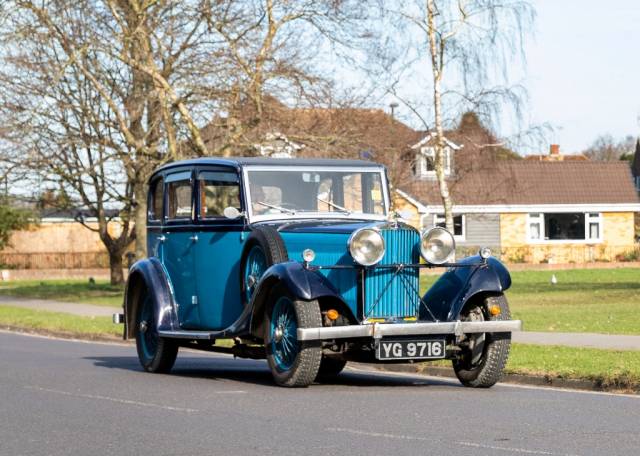
1935 | Talbot 75
Talbot AW75 Six-Light Saloon
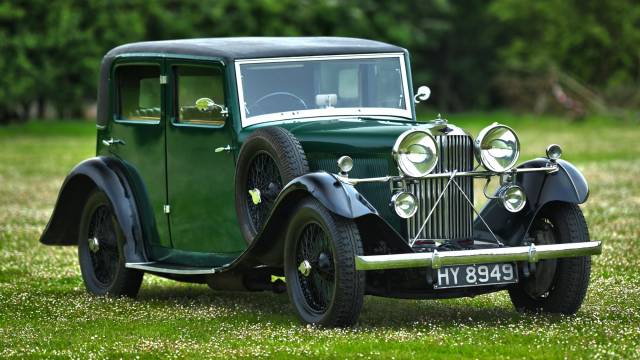
1933 | Talbot 75
1933 Talbot London AW 75 Short Chassis Saloon
Create search alert
Let yourself be notified as soon as a listing is published that matches your search filters.
Create listing
Do you have a Talbot 18-70 that you want to sell? Then create a listing now.
Create listingTalbot 18-70 Classic Cars: Prices & Market Values
History of the Talbot 18-70
The Talbot 18-70 emerged in the early 1930s during a period rich in automotive development. Talbot, known for its sporting pedigree under the Rootes Group and earlier French-English connections, crafted the 18-70 as a mid- to upper-range model. Built during a time when British motoring was rapidly evolving, the 18-70’s engineering and comfort set it apart from its contemporaries, offering more than just transportation: it represented the interwar period’s emphasis on refinement, touring capability, and mechanical integrity. The model contributed to the brand's reputation for both reliability and understated elegance.
Model History
As part of Talbot's line-up, the 18-70 replaced earlier six-cylinder mid-size offerings, marking a technological leap with an emphasis on durability and driving comfort. It was succeeded in spirit, if not directly, by later Rootes Group vehicles following World War II. The 18-70, available in various body styles including saloons and tourers, is a rare survivor from an era that preceded the streamlining and speed focus of postwar designs. Its production numbers were always limited, making extant examples of particular interest to collectors and historians.
Highlights of the Talbot 18-70
The 18-70 is noted for its straight-six engine, robust chassis, and traditional British craftsmanship. Standard features included advanced mechanical controls, ample interior space, and a ride quality superior to many rivals. Its relative rarity today is underscored by the fact that, in the classic car market, Talbot models like the 18-70 have a loyal following among pre-war enthusiasts.
Technical Data
Special Editions and Collectible Models
Due to the limited surviving documentation and small production numbers, specific special editions of the 18-70 are seldom referenced. However, unique coachbuilt bodies by specialist manufacturers, tailored for individual clients, do surface occasionally. These bespoke cars are the most collectible variations, featuring distinct design elements, custom interiors, and sometimes unique chassis modifications.
Weak Spots and Common Issues
There are no recorded common issues or weak spots specifically documented for the Talbot 18-70 in the available resources. However, buyers should note that as with any pre-war vehicle, attention to chassis rust, brittle wiring insulation, and wear in mechanical linkages—particularly in braking and steering gear—is crucial for both safety and originality. Routine inspection of original components, especially suspension and engine cooling systems, is advised for preserved driving reliability.
Engine, Performance, Transmission and Handling
The straight-six engine of the Talbot 18-70 provided ample torque, with a steady power band suitable for relaxed, long-distance touring. Manual transmissions with non-synchromesh gearing required period-correct double-declutch technique for smooth shifts. The robust chassis and suspension layout, though traditional, ensured safe handling at moderate speeds, favouring comfort and stability over outright sportiness. In period comparisons, it was a competent and reassuring touring machine. Highlight: The 18-70 with coachbuilt tourer body. Owners and enthusiasts appreciate these rarer, open versions for their blend of engineering and elegance, alongside the solid mechanicals shared across the series.
Interior, Comfort, Exterior and Design
Body designs of the Talbot 18-70 ranged from elegant four-door saloons to bespoke open tourers, often finished with metal, wood, and high-quality leather upholstery. Interiors prioritised comfort with spacious seating and detailed dashboards, sometimes featuring individual instrument layouts specified by the buyer. The imposing grille and large headlamps signified its era, while long flowing wings and running boards added visual gravitas. Optional extras of the period could include auxiliary lights, picnic tables, and special paint schemes. Unique touches varied according to the coachwork, making each car a distinct statement of its first owner's taste.
Other Features
Talbot 18-70s sometimes came equipped with period accessories such as integrated luggage racks, twin spare wheels, and factory-fitted sunroofs. Given their age, survivors often have individual histories, with period-appropriate restorations and modifications that further individualise each vehicle.
Summary
The Talbot 18-70 represents a rare opportunity to acquire a classic car from the early 1930s that embodies the engineering standards and comfort of its period. With statistics showing it forms the entire present market supply and demand for classic Talbots of this type, its exclusivity is assured. Mechanical simplicity, British coachwork, and tailored period features make every example a highly individual proposition for collectors and enthusiasts.