- Car
- Spyker (2 offers)
Buy Spyker Classic Cars
Spyker sits in a class of its own: a Dutch marque that moved from royal coachbuilding and record-breaking Edwardian engineering to hand-built aluminium supercars with aircraft-inspired detail. For UK buyers, that means one of the rarest collector-car badges on the market, whether your interest is a veteran film star from Genevieve or a C8 with an Audi V8 behind your shoulders.
Search results


2005 | Spyker C8 Spyder
just 6,700 km



2009 | Spyker C8 Laviolette
Spyker C8 4.2 Laviolette LM85 "№ 01 of 14" № 01 of 14 LM85 editions produced, Original factory "new" condition - 7651 kilometres from new, Finished in the unique LM85 livery of Burnt Almond Orange and Gun Metal, Homage to Spyker's Le Mans racing history, Accompanied with the full delivery package and extensive documentation, When quality and perfection almost overrides everything else

Spyker listing references from Classic Trader
Below you will find listings related to your search that are no longer available on Classic Trader. Use this information to gain insight into availability, value trends, and current pricing for a "Spyker" to make a more informed purchasing decision.

2009 | Spyker C8 Laviolette
2009 Spyker C8 LM85

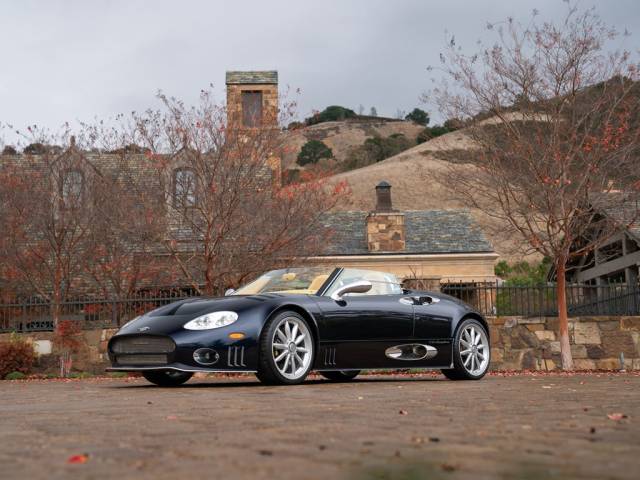
2009 | Spyker C8 Spyder
2009 Spyker C8 Spyder
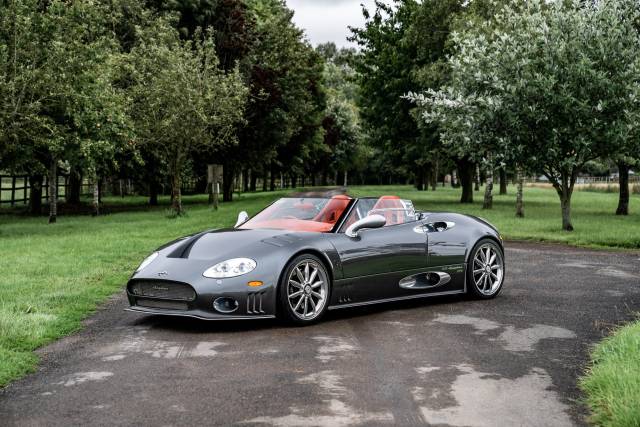
2008 | Spyker C8 Spyder
1 of 8 RHD examples built
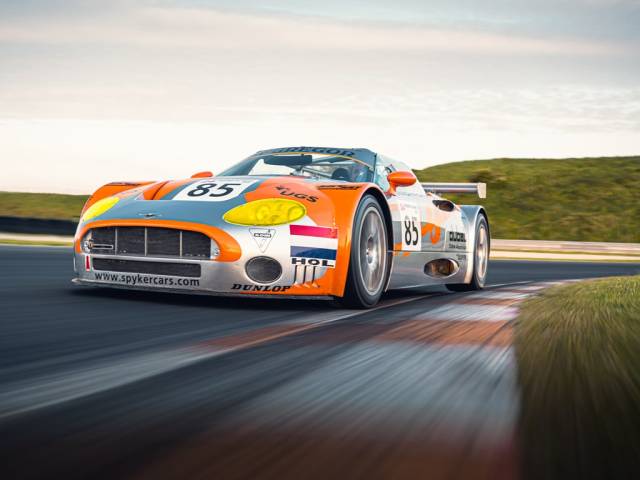
2005 | Spyker GT2-R Spyder
2005 Spyker C8 GT2-R
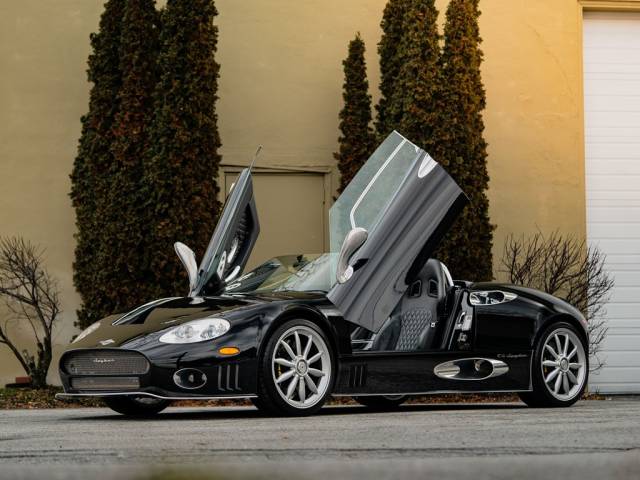
2006 | Spyker C8 Spyder
2006 Spyker C8 Spyder

2010 | Spyker C8 Laviolette LM85
LM85 LIMITED EDITION 1 of 15
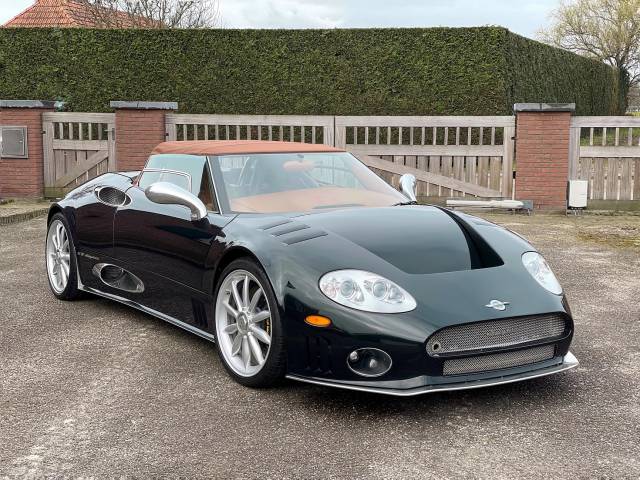
2006 | Spyker C8 Spyder
One-Off - Brand New
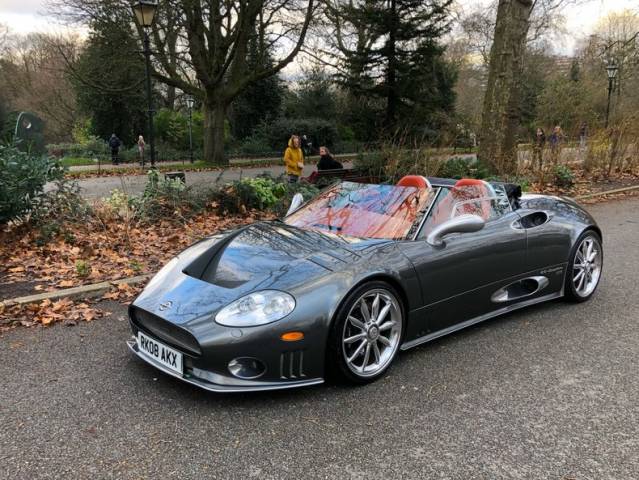
2008 | Spyker C8 Spyder
2008 Spyker C8 Spyder
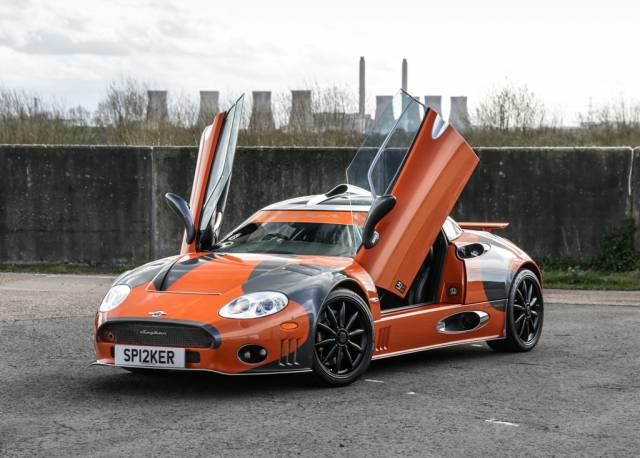
2012 | Spyker C8 Laviolette LM85
Spyker C8 Laviolette LM85

2010 | Spyker C8 Laviolette LM85
2010 Spyker C8 Laviolette LM85
History & Heritage
Few marques cover such a strange and appealing arc as Spyker. The story starts in 1880, when brothers Jacobus and Hendrik-Jan Spijker began as blacksmiths and coachbuilders in the Netherlands. By 1898 they had built the Golden Coach for the Dutch royal household, a commission that immediately placed the company among Europe’s serious luxury craftsmen. That same year they moved decisively into motor cars.
The original Spyker name matters because it was never only about style. It was about engineering ambition. In 1903, the marque unveiled the Spyker 60 HP Grand Prix racer, still one of the great landmarks of early motoring: a six-cylinder competition car with four-wheel drive and four-wheel braking. For buyers browsing the very top end of the veteran market, that achievement is not trivia; it is the root of Spyker’s reputation. The brand always wanted to do things before bigger rivals dared.
That spirit carried into endurance competition. In 1907, a production-based Spyker 14/18 HP Tourer finished second in the Peking-to-Paris rally, one of the toughest long-distance events in motoring history. The same period also gave the marque one of its most enduring British links: the 1905 Spyker 12/16-HP Double Phaeton later immortalised in the 1953 film Genevieve. In the UK, that connection still resonates because Genevieve helped turn veteran motoring into a mainstream enthusiasm rather than a niche curiosity. For a British buyer, Spyker is therefore not just an imported Dutch name; it is part of the folklore of the London to Brighton Veteran Car Run and of the broader club scene around Edwardian machinery.
Spyker’s first era was brilliant but financially fragile. After aircraft production, record runs and the streamlined C1 Aerocoque of 1919, the company faded away by the mid-1920s. Total production for the original firm was tiny, which is why surviving pre-war Spykers are now museum-grade objects more often than trade stock.
The modern story begins in 1999, when Victor Muller and Maarten de Bruijn revived the marque. The key stepping stone was the Silvestris V8 prototype, which led directly to the C8 Spyder launched at the Birmingham Motor Show in 2000. That debut matters for UK buyers too: modern Spyker effectively announced itself to the world on British soil.
From there came the small but important line-up that defines the brand on today’s collector market. The C8 Spyder was the open car that established the formula: aluminium spaceframe, mid-mounted Audi 4.2-litre V8, manual gearbox, and an interior styled like a hand-built aircraft cockpit. The C8 Laviolette followed in 2001, replacing the fabric roof with a dramatic glass canopy and roof intake. The Double 12 S translated the brand’s Le Mans ambitions into a road-going special, while later cars such as the Aileron and Preliator stretched the concept into a slightly more mature, more powerful grand-touring direction.
Spyker also tried to act like a far bigger company than it really was. There were Le Mans campaigns, a Formula 1 detour, the Saab acquisition, repeated financial crises and multiple attempted relaunches. None of that helped production stability, but it did create the odd paradox that drives collector interest today: modern Spykers are exotic, hand-built, visually unforgettable and genuinely scarce, with total output generally cited at around 290 cars across the modern era.
So when UK buyers look at Spyker, they are really looking at two linked histories. One is the world of brass lamps, sidevalve engines and Genevieve. The other is the world of the C8 Spyder, Laviolette, Aileron and Preliator: low-volume 21st-century supercars that already feel like rolling artefacts.
Highlights & What Makes Spyker Special
The appeal of Spyker is not based on one single specification sheet. It is based on character, scarcity and craftsmanship.
For most collectors, five Spyker families matter most:
- Spyker 12/16-HP and 14/18-HP veteran cars: important for the marque’s Edwardian reputation and the UK’s Genevieve connection.
- Spyker 30/40 C4: the pre-war flagship with Maybach six-cylinder power and long-distance record significance.
- C8 Spyder: the defining modern Spyker, launched in 2000 and still the purest expression of the reborn brand.
- C8 Laviolette / LM85: the closed-roof car with the glass canopy, stronger visual identity and some of the best recent auction results.
- C8 Aileron / Preliator: later, rarer evolutions with longer wheelbases, more refinement and, in the Preliator’s case, supercharged power.
What separates Spyker from other low-volume exotics is the consistency of its design language. Almost every modern Spyker major feature is linked to the firm’s aviation heritage: turned aluminium dashboards, toggle switches, exposed shift linkage, quilted leather, scissor doors, and instrument graphics that feel more coachbuilt than mass-produced. Even people who would never normally buy a Dutch exotic usually understand the appeal the moment they sit in one.
Then there is the engineering recipe. A Spyker is not a kit of random suppliers; it is a coherent car. The Audi 4.2 V8 gave the C8 line a mechanical anchor from a major manufacturer. That matters in the collector world because it means the engine itself is not obscure in the way a TVR or boutique Italian unit can be. You still need specialist knowledge, but you are not starting from nothing. The Getrag manual gearbox, AP Racing brakes, double-wishbone suspension and aluminium structure all add to the sense that Spyker was small, but never unserious.
Rarity is the other pillar. The Laviolette is generally cited at 55 built. The LM85 was planned for 24 cars, with 14 actually produced according to RM Sotheby’s Miami 2024 cataloguing. The Aileron is rarer still in public-market terms, and the Preliator remained extremely low volume. In a UK market full of limited Ferraris and numbered Porsches, Spyker plays a different game: most buyers will never see another one parked next to theirs.
That scarcity also shapes ownership. A Spyker is not a car you buy for anonymous use. It suits buyers who enjoy specialist workshops, build reports, factory details, provenance files, and long conversations at concours lawns, club gatherings or auction previews. In Britain, where the classic scene still values stories as much as lap times, that fits perfectly.
Technical Data
For UK buyers, the technical story splits neatly in two. Veteran Spykers are engineering-historic machines, bought on rarity and event eligibility. Modern C8 cars are usable collector supercars with known supplier components, but wrapped in deeply bespoke coachbuilt execution.
Three details matter most on a modern Spyker listing. First, the Audi V8 gives reassurance, but packaging is tight enough that major maintenance is still specialist work. Second, the aluminium spaceframe and bodywork resist rust far better than many classics, yet accident repair quality is crucial because straightness and panel fit are expensive to recover. Third, there is no such thing as a cheap “easy” Spyker: low mileage is attractive, but time-sensitive service items still matter even when the odometer looks flattering.
Market Overview & Buying Tips
Spyker sits in one of the thinnest collector markets in the world. That is both the attraction and the challenge. You are not buying into a liquid 911 or E-type market with weekly comparables. You are buying into a scarce, specialist, provenance-led niche where condition, history file and known expert involvement can move values dramatically.
Public results from 2024 to 2026 show that the market is active enough to judge direction. At RM Sotheby’s Miami 2024, a 2009 C8 LM85 sold for $445,000. At RM Sotheby’s Monaco 2024, a 2004 C8 Spyder sold for €263,750. In October 2025, a 2005 C8 Spyder sold at Bonhams’ Zoute Sale for €333,500. Then the market sharpened further in 2026: Classic.com records a 2008 C8 Laviolette at $590,000 in April, a 2006 C8 Laviolette at $670,000 in June, and a 2006 C8 Spyder at $532,500 later the same month. Those are serious numbers for a marque once treated as a curiosity.
For a British buyer, the practical takeaway is simple. C8 Spyders now broadly sit in the £200,000 to £400,000-plus zone depending on mileage, history and provenance. Laviollettes and LM85 derivatives increasingly occupy the £330,000 to £500,000 bracket, with the best cars pressing beyond that. Ailerons and Preliators trade so infrequently that public auction data remain sparse, but their rarity means sellers often pitch them above equivalent Spyders.
Pre-war Spykers are a different discipline altogether. They are less “market stock” than event-eligible artefacts, and value is bound up with body history, known ownership, period competition connection and eligibility for top veteran events. In Britain, the Genevieve halo keeps the early cars culturally visible even when none are actually for sale.
What should you inspect on a modern Spyker?
1. Service history, not mileage, comes first. SpykerEnthusiast’s own maintenance schedules show how much matters beyond an oil change: brake fluid, coolant, transmission oil, fuel filter, spark plugs, timing belt and pulleys, water pump, battery, air-conditioning service parts, and clutch inspection. Cars that have stood still in collections still need this work.
2. Accept that major servicing can be labour-heavy. BaT’s 3,600-mile 2006 C8 Spyder documented an engine-out service including water pump, belts, struts and air-conditioning work. That is a useful real-world reminder that access can be difficult even when the base engine is familiar.
3. Check cooling and belt-drive items carefully. Tight packaging around the Audi V8 means heat management matters. Ask when the water pump, coolant, thermostat-related items, belts and pulleys were last replaced.
4. Inspect chassis, suspension and body fit. The aluminium structure does not rust like steel, but kerb strikes, poor lifting, old repairs and panel misalignment are expensive. On specialist project documentation, worn ball-joint boots, tired suspension hardware and aged insulation are recurring realities on older cars.
5. Look closely at struts, electrical items and air-conditioning. SpykerEnthusiast specifically lists door, bonnet and trunk struts, headlight mechanisms, door motors, TPMS sensors, evaporator components and A/C filters as age-related maintenance points. A car that presents beautifully but has weak struts and half-working ancillaries is telling you how it has been used.
6. Confirm originality, options and build paperwork. Because volumes were so low, details matter: factory hardtop, propeller steering wheel, whisper exhaust, luggage, Chronoswiss items, original steering wheel, or known show-car provenance can all affect desirability.
For UK use, there are a few market-specific points. Nearly all modern Spykers are left-hand drive. That is not a problem in this sector, but it is worth checking visibility comfort, headlamp pattern, speedometer format, insurance appetite and whether the car will actually be used on country roads or mostly on tours and events. If you are importing from Europe after Brexit, GOV.UK requires the usual sequence: import declaration, possible VAT and customs duty, HMRC notification within 14 days, NOVA, approval where required, then DVLA registration and taxation. None of that should frighten a seasoned collector, but it does affect total landed cost.
Finally, note the tax and test position. Pre-war Spykers generally fall into the UK’s historic vehicle world: cars over 40 years old can be MOT-exempt if not substantially altered, and vehicles built before 1 January 1986 can move into the historic tax class from 1 April 2026 under current GOV.UK guidance. That benefits veteran and pre-war cars, not modern C8s.
Driving Feel
Driving a Spyker depends entirely on which century you choose, but the unifying theme is mechanical theatre.
An early Spyker, particularly the veteran 12/16-HP, is all about process. The sidevalve four, manual spark and throttle controls, long external lever and transmission brake demand involvement before you have even settled into the road. British writers revisiting the Genevieve film car found it surprisingly refined for such an early machine, brisk enough to feel alive, yet full of the ceremonial quality that makes veteran motoring so addictive. In UK terms, that is a car for London-to-Brighton-type spectacle, veteran runs, museum-level custodianship and pure historical charm.
A C8 Spyder is theatre of a completely different order. The scissor door rises, the sill is broad, the cockpit is a blaze of machined aluminium, toggle switches and diamond-quilted leather, and the exposed gear linkage looks like something from a bespoke marine engine room. Start the engine and the Audi V8 erupts just behind you with a hard-edged, metallic bark. There is nothing subtle about the experience.
What surprises many drivers is that a Spyker does not feel like a styling exercise. The pedals are weighty, the steering direct, and the manual shift demands a deliberate hand. On a quick British B-road, the car feels narrow of focus in a good way: it asks for attention, rewards smooth inputs and constantly reminds you that this is a hand-built machine rather than a polished algorithm. The later Aileron brings a little more maturity and a longer-legged feel, but the essential character remains tactile and mechanical.
That driving feel is one reason the market has strengthened. A Spyker is not merely rare to look at; it is rare to operate. In an age of filtered, screen-heavy supercars, a C8 feels gloriously analogue.
Design & Coachwork
Spyker’s visual identity is one of the strongest in modern car collecting. Many boutique marques try to look expensive. Spyker manages to look crafted.
The first-era cars already hinted at that. Edwardian Spykers combined substantial coachwork with advanced mechanical ambition, and the aircraft connection later reinforced the marque’s design vocabulary. When the modern company returned, it did not simply revive an old badge. It revived an entire design philosophy.
The early C8 Spyder and Laviolette, shaped under Maarten de Bruijn, remain the essential cars. The proportions are compact and muscular, yet the details do the real work: rivet-like visual themes, polished metal openings, deep grille treatment, dramatic air outlets and the unforgettable cockpit. Few interiors in the last 25 years are as instantly recognisable. Even the exposed linkage and switchgear can sell the car before the engine is started.
The Laviolette adds what many regard as the marque’s masterstroke: the glass canopy and roof intake. It gives the car a proper fighter-canopy look and makes the coupe more distinctive than the roadster from some angles. That helps explain why the best Laviolettes have been so well received at auction.
The later Aileron, associated with Simon Koop, lengthened the wheelbase and softened some of the earlier car’s visual aggression without losing the aviation theme. The details became cleaner, the proportions more GT-like, and the cabin more polished. The Preliator then pushed further with carbon-fibre body construction, stronger surfacing and modern features such as a head-up display, but it still looked unmistakably like a Spyker.
For collectors, that matters. Plenty of rare cars are rare because they failed. Spyker is different. It is rare, but also beautifully resolved. If you want a collector car that can sit next to a Pagani, a Zagato-bodied Aston or a low-volume Ferrari and still start conversations from design alone, Spyker absolutely qualifies.
Other: Motorsport, Culture and the UK Link
Spyker’s UK relevance goes beyond being left-hand drive and occasionally turning up at auction.
The oldest and most charming link is, of course, Genevieve. The 1905 Spyker 12/16-HP Double Phaeton played the role of Ambrose Claverhouse’s car in the film, and that connection still gives the marque a permanent place in British motoring culture. For enthusiasts involved in the veteran scene, that single car may be the best-known Spyker of all.
The modern brand also has British threads running through it. The C8 debuted at Birmingham. Some early aluminium body panels came from Coventry Prototype Panels. Spyker tried to deepen its UK production ties in the late 2000s. And British buyers continue to track the marque through Bonhams, RM Sotheby’s, Salon Privé and the wider concours-and-auction ecosystem.
Competition history matters too. Modern Spyker ran at Le Mans, built the Double 12R, campaigned the Spyder GT2-R and Laviolette GT2-R, and even stepped briefly into Formula 1 before the team became Force India. None of that made Spyker a volume success, but it reinforced the idea that the marque was always reaching for a level above its size.
That attitude is part of the ownership appeal now. A Spyker buyer is rarely just buying transport or even mere rarity. They are buying into a brand built on tenacity, which is fitting given the old company motto: “Nulla Tenaci Invia Est Via” — for the tenacious, no road is impassable.
Summary
Spyker is one of the few collector marques that genuinely feels unlike anything else. The pre-war cars give you royal coachbuilding, early four-wheel-drive innovation, Peking-to-Paris credibility and a priceless foothold in British motoring culture through Genevieve. The modern cars give you one of the boldest design languages of the 21st century, hand-built aluminium construction, Audi V8 dependability in principle, and rarity that even seasoned collectors respect.
For UK buyers, the decision is usually straightforward. If you want a veteran or pre-war Spyker, you are buying history, event eligibility and cultural significance. If you want a C8 Spyder, Laviolette, Aileron or Preliator, you are buying an ultra-low-volume exotic that has moved from curiosity to serious collector object. The market from 2024 to 2026 shows rising confidence, especially for strong Laviolettes and well-documented C8s.
Buy on history file, specialist maintenance, originality and provenance, not on badge novelty alone. Do that, and a Spyker delivers something very few classics can match: a genuine sense that every journey, every event stop and every garage glance belongs to a marque that has always preferred the difficult road.