- Car
- Powell (0 offers)
Buy Powell Classic Cars
Powell Sport Wagons are among the most unusual post-war American utility cars: Californian-built, Plymouth-powered and made in tiny numbers between 1955 and 1957. Find a Powell classic car with the documentation, completeness and import record that such a rare survivor deserves.
Search results
Currently, there are no matching listings for your search.
Create search alert
Let yourself be notified as soon as a listing is published that matches your search filters.
Powell listing references from Classic Trader
Below you will find listings related to your search that are no longer available on Classic Trader. Use this information to gain insight into availability, value trends, and current pricing for a "Powell" to make a more informed purchasing decision.
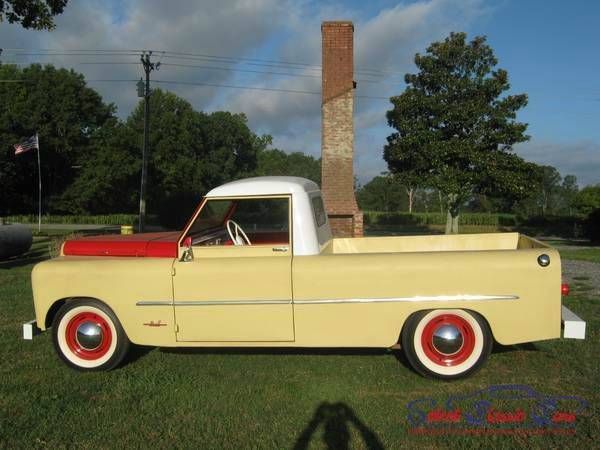
1956 | Powell Sport Wagon
Create search alert
Let yourself be notified as soon as a listing is published that matches your search filters.
Powell history: a Californian answer to the utility car
Powell Manufacturing Company was not an established Detroit car maker attempting to enter a new niche. It was a resourceful Compton, California concern with a background in radios and scooters, and its brief four-wheeled chapter is therefore very different from the histories of Chevrolet, Ford or Willys. Channing and Hayward Powell saw an opening in the mid-1950s for a compact, practical vehicle that could carry equipment, reach a fishing spot or serve a small business without the cost and bulk of a conventional American pick-up.
Their answer arrived for the 1955 model year as the Powell Sport Wagon. It looked unfamiliar even when new: a blunt fibreglass nose sat ahead of square steel bodywork, while a generous glass area and sliding side windows gave it a light, almost home-built clarity. The product was deliberately based on available mechanical parts rather than an expensive proprietary chassis and engine programme. Powell bought and rebuilt surplus 1941 Plymouth chassis, then paired them with reconditioned Plymouth flathead six-cylinder engines from the 1940–50 period. This approach made a small-scale vehicle possible, but it also explains why no two surviving Powells should be assumed to be mechanically identical.
There were two principal forms. The Sport Wagon Pickup was the working version, with a rear load bed and Powell’s distinctive utility-minded detailing. The Sport Wagon Station Wagon supplied an enclosed rear body and an even more eccentric alternative to the mainstream suburban wagon. Both appealed to buyers who valued ingenuity over chrome and conventional status. Optional pull-out carriers for fishing rods, for example, made the lifestyle intention explicit rather than merely decorative.
Production was short. Manufacture ceased in March 1957 after only three model years. The Powell Sport Wagon Registry estimates approximately 1,020 pickups and 150 station wagons, while recording 109 survivors in its November 2024 update. Exact historic totals are not universally agreed, particularly for the wagons, so these figures are best used as informed registry estimates rather than as a reason to assign a premium automatically. The important conclusion for a prospective owner is simpler: a real, substantially complete Powell is a rare object, and a car’s individual history matters more than a nominal model year.
Powell did not develop a later generation, a V8 flagship or a conventional successor. Its legacy is a small but memorable footnote in Californian independent manufacturing: a vehicle conceived around repairable, familiar running gear and a body whose eccentricity has become its lasting appeal. It sits naturally beside other American post-war specials and utility hybrids, but it is not a rebadged Plymouth. Its identity lies in the Powell body, construction details and surviving provenance.
Highlights of Powell ownership
The first attraction is rarity with purpose. Many obscure makes are known mainly through a forgotten badge or a single coachbuilt body; the Powell has a clear idea behind it. Its compact commercial-vehicle proportions, sliding windows and fishing-tube option make sense once the car is viewed as an affordable Californian outdoor and working vehicle rather than as a conventional estate car. The design is plainspoken, yet impossible to mistake for anything else.
Equally important is the Plymouth basis. The typical specification is a 201-cu-in, or roughly 3.3-litre, L-head straight-six, driving the rear wheels through a three-speed column-change manual gearbox. A flathead Plymouth six is slow by modern standards, but it is a well-understood pre-war/post-war American engine with an extensive knowledge base. Routine internal engine parts, ignition components and service information are generally less intimidating than they would be for a wholly bespoke low-volume car. That does not make every Powell easy to recommission: a long-stored engine still needs a proper assessment of cooling passages, lubrication, compression and cylinder-head condition.
The body and fittings are the opposite proposition. Powell-specific panels, the fibreglass front section, bonnet, grille, window mechanisms, trim and load-area hardware cannot be ordered as a catalogue exercise. An early vehicle may have oak tailgate or bumper elements, while later examples can use diamond-plate rear pieces. Some late-1956 cars are reported with Henry J steering wheels. Such variation is fascinating, but it means a buyer must distinguish period-correct variation from a later improvisation. Clear photographs, registry input and a file of earlier images are unusually valuable here.
For a British enthusiast, a Powell also offers a refreshing contrast to the better-known American import. It is left-hand drive and built for relaxed US roads, but it is much narrower in concept than a full-size 1950s station wagon. At a show, it will start conversations with people who have seen countless Tri-Chevy restorations but never a genuine Sport Wagon. Its appeal is not speed or concours polish; it is survival, oddity and mechanical honesty.
Technical data and production details
Because Powell rebuilt donor components, the table describes the usual Sport Wagon specification rather than a factory guarantee for every chassis. A seller should be able to support claimed engine size, chassis components and year with photographs and documentation.
Published performance figures, kerb weights and definitive chassis sequences are not sufficiently consistent to be useful as blanket buying criteria. A careful buyer should regard this absence as part of the marque’s character, not fill the gap with assumptions. Check what is fitted to the particular vehicle. A rebuilt Plymouth engine may carry a number appropriate to its donor rather than a simple Powell-specific engine sequence, and components may have changed during a restoration decades ago.
The vital identification point is the PMC serial stamping on the right-front frame rail. Ask for a sharp, close photograph before travelling, then inspect it in person with the title or previous registration documents to hand. The stamping should be considered alongside the body, not in isolation: an old Plymouth chassis alone does not create a Powell, while a convincing Powell body without a legible, coherent chassis identity creates a registration and value problem.
Market Overview & Buying Tips
The Powell market is not deep enough for a conventional price guide. Listings are infrequent, public auction evidence is scarce and condition differences are huge. The most useful recent completed result is a non-running, incomplete 1957 project sold by Bring a Trailer for US$3,800 on 18 April 2025. It is a useful floor point for a difficult project, not a valuation for a roadworthy car. A 1957 project offered at US$8,000 in September 2024 and a restored 1956 wagon advertised at US$25,000 in 2021 are asking prices, not confirmed sales. Classic Trader also recorded a 1956 example at £17,116 in an archived listing roughly a decade ago. These isolated figures show why a broad “Powell price” can mislead.
In practice, buy by completeness, authenticity and paperwork. An apparently inexpensive vehicle missing its grille, sliding-window hardware, tailgate pieces or fishing-rod tubes may require bespoke fabrication and many hours of research. Conversely, a less glossy vehicle with its original body details, a readable serial number, long ownership history and a sound frame can be the better acquisition. Station wagons are reported in far lower numbers than pickups, but scarcity only adds value when the car is recognisably complete and registrable.
Start with the structure. Examine the 1941 Plymouth frame for rust, previous collision damage, poor repairs and alignment. The right-front rail stamping must be clear enough to connect the vehicle to its title. Then inspect the flat steel panels, floor, load area, lower edges and mounting points. The fibreglass front should be checked for old impact cracks, distortion around fasteners and crude filler repairs. A repaint can conceal much on a flat-sided vehicle, so use a magnet where appropriate on steel sections and look underneath rather than relying on photographs taken at a flattering angle.
Next, assess Powell-only parts. Compare the bonnet line, grille, front panel, windscreen surround, sliding windows, door apertures and rear fittings with reliable period or registry imagery. Establish whether the wood on an early car is original, accurately remade or simply decorative timber added later. Diamond-plate rear details should similarly make sense for the car’s period. Missing hardware is not necessarily a reason to walk away, but it is a cost and lead-time issue which should be priced before an offer is made.
The Plymouth drivetrain deserves normal old-car discipline. Confirm that the engine turns freely; ideally obtain compression readings and evidence of oil pressure when running. Look for a cracked block, frost damage, head corrosion, smoky running and an overheating history. A radiator, water pump, hoses, brakes, kingpins, steering box and wiring may all be serviceable with standard American-car expertise, but none should be assumed good because parts are familiar. Test the three-speed column change thoroughly: wear in linkages can make a sound gearbox feel troublesome, while a reluctant box may have deeper faults.
For a UK purchase from the United States, the landed cost is not the hammer price or seller’s figure. Allow for inland collection, export handling, marine insurance, shipping, port charges, duty and VAT where applicable, a UK transporter, inspection and recommissioning. Before the car leaves America, secure the original US title or other acceptable ownership document, bill of sale, clear chassis photographs, engine details, shipping paperwork and a record of any restoration. A title discrepancy that looks minor in a US classified advert can become expensive once the car is at a British port.
The importer or customs agent must make the appropriate HMRC declaration, and a vehicle imported permanently into Great Britain normally needs a NOVA notification before DVLA registration. Keep the NOVA acknowledgement with the customs and purchase papers. The exact tax treatment, evidence requirements and registration route can change, so check current HMRC and DVLA guidance before committing funds rather than relying on a forum post or a seller’s reassurance.
For DVLA registration, expect to need a coherent identity trail, proof of date of manufacture where required, insurance and the relevant application documentation. A vehicle over 40 years old may be exempt from periodic MOT testing provided it has not been substantially changed, but exemption is not proof of roadworthiness and does not remove the need for proper registration evidence. A pre-purchase inspection by a US-based specialist familiar with unusual American vehicles, followed by advice from a UK historic-vehicle registration professional, is money well spent. Do not ship a Powell merely because its purchase price appears low.
The Powell driving experience
A sound Powell is not driven like a modern hatchback, nor should it be judged as a substitute for a period sports car. The tall, practical body, flathead six and column shift invite an unhurried approach. The engine’s appeal is its soft, long-stroke character: it pulls with a steady, old-fashioned rhythm rather than delivering dramatic acceleration. Selecting gears through the column mechanism, listening to the mechanical whirr and looking past the unusual fibreglass nose makes even a modest local journey feel distinctive.
The wheelbase and pre-war-rooted chassis give the Sport Wagon a different language from later American compact trucks. Steering, braking and body movement need anticipation, especially on British lanes where the driver is seated on the left and visibility at junctions needs thought. A well-sorted car should track predictably and stop straight, but it was never intended for motorway haste. Leave room, preserve momentum and enjoy the fact that the vehicle’s pace encourages its owner to notice the route.
The pickup feels most convincing with a few useful objects in its bed: a picnic basket, tools for a show or perhaps fishing equipment that acknowledges the original marketing idea. The station wagon has the more enclosed, companionable atmosphere of a tiny independent estate. Neither is a plush long-distance cruiser. Both offer an experience that is more engaging than their specifications suggest because every detail—the sliding glass, the square panels, the uncomplicated six—announces a maker solving practical problems on a shoestring.
Design, construction and character
Powell’s design was born from economy, but it avoids looking anonymous. The fibreglass nose reduced the need for costly deep-drawn pressings, while the steel body could be made from straightforward flat or lightly formed panels. This explains the crisp, almost architectural surfaces. There is no Detroit styling excess: the visual interest comes from proportion, useful openings and the contrast between the front moulding and the body behind it.
The sliding windows are central to the effect. They read as practical equipment rather than luxury trim, and their operation gives the cabin an air of a small workshop or beach vehicle. The rear treatment changes the character again. Oak components on early cars lend a handmade note; diamond-plate fittings on later vehicles push the Sport Wagon towards industrial utility. Neither arrangement should be “improved” casually during restoration. The correct answer is whatever the evidence says was fitted to that particular chassis.
This is why restoration should favour conservation over over-finishing. A flawless, heavily customised paint job can make a Powell look less convincing than an honest, neatly repaired body retaining its right fittings and patina. Recreate a missing panel accurately if necessary, but preserve original door frames, brackets, window tracks and serial evidence wherever possible. Modern upgrades may make the car easier to use, yet substantial changes can complicate historic registration and reduce its interest to the dedicated registry community.
Powell in collector culture
The Powell has survived through enthusiasts who appreciate the overlooked corners of American vehicle history. The Powell Sport Wagon Registry is an especially important resource because it records known vehicles and helps owners compare details that are not covered by a conventional workshop manual. Contacting the registry before purchase can help establish whether a chassis is known, whether its body configuration is credible and which features should be present.
In Britain, the car belongs as much at an American-vehicle gathering as it does at a general classic show. It offers a useful antidote to badge-led collecting. A Powell owner is unlikely to find every answer at a local parts counter, but will often find help through flathead Plymouth specialists, US shipping contacts, historic-vehicle clubs and the small group of marque custodians. The resulting ownership experience is collaborative: research is part of the pleasure, but should also be part of the budget.
Summary: choosing a Powell classic car
To buy a Powell classic car is to choose one of the rarest and most characterful American utility vehicles of the 1950s. The Sport Wagon Pickup and Station Wagon combine a familiar Plymouth flathead foundation with a body that could only have come from a small Californian maker. Their modest performance is beside the point; the appeal is their practical imagination and conspicuous individuality.
Choose the individual vehicle, not a theoretical price range. Verify the PMC frame stamping, title continuity, body completeness, donor-derived mechanical specification and corrosion condition. For an American import, budget honestly for shipping, customs, NOVA, DVLA registration and recommissioning. A properly documented, complete Powell may be a demanding purchase, but it rewards careful ownership with a place in a genuinely small and memorable chapter of motoring history.