- Car
- Porsche-Diesel (6 offers)
Buy Porsche-Diesel Tractor
The Porsche-Diesel tractor is one of the most distinctive post-war working classics: air-cooled, beautifully engineered and instantly recognisable in carmine red. Built in Friedrichshafen from 1956 to 1963, it remains a serious collector’s piece with a strong following in Britain and across Europe.
Search results
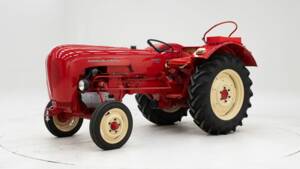
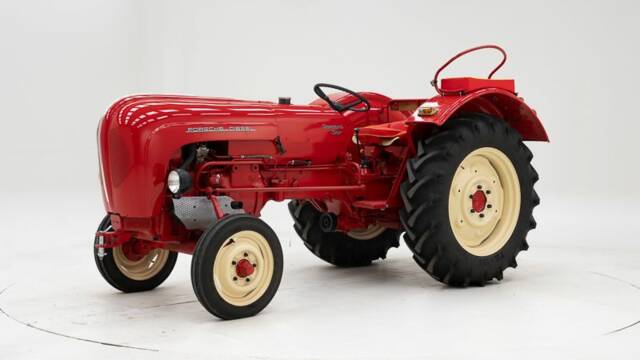
1961 | Porsche-Diesel Standard Star 219
1961 Porsche Standard STAR '61

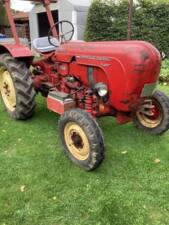
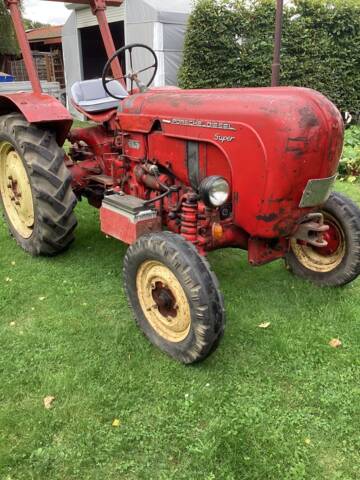
1967 | Porsche-Diesel Super N 308
Tractor, classic vehicle in original condition, original documents

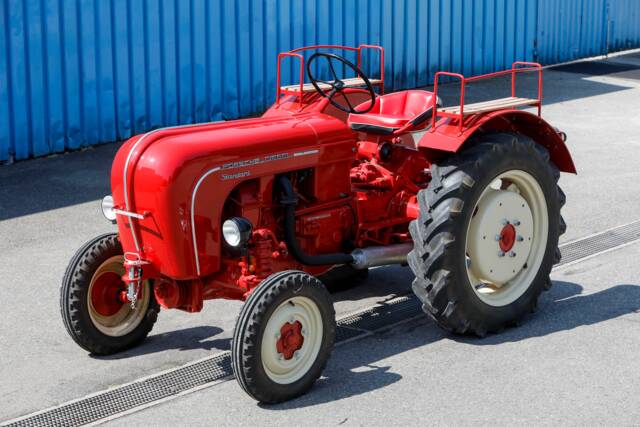
1958 | Porsche-Diesel Standard 208
Porsche 208 Standard
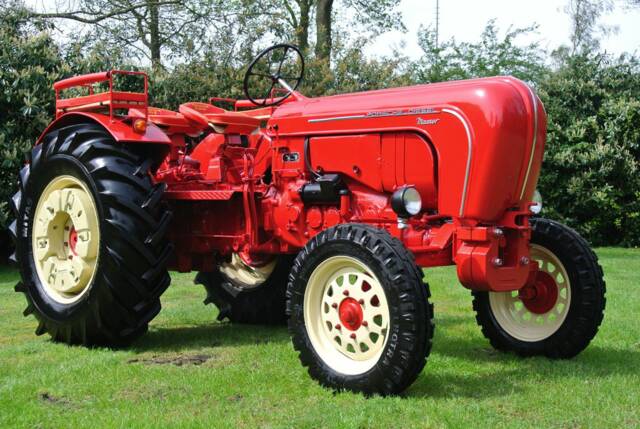
1958 | Porsche-Diesel Master 408
Porsche-Diesel Master 408 Tractor | 1958 | Route 66 Auctions - For sale by auction. Estimate 54600 EUR

Newsletter
The best Porsche-Diesel listings, straight to your inbox
Get hand-picked Porsche-Diesel listings, plus the best of cars, motorbikes, and auctions on Classic Trader — all in one place.
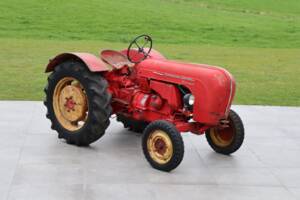
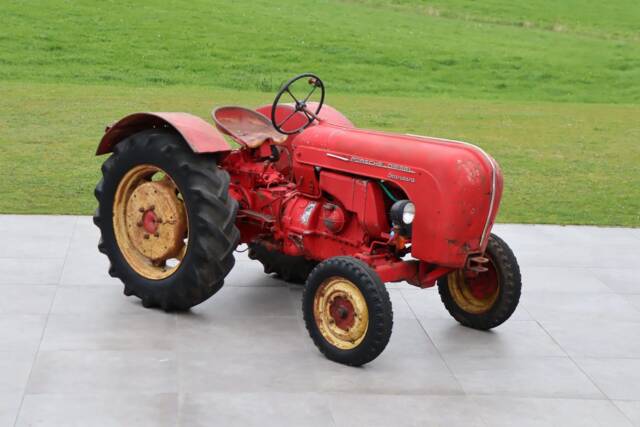
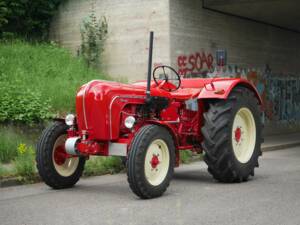
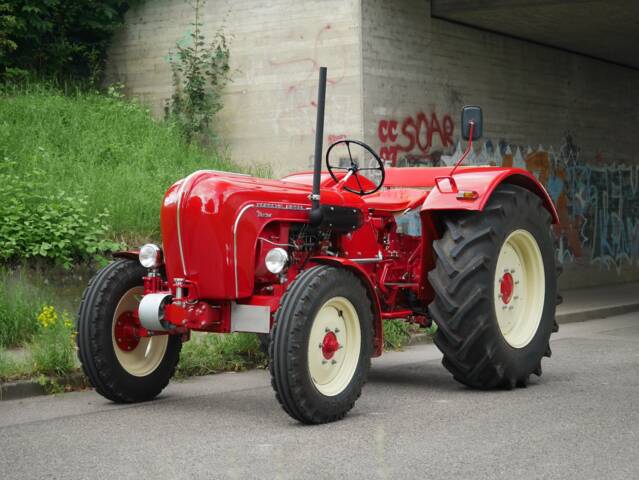
1961 | Porsche-Diesel Master 419
PORSCHE Super "Master" 403 F418 // besser als neu // Referenz-Restaurierung
Porsche-Diesel listing references from Classic Trader
Below you will find listings related to your search that are no longer available on Classic Trader. Use this information to gain insight into availability, value trends, and current pricing for a "Porsche-Diesel" to make a more informed purchasing decision.
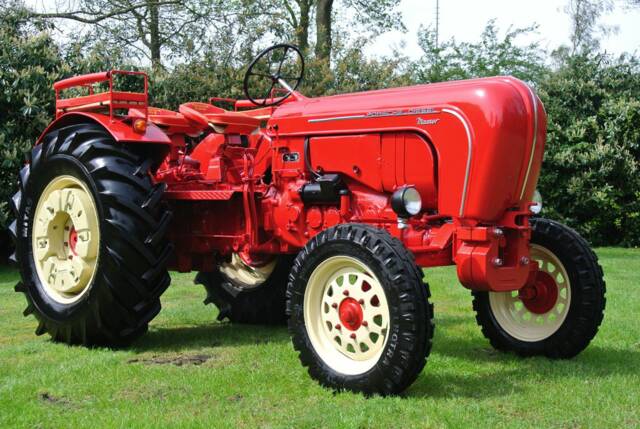
1958 | Porsche-Diesel Master 408
Porsche-Diesel Master 408 Tractor | 1958 | Route 66 Auctions - For sale by auction. Estimate 54600 EUR
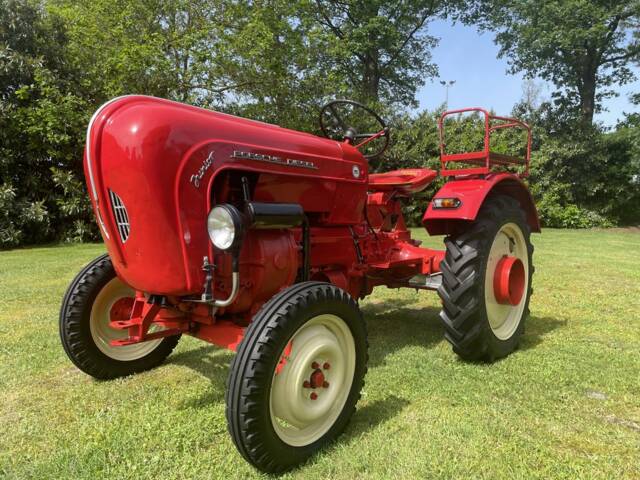
1959 | Porsche-Diesel Junior S
Porsche-Diesel Junior 108 | 1959 | Route 66 Auctions - For sale by auction. Estimate 9600 EUR
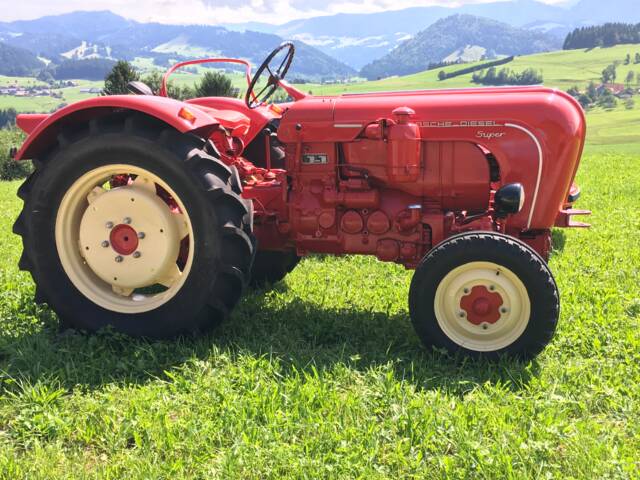
1961 | Porsche-Diesel Super L 319
Porsche Diesel 309 Super (1961) – Charakterstark. Selten. Fahrbereit.
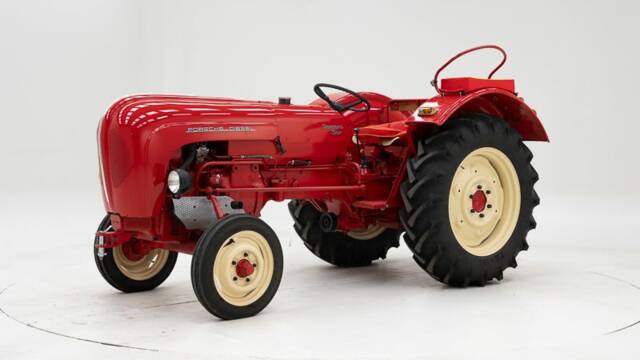
1961 | Porsche-Diesel Standard Star 219
1961 Porsche Standard STAR '61
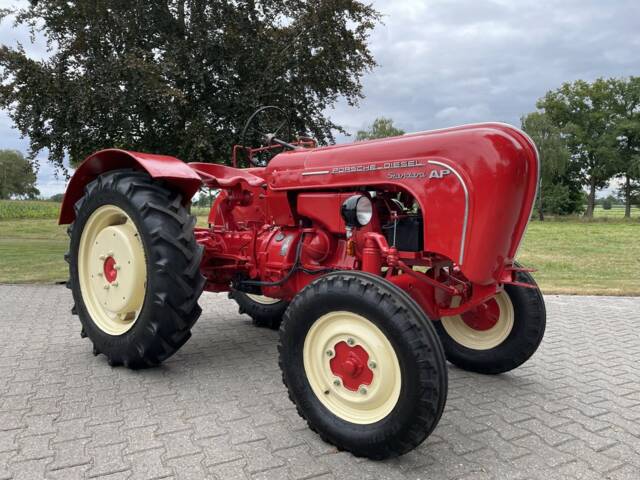
1957 | Porsche-Diesel Standard 218
Porsche-Diesel Standard 218 | 1957 | Route 66 Auctions - For sale by auction. Estimate 8500 EUR
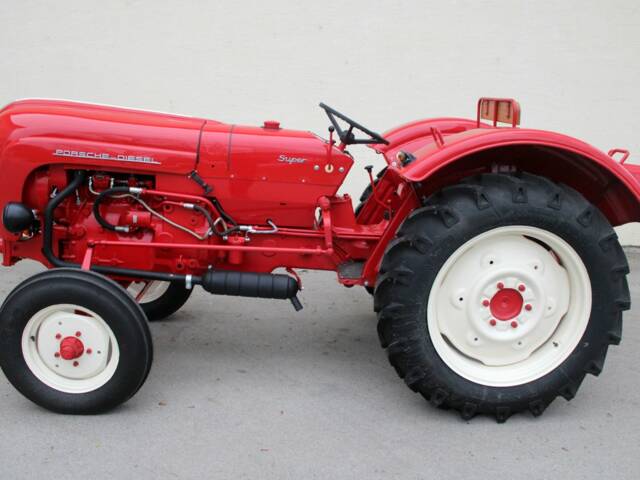
1963 | Porsche-Diesel Super Export 339
Porsche-Diesel Super 339 | 1963 | Route 66 Auctions - For sale by auction. Estimate 9500 EUR
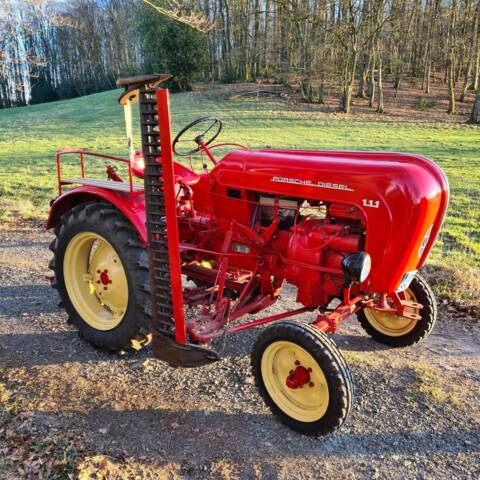
1957 | Porsche-Diesel P 111
Sehr Guter Zustand. Sofort Verfügbar in 51674
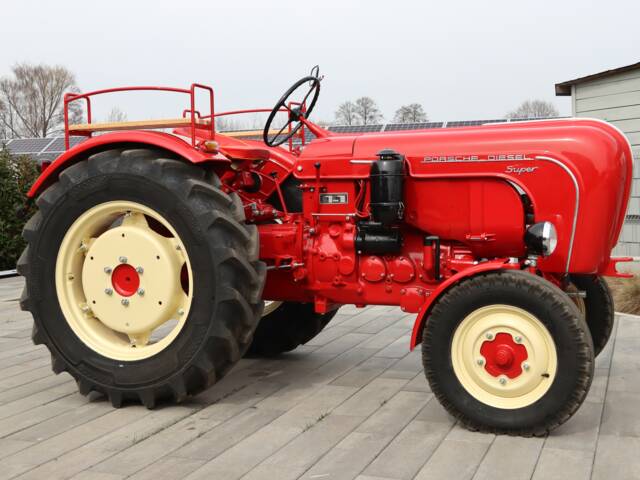
1960 | Porsche-Diesel Super N 308
Porsche Diesel Super, 308N, Fast Gears, Warranty

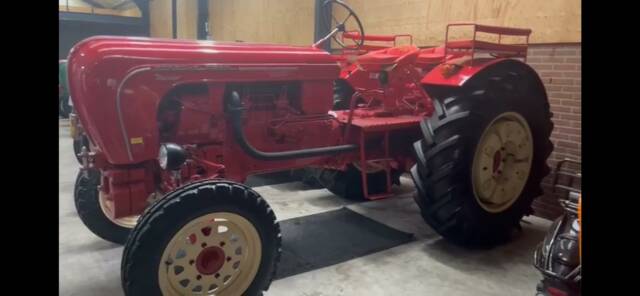
1958 | Porsche-Diesel Master 408
Restored
History
Porsche-Diesel tractors were built by Porsche-Diesel Motorenbau GmbH in Friedrichshafen between 1956 and 1963, with production running to roughly 125,000 tractors. The name carries real weight, but this was not a vanity project: it was a practical, industrial answer to the demands of modern farming in the post-war years. For many buyers today, that mix of purpose and prestige is exactly what makes the category so compelling.
The story sits within Porsche’s broader agricultural engineering heritage. Ferdinand Porsche had been thinking about compact, affordable tractors long before the Porsche-Diesel era, and by the 1950s the concept had matured into a family of machines that could serve small farms, vineyards and mixed agricultural holdings. The result was a range that was easy to understand, easy to service and, crucially, robust enough for hard work.
The line-up was intentionally clear. Junior models used a single-cylinder engine and offered 14 hp; the Standard brought two cylinders and 25 hp; the Super stepped up to three cylinders and 38 hp; and the Master topped the range with four cylinders and 50 hp. That hierarchy still helps buyers today, because it reflects both size and character. The Junior is charming and compact, the Standard is the all-rounder, the Super is the sweet spot for many enthusiasts, and the Master is the flagship for those who want the biggest, boldest Porsche-Diesel experience.
In Britain, Porsche-Diesel tractors appeal to a very particular audience. They fit naturally into the country’s strong vintage tractor show culture, where authenticity, condition and provenance matter. They also have a place in broader Porsche circles: a Porsche Club GB member may know them as well as a farmer’s grandson does. That crossover between sports-car heritage and rural machinery gives the tractors a cultural footprint that is larger than their production numbers might suggest.
Highlights
What makes a Porsche-Diesel special is not only the badge on the nose. It is the way the whole machine feels designed around longevity. These tractors use an air-cooled diesel layout, so there is no water radiator, no pump and no coolant circuit to worry about. Bosch fuel injection brings the fuel delivery precision that helped Porsche-Diesel develop a reputation for dependable starting and steady running.
The most distinctive technical feature on many models is the hydraulic coupling, supplied by Voith. Instead of the conventional clutch feel that many tractor drivers expect, this arrangement allows a smoother transfer of power and takes some of the shock out of gear changes. For operators in the field, that meant less wear and less fatigue; for collectors today, it gives the tractors a very particular driving rhythm.
Another hallmark is the engine architecture itself. The cylinders are individually removable, which makes maintenance far more manageable than on many contemporaries. That modularity matters to owners because a Porsche-Diesel was built to be repaired, not simply replaced. It is one reason why so many examples survived and why parts and restoration knowledge remain relatively healthy.
The look is just as important as the engineering. The famous “Red Nose” nickname comes from the Rotnase appearance, with carmine red RAL 3002 bodywork and ivory wheels. That colour combination is now inseparable from the model family. Even in a crowded auction hall or at a country show, a Porsche-Diesel stands out immediately.
For British buyers, that visual identity has strong appeal. It photographs well, it displays beautifully, and it has the kind of instant recognition that works at events from the Royal Highland Show to smaller county gatherings and club weekends. It is a working machine, but it carries itself with real presence.
Technical Data
Behind the headline figures lies a philosophy that still feels modern. The engines are compact, the packaging is neat and the layout prioritises serviceability. Porsche’s agricultural division did not chase unnecessary complexity; it chased durability, usable power and easy maintenance.
For buyers, the important takeaway is that the range is clearly tiered. If you want the most approachable entry point, the Junior is the obvious place to start. If you want a better balance of torque and tractability, the Standard is the safer all-round choice. The Super offers more flexibility for road use and demonstrations, while the Master delivers the most substantial driving experience.
Because these tractors were built for different farming tasks, condition matters more than mileage in the usual sense. A well-kept tractor with sound injection, healthy compression and tidy sheet metal can be far more valuable than a cosmetically restored example hiding mechanical weakness.
Market Overview
In the British market, Porsche-Diesel tractors are best viewed as collectible agricultural classics rather than cheap entry-level toys. Prices vary widely, but the strongest examples now command serious money. Current UK market data suggests Junior values around £8,800–£34,500, with a median near £20,563 according to classicvaluer.com’s 2026 data. That range tells you a lot: condition, originality and presentation can move the price dramatically.
Auction results show how international the market has become. At Bonhams Goodwood Festival of Speed 2022, a 1962 Porsche Model 219 sold for £17,825. Bonhams also sold a 1959 Porsche Diesel Standard for €14,375, showing that the Standard remains a highly liquid model in Europe. Further afield, Bring a Trailer recorded a Super 329 sold in December 2025 for $35,000, while RM Sotheby’s sold a Junior 108 S Vineyard in 2023 for $58,800. These results underline an important point: special variants, well-documented restorations and rare specification details can push values well above the usual range.
For British buyers, the Goodwood Festival of Speed is an especially relevant reference point. It is one of the UK’s most visible auction venues, and a strong sale there carries weight with collectors across the country. That matters because Porsche-Diesel tractors are often bought with the same scrutiny as sports cars: buyers want provenance, originality, correct details and evidence of proper upkeep.
Importing is also part of the story. Most surviving tractors on the British market come from Germany or Austria, where Porsche-Diesel was always better known and where the supply of preserved examples remains stronger. That means UK buyers should check transport costs, paperwork and the quality of any restoration before committing. A cheap continental tractor can quickly become an expensive project once shipping, recommissioning and missing parts are added.
British ownership is helped by the practical side of classic-vehicle status. For tractors first registered before 1977, DVLA historic vehicle registration can mean free VED and MOT exemption, although a voluntary inspection is still advisable. That does not make every tractor cheap to run, but it does improve the ownership proposition and removes some of the friction that might otherwise put new buyers off.
The market splits neatly into three broad buyer types. The first wants a usable show tractor with honest patina and straightforward mechanics. The second wants a better-quality restored example for display and club events. The third wants rarity: vineyard versions, high-spec Masters or particularly original tractors with known history. The most successful purchases usually come from knowing which group you are in before you start searching.
Practical advice in the UK is simple. Buy the best structure you can afford, then inspect the engine and fuel system carefully. A cosmetically bright tractor with weak compression is not a bargain. A less polished example with a sound drivetrain often is.
Driving Feel
Driving a Porsche-Diesel is not about speed. It is about mechanical communication. The tractor talks to you through vibration, sound and load. The air-cooled diesel note is deep and steady, with a character that feels industrial in the best possible way. At low revs, it settles into a working rhythm that suits fields, yards and exhibition ground alike.
The hydraulic coupling changes the experience more than many first-time drivers expect. It softens the transition between engine and gearbox and gives the tractor a calm, deliberate feel. Rather than fighting the machine, you work with it. That makes sense in agricultural use and still feels satisfying on a slow drive through a show field or private estate.
The Junior is the most intimate version of the experience. It feels lighter, more compact and slightly more playful. The Standard has the most obvious balance, which is why so many enthusiasts see it as the sensible choice. The Super feels more substantial, with enough reserve to handle regular use without losing charm. The Master is the most commanding of all, with the kind of presence that makes it feel almost locomotive in personality.
What British owners often appreciate is how the tractors suit the country’s event culture. At a Royal Highland Show display, a Porsche-Diesel can sit between implements and prestige machinery and still draw a crowd. At a Countryfile Live-style gathering, it has the right mix of recognisable branding, heritage and hands-on authenticity. You do not need to explain why it matters; people understand immediately that they are looking at a serious piece of post-war engineering.
If you are used to sports cars, the appeal is different but equally strong. Instead of chasing apexes, you are feeling torque delivery and mechanical momentum. Instead of a rev-hungry engine, you get slow-burn charm. That makes a Porsche-Diesel ideal for collectors who want something they can use, show and maintain without needing a full workshop and race team.
Design
Porsche-Diesel tractors have a design language that is simple, honest and memorable. The proportions are functional, but the details are carefully judged. The bonnet profile, the stance over the front axle and the colour scheme all contribute to a machine that is instantly identifiable as a Porsche product, even when parked beside more familiar sports cars from the same era.
The nickname “Red Nose” captures the essence of the look better than any marketing brochure. The carmine red body and ivory wheels create a strong contrast that reads beautifully in photographs and on the field. This is not accidental decoration; it is part of the brand identity. In a marketplace where many tractors were painted in muted industrial shades, Porsche-Diesel chose something bolder and more emotionally charged.
That approach links the tractors to Porsche’s wider design culture. The company understood that even utilitarian machinery could benefit from a coherent visual identity. Buyers may come for the badge and stay for the engineering, but the styling is what makes the machine unforgettable.
The design also supports restoration appeal. Because the forms are relatively clean, a correct restoration can look exceptionally sharp. But originality matters. Poorly matched red paint, incorrect wheel colour or missing trim can weaken the impression immediately. For that reason, collectors in Britain often look for tractors with a clear paper trail and as much original detail as possible.
This is also where the club scene helps. Porsche-Diesel Club Europa (PDCE) gives owners access to community knowledge, parts networks and restoration experience. In Britain, that sits comfortably alongside established classic-vehicle circles and tractor shows. The result is a niche but remarkably active ownership culture.
Other
Porsche-Diesel has earned a few unexpected footnotes that keep the story fresh. One of the best known is the tractor race at Rennsport Reunion 2018 at Laguna Seca, where Patrick Long won aboard a Standard Star. That event mattered because it showed just how deep Porsche’s own enthusiasm for the tractors runs. This was not a novelty act; it was an acknowledgement that these machines are part of the brand’s broader engineering history.
The auction world has also helped keep the category visible. Bonhams at Goodwood has become a meaningful benchmark for UK pricing, while American sales at BaT and RM Sotheby’s broaden the reference pool for rare variants. As with many classics, the best result often comes from a combination of rarity, quality and presentation rather than age alone.
Parts and support are another reason the tractors remain attractive. The Porsche-Diesel Club Europa is valuable not just for enthusiasts but for practical owners who want to keep a machine working. Availability is rarely as simple as walking into a modern dealership, but the network is strong enough that most restoration projects can be completed without absurd difficulty.
For British buyers, the main challenge is usually not whether the tractor can be maintained, but whether the right example is being sourced in the first place. Because many tractors arrive from the continent, documentation can vary. A complete set of papers, serial number confirmation and clear ownership history will always matter.
Summary
The Porsche-Diesel tractor is one of the most appealing working classics you can buy. It combines Porsche name recognition with practical engineering, strong visual identity and a genuinely useful range of models. From the nimble Junior to the muscular Master, each version has a clear character and a clear place in the market.
For British buyers, the attraction is even broader. There is the auction benchmark of Goodwood, the strength of the UK classic and vintage tractor scene, the support of Porsche club culture and the practical advantage of historic-vehicle status for older examples. Add in a healthy European supply base and a market that still rewards good condition and originality, and the category starts to make very good sense.
If you want a classic that looks right at a show, feels alive at low speed and carries a proper engineering story, a Porsche-Diesel deserves a place on your shortlist. Find the best example, check the mechanicals carefully and buy with confidence.