NSU-Fiat 1500 classic cars for sale
The NSU-Fiat 1500 stands as a unique bridge between Italian engineering and German manufacturing tradition, offering a distinctly styled and technically compelling alternative to mainstream vehicles from the 1930s to 1950s. Its rarity and rich story continue to attract collectors and enthusiasts, making each example a fascinating piece of European automotive heritage.
Search results
Currently, there are no matching listings for your search.
Create search alert
Let yourself be notified as soon as a listing is published that matches your search filters.
Create listing
Do you have a NSU-Fiat 1500 that you want to sell? Then create a listing now.
Create listingNSU-Fiat 1500 listing references from Classic Trader
Below you will find listings related to your search that are no longer available on Classic Trader. Use this information to gain insight into availability, value trends, and current pricing for a "NSU-Fiat 1500" to make a more informed purchasing decision.
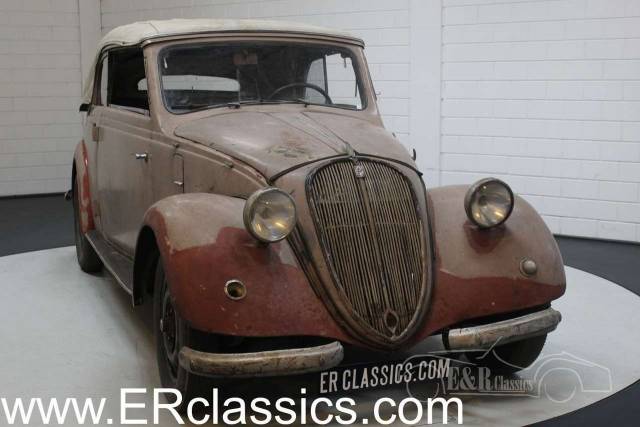
1938 | NSU-Fiat 1500 Gläser
Fiat 1500 Gläser Cabriolet 1938

Create search alert
Let yourself be notified as soon as a listing is published that matches your search filters.
Create listing
Do you have a NSU-Fiat 1500 that you want to sell? Then create a listing now.
Create listingNSU-Fiat 1500 Classic Cars: Prices & Market Values
History of the NSU-Fiat 1500
The NSU-Fiat 1500 is the result of a fruitful collaboration between Germany's NSU and Italy's Fiat. Built under licence, the NSU-Fiat models brought together the technical expertise and innovative spirit of two important European automotive players. In the 1930s and 1940s, German manufacturer NSU assembled Fiat designs, adapting them to the specific demands and driving conditions of the German market. The 1500 series was renowned for offering a high level of quality and reliability that stood apart from many contemporaries. Participation in this unique chapter of car history means owning a vehicle shaped by cross-border cooperation and the industrial climate of pre- and post-war Europe.
Model History
The NSU-Fiat 1500 traces its roots directly to Fiat's Italian 1500, a mid-sized family saloon that became popular for its advanced technical features. In Germany, the NSU-Fiat 1500 was offered as a local adaptation, with some modifications for domestic regulations and audience preferences. Its production in Germany ensured access to local aftersales networks and adaptation to local driving conditions. The model eventually gave way to later NSU and Fiat models as the partnership dissolved and the automotive landscape evolved in the 1950s.
Highlights of the NSU-Fiat 1500
A bespoke combination of German and Italian engineering, the NSU-Fiat 1500 distinguished itself with its independent front suspension, robust chassis, and comfortable ride. The model's engineering made it stand out among other mid-size cars of the era. Noteworthy are the streamlined body design and the fact that this single manufacturer code represents 100% of both the NSU-Fiat listings and viewing demand on our platform, underlining its exceptional rarity and focus of interest. Its limited supply and demand share show that the 1500 is a true piece of historical significance with a very narrowly focused collector audience.
Technical Data
Special Editions and Collectible Models
Throughout its manufacturing run, variations existed primarily in body styles and minor trim modifications specific to the German market. However, there are no documented factory special editions, making well-preserved original cars or rare body variants (e.g. cabriolets or commercial versions) especially sought after among connoisseurs.
Weak Spots and Common Issues
Owning an NSU-Fiat 1500 today means facing the typical challenges of vehicles assembled in pre- and post-war Europe: corrosion in the body structure, especially at sills and wheel arches, as well as wear in the suspension and brake components due to age. Spare parts can be difficult to source, and mechanical components, shared with Italian Fiat 1500s, may still require adaptation or reconditioning.
Engine and Performance, Transmission and Handling
The NSU-Fiat 1500 delivered dependable performance for its class. Its four-cylinder engine produced enough power for comfortable cruising and city driving, paired with a manual transmission that allowed drivers to appreciate the car’s lively yet durable drivetrain. The independent front suspension and robust chassis provided notable stability and relative comfort, making the 1500 a pleasant car to drive by contemporary standards. Common variations included standard four-door saloons and rarer convertible versions, both powered by the rugged 1.5-litre engine and characterised by their practical mechanics and long-distance comfort.
Interior, Comfort, Exterior and Design
The NSU-Fiat 1500 featured classical lines, often with streamlined fender and grille designs borrowed from its Italian parent. Inside, the focus was on simplicity, practicality, and durability, with robust switchgear and straightforward instrumentation. Optional factory and dealer accessories could include additional chrome trim, period radio equipment, and bespoke paintwork. Rare two-tone paint schemes, special upholstery options, and regionally specific trim variations occasionally surfaced, providing a touch of individuality. Cabriolet versions were valued for their open-air experience and elegant proportions.
Other Noteworthy Facts
The NSU-Fiat 1500 embodies a chapter of collaboration between two carmaking nations during a time of significant social and technological development in Europe. Surviving examples capture not only a mechanical story but a cultural one, reflecting cross-border industrial partnerships before, during and after WWII.
Summary
Combining the mechanical virtues of early Fiat engineering with German production values, the NSU-Fiat 1500 is an artifact of innovation and adaptation in the pre- and post-war European car industry. Its limited numbers, distinctive character, and cultural significance make it a compelling subject for dedicated collectors and enthusiasts with a sense for automotive history.