Nash P1 classic cars for sale
The Nash P1 stands as an early example of American automotive engineering from a manufacturer renowned for its innovative approach in the pre-war era. Despite limited surviving sources and few examples on the market, the P1 captures attention for its distinct design and characteristic Nash build quality.
Suchergebnisse
Zur Zeit sind keine passenden Inserate zu Ihrer Suche veröffentlicht.
Create search alert
Let yourself be notified as soon as a listing is published that matches your search filters.
Nash P1 listing references from Classic Trader
Below you will find listings related to your search that are no longer available on Classic Trader. Use this information to gain insight into availability, value trends, and current pricing for a "Nash P1" to make a more informed purchasing decision.
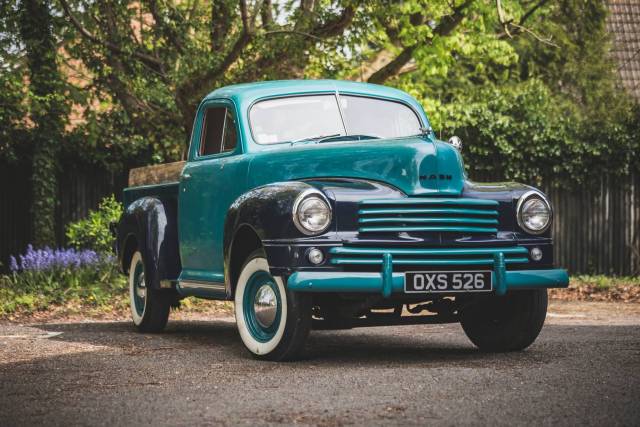
1946 | Nash P1
One-Off Prototype - Restored - Quite Amazing
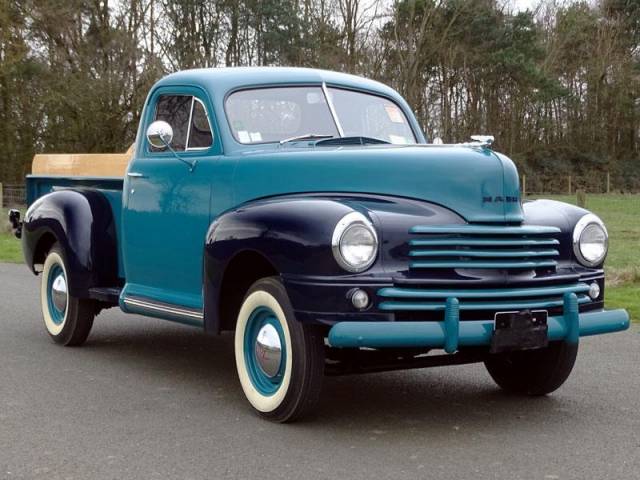
1946 | Nash P1
1946 Nash P1 Pickup Prototype
Create search alert
Let yourself be notified as soon as a listing is published that matches your search filters.
Nash P1 Classic Cars: Prices & Market Values
History of the Nash P1
Launched during the late 1920s, the Nash P1 represented Nash Motors’ drive to offer robust and reliable vehicles for the middle class. Nash, founded in 1916 by Charles W. Nash, quickly developed a reputation for inventiveness, introducing features uncommon for the time, such as advanced suspension setups and enclosed bodywork. The P1’s production era coincided with an important transition in American motoring, as the industry moved towards more comfortable, better-equipped vehicles. Combining efficiency with understated style, Nash targeted drivers aiming for dependable transportation during a period of massive economic and technological changes.
Model History: Nash P1
Within the Nash hierarchy, the P1 sloted in as a mid-range offering during its time, following predecessor Nash models that focused on practical sedans and coupes. The P1 paved the way for subsequent Nash series, contributing design and mechanical solutions that would be refined and expanded in later models. Nash’s naming conventions reflected continuous incremental improvement, and while the P1 did not see a direct, singular successor, its engineering lineage continued in Nash’s 1930s and 1940s models which adopted more streamlined bodies and richer equipment.
Highlights of the Nash P1
The Nash P1’s strengths lay in its robust chassis, smooth ride for its era, and the manufacturer's focus on in-house engineered components rather than relying solely on bought-in parts, which was a Nash hallmark. The car integrated several technical advances of its time, including all-steel bodywork and an attention to passenger comfort generally above its direct competitors. In the current market, Nash P1s are rarely listed for sale and comprise a negligible percentage of classic car offerings under the Nash badge, making them a distinctive find for marque enthusiasts.
Technical Data
Special Editions and Collectible Models
There is no recorded evidence of factory-issued special editions for the Nash P1. Any unique examples would likely be due to owner modifications or rare dealer-applied accessories rather than official limited series from Nash.
Weak Spots and Common Issues
No specific information about recurring issues or known weak spots for the Nash P1 could be found in current references. Given the era of manufacture, potential buyers should closely inspect for chassis corrosion, fatigue in mechanical components, and the overall condition of the drivetrain, as sourcing original or reproduction parts can be challenging. Assessment of electrics and upholstery, typically susceptible to wear in vehicles of this age, is recommended.
Engine and Performance, Transmission and Handling
The Nash P1's engine was typical of late-1920s American cars: an inline-six that prioritised smooth operation and reasonable power output for daily driving scenarios of its time. The manual gearbox was robust but requires careful adjustment and period-correct operation technique. On the road, early Nash vehicles are known for relatively refined ride quality, a result of considered suspension tuning and body integrity. Braking relied on mechanical drum systems, demanding regular maintenance to perform safely by modern standards. Most surviving Nash P1s were factory sedans or coupés, reflecting the pre-war American market’s preference for closed-bodied comfort. Highlighting their utility, these models balanced ride comfort with robust construction - features still appreciated by today’s enthusiasts.
Interior, Comfort, Exterior, and Design
Design-wise, the Nash P1 followed the brand’s philosophy of understated elegance. The exterior typically featured rounded fenders, a prominent upright grille, and spacious closed bodies. Interiors were characterized by durable cloth upholstery, simple instrumentation, and a focus on passenger space. Factory options in the late 1920s included two-tone paint, mohair seats, and detailed dash trim, but luxury was measured by robustness rather than ornamentation. Accessories such as rear-mounted spare wheels or period-specific lighting accessories would have been available at additional cost.
Other relevant features
While few Nash P1s include factory-fitted luxury features by today’s standards, customization was possible through dealer networks, including luggage racks, running board covers, and additional interior lighting. The scope for personalization and repair reflects the period's approach to motoring, with robust simple mechanics easily serviced by knowledgeable owners or specialist workshops.
Summary
The Nash P1 embodies a formative stage in Nash Motors’ history, reflecting advancements in comfort, engineering, and reliability from a pivotal era in American automotive development. While rare on today’s market, its solid construction and period features offer an authentic 1920s motoring experience for committed enthusiasts able to appreciate the historical context and maintenance requirements.