- Car
- Nash (1 offer)
Buy Nash Classics
Nash built some of America’s most distinctive classics, from wind-cheated Airflytes to the rare Nash-Healey and the Longbridge-built Metropolitan. For UK buyers, the brand offers real transatlantic charm, strong club support and an appealing mix of style, rarity and usable engineering.
Search results
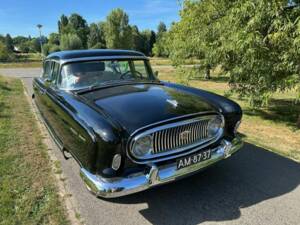
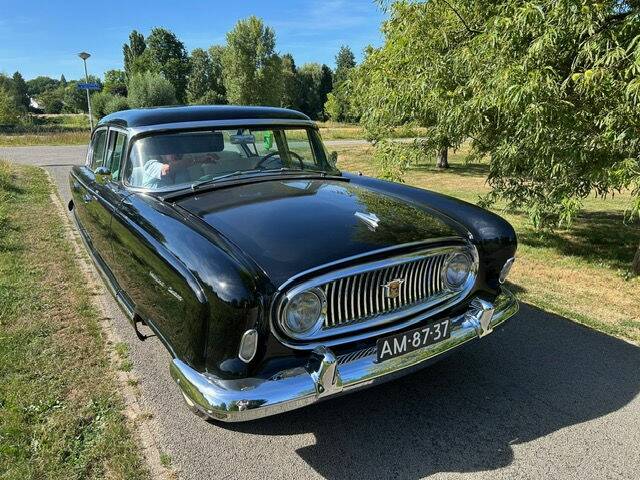
1955 | Nash Ambassador 8
Nash Ambassador V8 | Route 66 Auctions - For sale by auction. Estimate 10800 EUR

Nash listing references from Classic Trader
Below you will find listings related to your search that are no longer available on Classic Trader. Use this information to gain insight into availability, value trends, and current pricing for a "Nash" to make a more informed purchasing decision.
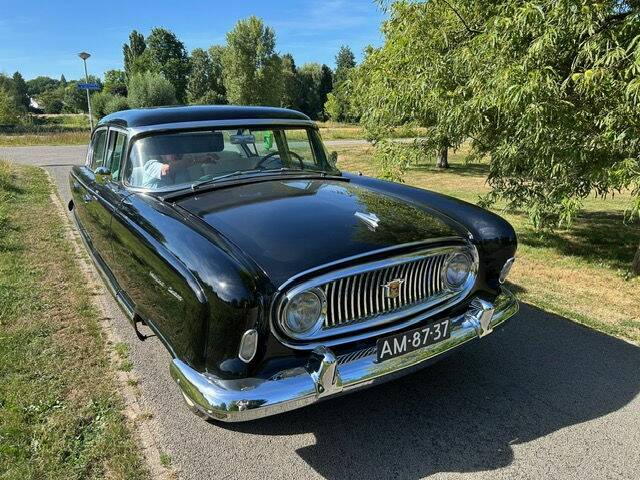
1955 | Nash Ambassador 8
Nash Ambassador V8 | Route 66 Auctions - For sale by auction. Estimate 15600 EUR
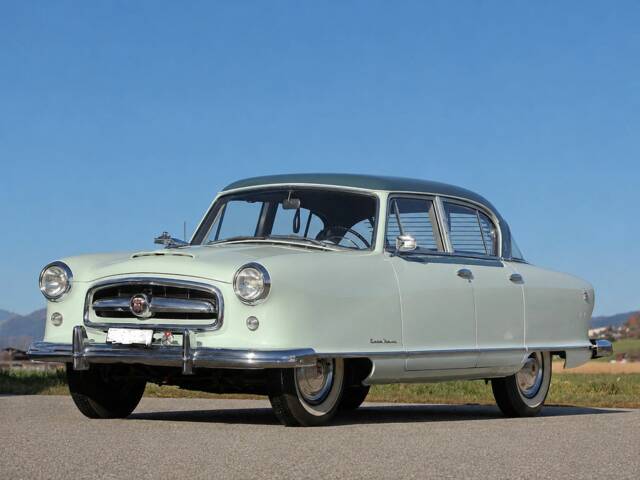
1954 | Nash Rambler
Nash Custom Rambler | 1954 | Route 66 Auctions - For sale by auction. Estimate 11400 EUR
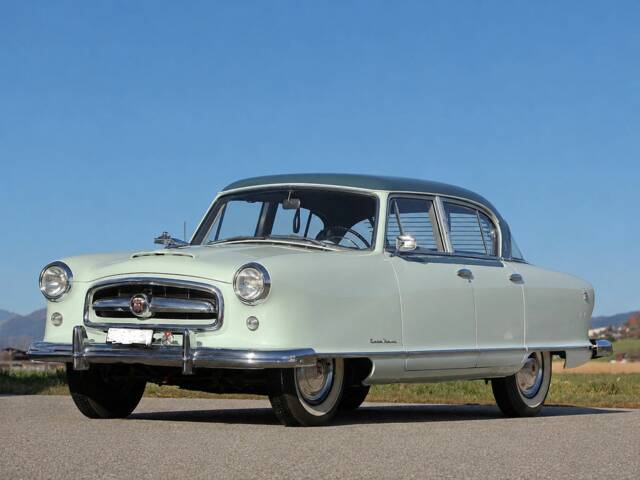
1954 | Nash Rambler Cross Country
Nash Custom Rambler | 1954 | Route 66 Auctions - For sale by auction. Estimate 13500 EUR
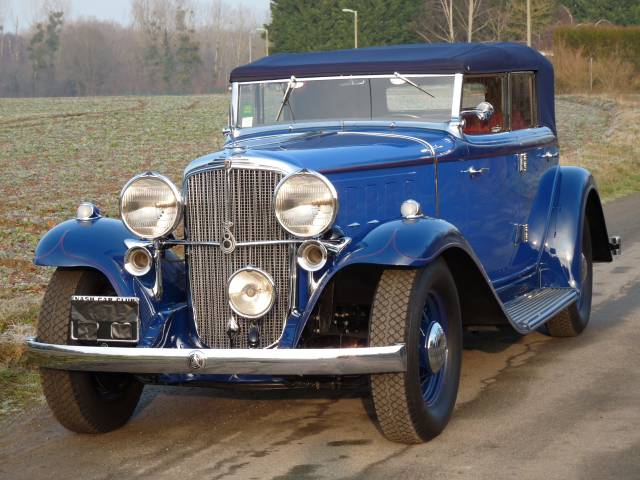
1932 | Nash Ambassador 8
1093 four doors convertible Sedan

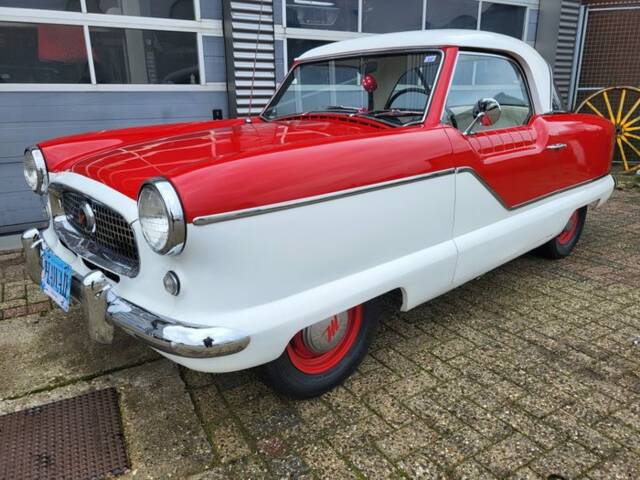
1957 | Nash Metropolitan
Nash - Metropolitan - 1957
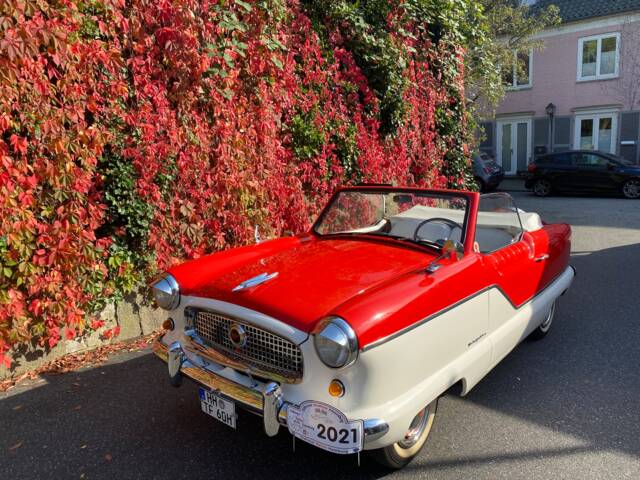
1960 | Nash Metropolitan
Roadster

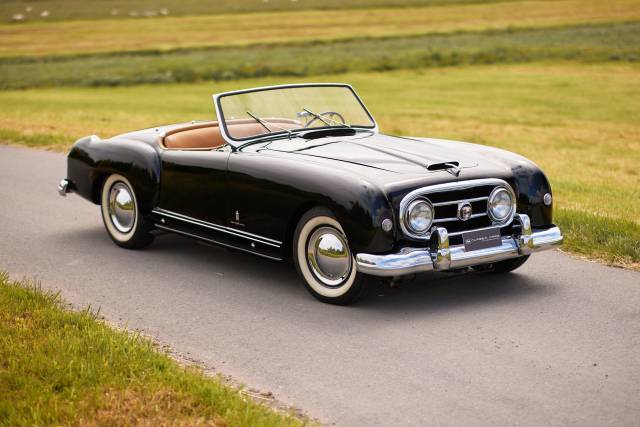
1953 | Nash Nash-Healey
Roadster
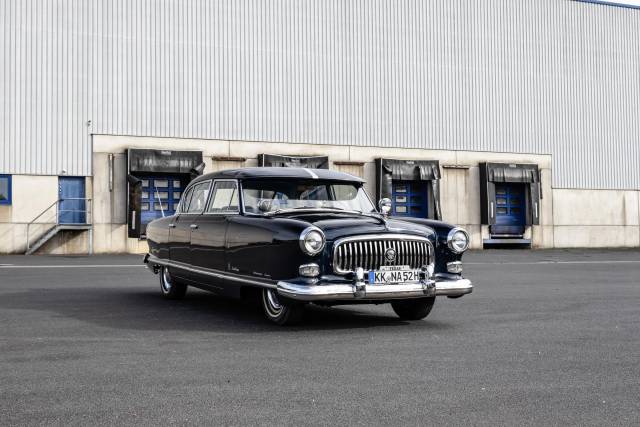
1952 | Nash Airflyte Ambassador
Nash Ambassador Airflyte Super (Golden Anniversary) Designed By Pininfarina
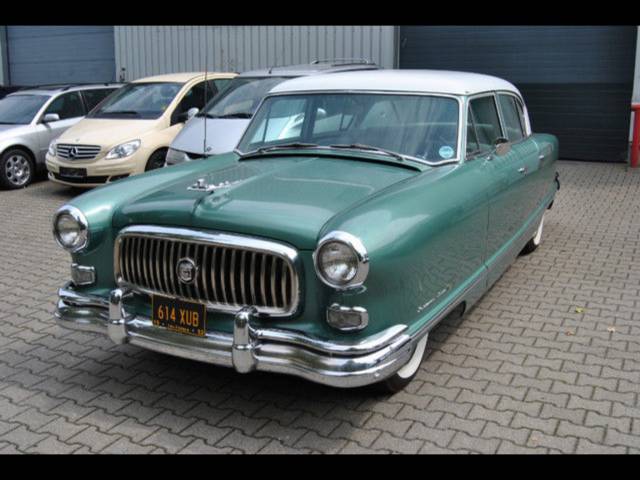
1952 | Nash Airflyte Ambassador
Nash Ambassasor Super Airfliyte zugelassen mit H Kennzeichen Tausch möglich
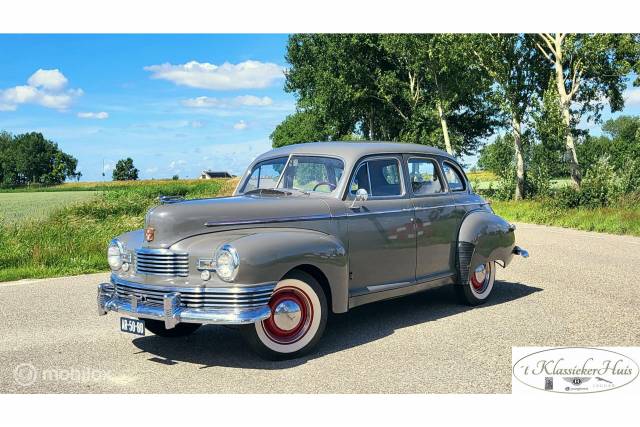
1947 | Nash 600 Trunk Sedan
Nash 600 super
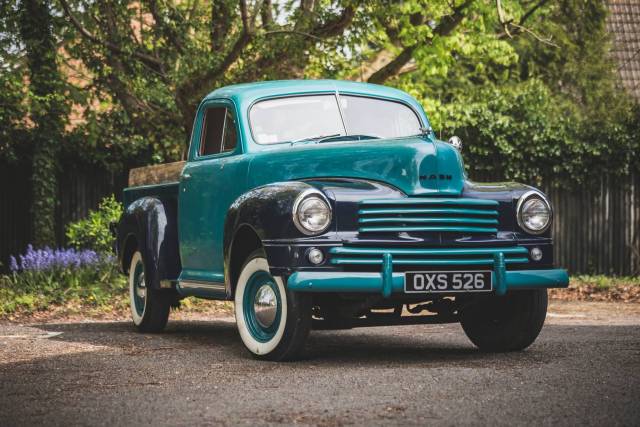
1946 | Nash P1
One-Off Prototype - Restored - Quite Amazing

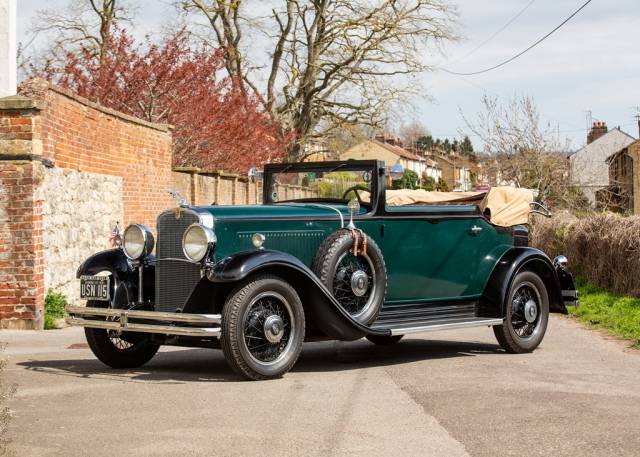
1931 | Nash 881 Convertible
Nash 881 Convertible
History
Nash is one of those classic-car names that rewards a closer look. Founded in Kenosha, Wisconsin, in 1916 after Charles W. Nash took control of the Thomas B. Jeffery Company, the marque quickly built a reputation for thoughtful engineering, careful packaging and a willingness to do things differently. While better-known rivals chased size and chrome, Nash often chased cleverness: better aerodynamics, lighter construction, more usable interiors and, in later years, a surprising openness to international cooperation.
That makes the brand especially interesting for British enthusiasts. Nash was never a mass-market name in the UK, but it found a place through specialist importers, club culture and the enduring appeal of unusual American cars on British roads. Nash Concessionaires in London helped feed the post-war appetite for transatlantic machinery, while the marque’s best-known sporting model was born from a meeting between American ambition and British expertise.
The story of the Nash-Healey is the obvious headline. George W. Mason and Donald Healey struck up the idea of collaboration on board the Queen Elizabeth, and the result was built around a Nash six-cylinder engine, Healey chassis engineering and, later, Pinin Farina bodywork from Italy. That mixture of US power, English road sense and continental elegance gives the car a uniquely British resonance. It was assembled in Warwickshire, and it remains one of the most compelling Anglo-American classics ever sold.
Nash’s wider post-war range took a very different direction. The Airflyte range, introduced for 1949, became famous for its “bathtub” shape, skirted wheels and wind-cheated profile. The Ambassador sat at the top of the line as the luxury choice, while the Rambler became a compact pioneer and a template for the kind of well-equipped small car that later became normal. Finally, the Metropolitan arrived as a city car for the American market, but it has a special British story too: it was assembled at Austin’s Longbridge plant and used British mechanical components.
Today, Nash matters because each of these cars offers something different. The sports-car buyer can chase Nash-Healey rarity; the full-size buyer gets an Airflyte or Ambassador with proper 1950s presence; the practical classic fan gets a Rambler; and the Metropolitan delivers charm, ease of ownership and a very relevant UK link. In the British classic scene, that range is part of the appeal.
Highlights
What makes Nash worth buying now is not just rarity, but identity. The cars have an unmistakable personality and a clear engineering story behind the styling.
- Nash-Healey: the most desirable Nash for many collectors, and the one with the strongest UK connection. Built from an American engine, British chassis thinking and, on later cars, Italian coachwork, it has genuine competition pedigree and real elegance.
- Airflyte: the post-war Nash that defined the brand visually. Its aerodynamic body, integrated front wings and broad cabin make it one of the most recognisable American classics of the era.
- Ambassador: the senior Nash. Big, comfortable and richly trimmed, it is the car for buyers who want early-1950s American luxury with a distinctly Nash flavour.
- Rambler: the compact original. It is not the most glamorous Nash, but it is historically important, usable and often the smartest entry point.
- Metropolitan: the cheeky small car with a British heart. Austin-built, easy to place on UK roads and full of club support, it is perhaps the most accessible Nash to live with.
Another reason the marque stands out is how varied the driving experience is across the range. A Nash-Healey feels like a proper sports car. An Airflyte is all about glide and novelty. A Rambler feels compact but honest, and the Metropolitan is pure charm. That breadth is useful for buyers who are deciding whether they want a concours piece, a Sunday cruiser or a car they can actually take to the pub, the club meet or the seaside.
For British buyers, Nash also offers a welcome practical bonus: the club world is active. The UK classic scene tends to reward unusual cars, and Nash fits neatly into that culture. At shows, on rally routes and in mixed-marque gatherings, these cars draw interest without being impossible to maintain. That balance is rare.
Technical Data
These figures matter because Nash buyers are often choosing between very different personalities. The Nash-Healey is a rare halo car and should be judged as such. The Airflyte and Ambassador are about condition, originality and usability. The Rambler and Metropolitan reward good restoration quality, solid paperwork and sensible mechanical upkeep more than absolute mileage.
Market Overview & Buying Tips
The Nash market in the UK is small, but that can work in the buyer’s favour. There is less price hype than with more obvious US classics, and values still reflect the niche nature of the brand. That said, the best cars have become more visible in recent auction results, and the strongest examples are now properly recognised.
Nash-Healey sits at the top. Recent auction results show that good cars can comfortably trade in the £55,000–£85,000 range, with exceptional examples going higher. A 1954 Le Mans Coupe sold on Bring a Trailer for $72,800 in January 2025, while RM Sotheby’s sold a 1953 roadster by Pinin Farina for $52,250 in 2024 and a 1954 Le Mans Coupe for $44,000 the same year. Bonhams recorded $82,880 for a 1953 Le Mans Coupe in Scottsdale, and valuation data places the model in a range that makes it clear this is no longer a cheap curiosity. For UK buyers, the key question is not just price but completeness: original engine, correct coachwork, matching numbers where applicable and strong history.
Airflyte cars are usually the value play for buyers who want Nash style without Nash-Healey money. In the UK, a solid, usable car can sit around £15,000–£35,000, with better restored examples above that. The market tends to reward structural integrity and correct trim. Because the body design is unusual and repair-intensive, a cheap car with hidden rust can quickly become expensive. Buy the best shell you can find. A sorted Airflyte has enormous road presence and a real club-event novelty factor.
Ambassador prices vary sharply depending on whether you are looking at an early straight-six or a later V8 car. Good cars often fall into the £18,000–£40,000 bracket in the UK market, though very fine examples can exceed that. The senior Nash gives you more luxury and road authority than the Rambler, but buyers need to be honest about size, weight and parts sourcing. A big American saloon can be glorious on a long run, yet less fun if it spends half its life in a narrow garage.
Rambler is often the most underrated buy. Recent auction evidence includes a 1953 Custom Convertible sold for $21,280 in 2024, while UK and European results show that decent cars are still accessible. Expect roughly £8,000–£20,000 for most cars, more for convertibles and very well presented examples. The Rambler matters because it is historically important and mechanically straightforward. It also suits the British classic-road environment well: easy to park, easy to explain, and different enough to stand out at any club meet.
Metropolitan remains the entry point for many Nash fans. It is the car most likely to be found in UK ownership, partly because of its Longbridge connection and partly because the size suits British roads. Recent UK auction results include a Bonhams Metropolitan coupé sold for £8,280, while broader market data suggests average values around £11,000 with strong cars beyond that. In practical terms, expect £7,000–£18,000 for most good cars, with exceptional restorations or rare variants higher. The Metropolitan is also where originality and rust repair matter most; tidy chrome and fresh paint are not enough if the floors, sills and structural areas are weak.
For UK buyers, three points deserve special attention:
- MOT and road use: many older classics can be MOT-exempt, but that does not mean they should be bought without proper inspection. A recently MOT’d car can still hide issues. Look for documented maintenance, not just a fresh ticket.
- RHD considerations: most Nash cars are left-hand drive. That is normal for US imports, but it affects overtaking, town driving and perceived value. Some buyers in the UK prefer originality; others will pay for a sympathetic conversion if it is well executed. Bad conversions hurt value.
- Club support and parts: the British classic scene is helpful here. The Nash Owners Club and wider AMC community can point you towards parts, trim details and correct specification. Mechanical parts are often easier than body and trim items.
If you are buying for use, not just collection, the Metropolitan and Rambler are the cleverest choices. If you want a statement car with a strong story, the Nash-Healey is the one. If you want size, comfort and a proper American feel, the Airflyte and Ambassador deliver the full experience.
Driving Feel
A Nash does not drive like a single type of car. That is part of the fun. The range stretches from elegant sports car to compact city runabout, and each one has a different rhythm.
The Nash-Healey feels the most naturally at home on a British B-road. That is no coincidence. Its roots are partly British, and the car has real steering intent rather than the lazy feel often associated with larger American classics. The engine delivers a strong, flexible pull, and the overdrive makes longer runs surprisingly relaxed. On flowing roads, the car has the right balance of presence and agility. It is not a modern lightweight sports car, but it has enough delicacy to make every journey feel deliberate.
The Airflyte is the opposite in temperament. It is about glide, not attack. On a smooth road it wafts along with a sense of quiet theatre, helped by the body shape and the long, relaxed chassis tuning. You feel the weight, but you also feel the engineering intent. It is the sort of car that transforms a simple drive into an occasion, especially on sunny days through the countryside or along the coast.
The Ambassador feels like the proper senior Nash. It is heavier, quieter and more formal. The steering is less about precision and more about ease, and the car rewards gentle inputs. On a motorway it makes more sense than in tight urban traffic. For UK touring, it is ideal if you enjoy long-distance cruising and do not mind accommodating the car’s dimensions.
The Rambler has a nice balance of compactness and American character. It is less dramatic than the bigger cars, but that can be an advantage. It is easy to place on the road, and its modest performance suits relaxed ownership. As a weekend car, it has a likeable honesty that many more flamboyant classics lack.
The Metropolitan is the most immediately charming. On British roads, it feels almost tailor-made for the job. It is narrow, friendly and full of visibility, which makes town driving and short touring simple. The engine is not powerful, but the car does not pretend otherwise. You buy a Metropolitan for character, not speed, and on that basis it delivers every time.
Design
Nash design is best understood as a story of experimentation. The marque was willing to break the visual habits of its time, and that is why the cars still stand out now.
The Airflyte is the clearest expression of that approach. Its skirted wheels, broad body sides and integrated front-end design made it look futuristic in the late 1940s and still give it a strangely modern profile today. It is one of those cars that can look both American and almost European, depending on the angle. The cabin packaging was equally thoughtful, with Nash’s famous focus on spacious interiors and practical seating layouts.
The Ambassador developed the same ideas in a more formal direction. Bigger, richer and more chrome-laden, it reflects the early-1950s shift towards luxury and visual presence. Yet it still has Nash’s underlying sense of rationality, which is why these cars often feel more coherent than some of their contemporaries.
The Rambler took the Airflyte language and compressed it into a smaller, cleverer package. It looks compact but not cheap, and that was the point. Nash understood that an entry-level car should still feel well made and stylish. That is one reason the Rambler became historically important: it showed that compact did not have to mean basic.
The Metropolitan is perhaps the most charming design of all. Its scale, two-tone paint schemes and toy-like proportions make it instantly memorable, but it is not just a gimmick. Because it was built in Longbridge, it also has a subtle British connection that feels very relevant to UK buyers. The use of Austin mechanicals under the body helps explain why so many survivors are still straightforward to live with.
Then there is the Nash-Healey, which sits in a class of its own. The British link to Donald Healey and Warwickshire is more than a footnote; it is central to the car’s appeal. Early cars had a more functional roadster look, while later Pinin Farina-bodied versions added real elegance. That coachwork gives the Nash-Healey a grand touring sophistication that makes it welcome at both American and European events.
Taken together, the range shows a brand that never stood still. Nash was willing to be weird, practical, sporty and luxurious all at once. That is a strong selling point now, because collector tastes increasingly reward individuality.
Other
Nash’s broader appeal in the UK is tied to how it fits into the classic-car ecosystem.
Club culture matters. British owners often rely on marque clubs for registration advice, parts sourcing and authenticity checks. That support is especially helpful with Nash because the cars are uncommon enough that correct trim, badges, badging positions and interior details can matter a lot to value. A knowledgeable club contact can save a buyer from an expensive mistake.
RHD reality also matters. A genuine right-hand-drive Nash is unusual, and most UK cars are imported left-hand drive. For some buyers that is part of the classic-car experience; for others it is a practical barrier. On narrow roads, a good LHD car is still perfectly usable, but the buyer should know exactly what they are getting. If a car has been converted, the quality of the work must be excellent and documented.
MOT and registration are worth thinking through before purchase. Many older Nash models can fall into the exempt category, but UK registration paperwork, dating evidence and import documentation still need to be correct. The Metropolitan is the easiest in this respect because of its UK assembly link and strong parts commonality. The Nash-Healey can require more care because it combines US, UK and sometimes Italian-origin elements.
Parts availability varies by model. The Metropolitan is best served because of Austin mechanical cross-compatibility. The Rambler and Airflyte have decent mechanical support through specialist suppliers, but trim and body panels can be harder. The Nash-Healey is the most specialised, so buyers should value provenance, completeness and the quality of any restoration work highly.
UK classic-car use also suits Nash more than people may expect. These are not anonymous cars. At a local show, the odd shape of an Airflyte, the neat proportions of a Metropolitan or the glamour of a Nash-Healey opens conversations immediately. That can be a big part of the ownership pleasure.
Finally, there is the British roadster connection. It is hard to overstate how much the Healey link improves the Nash story for UK buyers. The Nash-Healey is not merely a foreign classic imported into Britain; it is a car that sits within British motor history. That distinction matters when you are choosing a collectible car with long-term emotional appeal.
Summary
Nash is a make for buyers who value engineering originality, unusual styling and real historical links to Britain. It is not the biggest classic-car market, but it is one of the more rewarding ones because the cars each offer something distinct.
If you want the most special Nash, look at the Nash-Healey. If you want the strongest value and the easiest UK ownership experience, the Metropolitan and Rambler make a lot of sense. If you want presence, the Airflyte and Ambassador deliver classic American theatre in full.
In the UK market, the smartest buys are usually the most complete cars with the best paperwork. Rust, poor repairs and missing trim can quickly outweigh a tempting asking price. A well-sorted Nash, by contrast, gives you something rare: a classic that feels genuinely different, with enough club support and parts knowledge to be enjoyed properly.
For enthusiasts browsing Classic Trader, Nash is a marque worth taking seriously. It may not be the obvious choice, but that is precisely why it works.