- Car
- Mosler (0 offers)
Buy Mosler Classic Cars
Mosler is the kind of name that makes collectors look twice: a tiny Florida marque with huge ambition, built around light weight, race-bred engineering and very few compromises. In Britain, its story is inseparable from Rollcentre Racing, British GT glory and a loyal specialist scene that keeps the cars alive today.
Search results
Currently, there are no matching listings for your search.
Create search alert
Let yourself be notified as soon as a listing is published that matches your search filters.
Mosler listing references from Classic Trader
Below you will find listings related to your search that are no longer available on Classic Trader. Use this information to gain insight into availability, value trends, and current pricing for a "Mosler" to make a more informed purchasing decision.
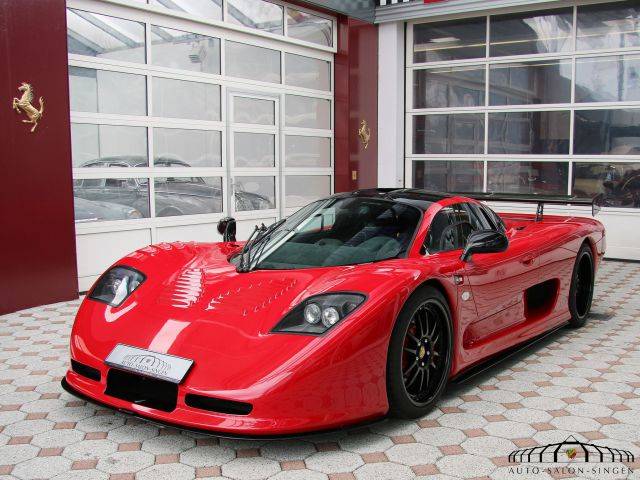
2006 | Mosler MT 900 GTR

Create search alert
Let yourself be notified as soon as a listing is published that matches your search filters.
History
Mosler Automotive began with an unlikely founder and an unusually clear idea. Warren Mosler, a Florida-based entrepreneur, financier and economist, launched Consulier Industries in 1985 with the aim of building a sports car that could out-think, rather than out-muscle, the established names. The result was not a mainstream American coupe, but a machine shaped by weight obsession, aerodynamic efficiency and the belief that engineering discipline could deliver speed more effectively than excess displacement.
The first chapter was the Consulier GTP, introduced in 1988. It looked unlike anything else on the road: low, angular and unapologetically functional. Beneath the body sat a carbon/Kevlar monocoque, a structure far ahead of its time for a small-volume road car, paired with a 2.2-litre turbocharged four-cylinder engine producing around 175 bhp in early form and up to 190 bhp in later Turbo III specification. At roughly 1,000 kg, the GTP was startlingly light for the era. Production was tiny, with only around 60 to 100 cars built between 1988 and 1993, and that scarcity is now a major part of its appeal.
Motorsport quickly shaped the brand’s identity. The Consulier GTP was developed and campaigned with racing in mind, and its ability to embarrass better-funded opponents created both attention and controversy. That pattern would continue throughout Mosler’s life: every time the car proved too effective, the rulebook, the competitors or the market seemed to push back.
In 1993, the road-car operation became Mosler Automotive, and the naming change was matched by a technical shift. The Mosler Intruder arrived with a Corvette-based LT1 V8 making about 300 bhp, followed by the Mosler Raptor from 1996 to 2000, which explored the same lightweight, mid-engined formula with even more power potential. These cars were still extremely rare, but they moved the company from curious outsider to serious niche performance builder.
The true landmark was the MT900, launched in 2001. Designed by Rod Trenne—also known for the Chevrolet Corvette C5—the MT900 was a clean-sheet supercar that gave Mosler a more mature, more coherent identity. It paired a carbon-honeycomb aluminium monocoque with a mid-mounted GM LS1 V8, a Porsche-derived transaxle and a kerb weight that remained roughly around 1,050 kg despite the car’s performance ambitions. The later MT900S distilled the concept even further. Using the LS6 V8 from the Corvette Z06, it produced 435 bhp and could weigh as little as 998 kg, or about 900 kg in Photon specification.
Mosler’s total production remained minuscule: around 35 road cars and roughly 50 race cars across the whole marque. That tiny output is exactly why the name has become so collectible. In 2013 the company’s assets were sold to Rossion Automotive, closing the original Mosler chapter, but the cars themselves were already entrenched in enthusiast memory. For British buyers, that history is especially relevant because Mosler’s strongest racing legacy was built in the UK, not in Florida.
Highlights
Mosler’s defining trait is simple to state and hard to copy: it treated mass as the enemy. Where many performance cars rely on a long list of tricks to compensate for weight, Mosler tried to remove the problem at source. That approach made every model distinctive, and it gives collectors a very clear reason to buy.
The Consulier GTP was remarkable because it arrived before the wider supercar world had fully accepted composite construction in low-volume road use. Its carbon/Kevlar body shell and low weight made it feel more like a prototype than a conventional road car. For collectors today, that makes it historically important as well as rare.
The Intruder and Raptor are important because they show Mosler moving from experiment to development. By adopting Corvette V8 power, the company gained the kind of torque and sound that American performance buyers expected, while still keeping the brand’s obsession with low weight and simple, effective engineering. These are the cars that began to align Mosler with the broader American supercar conversation.
The MT900 and MT900S are the cars most serious collectors look for. They combine the best of Mosler’s thinking: a rigid composite structure, mid-engined balance, strong GM small-block reliability and a chassis that prioritised feedback over luxury. The MT900S in particular earned a reputation for extreme performance with road-car usability. It was quick, light and brutally focused, but it still had the sort of parts support and engine logic that made ownership more realistic than many exotic alternatives.
There are also some telling details that buyers appreciate. The modular body and subframe architecture on the MT900 platform can make repairs more manageable than on many ultra-rare supercars. The LS-family engine means consumables and mechanical expertise are easier to source than the badge might suggest. And in the UK, the Mosler story is strengthened by a genuine motorsport and ownership ecosystem rather than a purely imported cult following.
For many enthusiasts, that UK connection is what lifts Mosler from obscure to compelling. British GT history, club-level awareness, specialist support and the fact that some cars are already registered and used on UK roads all make the marque feel less like an American curiosity and more like a genuine part of British enthusiast culture.
Technical Data
The numbers tell the Mosler story plainly. Every step in the marque’s development favoured less weight, more response and more direct connection. Even when power rose, the cars never became bloated. The MT900S Photon is the clearest expression of that idea: a road-race machine that, in the right specification, slips below the 900 kg mark while still offering serious V8 performance.
For British buyers, the technical picture should be read alongside registration and usability. Some Moslers in the UK carry V5C registration, and the MT900S is known to be SVA compliant for road use. That matters because imported niche cars can otherwise become paperwork projects. A properly documented car with the right approval trail is worth considerably more than an attractive but awkward example.
Market Overview
Mosler remains a tiny market, which means supply is always the first issue and price is often determined by provenance, specification and road legality as much as by mileage. For a buyer in Great Britain, that can be a blessing: rarity helps values, but the British scene also means there is real local knowledge, practical servicing support and a stronger understanding of the cars than you might expect for such an uncommon marque.
At the entry point, the Consulier GTP is the most accessible way into Mosler ownership. Recent auction results have placed good cars in the region of $28,000 to $55,000, depending on condition and originality. That makes it the collector’s choice for those who want the origin story: early composite technology, huge character and a direct line to Mosler’s later motorsport ambition. The challenge is not just purchase price, but finding a correct, well-preserved example with sensible documentation.
The most desirable road car is usually the MT900S. Recent market evidence shows just how variable prices can be. A Bonhams Goodwood sale in April 2023 achieved £166,750 for a 2010 MT900S coupé. A Bring a Trailer result in November 2022 reached $294,000 for a twin-turbo example, while a later BaT listing in January 2026 drew a top bid of $256,500 but did not meet reserve. A current Classic Valuer median around £215,180 underlines how strong the upper-middle market has become for well-kept, road-usable cars.
For the MT900R and other race cars, values are more volatile. They can be surprisingly affordable relative to road cars if they are tired, heavily used or difficult to register, but a properly documented competition car with a famous history can still attract strong money. Here, the British GT link matters a great deal. A Mosler with Rollcentre Racing history, UK competition records or notable period success is much more appealing to a serious enthusiast than a bare chassis with uncertain background.
Buyers in the UK should focus on three broad groups. First, the historian who wants a Consulier GTP or early Mosler as a milestone car. Second, the collector who wants the best road-going MT900S possible, ideally with traceable ownership and UK usability. Third, the motorsport buyer looking for a race car that has genuine competition heritage and support from known specialists.
The most important local names are Rollcentre Racing, once the main European Mosler operation under Martin Short, and Kendall Developments, now the key UK specialist associated with former Rollcentre expertise. That support network matters because these are not cars to buy casually. A Mosler with the right paper trail, road registration and service history is a very different proposition from a grey-import car with unclear modifications.
For British buyers, import and registration context also counts. Most of the surviving cars were built in tiny numbers in the US and then brought into Europe individually. That means checking compliance, IVA/SVA history, tax status and any evidence of proper UK registration is essential. A car already on a V5C will usually be easier to enjoy and insure than one still sitting in a customs or approval limbo.
Driving Feel
Driving a Mosler is less about luxury and more about intensity. Even the more civilised MT900 variants feel stripped back by modern standards. You sit low, visibility is shaped by a race-car mindset and the cabin tells you immediately that this was not designed to be a grand tourer. The whole experience is purposeful: close the door, settle into the seat and the car seems to say that comfort is optional, precision is not.
The LS-powered MT900S is the most polished expression of the breed. It starts with the familiar thrum of a GM V8, but the car’s light mass turns every input into an event. The throttle response is immediate, the steering is direct and the chassis reacts without the layered, filtered feel common in newer exotics. On a fast B-road or a clear circuit, that makes the Mosler feel alive in a way that many much more expensive cars struggle to match.
What stands out most is the sense of effortlessness. Because the car is so light, it does not need huge speeds to feel dramatic. Acceleration is strong, but the bigger sensation is the way it changes direction and the way braking compresses the whole experience into a tighter, more focused rhythm. It feels engineered around the driver rather than around image.
The MT900R pushes that feeling into motorsport territory. In the right setup it is noisy, uncompromising and extremely serious, yet still based on an underlying platform that many British race teams found effective and adaptable. That helped create Mosler’s unusual reputation: not merely a road car with a racing look, but a race car that could genuinely work in competition and then inspire road variants with real credibility.
For a British enthusiast, that matters. Mosler fits the same culture that values Lotus, TVR and the sharper end of track-day specials: lightness, feedback, mechanical honesty and the ability to reward a confident driver. It is not a car for showing off at low speed. It is a car for finding empty roads, good tyres and a clear understanding of what the machine is built to do.
Design
Mosler design changed significantly over time, but the core philosophy never did. Every body shape served a purpose. There was little interest in fashion for its own sake; instead, the cars were shaped by function, packaging and airflow. That is part of their charm, especially to collectors who value engineering sincerity over surface drama.
The Consulier GTP is the most obviously unusual. Its proportions are compact and low, with an almost prototype-like stance that makes it look as if it escaped from a test programme. The design may divide opinion, but that is exactly why it matters. It refuses to be polite, and in collector terms that is often a strength. Cars with a strong identity age better than cars that merely try to fit in.
By the time the MT900 arrived, Mosler had enlisted Rod Trenne, whose background at Chevrolet Corvette C5 gave the car a more disciplined visual language. The body is still aggressive, but it is better balanced and more recognisably supercar-like than the earlier Moslers. Low nose, deep side intakes, broad rear haunches and a substantial rear wing all signal the car’s intent. It looks fast because it was designed from the outset to be fast.
The MT900 family also introduced some details that became talking points among enthusiasts. The early split windscreen was one of them, a functional but controversial choice that reflected Mosler’s willingness to prioritise performance over conventional aesthetics. Later versions evolved the shape into something cleaner and more usable, without losing the platform’s sense of purpose.
Materials matter here too. Carbon, Kevlar, composite panels and modular substructures were not simply exotic ingredients for a brochure. They were the way Mosler kept weight down while still making the cars practical enough to repair in sections. That is one reason the MT900 remains so compelling to buyers today: it is exotic, but not irrational.
For UK collectors, the design appeal is amplified by rarity. You are unlikely to see another Mosler at every show, and that absence helps the car stand out in British club culture. It is unusual enough to attract attention, but credible enough to earn respect from people who know what they are looking at.
Motorsport
If you want to understand Mosler’s place in car culture, start with racing. The brand’s motorsport record is not a side note; it is the foundation of its reputation. Mosler’s competition cars did what the road cars promised and, in several cases, did it with greater success than their rivals expected. In Britain, that story reached its peak through Rollcentre Racing.
The headline achievement is the 2003 British GT Championship title won by Tom Herridge and Rollcentre Racing in a Mosler. That was not a symbolic result or a class cameo. It was a full championship campaign that put Mosler at the centre of British GT conversations, and it remains one of the most important markers in the marque’s history. For many British enthusiasts, Mosler is arguably more successful in British GT than anywhere else.
Elsewhere, the MT900R scored notable wins in the Rolex 24 Hours of Daytona GTS class, the FIA Tourist Trophy, the Spanish GT Championship and Britcar events at Silverstone. Those results show that the car worked across different formats and different circuits, which is a strong sign of engineering depth rather than one-off luck.
The British connection is especially strong because Rollcentre Racing, led by Martin Short, became the main European Mosler operation. Based in the UK, the team gave the marque real visibility in a market where club racing and endurance events carry huge weight. That is why Mosler has a genuine following among British specialists: it was not just imported; it was campaigned, developed and won with here.
This legacy still matters when buying. A car with Rollcentre provenance, British GT history or links to known UK specialists carries added appeal because the motorsport record is part of the asset value. Buyers are not just paying for a rare American supercar; they are paying for a proven competition story with British relevance.
The wider club scene also helps keep Mosler interesting. The cars may be rare, but they fit naturally into the UK’s track-day and historic motorsport culture, where owner knowledge, specialist workshops and event support often matter as much as badges. That is a big reason the marque has lasted in conversation even after production ended.
Summary
Mosler is one of the most distinctive names in the collector-car world because it combined tiny production, hard-edged engineering and genuine race success. From the carbon/Kevlar Consulier GTP to the refined but still savage MT900S, the marque stayed loyal to a single idea: remove weight, keep the car honest and let the chassis do the talking.
For buyers in Great Britain, the appeal is especially strong. The British GT Championship title with Rollcentre Racing, the UK specialist network around Kendall Developments, and the fact that some cars already have proper V5C registration make Mosler more accessible here than many similarly rare exotics. Add in the option of SVA-compliant road cars and the result is a marque that can be owned, used and understood rather than merely admired from afar.
Prices are now broad enough to create different entry points. A Consulier GTP offers the most affordable route into Mosler history, while an MT900S represents the sweet spot for collectors who want the strongest mix of rarity, usability and motorsport pedigree. Race cars such as the MT900R suit buyers who value authenticity and track heritage above road comfort.
Above all, a Mosler is a specialist purchase. You buy one for the engineering, the story and the experience of owning something genuinely unusual. If you find a well-documented car with known history, correct registration and support from UK Mosler experts, you are looking at one of the most compelling American collector cars of its era. Browse current Mosler offers and discover now what Classic Trader has listed today.