Moskvich 408 classic cars for sale
The Moskvich 408 stands out as a four-door Soviet saloon from 1964 to 1975, known for its modern bodywork, prominent tailfins, and robust engineering. Praised across Eastern and some Western European countries, the 408 represents the peak of compact Soviet automotive practicality—combining spaciousness and distinctive styling, with robust mechanical durability. Discover details about the Moskvich 408 and its remarkable production history below.
Suchergebnisse
Zur Zeit sind keine passenden Inserate zu Ihrer Suche veröffentlicht.
Create search alert
Let yourself be notified as soon as a listing is published that matches your search filters.
Create listing
Do you have a Moskvich 408 that you want to sell? Then create a listing now.
Create listingMoskvich 408 listing references from Classic Trader
Below you will find listings related to your search that are no longer available on Classic Trader. Use this information to gain insight into availability, value trends, and current pricing for a "Moskvich 408" to make a more informed purchasing decision.
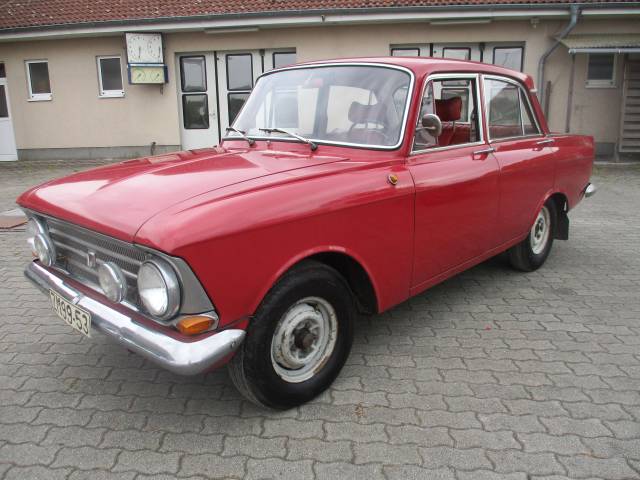
1968 | Moskvich 408
Moskvich 408 Moskwitsch 408

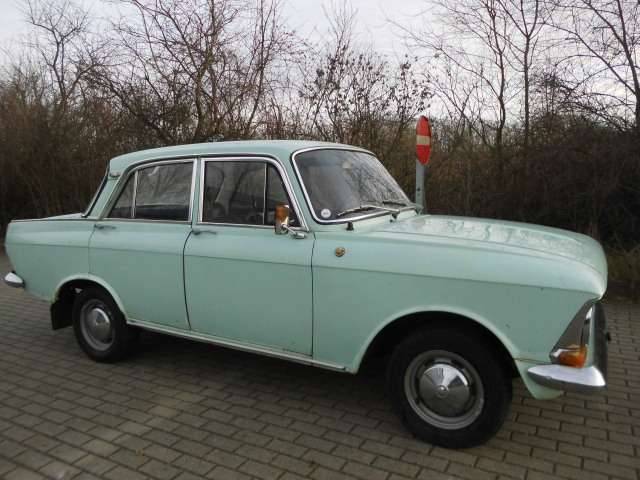
1972 | Moskvich 408
Moskvich 408 408 iE
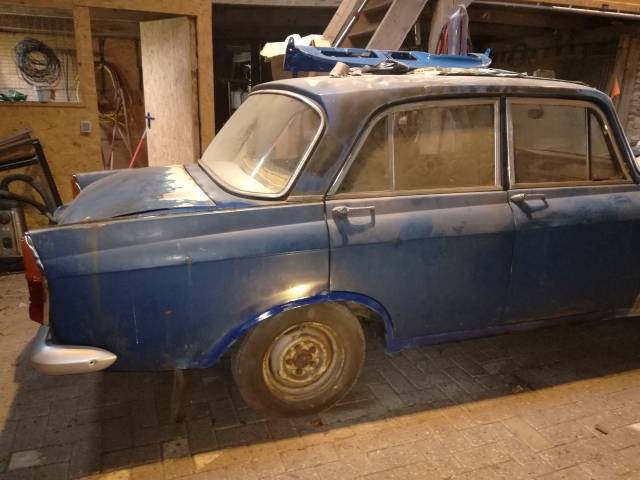
1966 | Moskvich 408
Moskvich 408 Selten durchgehende Sitzbank II. Hand original Papiere vorhande
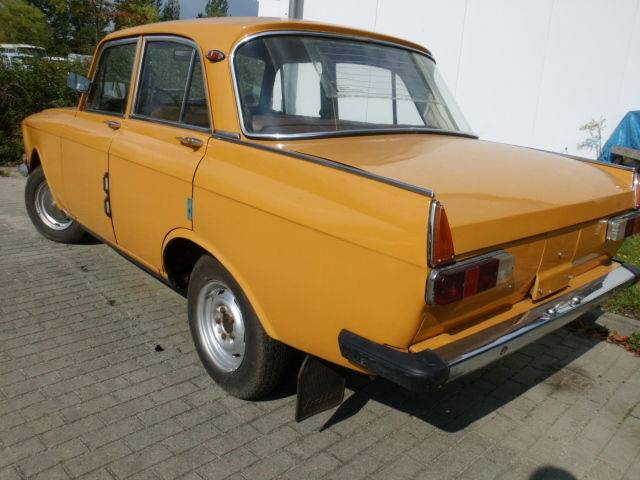
1970 | Moskvich 408
Moskwitsch 408 i.e
Create search alert
Let yourself be notified as soon as a listing is published that matches your search filters.
Create listing
Do you have a Moskvich 408 that you want to sell? Then create a listing now.
Create listingMoskvich 408 Classic Cars: Prices & Market Values
History of the Moskvich 408
The Moskvich 408 emerged from Moscow’s AZLK (formerly MZMA) as an entirely new model aimed at replacing the Moskvich 407. Development began in 1959, leading to a 1961 prototype and series production launch in October 1964. Unique for its era, the 408 featured a wheelbase longer than its predecessor, while reusing proven mechanical components. A hallmark of the 408 was its fresh, contemporary body, sporting distinct tailfins—a decision inspired in part by the rear end of the BMW 700. Available in saloon (four-door), estate (five-door), and rare coupé (three-door) variants, the Moskvich 408 quickly formed the backbone of Soviet family mobility. By August 1966, production had already reached 100,000 units.
Model History of the Moskvich 408
Initial Moskvich 408 production replaced the 407, introducing both evolutionary mechanical upgrades and a significant design overhaul. 1967 brought a front-end facelift—new grille and updated emblems—shared with the related Moskvich 412, though the latter later gained a more advanced engine. Further changes appeared in 1969: revised tailfins, squared headlights, and horizontal tail lamps, along with more elaborate dashboard designs. Export markets saw designated versions like the 408/IE and 412/IE. Apart from Moscow, the Ischmasch factory in Izhevsk also produced the 408 for a period before focusing on the 412. Ultimately, the 408 gave way to the Moskvich 2138/2140 series in 1976.
Highlights of the Moskvich 408
The Moskvich 408’s modernised body styling set it apart from other Soviet saloons in the 1960s, with its iconic tailfins and overall dimensions bringing a touch of Western influence—echoing the BMW 700’s aesthetics. Further highlights include the model’s adaptability, from taxi to private family use, and reliable mechanicals that stood up well in demanding conditions. Export versions—marketed under names like Moskvich Elite 1300 in France or Moskvich Elite in Finland—testify to its international reach.
Technical Data
Special Editions and Collectible Models
Some export variants of the Moskvich 408 achieved a distinct identity under names such as Moskvich Elite 1300 (France) and Moskvich Elite (Finland). These editions differed from domestic models in their equipment packages and finer trim. There are no widely documented, factory-built limited editions, but export models typically featured enhanced interior materials and unique badging.
Engine and Performance, Transmission and Handling
The 408’s 50 hp four-cylinder engine produced ample torque for everyday driving, particularly suitable for the rough and varied roads of the Soviet Union and Eastern Europe. Its four-speed manual gearbox, paired with rear-wheel drive, delivered predictable performance and easy maintenance. Handling reflected the priorities of the day—a comfortable ride, substantial ground clearance, and a chassis designed to survive harsh road conditions. Later dashboard and trim improvements contributed to a more civilised driving experience. While not fast by Western standards, the balance between engine durability and simplicity made the 408 exceptionally well-suited to its market. The most notable variant is the export-spec 408/IE, which is often sought after for its unique trim and adaptations for European markets.
Interior, Comfort, Exterior and Design
The Moskvich 408's exterior design is strongly characterised by its tailfins, a notable influence from Western automobiles such as the BMW 700. The 408’s evolution brought squared headlamps and distinctive horizontal rear lights. Interior updates in 1969 enriched dashboards and trim levels for added comfort. Special fabrics and colours were reserved for export variants, which also included additional accessories and features as standard, in line with market expectations abroad. While utilitarian by Western standards, the Moskvich 408’s layout prioritised functionality, roomy accommodation, and sturdy materials.
Other features
Production of the Moskvich 408 took place not only in Moscow, but also briefly at the Ischmasch plant in Izhevsk, marking one of the rare Soviet collaborations of that period. The model’s broad export acceptance—reaching as far as the UK, Denmark, the Netherlands, and France—reflects a surprisingly broad international footprint for a Soviet family car.
Summary
The Moskvich 408 defined a new chapter for the Soviet compact saloon segment in the 1960s and early 1970s, blending modernised styling with established reliability. Its uniquely Soviet take on styling, practical engineering, and ability to adapt across markets make it a compelling classic for enthusiasts of automotive history and Eastern Bloc engineering.