- Car
- Messerschmitt / FMR (2 offers)
Buy Messerschmitt / FMR Classic Cars
Messerschmitt and FMR sit at the sharp end of microcar history: tiny, technically inventive and instantly recognisable on any collector forecourt. In Britain, these Kabinenroller have long enjoyed a uniquely loyal following, helped by an active club scene and a market that still rewards originality.
Search results
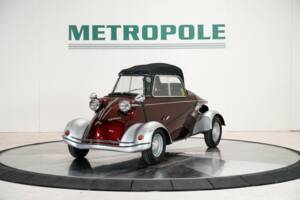
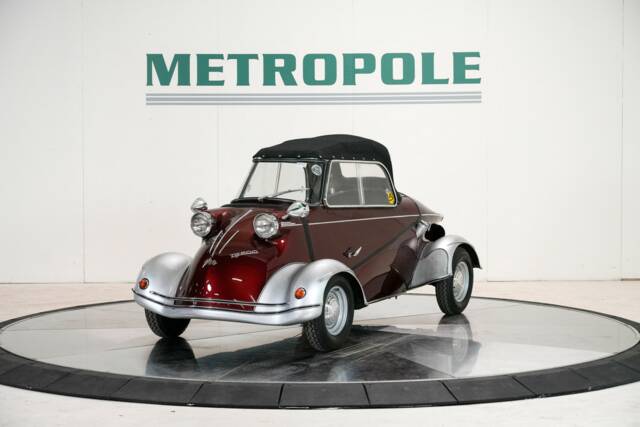
1960 | Messerschmitt / FMR Tg 500
Messerschmitt FMR Tg500 Tiger Cabriolet M1062


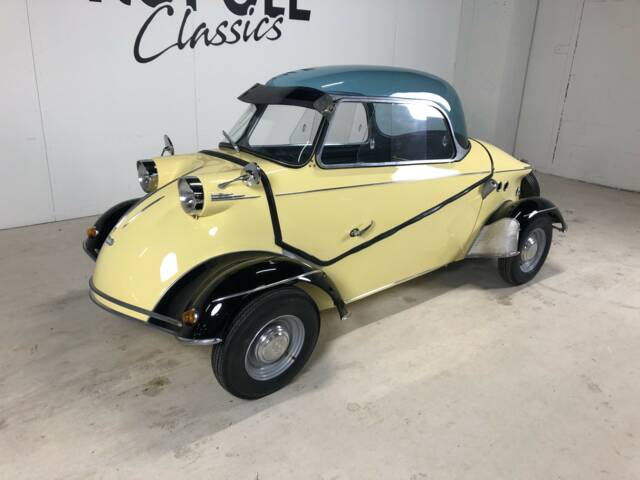
1959 | Messerschmitt / FMR Tg 500
Messerschmitt TG 500 Tiger M0558
Auctions ending soon

Loading…
Loading…
Loading…
Loading…
Messerschmitt / FMR listing references from Classic Trader
Below you will find listings related to your search that are no longer available on Classic Trader. Use this information to gain insight into availability, value trends, and current pricing for a "Messerschmitt / FMR" to make a more informed purchasing decision.
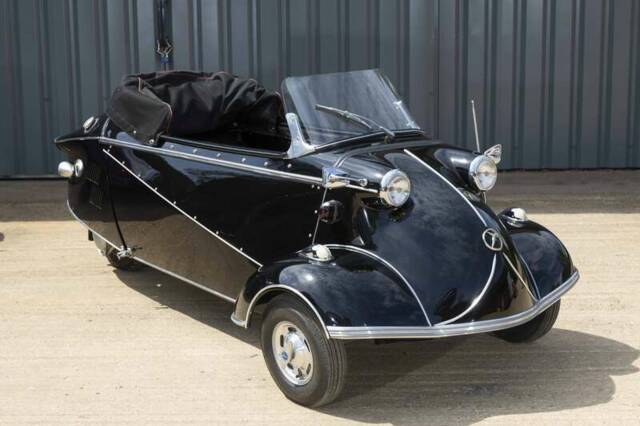
1958 | Messerschmitt / FMR KR 201
1958 Messerschmitt KR201 Roadster

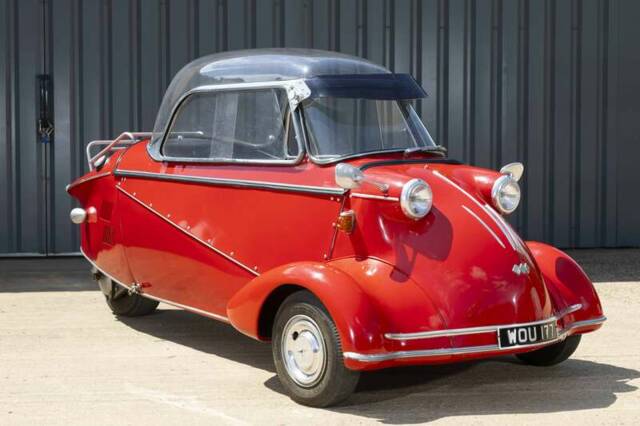
1959 | Messerschmitt / FMR KR 200
1959 Messerschmitt KR200
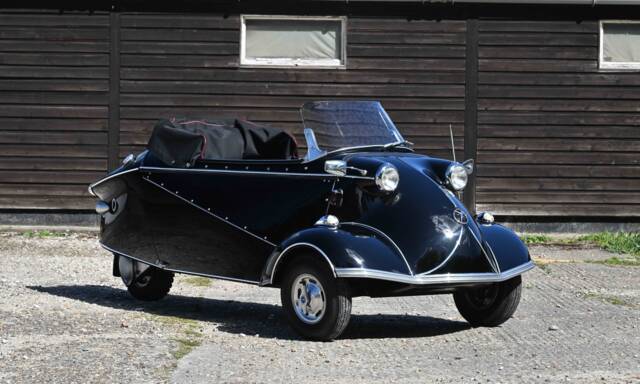
1958 | Messerschmitt / FMR KR 201
1958 Messerschmitt KR201 Roadster
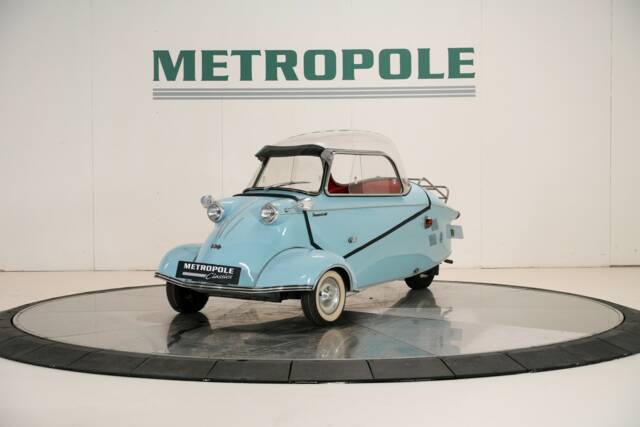
1959 | Messerschmitt / FMR KR 200
Messerschmitt KR 200 M1115
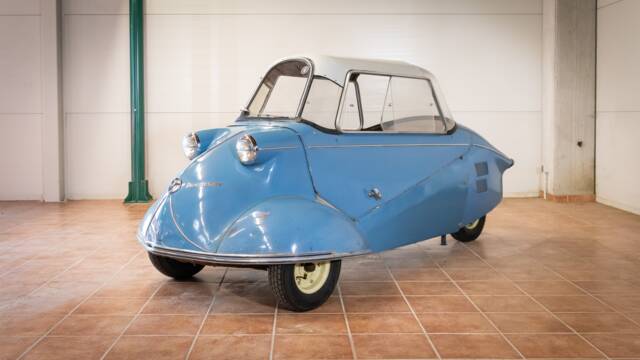
1953 | Messerschmitt / FMR KR 175
Charming Microcar with Aircraft Engineering Heritage


1959 | Messerschmitt / FMR KR 200
1959 Messerschmitt KR200
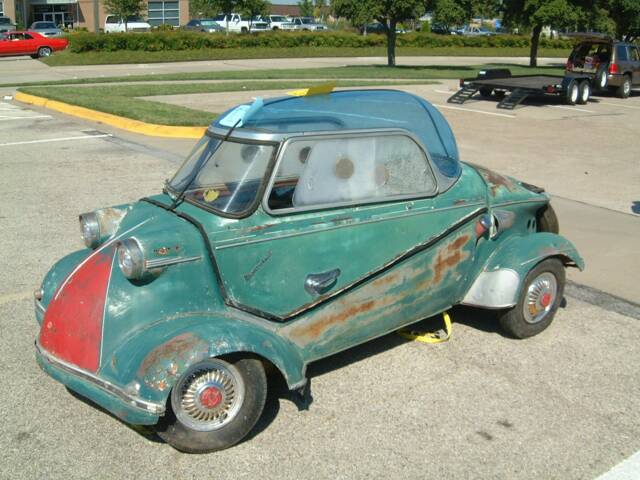
1958 | Messerschmitt / FMR Tg 500
probably the last unrestored Tg500 available

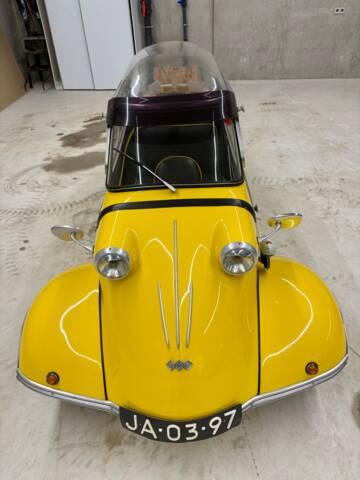
1964 | Messerschmitt / FMR KR 200
compleet gerestaureerd
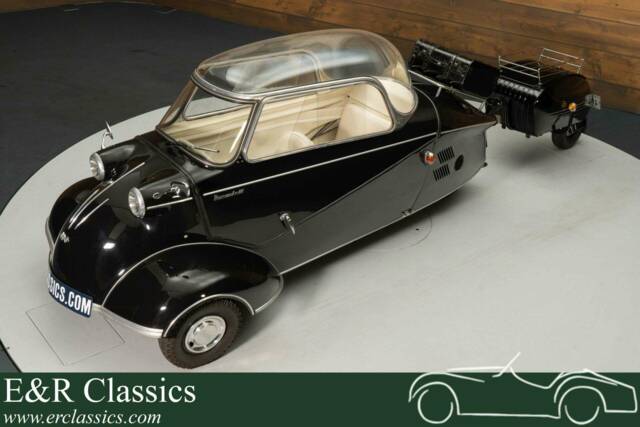
1961 | Messerschmitt / FMR KR 200
Oldtimer Messerschmitt KR200 | Gerestaureerd | Incl. aanhanger | 1961
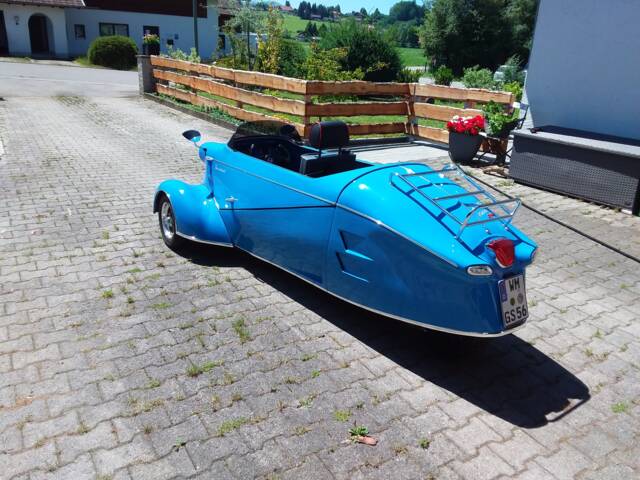
1962 | Messerschmitt / FMR KR 202 Sport
Nachbau von 2022 von den Messerschmitt Werken

1954 | Messerschmitt / FMR KR 175
Messerschmitt FMR KR 175 M0344
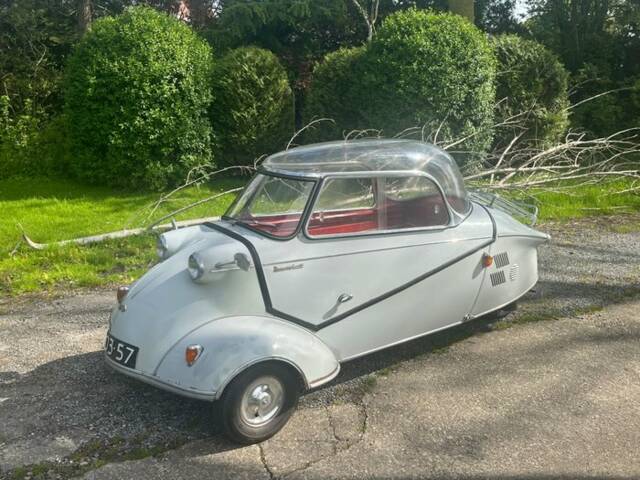
1959 | Messerschmitt / FMR KR 200
Messerschmitt - KR200 bubblecar - 1959
History
The story of Messerschmitt / FMR is one of the most unusual chapters in post-war motoring. These cars were not born from a conventional mass-market project, but from a period of reconstruction, material scarcity and a search for affordable mobility. Their design came from the imagination of Fritz Fend, whose early post-war invalid carriers evolved into a far more ambitious idea: a lightweight cabin scooter with weather protection, tandem seating and proper road manners. Once Willy Messerschmitt became involved, the project gained industrial momentum and a name that would soon be remembered well beyond Germany.
The first production version, the KR175, appeared in 1953. The letters stood for Kabinenroller, literally a scooter with a cabin, and that description still captures the car better than any marketing slogan could. It was compact, economical and unlike anything else on European roads. The KR175 was followed by the much more famous KR200, launched in 1955 with a larger engine, refined bodywork and a number of engineering improvements that made it the definitive Messerschmitt for most buyers.
For the UK, the timing was perfect. Britain was Messerschmitt’s biggest export market, and the cars arrived at a moment when the country was looking hard at low-cost transport. The Suez Crisis in 1956 tightened fuel availability and sharpened interest in small, efficient vehicles. That helped the Messerschmitt find an audience among British motorists who wanted weather protection, a sense of occasion and something with more character than a plain economy car. The fascination was never only about saving money; it was also about owning a machine that looked like nothing else.
The British connection goes deeper than sales figures. The Messerschmitt Owners' Club, founded in 1956, is the oldest club of its kind in the world and a strong sign of how quickly these cars inspired community. Club culture matters enormously in the UK classic-car world, and Messerschmitt ownership has always been sustained by magazines, registers, spares support and regular meets. That network kept the cars visible long after production ended in 1964 and still makes them easier to enjoy than many people expect.
In 1956 Messerschmitt was able to return to aircraft work, and the microcar business was reorganised as FMR – Fahrzeug- und Maschinenbau GmbH Regensburg. The later cars may wear different badging, but they belong to the same story. FMR’s most desirable model was the Tg500, nicknamed the Tiger. It retained the basic Kabinenroller philosophy but added more power, more road presence and a genuinely rare-production profile. Built in tiny numbers, it sits at the top of the family tree and remains one of the most fascinating German small cars ever made.
Collectors value Messerschmitt and FMR cars because they are both historically important and emotionally memorable. They reflect a specific European moment, yet they also feel modern in the way they package space and deliver a strikingly direct driving experience. For buyers today, they offer a route into microcar ownership with enough parts knowledge and club support to make the experience realistic rather than purely romantic.
Highlights
The Messerschmitt / FMR formula is simple to describe and hard to forget. A narrow body, tandem seats, a clear bubble canopy and a rear-mounted two-stroke engine create a silhouette that is instantly distinctive. Yet the appeal goes beyond appearance. These cars are genuinely clever. They use very little road space, weigh very little, and provide an experience that feels closer to small-aircraft thinking than to ordinary motoring.
One of the great talking points is the cockpit-like driving position. You sit low, centrally aligned with the vehicle’s narrow body, with your passenger directly behind you. That seating arrangement was not a gimmick; it reduced frontal area and helped the car remain compact while still carrying two people in weather protection. The canopy gives excellent outward visibility, and that sense of sitting inside a transparent capsule is a large part of the ownership charm.
Another famous detail is the reverse-running gearbox logic on the KR200. By reversing the starter, the engine can run in the opposite direction, effectively giving the car four reverse gears. It is one of those engineering solutions that sounds implausible until you experience it yourself, and it remains a talking point at every club meeting and classic event.
For British buyers, the social side of ownership is just as important. Messerschmitts are not isolated garage queens in the UK; they are part of an active and friendly club world. The Messerschmitt Owners' Club has preserved parts lists, technical knowledge and a sense of continuity that many more common classics no longer have. If you buy one today, you are not simply buying a microcar; you are entering a well-established network.
The cars also benefit from strong recognisability in the market. At shows, they draw people in from a distance, and that attention supports values in a subtle way. A car with personality, history and club backing is easier to sell than an anonymous compact, even when the latter may be more practical.
Among the family’s key highlights are the differences between the models. The KR175 is the original and historically important starting point. The KR200 is the sweet spot for most enthusiasts, combining relative availability with the best-known specification. The KR200 Cabriolet and KR201 Roadster add open-air appeal, while the FMR Tg500 gives the whole concept a much more serious and sporting feel. Each one has its own place in the collector landscape.
For buyers, originality matters. Correct trim, a sound canopy, a healthy chassis and clear paperwork are more valuable than cosmetic excess. On a car this small, the details are visible immediately. That makes a well-preserved example especially satisfying, and it also means poor restoration work is easy to spot. The best Messerschmitts feel honest, complete and lightly engineered rather than over-restored.
Technical Data
The numbers tell a useful story. The KR175 and KR200 are very light by any standard, which is why modest power is enough to make them feel lively. The Tg500 is different: it is still tiny, but the extra engine capacity and four-wheel layout make it feel much more substantial on the road. That model is also the one most likely to interest seasoned collectors who want the rarest and most performance-oriented machine in the family.
In period, the cars were engineered with economy and simplicity in mind. Their two-stroke engines are not complicated by modern standards, but they do require correct maintenance and sympathetic use. Buyers should expect sequential shifting, a compact drivetrain, and very clear mechanical character. These are not cars for passive ownership. Even the most modest Messerschmitt asks the driver to engage with it.
For UK buyers, it is worth remembering that these cars were built as left-hand drive vehicles. That is not necessarily a problem, because the cabin is narrow and visibility is good, but it does shape the ownership experience on British roads. The steering position, controls and sightlines were designed around continental use, so careful test driving is important before purchase.
Market Overview
The British market for Messerschmitt / FMR cars is small, informed and unusually loyal. These are specialist classics, not impulse buys, and most serious buyers know the difference between a decent driver, a cosmetic restoration and a properly documented car. As a result, pricing tends to reward condition, completeness and provenance more strongly than mileage alone.
For a KR200, the market in the UK typically starts around the low five figures for projects or incomplete cars, with better drivers moving into the £20,000–£35,000 range and high-quality restored examples often reaching beyond that when the right canopy, trim and history are present. Rare body styles and exceptional restorations can climb further. A useful current reference is the 1961 KR200 sold by Bonhams at the Goodwood Members’ Meeting in April 2025 for £16,100 inc. premium. That result is important because it shows the market remains active in Britain, and it anchors values at a realistic level for good but not top-tier cars.
The same sale also illustrates buyer behaviour. The car came with known history, old paperwork and a V5C, all of which matter greatly in the UK. Classic-car buyers here are often paperwork-sensitive. They want a clean V5C logbook, clear registration history, evidence of periodic use, and assurance that the car can be transferred without surprises. For a vehicle as specialist as a Messerschmitt, the documentary trail can matter as much as the mechanical condition.
Auction results elsewhere reinforce the pattern. A well-presented KR200 does not need to be ultra-rare to be desirable; it needs to be complete, tidy and believable. The strongest cars often sell to buyers who are already familiar with the club scene and understand how small parts, trim pieces and canopy condition influence long-term value. A project can still be attractive, but only if the shell is sound and the spares story is manageable.
The KR175 tends to attract enthusiasts who value originality and early production. It is less common than the KR200 on the market, and correctly restored examples can command a premium if they are complete and well documented. The KR201 Roadster and KR200 Cabriolet are especially appealing to those who want the most open and playful version of the design. Their desirability is often emotional as much as numerical.
At the top of the range sits the FMR Tg500. This is a very different buying proposition. Because only 320 were built, and because the car has more mechanical complexity and a more sporting reputation, the market is thin and highly selective. A Tg500 can reach well into six figures in strong condition, and buyers expect authenticity, specialist preparation and proper history. When one appears in the UK, it attracts intense attention.
For British owners, practical market factors also matter. MOT history is worth checking even if the car is exempt by age, because it gives a useful record of roadworthiness and use. Imported cars should be checked carefully against the registration paperwork, and buyers should make sure the DVLA record matches the chassis number and body style. A correct import or old UK registration can smooth ownership considerably, while unclear identity can slow down a sale or reduce confidence.
Spare parts availability remains better than many people expect. Club support is strong, and a good proportion of consumables, seals, trim items and mechanical parts can still be sourced through specialists or club contacts. The challenge is usually not whether a part exists, but how original the replacement is and whether it suits the specific version of car being restored. This is why experienced UK buyers often prefer a complete, honest example over a basket-case that needs every panel and fitting replaced.
Buyer habits in the UK also reflect the car’s social appeal. People often purchase Messerschmitts not just for collection, but for club runs, events and display use. That means they value roadworthiness, easy starting and attractive presentation. A car that can be driven to a show and parked among friends may be more desirable than a static concours entry with uncertain mechanical freshness.
Driving Feel
Driving a Messerschmitt is unlike driving almost anything else on the road. The first impression is psychological: you are low, narrow and enclosed by a transparent shell, with the world appearing unusually wide around you. At speed, the car feels light and alert, and the view forward is startlingly open. That combination of vulnerability and control is part of the charm.
The KR200 is the model that best balances usability and character. Its small two-stroke engine pulls with more eagerness than the figures suggest, and the car’s low mass means progress feels brisk at ordinary road speeds. In town, it is nimble and easy to place. On country roads, it has enough urgency to be entertaining, provided the driver keeps expectations realistic and works with the sequential gearbox rather than against it.
That gearbox is central to the experience. Shifting requires timing and care, and the driving style is more involved than in a modern small car. Once mastered, though, it becomes part of the pleasure. The car rewards anticipation, a light hand and an appreciation for mechanical rhythm. It is very much a conversation between driver and machine.
The ride quality is another surprise. Because the car is so light, it does not have the mass to isolate every surface imperfection, but it also does not crash through bumps in the way a heavier classic can. Instead it has a busy, lively feel that suits short journeys and social outings. Long-distance comfort is not the point. The point is a sensory, memorable drive that feels fresh every time.
The FMR Tg500 changes the mood. With more power, four wheels and a more planted stance, it feels less like a novelty and more like a tiny sports car. It still has the same cabin-era charm, but the extra engineering makes it calmer at speed and more confident on faster roads. For collectors who want the ultimate expression of the type, that is a strong argument.
What both cars share is the ability to make ordinary trips feel special. A run to a local meeting, an early morning petrol stop or a county-road outing can become an event. In the British classic scene, where social use matters a great deal, that is a major asset. A Messerschmitt is not simply driven; it is seen, discussed and remembered.
Design
The design of the Messerschmitt / FMR family is one of the clearest examples of function creating form. The narrow body is not just visually unusual; it is the direct result of a concept built around economy, weather protection and efficient packaging. The tandem seating arrangement, the curving roofline and the canopy all serve the same purpose: to reduce width while keeping two occupants enclosed.
The canopy is the signature detail. It gives the cars their aircraft-like identity and explains why so many people fall for them instantly. It also shapes the entire ownership experience. Opening the side-hinged canopy feels theatrical, and settling into the cabin feels more like boarding a small aircraft than climbing into a car. That is not a coincidence; it is the philosophy of the vehicle made visible.
The body is highly distinctive from every angle. The KR175 is slightly more utilitarian in feel, while the KR200 refined the proportions and made the whole package look more resolved. The cabriolet and roadster versions add an appealing softness to the form, showing how the underlying architecture could be adapted for open-air use without losing its identity.
The FMR Tg500 is arguably the most mature piece of design in the range. It keeps the family visual language but gives it extra width, more presence and a better sense of stance. The result is still tiny, but no longer merely whimsical. It looks purposeful, which is exactly why it sits so well with collectors who want something rarer and more technically ambitious.
Materials and finish matter here. A good Messerschmitt should look clean and coherent, not over-restored. Canopy clarity, correct trim, tidy brightwork and well-fitted panels are essential. Because the cars are so small, small flaws stand out quickly. Conversely, a well-preserved car can look incredibly charming even if it is not perfect. Age, honesty and correctness often trump glossy repainting.
In the British market, colour and specification also influence desirability. Bright period colours and deluxe trims suit the car well, while tired repaints and mismatched replacements can undermine confidence. Buyers often respond strongly to originality because it supports both visual appeal and future resale. A Messerschmitt with intact character feels more authentic than one that has been heavily modernised.
Other
For UK buyers, ownership is shaped by paperwork and club practice as much as by the car itself. A useful purchase file should ideally include the V5C, previous registration history, old invoices, club correspondence, photographs of restoration work and any evidence of specialist inspection. If the car has been dormant, look for notes about recommissioning, fuel system cleaning, brake work and canopy condition. Even where a car has a valid MOT history, it is wise to verify what has actually been repaired.
Because these are LHD cars, buyers sometimes ask whether they are realistic for British roads. The answer is yes, but with caveats. The driving position is centred in the narrow cabin, so the steering layout is less of an issue than in a wide left-hand-drive saloon. Overtaking, ticket barriers and kerbside parking still require thought, but the car’s compact dimensions make many manoeuvres easier than expected. In a country with strong club use and a good classic-car infrastructure, LHD is not a deal-breaker.
Rarity also affects how buyers assess restoration costs. A complete KR200 with the right parts and a healthy chassis can be economical to enjoy. A neglected shell with missing canopy, tired electrics and poor previous repairs can quickly become expensive, because small parts still need specialist sourcing and labour adds up fast. The same applies to a Tg500, only more so. For that model, restoration quality and historical correctness are central to value.
Another British-market consideration is event culture. Messerschmitts fit perfectly into the UK’s concours lawns, club stands and informal summer gatherings. They attract multigenerational interest, which helps both enjoyment and liquidity. A car that can be shown, talked about and driven in public tends to remain desirable. That is one reason Messerschmitt values in Britain have stayed resilient despite their niche appeal.
From a long-term collector perspective, the family’s strength lies in its clarity. The cars are easy to understand once you know the basics, and the best examples are not hard to authenticate. That combination of straightforward identity and strong visual personality is unusual. It gives buyers confidence and makes each car feel like a complete historical object rather than merely an oddity.
Summary
Messerschmitt / FMR classic cars occupy a rare place in the market: they are small, practical enough to use, and memorable enough to become instant favourites. In Britain, their story is especially strong. The UK was the biggest export market, the Messerschmitt Owners' Club has been active since 1956, and the cars still benefit from a club culture that values originality, paperwork and regular use.
For most buyers, the KR200 is the best starting point. It offers the core Kabinenroller experience, reasonable parts support and the broadest market presence. The KR175 appeals to collectors who want the earliest chapter, while the open variants add extra charm. At the summit, the FMR Tg500 is the rarest and most serious machine, with pricing and scarcity to match.
Recent UK auction activity shows that good cars still bring strong money, with the April 2025 Bonhams Goodwood Members’ Meeting sale at £16,100 providing a useful benchmark for a sound, documented KR200. For British buyers, that makes Messerschmitt and FMR ownership a realistic proposition as well as an emotional one. With careful inspection of the canopy, chassis, engine, and paperwork – and with attention to MOT, V5C and DVLA details – these little cabins can be a deeply rewarding part of a classic-car collection.
Find the Messerschmitt or FMR classic car that suits you best, and buy with confidence from the current offers on Classic Trader.