- Automobile
- Mercury
- Mercury Monarch (0 offerte)
Mercury Monarch classic cars for sale
The Mercury Monarch stands out as a luxury compact from the late 1970s, designed for drivers seeking both comfort and practicality. Built to answer the changing demands of its era, the Monarch offers American engineering with a focus on refinement, making it an appealing option for collectors looking for a blend of style and efficiency.
Risultati della ricerca
Attualmente non ci sono annunci corrispondenti alla tua ricerca.
Create search alert
Let yourself be notified as soon as a listing is published that matches your search filters.
Create listing
Do you have a Mercury Monarch that you want to sell? Then create a listing now.
Create listingMercury Monarch listing references from Classic Trader
Below you will find listings related to your search that are no longer available on Classic Trader. Use this information to gain insight into availability, value trends, and current pricing for a "Mercury Monarch" to make a more informed purchasing decision.
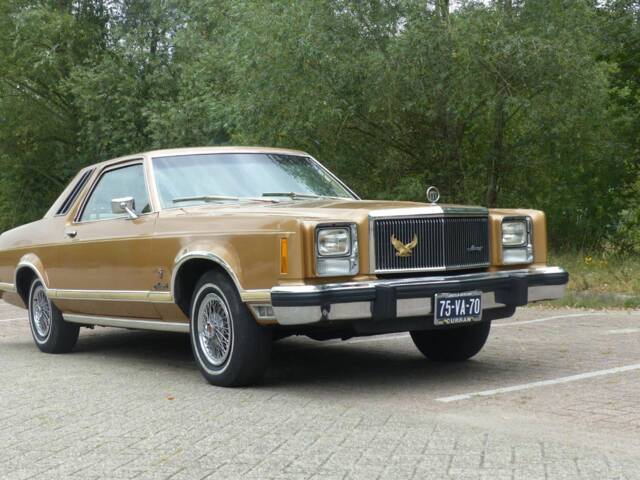
1978 | Mercury Monarch
Mercury Monarch | 1978 | Route 66 Auctions - For sale by auction. Estimate 7500 EUR
Create search alert
Let yourself be notified as soon as a listing is published that matches your search filters.
Create listing
Do you have a Mercury Monarch that you want to sell? Then create a listing now.
Create listingMercury Monarch Classic Cars: Prices & Market Values
History of the Mercury Monarch
The Mercury Monarch was introduced in 1975 as the Mercury division's response to the evolving automotive landscape post-1973 fuel crisis. Meant to replace the Mercury Comet, the Monarch moved away from traditional large sedans, delivering a more compact form factor with a focus on comfort and upmarket features. This shift reflected American consumers’ growing interest in fuel-efficient yet well-appointed cars, directly influenced by the economic and energy challenges of the time. Sold alongside its Ford Granada sibling, the Monarch helped establish the luxury compact segment in the United States during its production run, which lasted until 1980.
Model History
The Monarch's roots trace back to the Mercury Comet, which it succeeded in Mercury's lineup. Produced from 1975 to 1980, the Monarch’s model range covered four-door sedans and two-door coupes, presenting a more upscale alternative to mainstream compacts. After the Monarch ended production, Mercury refocused on other intermediate and compact offerings, but the Monarch remained one of the first American cars to successfully blend compact size with luxury features in this era.
Highlights and Market Data
A key highlight of the Mercury Monarch is its positioning as a luxury compact, at a time when few American manufacturers were targeting this segment. Buyers could expect plush interiors, improved ride comfort, and a variety of trim levels that set the Monarch apart from utilitarian compacts. The Monarch’s engineering focused on smoother driving dynamics and more generous standard features compared to its competitors.
Technical Data
Special Editions and Collectible Models
While not widely known for limited editions, certain Mercury Monarch trim levels, such as the upscale Ghia variants, distinguished themselves with features like upgraded interior materials, extra chrome, vinyl roofs, and unique badging. These configurations offer particular interest for collectors seeking luxury appointments.
Weak Spots and Common Issues
Information regarding specific weak spots for the Mercury Monarch is limited. As with most cars of its age, buyers should inspect for rust in the underbody and wheel arches, look for suspension wear, and verify the condition of the drivetrain, particularly with vehicles equipped with automatic transmissions. Interior trim and upholstery, especially on Ghia models, may require attention due to age-related deterioration.
Engine, Performance, Transmission and Handling
During its production, the Mercury Monarch offered a selection between economic six-cylinder engines and larger-displacement V8s. Power output was sufficient for comfortable daily driving of the period, with ride comfort prioritised over outright performance. The Monarch’s chassis tuning favoured a smooth, compliant ride and competent, if not sporty, handling. Rear-wheel drive and straightforward mechanicals make it approachable for classic enthusiasts. - Monarch Ghia: Luxurious trim, superior interior appointments, frequently specified with V8 engines.
- Standard six-cylinder coupe: Ideal for buyers prioritising fuel efficiency over outright performance.
Interior, Comfort, Exterior and Design
The Monarch’s design embraced the angular forms typical of the mid-70s, complemented by a substantial chrome grille and period-correct rectangular headlights. Ghia models featured vinyl roofs, extra chrome trim, and improved sound insulation for a more upmarket feel. Fabrics, vinyl, and imitation wood panelling defined the interiors, while accessory options included upgraded radios and air conditioning. The use of plush materials in higher trims distinguished the Monarch as a comfort-oriented model in its class.
Other Features
Due to its shared development with the Ford Granada, parts commonality aids in maintenance and restoration, making the Mercury Monarch accessible for enthusiasts wanting to keep running costs manageable.
Summary
The Mercury Monarch occupies a significant place among classic American luxury compacts, offering a blend of stylish design, comfort-oriented engineering, and practical day-to-day usability. The model’s singular presence in its segment on the Classic Trader platform further reflects its distinctiveness and appeal among collectors searching for a classic with both character and substance.