- Car
- Mercedes (1 offer)
Buy Pre-1926 Mercedes Classic Cars
Pre-1926 Mercedes cars from Daimler-Motoren-Gesellschaft are among the machines that defined the modern motor car: low-built, technically ambitious and usually coachbuilt to order. Find an early 35 hp, Simplex, shaft-drive tourer or 28/95 with the provenance, mechanical condition and usable history to suit serious UK ownership.
Search results
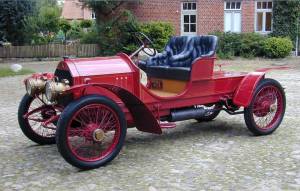
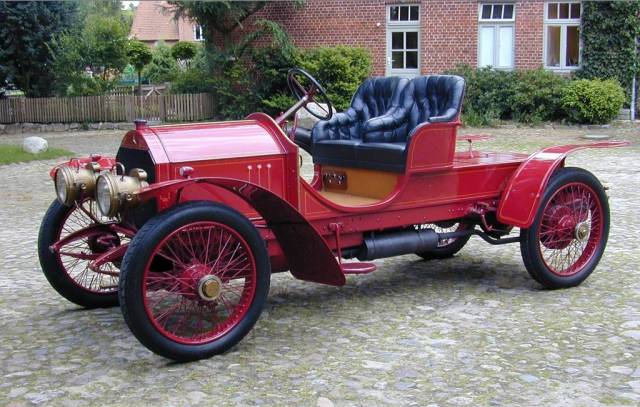
1909 | Mercedes 15/20 PS
A brass era speedster (runabout)

Mercedes listing references from Classic Trader
Below you will find listings related to your search that are no longer available on Classic Trader. Use this information to gain insight into availability, value trends, and current pricing for a "Mercedes" to make a more informed purchasing decision.
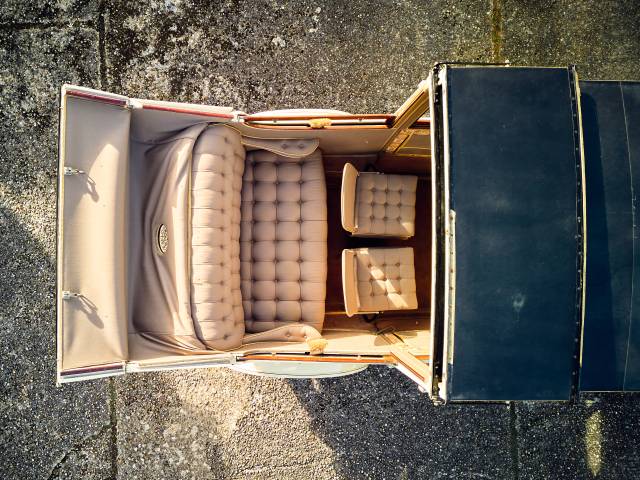
1910 | Mercedes 15/20 PS

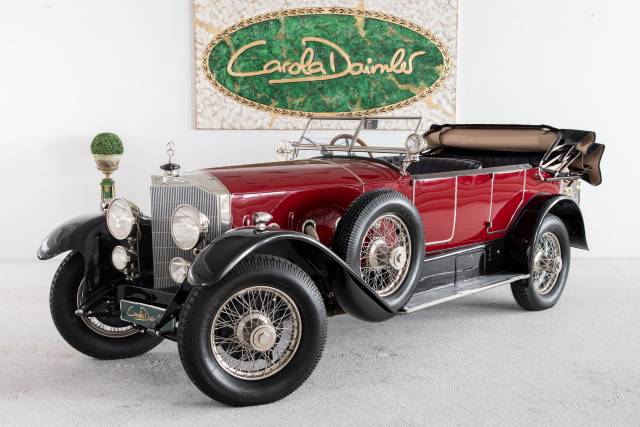
1924 | Mercedes 28/95 HP
MATCHING NUMBERS | MERCEDES-BENZ CERTIFICATE | FIRST-CLASS RESTORATION
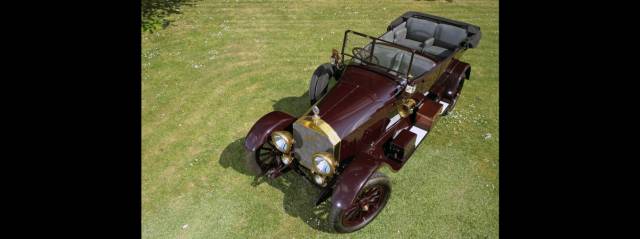
1915 | Mercedes 22/50 PS
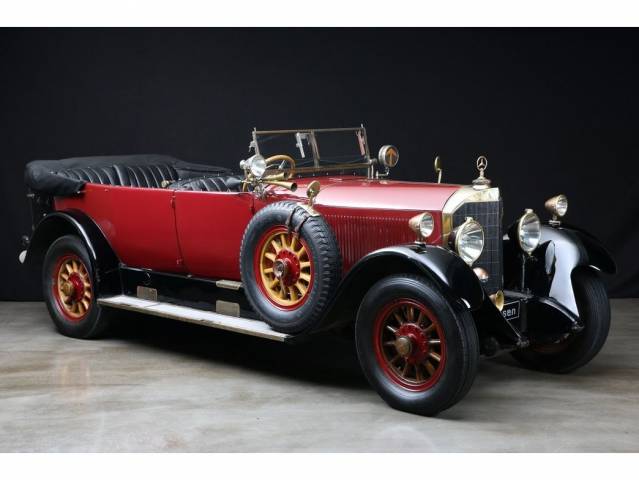
1925 | Mercedes 15/70/100 PS
1925 Mercedes-Benz 15/70/100 PS Offener Tourenwagen
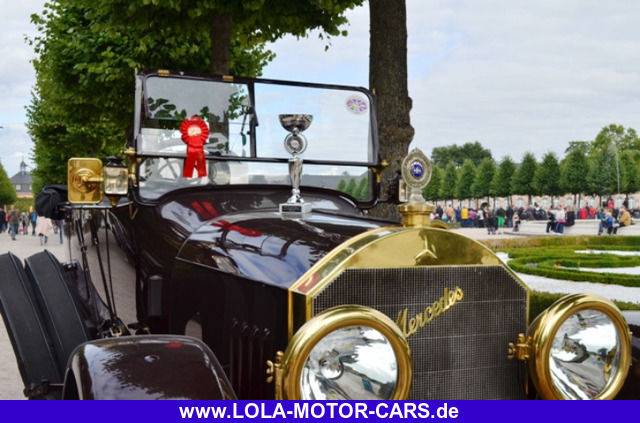
1915 | Mercedes 22/50 PS
| 22/50 hp | 1.Platz CONCOURS D'ELEGANCE SCHWETZ
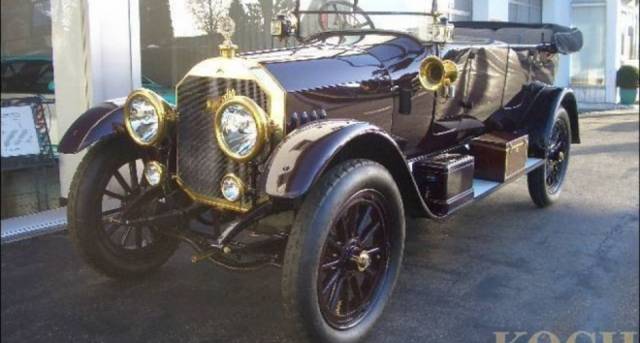
1915 | Mercedes 22/50 PS
22/50 Siebensitzer Open Tourer
History of DMG Mercedes
Mercedes before 1926 means something precise: automobiles built by the Daimler-Motoren-Gesellschaft (DMG) before the merger with Benz & Cie. That distinction matters when reading period catalogues, registration papers and auction descriptions — an early car's maker, engineering and identity belong entirely to DMG, the company that created the name.
The story began on the Côte d’Azur. Emil Jellinek, a DMG agent and racing entrant, wanted a car unlike the tall, carriage-derived machines then common. He commissioned a new type from Wilhelm Maybach and asked for a long wheelbase, wide track, low centre of gravity and a more powerful engine. The first 35 hp car was delivered in December 1900 and raced in 1901 under the name of Jellinek’s daughter, Mercédès. DMG adopted Mercedes as its automobile trademark in 1902. The name therefore denotes a DMG product in this period, not a later marque.
The Mercedes 35 hp is the watershed. Its pressed-steel chassis, front-mounted four-cylinder engine, honeycomb radiator and gated gearbox established the architecture that made fast road travel credible. It was not merely fast for its time; its proportions and stability changed what buyers expected from a performance car. The racing results around Nice gave the design an international audience, while Jellinek’s dealer network supplied wealthy customers from the Riviera to Britain and America.
Maybach’s Simplex range followed from 1902. “Simplex” referred to easier, more rational operation rather than simplicity of construction. Early cars retained chain final drive, but their long, low chassis, disciplined cooling and powerful four-cylinder engines made them formidable touring and competition machinery. At the upper end, the 60 hp used a 9.24-litre engine and became a reference point for the very large sporting motor car. A surviving original-bodied 1904 Simplex 40 hp, offered by RM Sotheby’s for Monterey 2026, is described with a 40 hp T-head four, four-speed transmission and double-chain drive; it is a useful reminder that intact survivors at this level are museum-grade objects as well as road cars.
After Maybach left DMG in 1907, Paul Daimler oversaw a move toward shaft-driven touring cars. The 1908–24 35 hp, 22/40 hp, 22/50 hp, 28/50 hp and 28/60 hp families brought quieter, more conventional transmission layouts without abandoning the robust, high-quality chassis. They were sold in a variety of wheelbases and often left the factory as running chassis. Consequently, an apparently similar Edwardian Mercedes can have very different bodywork, equipment, weight and purpose: a formal landaulette and an open colonial tourer deserve separate valuation logic.
The First World War interrupted car production and transformed DMG’s engineering experience. The post-war 28/95 hp, introduced before the war and resumed from 1920, was the flagship six-cylinder. Its 7.28-litre overhead-cam engine, twin carburettors and unusually advanced valve gear gave 90 hp. A short-wheelbase Sport version competed successfully; Max Sailer won the 1922 Coppa Florio in one, while the type also appeared at the Targa Florio. Just 25 first-series examples were built in 1914–15 and approximately 565 further cars after the war, a total generally quoted as 590.
The final pre-merger DMG Mercedes range was technologically restless. The 6/25/40 hp and 10/40/65 hp introduced supercharging to series production in 1921, while the 15/70/100 hp offered a larger, more imposing route to blown performance. These are still DMG Mercedes cars. Their complicated three-part power designations deserve careful interpretation: the figures refer to taxable rating, normally aspirated output and output with the supercharger engaged, not three interchangeable model names. By 1926 the corporate merger ended this distinct DMG Mercedes chapter.
Highlights of pre-1926 Mercedes
What makes an early Mercedes compelling is not one badge or one body style, but a coherent engineering philosophy carried across radically different cars. Low engine placement, long wheelbase, useful cooling capacity and stout chassis construction arrived well before many rivals adopted comparable solutions. The 35 hp showed the formula; the Simplex made it more usable; later shaft-drive cars refined it; and the 28/95 and supercharged models proved DMG could still build genuinely fast machinery after the war.
Several details reward close inspection. The honeycomb radiator is not decorative jewellery: it is part of the cooling system and an expensive, specialist component. Early chain-drive cars use sprockets, chains and tension arrangements that must be examined as a system. The four-speed gated gearboxes demand deliberate operation, while the leather cone or biconical clutches need correct adjustment rather than a modern driver’s habit of slipping them. On shaft-drive cars, the propeller shaft, universal joints, differential and torque path matter as much as the engine.
The 28/95 sits at the technical summit of the conventional range. Its six forged steel cylinders were arranged in pairs with welded water jackets, an aluminium crankcase and a shaft-and-bevel drive to the single overhead camshaft. This is sophisticated, handsome engineering, but it is not forgiving of an incomplete rebuild. A serious file should establish who rebuilt the crank, magneto, carburettors and cooling system, and what measurements were taken. A freshly painted engine bay without those answers is not a substitute.
Coachwork is equally central. Bodies came from DMG’s Sindelfingen works and outside coachbuilders; changes during a long life were common. Period body swaps are part of the history of these cars, not automatic disqualification, but they must be described precisely. Check the chassis number, engine number, commission record, body plate, old registration documents and photographs against the body now fitted. A later sports body on a long-wheelbase limousine chassis can make an enjoyable event car, but it should not be priced as an untouched sporting original.
For British enthusiasts, these cars belong naturally in Veteran Car Club, Edwardian and vintage touring culture rather than modern-classic ownership. A pre-1905 car may be eligible for the London to Brighton Veteran Car Run, subject to the organiser’s rules and accepted dating evidence. Later examples suit longer continental events only if the cooling, tyres, brakes and spares strategy have been prepared for the job. Their sheer scale, open-air travel and manual workload are part of the attraction.
Technical Data: representative DMG Mercedes
Figures below are representative factory-type data. Coachwork, axle ratio and period modifications can alter mass and performance materially; verify the individual chassis rather than treating a table as a build record.
The 28/95 numbers are especially useful in an inspection. Factory archive specifications give a 105 mm bore and 140 mm stroke, two Pallas carburettors, semi-elliptic springs front and rear, and 26 litres of coolant. Depending on axle ratio and tyres, the quoted top speed spans 110–138 km/h. That spread explains why an owner’s report of relaxed fast touring can be authentic, but it does not excuse poor brakes, overheating or vague steering on the example being sold.
Market Overview & Buying Tips
The market is tiny, international and fiercely condition-sensitive. You are usually buying a particular chassis, not a standardised model. Originality, proven chain of ownership, a credible body history and recent specialist use can move value far more than a generic claim of restoration. Conversely, a correct, well-documented mechanical car with an old rebody may be a sensible entrant to events, provided the price clearly reflects that status.
Recent auction activity shows the breadth rather than a simple price ladder. At Bonhams Bond Street in December 2024, a 1910 35 PS Landaulette sold for £109,250 including premium. It had spent 49 years with one family and had been recommissioned, but the catalogue also disclosed a revised body and an earlier 8.5-litre engine in place of its original unit—exactly the kind of candid qualification a bidder should price in. At Bonhams Goodwood in July 2024, a 1924 10/40/65 hp Sports sold for £149,500 including premium. The sale description identified a shortened original chassis, replacement sports body, non-original larger supercharger and ignition, plus useful later mechanical upgrades. It was an attractive, usable event proposition, not a matching factory sports car.
At the higher end, the supply of genuinely original flagship cars is much thinner. RM Sotheby’s sold a 1911 22/40 hp ‘Colonial’ Double Phaeton for US$187,000 at Hershey in 2025. RM Sotheby’s also listed a remarkably intact, original-bodied 1904 Simplex 40 hp for its 2026 Monterey sale at US$5–6 million; that is an auction estimate, not a realised result, and illustrates how exceptional originality can sit in a separate market. Bonhams offered a 1925 15/70/100 hp Tourer at Goodwood Revival in September 2024 with a £200,000–£300,000 estimate. Again, an estimate is evidence of positioning, not a transaction price. Do not average these numbers to value another car.
For a UK buyer, budget beyond hammer price or asking price. A mechanically complete 35 PS or 10/40/65 with altered coachwork can be a six-figure purchase; a correctly identified, major Simplex or 28/95 can be dramatically more expensive. Commission an inspection by a specialist experienced with brass-era ignition, water jackets, coachbuilt timber and early transmission systems, not merely a general pre-war garage. Ask to see the car started cold, driven until fully warm, then restarted. Verify oil pressure behaviour, coolant circulation, clutch take-up, all gear engagement, steering free play and brake balance on the road.
Bodywork merits an independent inspection. Ash framing can rot invisibly where it meets steel brackets, scuttle, door bottoms and rear body structure; paint can conceal movement at joints. On open cars, inspect hood bows, irons, hood fabric and weather equipment because replacement is bespoke work. Look beneath carpets and floorboards for corrosion in crossmembers, loose fasteners and unsuitable repairs. A sound-looking radiator must be pressure-checked by someone who understands the appropriate low-pressure system; inappropriate modern sealants can block fine passages.
Engine originality has special weight. On a 28/95, confirm the engine number against archive evidence and establish whether the overhead-cam drive, magneto, carburettors and water pump are correct or later substitutes. On a supercharged car, determine whether the compressor, drive, carburation and lubrication arrangement are period-correct. A non-original component need not prevent enjoyable use, but it should alter the description, insurance agreed value and purchase price. Do not rely on a body plate alone: commission sheets, factory archive extracts, old FIVA documents and dated photographs form a more convincing chain.
Parts are available through specialist networks, machine shops and clubs, but “available” often means made to order. Consumables, magneto work, tyres and basic fasteners can be sourced; crankshaft, cylinder, radiator-core, gearbox or coachwork repairs can involve lengthy skilled labour. Buy the best history file you can afford, including invoices that show the work has been driven and debugged afterwards. A car restored ten years ago and used regularly on rallies can be less risky than a newly finished cosmetic restoration with no miles.
UK import administration should be settled before use. HMRC must be notified within 14 days of a permanent arrival; complete the import declaration and NOVA process, then register and tax with the DVLA before normal road use. Retain the foreign title or registration, bill of sale, shipping and customs paperwork, clear chassis photographs and a reputable dating document. The DVLA may need evidence of age and identity for an imported historic vehicle, and an inspection or additional documentation can slow registration. Confirm the applicable customs duty and import VAT treatment with a customs agent before bidding: age, origin, commodity classification and proof all matter.
Once registered, a vehicle constructed more than 40 years ago is generally eligible for the UK historic-vehicle tax class, subject to the relevant rules and declaration. Most historic vehicles are exempt from routine MOT testing, but exemption is not a certificate of safety and can be lost if there have been substantial changes to the main components. For a 100-year-old car, annual voluntary inspection by an informed tester or specialist is prudent, particularly for tyres, steering, brakes, lamps and fuel system. Insurance, event requirements and overseas travel may impose their own conditions. Obtain written confirmation from the insurer before altering ignition, brakes, wheels or fuel arrangements.
Driving Feel
Driving a pre-1926 Mercedes is active, physical travel. A 35 hp or Simplex asks the driver to think ahead: hand throttle, ignition control, clutch, long gear lever and mechanical brakes all require anticipation. The reward is unusually direct feedback. The big four has a slow, deliberate beat, and the tall wheels and long wheelbase smooth a road in a way that photographs cannot convey. At speed, the low chassis explains why these cars startled contemporary observers; the driver sits in a machine designed to cover ground, not an adapted carriage trying to do so.
The shaft-drive touring cars feel more settled and less theatrical, especially in a substantial closed or semi-closed body. They are not light cars, yet their steering and engine flexibility can be surprisingly usable when maintained correctly. A 28/95 has a different character again: the six-cylinder engine combines immense low-speed torque with a refined mechanical whirr from the overhead-cam drive. It feels capable of brisk, sustained road work, but demands respect for its narrow tyres, limited braking reserve and tall, exposed seating position.
Supercharged DMG Mercedes add theatre when the blower is engaged, but the best journey is rarely an exercise in maximum boost. Smooth throttle work, mechanical sympathy and generous following distances make these cars rewarding on British lanes and A-roads. Avoid congested town use on hot days unless cooling and clutch operation are proven. Plan fuel stops, carry the specific tools and spares your car requires, and use an experienced passenger as navigator and second pair of eyes.
Design and Coachwork
Early Mercedes design is the transition from carriage language to motor-car logic. The 35 hp’s radiator, long bonnet and set-back passenger compartment became an enduring silhouette because each element served packaging and stability. The Simplex developed this into an imposing form: exposed mechanical parts, bright brass, tall wheels and a body that appears to sit within, rather than above, the chassis. The effect is purposeful rather than ornamental.
By the shaft-drive era, body builders could offer everything from touring phaetons to landaulettes and enclosed formal bodies. The same mechanical base may therefore be elegant, sporting, colonial or chauffeur-driven. Judge design quality in the round: bonnet length, scuttle line, wheel arch shape, door proportions, windscreen rake, hood fit and the relationship between body and chassis. A body that is technically old but awkwardly proportioned can diminish a car more than honest, well-documented later coachwork.
The 28/95 introduced a distinctive V-shaped radiator and more integrated sporting presentation. In a genuine Sport form, its shorter proportions and lower stance make the mechanical performance visible before the engine is started. Formal 28/95 bodies instead emphasise the chassis’s ability to carry passengers in considerable comfort. Neither is intrinsically superior; factory documentation, surviving original fabric and the intended use should decide the right choice.
Ownership, events and documentation
These are social cars as well as collector cars. The UK’s veteran and vintage scene offers practical knowledge through marque registers, the Veteran Car Club of Great Britain, VSCC-style touring circles and specialist restorers. Before buying, speak to owners of comparable cars and ask which suppliers make tyres, radiator cores, timberwork, magneto repairs and castings. Their answer will reveal whether a car has an active support network or only a persuasive catalogue description.
Documentation should travel with the car, not live as an undocumented promise. Favour files containing factory archive extracts, correspondence with previous owners, restoration photographs, invoices, event entry records, historic registration documents and clear number-stamping photographs. If the car has been rebuilt from disparate components, record that honestly. Correct identity is not an academic detail: it affects value, club eligibility, import registration and the confidence of the next custodian.
Summary
A pre-1926 DMG Mercedes is a purchase for the buyer who values engineering provenance and participation. The 35 hp and Simplex explain why the name became important; the shaft-drive touring cars offer varied coachwork and usable Edwardian character; the 28/95 and supercharged late cars show the most ambitious side of DMG before 1926.
Find the individual car with the right combination of identity, body history, specialist mechanical evidence and UK paperwork. A thorough inspection, a realistic recommissioning fund and a clear NOVA/DVLA plan will matter more than a glossy restoration or a famous model designation alone.