- Car
- McLaren (5 offers)
Buy McLaren classic cars
From Bruce McLaren’s orange Can-Am racers to carbon-fibre supercars assembled in Woking, McLaren combines competition thinking with unusually usable road cars. Find a carefully documented McLaren classic or modern collectible on Classic Trader.
Search results


2023 | McLaren Artura
MCLAREN Artura Coupé V6 3.0 680 ch



2018 | McLaren 720S
Saros Blue - Carbon - Low Mileage -

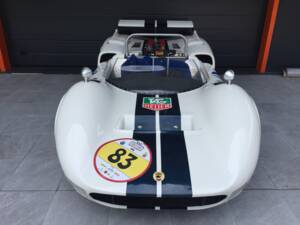
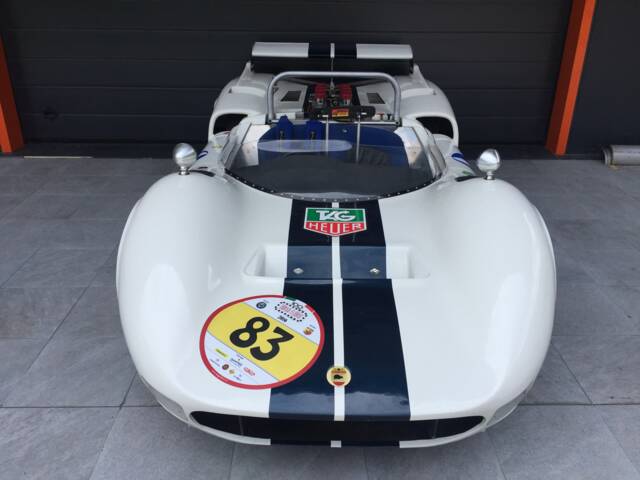
1967 | McLaren M1C
McLaren Elva M1C Can Am

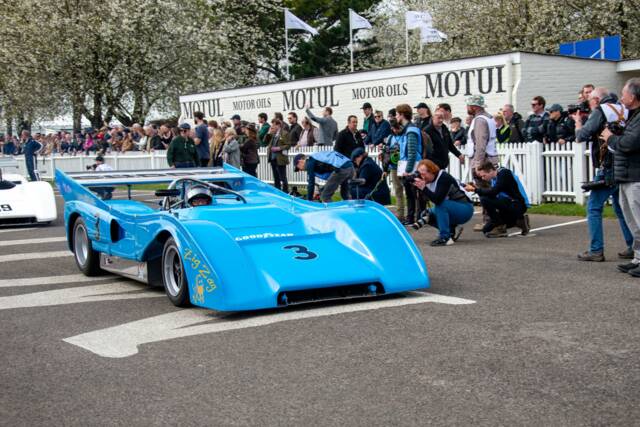
1972 | McLaren M8F
McLaren M8F “Cuddy”

Newsletter
The best McLaren listings, straight to your inbox
Get hand-picked McLaren listings, plus the best of cars, motorbikes, and auctions on Classic Trader — all in one place.


2020 | McLaren Senna LM
McLaren Senna LM "Papaya Orange with 727 kms" The tribute to a legendary Le Mans victory by McLaren Special Operations, One of only 20 "Senna's" manufactured, The Senna falls under the Hypercars category, MSO - "For those who seek something truly one-of-a-kind", Only 7 copies have been delivered in Papaya Orange, "If you want to play with legal road performance",
VAT is reclaimable
McLaren listing references from Classic Trader
Below you will find listings related to your search that are no longer available on Classic Trader. Use this information to gain insight into availability, value trends, and current pricing for a "McLaren" to make a more informed purchasing decision.

2015 | McLaren 650S Spider
1ST OWNER - 21% VAT DEDUCTIBLE

2016 | McLaren 675LT
McLaren 675LT "MSO-options" with delivery mileage! Recently fully serviced and inspected by the authorized dealer,The first owner ordered it in Pearl White (Elite Paint) with Almond White leather/Carbon Black Alcantara,Only mileage by dealer, The buyer appreciated personalization - for example: he ordered the MSO CF Roof Scoop and CF bonnet (a €45.000 option),"But also practical options such as Vehicle-lifter and parking sensors"

2016 | McLaren 675LT
McLaren 675LT "MSO" V8 3.8 1367 Miles from new! Carbon hood and roofscoop by MSO, recently fully serviced!

2019 | McLaren 600LT
MCLAREN 600LT coupé 3.8 V8 600ch - Pack carbone extérieur - malus inclus

2017 | McLaren 570GT
2017 McLaren 570 GT4


2016 | McLaren 675LT Spider
2016 McLaren 675LT Spider - 1,950 Miles

2014 | McLaren MP4-12C Spider
2014 McLaren MP4-12C Spider - 2,730 miles

2019 | McLaren Senna GTR
413 MILES & ONE OWNER

2021 | McLaren 720S Spider
McLaren 720S

2017 | McLaren 570GT
2017 McLaren 570GT
McLaren: a racing company that built road cars
McLaren is unusual among collector marques because its road cars are inseparable from racing, yet are not merely racing cars with number plates. Bruce McLaren formed Bruce McLaren Motor Racing in Britain in 1963. The New Zealander had already won in Formula 1, but his ambition was to build and develop his own machinery. The young company competed in Formula 1, Indianapolis and, most emphatically, the Canadian-American Challenge Cup. Bruce McLaren was killed testing an M8D at Goodwood in 1970; the organisation endured, and its engineering culture outlived its founder.
The early orange Can-Am cars explain much of the marque’s character. McLaren won the championship in 1967 with the M6A, then dominated with the Chevrolet V8-powered M8s. Denny Hulme, Peter Revson and Bruce McLaren himself made the broad, low cars famous. A 1971 M8F, with its big-block V8, aluminium chassis and vast aero surfaces, belongs to the world of historic competition rather than ordinary classic-car ownership. Provenance, period specification, race history and eligibility matter at least as much as paintwork. It is an important part of the McLaren story, but a very different purchase from a road-going Woking car.
The first road car to carry the name as a fully fledged McLaren was the F1. Conceived under Gordon Murray and designed with Peter Stevens, it appeared in 1992. Murray’s brief was not to homologate a racer: it was to make the best driver’s road car possible. The central driving position, two offset passenger seats, carbon-fibre monocoque and naturally aspirated BMW S70/2 V12 were consequences of that brief. Production ran to 106 cars in all forms between 1992 and 1998, including 64 road cars, 28 GTRs, five LMs and three GTs. When a F1 GTR won the 1995 Le Mans 24 Hours outright on its debut, the road-car programme gained an almost improbable competition chapter.
After the Mercedes-Benz SLR McLaren programme, McLaren Automotive returned as an independent series manufacturer in 2010. The MP4-12C, later renamed 12C, began customer production in 2011 and established the formula still recognisable today: carbon tub, mid-mounted twin-turbo V8, rear-wheel drive and a seven-speed dual-clutch gearbox. It was followed by the 650S and the focused 675LT; the Sports Series brought 570S, 570GT and 600LT ownership to a wider audience; the Super Series moved through 720S to 750S. At the summit sit the P1, Senna, Speedtail, Elva and their track-oriented relatives.
For a British buyer, this creates an unusually broad home-market proposition. A car may be RHD from new, UK supplied and still supported close to its birthplace in Surrey, while its market is global. A 12C can be an approachable entry to carbon-chassis supercar ownership; a 720S a devastatingly quick grand tourer for a dry Sunday route; an F1 or P1 a collection-level acquisition requiring specialist due diligence. They share a badge, but they should never be valued or inspected as though they are one homogeneous range.
What distinguishes a McLaren
The defining modern McLaren component is the carbon-fibre passenger cell. The 12C’s MonoCell was revolutionary for a comparatively series-built supercar; later cars use developments such as MonoCage and MonoCage II. Aluminium subframes, suspension and composite body panels attach to that immensely rigid core. The advantages are low mass, precise suspension location and the structural freedom for dihedral doors. The caveat is fundamental: damage to a carbon structure is not a conventional steel-panel repair. A prospective owner should require repair invoices, structural assessment and, where relevant, McLaren-approved repair documentation before accepting accident history.
Most modern examples use either the 3.8-litre M838T or 4.0-litre M840T flat-plane-crank V8, both twin-turbocharged and dry-sumped. Torque goes through a Graziano seven-speed Seamless Shift Gearbox to the rear axle. McLaren’s answer to the usual anti-roll bars is the hydraulically interconnected ProActive Chassis Control system. It permits an impressively calm ride on broken roads while controlling roll and pitch when driven hard. That breadth is central to the brand appeal, but it makes condition and diagnostic history more significant than on a simpler coil-spring sports car.
The F1 remains its own proposition. Its 6.1-litre BMW V12 produces 627 bhp, drives through a six-speed manual gearbox and sits behind a central driver. Gold foil in the engine bay reflects heat; the tailored luggage, titanium tool kit and three-seat cabin demonstrate an obsessive rather than theatrical approach. With a quoted weight of 1,138 kg and a verified 240 mph-plus top speed, it still feels startlingly pure. The P1 approached performance from the opposite direction: its 3.8-litre V8 and electric motor produce 916 PS, with electrical torque fill rather than meaningful electric range as the priority. Its 375-car production run was sold before the first customer delivery.
The 720S made the same thinking accessible at Super Series level. Its 4.0-litre V8 develops 720 PS and 770 Nm, while the deep headlamp ‘eye sockets’ double as radiator inlets. The 750S, introduced in 2023, develops 750 PS and 800 Nm. Neither is a traditional oldtimer, but both are likely future modern classics: limited-volume, intensely specified British cars whose originality and maintenance record will increasingly separate the good examples from the merely cheap ones.
Technical data for representative McLarens
The figures below show the breadth of the marque rather than a complete production register. Dry weights and acceleration claims are manufacturer figures and will vary with specification, fluids and market equipment.
Numbers in advertisements need reading carefully. McLaren often quoted PS while British listings may use bhp; dry mass is not kerb weight; and a generous MSO specification can alter value far more than a small power difference. Confirm the VIN, original specification sheet, optional carbon packs, wheel design, audio, lift system and paint code rather than relying on a dealer’s shorthand model description.
Market overview and buying tips
The McLaren market divides sharply by age, rarity and intended use. Can-Am cars and F1s are international blue-chip collector assets. P1s, Sennas, Speedtails and Longtails trade in a smaller global specialist market where colour, MSO content, mileage, country of first delivery and factory support can move values dramatically. The 12C, 650S, 570S and 720S give buyers a much broader pool, but none should be mistaken for inexpensive performance motoring simply because its asking price has softened from new.
Actual auction evidence provides useful anchors. In December 2024, RM Sotheby’s sold a 2015 P1 from the Dare to Dream Collection for $2,095,000; it had covered 1,913 miles and carried more than $100,000 of MSO equipment. In October 2024, another P1, chassis 055, sold at RM Sotheby’s Dubai for $1,186,250. It had 3,625 km, Japanese delivery history and a disclosed faulty battery. The gap is instructive: headline model and production number alone do not create a value. Specification, readiness, geography and condition are commercial facts.
At the other end of the range, Collecting Cars recorded £115,000 for a UK-based RHD 2017 720S in December 2024 with 4,604 miles. This is a real completed sale, not an estimate, but it is not a price guide for every 720S. A car with deferred tyres, brakes, hydraulic work or paint defects can consume the apparent saving quickly. Similarly, a 2016 675LT Spider sold at RM Sotheby’s Paris in January 2024 for €241,250, while the very limited, low-mileage cars can command a different premium. In the UK, buyers should compare like with like: coupé with coupé, RHD with RHD, and completed servicing with completed servicing.
For British ownership, UK-supplied RHD cars have practical advantages. The speedometer, lighting, rear fog lamp, infotainment setting and first-owner documentation are normally right for the market, and an unbroken MOT history gives useful mileage and advisory evidence. A European LHD car is not intrinsically inferior, especially for continental use or a serious collection, but it should be priced and insured on that basis. Imports need a clear chain of title, NOVA/V5C position where applicable, VAT or duty evidence, and confirmation that lighting and speedometer requirements have been dealt with properly. A car returning from a warm climate may look immaculate yet still need scrutiny for inactive seals, ageing tyres and incomplete UK service support.
Service history comes before odometer theatre. Ask for annual invoices, not a verbal assurance of ‘full history’. Confirm dates, mileages, dealer or specialist names, campaigns and recalls. Obtain the factory build specification, both keys, owner’s books, trickle charger, vehicle health checks and every removed or upgraded original part if originality matters. Long lay-ups are not harmless: batteries sulphate, fluids age, seals dry and tyres become unsafe without adding a single mile. A low-mileage car that has been periodically exercised and serviced correctly is preferable to a static ornament.
A pre-purchase inspection by a McLaren retailer or established independent is money well spent. It should include diagnostic scans, a road test, underbody inspection with trays removed where possible, brake assessment, tyre-date inspection and a close look at the carbon tub and attachment points. The report should identify open campaigns and distinguish stored low-voltage error codes from recurring faults. It is sensible to ask the inspecting business whether it will maintain the specific car afterwards; that answer often reveals more than an optimistic sales description.
On early 12Cs, check the operation and alignment of both dihedral doors, windows, latches, front lift, air conditioning, IRIS infotainment and all steering-wheel controls. Inspect for condensation in lamps, damage to front splitters and evidence of impacts beneath the car. The interconnected suspension should alter the car’s character between modes; knocks, hydraulic leaks, a harsh ride or uneven tyre wear deserve specialist investigation. Suspension accumulators are wear items, while leaking dampers, damaged lower arms and neglected geometry can create much larger bills. A known 12C issue is leakage around turbo feed pipes; a sump-tank replacement can require extensive engine-out labour if the drain plug has been abused.
Across 3.8- and 4.0-litre cars, listen carefully from cold rather than accepting an engine warmed before arrival. Persistent tapping, fluid leaks, poor coolant condition or an uneven exhaust appearance require diagnosis. Check water-pump history, cooling hoses and clamps. The dual-clutch gearbox is robust when maintained, but leaks from the casing, warning messages or unhappy shifts must not be dismissed. Avoid repeated cold revving: the dry-sump V8 needs its oil system to establish pressure. On Sports Series cars, inspect door hinges particularly closely; on all cars, test infotainment, cameras, lift and active aero rather than assuming optional systems work because the dashboard is clear.
The P1 needs a more formal approach. High-voltage battery condition, charging equipment, hybrid service records, brake condition, tyre age and all factory health reports should be reviewed before purchase. A P1 that has been static for years is a technical project, not automatically a collector bargain. An F1 or historic racer requires another level of specialist diligence: chassis, engine and gearbox identities, factory correspondence, provenance, period photographs, restoration records, tools and matching luggage all affect authenticity and liquidity. For these cars, appoint an independent marque authority before discussing a deposit.
Parts support is better in Britain than the marque’s reputation for exotic complexity suggests. Woking is the spiritual and practical centre, with official retailers and respected independents around the country. Yet carbon panels, P1-specific hardware, special wheels, hybrid parts and rare historic-racing components can involve lead times and serious expense. Include contingency in the budget; a car bought at the bottom of the market often has simply transferred its deferred bill to the next owner.
The driving experience
A well-sorted McLaren does not feel like a heavy luxury coupé trying to disguise its mass. Even the 12C has a compact cabin, good forward visibility and a low scuttle that make a B-road feel less intimidating than the performance suggests. In Normal mode, its hydraulic suspension can round off broken tarmac with surprising fluency. Press harder and the car stays unusually flat, the front axle responding cleanly without the artificial weight common in some contemporaries. The V8 sound is more mechanical and urgent than operatic; its appeal lies in the way torque, grip and steering work together.
The 720S is more intense but follows the same philosophy. There is extraordinary acceleration from middling revs, yet the impressive part is the composure with which it carries speed. Its visibility through the slim carbon structure is a genuine advantage on a narrow British road. It asks for restraint in wet weather and care over crests, speed humps and broken edges, but it can cover distance without the jitteriness expected from a 700 bhp supercar. A Spider adds theatre and open-air induction noise, while a Coupé retains the cleaner visual line; neither is a compromise in structural seriousness.
The F1 feels analogue in a way no later McLaren can replicate. Climbing into the central seat, selecting a gear manually and hearing the V12 build revs makes the experience intimate rather than merely fast. The car is wide, its seating arrangement takes acclimatisation and its value changes the emotional stakes, but the controls are light and lucid. The P1 is more dramatic still: hybrid torque, active aero and braking capability compress the horizon at a pace that needs suitable road, tyre temperature and a disciplined driver. The common thread is not a single soundtrack or shape, but the sense that the car has been organised around its driver.
Design, construction and Woking identity
McLaren design generally follows airflow and packaging rather than retro ornament. The M8 racers wore wide wings and open intakes because they needed downforce and cooling. The F1 is almost restrained by comparison: a tight, low form with little unnecessary decoration, shaped around the central cockpit and a high-speed stability target. Stevens’ body has aged well because its details serve a coherent engineering idea rather than fashion.
Modern cars make the technical surfaces more visible. The 12C is comparatively smooth and compact; the 720S turns its headlamp apertures, doors and side channels into working aerodynamic devices. Rob Melville’s work brought that organic, tightly shrink-wrapped approach to the brand’s later design language. The McLaren Technology Centre and Production Centre at Woking give these cars a particular British identity: highly engineered, hand-assembled in limited volume, but not nostalgic.
For buyers, design specification is financial as well as personal. Original paint, MSO colours, exposed carbon, correct wheels and an intact interior can materially affect saleability. A respray is not automatically disqualifying, nor is a tasteful upgrade, but both need documentation. The right question is not simply whether a car looks spectacular at first sight; it is whether its presentation, panels and options agree with the build record and its history.
Competition heritage and collector relevance
McLaren’s competition record gives the road cars context rather than a borrowed marketing story. The Can-Am success created the orange racing image; Formula 1 titles came with drivers including Emerson Fittipaldi, James Hunt, Niki Lauda, Alain Prost, Ayrton Senna, Mika Häkkinen and Lewis Hamilton. The 1995 Le Mans victory by the F1 GTR remains exceptional because the original F1 was designed first as a road car. Later 12C, 650S and 570S GT3 programmes maintained a direct connection between customer motorsport and the production range.
That heritage makes original specification valuable, especially on Longtail, Ultimate and MSO cars. A track-used car is not inherently undesirable: well documented running, inspections and responsible maintenance may be preferable to prolonged storage. What matters is transparency. Ask for track inspection records, brake and tyre replacements, alignment reports and photographs. A road car made to resemble a GTR, LT or factory special should be described honestly as such; similarity is not provenance.
Choosing the right McLaren
McLaren classics and modern collectables span the raw M8F, central-seat F1, pioneering 12C, hybrid P1 and exceptionally capable 720S. The badge is not a shortcut to a buying decision. Choose the era and use case first, then buy the car with the strongest evidence: unambiguous history, correct specification, sound carbon structure, current servicing and a credible inspection.
For a UK enthusiast, a documented RHD Woking-built example combines local support with worldwide collector interest. Do not purchase the lowest advertised price; purchase the most transparent car your budget allows. With a marque specialist involved before money changes hands, Classic Trader can help you find a McLaren that rewards both careful ownership and the open road.