Lada 2107 classic cars for sale
The Lada 2107, also known in the UK as the Lada Riva, is the quintessential Soviet compact saloon, renowned for its rugged simplicity and practical engineering. Well-known for delivering reliable transport across varied markets, from Russia to Western Europe, the 2107 has become an accessible entry-point into classic car ownership with its unique Eastern Bloc charm.
Search results
Currently, there are no matching listings for your search.
Create search alert
Let yourself be notified as soon as a listing is published that matches your search filters.
Create listing
Do you have a Lada 2107 that you want to sell? Then create a listing now.
Create listingLada 2107 listing references from Classic Trader
Below you will find listings related to your search that are no longer available on Classic Trader. Use this information to gain insight into availability, value trends, and current pricing for a "Lada 2107" to make a more informed purchasing decision.
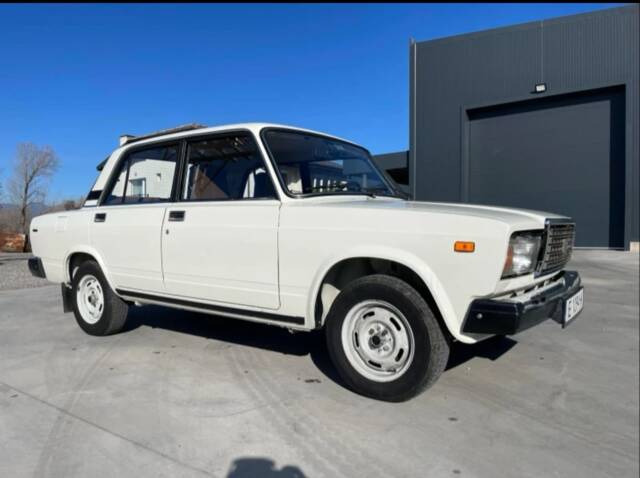
1988 | Lada 2107
1988 Lada 2107 – Museum-Grade Condition | Only 2,200 km
Create search alert
Let yourself be notified as soon as a listing is published that matches your search filters.
Create listing
Do you have a Lada 2107 that you want to sell? Then create a listing now.
Create listingLada 2107 Classic Cars: Prices & Market Values
History of the Lada 2107
The Lada 2107, part of the broader Zhiguli line-up, made its debut in the Soviet Union in 1979. Manufactured by AvtoVAZ and introduced gradually to Western European markets during the early 1980s, the 2107 became emblematic of Russian automotive development. The right-hand drive version was marketed as the Lada Riva in the UK and various Commonwealth countries, while German buyers recognised it as the Lada Nova. Focused on durability and simplicity, the 2107 continued the Lada tradition of practical motoring, gaining a reputation in both domestic and export markets as a dependable and easily maintained vehicle.
Model History
The Lada 2107, alongside its siblings—the 2105 and station wagon 2104—formed a three-pronged attack on the compact market segment. Based on the older Fiat 124, these models underwent a gradual modernisation to meet varying market demands. The 2107 was distinguished within the Zhiguli family by its more elaborate chrome grille and improved interior appointments. Its extended production run and export success meant it was a familiar sight on roads from Eastern Europe to the UK well into the late 1990s. Predecessors were primarily earlier Lada/VAZ sedans derived from the original Fiat platform, with the series remaining in production far longer than initial Western competitors.
Highlights of the Lada 2107
Key highlights of the Lada 2107 include its enduring reputation for mechanical simplicity and its ability to thrive in austere conditions with minimal servicing. The model was specifically engineered to tackle the suboptimal road and climate conditions of the Soviet Union, which translated to a robust and easy-to-fix structure. Unlike many Western contemporaries, the 2107 offered a boxy, angular aesthetic with utilitarian details and a no-nonsense approach to comfort and technology.
Technical Data
Special Editions and Collectible Models
The standard 2107 did not generally offer limited or special editions in the Western sense. While certain export variants may have featured minor enhancements in trim or equipment (such as improved upholstery or radio units for Western markets), these did not usually receive separate designation or collectible status.
Weak Spots and Common Issues
No data has been supplied about common weak spots or failure points for the Lada 2107; however, buyers should always inspect for rust, especially in load-bearing and lower body sections, as is typical for vehicles of this period and construction.
Engine and Performance, Transmission and Handling
The Lada 2107's longitudinal engine configuration and rear-wheel drive provided straightforward, predictable handling in everyday use, suited to both urban and rural environments. The suspension and drivetrain layout were chosen for ease of maintenance and repair, allowing the 2107 to keep going under conditions that would trouble more complex competitors. While it was not designed for spirited driving or high-speed cruising, the drivetrain was optimised for longevity and fuel efficiency at everyday speeds. Most buyers favoured the basic 1.5-litre and 1.6-litre versions for their balance between power and reliability. The carburettor-fed engines remain straightforward to work on and source parts for compared to more exotic imports.
Interior, Comfort, Exterior and Design
Distinctive for its angular lines and upright posture, the 2107 was fitted with a prominent chrome grille and understated trim. Interiors were minimalist, focusing on practicality rather than luxury, though Western market versions sometimes gained slightly improved fabric, controls, or heating elements. The basic dashboard layout, robust seat upholstery, and durable vinyl ensured the 2107 could withstand years of daily use. Colours were typically conservative, echoing the functional design ethos of the era.
Other Features
The Lada 2107 is frequently considered for modifications or upgrades due to its basic construction, including aftermarket suspension tweaks, interior retrims, and period-correct audio systems. Owners often appreciate the platform’s potential for personalisation, even within the original constraints.
Summary
The Lada 2107 stands as a distinct chapter in automotive history, showcasing the pragmatic engineering and design sensibilities of the Soviet bloc. It remains highly regarded for its unique combination of sustainability, ease of ownership, and historical relevance, cementing its place as a fully-fledged classic for buyers seeking something different from mainstream Western classics.