Iveco Massif classic cars for sale
The Iveco Massif stands out as a rare sight—designed as a rugged four-wheel-drive workhorse, it was produced from 2007 to 2011, mainly catering to utility professionals and off-road enthusiasts. Combining robust mechanics with utilitarian charm, the Massif is now regarded as a distinctive option for collectors seeking something beyond mainstream classics.
Search results
Currently, there are no matching listings for your search.
Create search alert
Let yourself be notified as soon as a listing is published that matches your search filters.
Create listing
Do you have a Iveco Massif that you want to sell? Then create a listing now.
Create listingIveco Massif listing references from Classic Trader
Below you will find listings related to your search that are no longer available on Classic Trader. Use this information to gain insight into availability, value trends, and current pricing for a "Iveco Massif" to make a more informed purchasing decision.
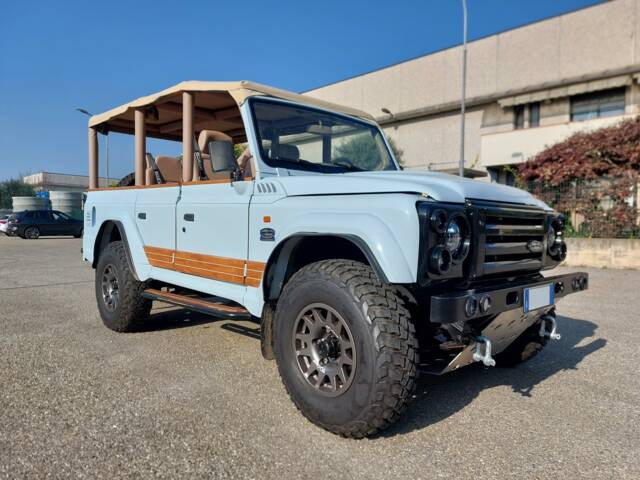
2010 | Iveco Massif 3.0 HPT

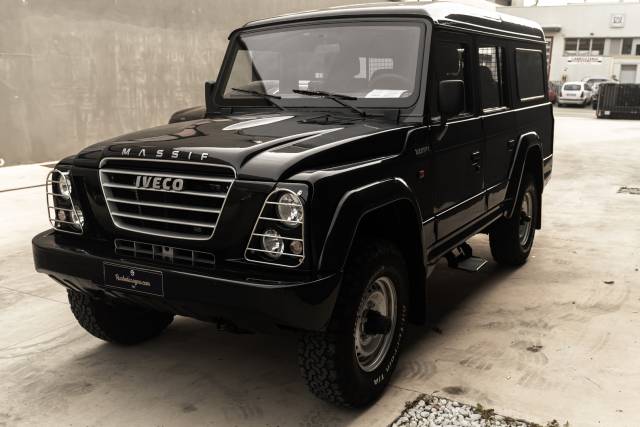
2009 | Iveco Massif 3.0 HPT
Create search alert
Let yourself be notified as soon as a listing is published that matches your search filters.
Create listing
Do you have a Iveco Massif that you want to sell? Then create a listing now.
Create listingIveco Massif Classic Cars: Prices & Market Values
History of the Iveco Massif
The Iveco Massif has its roots in practical utility rather than luxury. Launched in 2007, it was developed through a partnership between Iveco and Santana Motor, leveraging the Spanish manufacturer’s experience with robust off-roaders. The Massif filled a niche for states, military, and private sectors needing a solid 4x4, positioned alongside the likes of the Trakker truck and Daily 4x4 van in Iveco’s portfolio. It essentially restyled and rebadged the Santana PS-10, maintaining rugged credentials suited for demanding tasks. However, a changing market and competition from imported models led to decreasing production figures, ending with the cessation of manufacturing in 2011 when Santana’s factory shut down.
Model History
The Massif succeeded the Santana PS-10, updating its legacy with new looks and mechanical enhancements. There was no direct predecessor from the Iveco family itself, as it was a product of collaboration. After its discontinuation, no direct successor carried the Massif name, as the utilitarian off-road segment for Iveco was overtaken by other Fiat Group imports, notably various Jeep models. Its production was brief, spanning four years, with volumes dropping sharply toward the end due to market pressures and internal restructuring at Santana and within the Fiat Group.
Highlights and Key Features
The Iveco Massif is renowned among off-road aficionados for its uncompromising simplicity and ruggedness. Built with utility in mind, it featured durable ladder frame construction and selectable four-wheel-drive—traits that made it a favourite for authorities and fleets working in remote or challenging terrains. Its practical design also meant straightforward maintenance and good parts accessibility for many mechanical components.
Technical Data
Special Editions and Collectible Models
There are no widely documented special or limited editions of the Massif. Most variants were built to serve a purpose, differing primarily by bodystyle (station wagon, pick-up, hardtop) and specification according to market or mission requirements.
Engine, Performance, Transmission and Handling
The Massif was fitted with torquey diesel engines, offering strong low-end pull combined with manual gearboxes—ideal for towing or off-road work. The suspension, inherited from its Santana predecessor, used leaf springs for maximum load-carrying ability, resulting in a firm ride but outstanding rough terrain capability. On-road comfort lagged behind more modern SUVs, but off-road, the vehicle excelled thanks to its rugged underpinnings and functional driveline. The most popular configurations were the three- and five-door station wagons and hardtop commercial variants, often chosen by state agencies and military clients for dependability and straightforward servicing.
Interior, Comfort, Exterior and Design
Massif interiors were utilitarian, with control layouts dictated by function. Hard-wearing plastic and vinyl robust enough to handle boots, tools, and the elements dominated the cabin. Externally, the squared-off styling, especially with flared arches and steel wheels, reinforced the vehicle’s tough image. Factory options focused on practical needs rather than luxury, with accessories such as roof racks, additional lighting, and towing equipment commonly specified. Unusual paint colours or materials are rare—fleet white and basic finishes were most common.
Other Information
The Massif’s short production run and its unique background as a joint venture make it a curiosity in the classic vehicle world—especially in regions where few were sold new. This can affect parts availability positively, due to shared Santana mechanicals, but trim and body panels may be more challenging to source.
Summary
The Iveco Massif earned a reputation as a no-nonsense, utility-biased off-roader. With its production history closely tied to the end of Santana’s car-building era, and as a unique outlier in the Iveco history, it has become a rare sight. For collectors and off-road enthusiasts seeking durability and function over finesse, the Massif offers a distinctive proposition.