Goliath GD 750 classic cars for sale
The Goliath GD 750 stands out as a utilitarian vehicle from post-war Germany, built to meet the needs of a recovering economy. Its compact three-wheeled design, robust twin-cylinder engine, and practical loading capacity make it a unique offering in the historic small commercial vehicle segment.
Search results
Currently, there are no matching listings for your search.
Create search alert
Let yourself be notified as soon as a listing is published that matches your search filters.
Create listing
Do you have a Goliath GD 750 that you want to sell? Then create a listing now.
Create listingGoliath GD 750 listing references from Classic Trader
Below you will find listings related to your search that are no longer available on Classic Trader. Use this information to gain insight into availability, value trends, and current pricing for a "Goliath GD 750" to make a more informed purchasing decision.
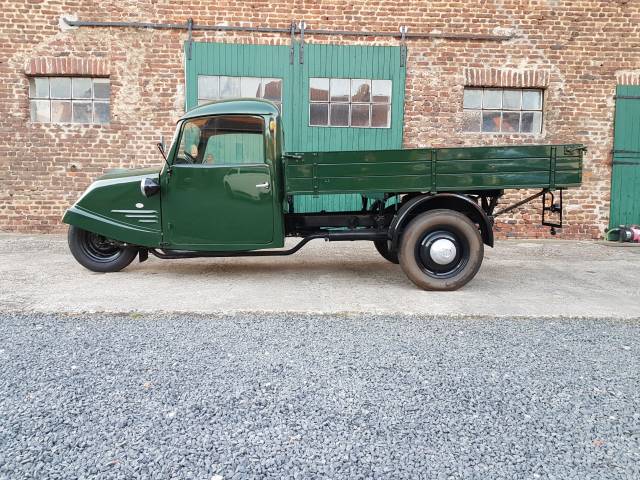
1954 | Goliath GD 750
Borgward Goliath GD750 Dreirad Tempo
Create search alert
Let yourself be notified as soon as a listing is published that matches your search filters.
Create listing
Do you have a Goliath GD 750 that you want to sell? Then create a listing now.
Create listingGoliath GD 750 Classic Cars: Prices & Market Values
History of the Goliath GD 750
Goliath, based in Bremen, produced the GD 750 in the challenging environment of post-WWII West Germany. Released in the late 1940s, it was targeted directly at tradesmen and small businesses requiring a reliable and cost-efficient way to transport goods in a country with limited resources and recovering industries. The GD 750’s three-wheel layout was more than a technical curiosity—it responded to unique regulations and material shortages of the time, making the most of available components. Goliath, a marque under the Borgward Group, leveraged its expertise from prewar light vehicle construction, offering a practical solution for small transport needs. Demand for these robust vehicles was high throughout the 1950s until automotive and economic progress made four-wheeled vans more desirable.
Model history of the Goliath GD 750
The GD 750 succeeded earlier Goliath three-wheeled models, embodying incremental improvements in payload, engine reliability, and chassis robustness. Key evolutions included refined mechanical components, simple yet effective cabin ergonomics for the driver, and a basic but purposeful loading area. The series spanned various body styles: open pickups, closed vans, and special-purpose variants, all sharing the signature three-wheeled chassis and compact proportions. Production spanned from the late 1940s into the first half of the 1950s, before being replaced by more conventionally-configured transporters within the Goliath and Borgward families.
Highlights of the Goliath GD 750
A defining feature of the GD 750 is its three-wheeled chassis, which not only reduced weight and production costs but also allowed for unique driving characteristics and a compact footprint—ideal for tight, urban postwar streets. Its air-cooled two-cylinder engine provided just enough power for urban and short-haul deliveries. The GD 750 is notable for its spartan, purely functional approach—no frills, just utility. Its design marked a clear distinction from the more ornate pre-war vehicles. Practicality extended to its adaptable bodies: buyers could specify a closed van, a flatbed, or even order custom ex-factory builds. Robustness and mechanical simplicity made the GD 750 easy to maintain and repair with basic tools, an invaluable quality for its target audience during the period of economic recovery.
Technical Data of the Goliath GD 750
Special Editions and Collectible Models
Several body styles and configurations of the GD 750 exist, including closed delivery vans, open flatbeds, and rare specialty builds for municipal or bespoke commercial purposes. These rare variants, often factory-modified for specific customer needs, can be especially sought-after by microcar and commercial vehicle collectors.
Maintenance and Common Issues
The GD 750’s mechanical simplicity makes routine maintenance accessible. Key service points include regular gearbox inspections, lubrication of the three-wheel suspension, and vigilant care of the two-stroke engine (especially with respect to correct fuel and oil mixing). With age, corrosion of chassis elements and cabin floors can occur, particularly in vehicles exposed to the elements or heavy loads. Replacement parts may be scarce but are generally interchangeable with other contemporaneous Borgward-Group commercial vehicles.
Engine, Transmission and Driving Behaviour
The GD 750’s two-stroke twin offers modest power, with acceleration and top speed tuned for city transport rather than main roads. The three-wheeled configuration delivers a tight turning circle, ideal for confined spaces, but care is needed at higher speeds or when cornering with heavy loads. The ride is utilitarian: basic suspension and honest steering without power assistance. Braking is effective for the vehicle’s weight, though it lacks modern progressive feel. Open pickup configurations and original municipal service versions, due to their rarity and clear historical application, are often highlighted among enthusiasts for their authenticity and practicality.
Interior, Comfort, Exterior and Design
The GD 750 eschews ornamentation in favour of robust utility. The driver’s cabin features a simple metal dashboard, flip-up seats, and sparse instrumentation, all engineered for easy access and resilience against commercial wear. Exteriors are characterised by flat metal panels, pragmatic door handles, minimal chrome, and plain finishes—factory paint options ranged from industrial greys to municipal greens. Accessories were virtually all functional, such as external tool racks or sliding side windows, with special builds occasionally receiving custom signage for trade use.
Other information
Some GD 750s were adapted for use in unusual roles, such as mobile market stalls or small municipal service vehicles. Their adaptability and solid underpinnings mean that a small number have survived in running order, either in private hands or museum collections explicitly focused on commercial and utilitarian vehicle history.
Summary of the Goliath GD 750
As a postwar workhorse, the Goliath GD 750 offers clear insight into a unique phase of German automotive and economic recovery. Its three-wheeled configuration, straightforward engineering, and range of practical body styles make it a distinguished and recognisable entry in the world of historic commercial vehicles.