Frisky Family Three classic cars for sale
The Frisky Family Three is a rare British microcar, notable for its clever engineering, three-wheeled layout, and the touch of Italian designer Giovanni Michelotti. Its compact size, unique charm, and exceptional rarity make it a sought-after model among classic car enthusiasts.
Search results
Currently, there are no matching listings for your search.
Create search alert
Let yourself be notified as soon as a listing is published that matches your search filters.
Create listing
Do you have a Frisky Family Three that you want to sell? Then create a listing now.
Create listingFrisky Family Three listing references from Classic Trader
Below you will find listings related to your search that are no longer available on Classic Trader. Use this information to gain insight into availability, value trends, and current pricing for a "Frisky Family Three" to make a more informed purchasing decision.
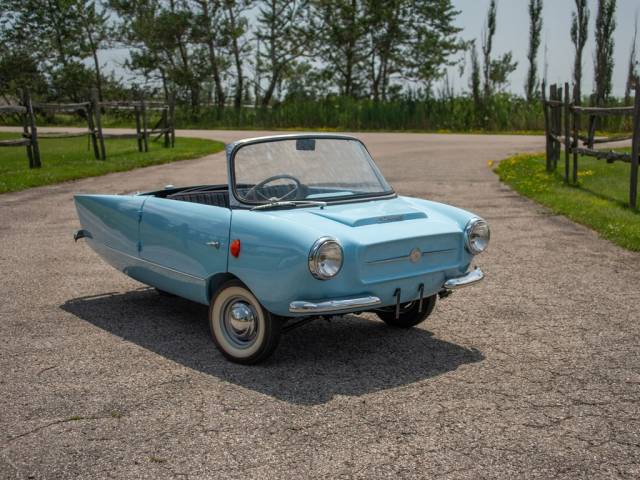
1959 | Frisky Family Three
1959 Frisky Convertible Special
Create search alert
Let yourself be notified as soon as a listing is published that matches your search filters.
Create listing
Do you have a Frisky Family Three that you want to sell? Then create a listing now.
Create listingFrisky Family Three Classic Cars: Prices & Market Values
History of the Frisky Family Three
The Frisky Family Three was manufactured by Henry Meadows Ltd in Wolverhampton, UK, between 1958 and 1961. The model's conception began in Cairo, led by Captain Raymond Flower and his associates, before being brought to England, where cooperation with Henry Meadows led to the formation of Frisky Cars Ltd. The early prototype, known as the 'Bug,' stood out for its gullwing doors but proved too complicated and expensive for mass production when introduced at the 1957 Geneva Motor Show. The final production design came from Giovanni Michelotti, whose styling shaped all subsequent Frisky models. Transitioning from the cabriolet Friskysport, the Family Three was introduced in January 1959 as a three-wheeled, closed-roof coupe fit for both urban and rural roads. Production numbers for all Frisky models combined barely reached 1,500 units, and only around 75 are known to survive across all body types.
Model History
The Family Three stemmed from an evolution within the Frisky brand, building on the four-wheeled Friskysport cabriolet. Distinguishing itself as a three-wheeler with a coupe body and a 197 cc Villiers single-cylinder two-stroke engine, the Family Three could legally be driven with a motorcycle licence under UK regulations at the time. The coupe body and rear trike configuration specifically targeted families seeking economical motoring. There was no direct predecessor in the Frisky lineup with the same blend of design and function, and the end of production in 1961 marked the end of the Frisky Family Three's concise production run, with no direct successor.
Highlights of the Frisky Family Three
The Frisky Family Three's standout features include its Villiers two-stroke single-cylinder engine, rearward tricycle layout, and Italian-influenced aesthetics by Giovanni Michelotti. The lightweight construction enabled agile handling, making it practical for city use. The frontal lines and compact form still give the Family Three a distinctive presence at classic vehicle events. Designed with an eye for both engineering practicality and style, the Family Three distinguished itself with its unusual combination of British mechanicals and continental flair.
Technical Data
Special Editions and Collectible Models
No independent special or limited editions of the Frisky Family Three are documented. All variants of this model share a highly similar technical and visual specification, with the principal distinction being colour and individual trim. However, early examples or those retaining original features and documentation tend to be regarded as particularly collectible due to overall rarity.
Weak Spots and Common Issues
There is no detailed data about common weak spots of the Frisky Family Three in the provided sources. Collectors should, however, expect typical concerns associated with low-volume microcars from the era, such as parts availability for drivetrain and unique bodywork, and the need for specialist attention for the Villiers engine and original mechanicals.
Engine and Performance, Transmission and Handling
The Villiers 197 cc one-cylinder two-stroke engine delivers predictable performance for a microcar, allowing brisk acceleration at low speeds suitable for urban and local rural driving. The four-speed gearbox with a reversing function made the car easy to operate despite its unusual three-wheeled layout. The car's very light weight and compact size provided nimble handling, while the trike configuration was tailored to exploit British motorcycle licence regulations for drivers. Enthusiasts describe the ride as entertaining, especially given the minimal mass and basic suspension.
The most recognised and documented model in the Frisky range remains the Family Three, thanks to its distinct design and its status as the only currently traded model from this marque.
Interior, Comfort, Exterior and Design
Giovanni Michelotti's influence shows in the Family Three's smooth, flowing design and compact dimensions. The body features attractive, curved lines that ensure it stands apart from boxier contemporaries. Interiors are basic but geared for two to three occupants, with simple gauges and limited trim, in keeping with an economical microcar. The closed coupe body provided weather protection over the open-top Friskysport. Customisation from the factory was minimal, with most cars finished in a small palette of colours, emphasising clean, purposeful design typical of the late 1950s British industry. Original accessories and rare period add-ons, if present, enhance the classic appeal.
Other Relevant Features
All Frisky vehicles were built in very limited numbers, and period documentation or original registration books can add substantial historical value. Owners and enthusiasts commonly gather via the Frisky Register, which is a crucial resource for restorers seeking rare parts or guidance. The combination of British construction and an Italian designer makes the Family Three unique among microcars of the era.
Summary
The Frisky Family Three is a distinctive representative of British microcar history, combining inventive engineering, rare Italian design, and a unique three-wheel layout. With only around 75 Frisky cars surviving across all models, and the Family Three being the focus of both supply and demand, this model offers a rare opportunity for collectors and enthusiasts focused on post-war small car innovation.