Delahaye VLR Classic Cars for Sale
The Delahaye VLR stands out as a French-designed 4x4 developed for military use post-WWII, combining robust off-road capability with distinctive technology from one of France’s most storied automotive manufacturers. Its limited civilian availability and technical heritage make it a rare find.
Résultats de la recherche
À l'heure actuelle, il n'y a pas d'annonces correspondant à votre recherche.
Create search alert
Let yourself be notified as soon as a listing is published that matches your search filters.
Create listing
Do you have a Delahaye VLR that you want to sell? Then create a listing now.
Create listingDelahaye VLR listing references from Classic Trader
Below you will find listings related to your search that are no longer available on Classic Trader. Use this information to gain insight into availability, value trends, and current pricing for a "Delahaye VLR" to make a more informed purchasing decision.
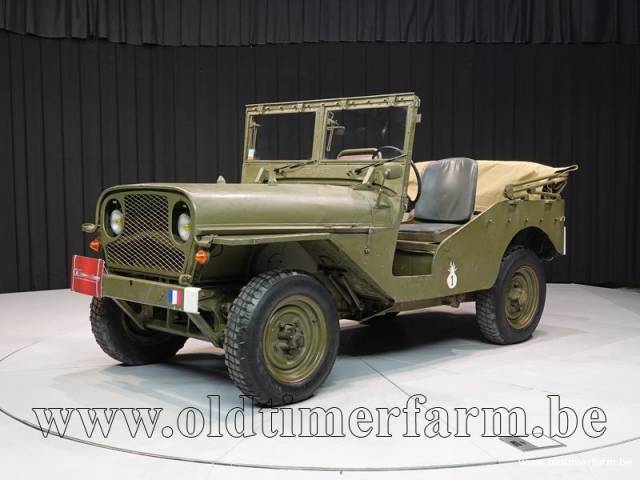
1957 | Delahaye VLR
1957 Delahaye VLRD '57
Create search alert
Let yourself be notified as soon as a listing is published that matches your search filters.
Create listing
Do you have a Delahaye VLR that you want to sell? Then create a listing now.
Create listingDelahaye VLR Classic Cars: Prices & Market Values
History of the Delahaye VLR
The Delahaye VLR (Véhicule Léger de Reconnaissance) was launched in the summer of 1950 at a decisive moment for the French car industry. With postwar economic struggles and punitive taxation triggering a sharp decline in luxury car demand, Delahaye pivoted to military utility production. Tasked with replacing American Jeeps in the French army, the project began as the 'Delta' in 1948, culminating in a vehicle that would carry the marque through challenging years. Early prototypes saw extensive military testing, and the production VLR—also designated occasionally as VLRD—was delivered primarily to military clients, with only a handful reaching private buyers. The line's end came with Delahaye’s insolvency in 1954, when Hotchkiss, a competitor, briefly continued production.
Model History
The VLR replaced imported Jeep models in the French army’s fleet, responding to postwar needs for a domestically manufactured light reconnaissance vehicle. Beginning with Renault-powered prototypes, the model transitioned through several iterations before reaching production form in 1950, with its configuration ultimately tailored for military deployment but conceived with civilian agricultural use in mind, much like the Land Rover. The VLR was the last major series produced by Delahaye before the company’s demise, after which production rights briefly passed to Hotchkiss.
Highlights of the Delahaye VLR
The VLR’s most notable feature is its thorough adaptation to military requirements: full four-wheel-drive, an 8-speed transmission including low-range and two reverse gears, admirable approach and departure angles, and a 60–70% climbing capacity. Its 4-cylinder inline engine produced 63 hp—a significant figure for the early 1950s in this category. Production numbers remain low, especially for civilian models, making survivors particularly sought-after for their engineering and historical context. The vehicle’s watertightness to 60 cm and a payload capacity accommodating four passengers or 400 kg underline its versatility.
Technical Data
Special Editions and Collectible Models
Most VLR units were built for the French military, although a small number were sold to private customers, including farmers and rural professionals. There is no known special edition or luxury variant, but surviving civilian examples are notable for their rarity and are highly documented among collectors owing to their unique provenance.
Weak Spots and Common Issues
No specific data on recurring weak spots for the Delahaye VLR is provided in current sources. However, as with most military vehicles from this era, regular attention should be paid to drivetrain wear, the condition of the transmission and all-wheel-drive components, and rust in the ladder chassis and bodywork, especially if the vehicle has been utilised in demanding off-road environments or exposed to moisture. Original components can be challenging to source due to the model's limited production run.
Engine, Performance, Transmission, and Handling
The VLR’s engine, developing 63 hp from its 2-litre four-cylinder, provides solid, reliable power for both highway and rough-terrain use. The sophisticated 4-speed transmission, combined with a transfer case, permits a total of eight forward and two reverse gear ratios. All-wheel drive ensures traction on diverse surfaces, and the vehicle manages gradients up to 70%. Steering is direct, typical of postwar military machines, and the robust suspension enables significant off-road articulation. The focus is entirely on the VLR series, as it represents both the sole and most technically advanced Delahaye offering in this 4x4 segment.
Interior, Comfort, Exterior, and Design
The VLR’s interior is utilitarian, reflecting its military origins: seating is minimalistic for up to four, and controls are robust, built for functionality over comfort. The exterior retains a clear Jeep influence—open fenders, short wheelbase, and upright stance. Materials chosen prioritise resilience: steel body panels, exposed fasteners, and easy-to-clean surfaces. Customisation from the factory was nearly non-existent, but some units in civilian hands received paint adaptations or additional storage accessories. Instrumentation is basic but legible, and switchgear is designed for use with gloves, essential for military operations.
Other Features
The VLR’s postwar development story tracks the broader trajectory of the French automotive industry under pressure, and it highlights Delahaye’s adaptability. Its innovative 4WD and drivetrain solutions remain points of interest for engineers and collectors interested in period technology.
Summary
The Delahaye VLR is an outstanding example of postwar French ingenuity, blending technical robustness with a fascinating military history. Its scarcity—especially among civilian variants—positions it as a unique chapter in automotive development. For those searching the Classic Trader marketplace, the VLR represents the full extent of Delahaye’s contribution to 4x4 technology, deserving close attention from enthusiasts and collectors sharing an interest in French vehicles and historical off-roaders.