Delahaye Type 0 classic cars for sale
The Delahaye Type 0 stands as a striking artefact from the birth of the automotive era, representing the innovative engineering and design philosophies of its time. Built by the revered French marque Delahaye, this model marks the company’s origins in the late 19th century, making every surviving example a distinct glimpse into the earliest days of motoring.
Search results
Currently, there are no matching listings for your search.
Create search alert
Let yourself be notified as soon as a listing is published that matches your search filters.
Create listing
Do you have a Delahaye Type 0 that you want to sell? Then create a listing now.
Create listingDelahaye Type 0 listing references from Classic Trader
Below you will find listings related to your search that are no longer available on Classic Trader. Use this information to gain insight into availability, value trends, and current pricing for a "Delahaye Type 0" to make a more informed purchasing decision.
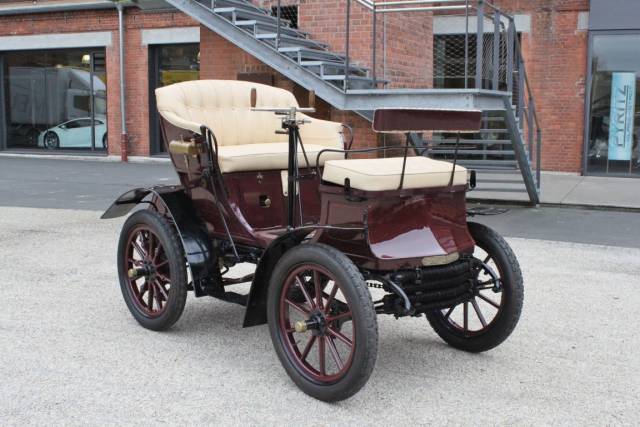
1897 | Delahaye Type 0
Create search alert
Let yourself be notified as soon as a listing is published that matches your search filters.
Create listing
Do you have a Delahaye Type 0 that you want to sell? Then create a listing now.
Create listingDelahaye Type 0 Classic Cars: Prices & Market Values
History of the Delahaye Type 0
The Delahaye Type 0 was introduced in 1894, placing it among the very first automobiles produced in France. Émile Delahaye founded the company in Tours, and the Type 0 was his inaugural attempt at a motorised vehicle. It featured a rear-mounted single-cylinder engine and was originally intended solely as a demonstration vehicle. As such, the Type 0 did not enter large-scale production, but it established the blueprint for later Delahaye vehicles: a blend of durability, mechanical ingenuity, and a focus on reliability. The Type 0’s unveiling coincided with a period of feverish invention in European automotive circles, and its technology prefigured developments that would dominate car construction for decades.
Model History of the Delahaye Type 0
Following the release of the Type 0, Delahaye expanded its range under the guidance of Émile Delahaye. The Type 0’s immediate successor, the Type 1, evolved several key mechanical elements first tried in the Type 0, refining the single-cylinder layout and improving upon its transmission and chassis design. Each subsequent Delahaye model became more refined, eventually cementing Delahaye’s reputation as a premium French builder of both touring and competition automobiles during the interwar period. The Type 0, therefore, is the essential origin point in Delahaye’s storied lineage.
Highlights and Features of the Delahaye Type 0
What makes the Type 0 especially fascinating for collectors and automotive historians is its status as a true pioneer of the French motor industry. Its design, employing a single-cylinder rear engine and rudimentary but innovative controls, speaks directly to the ingenuity of late-19th-century engineers. Although the Type 0 was not produced in volume, its technical solutions—such as the layout of controls and the organisation of mechanical elements—served as a reference point for future Delahaye automobiles.
Technical Data for the Delahaye Type 0
Special Editions and Collectible Variants
Given the experimental nature and extremely limited production of the Delahaye Type 0, each surviving example can be considered unique. No official special editions are known, but variations between individual vehicles may exist due to the artisanal construction and lack of a standardised manufacturing process in the early 1890s.
Weak Spots and Common Issues
There is scarce documentation on common issues, reflective of both the rarity of the model and the limited records from the 1890s. Prospective owners should anticipate challenges linked to age, such as frail original materials, obsolete parts, and the need for custom restoration solutions. Securing expert mechanical advice is essential, as the technology predates most mainstream automotive service know-how.
Engine and Performance, Transmission and Handling
Performance benchmarks for the Type 0 are not comparable to later Delahaye offerings, as this was a primitive, proof-of-concept vehicle. The single-cylinder engine produced modest power appropriate for demonstration and experimentation more than transport. Controls and steering mechanisms were rudimentary compared to even early 20th-century cars, but they did help lay the groundwork for Delahaye’s subsequent focus on driveability and mechanical reliability. Other notable Delahaye models include the Type 135 and Type 175, which represented a quantum leap over the Type 0 in both chassis refinement and engine performance, making them more practical and driveable for period enthusiasts.
Interior, Comfort, Exterior and Design
The Type 0’s design is entirely utilitarian, following conventions closer to horse-drawn carriages than modern cars. The wooden bodywork and open seating arrangements reflect the transitional nature of early motoring. Some examples might feature hand-crafted trimmings or unique paint reflecting their individual construction. As was the convention at the time, there was little in the way of explicit accessories or specials, though individual owners may have commissioned custom touches to interiors or coachwork.
Other Notable Features
Due to its prototype status, the Type 0 was never intended for mass-market sale, and existing examples usually have unique provenance, often tracing directly to historical demonstrations, exhibitions, or early automotive competitions. Surviving vehicles often reside in museums or appear in concours events, prized for their historical narrative as much as for their mechanical originality.
Summary
The Delahaye Type 0 is a singular piece of automotive history, representing both the origins of the Delahaye marque and the broader technical evolution of the motorcar in France. Owning or restoring a Type 0 is as much about historical stewardship as it is about vehicle ownership, with every detail providing insight into the very earliest days of motor engineering.