Dallara IR classic cars for sale
The Dallara IR series represents a crucial chapter in the story of single-seater racing, marking the Italian constructor's dominance in North American open-wheel circuits. These cars, known for their technical refinement and speed, are regarded as race-bred machines rather than road-going classics, and their presence in the collector's scene stems from their engineering pedigree and competitive history.
Search results
Currently, there are no matching listings for your search.
Create search alert
Let yourself be notified as soon as a listing is published that matches your search filters.
Create listing
Do you have a Dallara IR that you want to sell? Then create a listing now.
Create listingDallara IR listing references from Classic Trader
Below you will find listings related to your search that are no longer available on Classic Trader. Use this information to gain insight into availability, value trends, and current pricing for a "Dallara IR" to make a more informed purchasing decision.
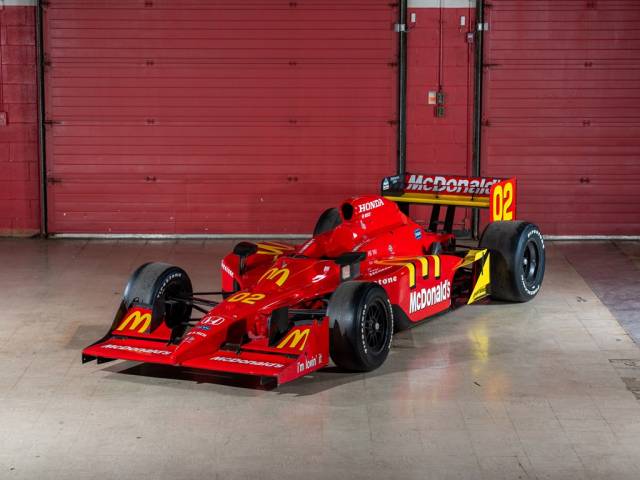
2007 | Dallara IR-05
2007 Dallara-Honda IR-05
Create search alert
Let yourself be notified as soon as a listing is published that matches your search filters.
Create listing
Do you have a Dallara IR that you want to sell? Then create a listing now.
Create listingDallara IR Classic Cars: Prices & Market Values
History of the Dallara IR series
Dallara, an Italian company known for its focus on motorsport engineering, entered the American racing scene in the late 1990s. The IR series was developed for the Indy Racing League (later known as IndyCar), starting from 1997. Following the split between IndyCar and CART, Dallara quickly became a dominant chassis supplier, capitalising on technical reliability and adaptability to different circuit types.
The IR cars replaced the early G-Force and Riley & Scott models in many teams, thanks to their structural integrity and efficient aerodynamics. Over multiple generations, the Dallara IR chassis evolved, responding to changes in regulations, with notable iterations including continuous improvements to safety, downforce, and mechanical grip.
Model history of the Dallara IR series
The original Dallara IR model debuted in 1997, with subsequent upgrades aligning with Indy Racing League's evolving requirements. Successor models included the IR-03 and IR-05, which introduced modular crash structures, more advanced suspension geometry, and aerodynamic developments.
Dallara succeeded its IR lineage with the DW12 chassis in 2012, following safety reforms after the 2011 Las Vegas crash, but the IR models remain significant for their contribution to the modern era of American open-wheel racing. There is no direct predecessor within Dallara's line, as the IR was Dallara’s entry into the series; previously, teams mostly used G-Force or Riley & Scott chassis.
Highlights of the Dallara IR series
Dallara IR chassis were known for their robust carbon-fibre composites, allowing for high-speed impacts and swiftly replaceable parts—a key advantage during the rigours of oval racing. The modular monocoque design combined with aerodynamic bodywork options made these cars adaptable across ovals, street circuits, and road courses.
The IR models also became the chassis of choice throughout the 2000s, used by almost all teams in the IndyCar series. This underlines their trustworthiness and performance in multiple race conditions.
Technical data of the Dallara IR
Special Editions and Collectible Models
Within the Dallara IR chassis lineage, special liveries and championship-winning cars hold particular appeal. Vehicles raced by notable drivers or carrying championship heritage, such as the chassis used by Sam Hornish Jr. or Scott Dixon for their title-winning seasons, are considered particularly significant by collectors. However, strictly speaking, the IR models were produced to uniform specifications without factory-built limited editions.
Engine and Performance, Transmission and Handling
Dallara IR cars were renowned for their high-speed capability, precise handling, and ability to adapt to a broad range of track conditions. The combination of advanced aerodynamics and mechanical grip enabled safe cornering speeds and stable performance on both ovals and road circuits. The sequential gearbox allows rapid gear changes, essential in race scenarios, and the chassis tuning permits fine setup adjustments for track optimisation. Popular variants to highlight include the IR-03 and IR-05, lauded for their balance between safety advancements and competitive edge. These versions featured refined underbodies and crash structures, along with compatibility for the Honda Indy V8, which became a mainstay engine in the late 2000s.
Interior, Comfort, Exterior and design
As pure race vehicles, Dallara IR cars are stripped of comfort-oriented features; their cockpits are designed solely for function, with custom-moulded seats, race harnesses, and a data-rich steering wheel forming the primary driver interface. The exterior design, sculpted for minimal drag and maximum downforce, features a low, purposeful stance, exposed wheels, and interchangeable aero kits.
Paintwork, sponsors' liveries, and team decals contribute to visual individuality. While factory design cues are minimal due to regulations, the visual character of an IR car is defined by its race history and bespoke modifications introduced by individual teams.
Summary
The Dallara IR series remains a benchmark in single-seater racing history, reflecting Dallara's engineering prowess and its central role in shaping American open-wheel competition. With every Dallara IR chassis listed constituting the sole model from the marque on the Classic Trader platform, their relevance within both the brand and classic car circles is underscored by unanimous search and listing interest. These cars appeal uniquely to motorsport collectors, offering a tangible link to professional racing’s most competitive era.