Cooper T51 classic cars for sale
The Cooper T51 redefined Formula One engineering in 1959 with its rear-engined layout and featherweight construction, making it (and its pioneering chassis) a standout in the history of British motorsport. Its combination of innovation, performance, and technical refinement attracts collectors and historic racers to this day.
Search results
Currently, there are no matching listings for your search.
Create search alert
Let yourself be notified as soon as a listing is published that matches your search filters.
Create listing
Do you have a Cooper T51 that you want to sell? Then create a listing now.
Create listingCooper T51 listing references from Classic Trader
Below you will find listings related to your search that are no longer available on Classic Trader. Use this information to gain insight into availability, value trends, and current pricing for a "Cooper T51" to make a more informed purchasing decision.
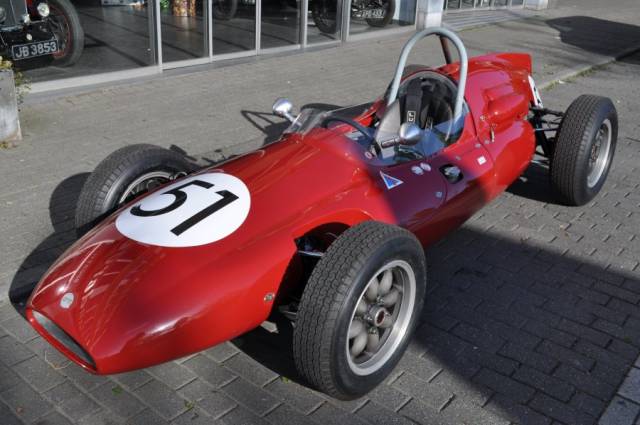
1959 | Cooper T51
A history of Cooper T51
Create search alert
Let yourself be notified as soon as a listing is published that matches your search filters.
Create listing
Do you have a Cooper T51 that you want to sell? Then create a listing now.
Create listingCooper T51 Classic Cars: Prices & Market Values
History of the Cooper T51
The Cooper T51 marked a turning point in racing car design. Developed by John Cooper and engineered by Owen Maddock for the 1959 Formula One season, the T51 emerged against the prevailing logic of the time: its engine was mounted behind the driver, a sharp departure from the standard front-engined setup. This radical concept challenged convention but soon proved its merit, with Jack Brabham driving the T51 to both drivers’ and constructors’ championships. Between 1959 and 1963, no fewer than 38 drivers piloted T51s in Grand Prix events. The car’s impact extended beyond Cooper, forcing an industry-wide rethink and hastening the decline of front-engined F1 designs.
Model History
The T51 was developed as the successor to earlier Cooper F2 and F1 machines, representing the evolution of the rear-engine experiment that had already seen limited success. After the T51, its influence led directly to successors like the Cooper T53, more refined in both chassis and aerodynamics. The T51’s era aligned with the rise of rear-engined layouts across Formula One, fundamentally shifting racing car architecture for decades to come.
Highlights of the Cooper T51
The T51’s most significant highlight is its rear-mounted Coventry-Climax engine, departing from the standard of its era. Pilots like Brabham, Moss, and McLaren piloted T51s to a remarkable string of results in 1959, scoring five victories from just nine races. The T51 was renowned for its light tubular space-frame chassis, independent suspension setup, and innovative weight distribution, including multiple cleverly-positioned fuel tanks. Its 2.5-litre engine output 220 hp at just 540 kg, making it a formidable racing tool on circuits worldwide.
Technical Data
Special Editions and Collectible Models
Within the T51 series, special chassis supplied to teams with unique specifications or specific histories (such as those campaigned by Jack Brabham, Stirling Moss, or Bruce McLaren) can be considered as particularly notable. Cars with proven race provenance or continuous documented history are typically viewed as more collectible.
Engine and Performance, Transmission and Handling
The T51’s lightweight framework and mid-mounted 2.5-litre Coventry-Climax engine created a vehicle with swift directional changes, balanced cornering, and excellent feedback to the driver. The rear-engine layout optimised weight over the driven wheels, enhancing traction on corner exit—a considerable advantage in a period dominated by heavier, front-engined competitors. The independent suspension and four-disc brake setup delivered superior control and stopping power. The T51 set benchmarks in chassis response, agility, and confidence-inspiring handling, making it exceptionally competitive throughout its career. Notable examples include T51 chassis raced by Jack Brabham in 1959, which secured both world championship titles, along with further entries for Stirling Moss and Bruce McLaren, all featuring Coventry-Climax engines, independent double-wishbone suspension, and four-speed transmissions.
Interior, Comfort, Exterior and Design
The T51’s design, with its unmistakably low nose and aerodynamic profile, was dictated by its mechanical layout. The cockpit was minimalist, focused solely on driver engagement and control, with a small perspex windscreen and tight bodywork wrapping around the central chassis. Unique to the T51 was the sharp rise behind the driver, housing the rear-mounted engine. Chassis numbers and bespoke colour schemes assigned to individual customer teams provide further distinction. Typical fitments were functional and competition-focused, without luxury or comfort features—period instrument clusters and lightweight seats reinforced its motorsport intent.
Other relevant features
The Cooper T51’s revolutionary impact on motorsport engineering has ensured its ongoing influence in historic racing. Cars with robust original documentation and continuous provenance have a higher standing among collectors and at historic motorsport events.
Summary
The Cooper T51 fundamentally reshaped Formula racing with its mid-engined layout and attainment of both world drivers’ and constructors’ championships in 1959. Its technical brilliance—combining featherweight construction, a potent Coventry-Climax engine, and pioneering mass distribution—makes it a frequent star in historic races. Whether in original Grand Prix trim or carefully-restored condition, the T51 remains a central artefact of racing history and British engineering progress.