- Car
- Bizzarrini
- Bizzarrini GT Europa 1900 (1 offer)
Bizzarrini GT Europa 1900 classic cars for sale
Developed by the renowned Giotto Bizzarrini and first unveiled in 1966, the GT Europa 1900 stands out with its lightweight fibreglass body, advanced engineering and rare production volume of just 12 to 14 examples completed by the factory. With front-mid engine layout and a spirited Opel 1.9-litre engine, it delivers distinct driving dynamics, reserved for true connoisseurs of 1960s Italian sports car craftsmanship.
Search results
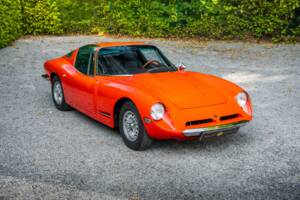


Bizzarrini GT Europa 1900 listing references from Classic Trader
Below you will find listings related to your search that are no longer available on Classic Trader. Use this information to gain insight into availability, value trends, and current pricing for a "Bizzarrini GT Europa 1900" to make a more informed purchasing decision.
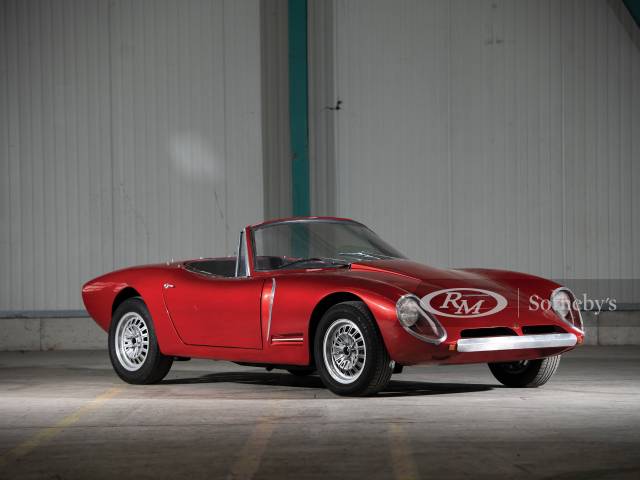
1969 | Bizzarrini GT Europa 1900
Online Only: The European Sale featuring the Petitjean Collection

Bizzarrini GT Europa 1900 Classic Cars: Prices & Market Values
Introduction and history of Bizzarrini GT Europa 1900
The Bizzarrini GT Europa 1900 was born from the ambition of Giotto Bizzarrini, who brought engineering excellence from his work at Ferrari, notably the 250 GTO, into his own venture. Presented at the 1966 Turin Motor Show, the GT Europa 1900 was envisioned as a smaller, more accessible companion to the renowned 5300 GT Strada. Built at the Livorno facility, its brief production run between 1966 and 1968 yielded at most 14 factory-completed cars, with additional unfinished bodies marking the turbulent financial times of the marque. Its underlying structure nods to its more illustrious siblings, yet imbued with an ethos of purity: lightweight fibreglass bodywork, stripped-down interiors, and a commitment to motorsport-inspired performance.
Model history
The GT Europa 1900 followed the much more powerful 5300 GT Strada, targeting a lower segment with comparably modest displacement and cost. Bizzarrini initially mated the car with the Fiat-OSCA 1500 engine, later switching to Opel's 1.7- and then 1.9-litre four-cylinders for the final cars. No true direct successor followed, as Bizzarrini's financial troubles effectively ended series production. Nevertheless, unfinished chassis and bodies hint at a broader ambition that was ultimately curtailed.
Highlights of Bizzarrini GT Europa 1900
• Monocoque body in lightweight fibreglass/reinforced plastic (GFK), remarkable for mid-1960s standards. • Front-mid engine layout with longitudinally mounted 1.9-litre Opel engine. • Output ranging from 105–110 PS in production trim, with race-tuned variants reportedly exceeding 200 PS. • All-round disc brakes and independent suspension for true sports car dynamics. • Curb weight as low as 650–700 kg, supporting agile handling. • Extremely rare: only 12–14 complete Bizzarrini-built examples; unmatched exclusivity even among Italian exotics. • Registered in the ISO-Bizzarrini global register. • Purist, functional black interior with period-correct detailing. • Standard fitment with Campagnolo Electron alloys and tinted windscreens. • Documented peak speed: ~200 km/h, 0–100 km/h in ~7.2 seconds, depending on specification.
Technical data
Special Editions and Collectible Models
A handful of race-tuned or specially modified Europa 1900 units reportedly achieved outputs well above the standard 110 PS, making them particularly sought after by collectors focused on motorsport heritage. These few individualised builds, however, are not documented as factory editions but rather as period upgrades or custom works.
Weak Spots and Common Issues
Due to the extremely limited number of survivors and the unique, partially hand-built fibreglass construction, potential buyers should check for previous body repairs or structural weaknesses. Some unrestored chassis may originate from incomplete original stock, sometimes affected by careless handling during Bizzarrini’s financial crises. Spare parts for unique details like the Campagnolo wheels or bespoke trim elements can be exceptionally challenging to source. The Opel mechanicals, in contrast, tend to be robust and easily serviceable by classic car specialists familiar with the period.
Engine and Performance, Transmission and Handling
The GT Europa 1900’s character is defined by its front-mid engine layout and featherweight construction. With its Opel four-cylinder positioned well behind the front axle, balance is excellent, resulting in neutral and responsive cornering. At roughly 650–700 kg, the car reacts instantly to inputs, and four disc brakes provide ample stopping power for spirited road use. Depending on specification, acceleration from standstill to 100 km/h occurs in as little as 7.2 seconds, and the car can reach a documented top speed of 200 km/h. The limited-slip differential, lightweight chassis and independent suspension further underline the model’s driver-focused engineering. Most surviving examples are equipped with the 1.9-litre Opel engine (1900). A small number were fitted with the earlier 1.5-litre Fiat-OSCA engine or later received aftermarket modifications—these are particularly notable for their rarity and performance nuances. Performance figures: 105–110 PS standard, custom race versions upwards of 200 PS.
Interior, Comfort, Exterior and Design
The GT Europa 1900 exterior follows the fastback lines of its larger siblings, presenting a compact physique with distinctive Bizzarrini DNA. The hand-laid fibreglass body allowed for lightweight design and subtle racing details. Functional, black minimalist interiors focus on core instrumentation and basic comfort, with little luxury but plenty of purpose. Campagnolo Electron wheels, period racing-style latches for doors and bonnets, and tinted windscreen glass signal period engineering at its most authentic. Individuality arose through limited production, so small details and finishes may vary between cars. Special accessories and trims are exceedingly rare, with most cars retaining a purist spec as intended by Giotto Bizzarrini.
Other relevant features
The GT Europa 1900’s history is meticulously documented in the ISO-Bizzarrini International Register. Given the limited production, each chassis carries a wealth of provenance for marque historians.
Summary
The Bizzarrini GT Europa 1900 represents one of Italy’s rarest and most technically intriguing 1960s sports cars. Built by Giotto Bizzarrini as a lightweight, accessible alternative to his V8-powered models, the car’s advanced engineering, minimal production run, and racing-focused layout give it a unique character on today’s classic car market. For collectors and enthusiasts, this car offers both mechanical excitement and a tangible link to one of Italy’s most innovative automotive minds.