- Car
- Armstrong-Siddeley
- Armstrong-Siddeley Star Sapphire (1 offer)
Armstrong-Siddeley Star Sapphire classic cars for sale
The Armstrong-Siddeley Star Sapphire, produced from 1958 to 1960, represents the final chapter in the brand’s automotive history. Famed for its refined engineering, subtle technical upgrades over its predecessor, and distinctive British executive saloon flair, the Star Sapphire offers a rare glimpse into Coventry’s engineering prowess.
Search results
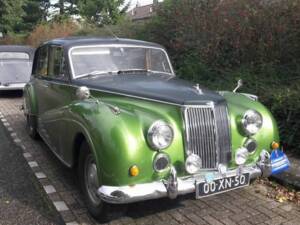
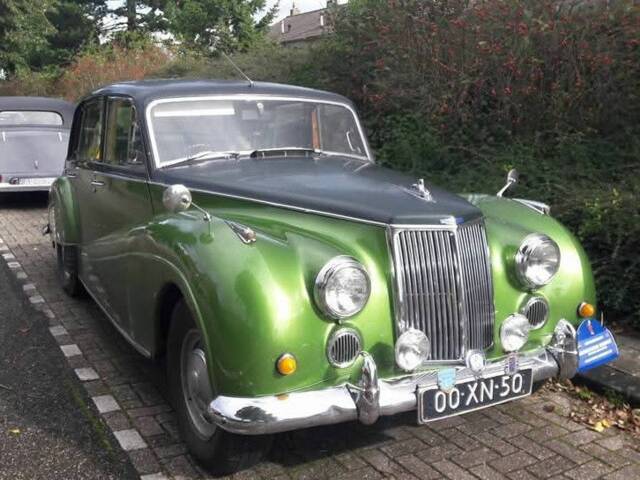
1959 | Armstrong-Siddeley Star Sapphire
Armstrong Siddeley Star Sapphire | 1959 | Route 66 Auctions - For sale by auction. Estimate 4500 EUR
Armstrong-Siddeley Star Sapphire listing references from Classic Trader
Below you will find listings related to your search that are no longer available on Classic Trader. Use this information to gain insight into availability, value trends, and current pricing for a "Armstrong-Siddeley Star Sapphire" to make a more informed purchasing decision.
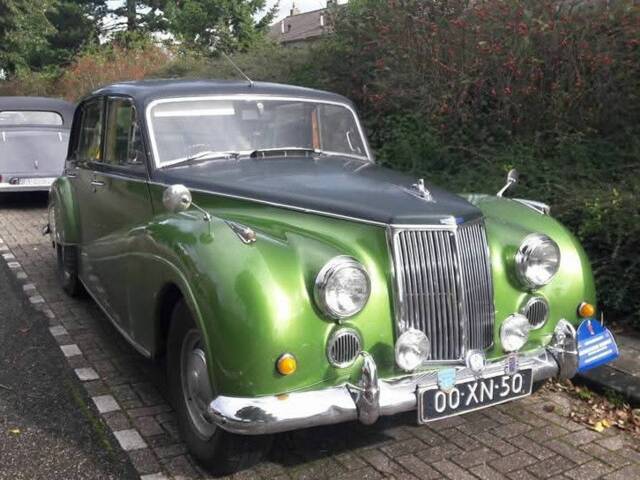
1959 | Armstrong-Siddeley Star Sapphire
Armstrong Siddeley Star Sapphire | 1959 | Route 66 Auctions - For sale by auction. Estimate 5500 EUR
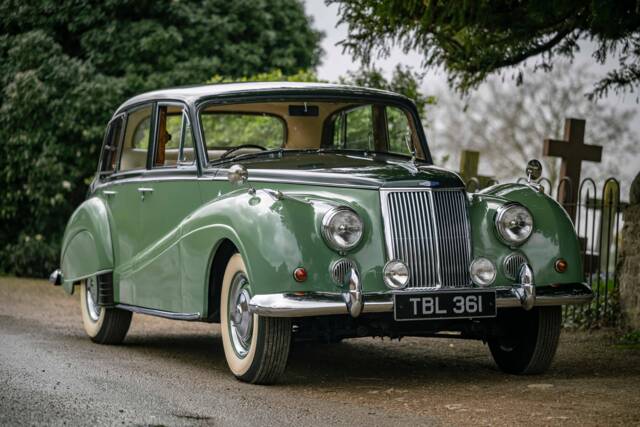
1959 | Armstrong-Siddeley Star Sapphire
Fabulous Star Sapphire – Enthusiast Owned
Armstrong-Siddeley Star Sapphire Classic Cars: Prices & Market Values
Introduction and history of Armstrong-Siddeley Star Sapphire
The Armstrong-Siddeley Star Sapphire marks the culmination of the marque’s tradition-rich journey, rooted in the engineering heartland of Coventry. Initially renowned for aircraft engines, Armstrong Siddeley transitioned into car manufacturing post-1919. By the late 1950s, the Star Sapphire emerged as the swansong—debuting in October 1958. It mirrored the understated executive luxury of its era, blending advanced technology with discreet British elegance. Armstrong Siddeley’s merger with Bristol Aero Engines in 1959 signalled the end of its car-building legacy, with the Star Sapphire being its last series.
Model history
The Star Sapphire succeeded the Sapphire 346, an executive saloon introduced in 1952 featuring a six-cylinder inline engine and a reputation for solid, understated engineering. The Sapphire 346 itself was more evolution than revolution, with extended wheelbase versions appearing in 1955. Parallel developments included the Sapphire 234 and Sapphire 236, which shared chassis and bodywork but used different engines and were produced in smaller numbers. The Star Sapphire brought incremental changes, particularly in powertrain and minor cosmetic elements. Its intended successor, the Star Sapphire Mark II, never saw production, as car manufacturing ceased with the Bristol Aero Engines merger.
Highlights of Armstrong-Siddeley Star Sapphire
Key technical highlights include the enlarged 3990cc six-cylinder engine with a 16% increase in displacement and 30% more torque than the Sapphire 346, indium-coated bearings, and a vibration-damped crankshaft for smoother running. The introduction of power-assisted Girling brakes and recirculating ball steering reduced the turning circle by 1.37 metres, improving urban manoeuvrability. The BorgWarner automatic gearbox boosted comfort—a forward-looking feature among late 1950s British saloons. As recognition of its design, the Star Sapphire won first prize for best bodywork at the Earls Court Motor Show.
statistically, the Star Sapphire represents 100% of available and viewed Armstrong-Siddeley models in current listings, underscoring its scarcity and focused collector interest within the marque.
Technical data
Special Editions and Collectible Models
A limited number of long-wheelbase vehicles were produced (77 units), alongside 73 Pullman limousines—these offer particular rarity due to their low production numbers. Some chassis were converted for ambulance and hearse duties, further reducing the numbers of surviving examples in standard saloon form.
Weak Spots and Common Issues
While no detailed weak spots are provided, buyers should pay attention to bespoke technical elements such as indium-coated bearings and the BorgWarner transmission, as parts can be uncommon. Braking and steering systems are technically advanced for the period and require careful, knowledgeable maintenance. Availability of some replacement parts may be an issue due to the low production number and end of manufacturer support in 1960.
Engine and Performance, Transmission and Handling
The 4.0-litre six-cylinder represents a notable progression in torque and smoothness from the Sapphire 346, aided by the use of a vibration damper and advanced bearings for the era. The car’s top speed of 159 km/h was competitive for its class. The automatic gearbox was both comfortable and forward-thinking, and aided by power steering and brakes, the car was easier to handle and more precise than its predecessor. These innovations made the Star Sapphire a substantial and enjoyable cruiser for its time. Most sought-after are the rare Pullman limousines and long-wheelbase versions, each produced in only a handful of examples.
Interior, Comfort, Exterior and design
The Star Sapphire followed the late 1950s British luxury saloon aesthetic, with restrained lines and classical proportions. Noteworthy are its redesigned radiator grille, no longer integrated with the bonnet’s upper line, and subtle trim upgrades. The interior was designed for comfort, with a commanding driving position and the luxury appointment expected from a top-line executive model. Special colours, high-grade materials, and period accessories like walnut veneer dashboards and lambswool carpets were typical, helping distinguish the Star Sapphire from its less exclusive contemporaries.
Other relevant features
The Star Sapphire carries historical significance as Armstrong Siddeley’s final car before the merger, making it an emblematic close to an era of British engineering. Pricing at launch (2646 GBP) positioned it alongside the upper echelons of executive motoring in postwar Britain.
Summary
The Armstrong-Siddeley Star Sapphire, produced from 1958 to 1960, encapsulates postwar British luxury, advanced engineering, and the end of Armstrong Siddeley’s storied car production. With just over a thousand produced in total—covering standard, long-wheelbase, Pullman limousine, and some specialist chassis—surviving examples are highly individual, technical, and culturally significant, standing out in the classic saloon sector for their nuanced advancements and authentic Coventry craftsmanship.