Adler 2.5 Litre classic cars for sale
The Adler 2.5 Litre, produced between 1937 and 1940, is a remarkable example of advanced pre-war German engineering. With fewer than 50 units thought to survive worldwide, its streamlined body, six-cylinder engine and Bauhaus-influenced design by Walter Gropius make it a fascinating and exclusive choice for classic car enthusiasts.
Search results
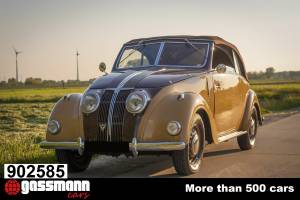
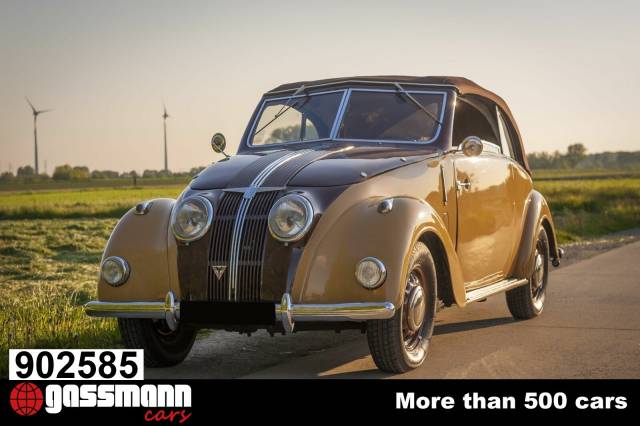
1938 | Adler 2,5 Litre
ADLER 2.5L Type 10 Cabriolet von Karmann

Adler 2.5 Litre Classic Cars: Prices & Market Values
Introduction and history of Adler 2.5 Litre
The Adler 2.5 Litre—also known as the Adler Typ 10 Autobahn—was developed in response to government guidelines for mid-size cars with a 2.5-litre engine capacity. Built from 1937 to 1940, only 5,200 units left the Adler factory. The outbreak of World War II abruptly ended its production, with postwar restrictions stopping any attempts at revival. Many of the remaining vehicles were exported, since new production was forbidden by the Allied powers. After the war, Adler shifted to manufacturing typewriters, closing the chapter on its automotive ambitions.
Model history
The 2.5 Litre followed previous Adler models but marked a technical and stylistic leap. Karl Jenschke, previously a close collaborator of Ferdinand Porsche and later chief designer at Auto Union, was responsible for its engineering. The model was renowned for setting 28 international class records between 1935 and 1936, underlining its advanced design. Later examples—introduced from 1939—differed with additional rear wheel covers, a larger boot lid, rounded instruments, and a better-concealed fuel filler. Earlier cars lack these features. There was no direct successor, as Adler exited the car industry after WWII.
Highlights of Adler 2.5 Litre
One of the most striking features is the car’s streamlined body—clearly influenced by Bauhaus principles—designed by Walter Gropius, who also created the emblematic Adler logo. The interior layout allows three people to sit side-by-side at both the front and back, an unusual feature even among large saloons of its era. The large sliding sunroof and distinctive split 'pretzel' rear window further set it apart from competitors. During its brief production run, the 2.5 Litre established 28 international records, showcasing its technical excellence. Even today, one was awarded first place in the "Special Coachwork Sport" class at the 2019 Concours d’Elegance. The model represents 100% of supply and demand for Adler classic listings in our database, underscoring its significance as Adler’s most recognised classic car.
Technical data
Special Editions and Collectible Models
While not officially released as special editions, variations during production—such as the addition of rear wheel covers, a larger boot lid, and differently styled instruments from 1939 onwards—are notable among collectors. The model’s connection to Walter Gropius and its track record of international racing successes have contributed to its status as a sought-after vehicle among pre-war saloon cars.
Weak Spots and Common Issues
No specific common technical issues are documented in the available data. As with many vehicles from this era, potential buyers should carefully inspect the condition of the bodywork, mechanical components and interior fittings due to the scarcity of replacement parts, and consider the impact of historic modifications or restoration work.
Engine and Performance, Transmission and Handling
Power comes from a 2.5-litre six-cylinder inline engine that ensures smooth running and adequate motorway pace for late 1930s standards. The drivetrain and handling were oriented for comfort, with a quiet operation and a focus on stability at sustained speeds. The car’s streamlined design provided aerodynamic advantages, despite its considerable overall width. The factory declared a top speed of 125 km/h, while comfortable cruising on the Autobahn was between 80 and 100 km/h, with fuel consumption averaging 12–14 litres per 100 km. Ride comfort is enhanced by the spacious interior, sliding sunroof, and effective heating system. Particularly, collectors value the later production models (from 1939) featuring rear-wheel covers, a larger boot lid, and round instruments. These details help distinguish earlier from later cars and are markers of evolution within the series.
Interior, Comfort, Exterior and Design
Walter Gropius, a co-founder of the Bauhaus movement, was responsible for the aerodynamic body design as well as the characteristic Adler crest with extended wings. The split windscreen and distinct 'pretzel' rear window are easily recognisable details. The expansive sliding sunroof offers open-air flair—rare among saloon cars of the era. The wide interior bench seats, capable of accommodating three passengers abreast in both the front and rear, point to a design focused on comfort for long journeys. Standard factory heating added to passenger comfort. The streamlined exterior was available in period-typical paint finishes and makes the car visually relevant to interwar design trends.
Other relevant features
The Adler 2.5 Litre stands out not only for its technical and design merits but also for its historical significance. As a model directly shaped by government automotive policy and later impacted by wartime restrictions and postwar industry shifts, it embodies a crucial phase in German automotive history. Its rarity today, with only about 50 examples surviving, underscores its exclusivity.
Summary
The Adler 2.5 Litre exemplifies innovative 1930s automotive engineering, pioneering Bauhaus-influenced design, and comfortable grand touring credentials. Produced in limited numbers and featuring advancements like a six-cylinder engine and streamlined shape, it remains a highly distinctive classic car with significant historical importance. Its small surviving population makes every example a notable piece of automotive heritage.