Wartburg 353 classic cars for sale
The Wartburg 353, introduced in 1966 by AWE in Eisenach, was a practical and robust mid-size family car for the Eastern Bloc. It stands out with its distinctive three-cylinder two-stroke engine, flexible body configurations, and simple mechanics. Due to its long production period and continued popularity, you can find a variety of versions, spares, and accessories for the 353 today.
Search results
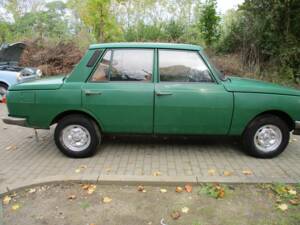
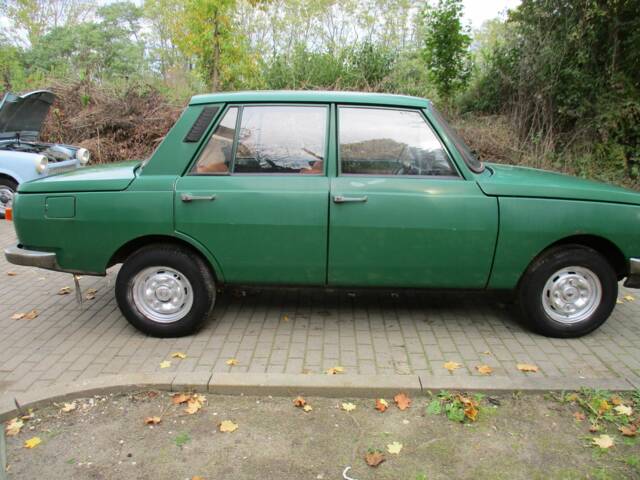
1980 | Wartburg 353 W
Wartburg 353
History of the Wartburg 353
Unveiled in 1966, the Wartburg 353 represented both continuity and innovation for East German car production. Emerging from VEB Automobilwerk Eisenach, the 353 replaced the 312 and brought upgrades in mechanics and comfort, while keeping the tried-and-true two-stroke engine. Hans Fleischer’s bodywork design, supported by Clauss Dietel and Lutz Rudolph, gave the car a modern appearance, even in comparison with Western models. Exported as the Wartburg Knight, the 353 quickly became a fixture throughout Eastern Europe and beyond. Its production spanned 22 years, the longest for any Wartburg model, with more than 1.2 million units leaving the factory before the model was succeeded by the Wartburg 1.3 in 1988.
Model History of the Wartburg 353
The Wartburg 353 directly followed the 312, inheriting some components but introducing important updates, especially to suspension and comfort. Initially, only minor design tweaks distinguished early 353s from their predecessors. In 1975, the model was updated and became the 353W (W for 'Weiterentwicklung', or 'further development'), bringing technical improvements such as disc brakes at the front and modernised mechanical components. The final evolution included the 1985 facelift, featuring a modified front section and engine details. The 353 line was succeeded by the Wartburg 1.3 in 1988, marking the end of the era for the two-stroke engine.
Highlights of the Wartburg 353
One of the most distinctive features of the Wartburg 353 is its three-cylinder, 1-litre two-stroke engine, renowned for its characteristic sound and simple engineering. The body style range included four-door saloons, estates (Tourist), and even specialised conversions for ambulance or military use (NVA). The car used independent suspension on all four wheels and, from 1975, front disc brakes. Numerous original accessories are still available, such as roof racks and period documentation.
Statistical data from our listings shows: The Wartburg 353 holds a share of 100% among listed Wartburgs, both in terms of supply and user interest, reflecting its exceptional dominance and popularity within the Wartburg lineup.
Technical Data
Special Editions and Collectible Models
The Wartburg 353 was available in several notable versions, including the 'Tourist' estate, ambulance and NVA (National People’s Army) special vehicles. The 353W, introduced in 1975, is significant for its technical upgrades and is often valued by collectors for these features. The 1985 facelift models, featuring revised front-end styling and improved carburettors, are also noteworthy for enthusiasts and restorers.
Weak Spots and Common Issues
Owners should pay close attention to the usual signs of body corrosion, especially underbody and wheel arches. The simple two-stroke engine is robust but requires regular maintenance, correct lubrication, and clean carburettor setup. Brake systems, especially drum and early disc setups, should be checked for proper function. Due to the age of most examples, restoration needs (interior and exterior) are common and spare parts availability varies by country.
Engine, Transmission and Handling
The 1.0-litre, three-cylinder two-stroke engine delivers distinct sound and peppy low-end torque ideal for city driving and light family utility. Power is transferred via a fully synchronised four-speed manual gearbox, providing predictable and engaging operation for classic motoring aficionados. Suspension offers reasonable comfort for a car of its class and age, especially after the 1975 updates. Braking performance was upgraded in later years with the move to front disc brakes.
Popular models include the standard four-door saloon for everyday road use and the estate (Tourist) for practical cargo and family transport. Both retain the characteristic driving experience of the 353. undefined
Interior, Comfort, Exterior and Design
The Wartburg 353 combined practical design with Eastern European engineering simplicity. Hans Fleischer’s body concept was enhanced by Clauss Dietel and Lutz Rudolph, yielding a clean, straightforward silhouette. Early models offered fabric seats and functional dashboards, with later versions providing improved materials. The estate ('Tourist') featured ample loading space, while various colours were available according to market and period. Specialist accessories, including roof racks and period-correct extras, can still be sourced for restoration or personalisation projects.
Other Features
Original accessories and documentation, including spare parts, factory manuals, and roof racks, remain available for dedicated restorers. Vehicles were often registered as classics or veteran cars in multiple European countries, confirming ongoing international interest and support for the 353 community.
Summary
The Wartburg 353 stands as one of the most recognisable classics from Eastern European automotive history. Its two-decade production span brought continuous mechanical upgrades and body variations, making it both accessible and interesting for collectors and enthusiasts. With 100% of Wartburg listings represented by this model, the 353 is the defining choice for those seeking a piece of automotive history that is practical to maintain, distinctive in operation, and offers a unique slice of motoring culture from the other side of the Iron Curtain.