Suzuki SJ classic cars for sale
The Suzuki SJ model series, encompassing the renowned SJ410, SJ413, and Samurai, offers uncompromising off-road capabilities in a lightweight, utilitarian package. Produced from the late 1970s through the 1990s, these four-wheel drive vehicles have cemented their status through mechanical simplicity, enduring reliability, and strong parts availability. With variants such as cabriolets, hardtops, and specialised editions, the SJ remains a mainstay for enthusiasts looking for rugged, no-nonsense adventure vehicles.
Search results
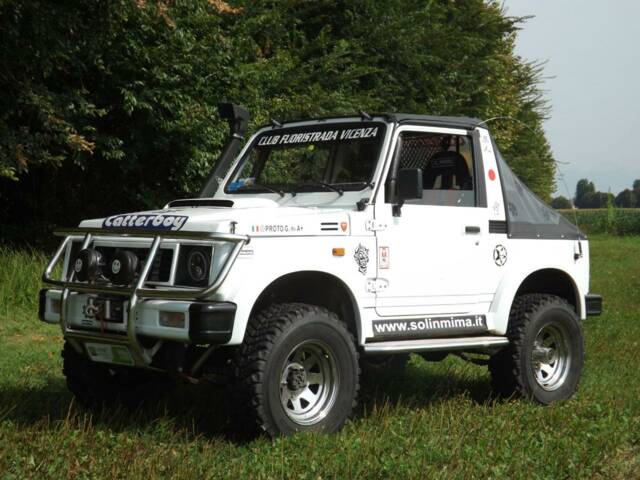
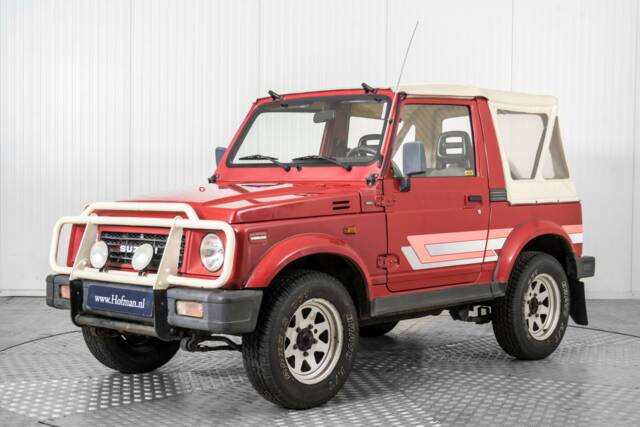
1991 | Suzuki SJ Samurai
Suzuki Samurai 4x4 1.3 Cabrio Softtop
Auctions ending soon

Loading…
Loading…
Loading…
Loading…
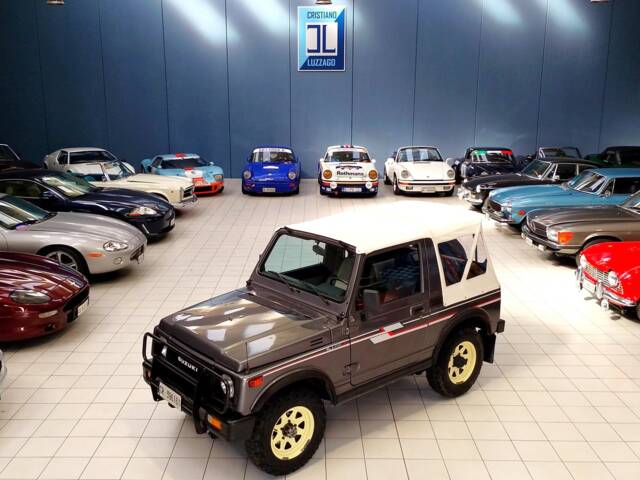
1988 | Suzuki SJ 413
SUZUKI SANTANA SJ 413 (1988)
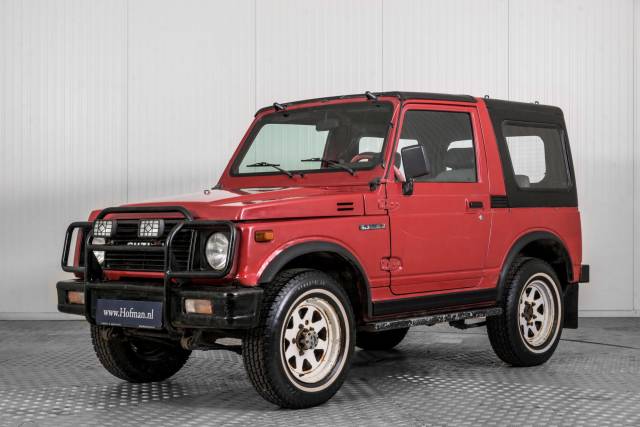
1986 | Suzuki SJ 413
Suzuki Samurai 4WD
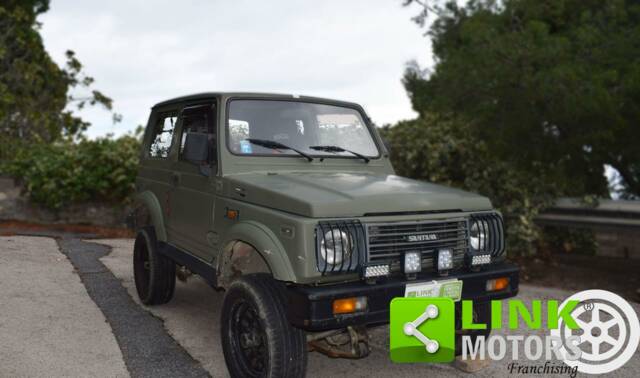
1991 | Suzuki SJ Samurai
SUZUKI Samurai 1.3 64CV del 1991
Suzuki SJ listing references from Classic Trader
Below you will find listings related to your search that are no longer available on Classic Trader. Use this information to gain insight into availability, value trends, and current pricing for a "Suzuki SJ" to make a more informed purchasing decision.
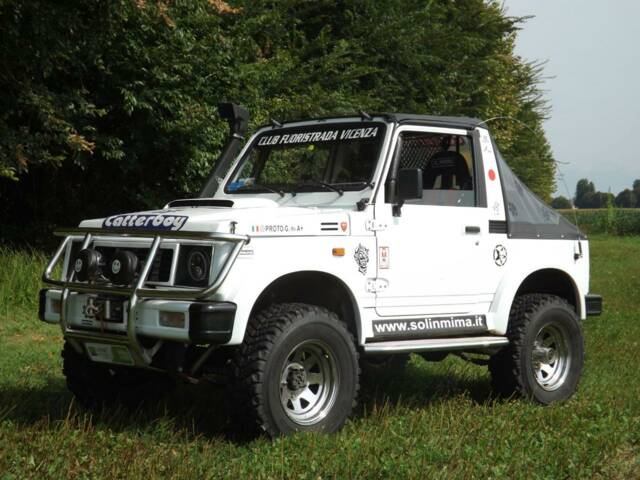
1989 | Suzuki SJ Samurai
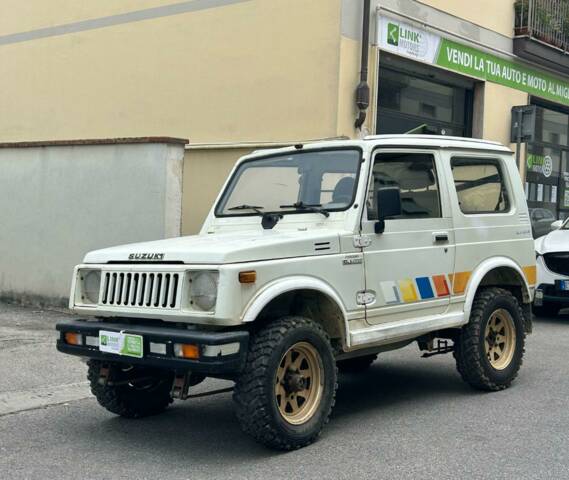
1991 | Suzuki SJ Samurai 1.0
SUZUKI Samurai 1.0 Berlina
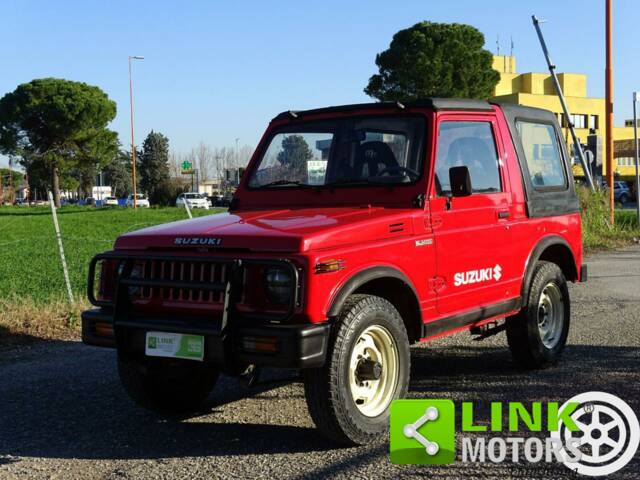
1986 | Suzuki SJ 410
SUZUKI SJ 410 Samurai 45 CV
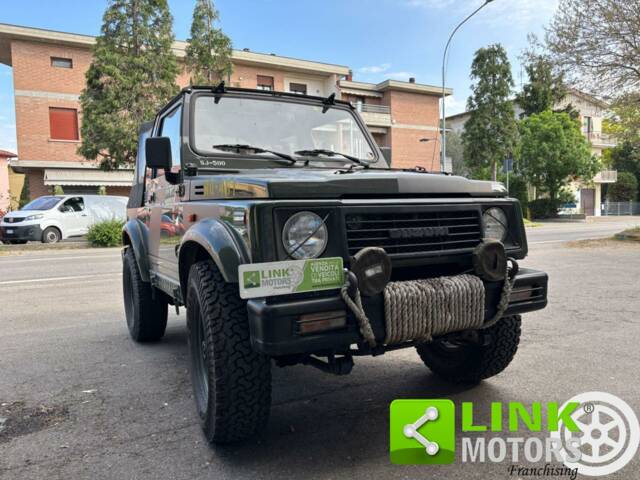
1989 | Suzuki SJ Samurai
SUZUKI Samurai 1.3 benzina/GPL
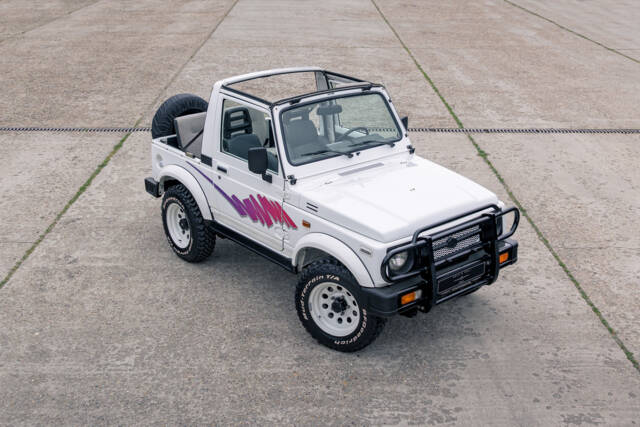
1993 | Suzuki SJ Samurai
Sought after four-seater configuration | Original Polar White paint with factory stickering | Fully stamped service records
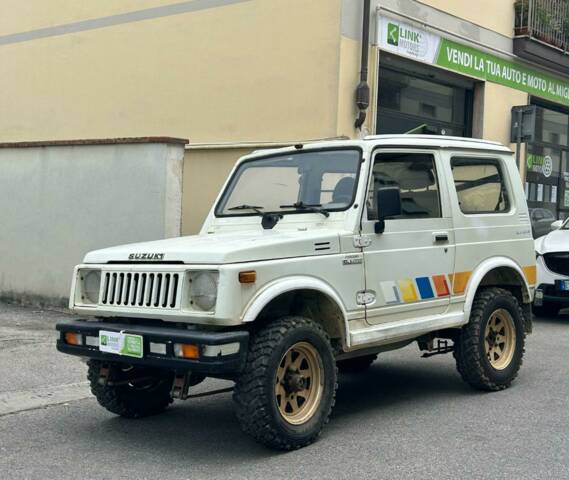
1991 | Suzuki SJ Samurai 1.0
SUZUKI Samurai 1.0 Berlina
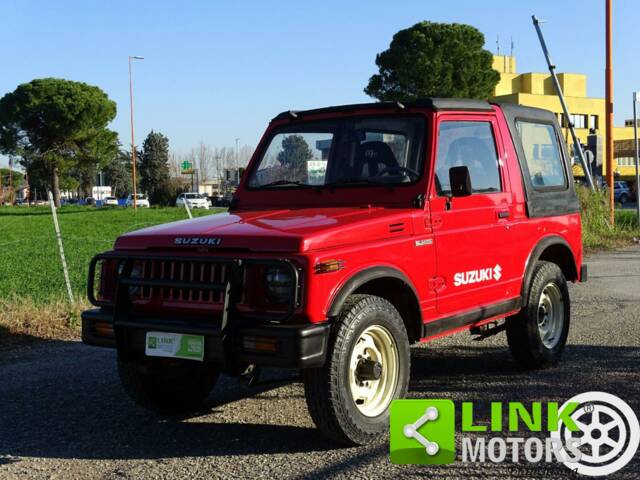
1986 | Suzuki SJ 410
SUZUKI SJ 410 Samurai 45 CV
Suzuki SJ Classic Cars: Prices & Market Values
The market value of Suzuki SJ classic cars is primarily determined by the specific manufacturer code and variant, as well as technical condition, originality and mileage. Additional factors include rarity, history and documentation. A well-maintained, largely original vehicle with low, verifiable mileage and complete history including appraisals and documentation typically achieves significantly higher prices than a comparable vehicle with deferred maintenance, many modifications or unclear provenance.
Suzuki SJ: Market Prices & Value Trends
Based on Classic Trader marketplace sales data from March 2021 to January 2026, the Suzuki SJ (including SJ 410, SJ 413 and SJ Samurai) shows a generally firm, slightly rising market, with most mainstream asking prices clustering higher in the last 12–18 months. Across Europe, the bulk of adverts sit in the €5,000 to €10,000 band for usable, correctly presented cars, while clean, well-sorted examples commonly land around €7,000–€9,000. At the cheaper end, project-grade or cosmetically tired SJs appear from roughly €3,000–€5,000, but these should be treated cautiously as condition varies widely. At the top end there are occasional standout prices (around €15,000–€17,000, and a few even higher), which look like condition-led outliers rather than the everyday market. Italian listings dominate the dataset, with some Dutch, Belgian and UK entries (one UK advert at £6,006). This stability is supported by the SJ’s classic 4x4 simplicity, growing nostalgia appeal and limited supply of rust-free originals, which helps better examples hold their value.
History of the Suzuki SJ Series
The Suzuki SJ series first appeared in the late 1970s, building on the success of the LJ series as a pioneering compact off-roader. Designed to be lightweight, simple, and capable in tough terrain, the SJ saw global production and was offered in various forms including Cabriolet, Hardtop, Pickup, and Long Wheelbase versions. Italian and broader European markets sometimes recognised the Santana version, built under licence in Spain due to tariff restrictions on Japanese imports. The SJ’s combination of part-time four-wheel drive, robust leaf spring suspension, and minimal bodywork made it an instant favourite in both urban and rural settings. Its influence was pivotal in paving the way for the globally successful Suzuki Samurai and Jimny lines. The SJ also gained notoriety in rally and military applications, including participation in the Paris Dakar, further proving its rugged DNA.
Model Development and Variants
The SJ range began with the SJ410, launched in 1979 and featuring a 1.0-litre engine with 37 kW. The SJ413 followed in 1981 with a stronger 1.3-litre engine. Cabins and running gear were continually improved, leading to versions like the Samurai from 1988, with enhancements including a 5-speed gearbox and, from 1990, G-Kat catalytic converters to meet new emissions regulations. Across its lifespan, the SJ series was produced in several body styles, from short wheelbase soft tops to hardtop variants, and in specialised configurations for military and other uses. Spanish Santana-built models are notable for their local assembly and mix of European and Japanese components. Production of the SJ lingered in some markets well into the early 2000s, largely due to global demand and the enduring appeal of its rugged construction.
Highlights and Standout Features
The Suzuki SJ series is celebrated for its compact dimensions, robust design, and genuine off-road capability. It offers selectable all-wheel drive, leaf spring suspension both front and rear, and highly accessible mechanicals—factors that contribute to its reputation as a go-anywhere workhorse. Popular variants include Cabriolet and Hardtop models, with payloads up to roughly 396 kg and maximum towing capacity around 1,100 kg. Spanish-built Santana SJs are recognised for their hybrid sourcing of parts and badging. Special editions and military variants, like the MIL, further distinguish the lineup. Compared to the wider Suzuki classic spectrum, SJs are especially significant: 78% of all Suzuki classic listings are SJs, indicating extremely strong supply in the market. Of the SJ series, the SJ413 attracts 56.1% of demand (measured in listing views), highlighting its popularity, while supply focuses more broadly across all SJs.
Technical Data
Special Editions and Limited-Run Models
Special variants include the MIL (military model) with adapted seating, doors, and, in some cases, locking differentials or unique bodywork. Santana-made SJs for the European market are distinguished by their special badging and mixed assembly of European and Japanese parts. Rare accessories include factory removable hardtops and unique colour combinations or configurations for special deployments.
Weak Spots and Common Issues
Rusted bodywork is prevalent across all SJ versions, specifically at wheel arches, sills, inner wheel wells, and underbody seams. The frame typically withstands better, but extensive corrosion on the body is common—replacement with GRP panels is not unusual. Heaters may fail due to blocked hoses, rubber suspension bushes and anti-roll bar mounts can deteriorate, and leaky shock absorbers are also frequent. Early SJ410 models suffer from pronounced rust at body joints and have relatively low power. SJ413s occasionally develop carburettor issues, high-mileage gearbox or clutch wear, and shifting mechanism problems. Samurai models, while slightly improved, may experience start-up issues with automatic chokes and stability concerns in rapid lane changes. Later Samurai (post-1990, G13B engines with G-Kat) are preferable for emissions compliance and lower tax costs. A thorough underside and body inspection is essential. Expect no modern electronic safety systems such as ABS/ESP, and budget for typical rust repairs.
Engine, Performance and Handling
All SJ variants feature four-cylinder petrol engines, either the 1.0-litre (SJ410) or 1.3-litre (SJ413/Samurai), paired with manual four- or five-speed gearboxes. Selectable part-time all-wheel drive and low-range transfer case are standard, supporting genuine off-road driving on demanding terrain. The direct steering, rigid axles, and leaf springs provide a true classic off-road feel but can be harsh on paved roads. Maximum power never exceeds 64 hp, which translates to moderate acceleration but excellent torque for climbing and slow-speed manoeuvres. Later models (Samurai, post-1988) offer longer wheelbases for improved stability, with specific versions tailored for military and expedition use. - SJ410 (1.0-litre, 37 kW)
- SJ413 (1.3-litre, 47 kW)
- Samurai (1.3-litre, 64 hp, 5-speed gearbox, G-Kat)
Interior, Comfort, Exterior and Design
Styling is strictly functional: upright two-box architecture, pronounced wheel arches, exposed hinges, and simple steel bumpers define the SJ's look. Cabriolet models may have soft or removable hard tops; Kombi and Hardtop versions offer more weather protection. Special editions like the MIL or Santana feature bespoke badges and, occasionally, unique paint or interior trims. The cockpit is spartan: durable textiles or vinyl, straightforward instrumentation, and minimal accessories underscore the rugged intent. Factory extras, such as off-road tyres, reinforced suspension, and specialist hardtops, are sometimes found. Many SJs feature period aftermarket wheels or steering wheels installed by enthusiasts. Accessories could include winches, jacks, or additional tools catering to expedition or farm use.
Other Notable Features
Replacement parts availability remains strong worldwide, and many SJs are still sourced as southern European imports due to the favourable climate for corrosion prevention. Documentation such as original toolkits and service manuals is commonly found. Enthusiast scene is active; modifications for off-road use, such as reinforced suspension or snorkels, are popular and well-supported by aftermarket suppliers.
Summary
The Suzuki SJ range is a defining name in classic compact off-roaders: unrivalled mechanical simplicity, authentic driving feel, and enormous market presence set it apart from other vehicles in its segment. Buyers should prioritise body condition due to rust issues and look for mechanically maintained cars, ideally with post-1990 emissions-compliant engines. Versatile, easy to repair, and with unfiltered character, the SJ is the benchmark for affordable and usable classic off-road motoring.