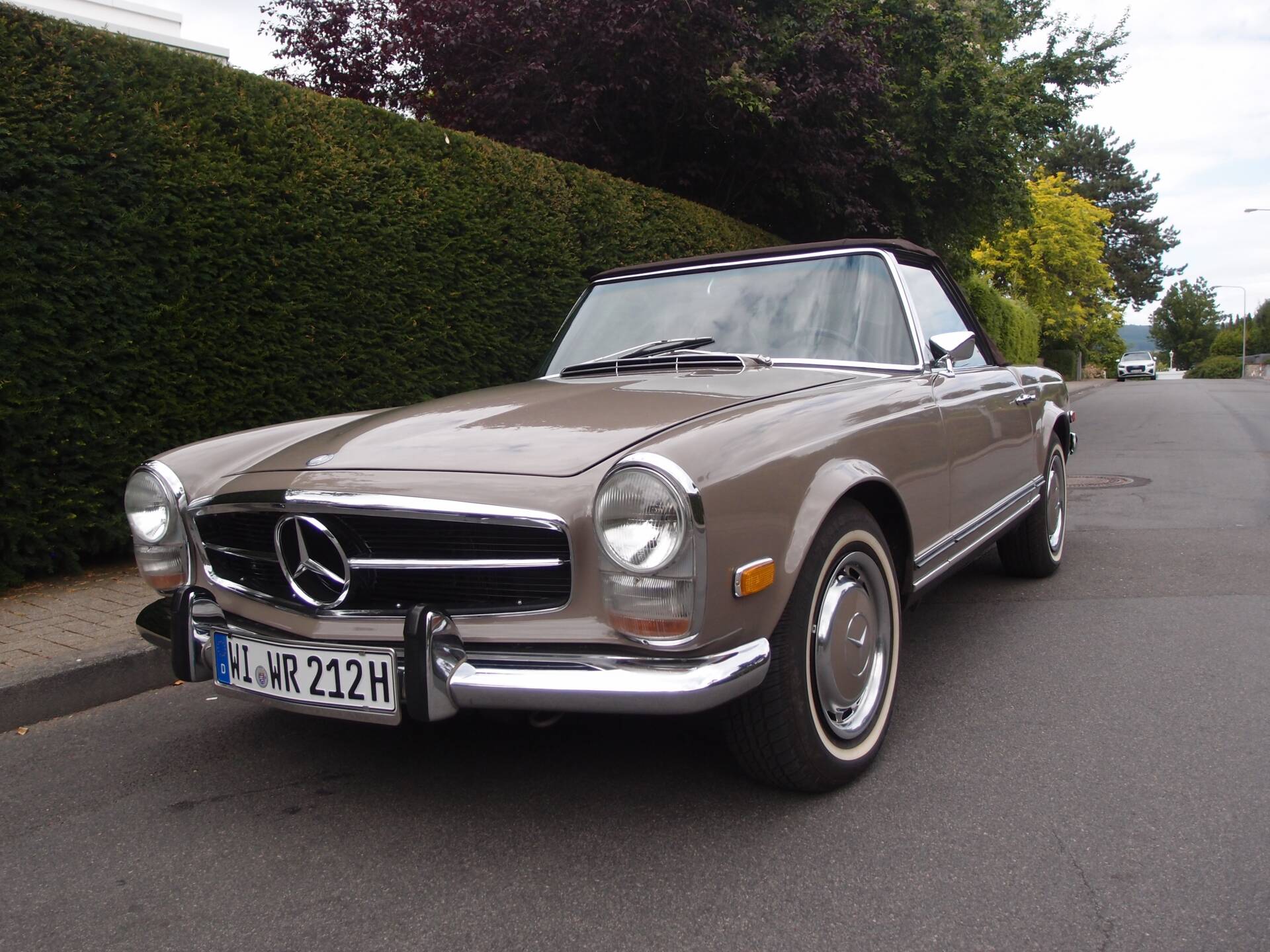
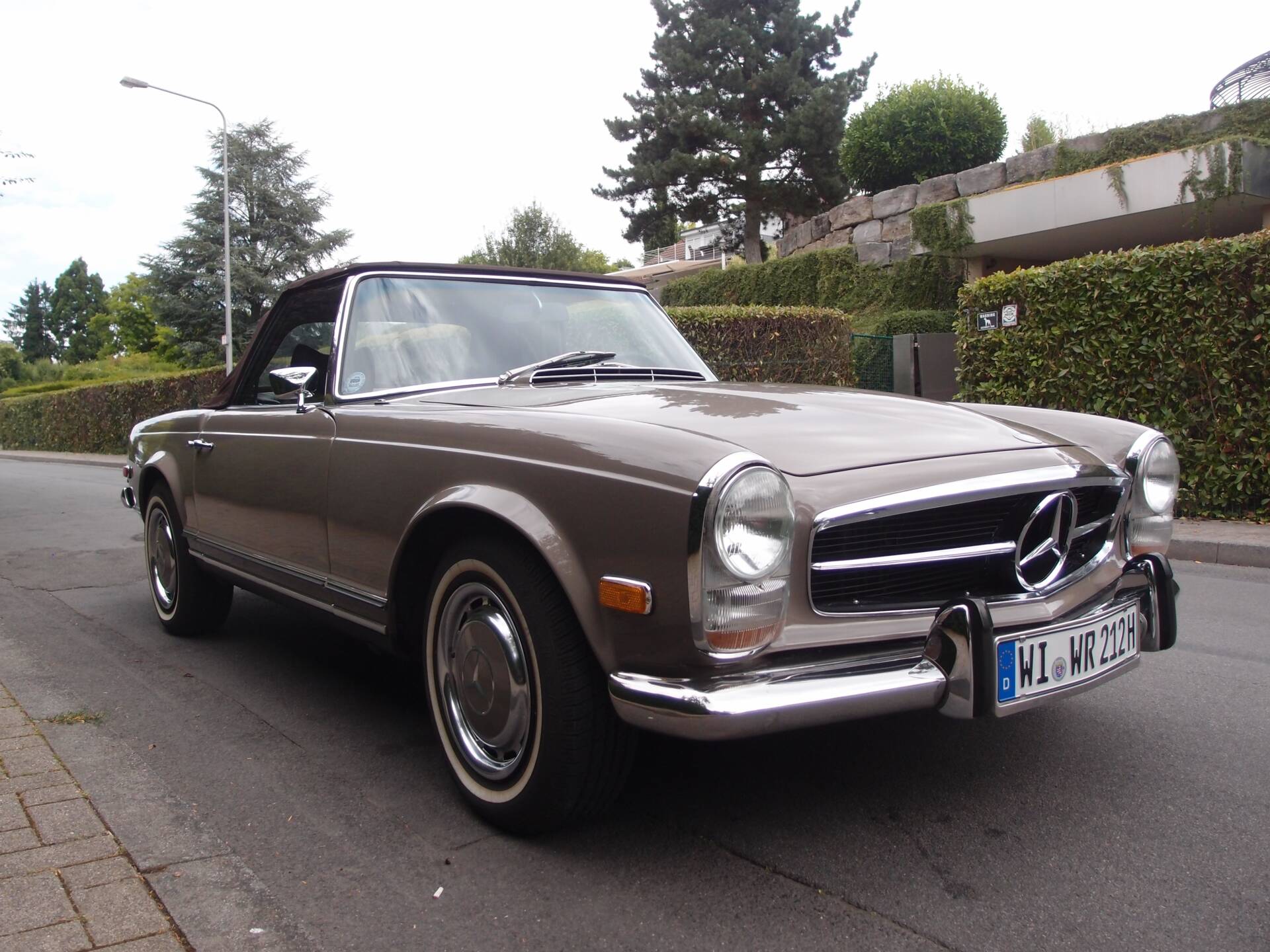
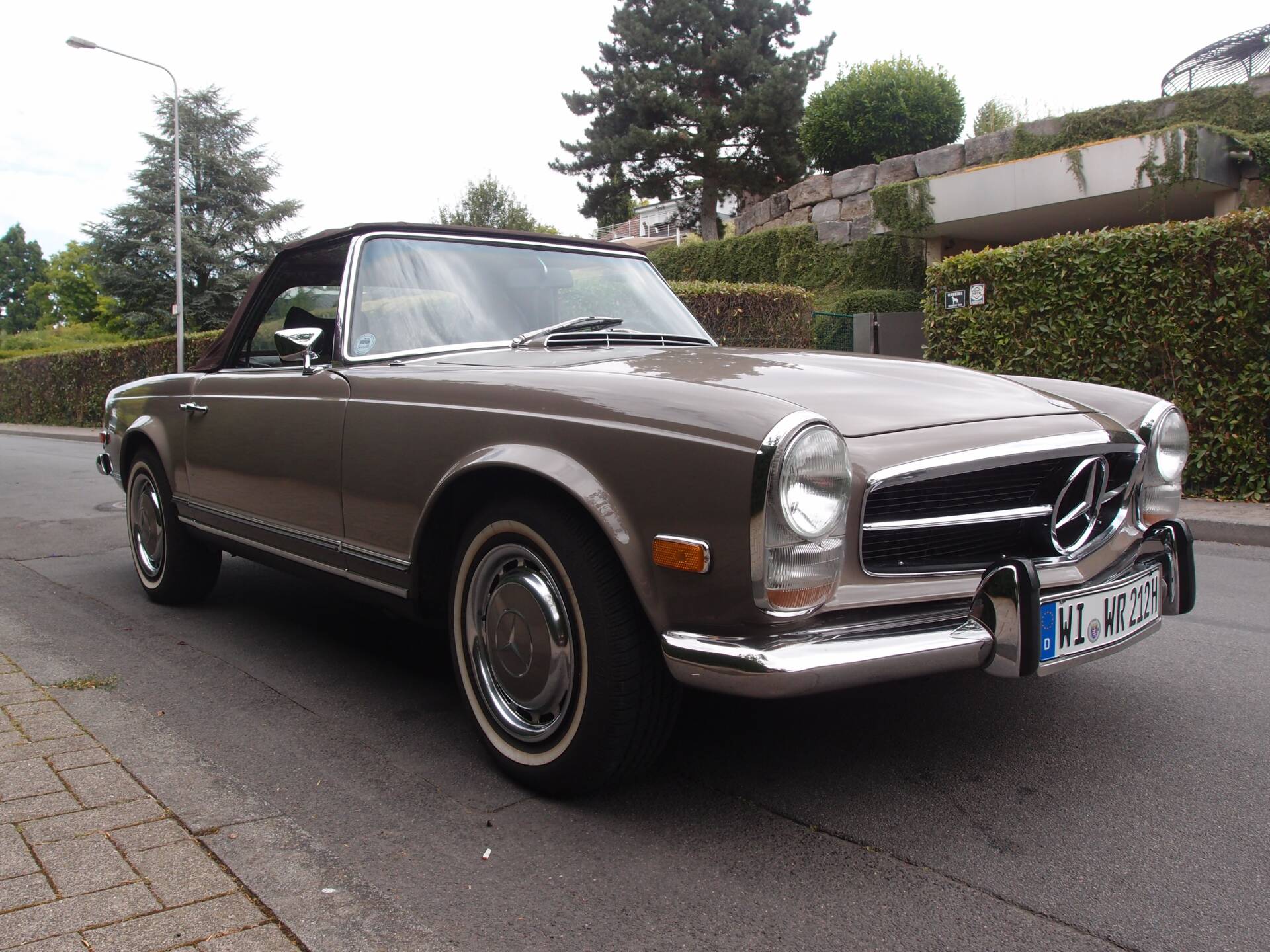
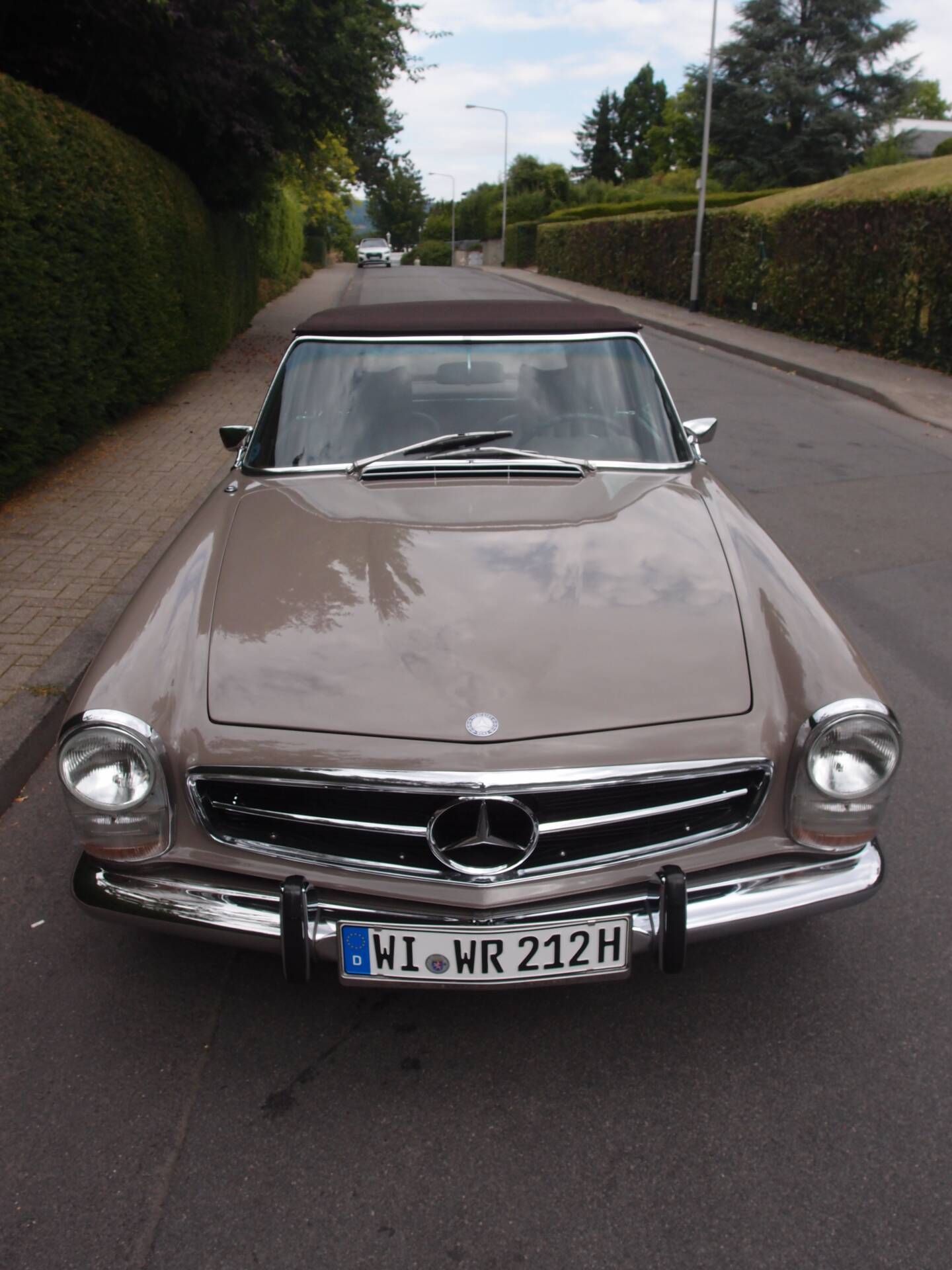
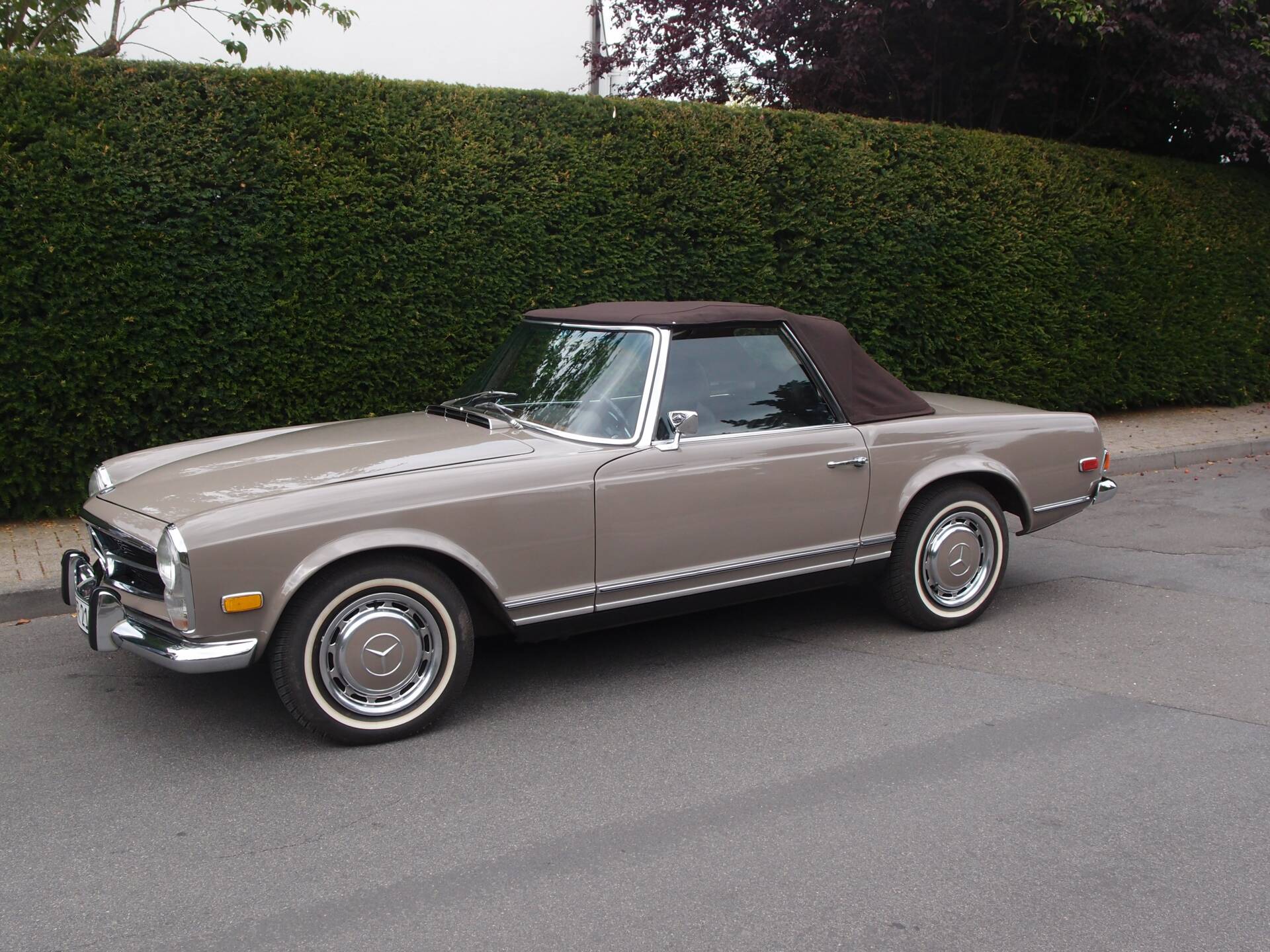
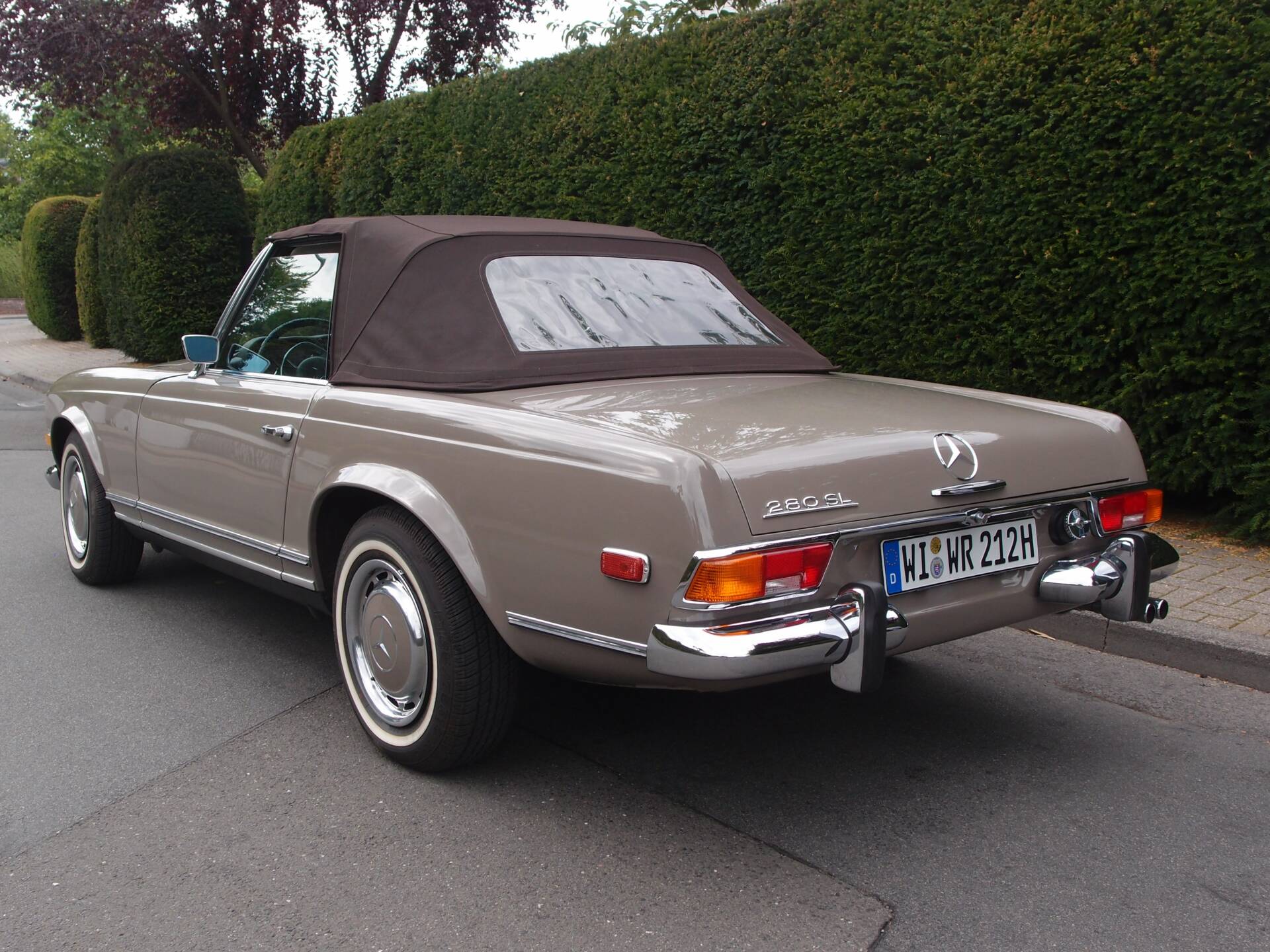
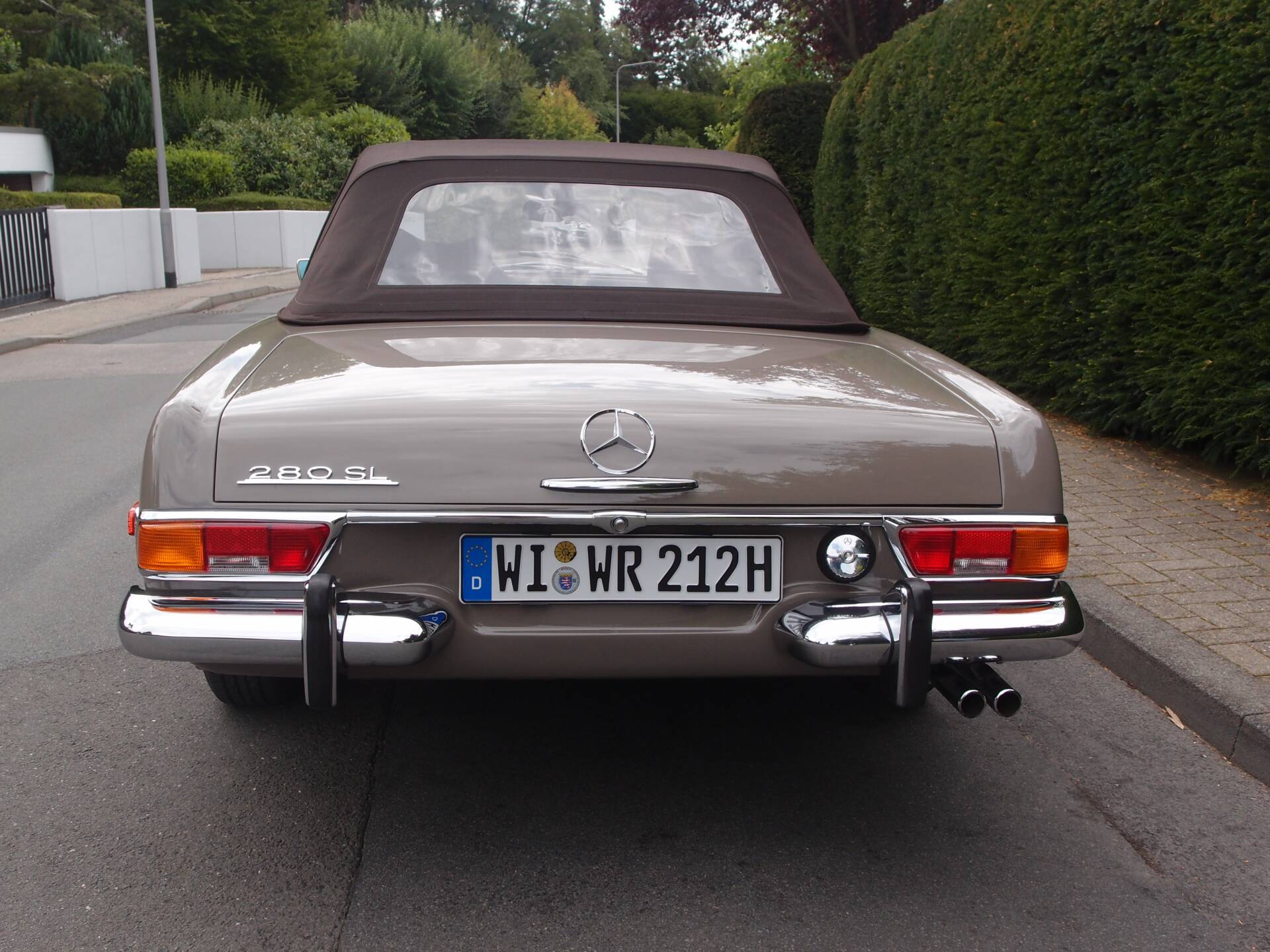
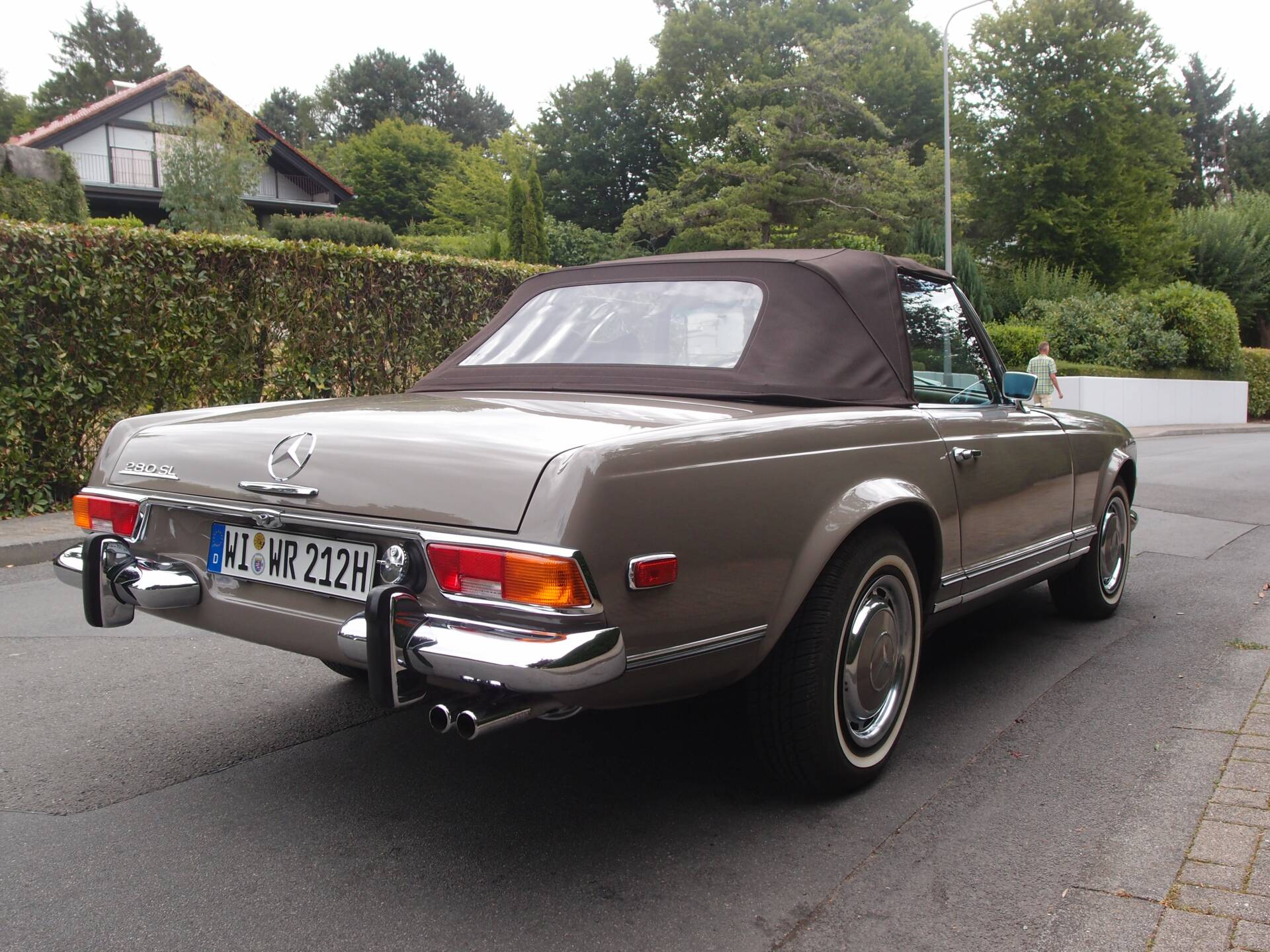
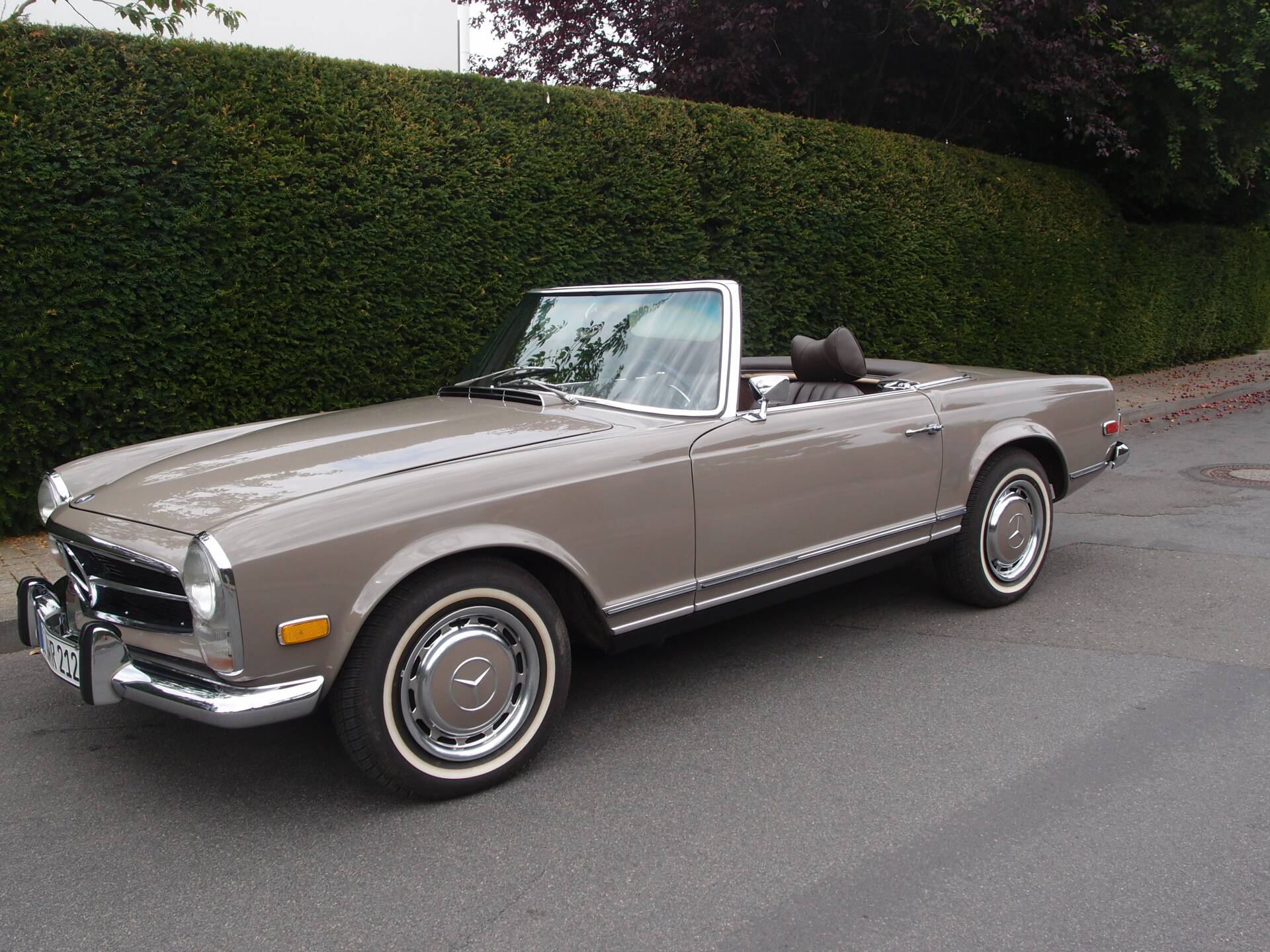
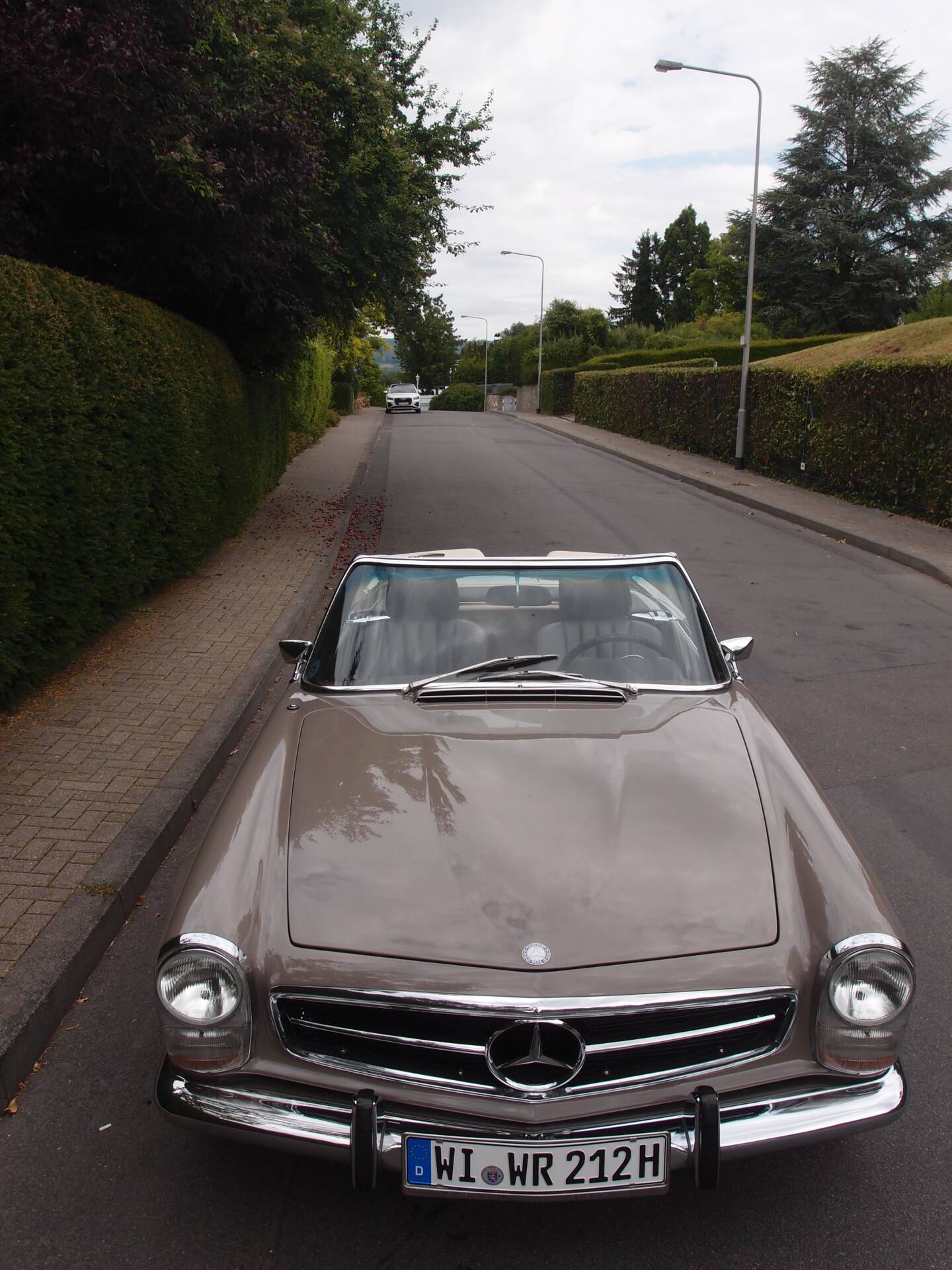
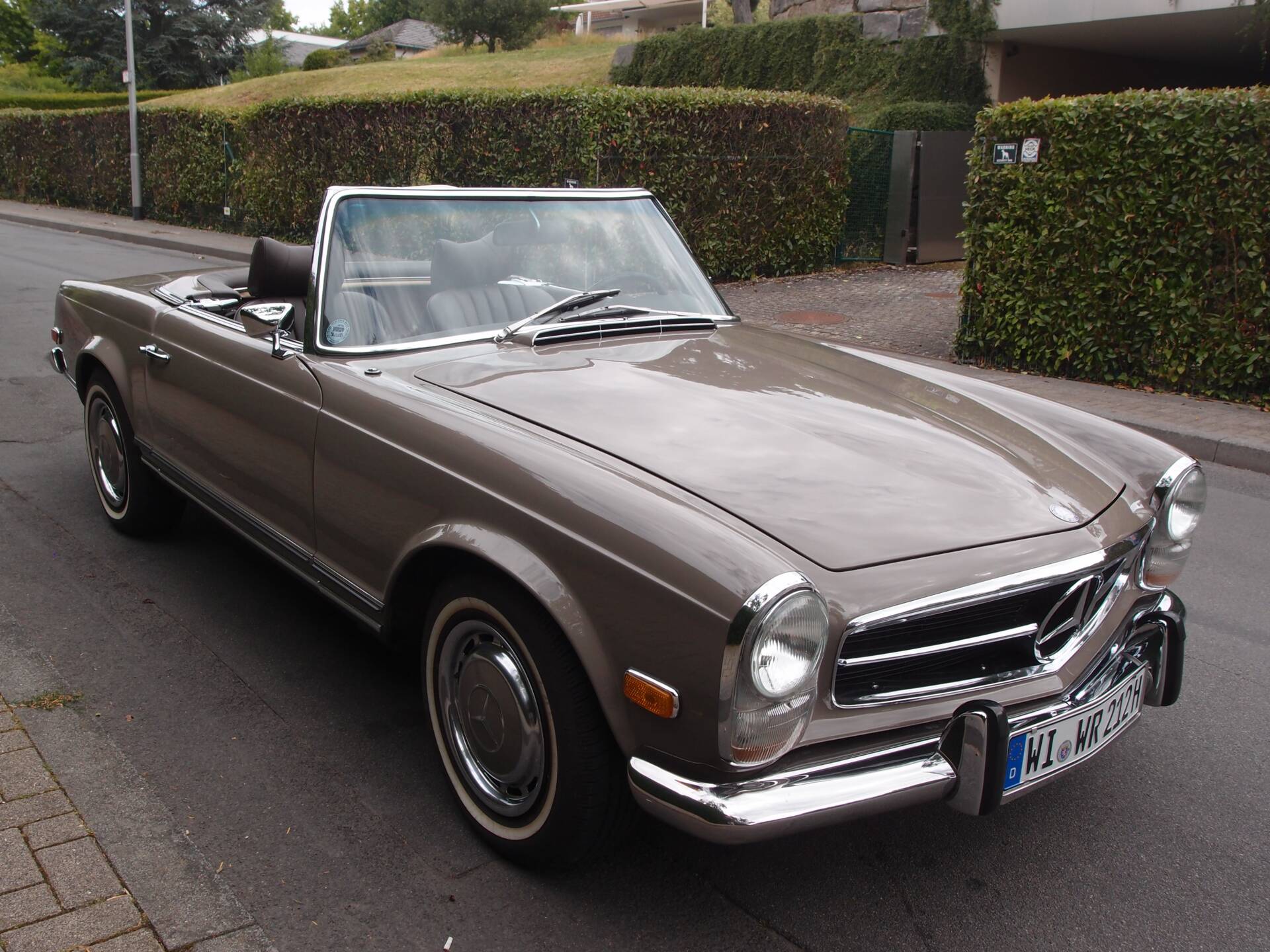
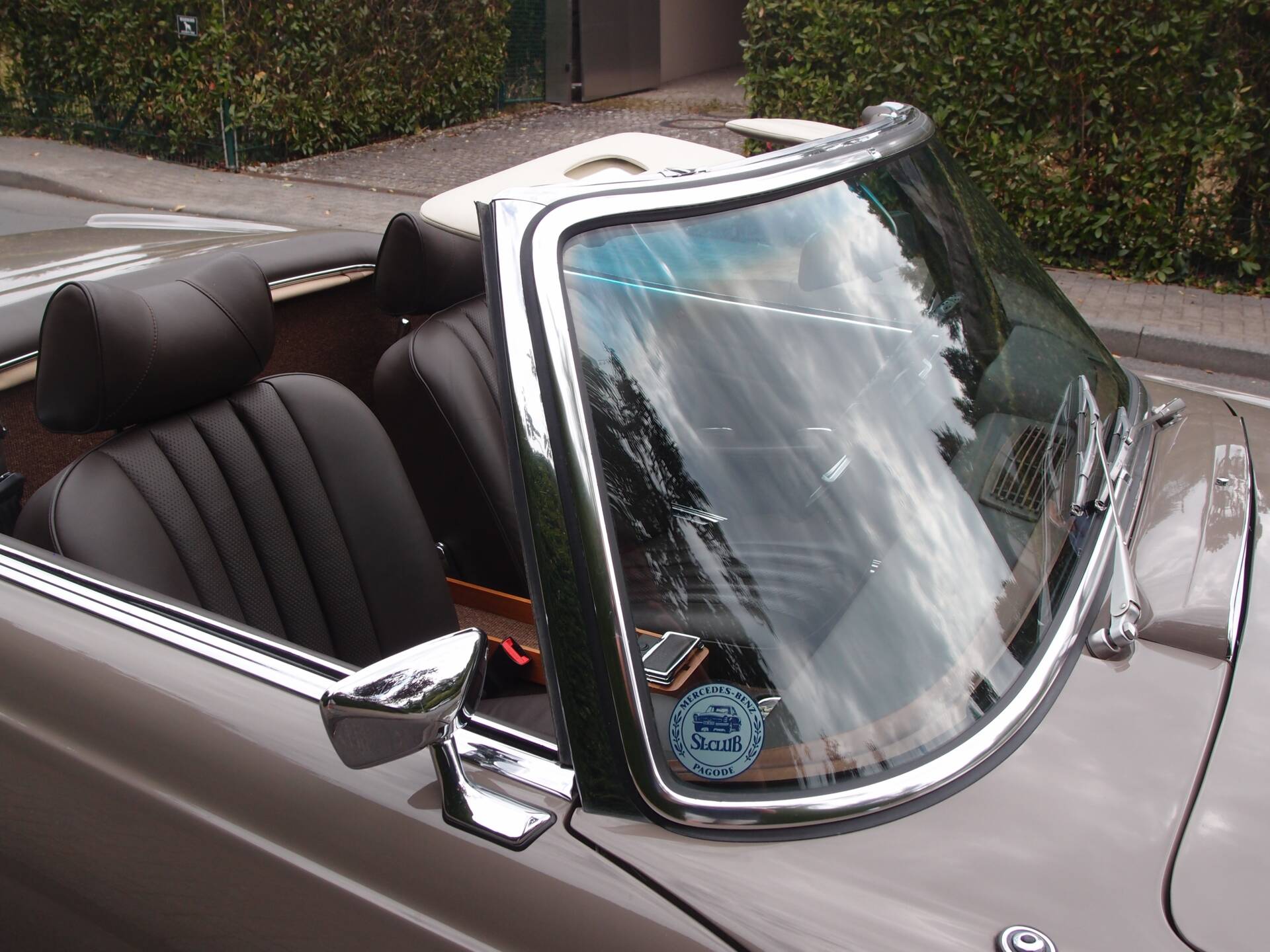
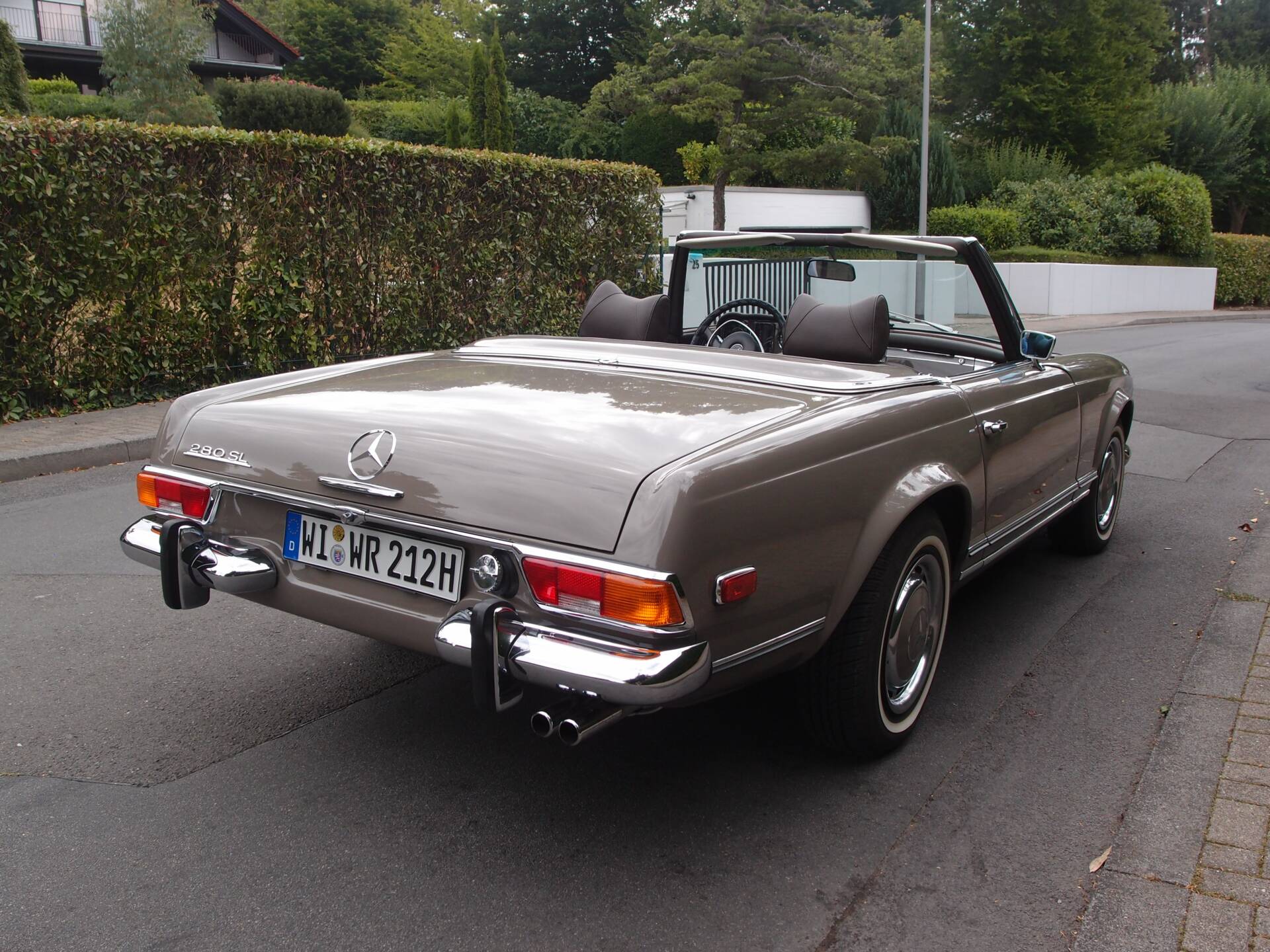
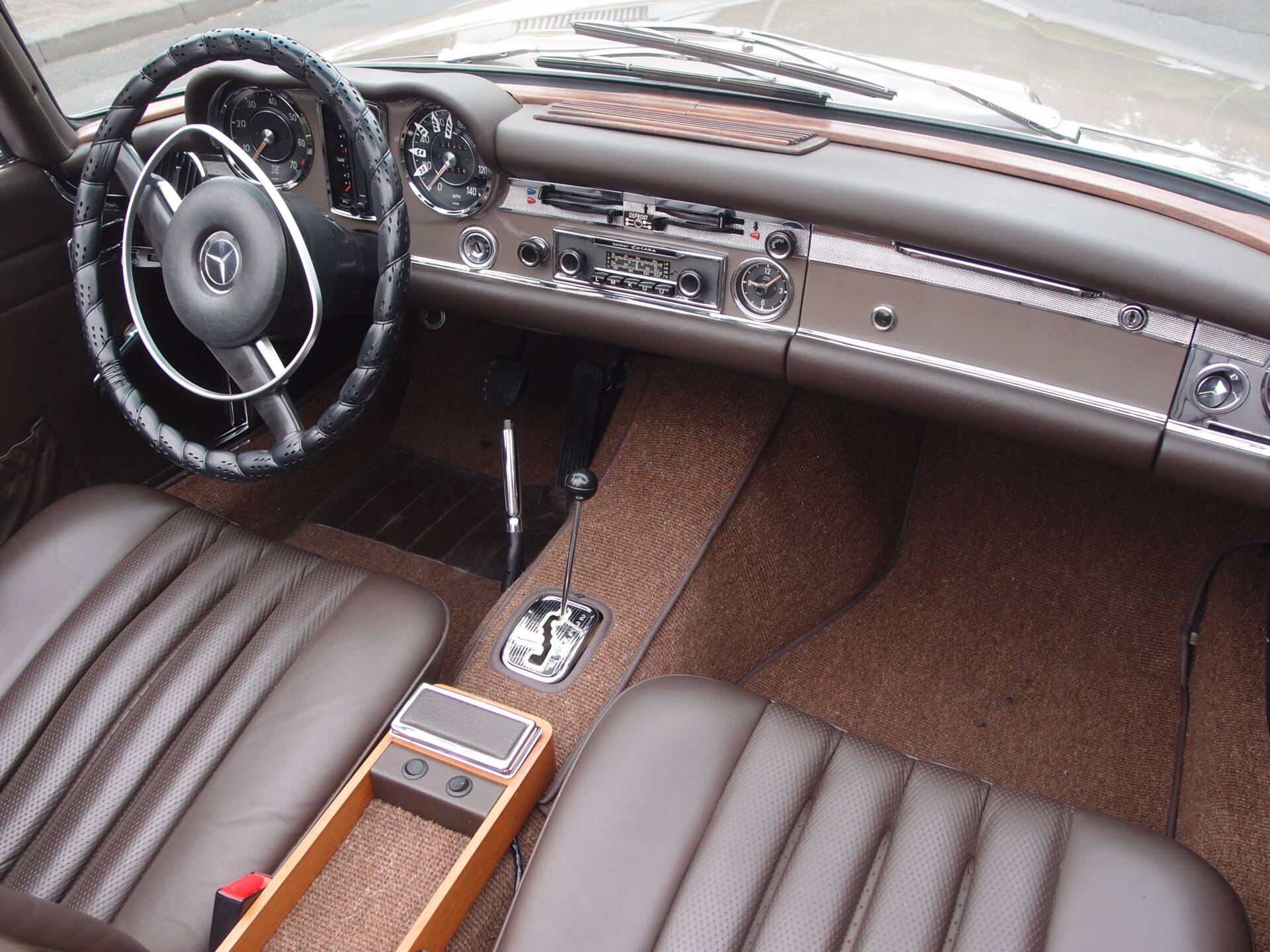
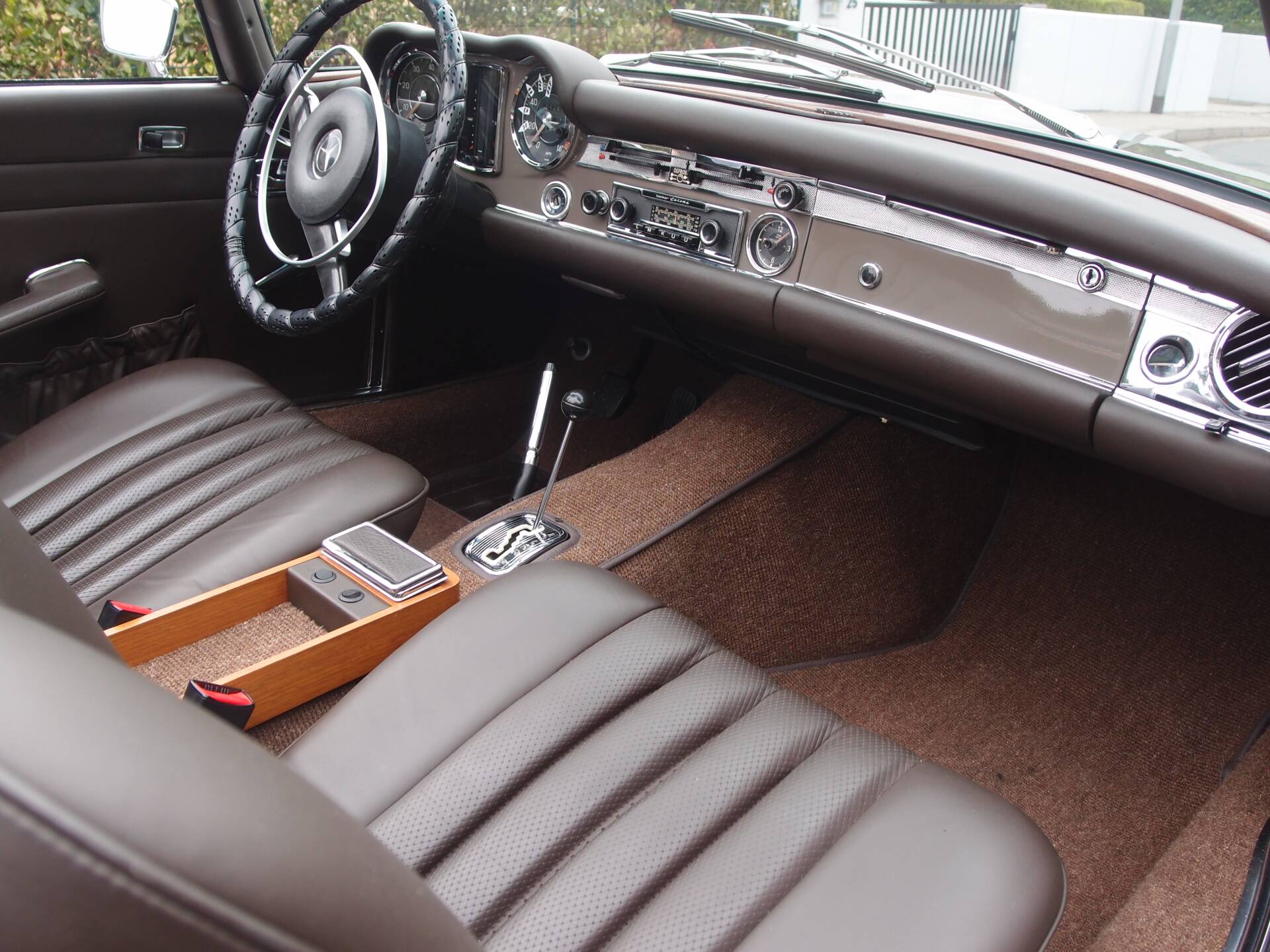
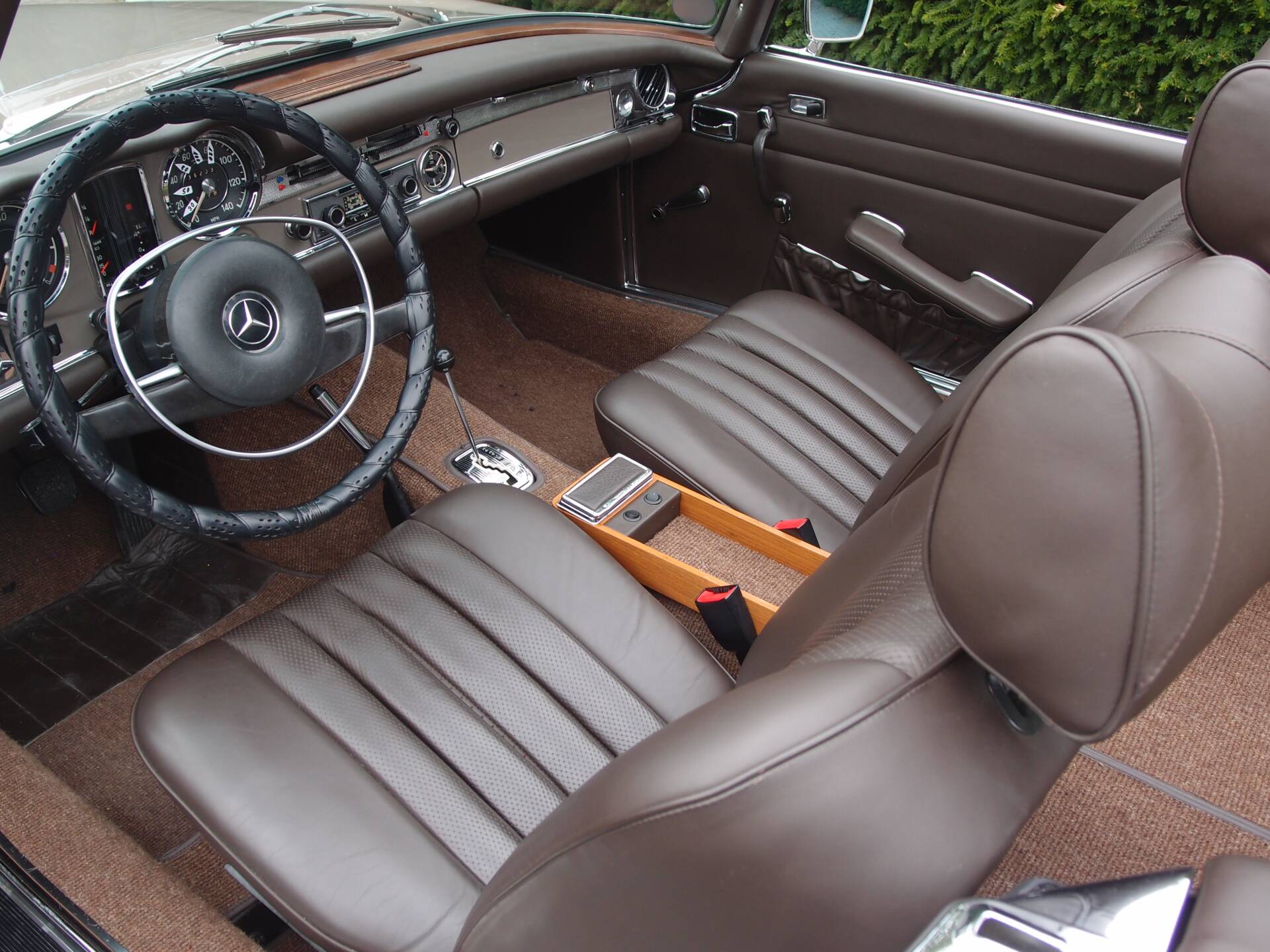
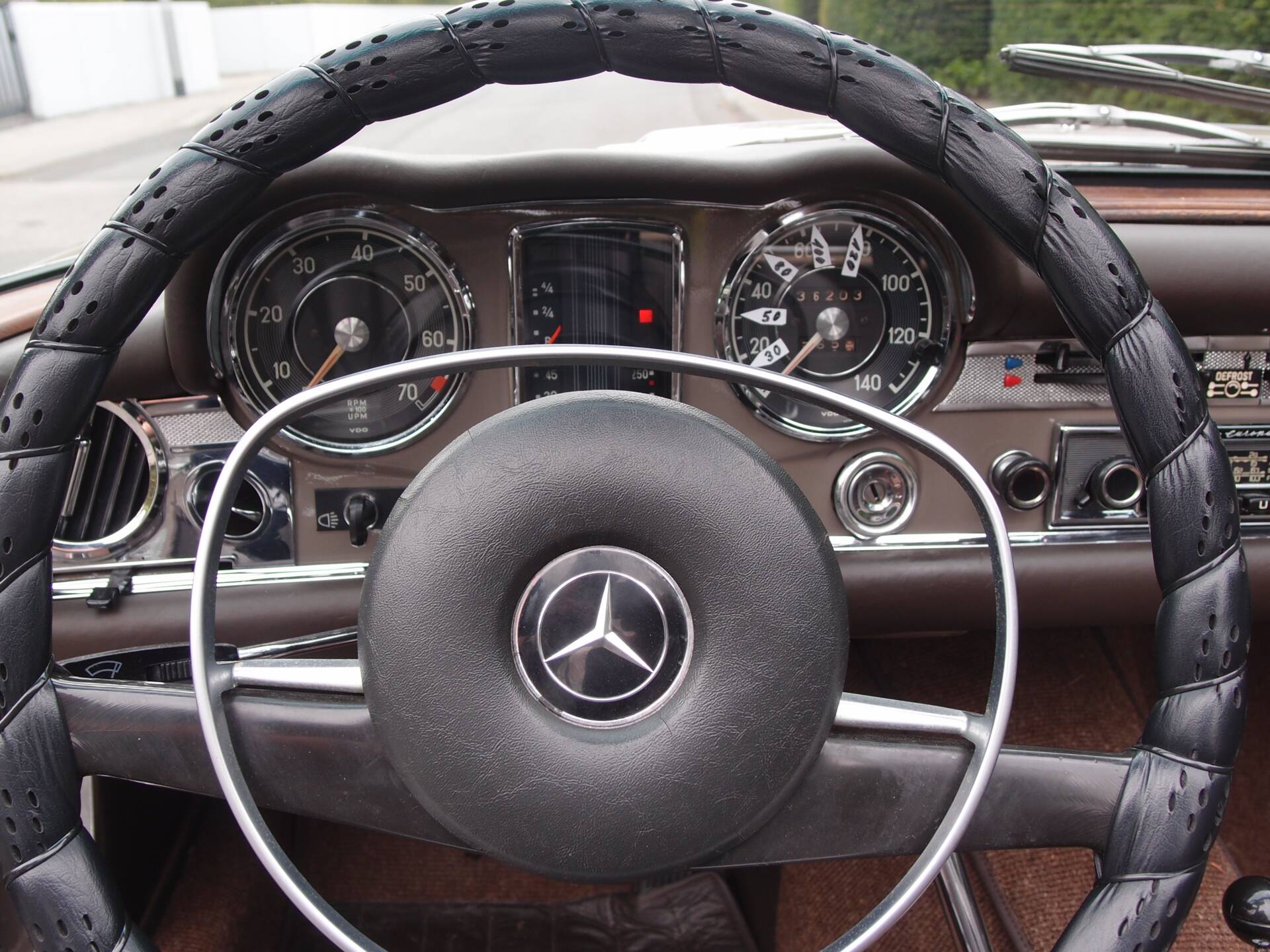
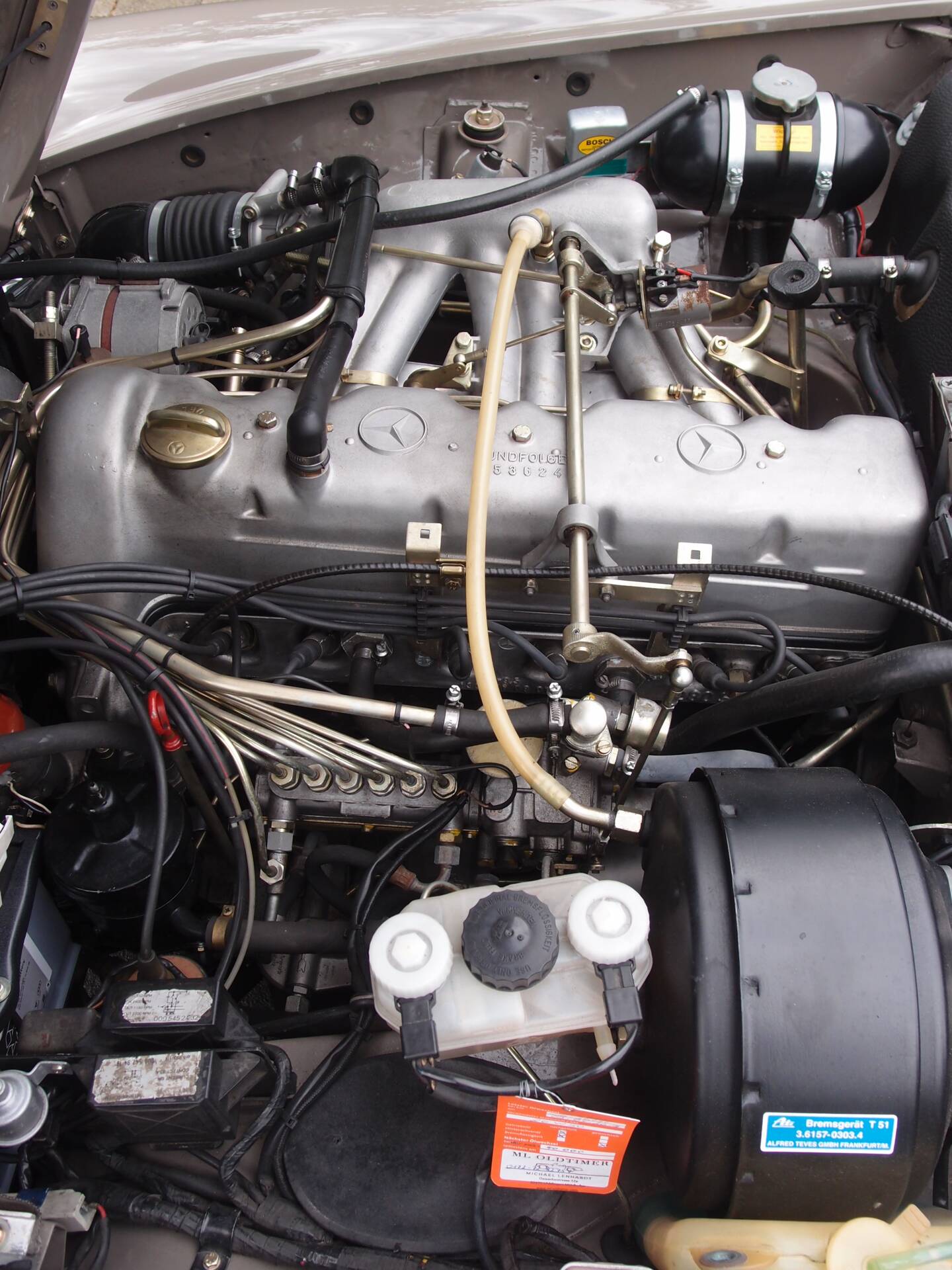
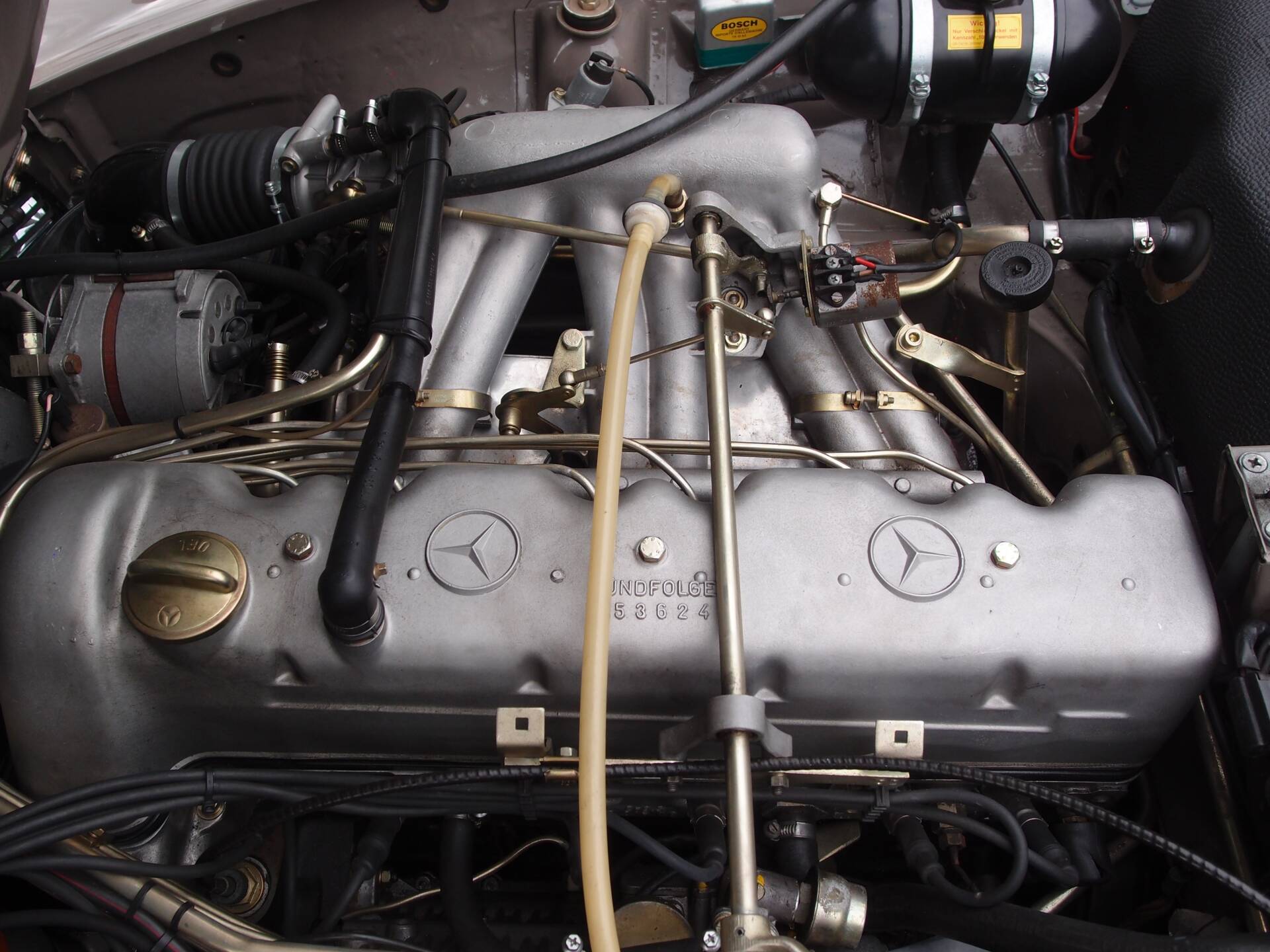
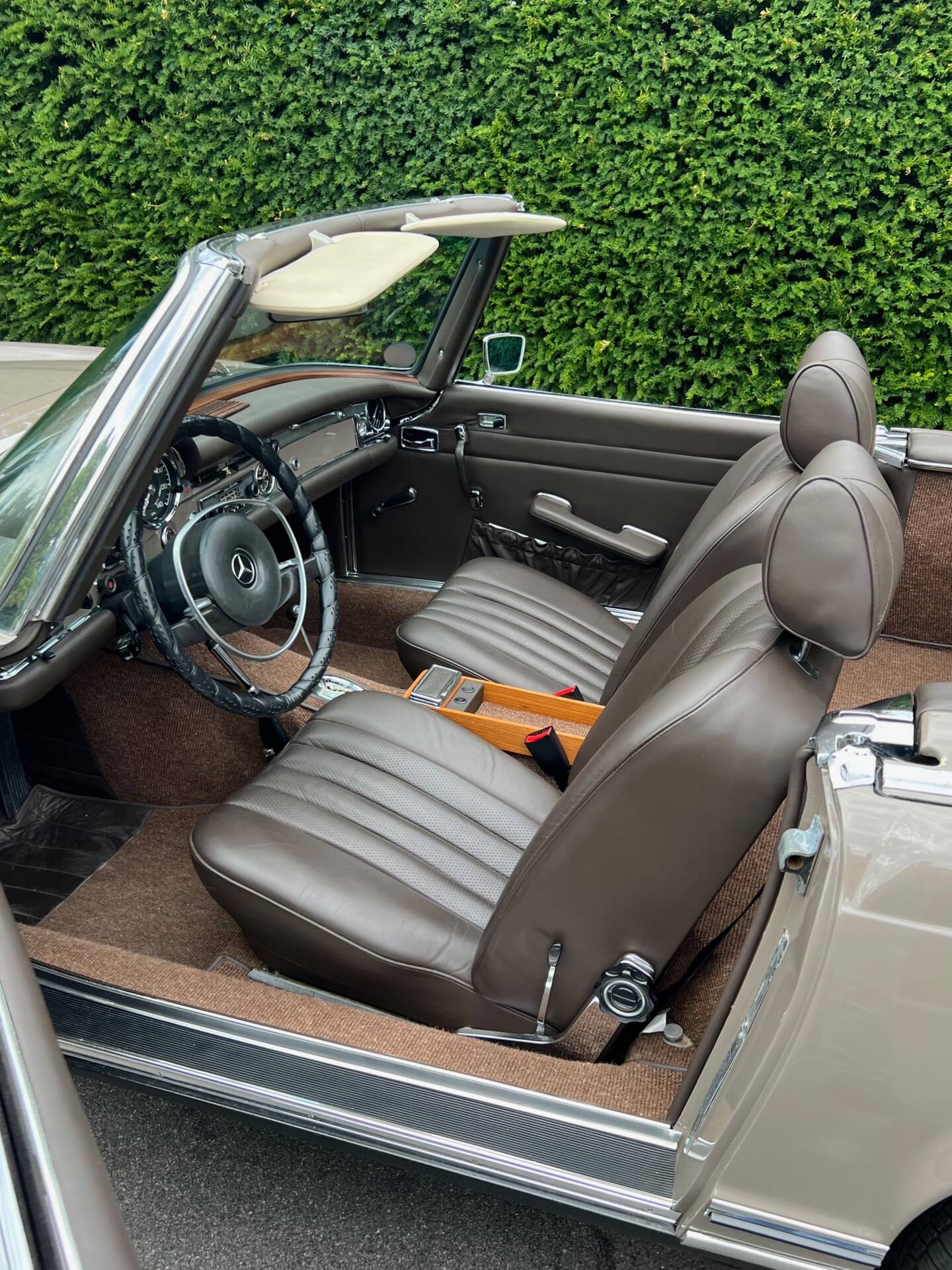
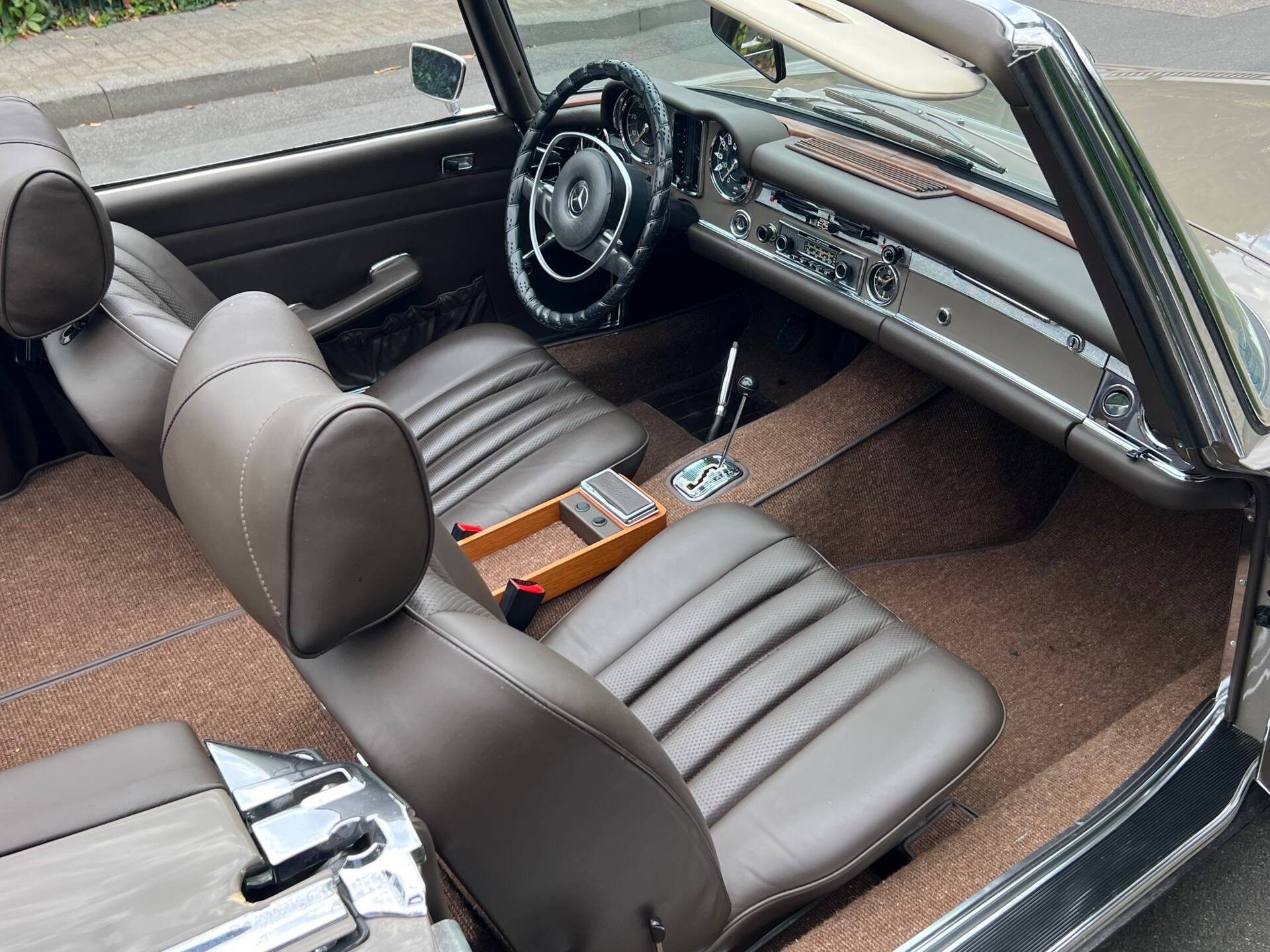
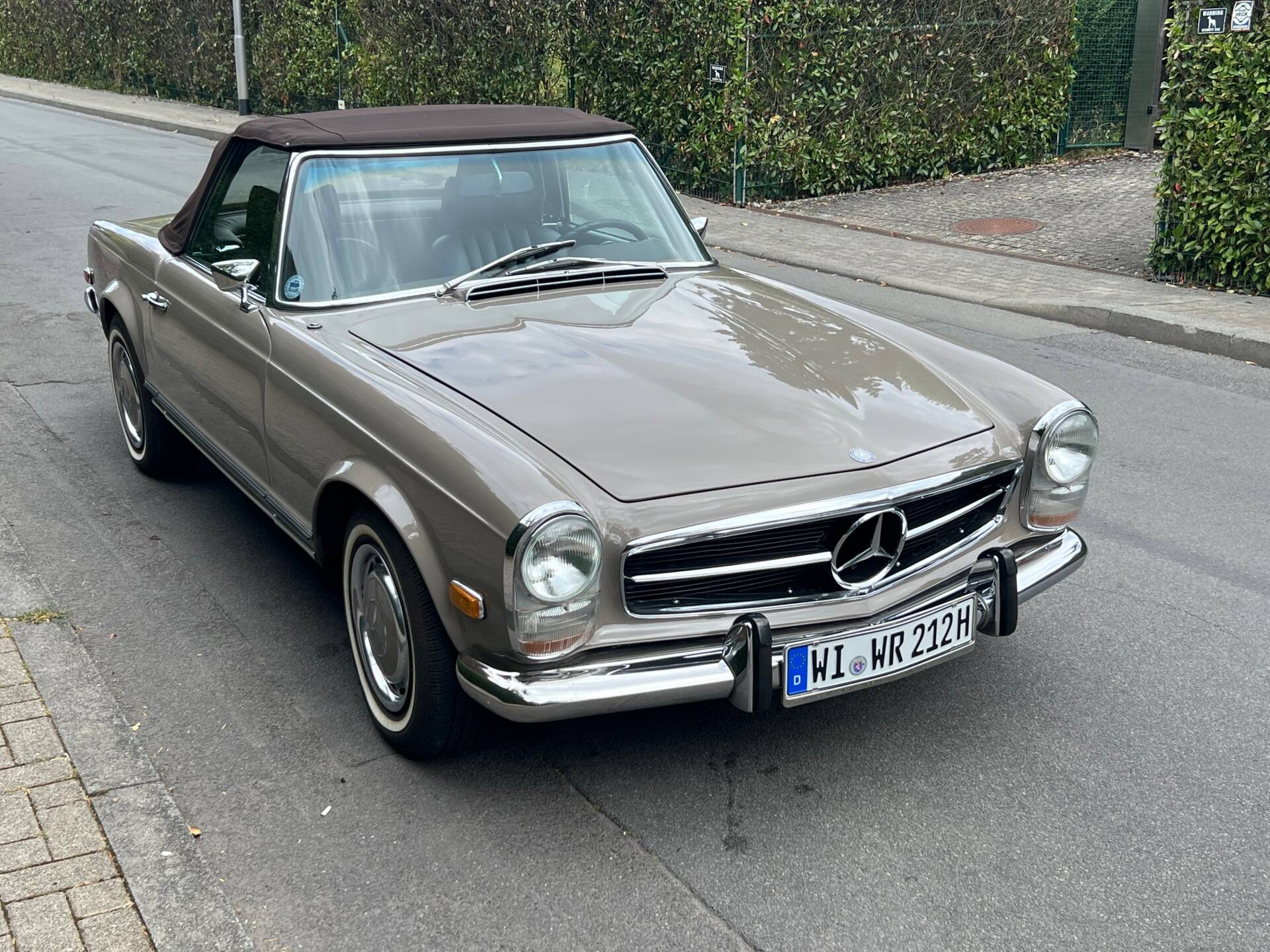
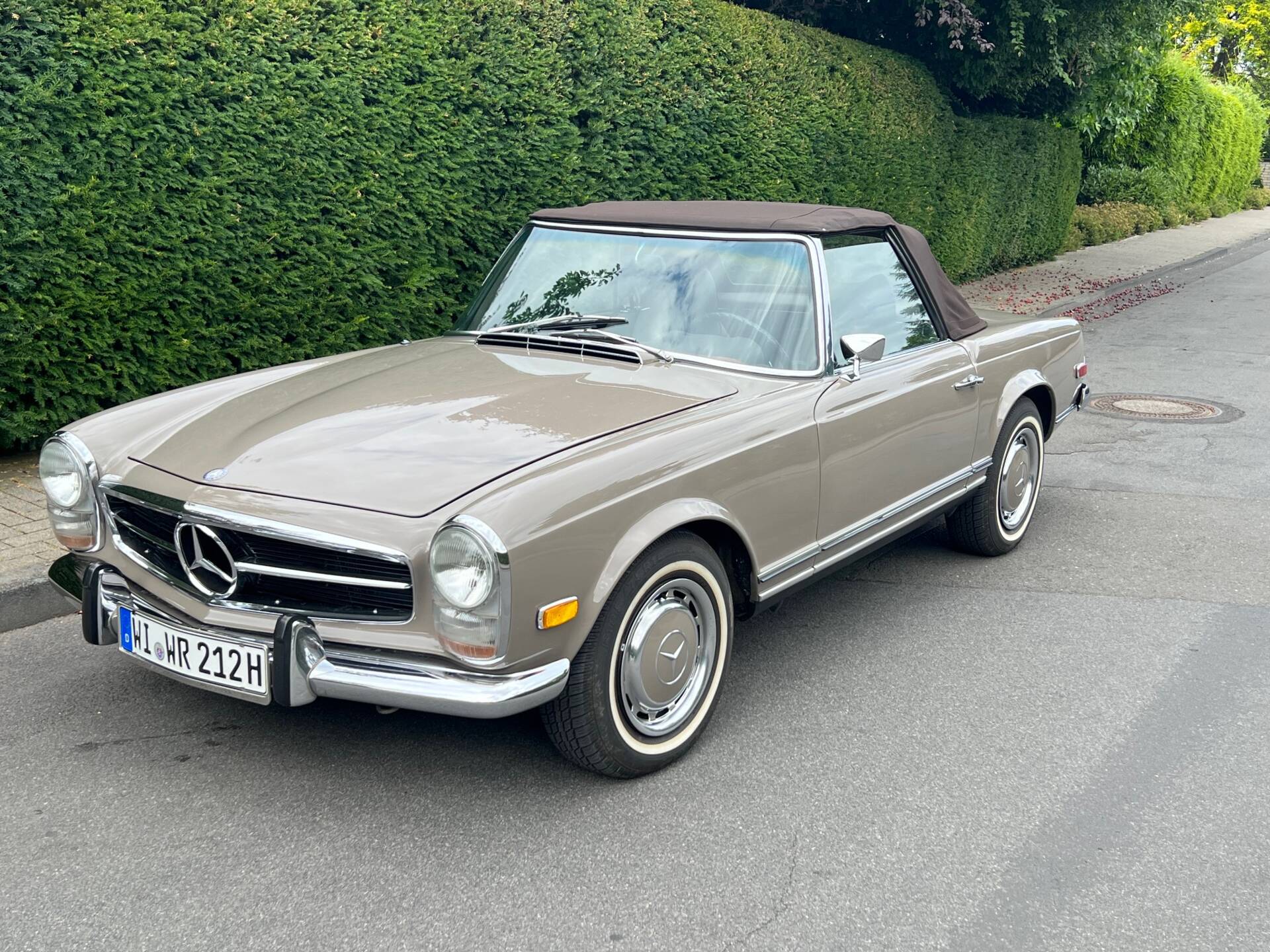
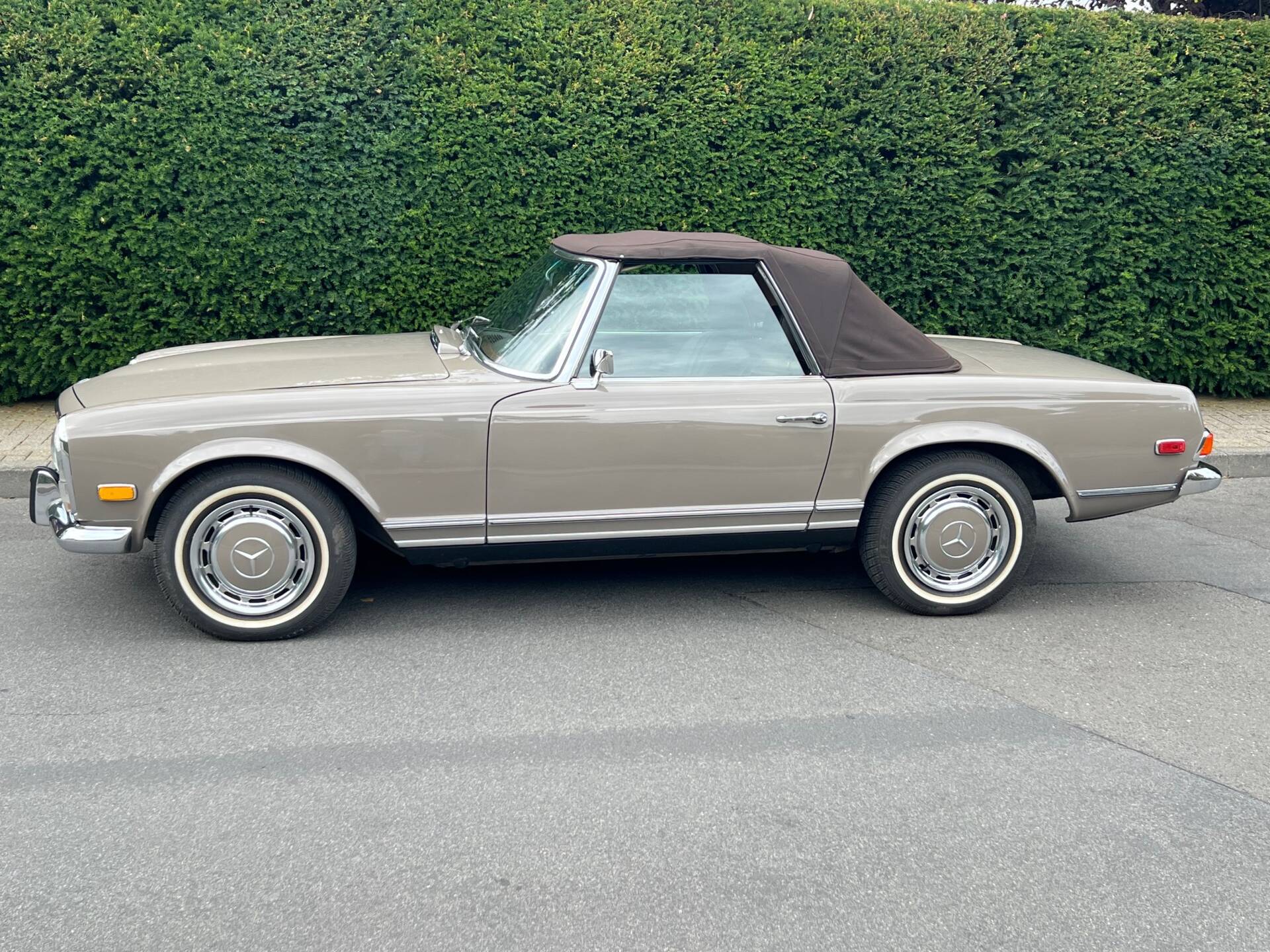
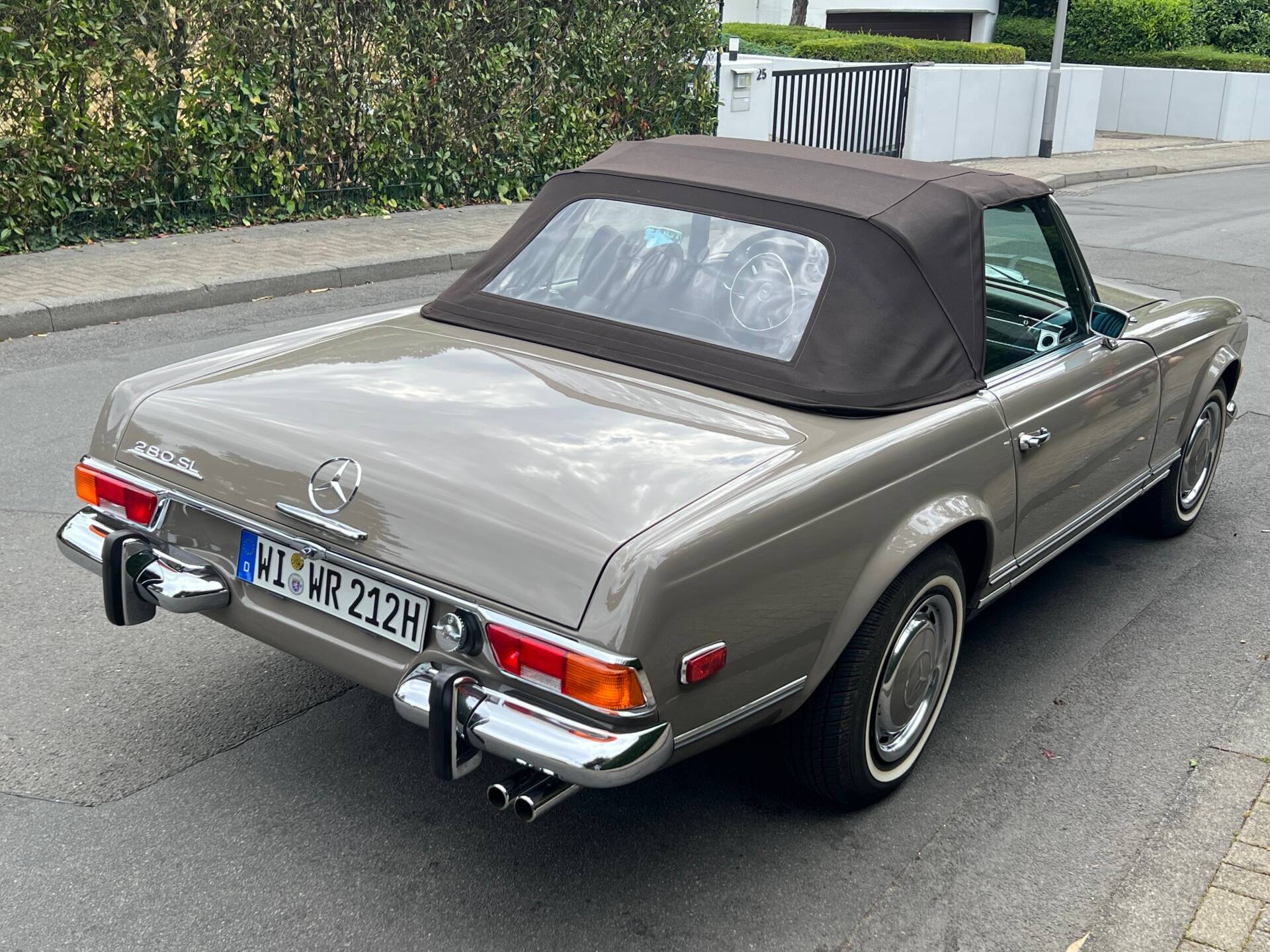
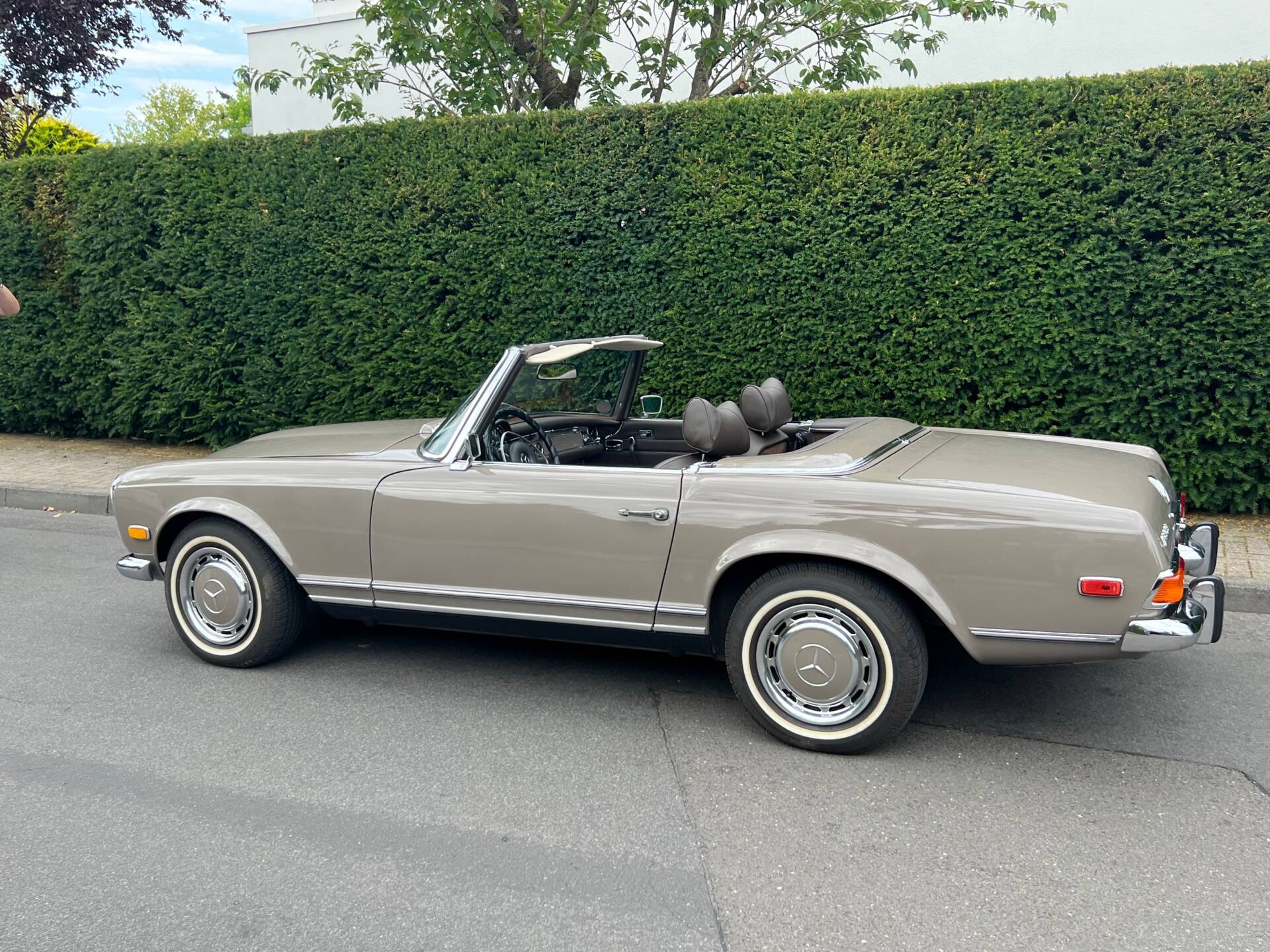
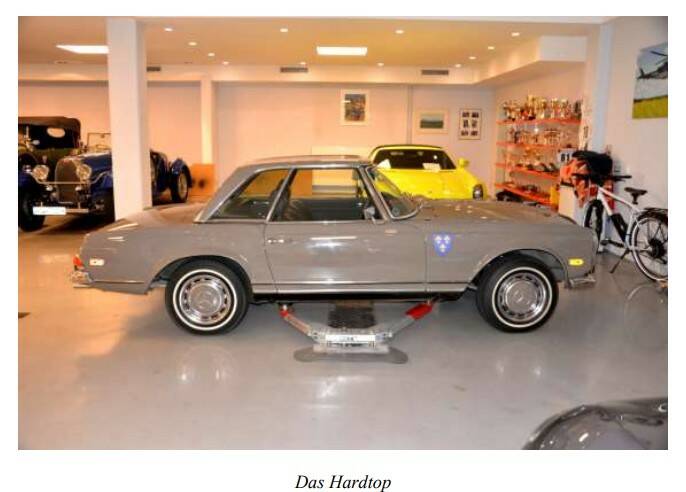
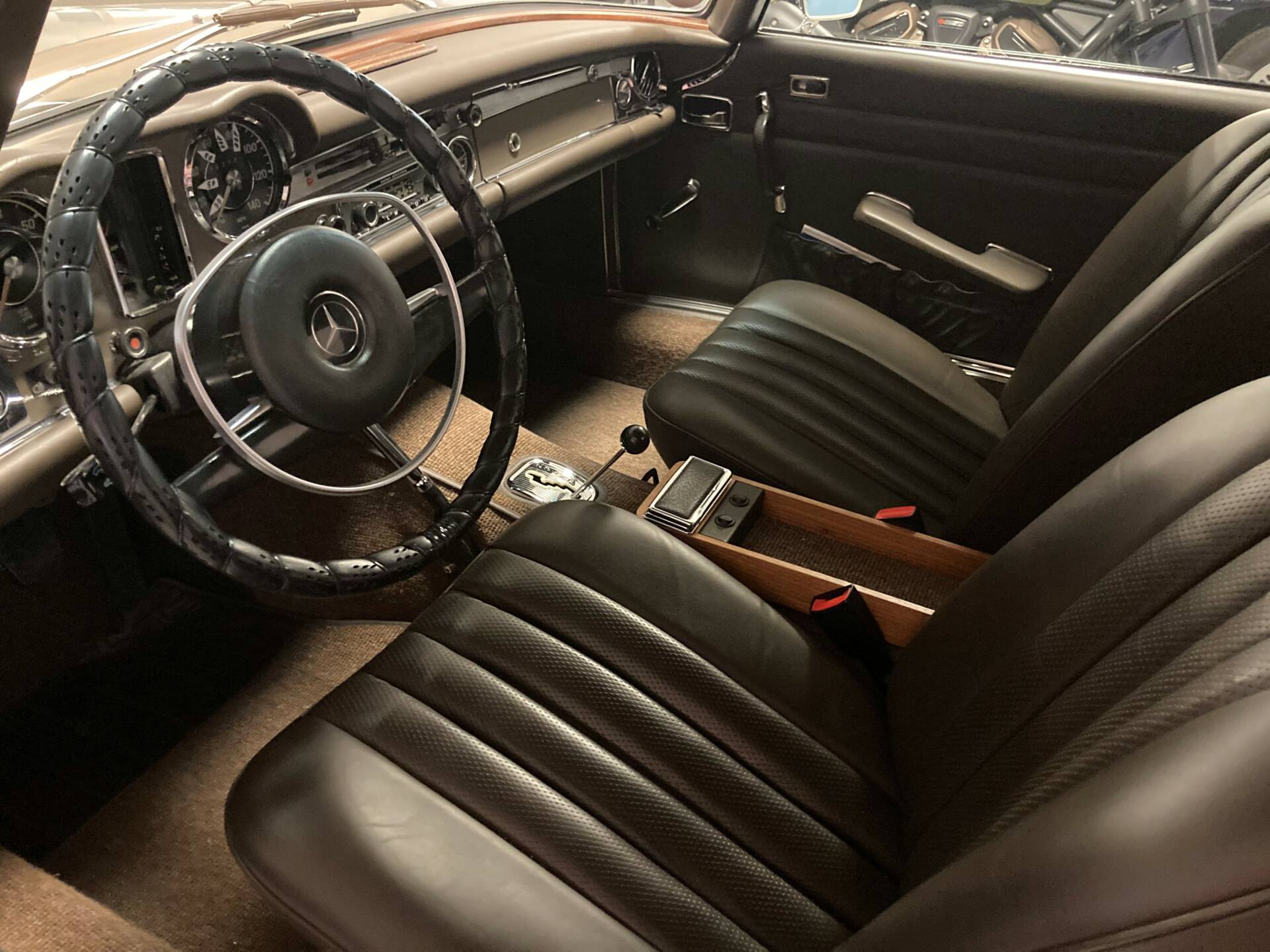
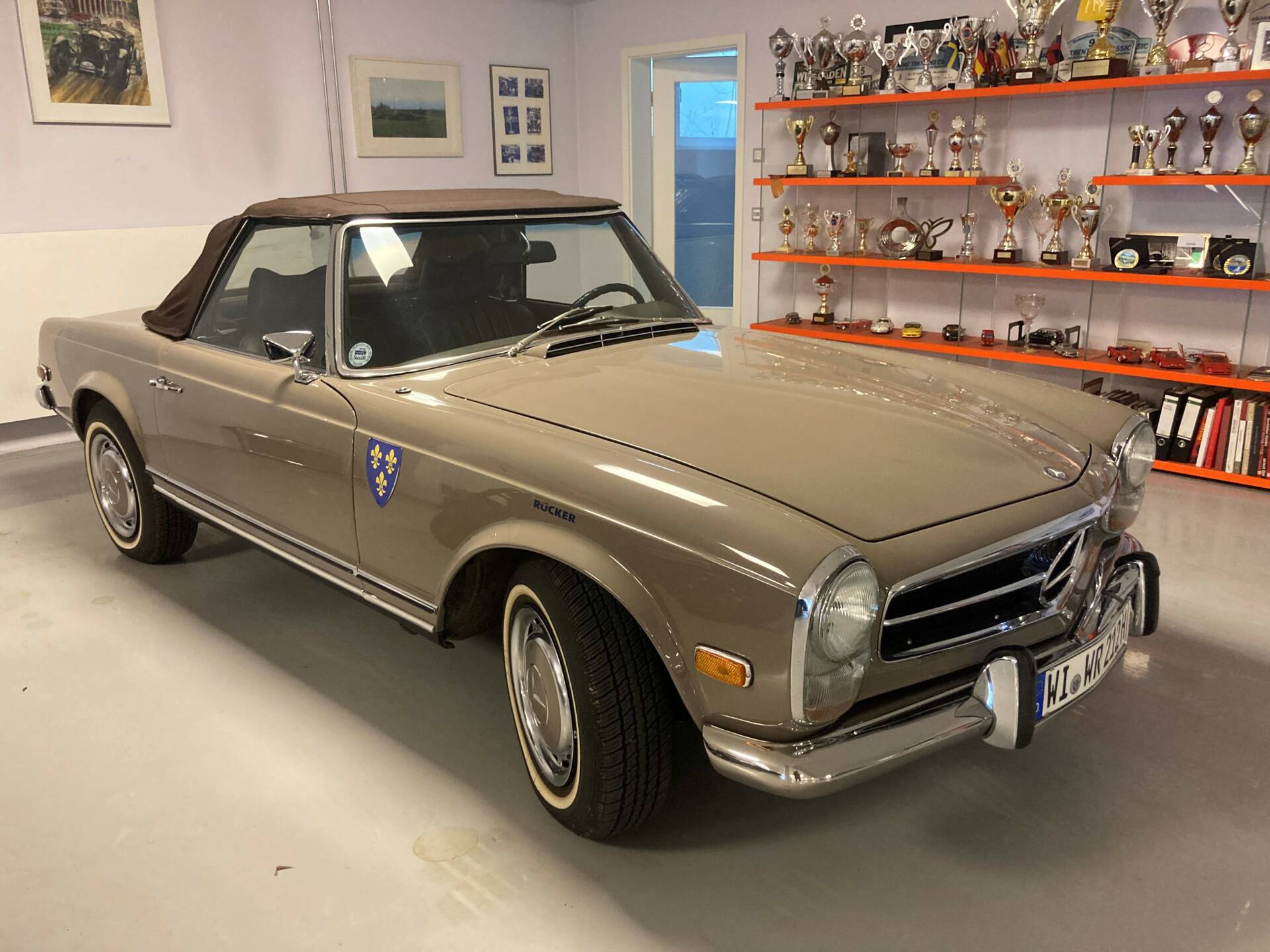
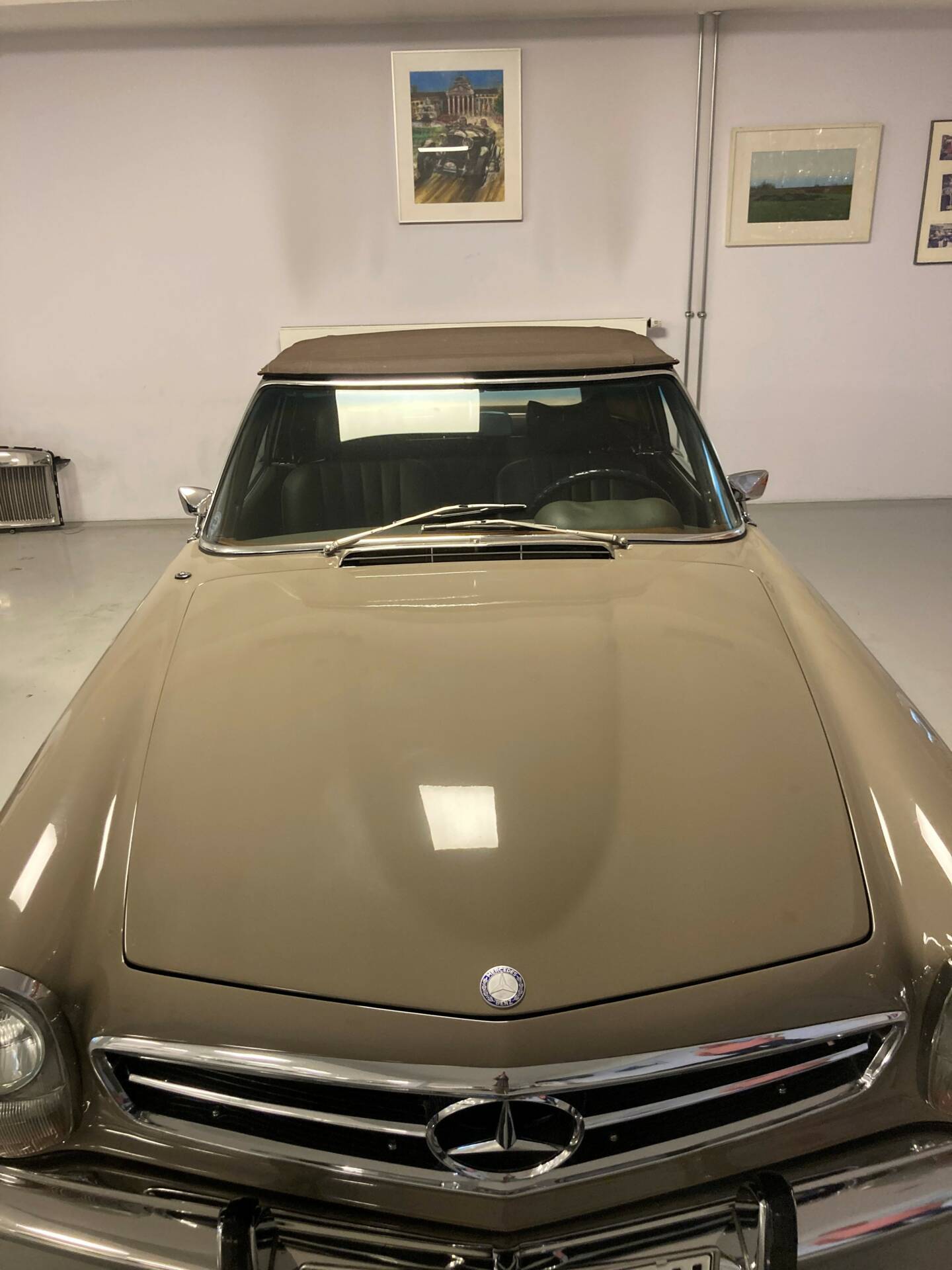
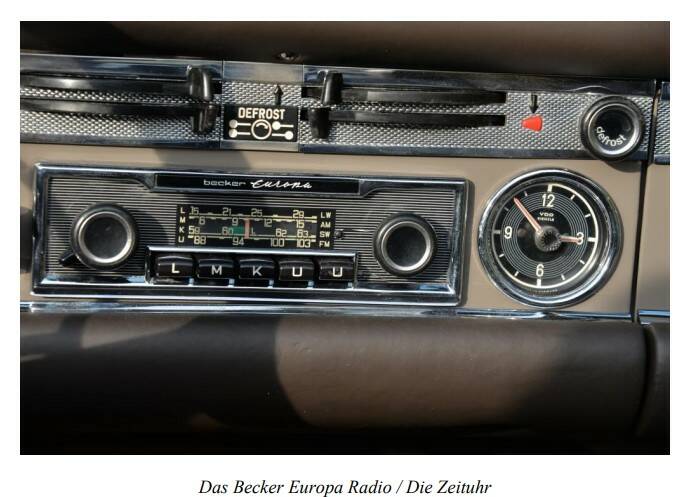
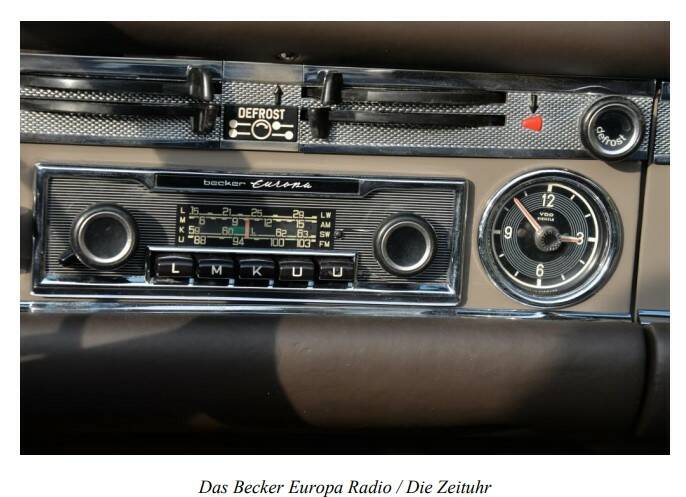
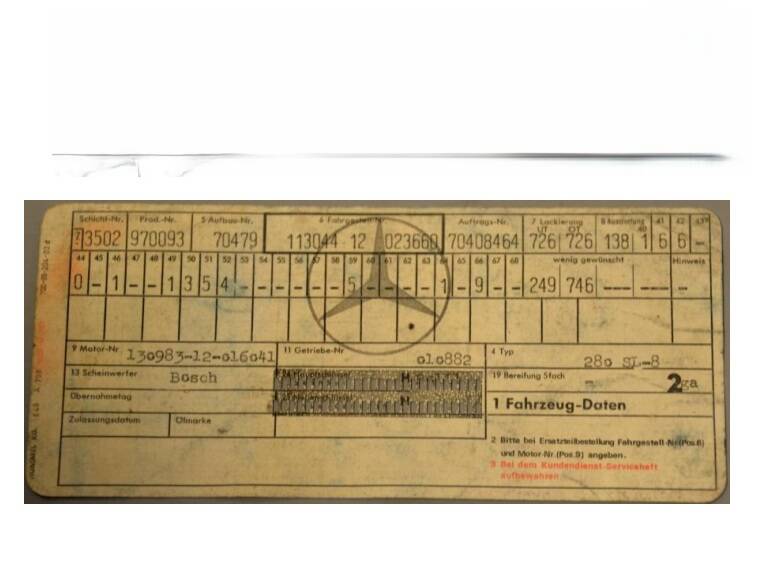
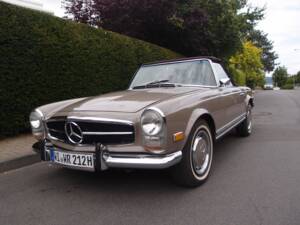
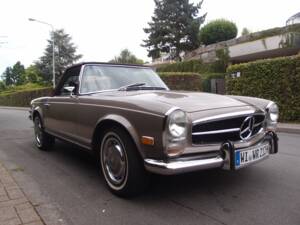
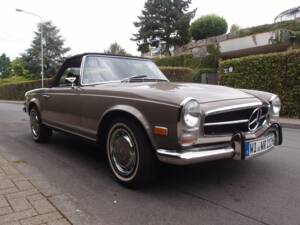
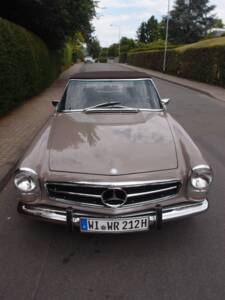
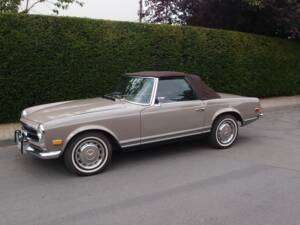
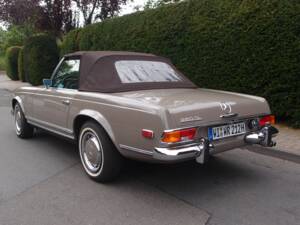
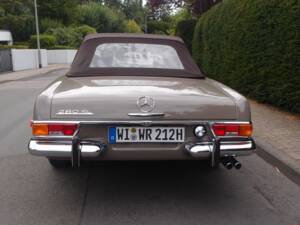
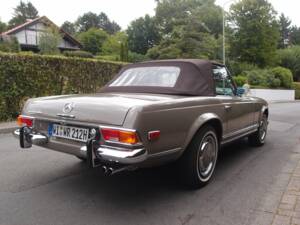
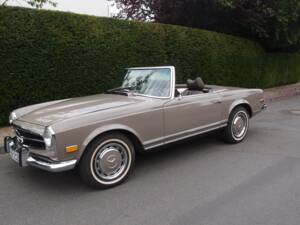
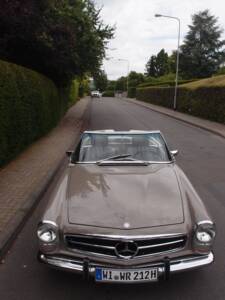
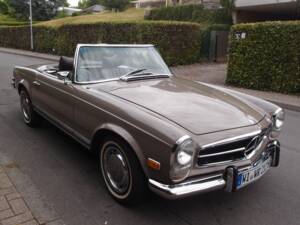
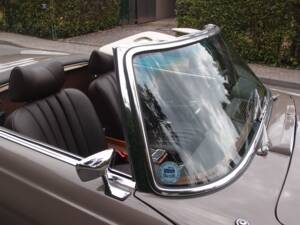
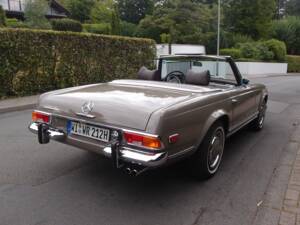
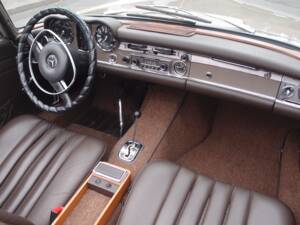
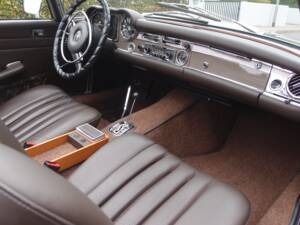
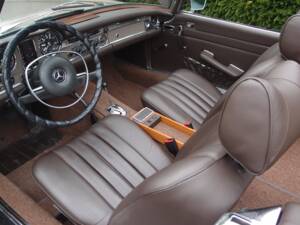
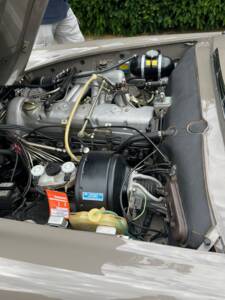
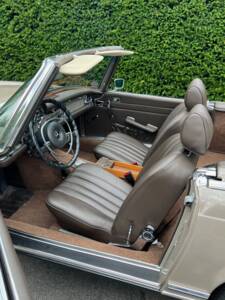
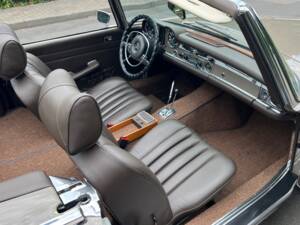
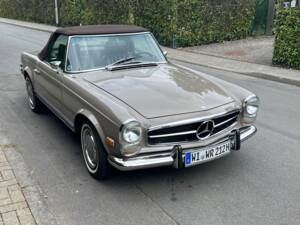
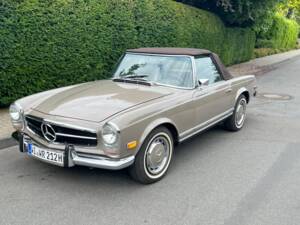
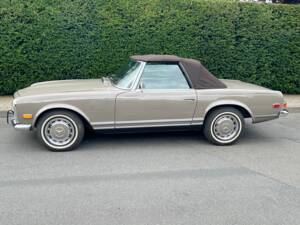
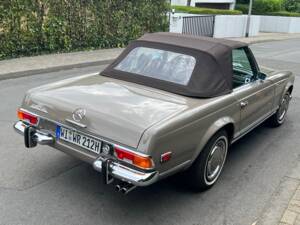
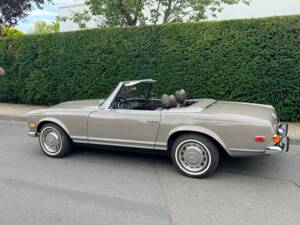
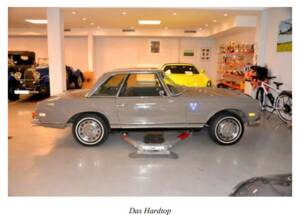
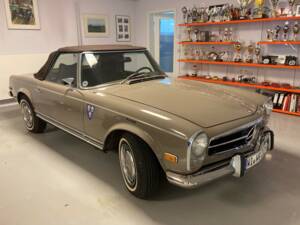
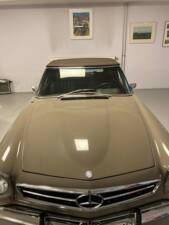
With the W 113 model series, the 230 SL succeeded the legendary 190 SL and 300 SL at the Geneva Motor Show in March 1963. Development had begun at the end of the 1950s. While the first design studies were still strongly reminiscent of the 190 SL externally, in the following years they demonstrated an ever-growing independence from their predecessor. The unmistakable feature of the W113 (230 SL, 250 SL, 280 SL) is a concavely curved hardtop, which led to its later nickname Pagoda SL.
However, this hardtop had one decisive disadvantage:
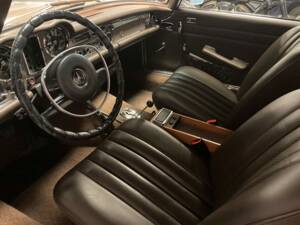
It increased the drag coefficient from 0.481 for the soft top to 0.515. This meant higher fuel consumption and a lower top speed (approx. 4 km/h) when the hardtop was fitted. The “Pagoda” was the first SL in which extensive safety measures were introduced. Since its basis was the floor pan of the W 111 “Fintail”, with a wheelbase shortened by 30 cm, the SL also has a rigid passenger cell and crumple zones, with easily deformable front and rear sections. As in the sedan, the interior is padded and free of hard corners and edges. Safety belts, as in its predecessor, were available as
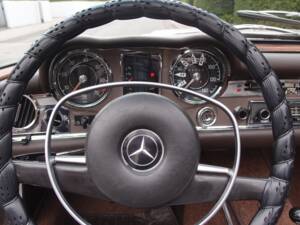
optional equipment. The steering gear was moved from the crash-prone area of the front end to the firewall; the steering column is bent and has joints that prevent the feared lance effect in an accident. In 1967, the safety steering column with a padded hub in the steering wheel was added.
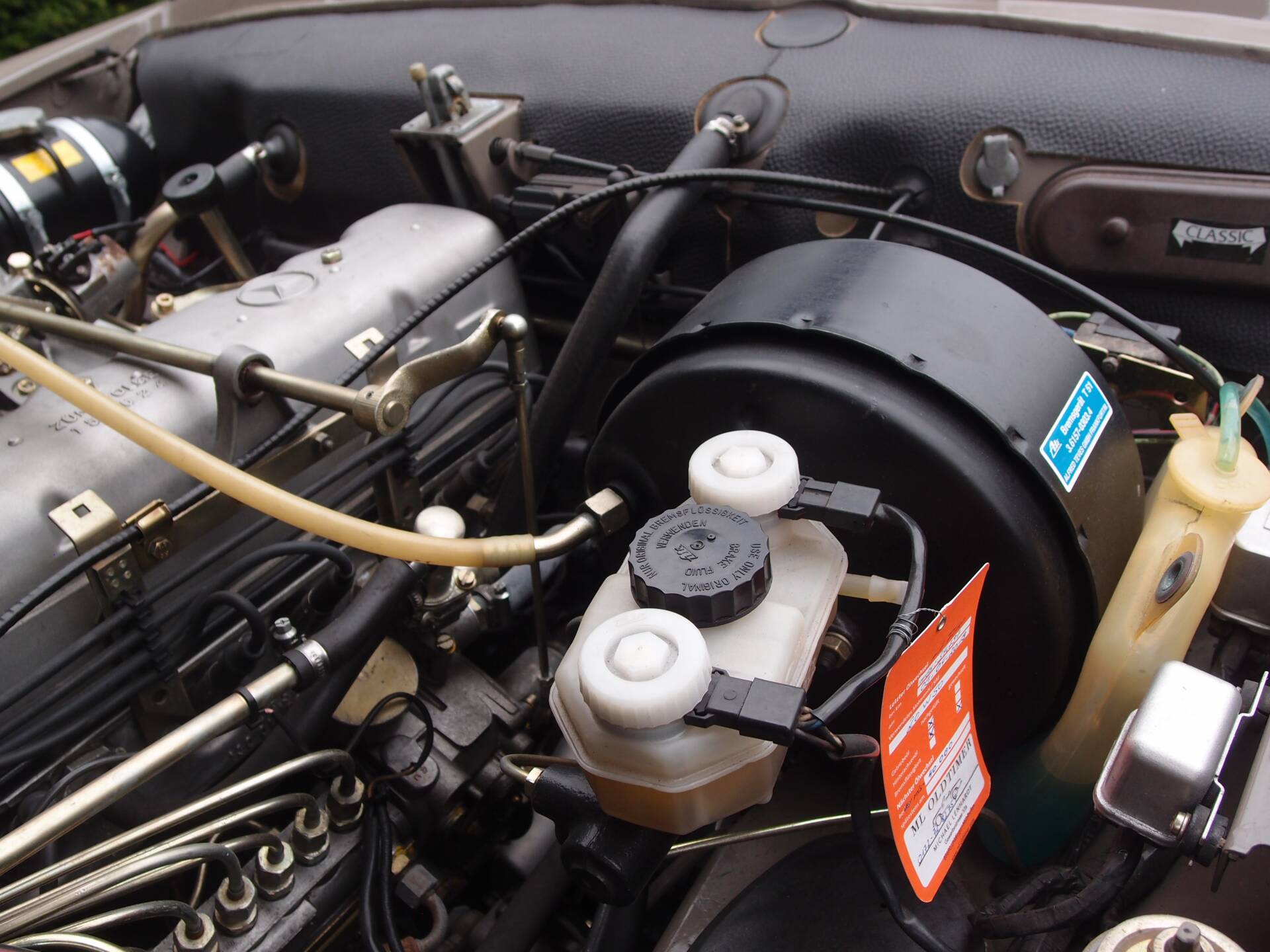
The suspension with recirculating-ball steering and a rear single-joint swing axle was also adopted from the W 111 sedan. The dual-circuit braking system initially had disc brakes only on the front axle; with the introduction of the 250 SL, also on the rear axle. Its suspension is firm, but very comfortable for a sports car. For the
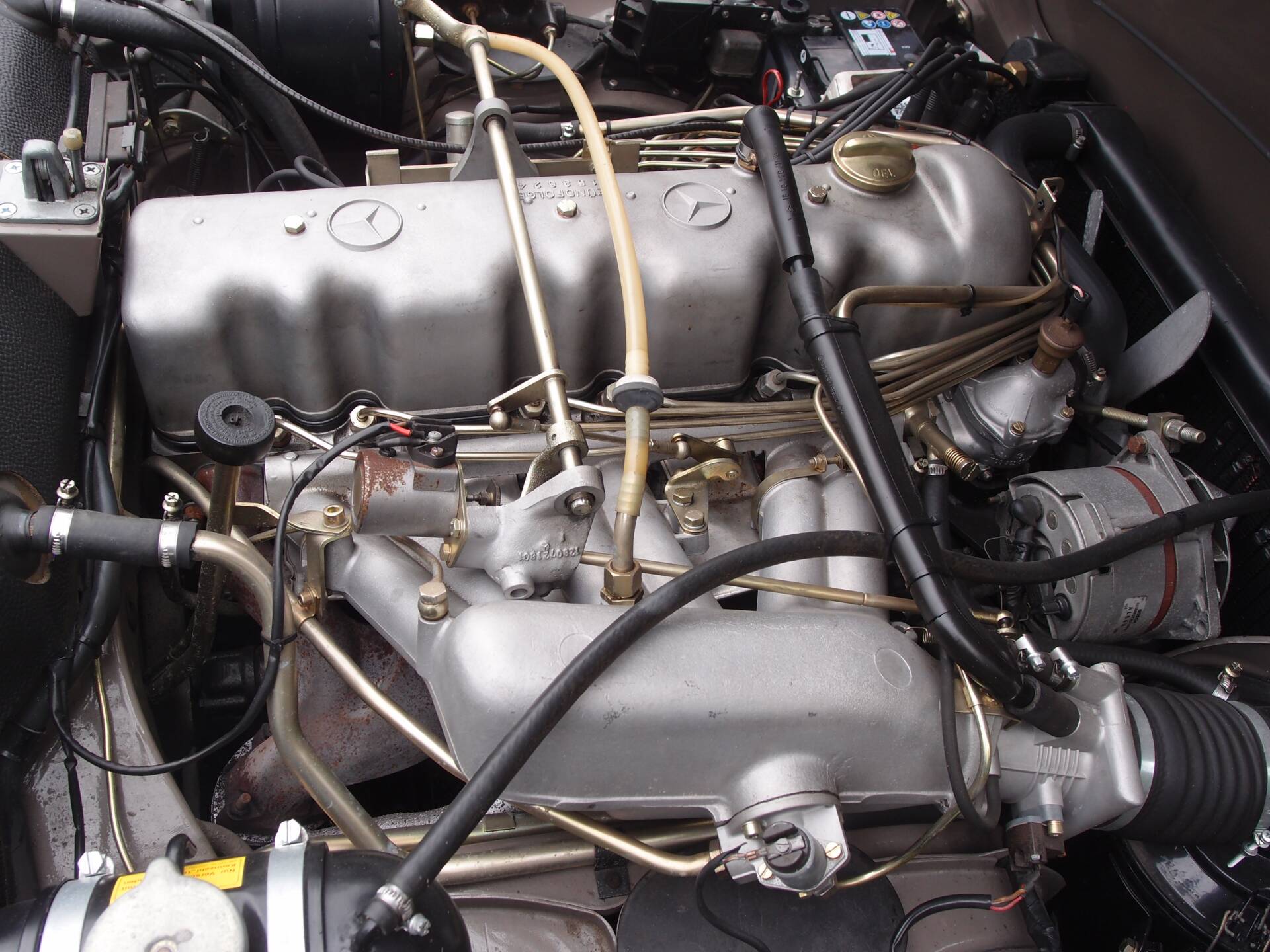
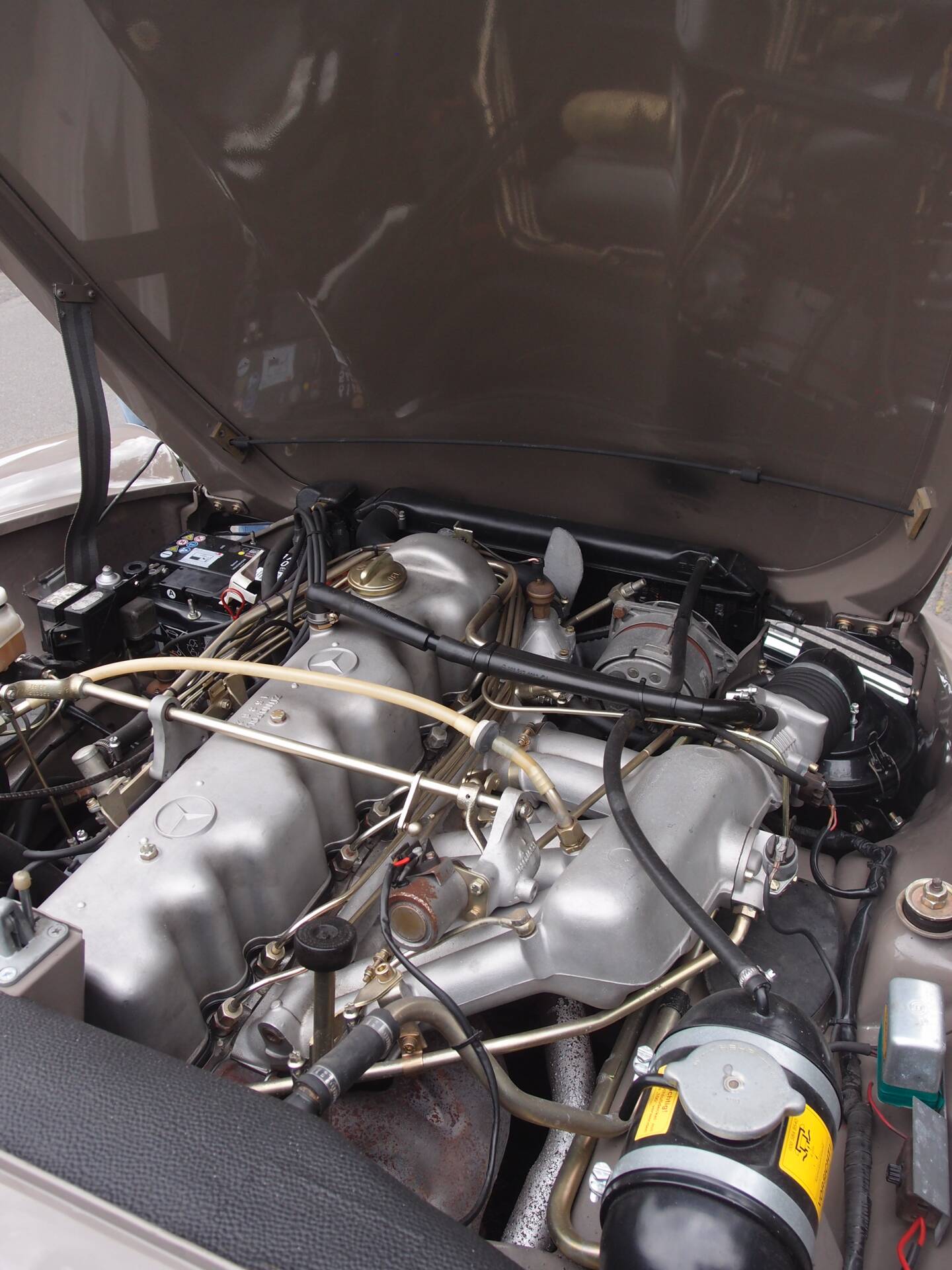
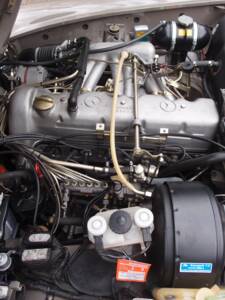
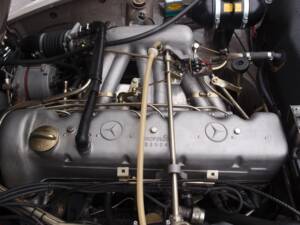
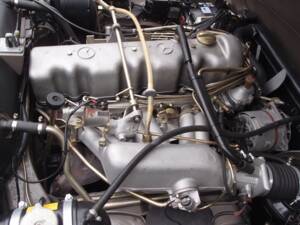
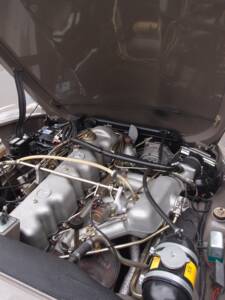
damping, gas-pressure shock absorbers are used; for the first time, an SL rode on belted tires. The engine designated M 127 II was a new development, as Mercedes-Benz had never been entirely satisfied with the refinement and performance of the 190 SL engine. Thus, in 1956, a six-cylinder fuel-injected M 127 engine with 2.2 liters of displacement and 130 hp was developed. Since, at the beginning of the 1960s, the 2.0- to 2.5-liter
sports car segment had been enriched by classic representatives of the GT category such as the Porsche Carrera 2 and Alfa Romeo 2600, Mercedes-Benz quickly realized that 2.2 liters of displacement and 130 hp would not be sufficient to satisfy customer expectations. By using a camshaft with greater overlap and increased valve lift, increasing displacement to 2.3 liters, and employing intake-manifold fuel injection via a six-plunger injection pump, the output of the engine, now designated M 127 II, was increased to 150 hp.
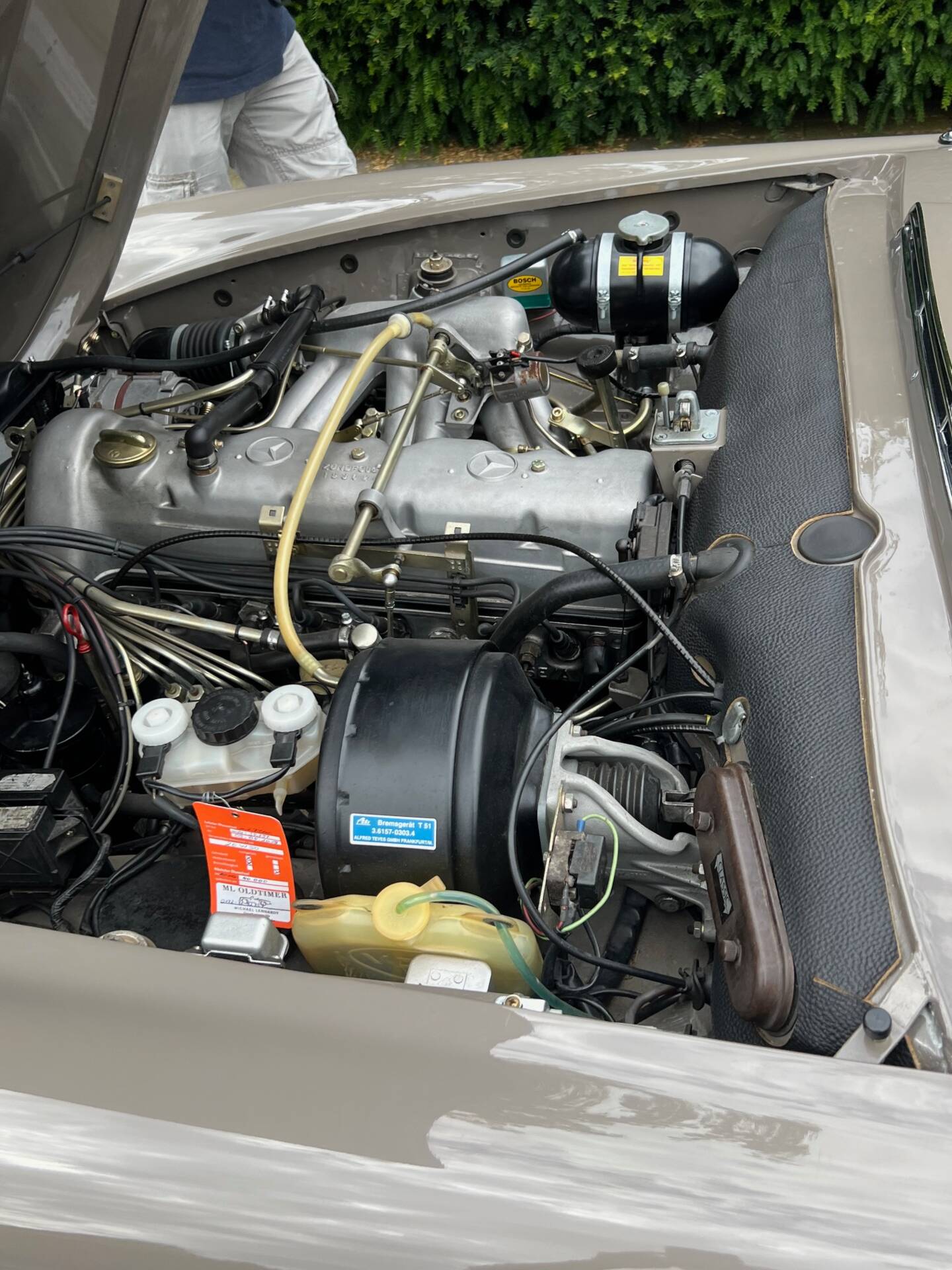
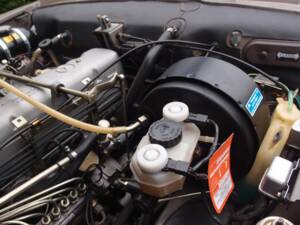
The six-cylinder M 127, also originating from the W 111 sedan and featuring cylinders cast in pairs, underwent several modifications. The most important was the use of a six-plunger injection pump instead of the two-plunger pump with two triple distributors. This made it possible to inject the fuel through the open intake valves directly into the combustion chamber, rather than only into the intake manifold. The M 127 II engine, bored out to 2.3 liters, therefore produces 150 hp at 5500 rpm and offers
196 Nm of torque at 4200 rpm. This very sporty SL powertrain requires relatively high engine speeds. Top speed with the manual transmission is 200 km/h. A four-speed automatic transmission was available as an option, the first time ever in an SL. In December 1966, the Mercedes-Benz 250 SL (M 129 engine), also producing 150 hp and now featuring equal cylinder spacing, followed. The engine and brakes were derived, with slight modifications, from the 250 SE. Original 250 SLs are the rarest examples of the W 113 series due to their production period of just over one year. In 1968, the 250 SL was replaced by the 170-hp, higher-torque 280 SL with the M 130 engine. Externally, the car differs from its predecessor only by the badge on the trunk lid and modified wheel covers. In 1968, the 280 SL received
the padded-hub steering wheel of the 280 S/SE; the steering column is therefore shorter than in the 230 SL and 250 SL; conversions of 230 SLs or 250 SLs to 280 SL specification can sometimes be identified by this feature. With 170 hp, the 280 SL engine produces 10 hp more than the 280 SE engine of the sedans with the same displacement; the same SL engine also temporarily powered the simultaneously produced 300 SEL after production of the aluminum engine had ended.
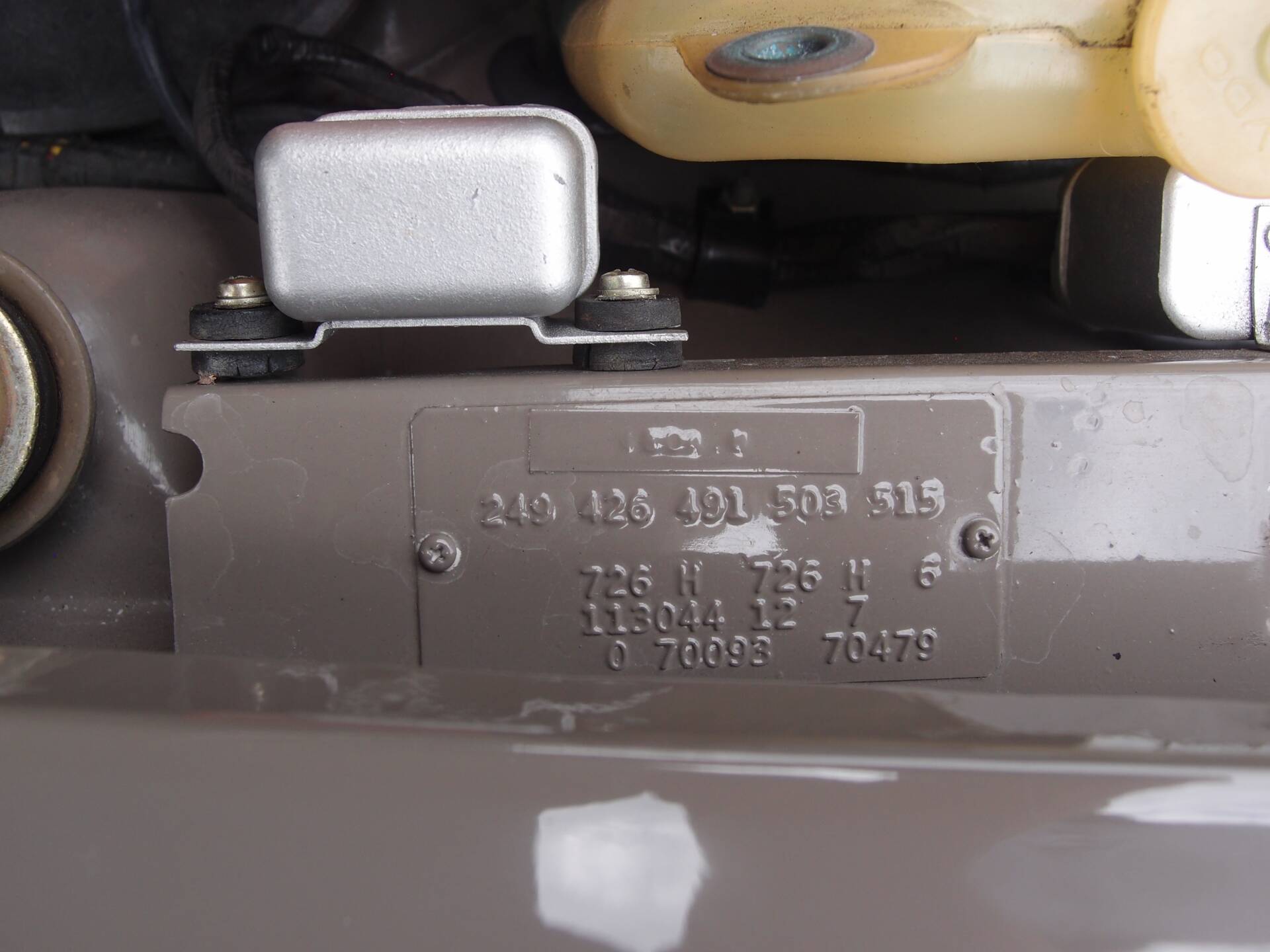
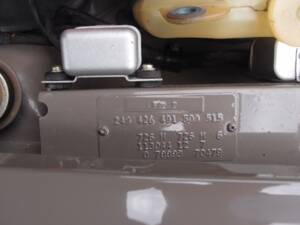
Thanks to the modular design principle, many interchange possibilities exist among the powertrains. In earlier decades, this was frequently taken advantage of in cases of the not uncommon engine failures. When purchasing, great importance should therefore be placed on the correct pairing of the body and powertrain. The decisive factor is the second group of three digits in the chassis number after model series 113, in conjunction with the engine type. Powertrains that do not belong to the body’s model series immediately devalue a vehicle by five-figure euro amounts. Offers that appear surprisingly inexpensive often have a catch here and, upon closer examination with regard to investment value and the costs of returning the car to its original specification, are often too expensive.
Eight-cylinder engines were never offered in the W113 series, although both attempts to do so and private conversions, including conversions to the M 100 engine from the 300 SEL 6.3, were carried out. V8 engines were not introduced in the SL until 1971, in the successor 350 SL.
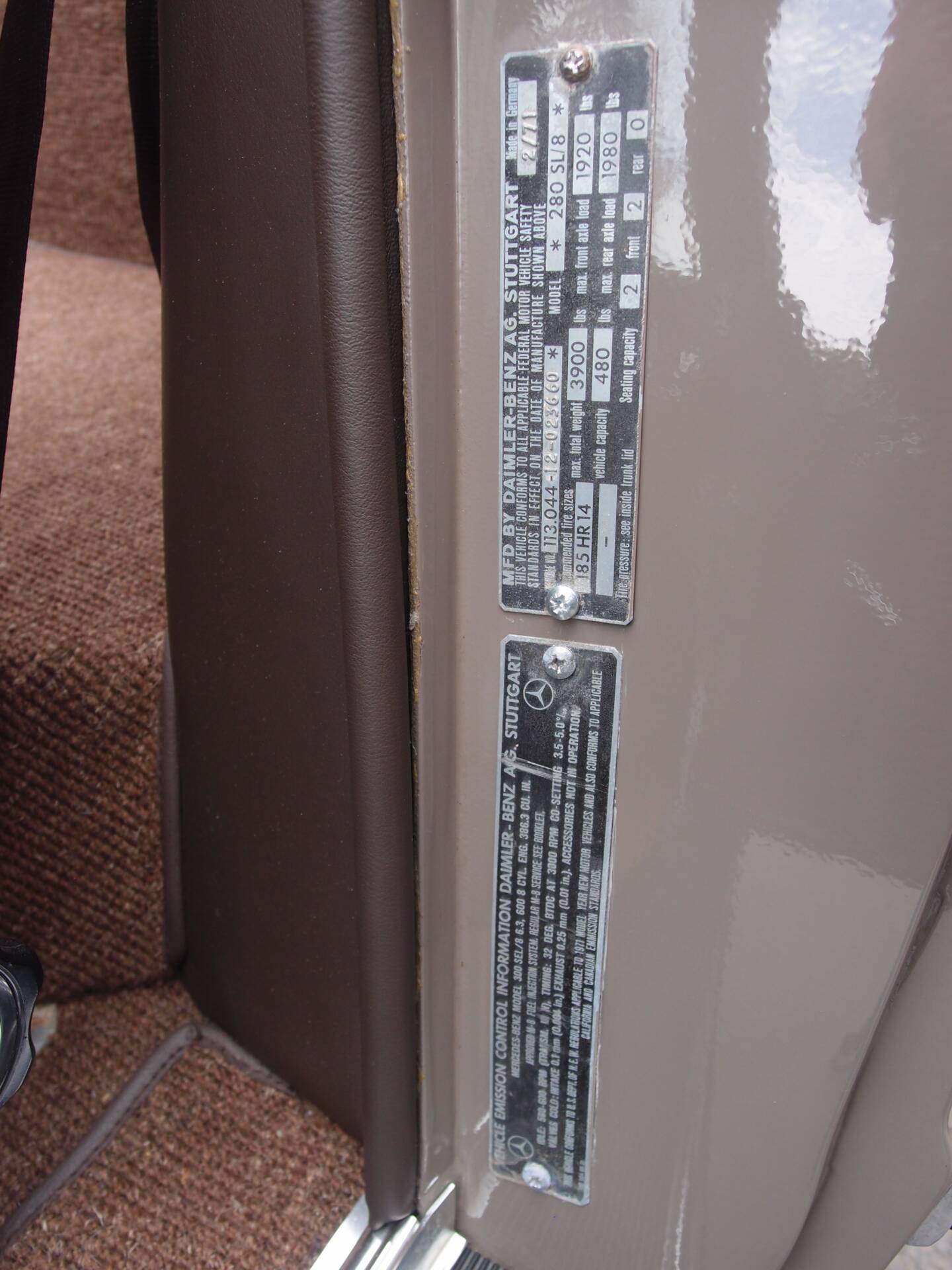
The 250 SL (W113 A) arrived in December 1966, although it was built only until January 1968. It was equipped with a 2.5-liter engine producing 150 hp. In the same month, the 280 SL (W113 E28), probably the most refined of all Pagoda SLs, appeared with a 2.8-liter engine and now 170 hp. At the time, the price of a 280 SL with a coupé roof was DM 24,300.00. The 280 SL was built until March 1971.
The entire range of Pagoda SLs extended from 1963 to 1971. During this period, 19 831 examples of the 230 SL, 5 196 examples of the 250 SL and, last but not least, 23 895 examples of the 280 SL were produced.
Important legal notice / Sale on behalf of the customer:
This vehicle is offered exclusively under a brokerage agreement (in the name and on behalf of third parties). I am not acting as the seller or dealer, but solely as an intermediary.
The actual seller of the vehicle is the estate of the deceased vehicle owner, legally represented by the responsible executor. The purchase agreement will be concluded directly with the executor.
As this is a sale from a private estate, the sale is made with the complete exclusion of any liability for material defects (warranty), any guarantee or return, to the extent permitted by law.
This description has been automatically translated. Original language: German.