Lotus Europa classic cars for sale
The Lotus Europa delivers an uncompromising, purist driving experience that embodies Colin Chapman’s principles of minimal weight and direct feedback. With a distinctive wedge-shaped, low-slung body and mid-engine layout, the Europa stands out as one of the most innovative British sports cars of its era.
Search results
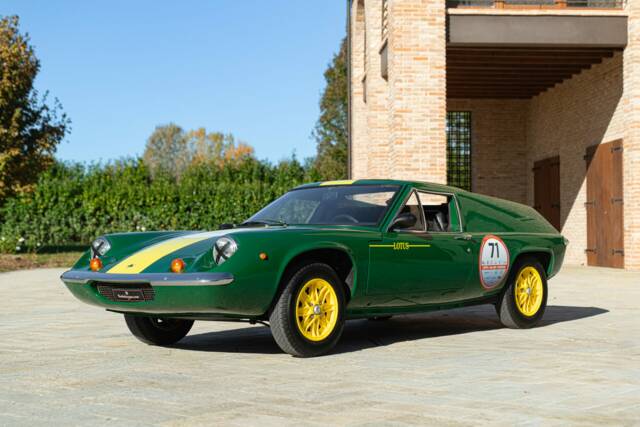
1971 | Lotus Europa
2025-08-29 15:44:52 | Lotus EUROPA II° SERIE
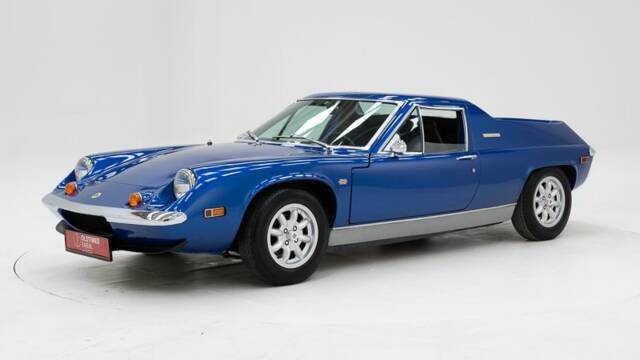
1974 | Lotus Europa Twin Cam
1974 Lotus Europe '74
Auctions ending soon

Loading…
Loading…
Loading…
Loading…
The story behind the Lotus Europa
Launched in 1966, the Lotus Europa was conceived as a road-going sports car that brought racing technology to public roads. Lotus, navigating export regulations and a changing automotive landscape, designed the Europa specifically for markets outside the UK, initially focusing on Europe, particularly France. Early models were built with Renault engines, surprising considering Britain’s less integrated approach to continental partnerships at the time. The lightweight fiberglass body and steel backbone chassis, directly descended from Lotus racing efforts, ensured exceptional handling and driving precision. The Europa quickly made a name for itself not just for its driving dynamics but also for its unconventional engineering choices, making it a marked departure from typical British sports cars of the 1960s. Production of the original Europa series concluded in 1975, after nearly a decade of incremental evolution and motorsport involvement.
Model history: from racing roots to road innovation
The Europa’s lineage covers several distinct types: Type 46 (S1), Type 47 (racing version), Type 54 (S2), Type 65 (Federal for the US), and Type 74 (Twin Cam). The first Series 1, introduced in 1966, featured a 1.5-litre Renault engine, fixed seats, and minimal interior, with the fiberglass body bonded to the chassis. By 1968, the Series 2 improved serviceability with a bolted body, adjustable seats, and electric windows. The Type 65 addressed US legal requirements with safety and lighting adaptations. Motorsport demands prompted the creation of the Type 47, while in 1971, the Type 74 Twin Cam arrived with a Lotus-Ford engine, producing over 100 bhp. The final iterations, including the rare Special, received further power and five-speed gearboxes before Europa production wound down in 1975.
Unique features and statistics of the Lotus Europa
The Lotus Europa’s defining technical hallmark is its central engine with rear-wheel drive, paired with a steel backbone chassis for high rigidity and low mass. The handling remains renowned among sports car engineers and enthusiasts, delivered through Lotus’s racing-derived suspension: fully independent, with the rear employing the modified Chapman strut seen in single-seaters. The fiberglass body grants the Europa a low centre of gravity and a distinctive wedge profile. Interiors are stripped-down, driver-focused, with fixed or minimally adjustable seating and clear instrumentation. The car’s straightforward engineering is echoed in its maintenance-friendly mechanicals, especially post-S2. Motorsport variants and victories at Brands Hatch and other events underscore its sporting pedigree.
Technical data
Special Editions and Collectible Models
The Lotus Europa saw several significant special models:
- Type 47: Pure racing variant with increased power, thinner bodywork, and bigger arches for track use. Not intended for the road.
- Type 74 Twin Cam ('Special'): Brought the 1558 cc Lotus-Ford engine, power increases (especially 'Big Valve' models), improved handling, new gearbox, and striking black and gold F1-inspired paintwork. Produced to commemorate Lotus’s F1 World Championships.
- Series 2 Federal (Type 65): Designed to meet strict US regulations, with safety and emissions adaptations.
Weak spots and common issues
Early Series 1 Europas with the bonded fiberglass body are notoriously difficult to repair structurally, as the body can delaminate from the chassis with age or improper repair. Rust can affect the steel backbone, especially in neglected examples. The electrical system can be prone to faults, particularly on cars exposed to damp climates. Mechanically, the Renault units are generally robust if maintained but require correct oils for gearbox longevity. Chassis and suspension bushings, being subject to hard driving, can wear out and must be regularly checked.
Engine and Performance, Transmission and Handling
The Europa delivers renowned handling prowess thanks to its mid-engine layout, low mass, and Lotus-developed suspension. Even with modest engine outputs in early models, its lightness gives it a lively character—0–60 mph in under 10 seconds (S1), with Twin Cam versions bettering this noticeably. The Type 74 Twin Cam models feature lively acceleration and more composed high-speed cruising, thanks to the five-speed transmission. All versions share a direct steering feel and agile responses, making them competitive in both period road and racecourses. - Europa S1 (Type 46): 1470 cc Renault, 4-speed, minimalist interior, bonded body.
- Europa S2 (Type 54): Bolted body for repairability, enhanced interior, improved comfort.
- Europa Twin Cam (Type 74): 1558 cc Lotus-Ford engine, up to 126 hp (Big Valve), 5-speed (late models), iconic F1 livery.
Interior, Comfort, Exterior and Design
Design elements are uncompromisingly driver-centric: bucket seats, fixed or basic adjustable, with a minimalist instrument layout. No excess; the aluminium or later wooden dashboard reflects era taste. The wedge-shaped exterior—low and striking—is built from single-mould fiberglass, optimising airflow and weight. Adjustable details were limited: fixed windows in early S1, progressing to electric in S2. Special models deliver unique paint (notably the black and gold Twin Cam Special), unique badging, and, in racing models, functional cooling and aerodynamic mods. Accessories and options were minimal, reinforcing the no-frills sporting ethos.
Further features and notes
The Europa marked one of the first mass-produced mid-engined road cars, influencing later competitors on layout and handling. Motorsport successes, especially with Type 47, built its reputation as a serious driver’s car far beyond its raw horsepower figures.
Summary
The Lotus Europa remains a touchstone of British sports car engineering—an audacious attempt to democratise racing technology for road use. With innovative structure, aerodynamic shape, and a singular focus on driver engagement, the Europa continues to command attention from enthusiasts who value authenticity, minimalism, and technical ingenuity.