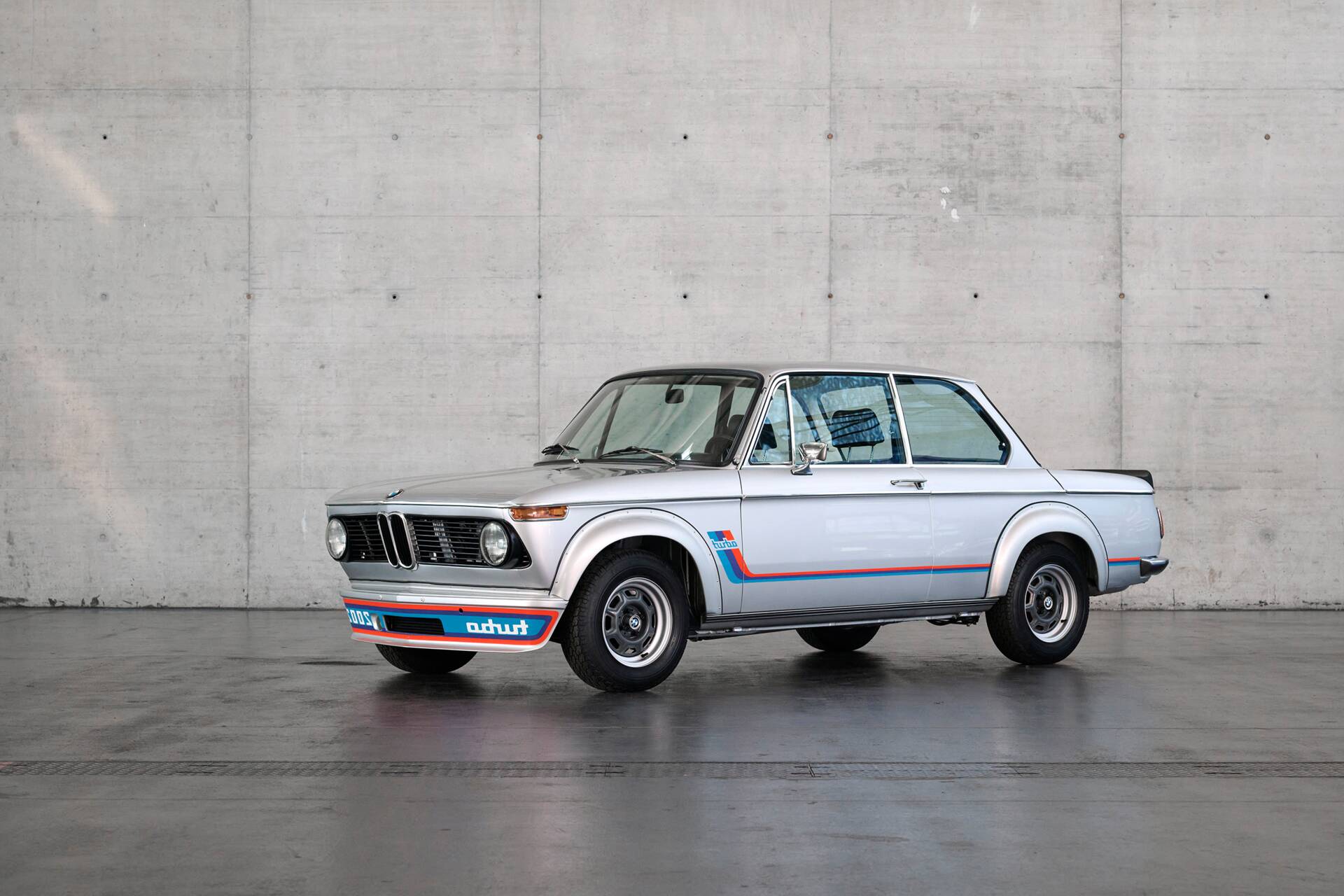
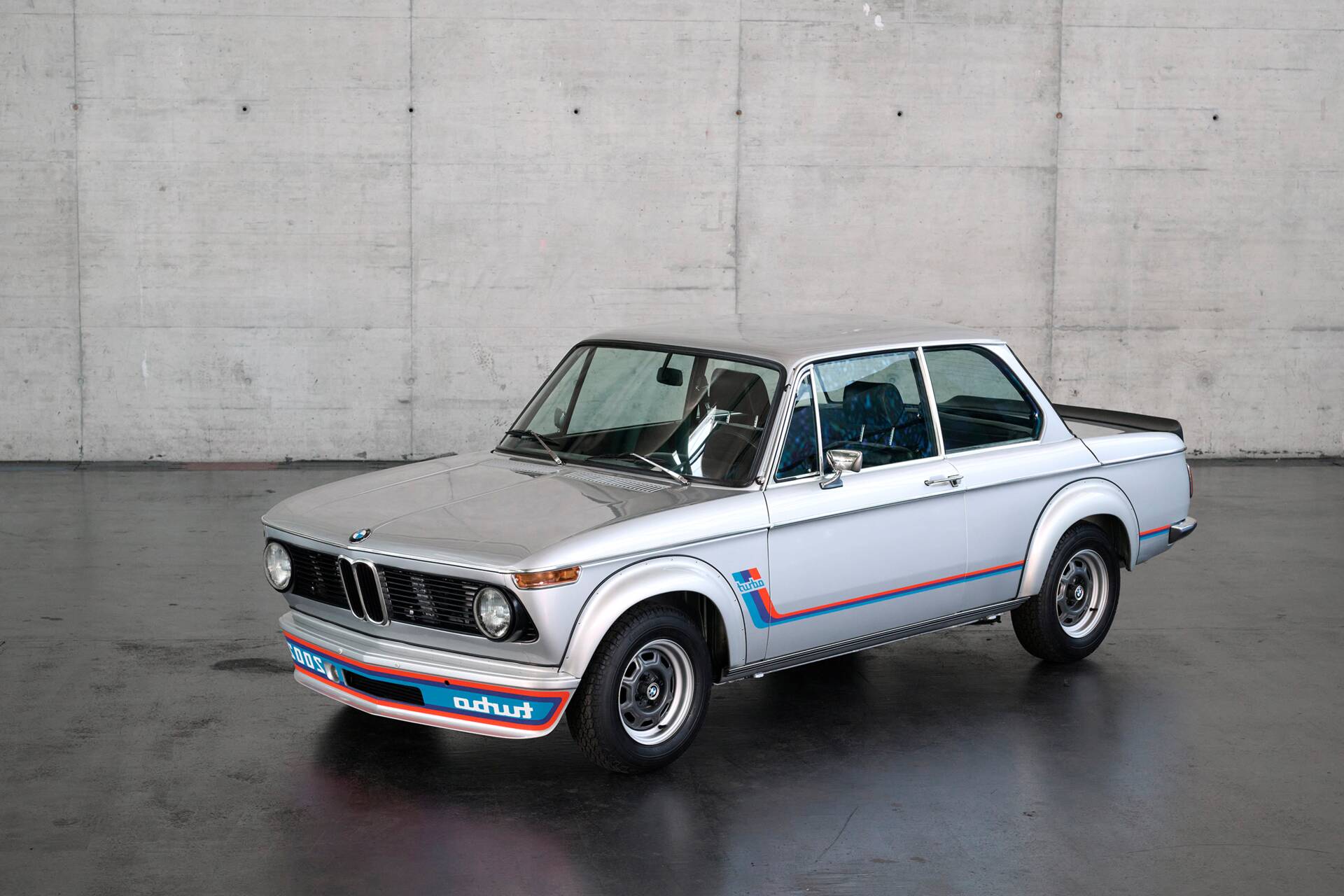
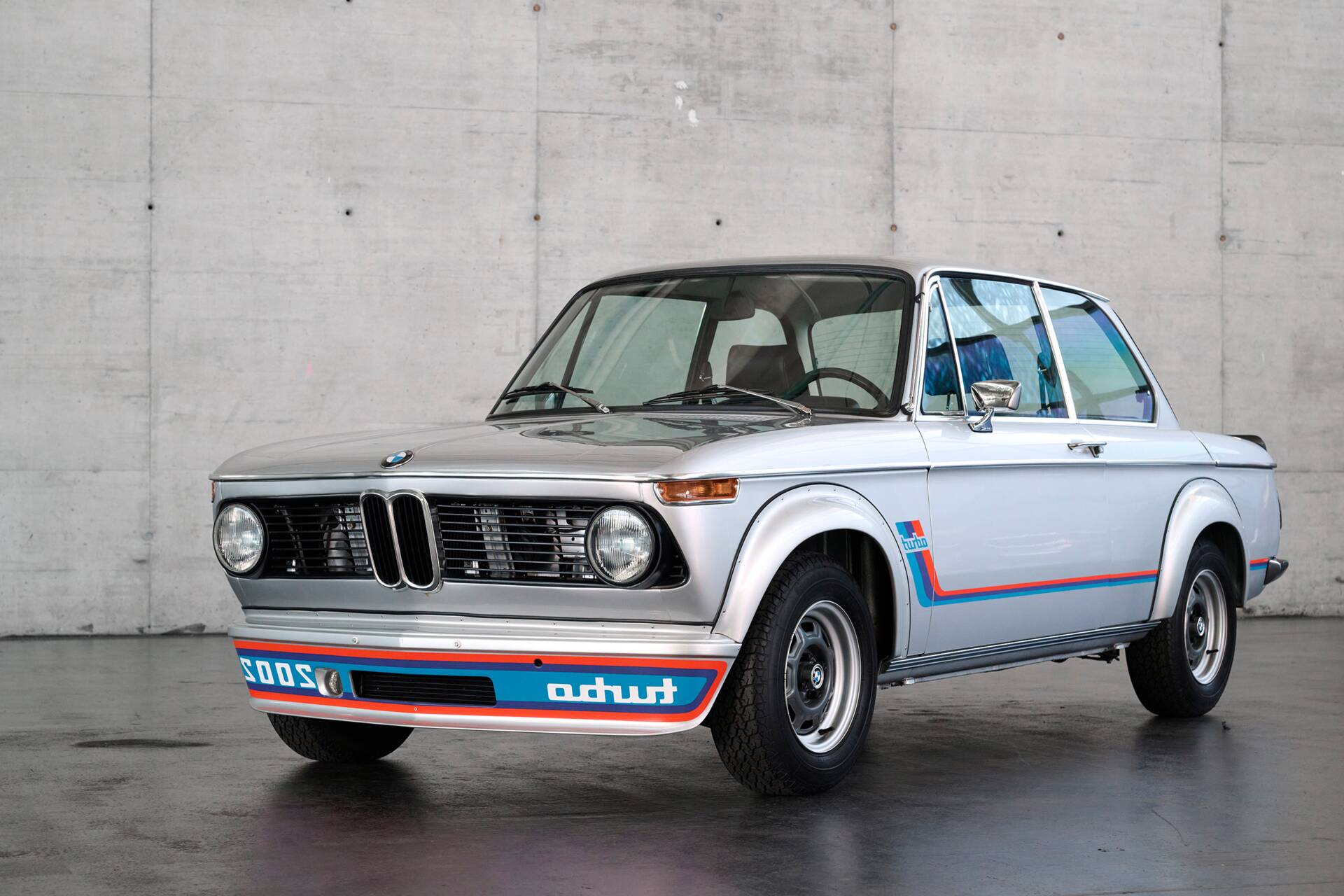
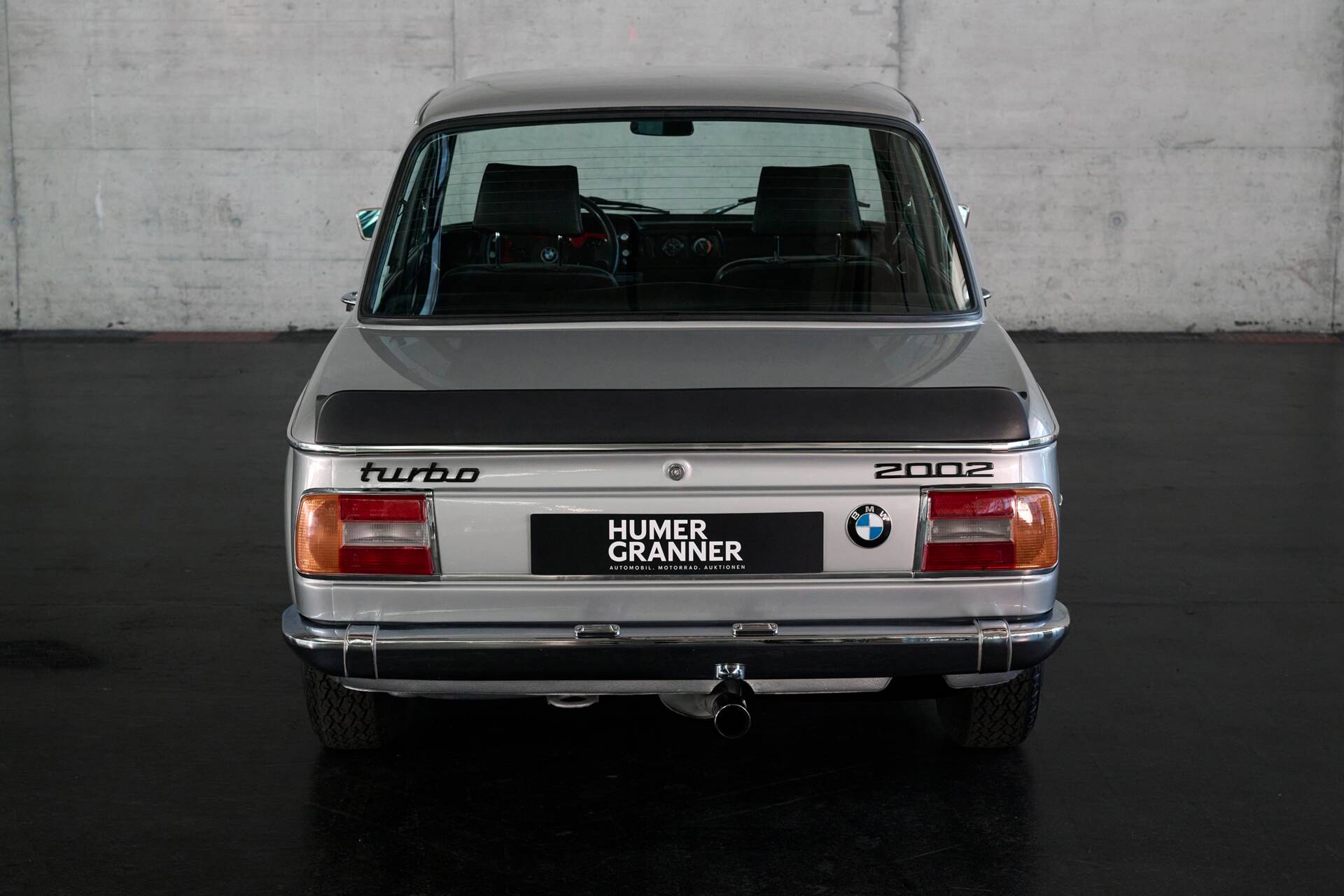
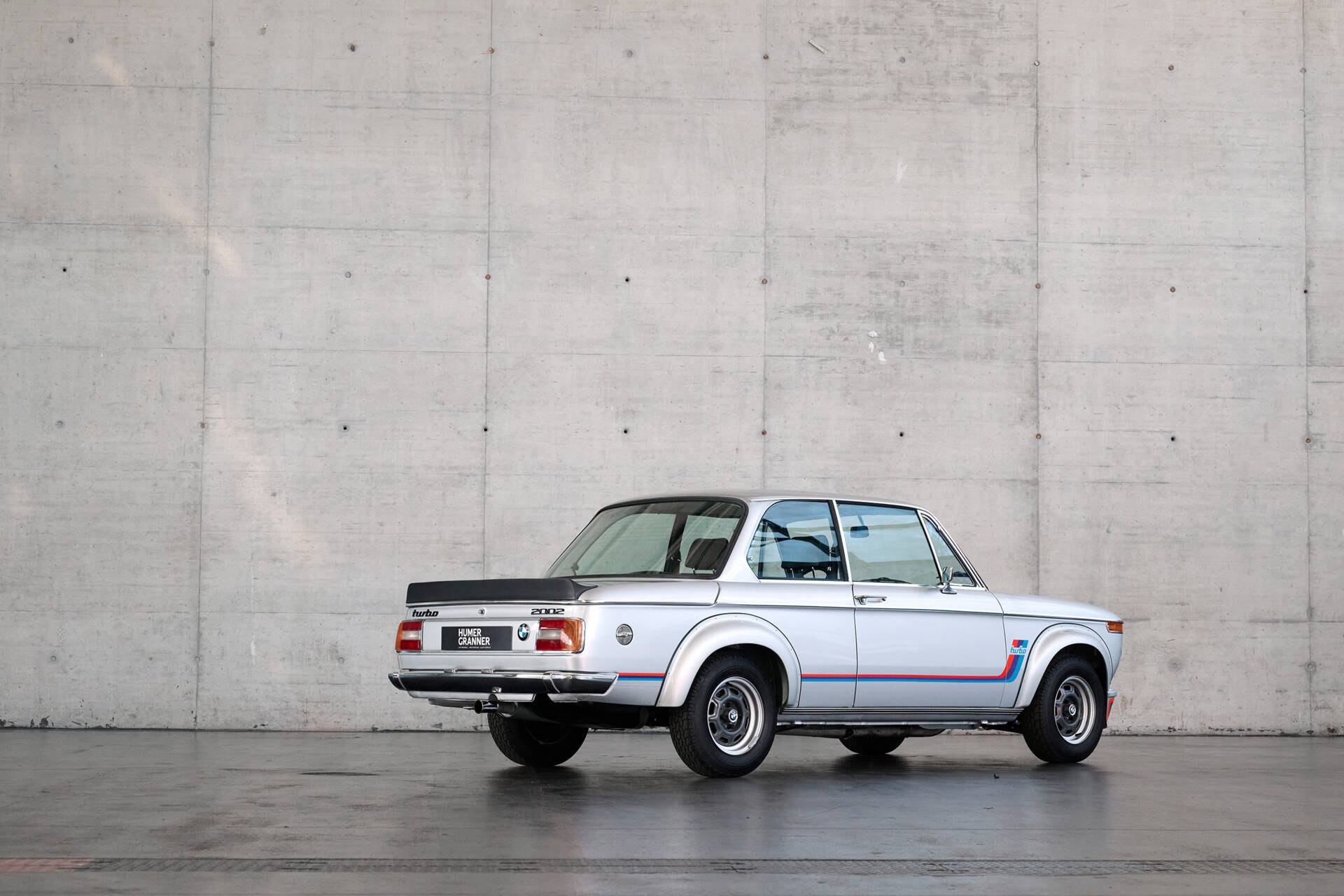
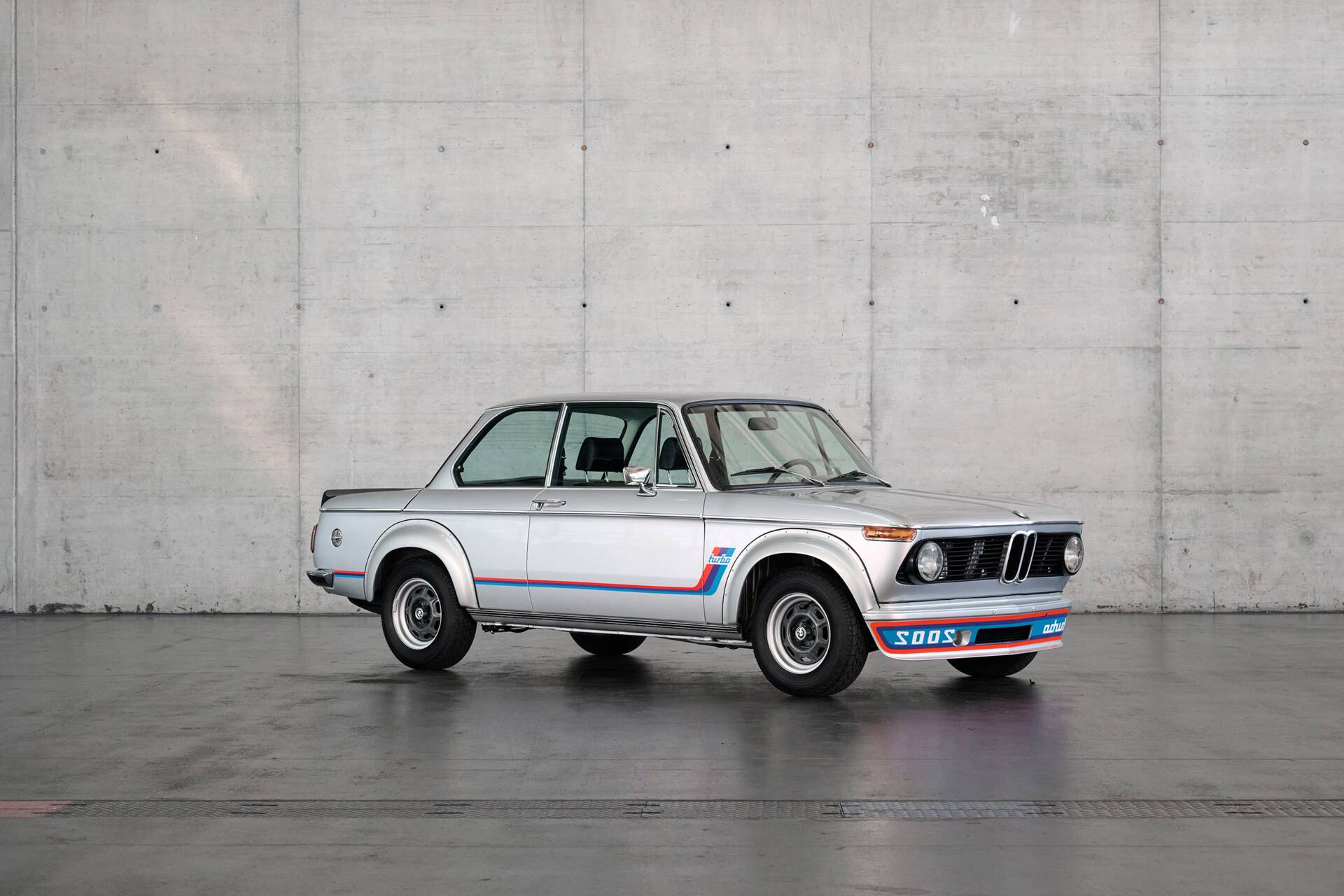
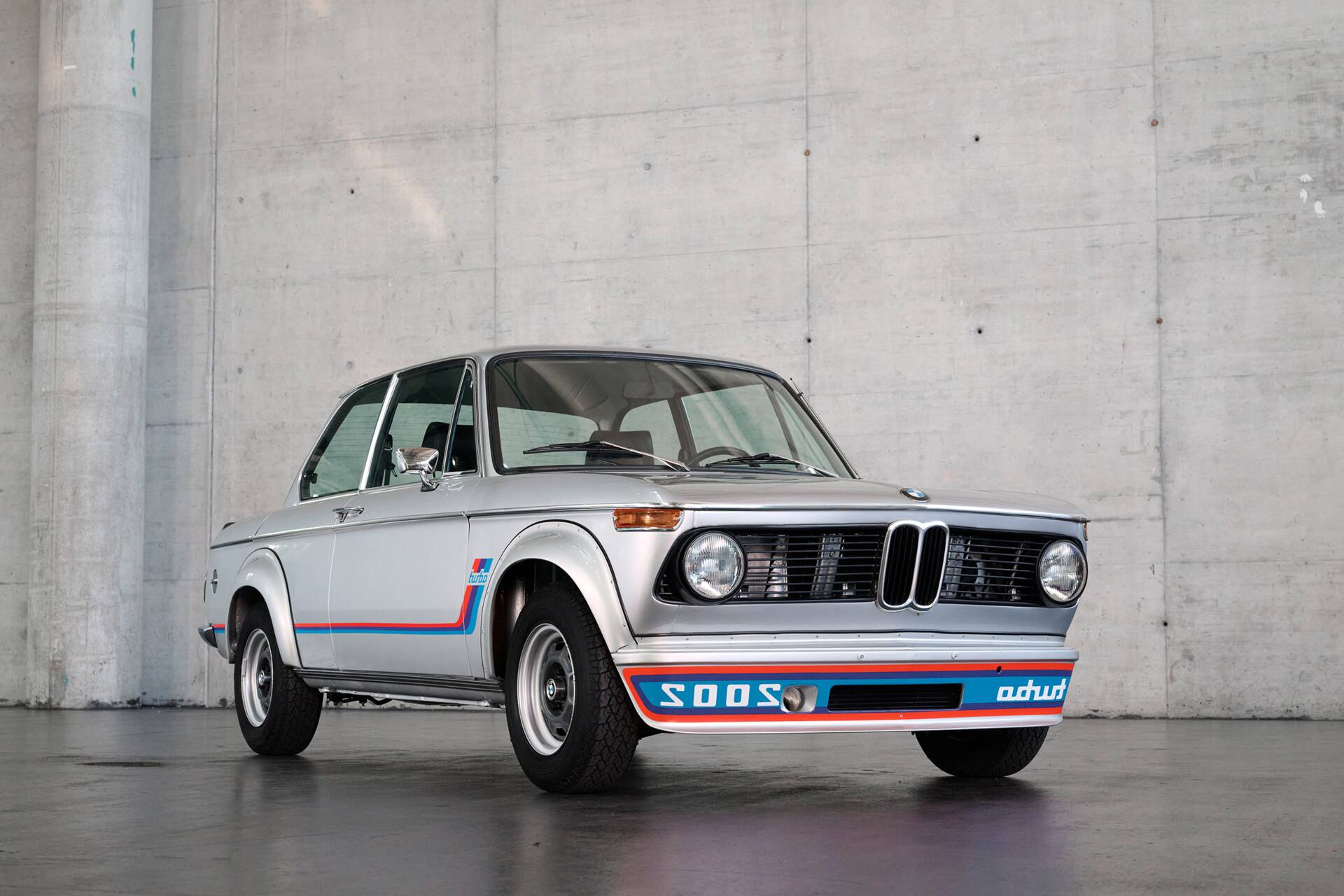
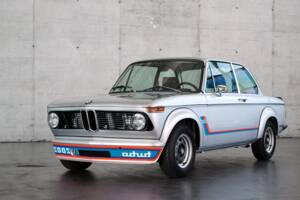
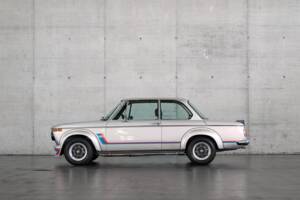
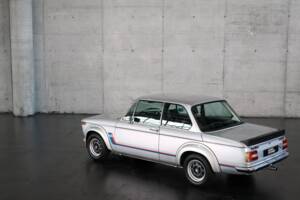
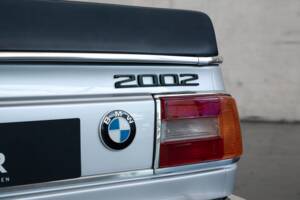
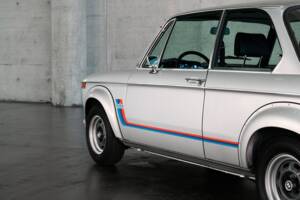
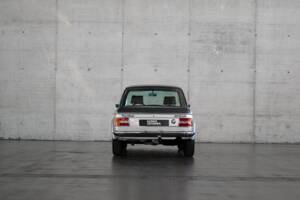
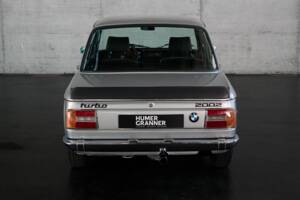
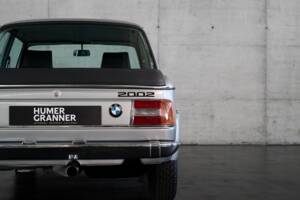
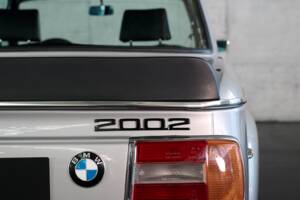
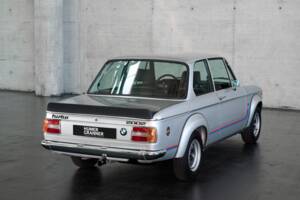
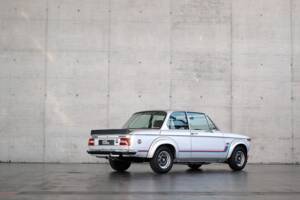
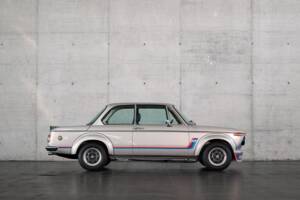
1974 BMW 2002 Turbo. Im Auktionsverkauf. Schätzwert: 90.000 € - 120.000 €. Ohne Mindestpreis!
one of only 1,674 2002 turbos builtDelivered new to Sicily in 1974The first German production car with a turbochargerA 1970s icon with breathtaking performanceComprehensively restored by a BMW employeeFuel-injection pump recently completely overhauled
There are moments when a manufacturer unveils a car with timing so spectacularly unfortunate that one almost has to admire it. BMW managed just such a moment in the autumn of 1973. At the Frankfurt Motor Show, the Munich company presented a small two-door saloon with 170 hp, flared wheelarches, a front spoiler and a turbocharger. A few weeks later, the oil crisis began. Suddenly, car-free Sundays were being imposed, petrol prices became the subject of public debate and conspicuously high fuel consumption was considered about as fashionable as an oil-fired stove in the living room.
Yet the idea had hardly been dreamt up overnight. Quite the opposite: the Turbo represented the provisional culmination of a development that had transformed BMW into a serious motor manufacturer over the preceding decade. At the beginning of the 1960s, things in Munich had looked very different. Between the Isetta, small economy cars and expensive V8 saloons, BMW lacked precisely the sort of car with which it could make money on a sustainable basis. The Neue Klasse, introduced in 1961, changed all that. Modern suspension, powerful four-cylinder engines and an inherently sporting character gave BMW an identity that sounds remarkably familiar today.
In 1966, this spawned the two-door 02 Series. Shorter, lighter and cheaper than the four-door Neue Klasse, but with essentially the same ingredients. The 1600-2 started things off, but it soon became apparent that the compact body could accommodate a surprising amount of performance. In 1968 came the 2002 with its two-litre engine, alongside the twin-carburettor 2002 ti with 120 hp. The mechanically fuel-injected 2002 tii followed in 1971, producing 130 hp courtesy of Kugelfischer injection.
By then, the sensible little two-door saloon had become a fairly serious sporting machine. Motor racing had noticed, too. BMW’s M10 four-cylinder was robust, light and, above all, remarkably receptive to further development. Paul Rosche and Munich’s racing-engine department had begun putting it under pressure in the late 1960s. A turbocharged two-litre engine in a BMW 2002 contributed to victory in the 1969 European Touring Car Championship. The idea of extracting substantially more power from a relatively small engine using exhaust gases had therefore been thoroughly explored at BMW long before anyone could order a 2002 turbo from their local dealer.
The principle was seductive. Instead of building ever-larger engines, one used the energy of the exhaust gases to drive a compressor. More air meant more oxygen, more oxygen allowed more fuel, and the result – provided everything held together – was considerably more power.
Turbocharging, however, brought enormous thermal stresses and presented engineers with problems that simply did not exist in a naturally aspirated engine. Then there was throttle response. Early turbochargers needed sufficient exhaust flow before they really got going. Below a certain engine speed, therefore, not an awful lot happened. Then the boost arrived and matters suddenly became considerably more interesting. In a racing car, this was both a challenge and part of the attraction. For a road car, the technology first needed to be taught a few manners.
Just how seriously BMW was taking the turbo idea became clear in 1972, with a car that had about as much in common with the respectable shape of the 02 as a spacesuit has with a traditional tweed coat. For the Munich Olympics, BMW unveiled the Turbo, designed by Paul Bracq. Low, wedge-shaped, with gullwing doors and a mid-mounted engine, it looked like a message from the future. Its two-litre four-cylinder sat transversely behind the occupants and produced between 200 and 280 hp, depending on boost pressure. The one-off was primarily a technological demonstrator and safety study, but it left little doubt that BMW had further plans for turbocharging.
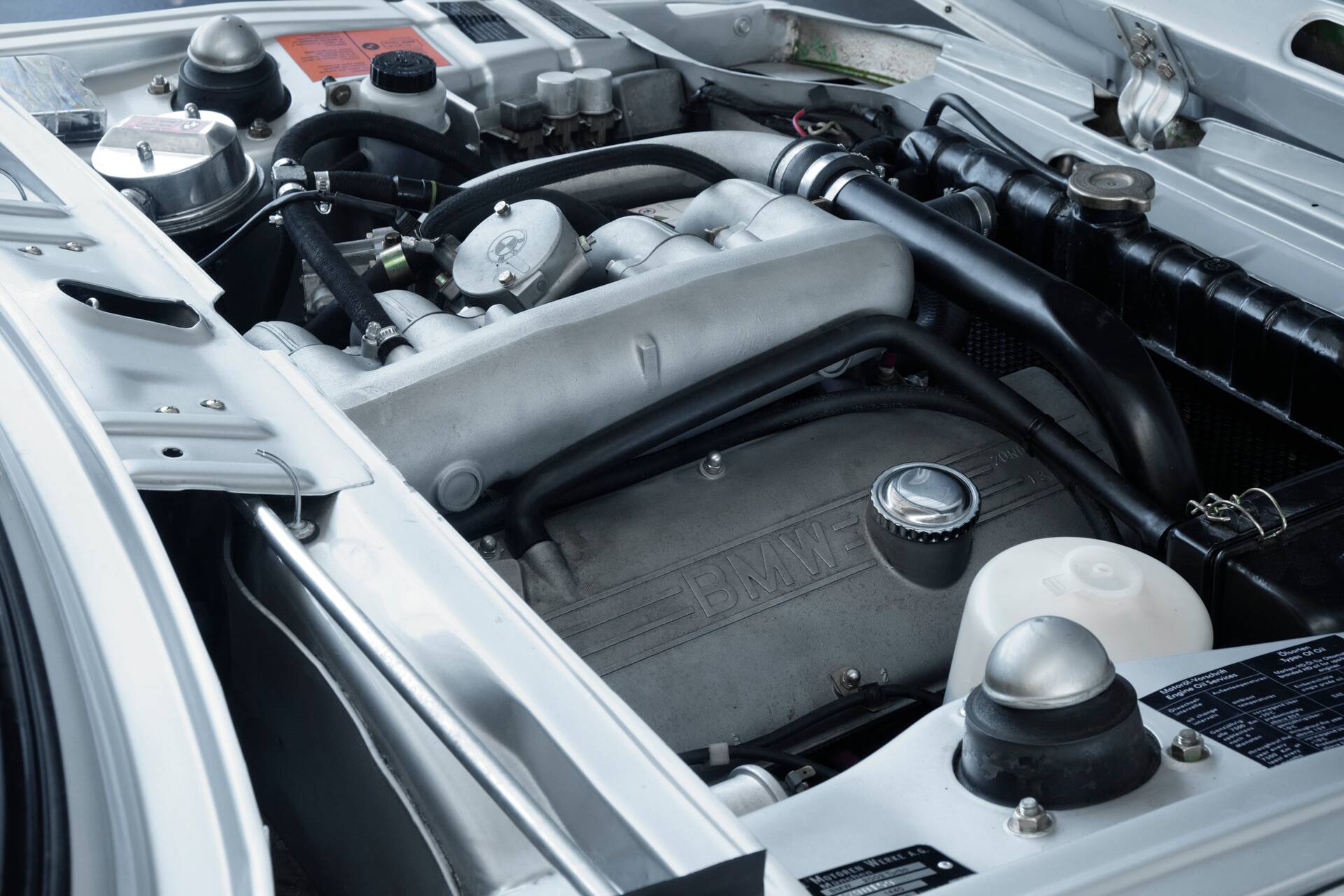
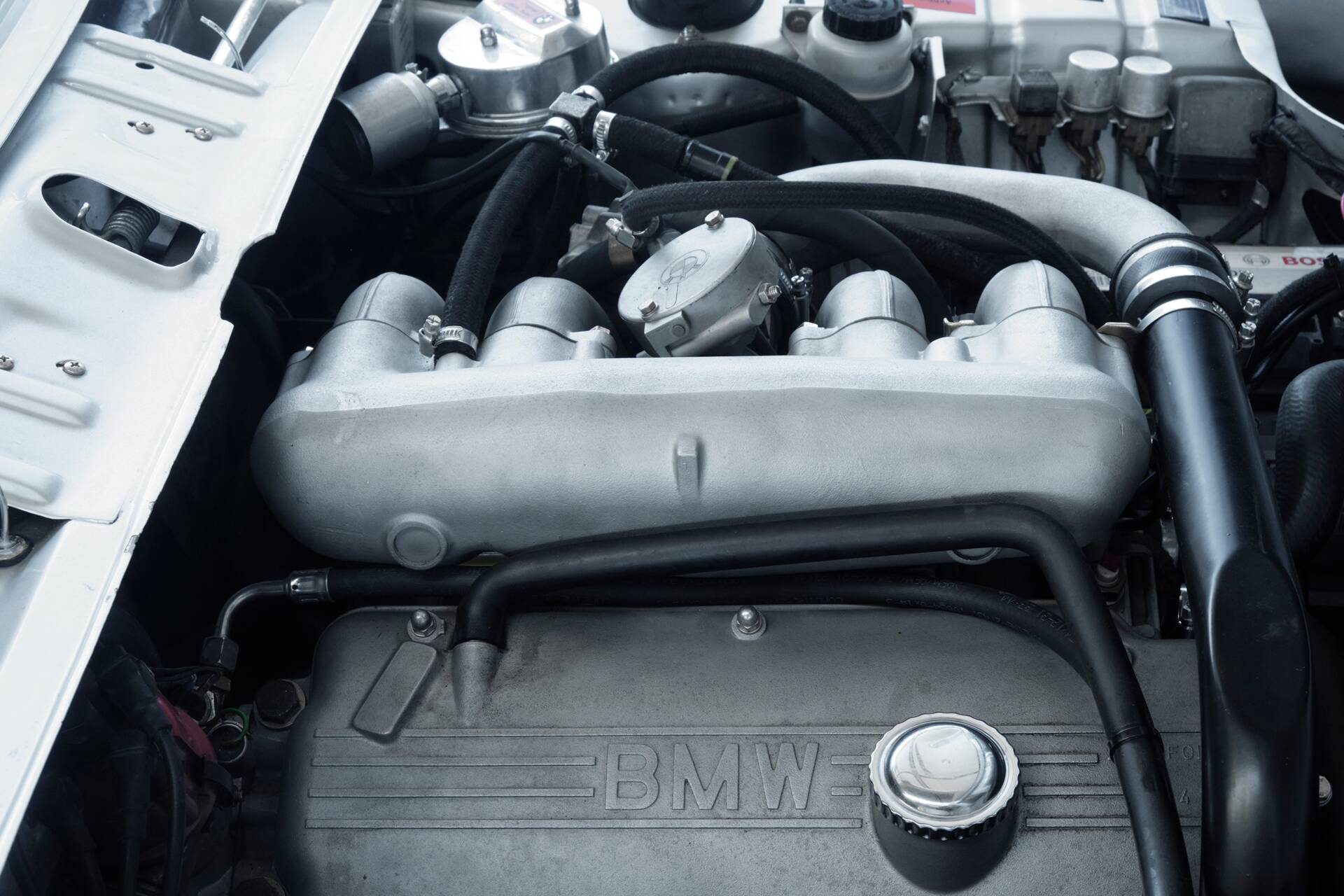
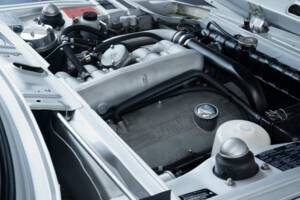
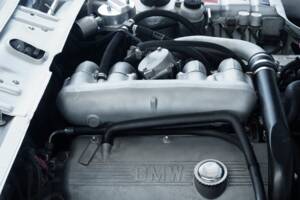
At the Frankfurt Motor Show in September 1973 stood the BMW 2002 turbo. Not as a futuristic concept, but as a car one could actually buy. Beneath its bonnet was the familiar M10 four-cylinder, displacing 1,990 cc, with Kugelfischer fuel injection and an exhaust-driven turbocharger supplied by Kühnle, Kopp & Kausch. Where the 2002 tii produced 130 hp, the Turbo now offered 170 hp at 5,800 rpm. Those additional 40 hp translated into a specific output of more than 85 hp per litre – a remarkable figure for a production engine in the early 1970s. Maximum torque rose to 240 Nm at 4,000 rpm. With a kerb weight of just around 1,080 kilograms, these were anything but academic figures.
Seven seconds were enough to reach 100 km/h, and 211 km/h was possible. In a small two-door saloon. In 1973.
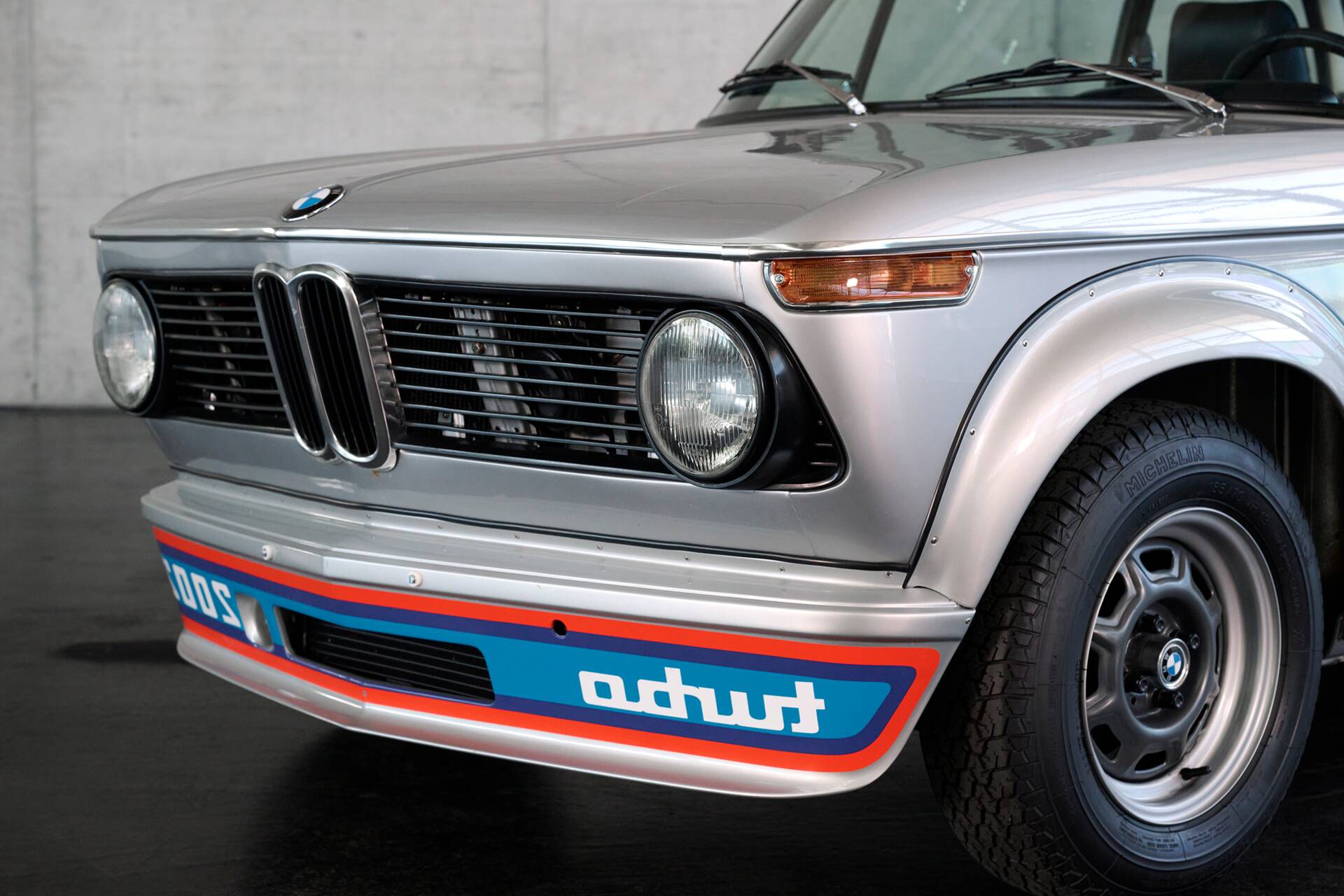
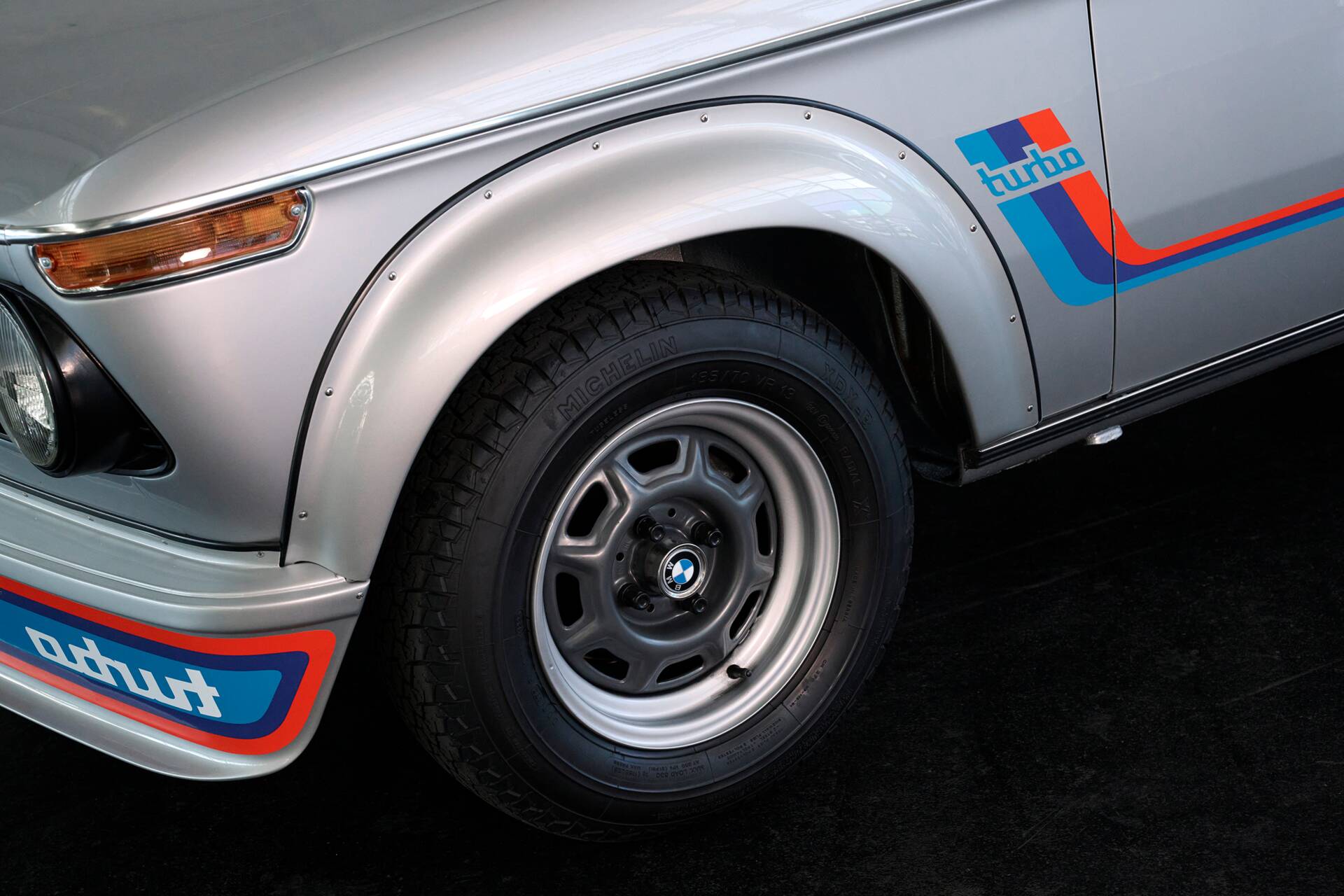
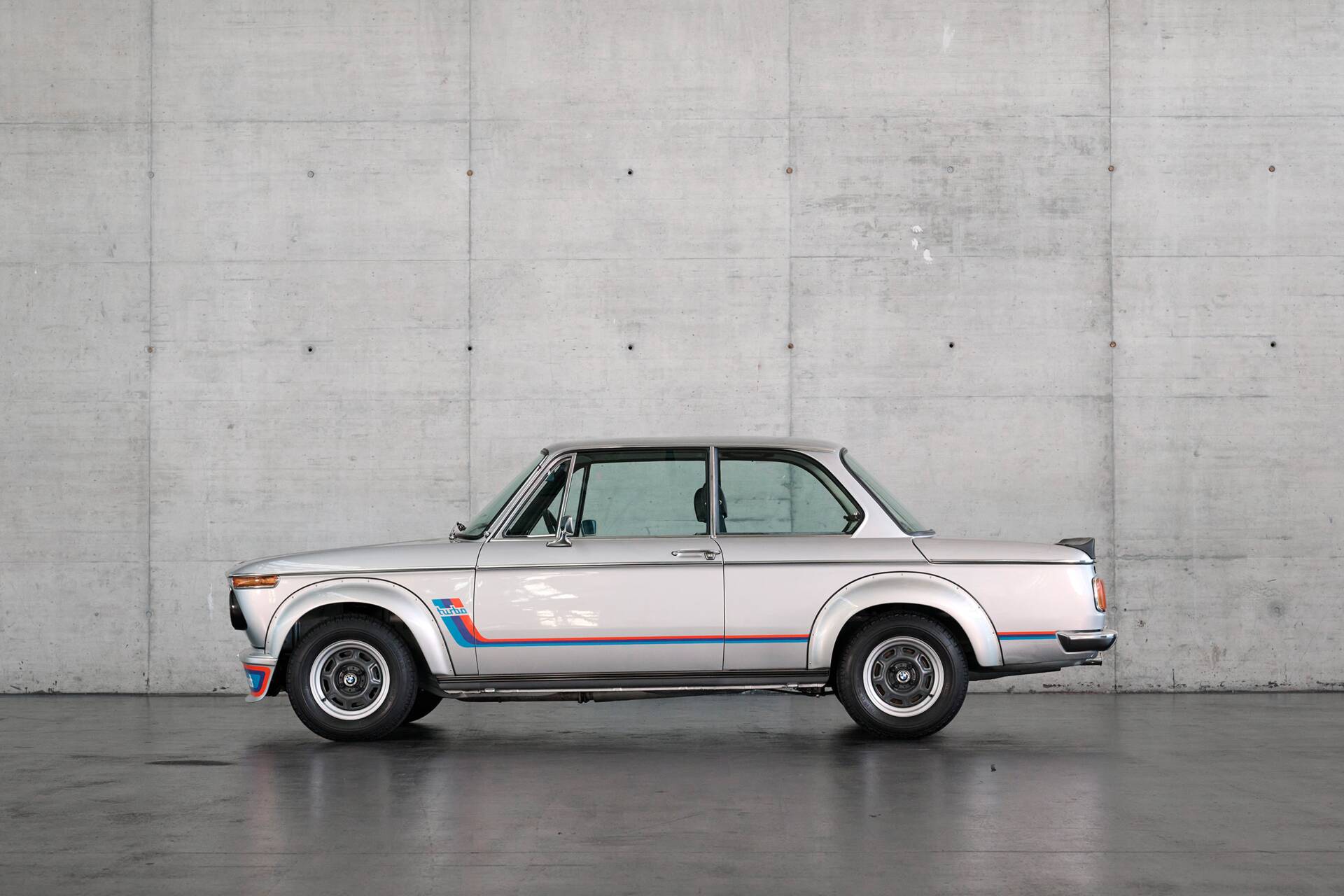
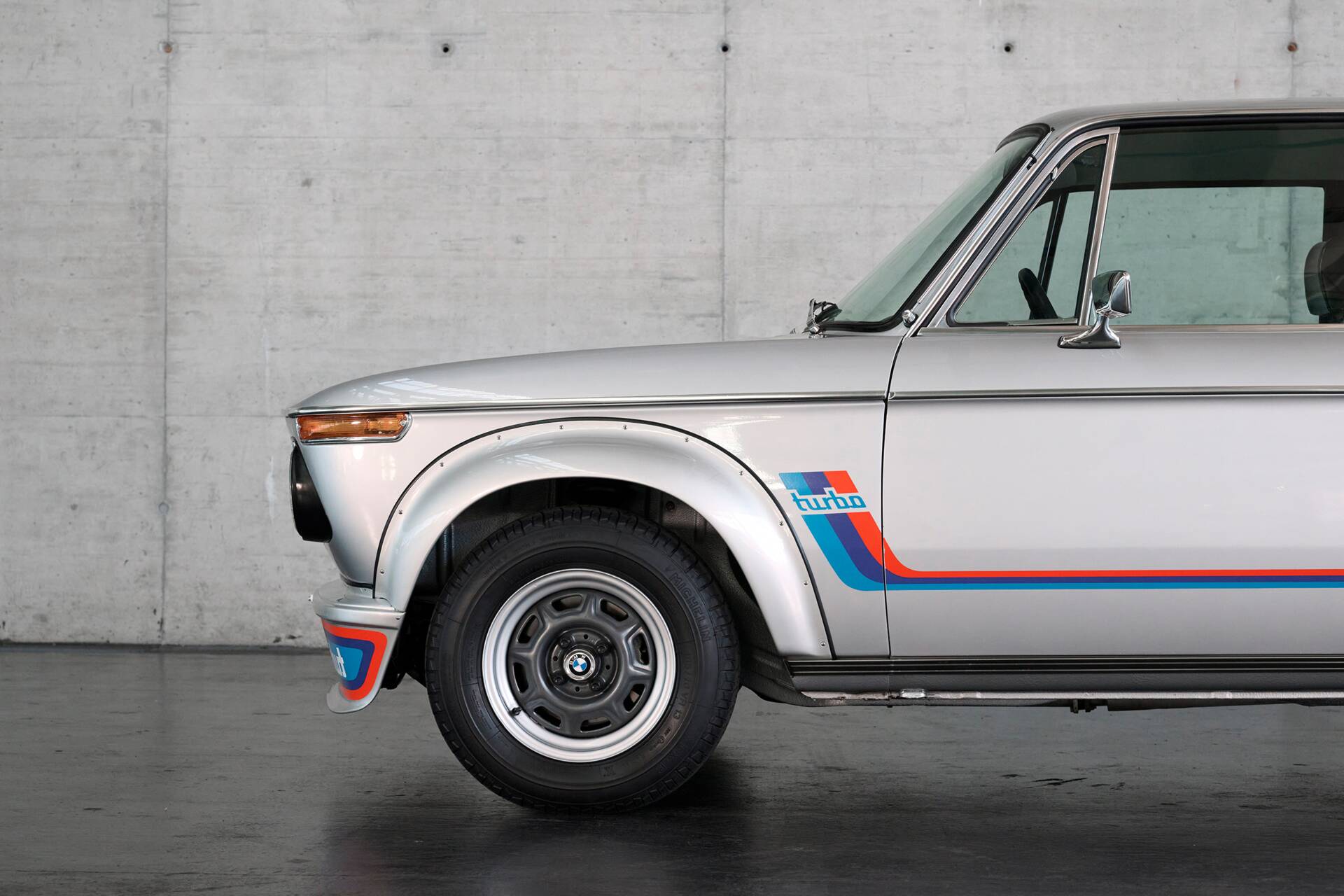
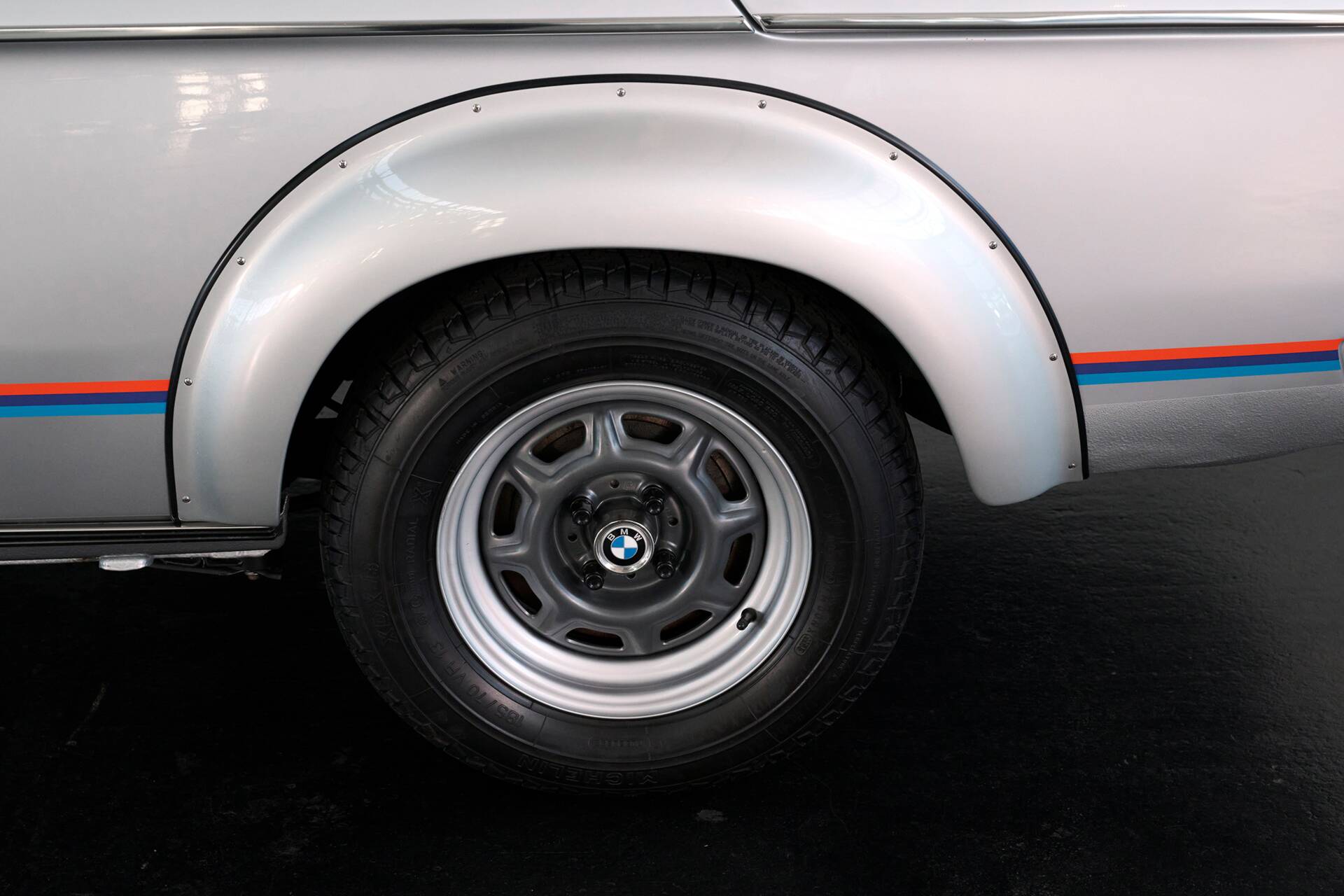
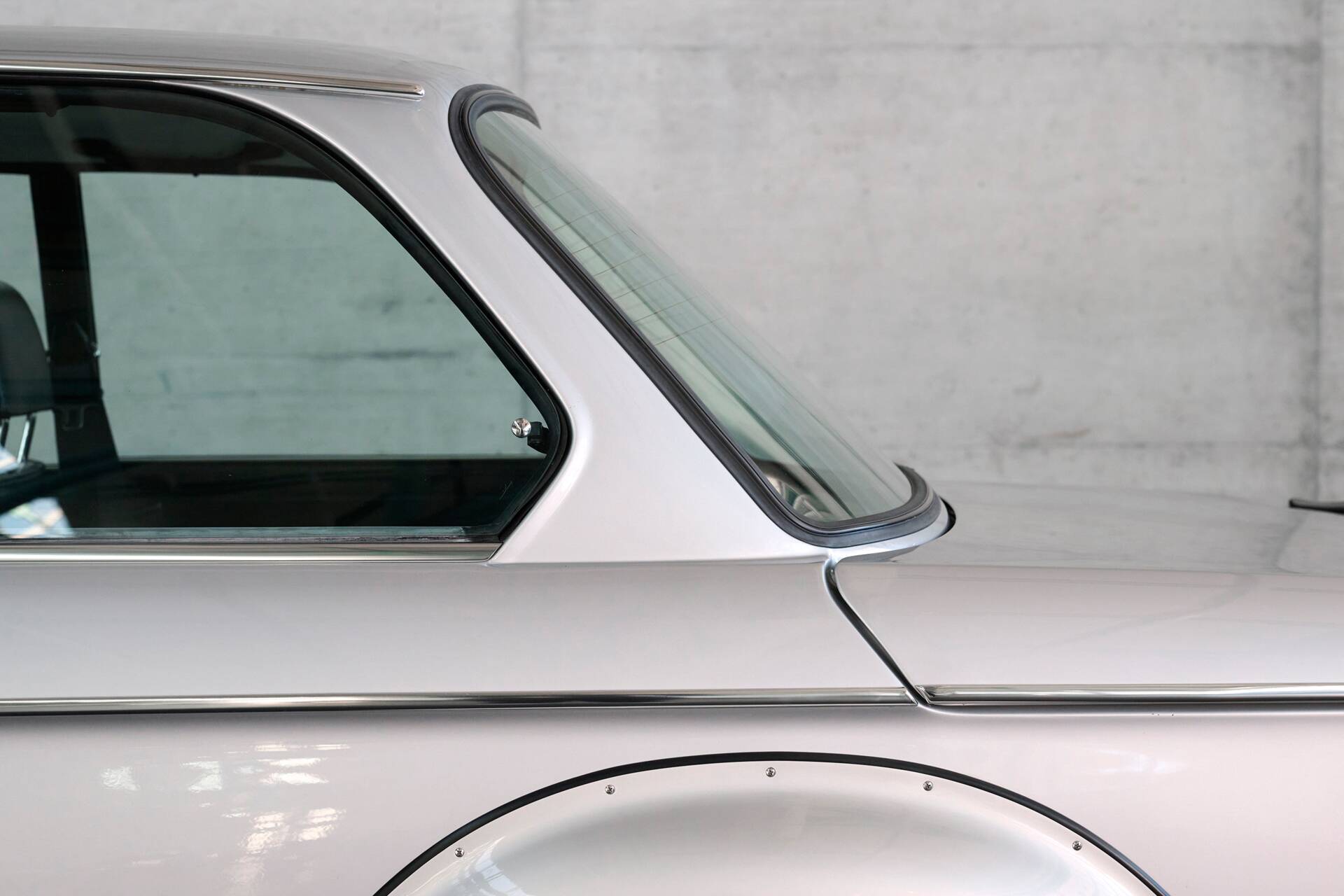
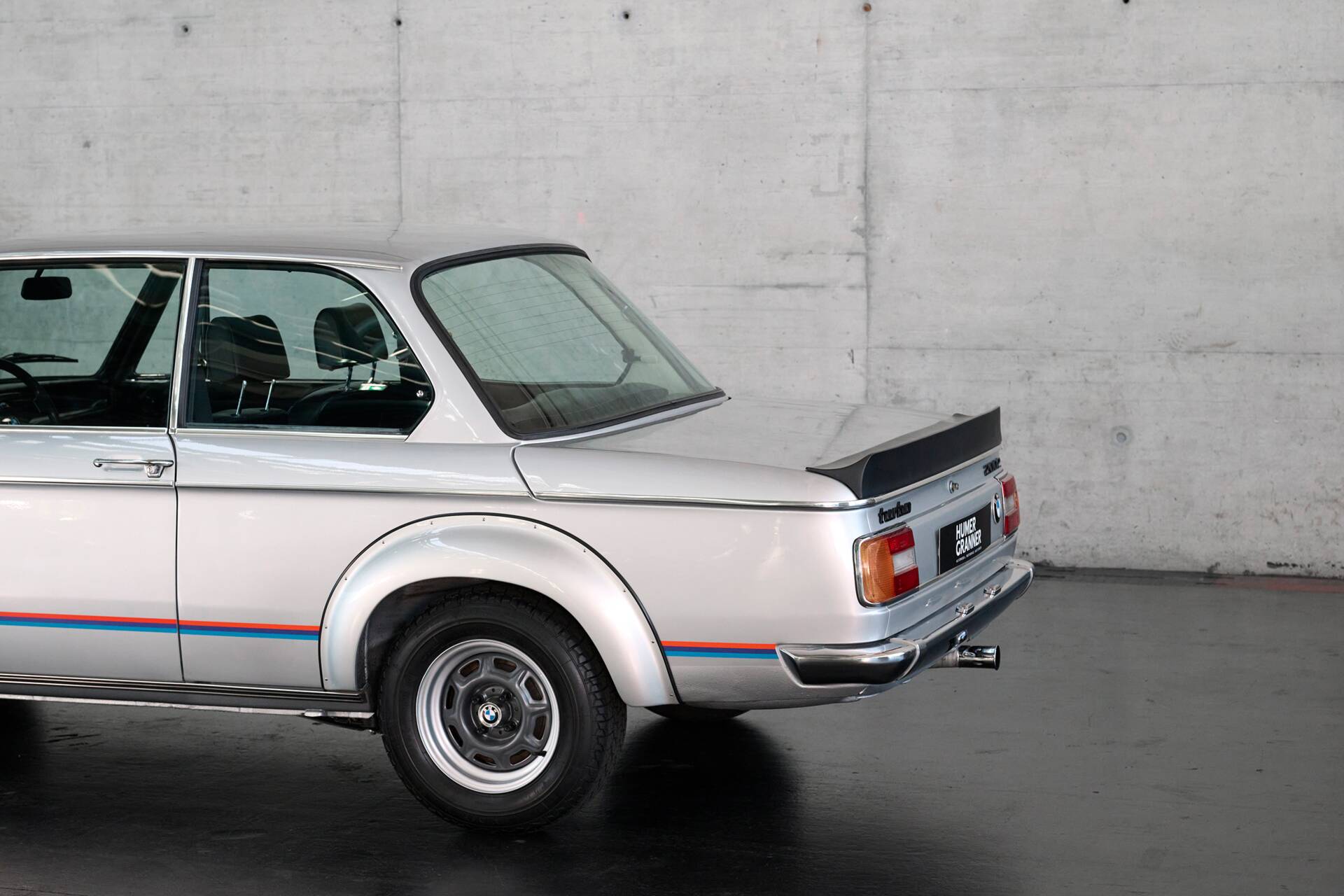
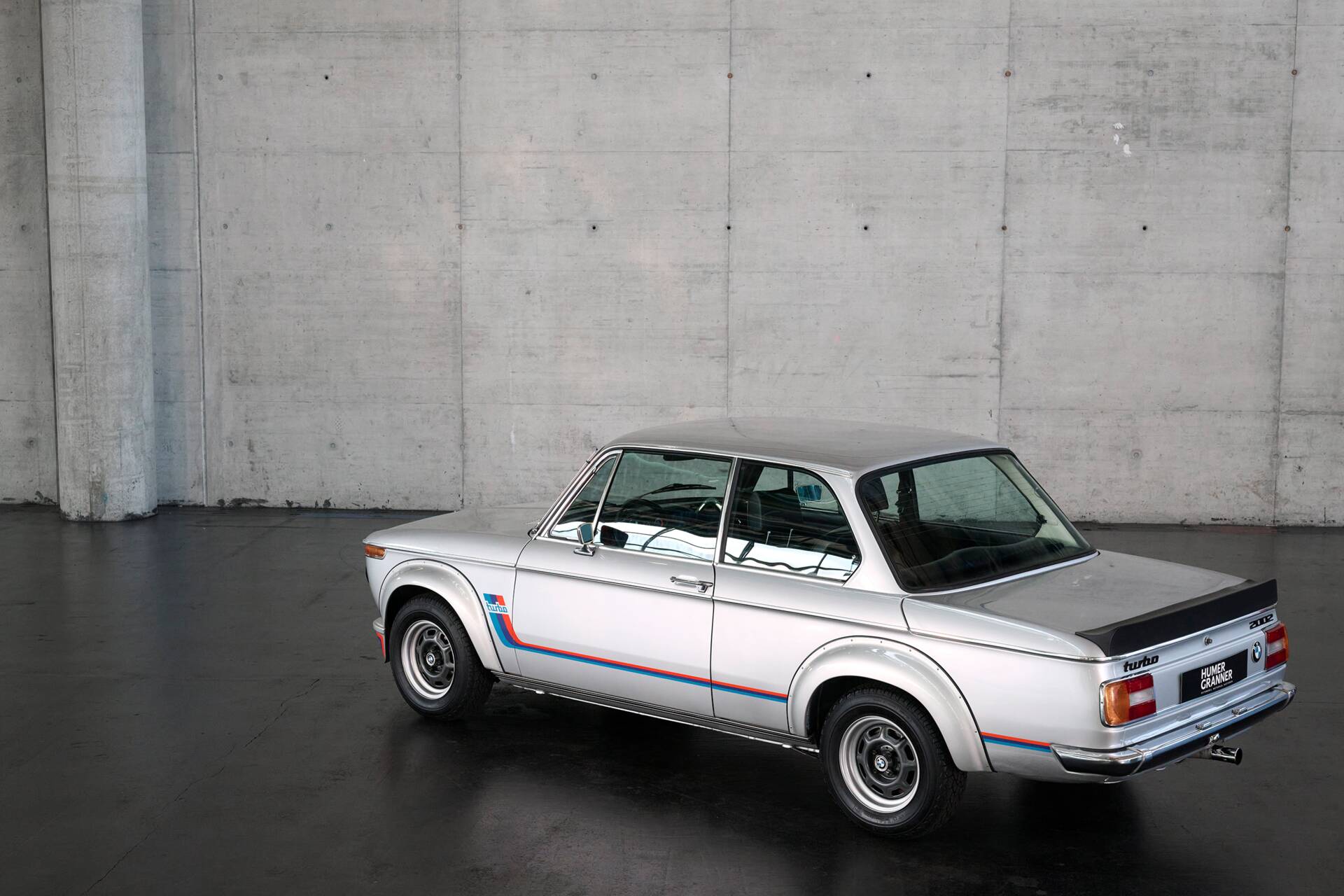
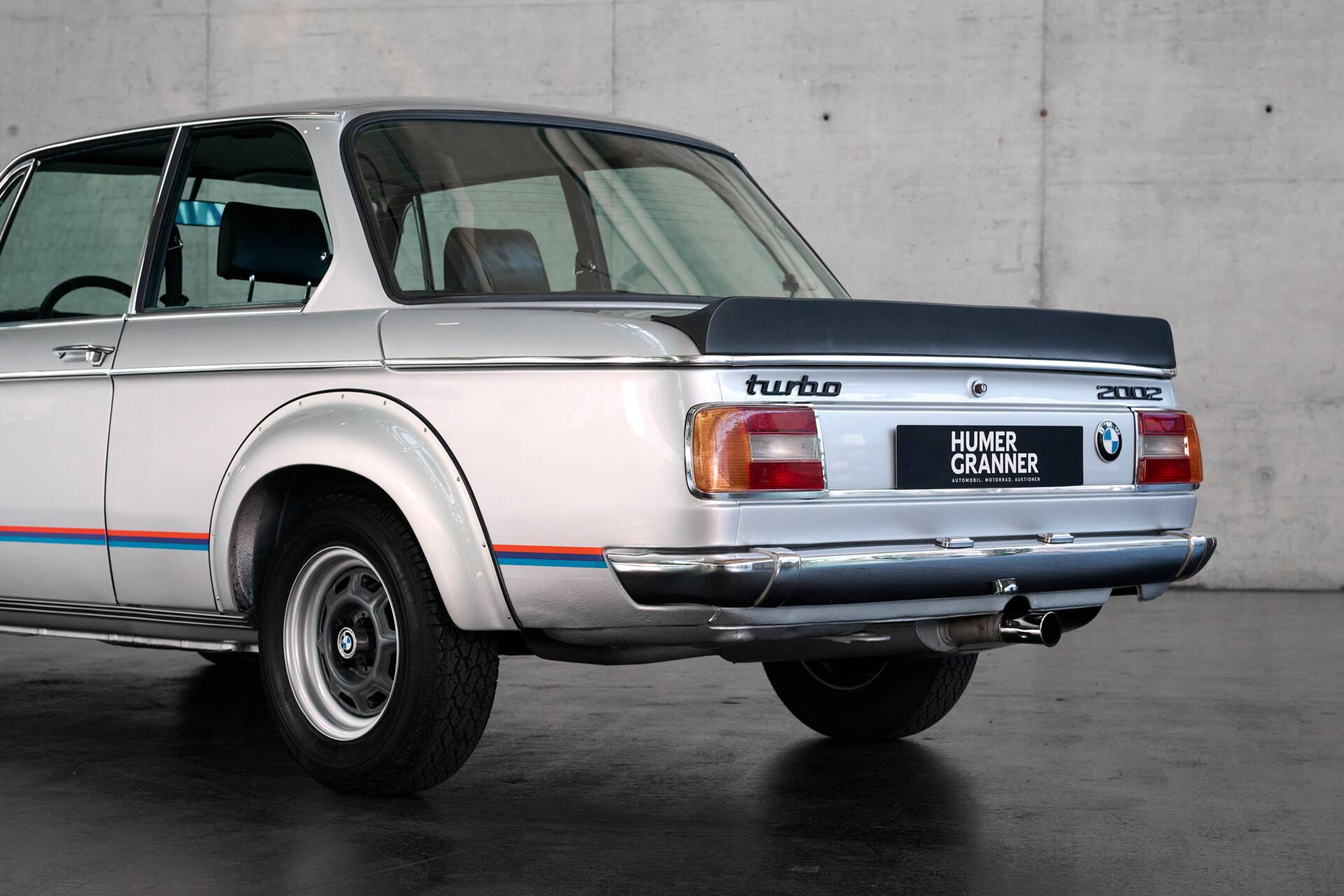
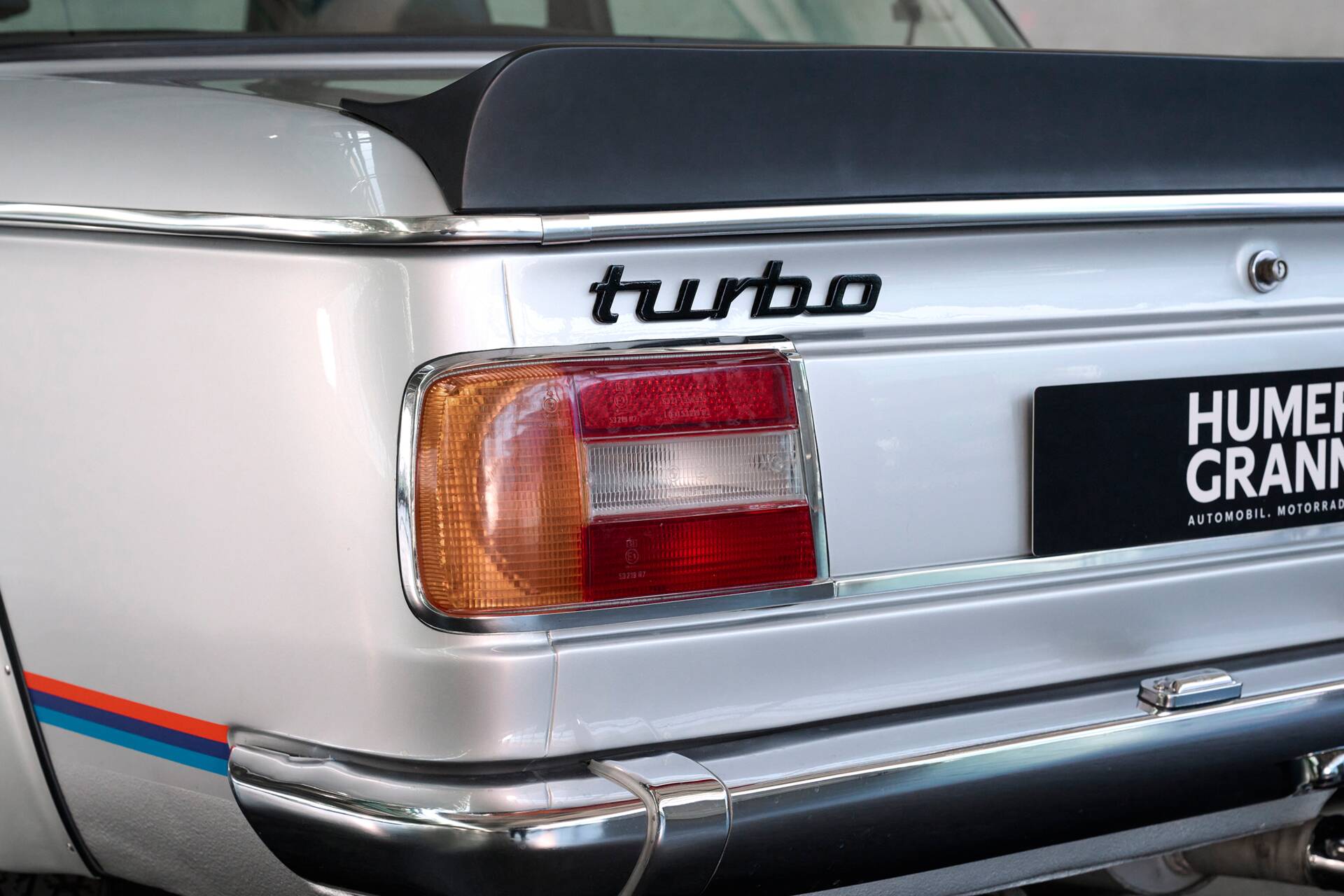
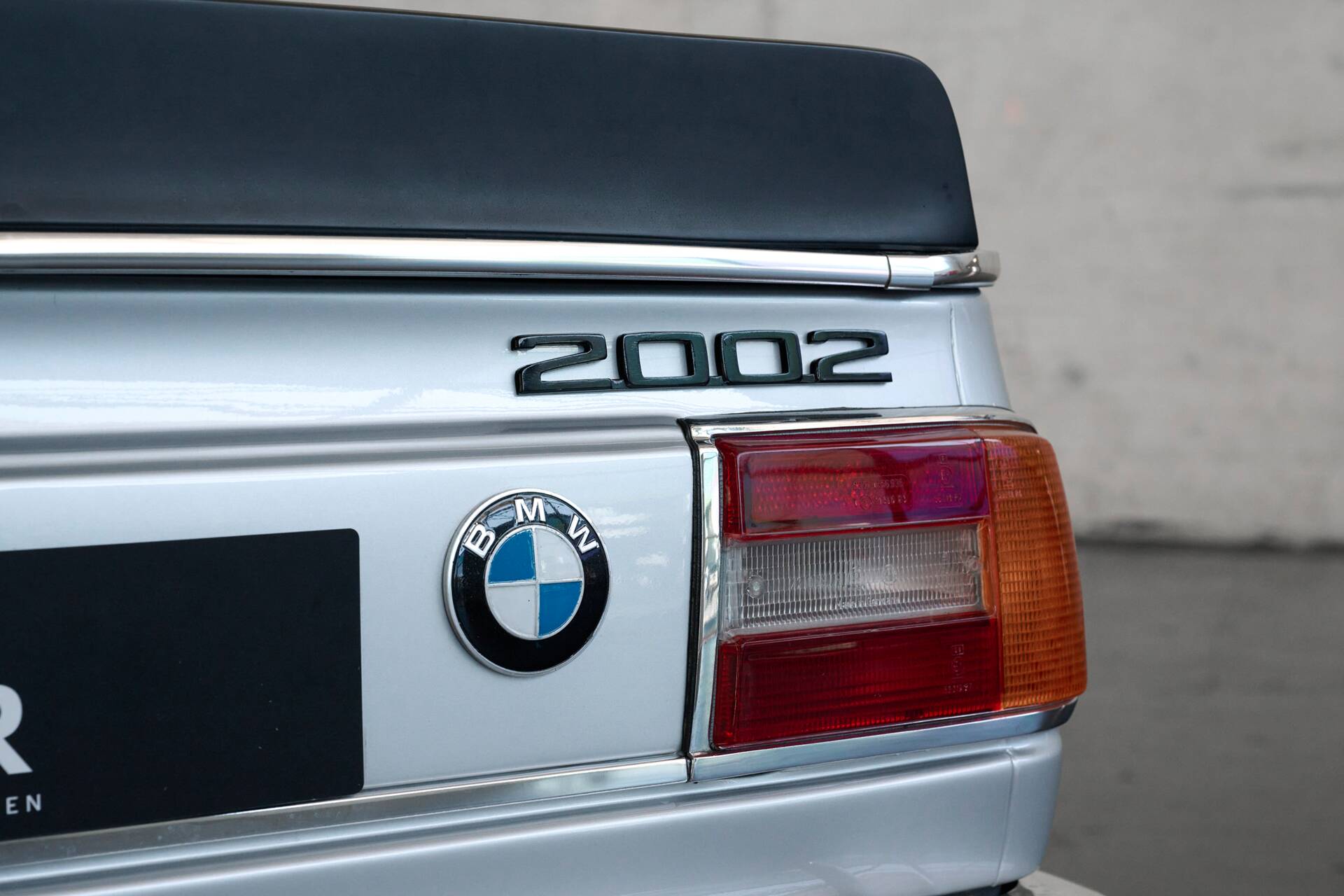
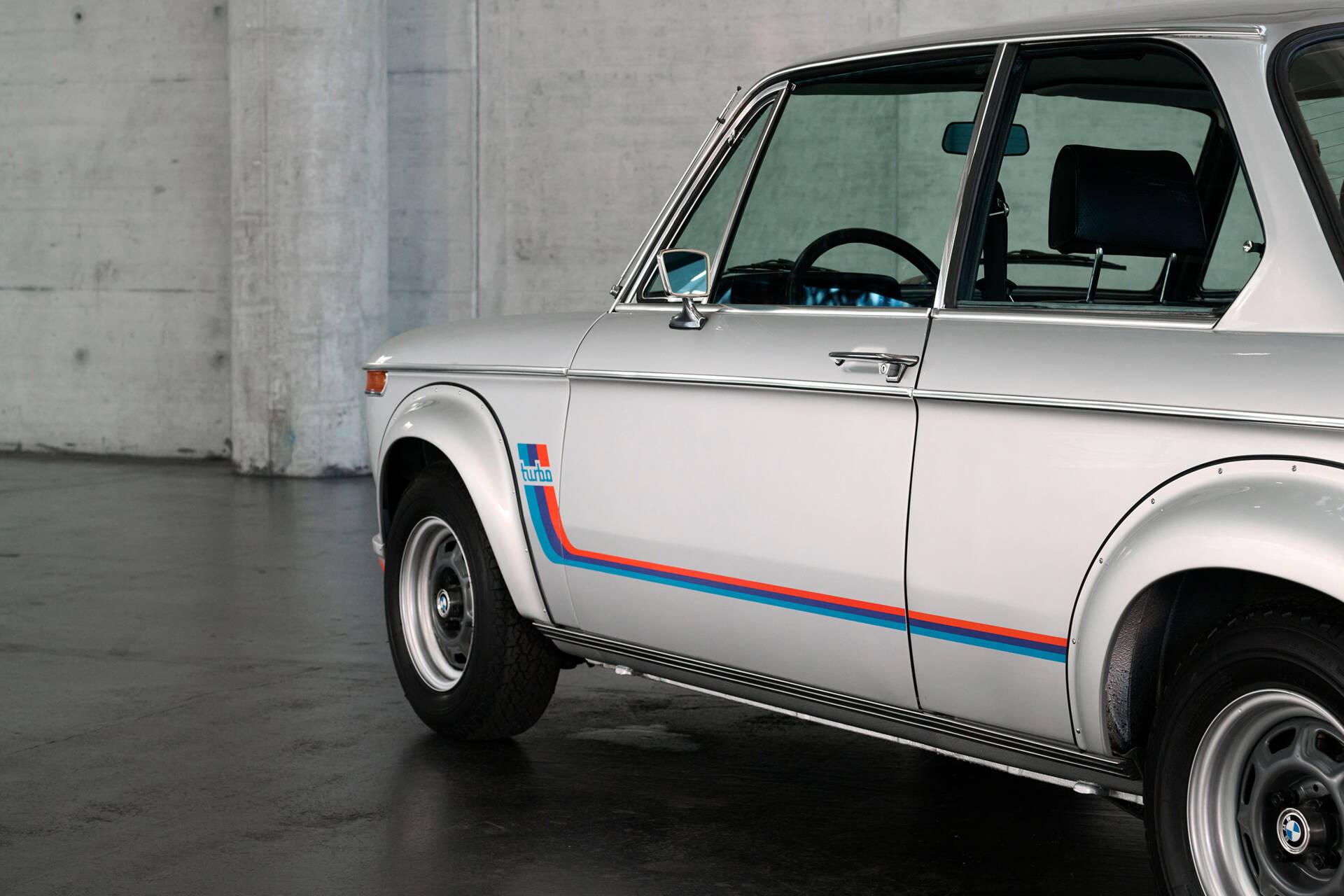
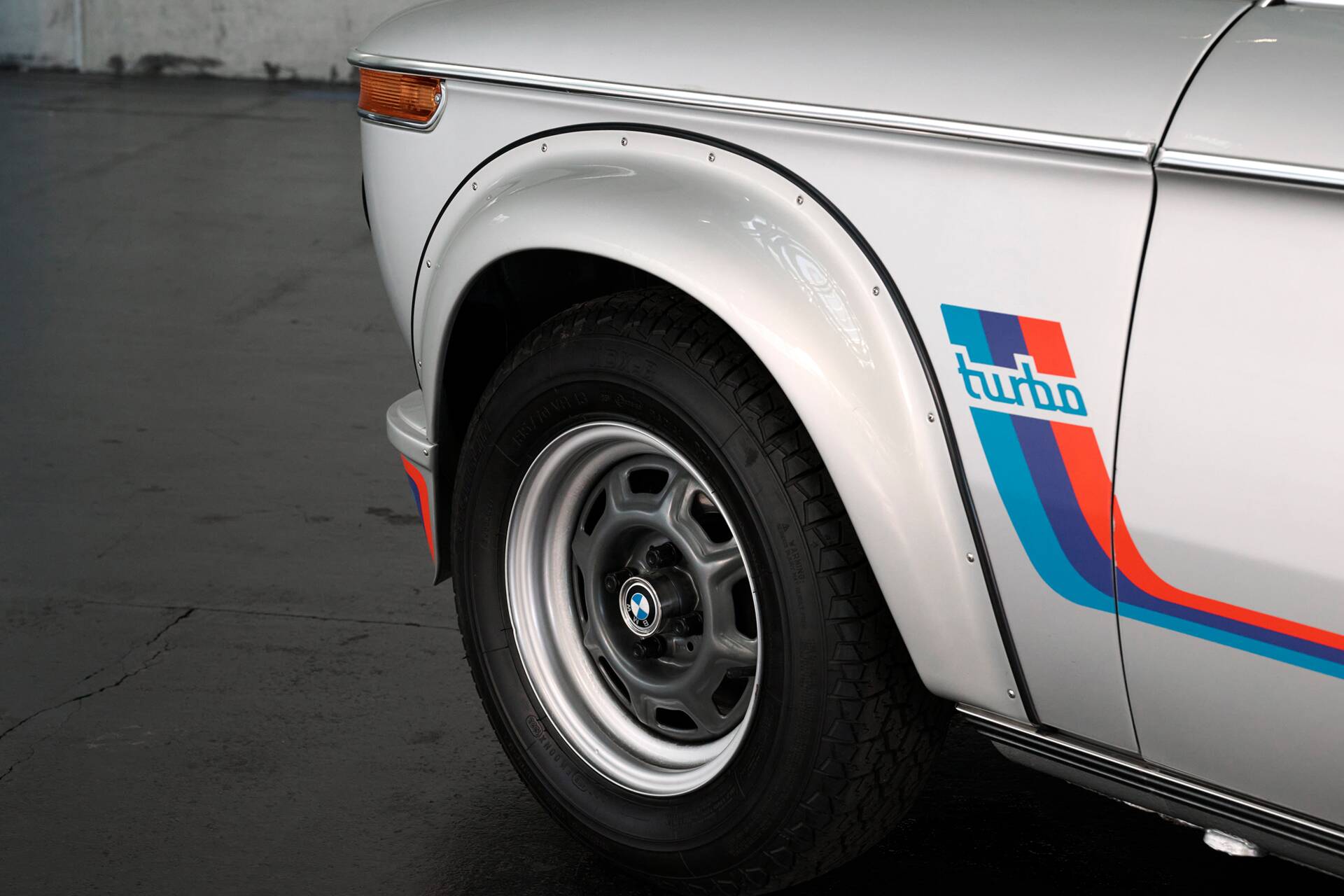
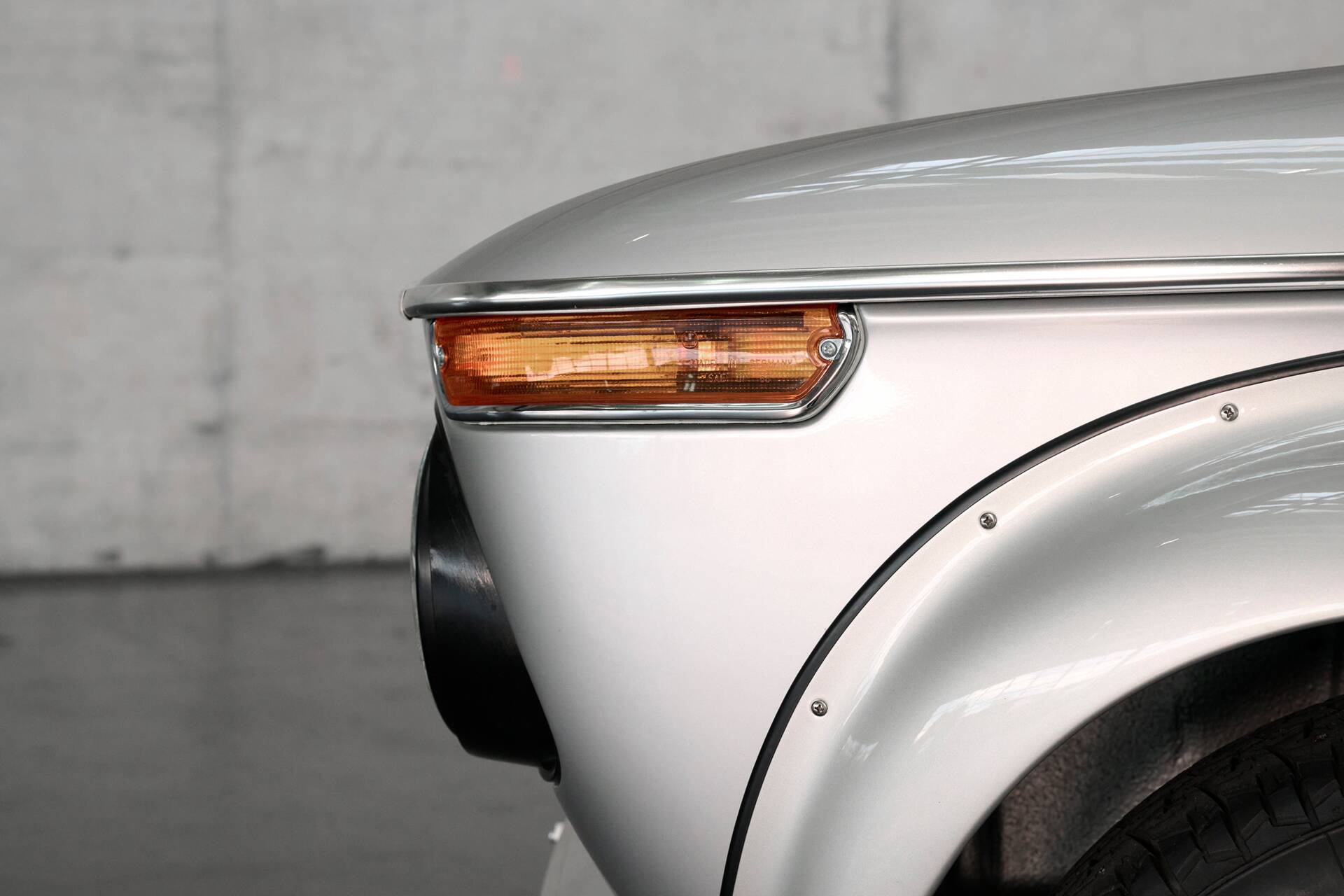
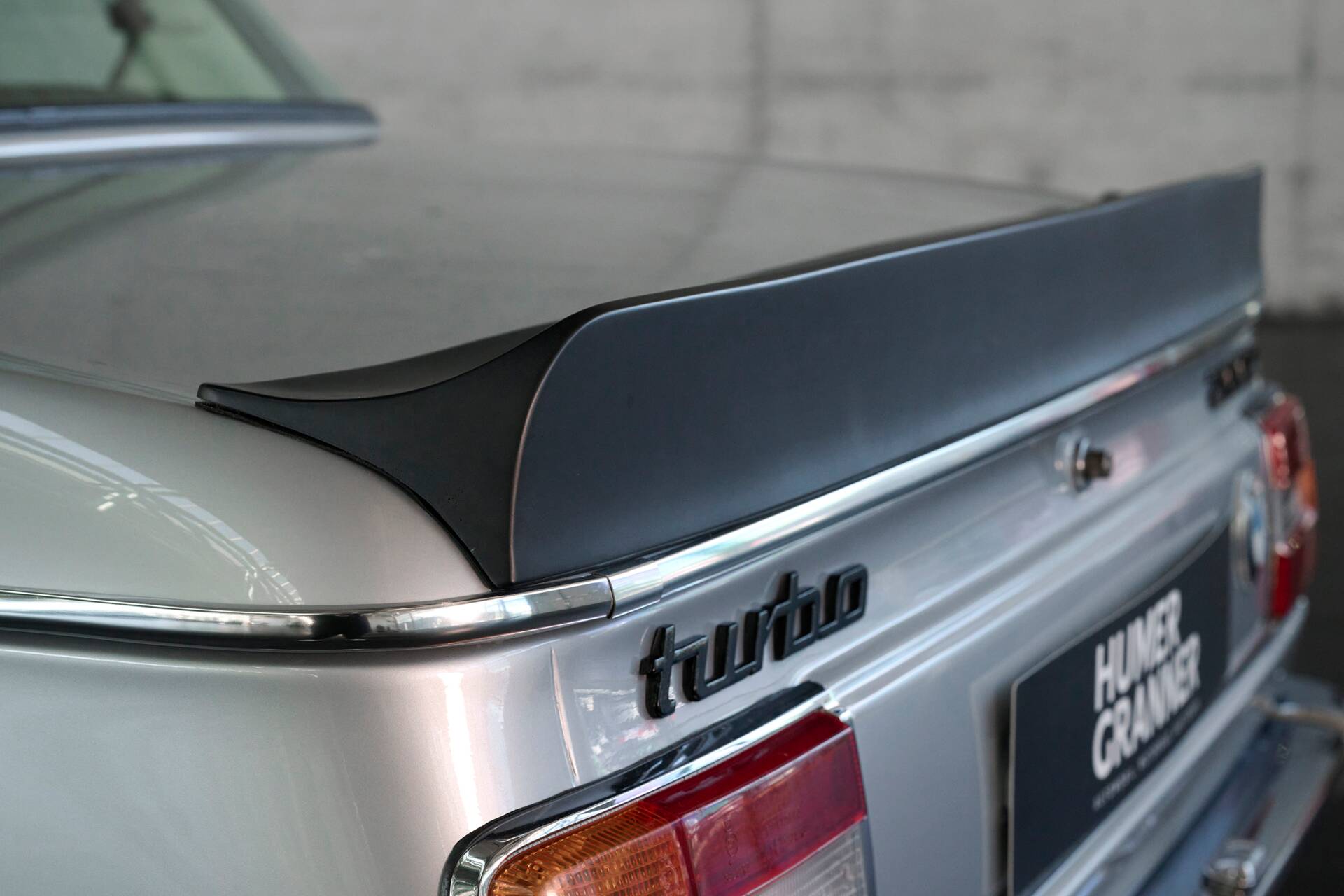
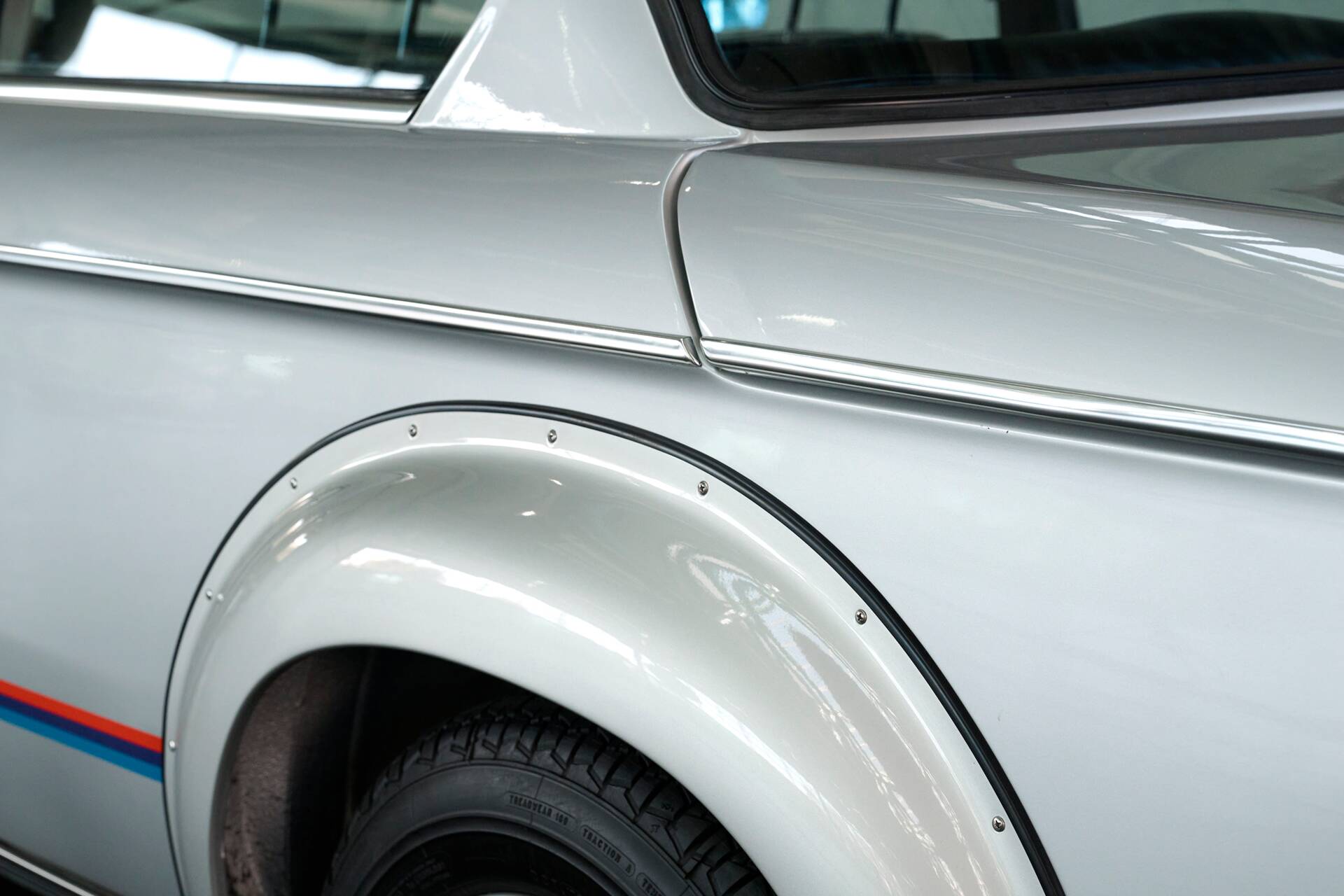
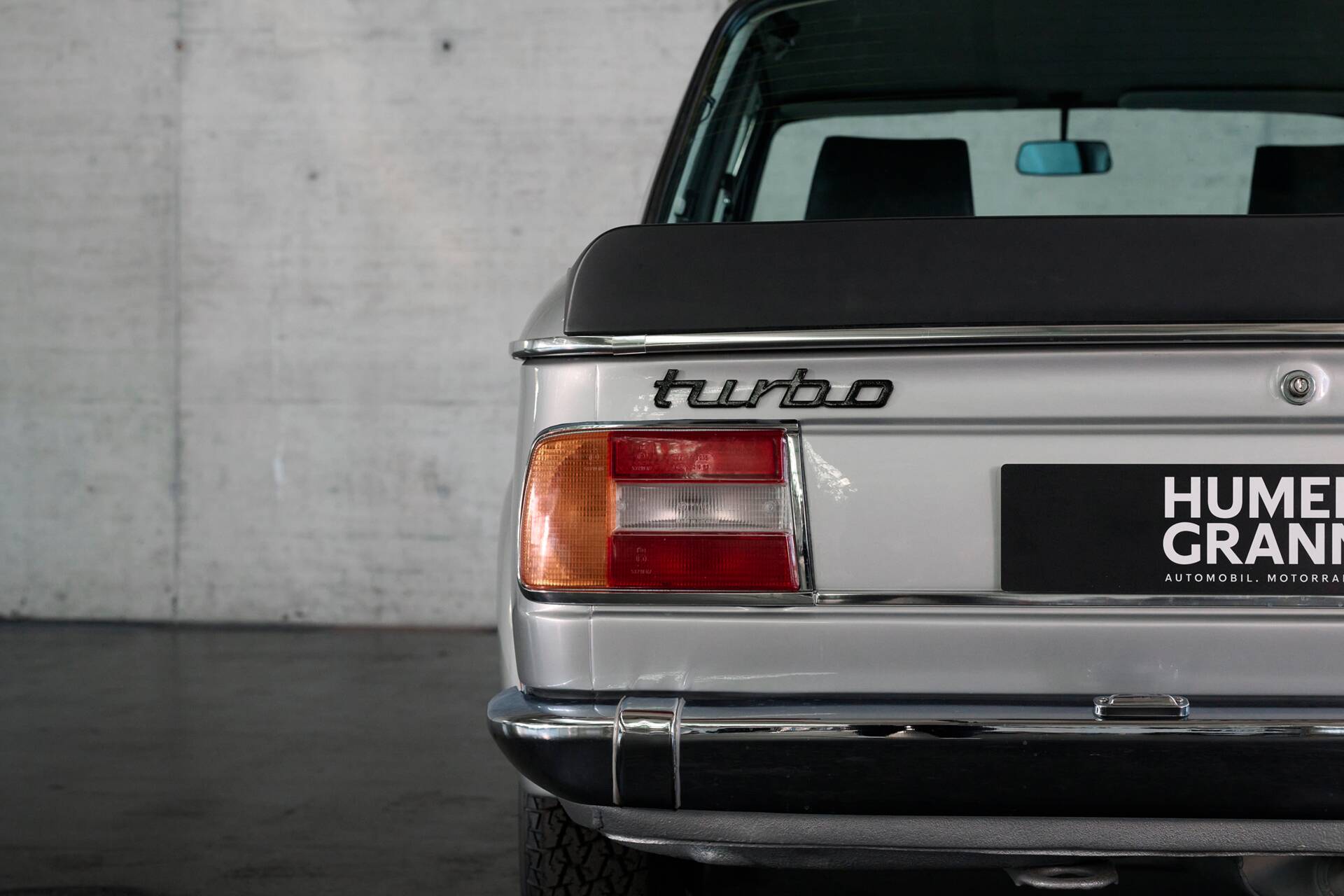
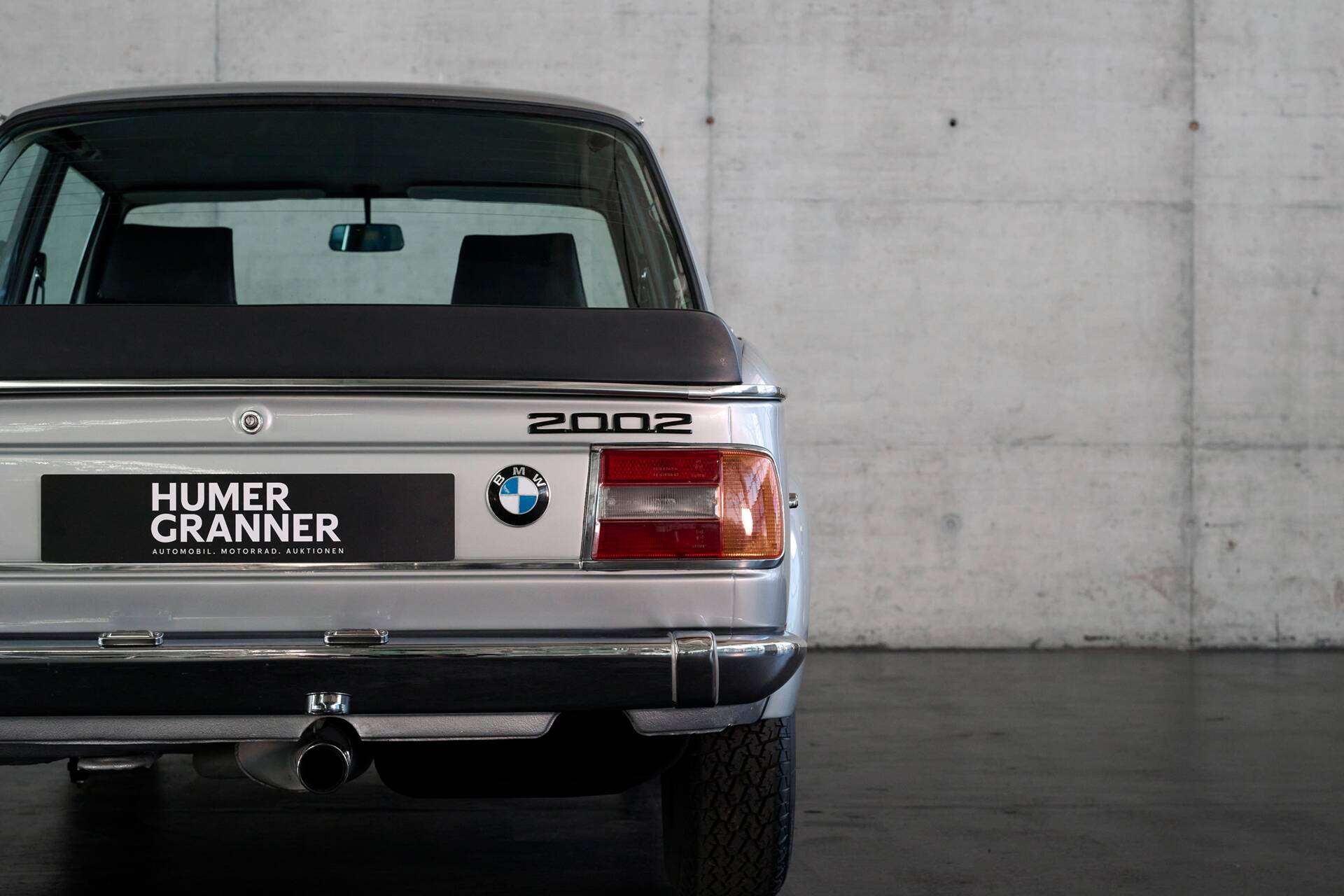
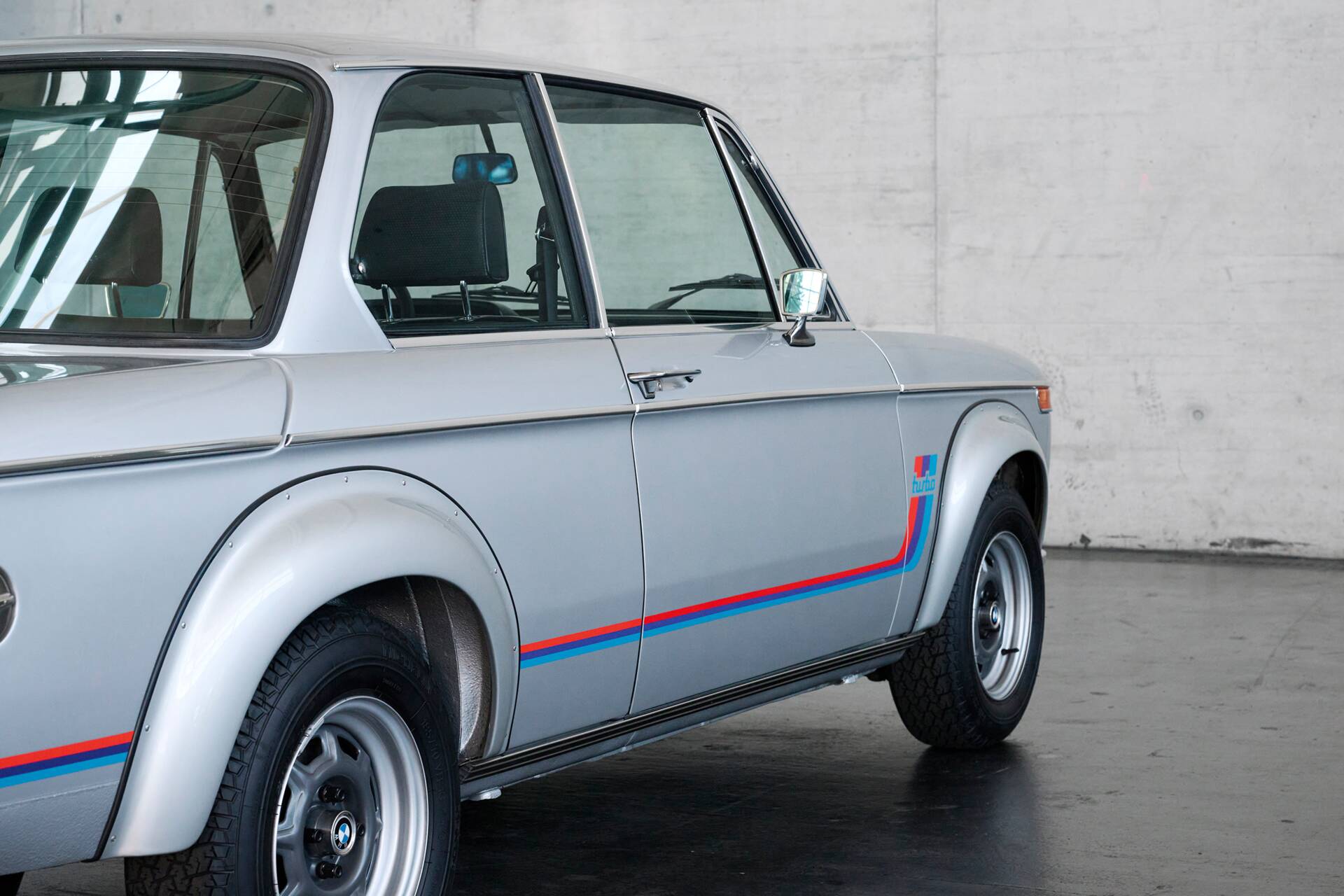
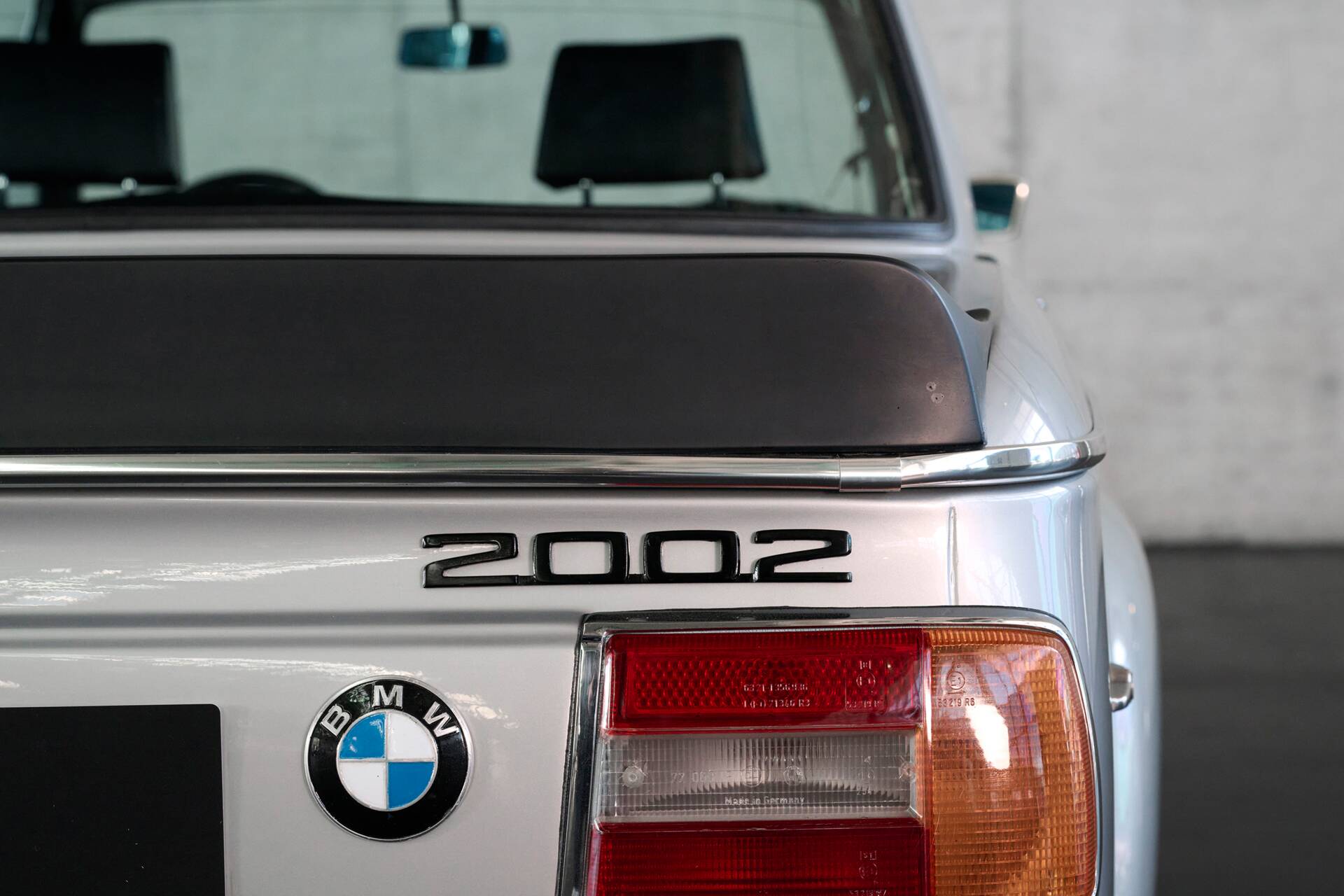
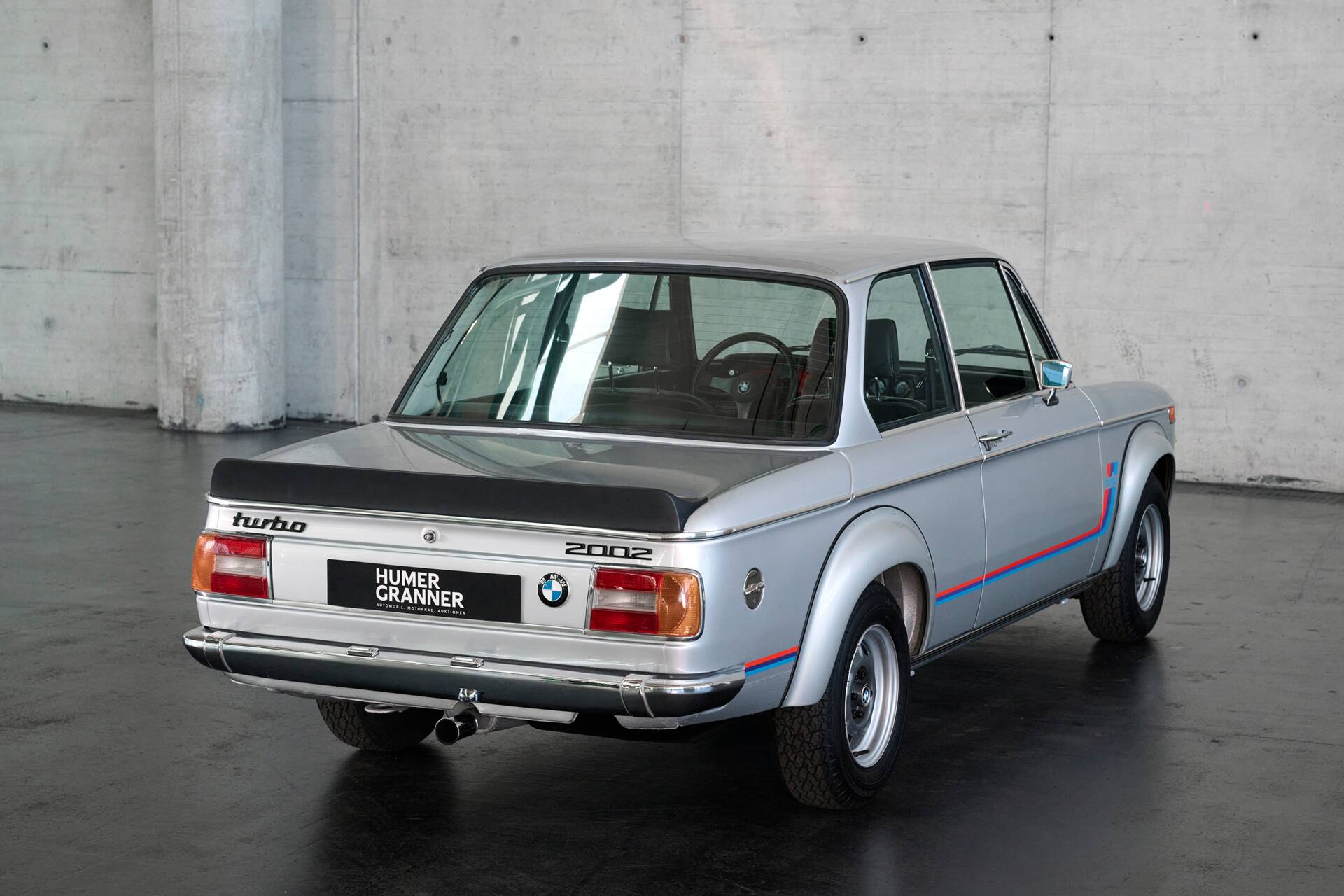
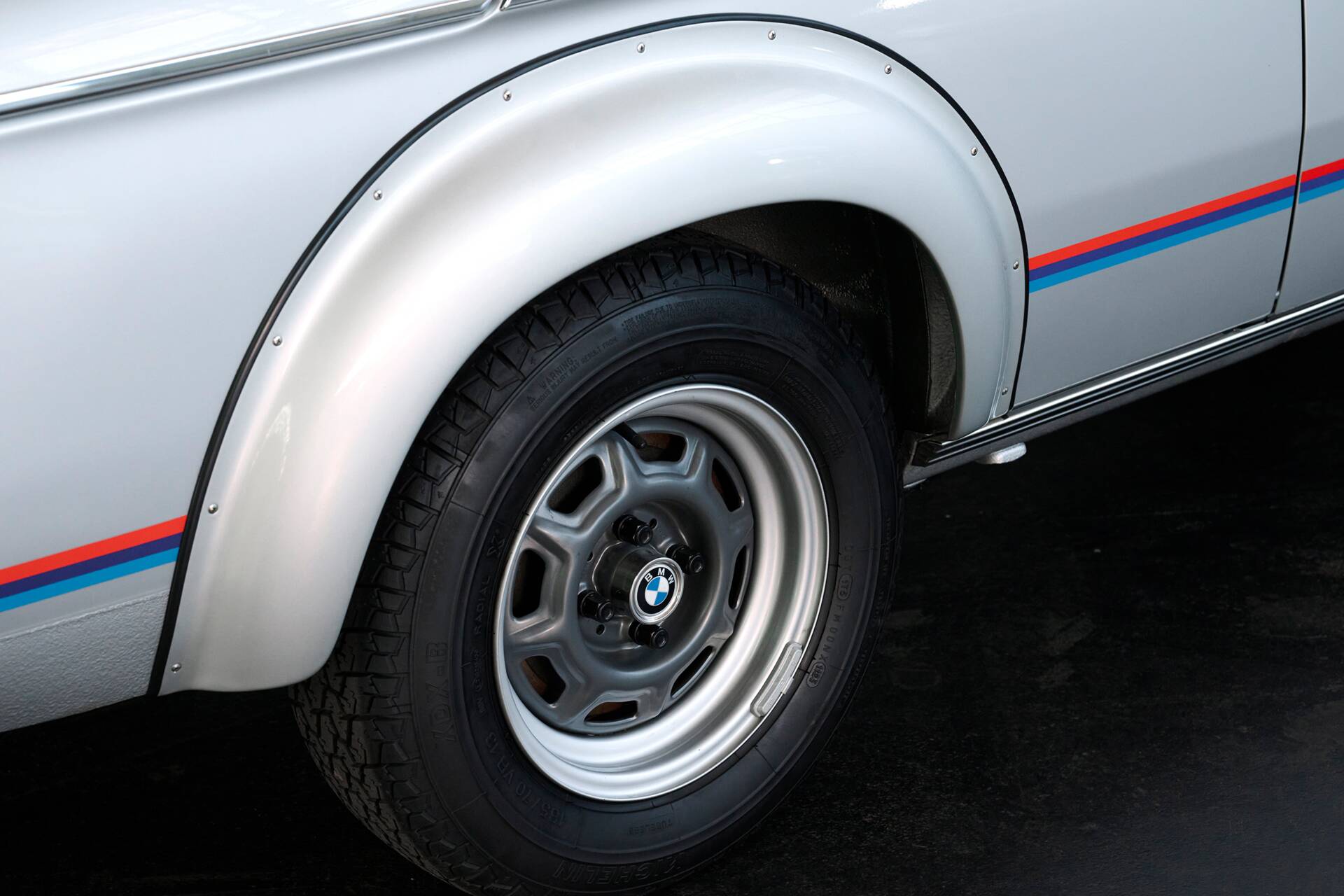
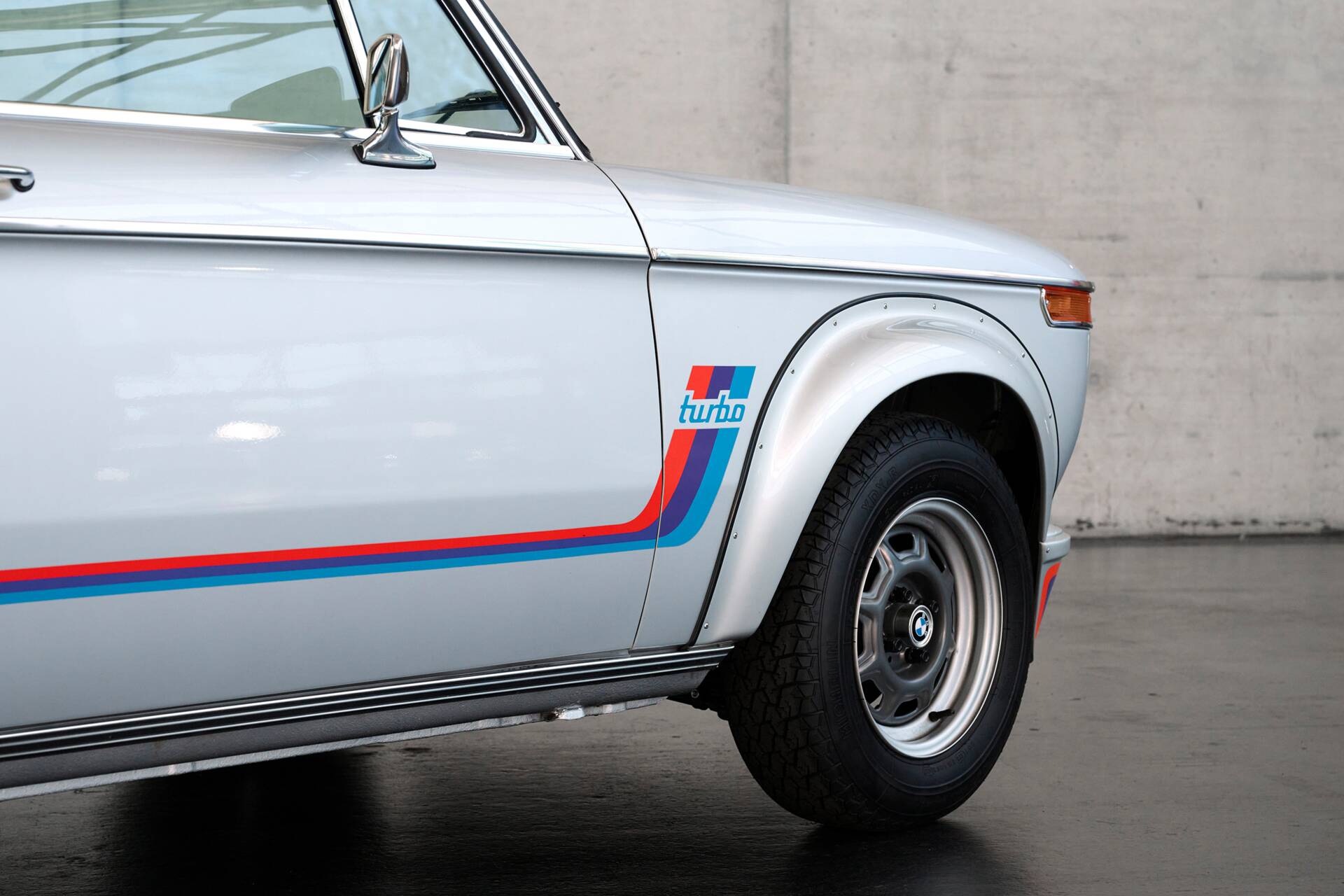
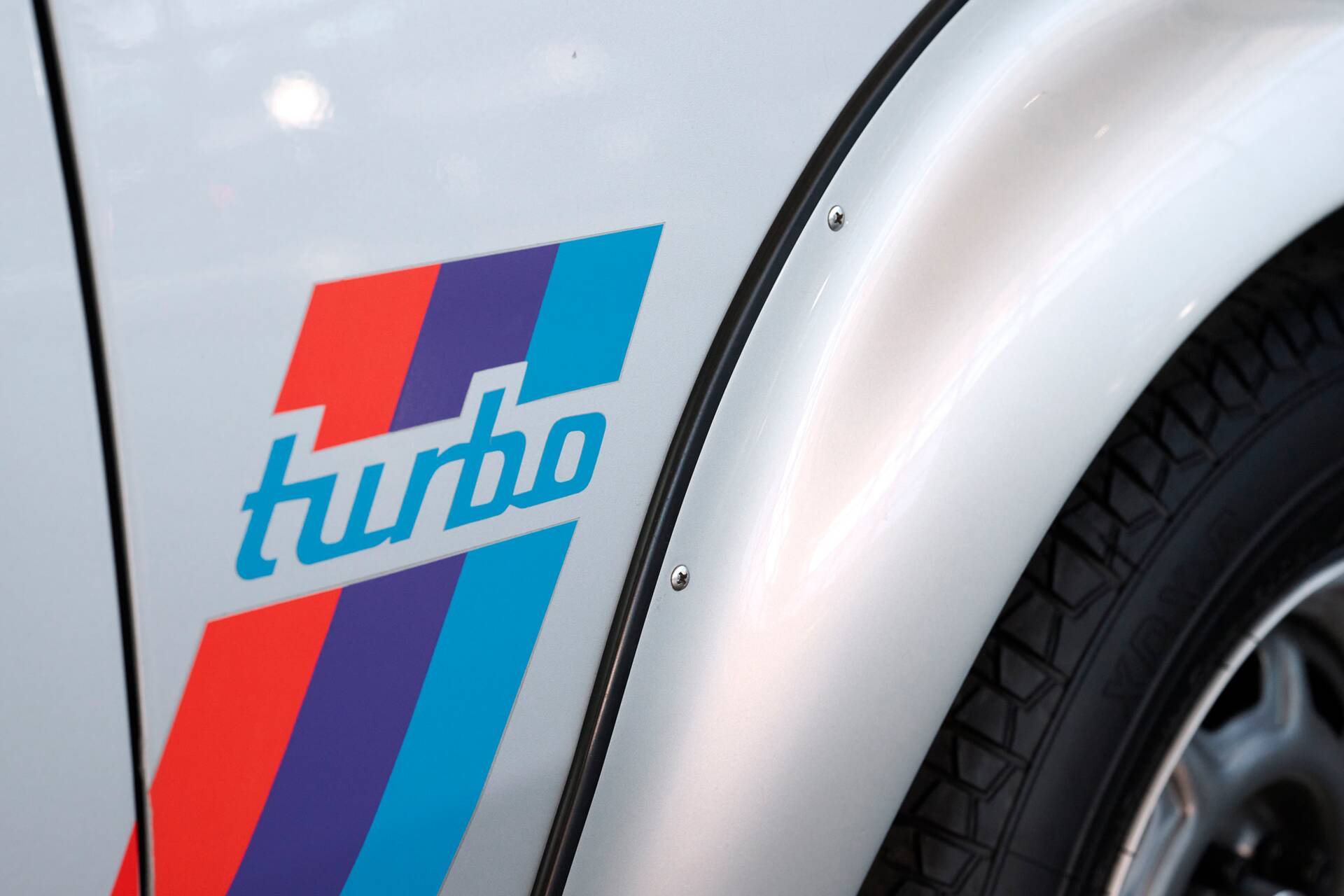
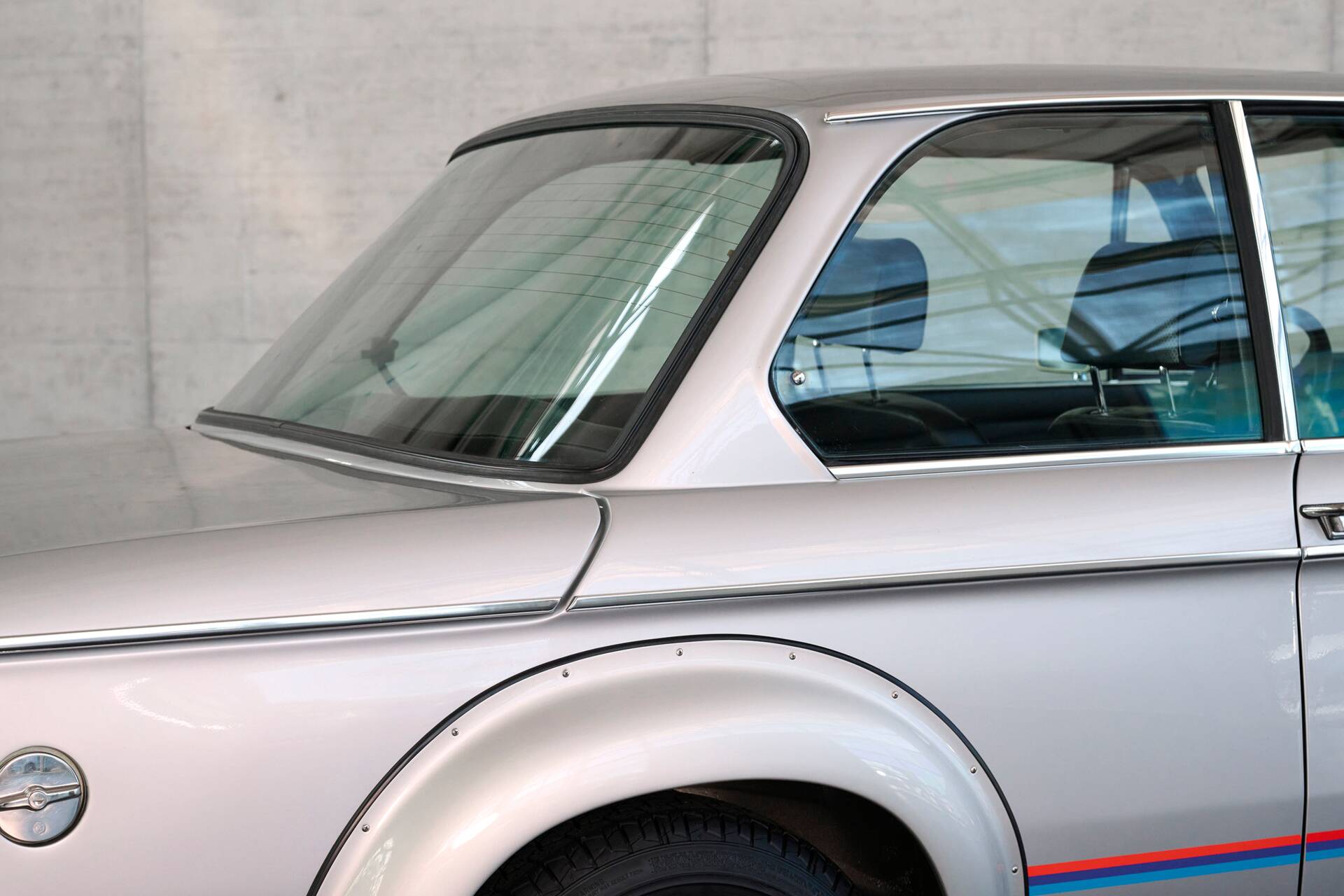
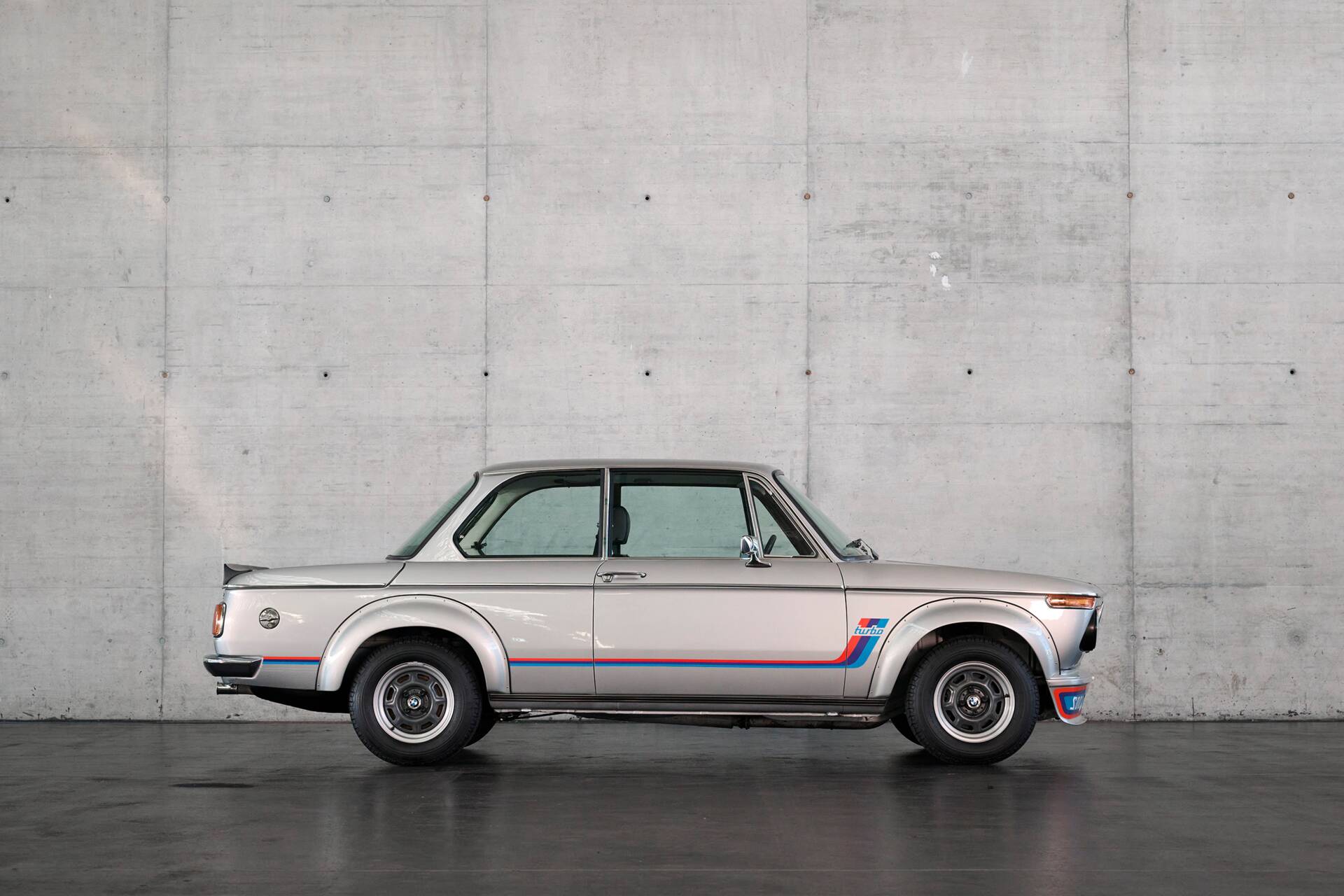
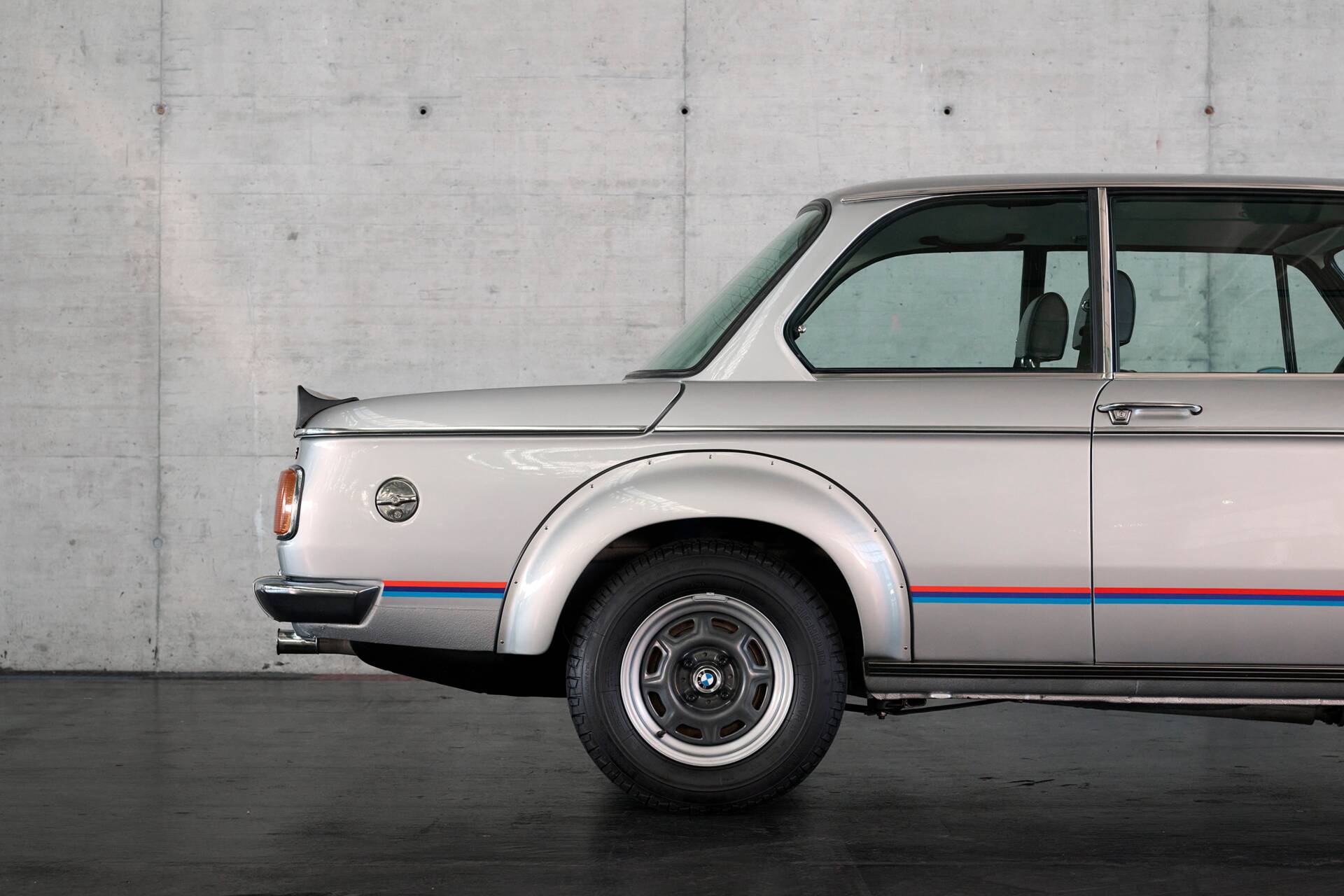
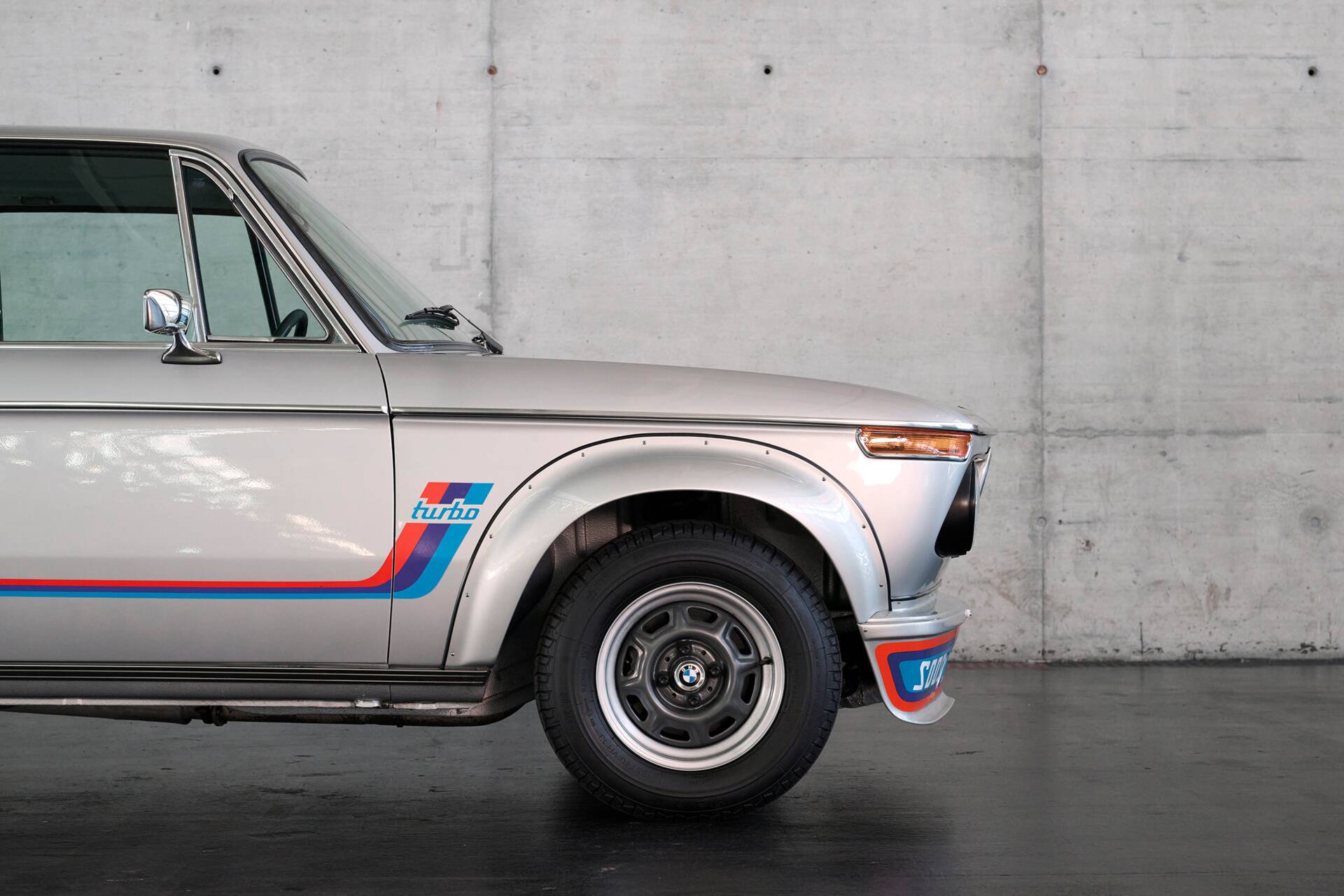
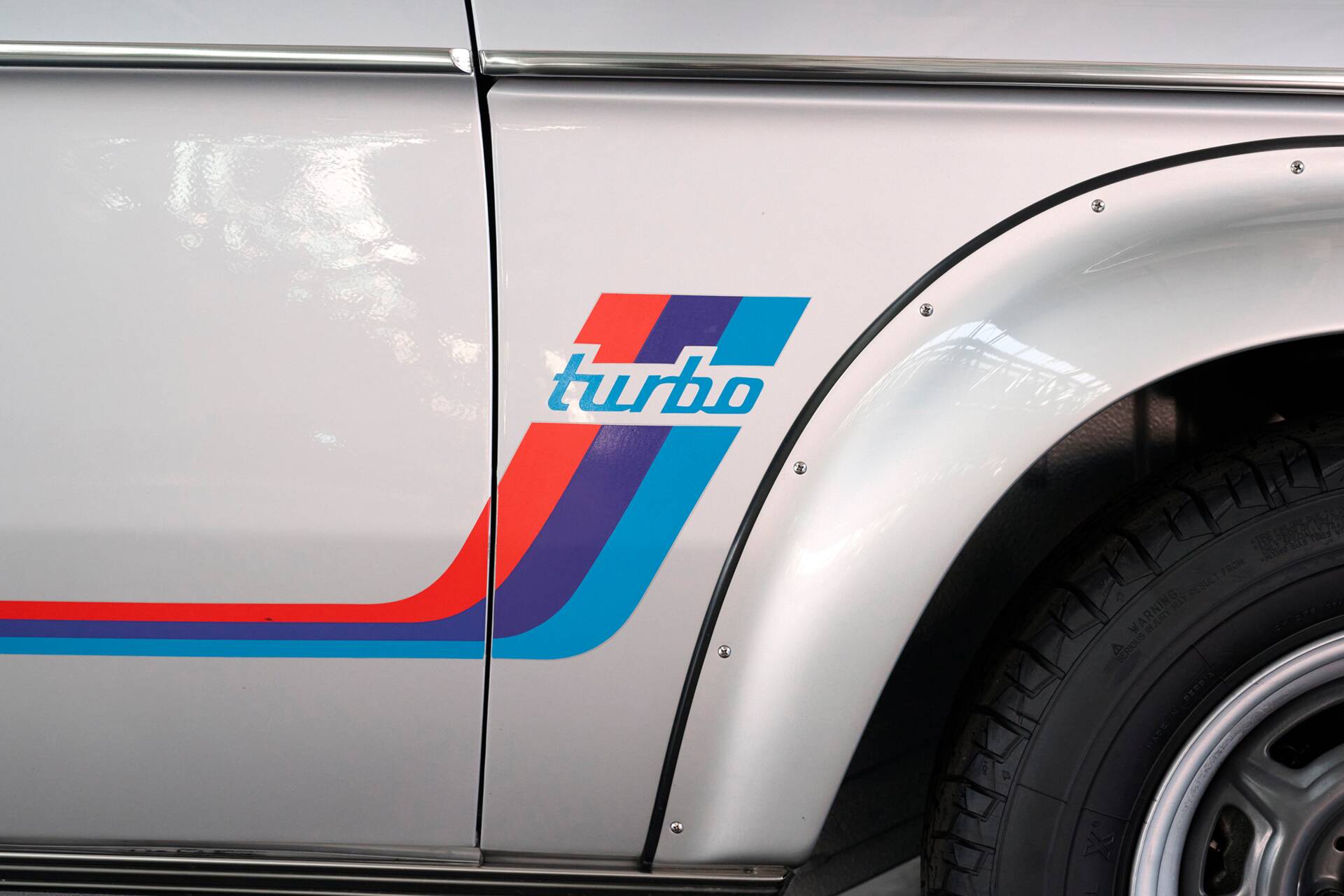
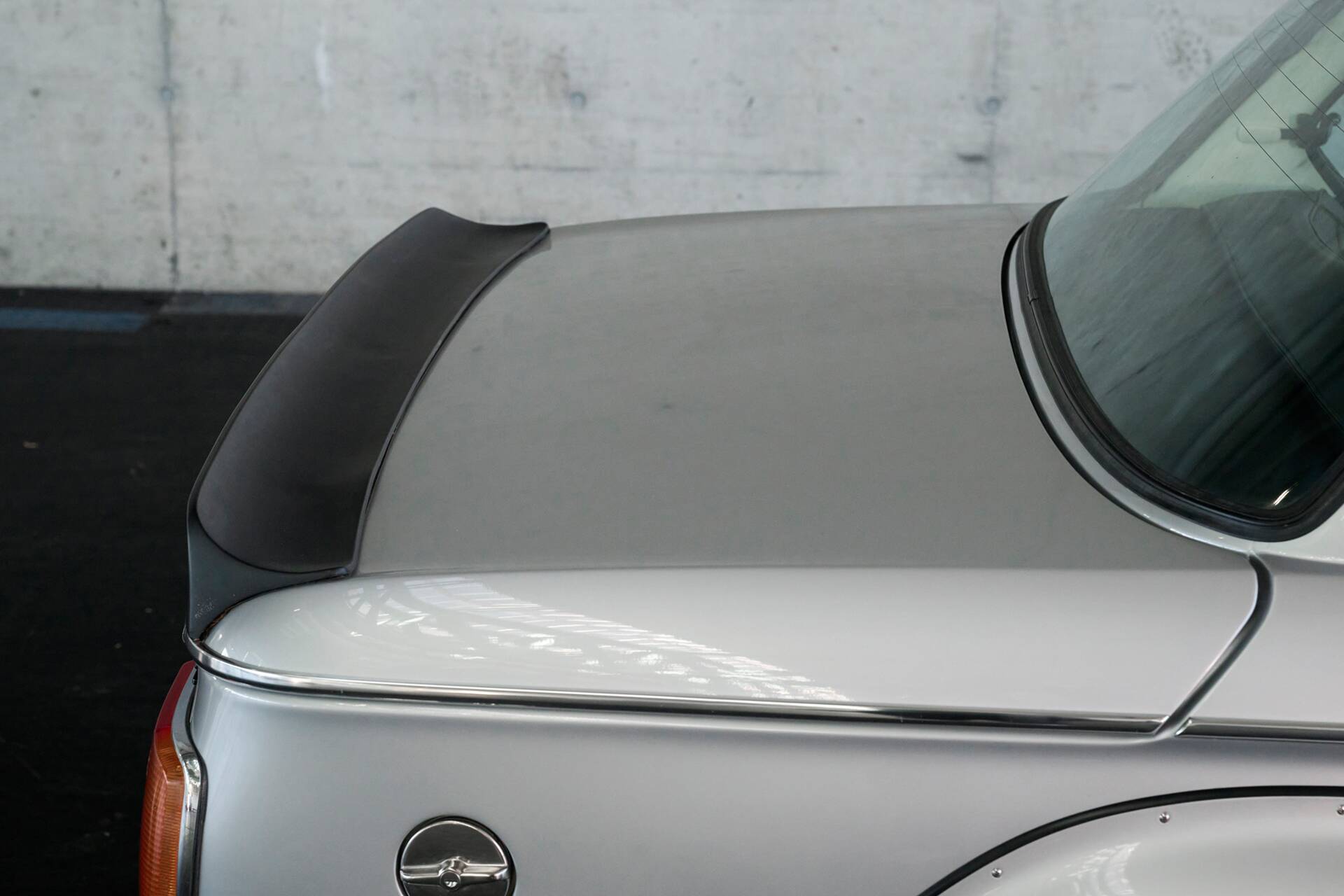
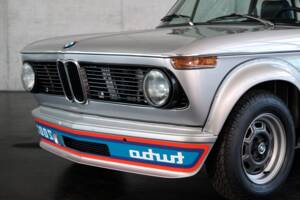
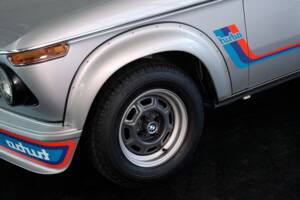
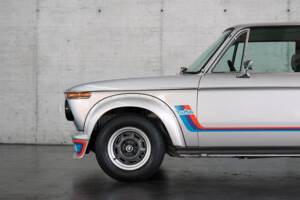
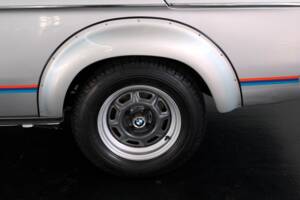
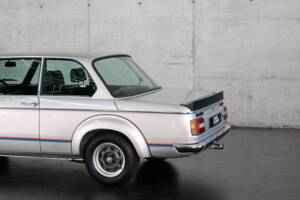
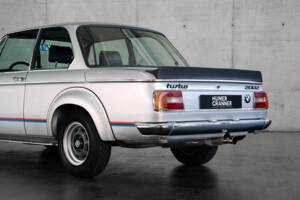
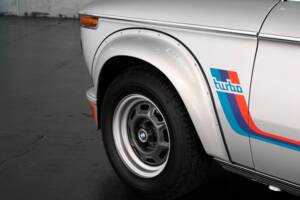
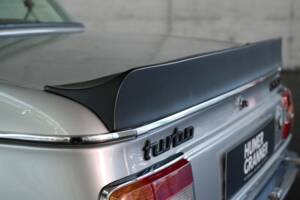
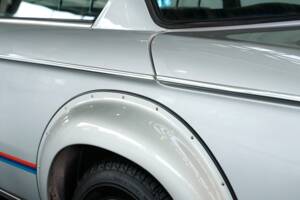
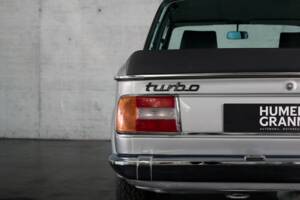
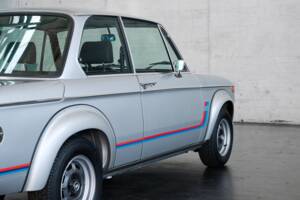
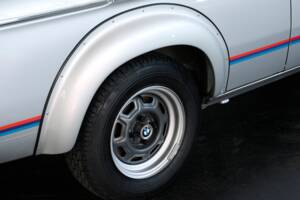
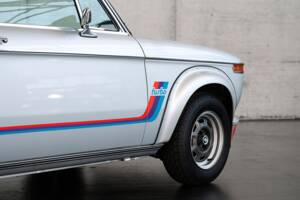
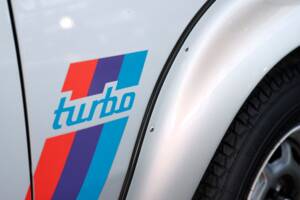
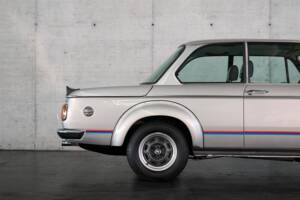
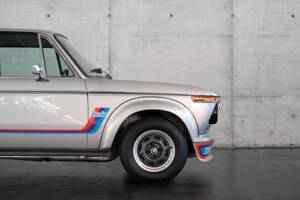
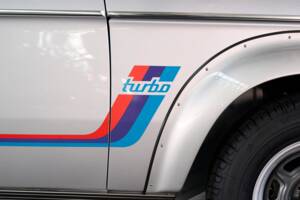
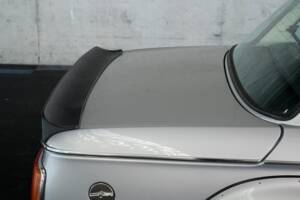
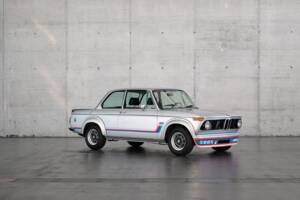
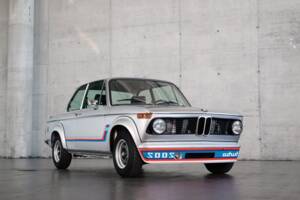
BMW made little effort to play down the whole business visually. Plastic extensions stretched over the wheelarches, a deep spoiler sat beneath the nose and a lip spoiler adorned the rear. Motorsport stripes ran along the flanks. Only two paint colours were offered: Chamonix White and Polaris Metallic. The words „2002 turbo“ appeared in mirror writing on the front spoiler. The message could hardly have been simpler: anyone driving ahead of the BMW should be able to read in their rear-view mirror that it was time to move over. Subtle it was not, and with the government preaching economy, the lettering met with little public enthusiasm. It became famous nonetheless. Probably for precisely that reason.
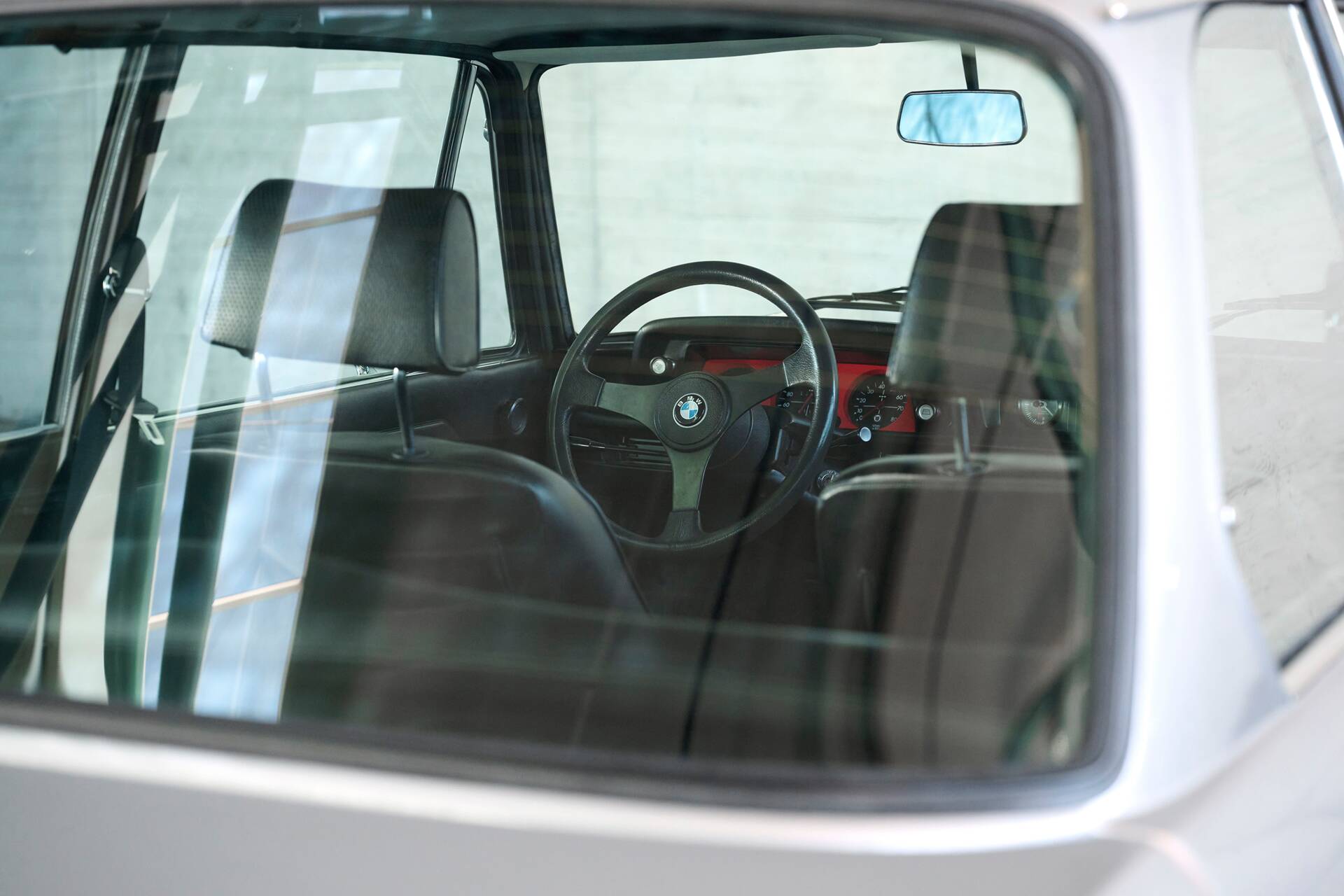
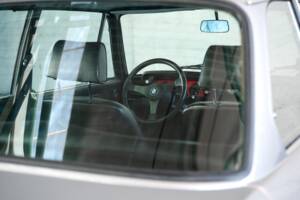
The chassis had to keep up as well. MacPherson struts continued to locate the front wheels, while the rear retained BMW’s characteristic semi-trailing-arm suspension. Springs and dampers, however, were adapted to the increased performance. Ventilated disc brakes operated at the front, with larger drums at the rear. A limited-slip differential helped transmit the power to the road through the rear wheels. Inside, the same philosophy continued. The basic 02 remained recognisable, but sports seats, a special steering wheel, red accents and additional instruments reminded the driver that this was no ordinary two-litre engine.
Below the point at which meaningful boost developed, the 2002 turbo could behave with surprising civility. Then the turbocharger began working in earnest. At around 4,000 rpm, the engine’s character changed dramatically, and the little saloon became the car whose reputation has endured to this day. The power did not arrive with the smooth predictability of a modern turbocharged engine. It announced itself. Emphatically.
Consequently, the Turbo demanded attention. The wheelbase was short, the rear suspension was not exactly renowned for responding to every change in weight distribution with stoic composure, and electronic driver aids were still a thing of the future. Anyone experimenting with boost pressure and steering angle simultaneously on a wet road could learn quite a lot about opposite lock.
By the time Porsche presented its 911 Turbo as a production model a year later, the little BMW was already sitting in showrooms. The combination of compact saloon, relatively small engine and turbocharging thus anticipated a formula that would become practically standard fare for sporting everyday cars decades later. Only in 1973, it was spectacularly out of place.
In October 1973 came the Yom Kippur War. OPEC countries curtailed production, oil prices rose dramatically and car-free Sundays were imposed in Germany towards the end of the year. The 2002 turbo consequently became an unwitting symbol of an automotive world that was suddenly being publicly called into question. Its provocative appearance hardly helped. A car that looked as though it was overtaking something even while standing still was not particularly well suited to an age in which speed limits, fuel consumption and the finite nature of natural resources had abruptly become matters of serious discussion.
Motor racing also remained closely connected with the story. The production Turbo was no isolated aberration, but stood between the turbocharged racing 02s of the late 1960s and a line of development that would take BMW a very long way indeed. The M10 engine provided the engineering basis for further racing engines, eventually reaching Formula One. There, during the 1980s, outputs from just 1.5 litres were reputed to have reached four figures in qualifying trim. Quite a career for an engine block.
The 2002 turbo itself, however, had little time for further development. It arrived towards the very end of the 02 Series‘ life. Production began in October 1973 and ended in June 1975. The BMW arrived, caused a considerable stir and disappeared again. Production numbers were correspondingly small. Just 1,672 examples were built. Compared with the hundreds of thousands of ordinary 02s, that is scarcely more than a footnote. Albeit one that is nowadays invariably printed in bold.
The BMW 2002 turbo remained a brief, noisy episode. And perhaps that was precisely its good fortune: it arrived at the party in 1973 with 170 hp, bulging wheelarches and a mirror-written „turbo“ across its nose – and was gone again before anyone had the chance to teach it some manners.
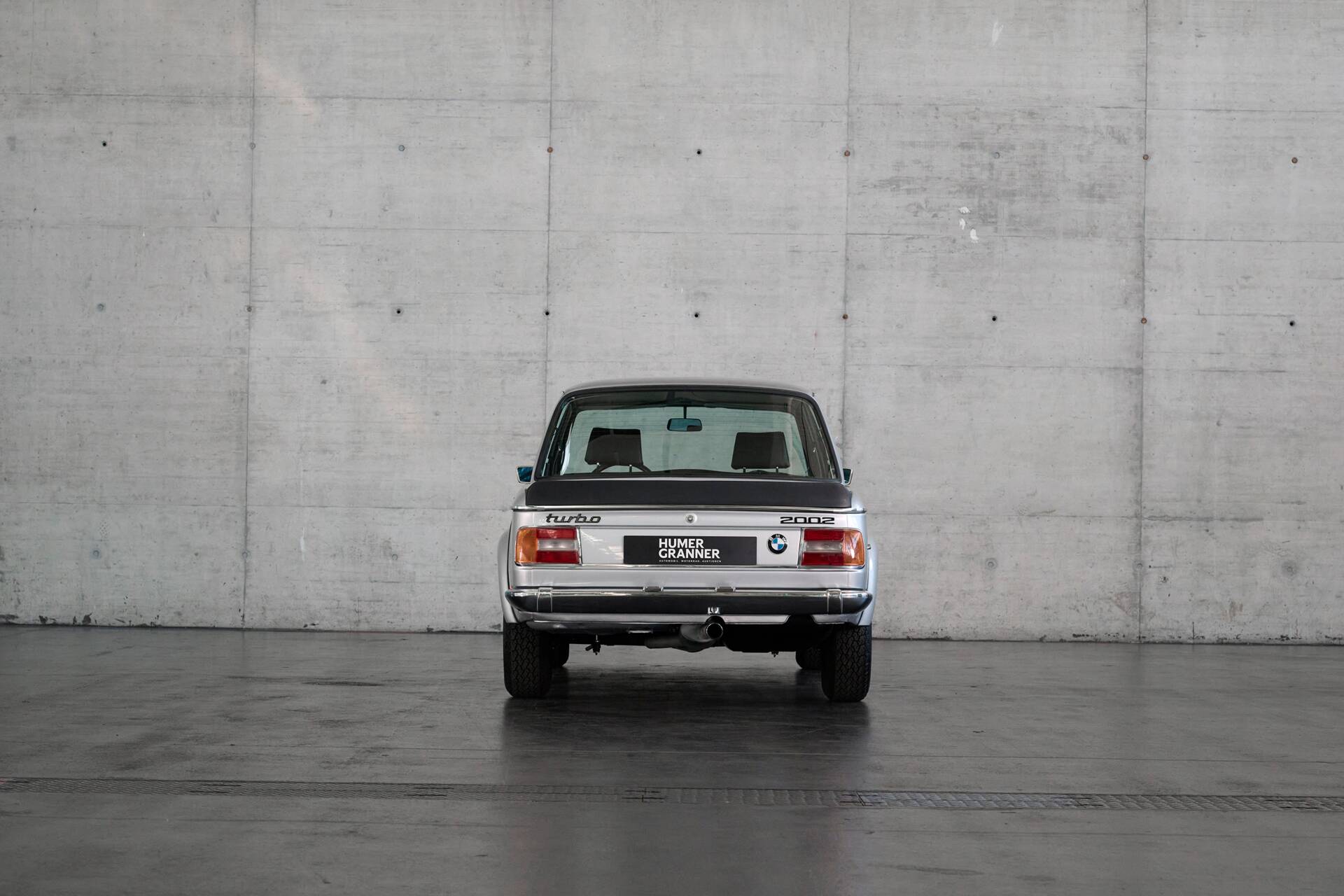
This BMW 2002 turbo, finished in Polaris Metallic (060), was delivered new to Italy in 1974, more precisely to the province of Trapani, at the westernmost tip of Sicily. From there it made its way to Upper Franconia almost three decades later, before passing to its most recent keeper in Lower Bavaria during the winter of 2011/2012. He was an employee at BMW’s Dingolfing plant, and he wanted the then almost 40-year-old 2002 turbo to look every bit as good as the cars leaving the BMW factory there. That was the objective. Several hundred photographs still document the journey towards achieving it.
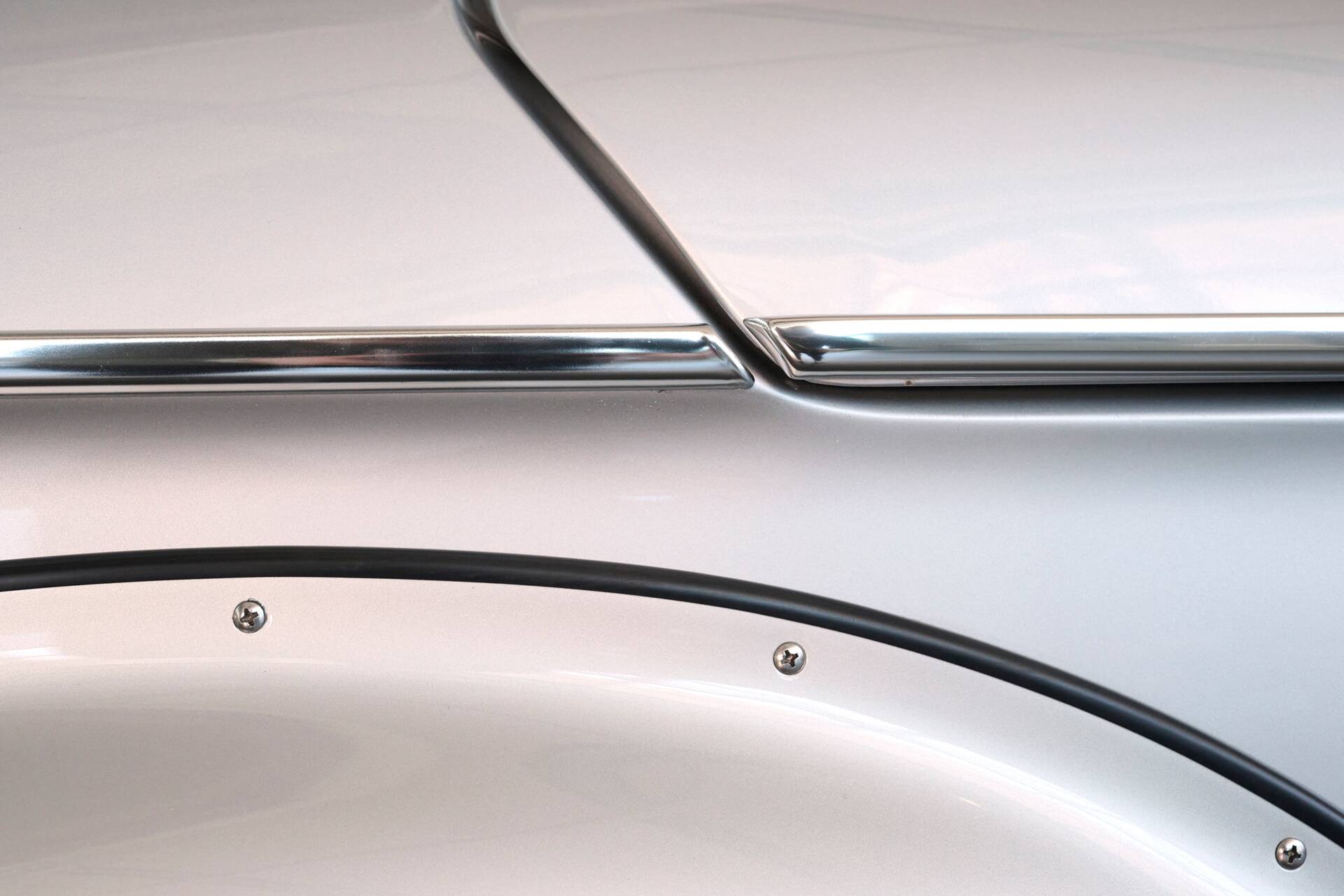
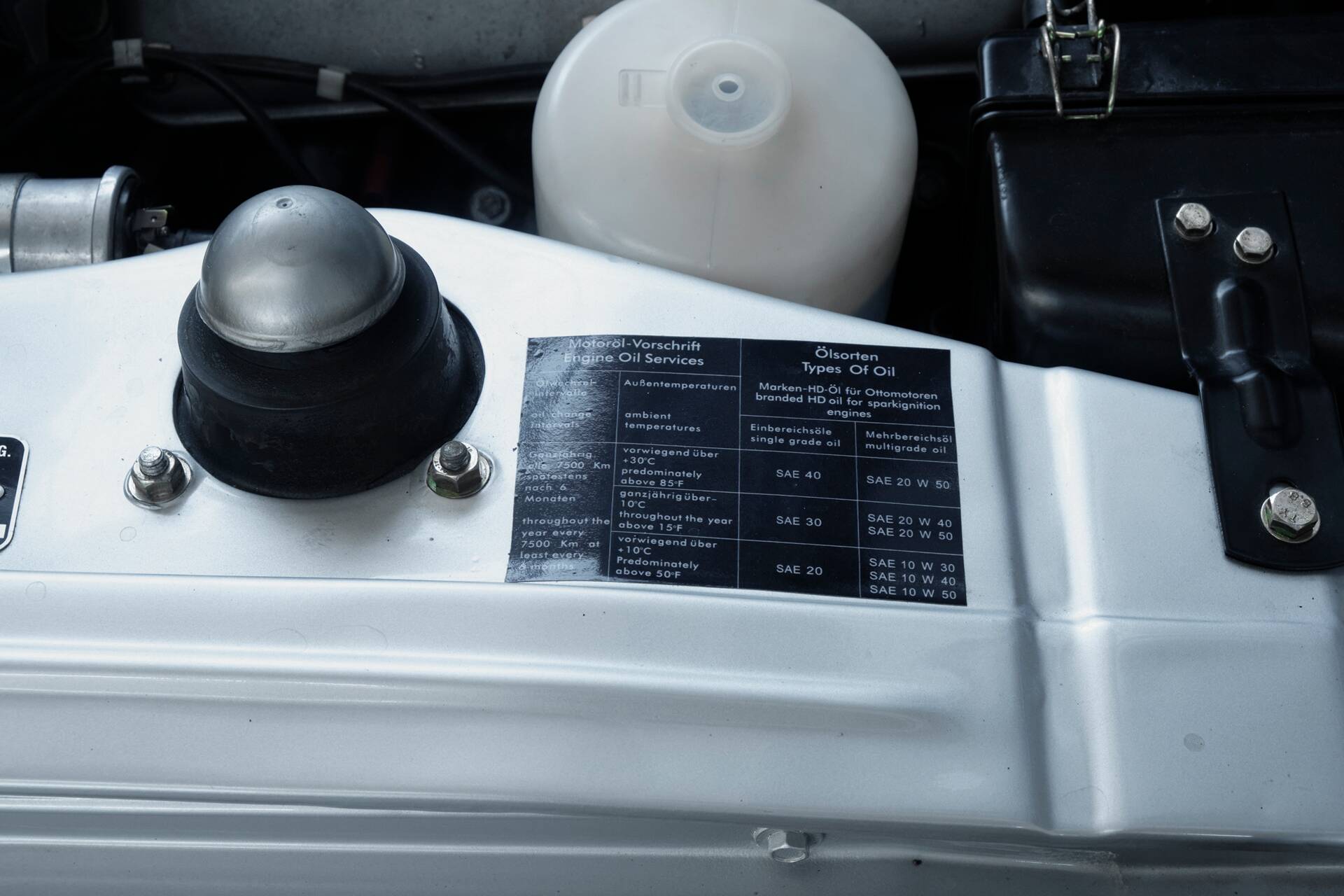
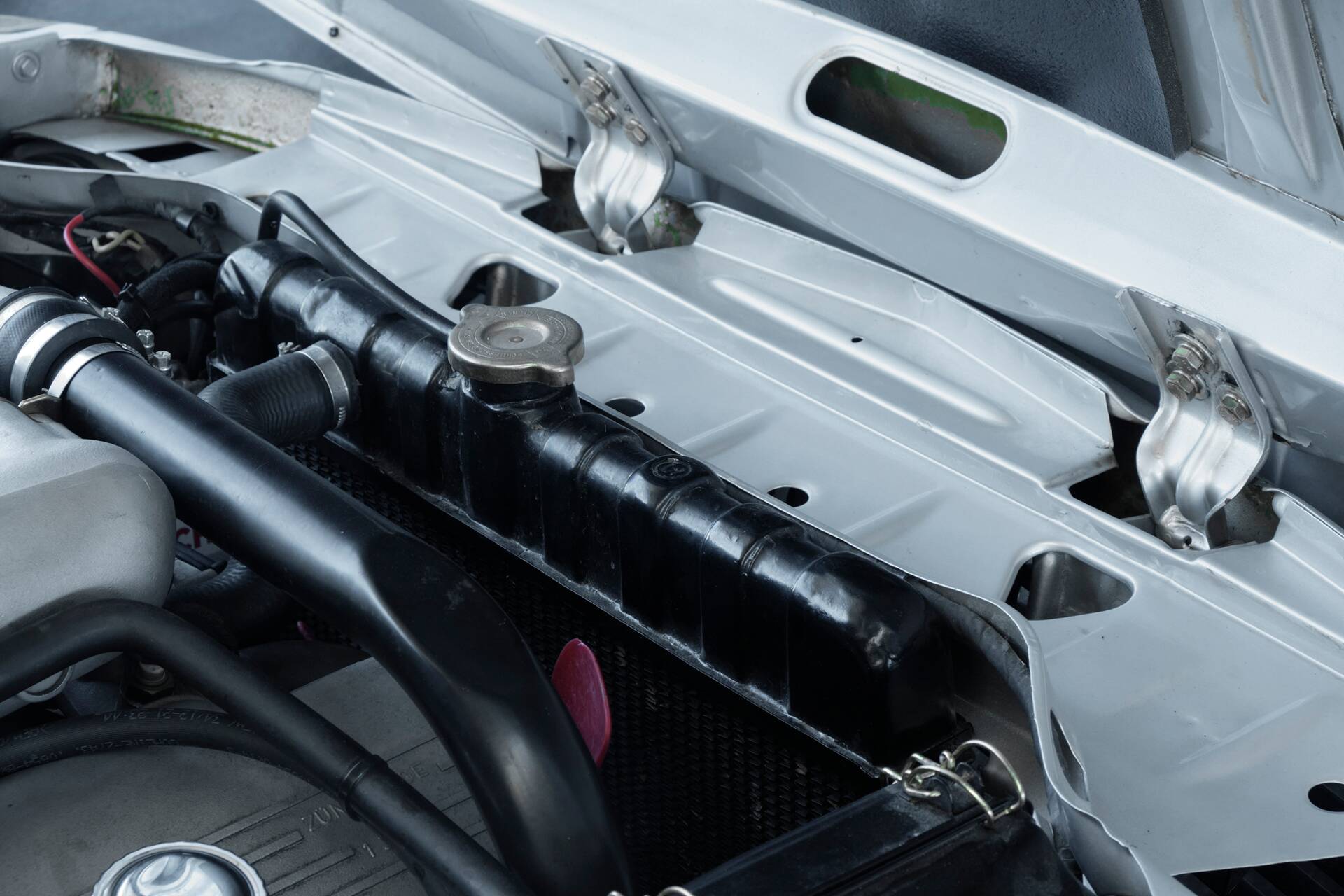
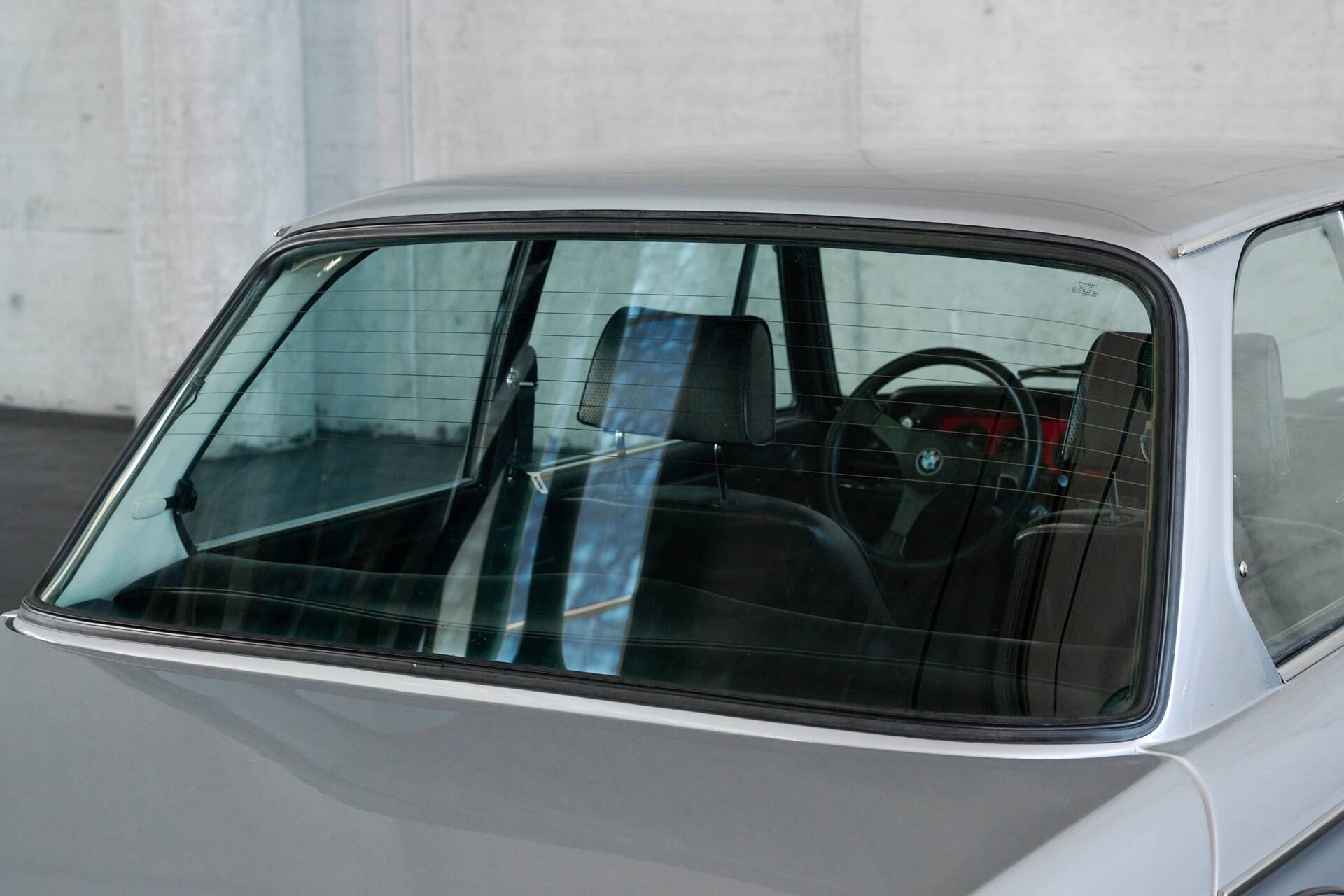
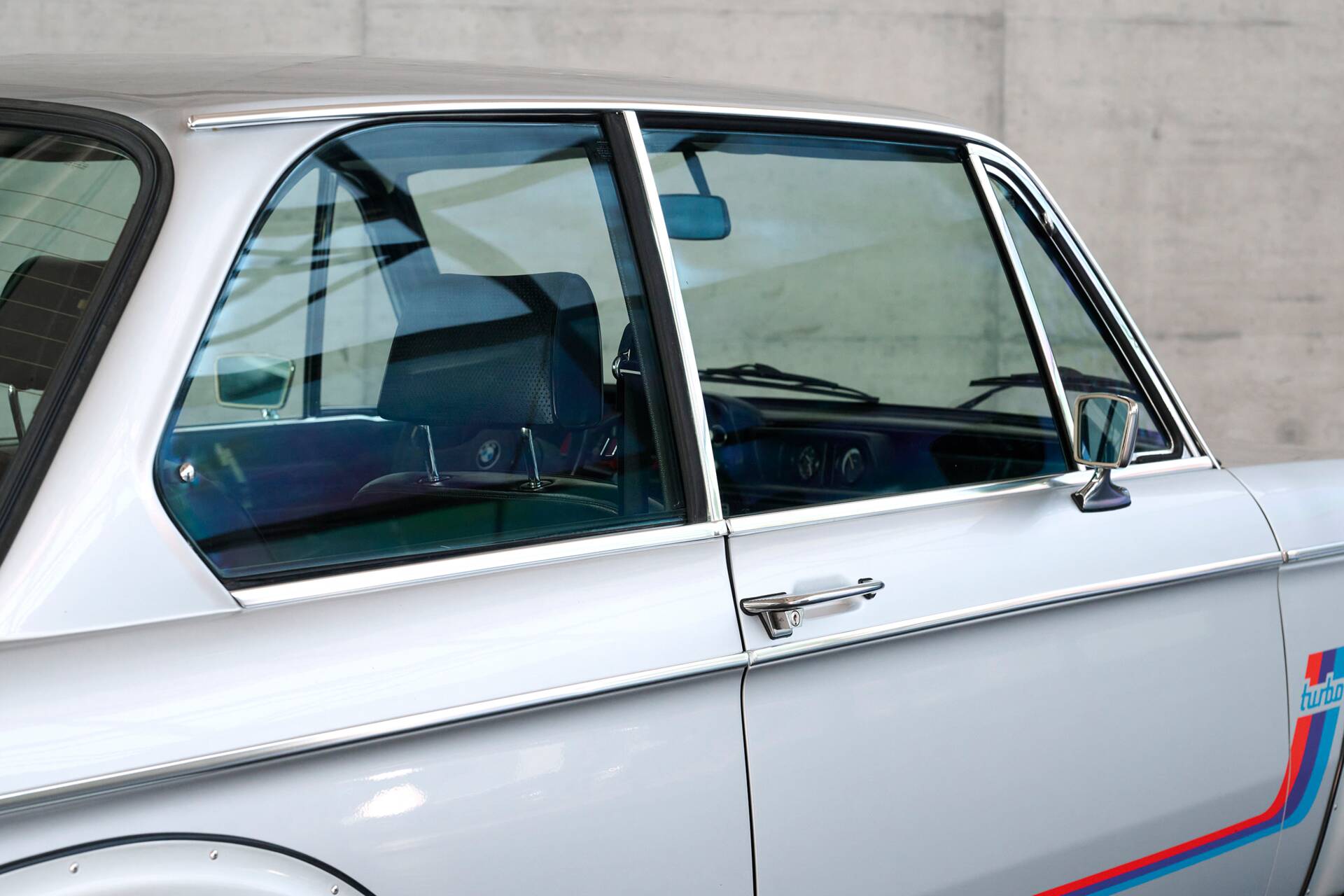
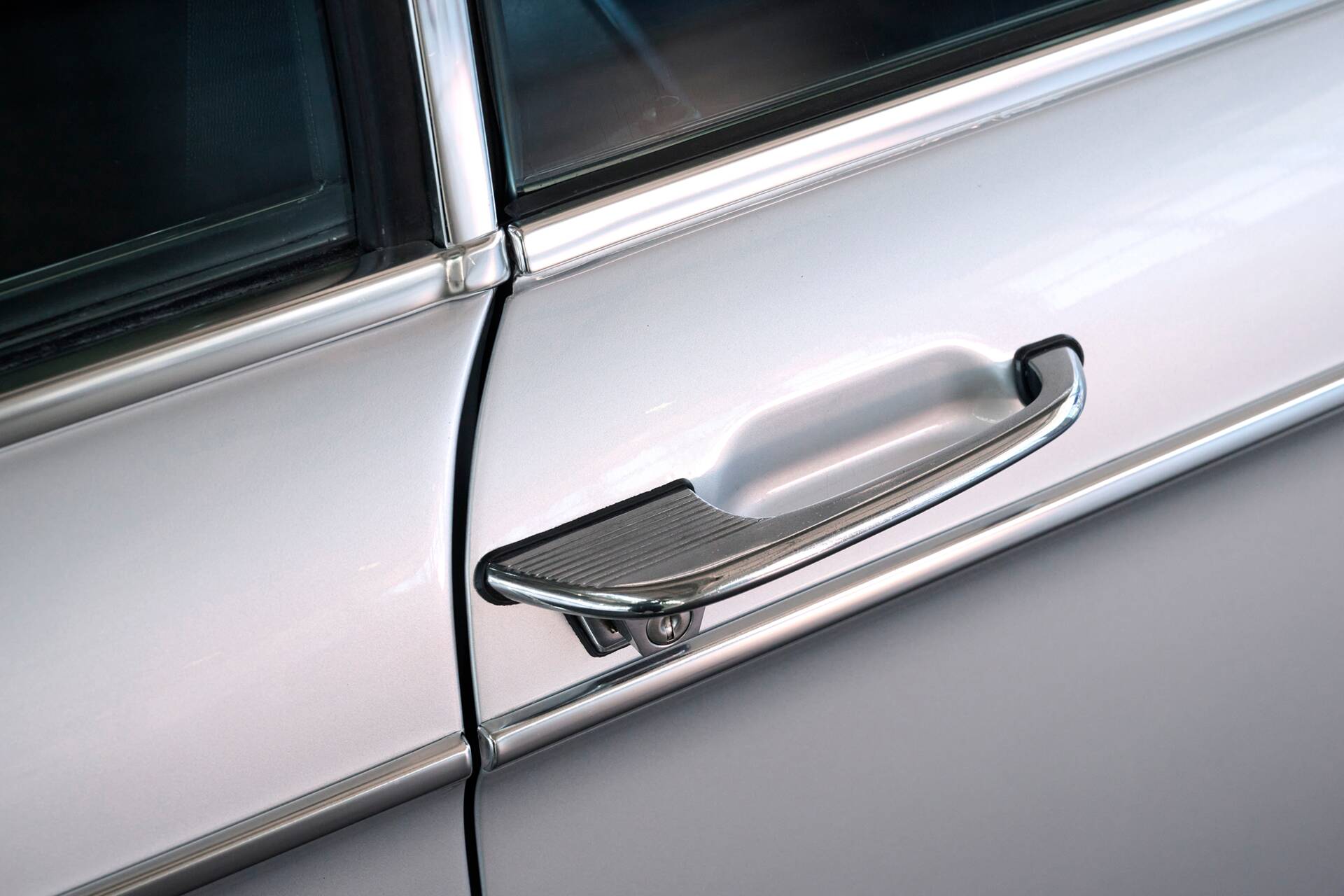
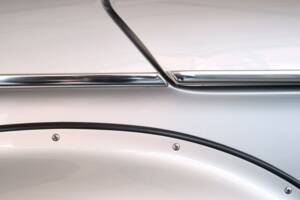
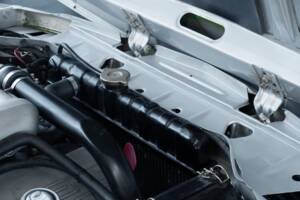
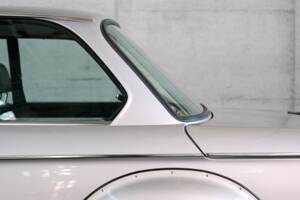
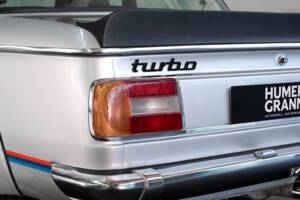
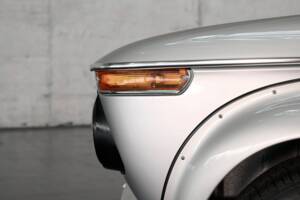
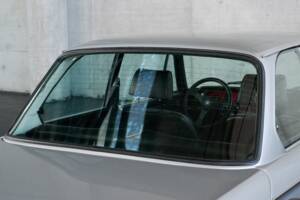
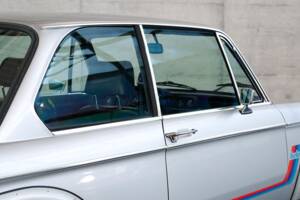
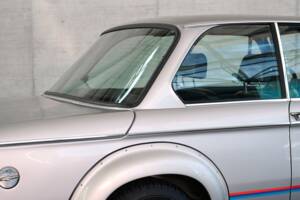
The 2002 turbo was carefully dismantled and subsequently rebuilt with painstaking attention to detail and originality. The photographs show a rust-free underbody stripped of its paint. The wheelarch extensions were carefully removed before the body received a fresh coat of its original Polaris Silver. The entire mechanical side, including drivetrain and suspension, was meticulously overhauled. In the exceptionally well-preserved passenger compartment, particular emphasis was placed on retaining its original character and atmosphere. The seat covers, for example, are still the originals, while the padding beneath them was renewed. Finally, the BMW received its stripes and a fresh turbo script on the nose. The work was completed in time for summer, and the 2002 turbo was back on Bavarian roads.
After a good ten years, the Kugelfischer fuel-injection pump was also completely overhauled by Koller und Schwemmer in Nuremberg. The rest still speaks for itself today and requires little explanation. One look at the Turbo reveals that the work was carried out by someone who knew precisely what he was doing, and whose standards were high enough to achieve a quality of restoration that convinces in every respect.
What neither photographs nor words can adequately convey, however, is that unique sensation when the turbocharger comes into its operating range. Some things simply defy description.
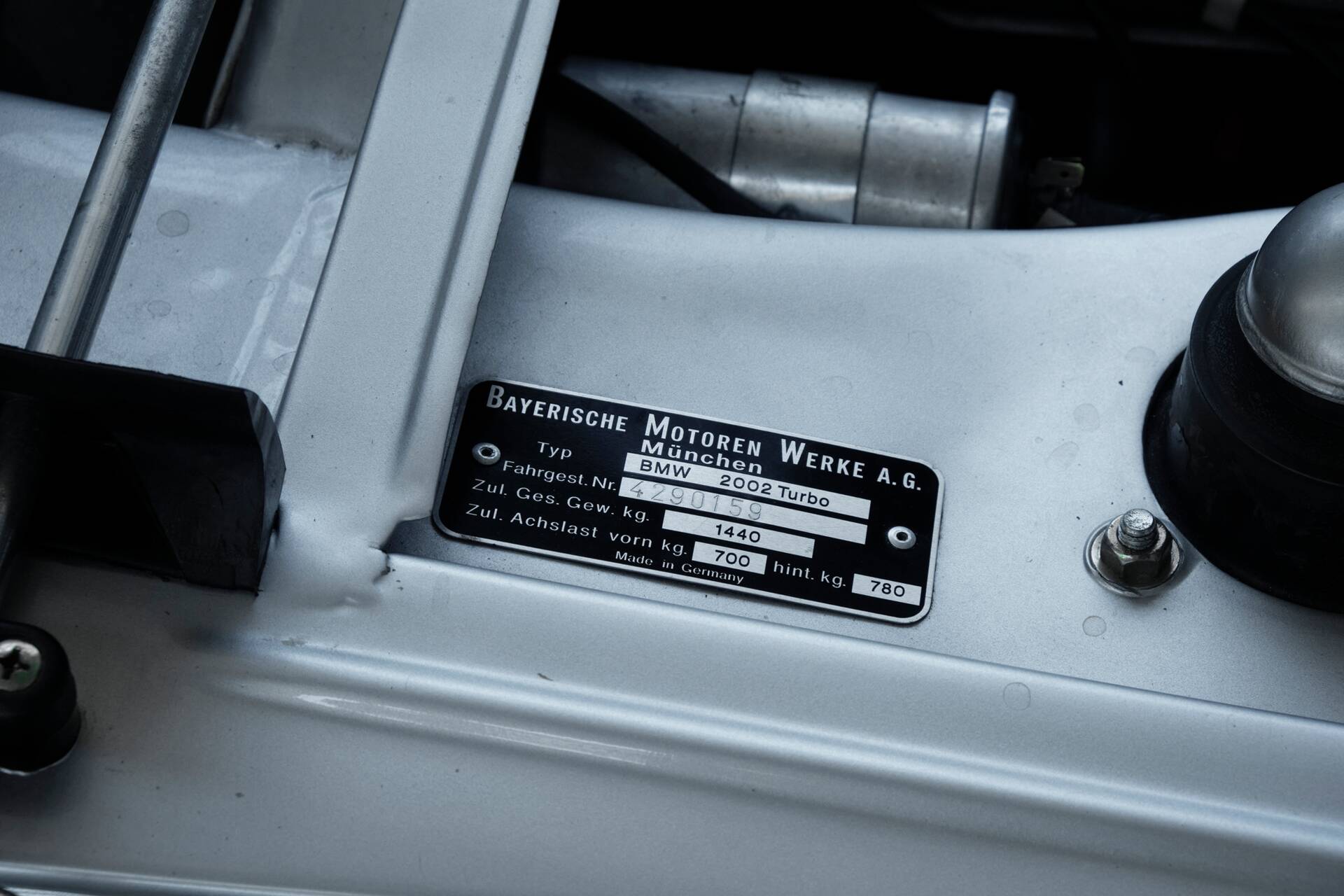
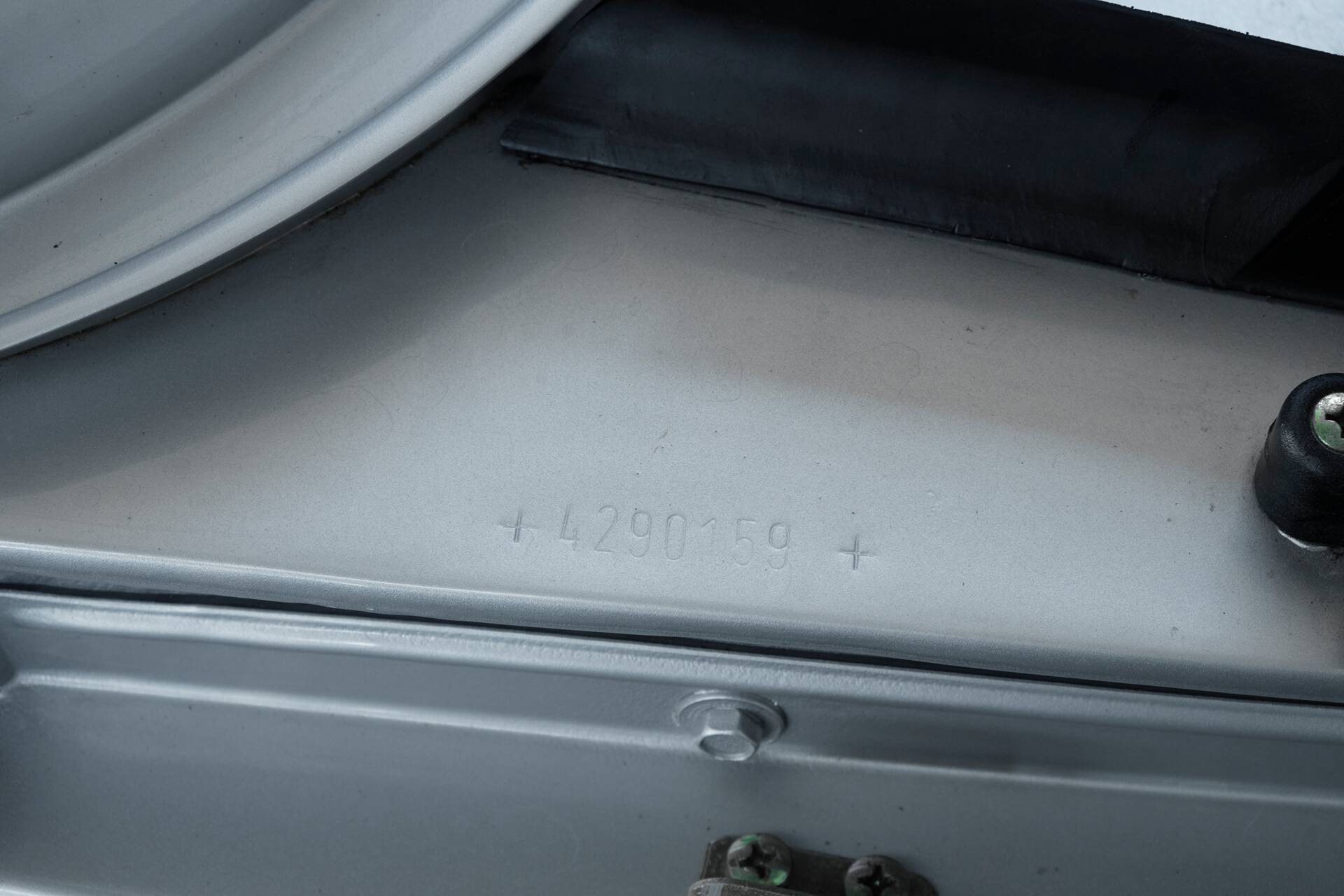
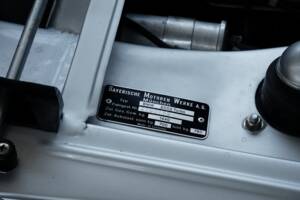
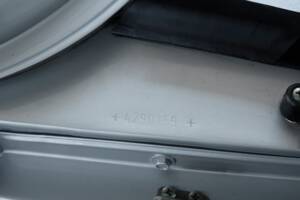
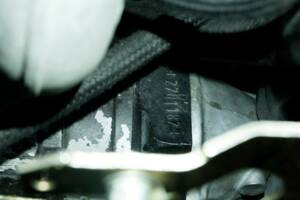
Chassis: 4290159
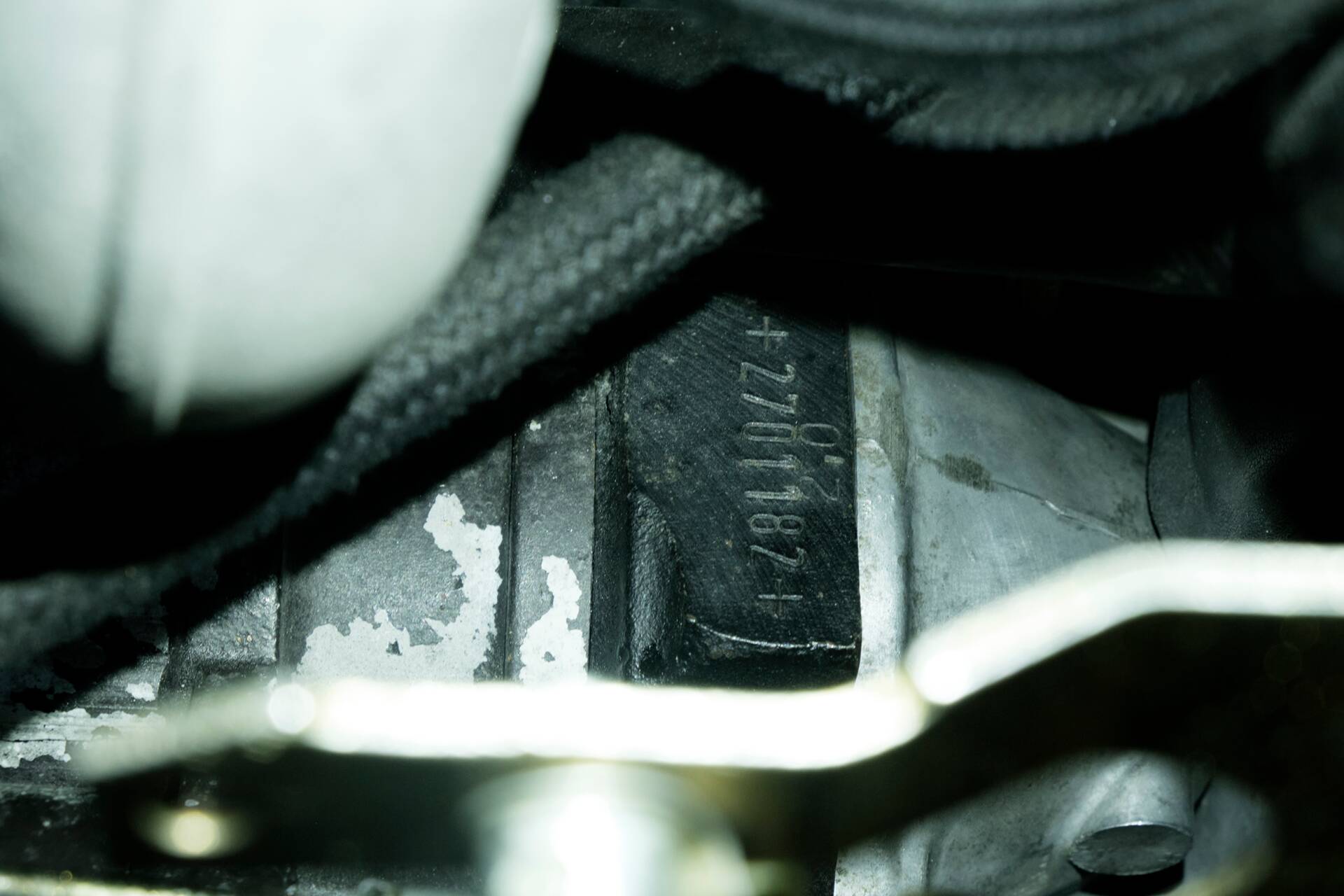
Motor / Engine: –
Papiere / Documents: Deutsche historische Zulassung Deutsche Zulassungsbescheinigung (2011) Italienisches Certificato di proprietá (2010, Kopie) Italienisches Certificato di proprietá (2002, Kopie)
Schätzwert / Estimate: EUR 90.000 – 120.000 Ohne Limit / Without reserve
Ort / Location: CLASSIC EXPO Salzburg Messezentrum Salzburg Am Messezentrum 1 5020 Salzburg
Datum / Date: 17. Oktober 2026 11:00 bis 13:00 und ab 16:00
Besichtigung / Viewing: 16. und 17. Oktober 2026
Auction listing and bidding