- Car
- UMM (0 offers)
Buy UMM Classic Cars
UMM made unusually tough Portuguese four-wheel drives for work before fashion, from Cournil-derived farm machines to the better-equipped Alter II. Find an uncommon, right-hand-drive-friendly classic with genuine utility, character and a small but resourceful international owner network.
Search results
Currently, there are no matching listings for your search.
Create search alert
Let yourself be notified as soon as a listing is published that matches your search filters.
UMM listing references from Classic Trader
Below you will find listings related to your search that are no longer available on Classic Trader. Use this information to gain insight into availability, value trends, and current pricing for a "UMM" to make a more informed purchasing decision.
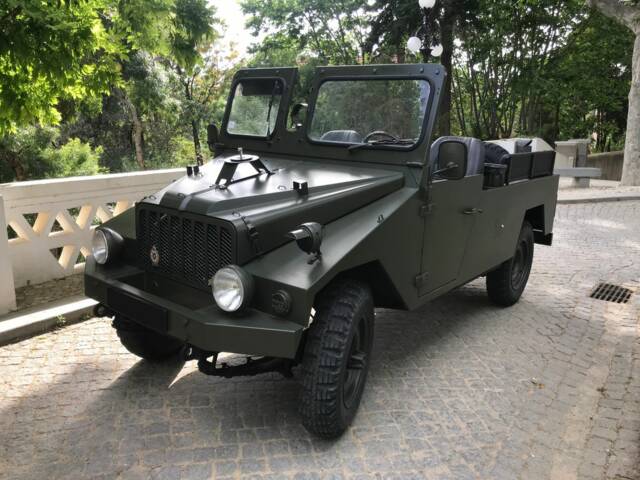
1982 | UMM Cournil Entrepreneur
UMM Cournil | 1982 | Route 66 Auctions - For sale by auction. Estimate 14500 EUR

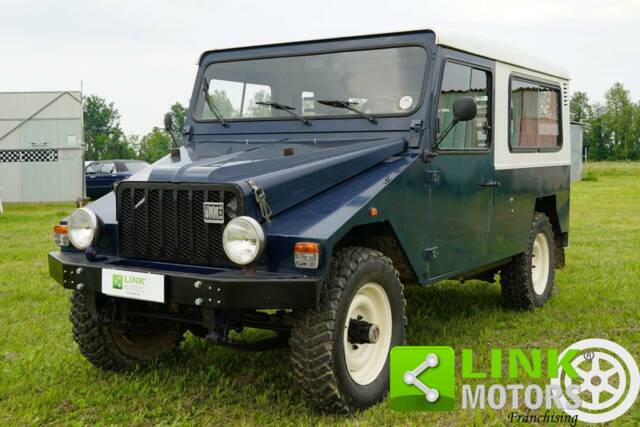
1985 | UMM Cournil Entrepreneur
JEEP UMM Cournil Entrepreneur 4X4 1985 - PRENOTATA

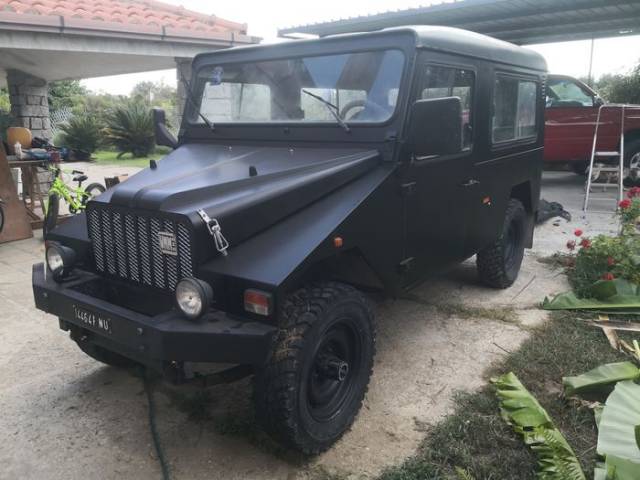
1985 | UMM Alter 2.5 TD
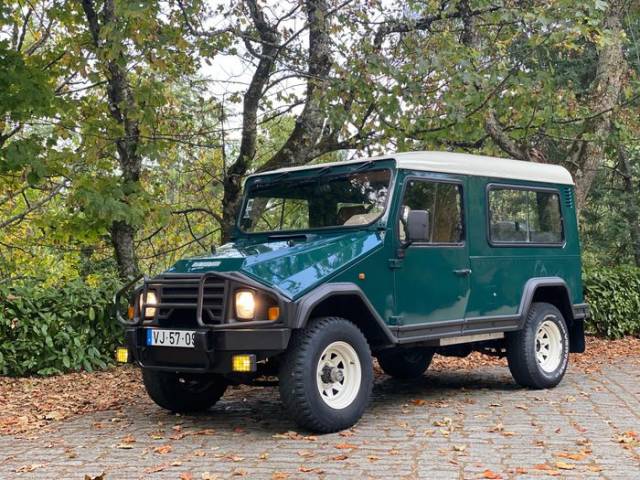
1990 | UMM Alter 2.5 TD
Create search alert
Let yourself be notified as soon as a listing is published that matches your search filters.
UMM: Portugal's purposeful four-wheel drive maker
UMM stands for União Metalo-Mecânica, a Portuguese metalworking concern that entered vehicle manufacture in 1977. Its story begins not with a styling studio but with the extraordinarily practical French Cournil. Bernard Cournil had developed his post-war farm four-wheel drives around the requirements of rural France: simple diesel power, low gearing, a strong ladder chassis and the ability to keep working far from a dealership. UMM acquired rights to the long-wheelbase Cournil/Entrepreneur concept and industrialised it in Portugal.
That origin matters when assessing a UMM. It is not a Portuguese imitation of a Land Rover, though the comparison is inevitable. It is a branch of the Cournil family, developed for agriculture, forestry, public works, military use and difficult tracks. Early examples appeared as the UMM 4x4 Cournil, then as the UMM 4x4/Entrepreneur. They were functional machines: upright cabins, heavy-gauge steel, leaf springs and diesel engines sourced from Peugeot/Indenor. The models were offered in short and long forms and in bodies suited to passengers, loads or specialist equipment.
The major visual change came with the Alter in the mid-1980s. Portuguese architect Carlos Galamba reshaped the front, screen and cabin treatment, trying to make the vehicle more usable beyond the paddock without denying its working nature. A contemporary Portuguese account describes this as a process of “civilising” the vehicle: more coherent supplier parts, altered dashboards and a more human cabin rather than a wholesale redesign. It remains an important distinction. An Alter should feel less agricultural than a Cournil-derived predecessor, but it is still a utilitarian 4WD.
In 1986 the Alter II brought the meaningful mechanical step. It received a revised gearbox, UMM transfer case, suspension changes and extra sound insulation. Subsequent versions introduced the 2.5-litre turbo-intercooled diesel, five-speed gearbox, ventilated front discs and power steering. The 1990s range could also include BMW-powered variants, but specification varies sharply by market, year and wheelbase. Do not buy by badge alone: confirm the engine, transmission, axle hardware and body style from the individual vehicle.
UMM found buyers well beyond private owners. Portuguese armed forces, municipalities, fire services and commercial users valued its straightforward durability. It also appeared in Paris–Dakar in the early 1980s; Portuguese historical reporting records a best 34th overall result in 1984. That competition association is interesting provenance, not evidence that every standard road UMM is a rally vehicle.
Private-customer Alter II production ceased during the 1990s, with utility and special orders continuing for a time. A proposed Alter 2000 revival with a quieter 2.1-litre turbodiesel did not restore regular volume production. Published production totals are inconsistent: enthusiast and historical sources commonly cite more than 30,000 UMM vehicles worldwide, while figures for a particular Alter run are much less secure. For an Australian collector, rarity is the point—but it also means chassis-specific documentation is more valuable than a broad production claim.
What makes an UMM distinctive
The appeal is refreshingly direct. A good UMM is a working four-wheel drive from an unlikely marque, with Portuguese identity, French mechanical ancestry and an honest, square-rigged presence. It has none of the lifestyle polish of a late Defender or modern SUV. In exchange it offers compact external dimensions, useful sightlines, a low-range transfer case and a body/chassis built for hard service.
Four characteristics define the make.
A serious structure. Clube UMM describes a rectangular steel chassis using 4 mm section, with a fully welded 2 mm steel body. Exact construction and reinforcement differ among versions, but the point is clear: this was engineered as a durable utility platform. That strength does not make it rust-proof. On a decades-old, welded steel vehicle, corrosion can be concealed in seams, outriggers, spring mounts and previous repairs. Treat impressive gauge as a reason to inspect more carefully, not a substitute for inspection.
Diesel torque over outright speed. The familiar naturally aspirated 2.5-litre Peugeot diesel produced 76 CV/PS, while the 2.5 Turbo Intercooler produced 110 CV/PS. The latter is the more relaxed road vehicle, but neither is a fast touring wagon. The factory material quotes 120 km/h for the atmospheric diesel and 140 km/h for the turbo; a buyer should regard those as period maximums, not a promise of effortless modern motorway travel. Condition, gearing, tyres, load and wind matter enormously in Australia.
Proper low-range hardware. Alter II equipment included selectable four-wheel drive, freewheeling front hubs and a reduction transfer case. The Club’s technical material describes a five-speed gearbox with reduction, giving ten forward and two reverse ratios on relevant versions, plus a 40 per cent limited-slip rear differential. Check the exact arrangement on the vehicle: early four-speed and later five-speed cars are not interchangeable descriptions.
A mixed-source maintenance proposition. Peugeot engine consumables, some Jeep-related axle/brake components and generic bearing/seal sourcing can make regular servicing less intimidating than the badge suggests. The UMM Owners Club’s alternative-parts guide identifies Peugeot filters and gearbox applications, and notes some Jeep CJ-derived axle items. But UMM-specific transfer-case parts, body pressings, chassis pieces, springs, front exhaust sections and trim can be difficult. Buy the condition and included spares, not a promise that “it is basically a Land Rover”.
The make’s compact range is part of the attraction. The early UMM 4x4 represents the raw Cournil-derived workhorse; the Alter adds a more resolved appearance; the Alter II is the best all-round classic choice for many drivers; and the scarce later Alter 2000 is a separate, small-scale epilogue. A buyer choosing between them should prioritise history, corrosion condition and parts support over a marginal power advantage.
UMM technical data
Figures below identify common published configurations rather than every body, export or special-service derivative. Verify the data plate, engine number and factory literature for the car offered. “Production” is deliberately qualified where a dependable model-specific total is not published.
The table gives a useful first filter, but it cannot establish originality. UMMs were supplied in many body and fleet configurations, and hard use encouraged repairs, upgrades and engine changes. A roadworthy Australian example may have sensible local alterations; its value rests on whether those changes are documented, competently executed and acceptable to the registration authority in the buyer’s state or territory.
Market overview and buying tips
There is no deep Australian UMM market to produce a credible local price guide. That is important information, rather than a gap to fill with invented dollar figures. An Australian buyer will probably be considering an imported car, an expatriate-owned example or a vehicle already brought in privately. Price must therefore be separated into purchase price, shipping, taxes, biosecurity, approval, compliance and registration. A cheap overseas UMM can become an expensive project before it reaches the first club run.
Public evidence is thin but useful when quoted precisely. Classic Trader’s historic UK search records a 1985 UMM Alter 2.5 TD advertised at £4,694 and a 1990 Alter 2.5 TD advertised at £14,081; these are archived asking prices, not sold results. At the other end, Bring a Trailer sold a comprehensively refurbished, Spanish-imported 1993 Alter II 4x4 Turbodiesel for US$29,000 on 3 August 2022. The listing recorded 97,000 km, a repaint, retrimmed interior, resealed 2.5-litre turbodiesel, cooling and braking work, and US import documentation. That is a genuine public sale, but it is one exceptional, restored vehicle in the United States—not an Australian benchmark and not proof that an unrestored UMM is worth the same.
More recent public material reinforces the range without supplying a sale result: a 1989 Alter II discussed in 2024 had a US$3,200 asking price in running-project territory. Treat it only as an asking-price illustration. As at the research date, readily verifiable 2024–26 Australian UMM auction sales were not found. Ask any seller for the original overseas invoice, auction result, purchase agreement and currency evidence; do not convert foreign asking prices into a confident A$ valuation.
For a UMM sourced overseas, start with legality before arranging shipping. Australia’s Department of Infrastructure says an import approval is required before import; a vehicle more than 25 years old may be eligible under the older-vehicle concessional RAV entry route. The vehicle must be over 25 years old from its build date, and evidence can include the original sales record, deregistration document and chassis/VIN photographs. The approval also permits import, but state or territory registration remains a separate decision. An approval can take up to 30 business days according to the older-vehicle guidance, so leave a realistic buffer.
For an UMM, right-hand drive is a practical advantage. Portuguese-market vehicles were normally RHD, matching Australian traffic and avoiding the state-level uncertainty that can accompany left-hand-drive classics. It is not a blanket registration guarantee: confirm the specific state’s inspection, lighting, seatbelt, tyre, windscreen and engineering expectations before purchase. Avoid treating a factory RHD steering position as permission to ignore condition or evidence. If a vehicle has been converted, identify who performed the work, when, and whether the conversion is accepted in the intended registration jurisdiction.
Budget beyond the hammer or advert price. The Australian Government’s eight-step import guidance explicitly lists freight, storage, delivery, approval fees, customs duty, GST, quarantine cleaning and inspection, asbestos testing/removal, modification, registration and insurance as possible costs. Australian Border Force says GST is generally 10 per cent of the value of the taxable importation, which includes customs value, duty, international freight and insurance. Duty depends on tariff classification and origin, so obtain a written broker assessment rather than applying a generic percentage. The ABF also warns that a vehicle arriving without approval can accrue substantial storage costs.
Luxury Car Tax is unlikely to affect an ordinary UMM but should not be casually dismissed on an exceptional restoration. LCT applies to eligible cars above the threshold and is charged at 33 per cent on the amount above it; the ATO explains the formula and what is included in LCT value. It is not a reason to value a typical UMM near the threshold. It is a reason to model the landed position carefully if buying a high-priced restored example.
Biosecurity is particularly relevant to a utility four-wheel drive. Old mud, seeds, animal material and oily buildup can delay clearance or require cleaning. Obtain comprehensive underside photographs before bidding, request professional steam cleaning before loading and retain invoices. The Department specifically lists cleaning for quarantine, inspection and asbestos matters among potential import costs. Do not rely on a seller’s “clean chassis” description.
Inspection priorities
Chassis and body: Put the UMM on a hoist. Inspect main rails, crossmembers, spring hangers, shackle mounts, outriggers, body-to-chassis joins, floor edges, bulkhead, windscreen surround, door bottoms, rear corners and pickup/station-wagon load floors. Look for plated repairs with poor seam treatment, mismatched sections and corrosion hidden by fresh underseal. Measure only after cleaning suspicious areas.
Driveline: Test high and low range, four-wheel-drive engagement, freewheeling hubs and reverse selections on a safe surface. Listen for transfer-case chain noise, bearing rumble, excessive propshaft play and axle whine. Confirm the limited-slip rear differential is the specified type rather than assuming it is present. Check diff and transfer oils for water or metallic debris.
Engine and cooling: The Peugeot diesel is familiar in principle, but the installation is UMM-specific. Assess cold starting, crankcase breathing, injector-pump leaks, coolant contamination, radiator condition and evidence of overheating. On turbo versions inspect boost plumbing, intercooler ducting, exhaust manifold condition and turbo oil feed/return. A low-power naturally aspirated diesel that starts cleanly and maintains temperature is better than a smoky “upgraded” vehicle with no paperwork.
Brakes, steering and suspension: Inspect leaf springs for cracks, sagging and incorrect packs; shock mounts; steering-box leaks; track rods; brake lines; flexible hoses and seized adjusters. Later Alter II turbo equipment included ventilated front discs and power steering, but verify what is actually fitted. Check that tyres, wheels and flares are legal and appropriately rated for Australian registration, especially on ex-service cars.
Identity and paperwork: Match chassis number to foreign title, build-date evidence, import approval and RAV entry. Check whether the body has been altered, whether seating capacity matches its registration proposal and whether military or emergency-service equipment has been lawfully removed or documented. A UMM with old fleet plates, amateur chassis repairs and no export documents needs a much larger contingency than a documented civilian vehicle.
Parts deserve a realistic plan. Before committing, contact the UMM Owners Club/UMM World and Portuguese specialists with the chassis number and mechanical specification. Secure workshop manuals, a parts book and any removed original pieces. Order service consumables in advance, but do not stockpile parts based solely on forum substitutions. The owners’ alternative-parts list is a valuable lead, not a warranty of fitment. In Australia, shipping time and freight cost make a spare filter, belts, hoses and brake-service plan sensible.
Behind the wheel
An UMM should be driven as a classic utility vehicle, not apologised for as a crude SUV. From the high, upright seat the slab-sided bonnet and three-wiper screen make placement surprisingly easy. The short, squared-off body gives a driver a useful sense of where the corners are on a bush track, while the long-wheelbase versions exchange some manoeuvrability for passengers and load space.
The atmospheric diesel asks for momentum and patience. Its attraction is the low-speed, unhurried response that suits tracks, farm lanes and gentle touring; it is not the choice for frequent high-speed interstate runs. The turbo Alter II is the more usable road companion, with 110 PS and 238 Nm giving it a broader stride, yet noise, leaf-spring ride and bluff aerodynamics remain core parts of the experience. A well-sorted example should track predictably, brake squarely and steer without alarming wander; it will never isolate occupants like a current dual-cab.
Off sealed roads, the UMM’s personality makes sense. Low range, mechanical engagement and a sturdy chassis reward deliberate inputs. Select the correct range before the obstacle, use the diesel’s torque, avoid shock loads and remember that age affects brake hoses, tyres, cooling systems and every rubber bush. On Australian corrugations, heat and long distances, conservative driving and preventative maintenance are more valuable than proving a point about toughness.
Design, coachwork and character
The earliest UMMs wore their French agricultural ancestry openly: flat panels, tall glass and a shape dictated by access, payload and repair. The Alter was not a clean-sheet fashion exercise. Carlos Galamba worked around existing hard points and supplier constraints, reshaping the front and making the cabin more approachable. That restraint is why the Alter looks distinctive rather than generic. It has a forward-leaning grille treatment, a purposeful bonnet and a cabin that appears assembled around a job to be done.
The best UMMs retain that integrity. Original steel wheels, correct mirrors, period seats, dashboard pieces, canvas tops and body hardware matter because replacements are not as easy to find as Land Rover equivalents. A tasteful expedition fit-out can be useful in Australia, but excessive lift, oversized tyres, cut guards or decorative military additions may harm road manners, registration prospects and future value. Photograph the original equipment before any work and preserve it where possible.
Colour and body choice change the character. A soft-top short-wheelbase UMM feels closest to the simple rural 4WD idea. A wagon makes better sense for family outings and wet-weather use. Pickups and service bodies can be fascinating pieces of industrial history, but must be assessed for rust, load modifications and registration classification. The most convincing restoration is not necessarily the glossiest: it is one with straight metal, correct gaps, properly treated seams and a file showing what was repaired.
Competition, service and community
UMM’s reputation was built in service as much as in private garages. The make served agricultural, municipal, emergency and military roles, while its appearance in Paris–Dakar provided a useful endurance showcase. Portuguese reporting records UMM entries in the 1982, 1983 and 1984 events, with 34th overall in 1984 as its strongest recorded finish. This background explains the rugged hardware and broad range of bodies; it should also prompt extra scrutiny of ex-service examples, which may have led hard lives.
The worldwide community is small but unusually important. Clube UMM in Portugal preserves technical material and history; UMM World hosts manuals and an alternative-parts guide with manufacturer permission for published works. For an Australian owner, these networks can be more useful than a local parts counter. Join before purchase, ask what components are unique to the exact chassis and arrange a freight strategy with other owners when possible.
Summary
Buying an UMM in Australia is a specialist decision, not a substitute for the easiest available Land Rover. Its strengths are authenticity, rugged mechanical logic, Portuguese heritage and genuine capability. The Alter II turbodiesel is often the most rounded choice, while earlier Cournil-derived UMMs appeal to collectors who value the original working concept.
Choose a documented, structurally sound RHD example with a verified build date, working low-range system and a realistic parts plan. Price it as a landed Australian project, not as a foreign advert converted into dollars. With import approval obtained before shipping, biosecurity allowed for, state registration checked and the right owner contacts in place, an UMM can be one of the most individual classic four-wheel drives on Australian roads.