- Car
- Unic (0 offers)
Buy Unic Pre-War Classic Cars
Unic pre-war cars bring French taxi durability, scarce coachbuilt bodies and a distinctly different character to an Australian collection. Find an authentic Unic with sound timber, matching identity and an import file ready for the long journey south.
Search results
Currently, there are no matching listings for your search.
Create search alert
Let yourself be notified as soon as a listing is published that matches your search filters.
Unic listing references from Classic Trader
Below you will find listings related to your search that are no longer available on Classic Trader. Use this information to gain insight into availability, value trends, and current pricing for a "Unic" to make a more informed purchasing decision.

1927 | Unic L61 Torpedo
UNIC L 61

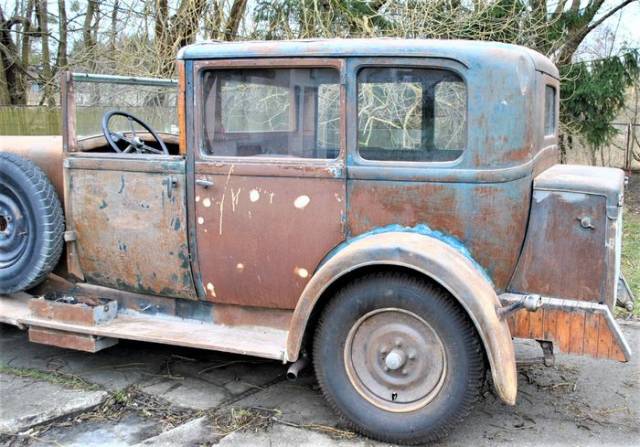
1930 | Unic L1

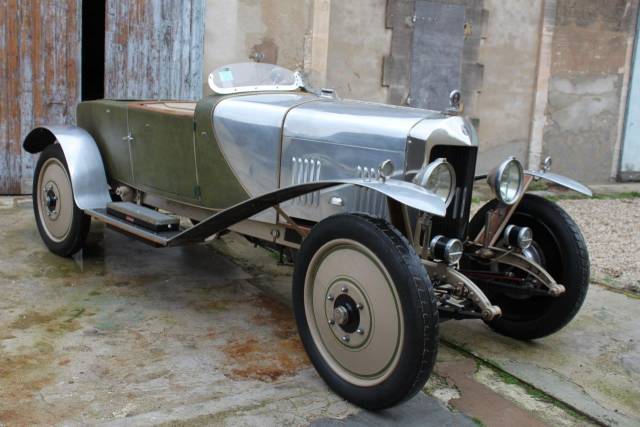
1924 | Unic L1
Unic L2 Supersport


1919 | Unic J3

Create search alert
Let yourself be notified as soon as a listing is published that matches your search filters.
History of Unic
Unic is one of those French makes whose passenger cars are far rarer than the name suggests. Australian enthusiasts may know the badge from commercial vehicles or the later Iveco connection, but a Unic car belongs to a much earlier story: Paris taxis, practical touring chassis and individually bodied pre-war machines. For a buyer in Australia, that distinction matters. A passenger Unic is not simply an old French truck wearing a familiar name; it is a scarce survivor from a manufacturer that stopped making cars in July 1938.
Georges Richard founded the company at Puteaux in 1905, after leaving Richard-Brasier, with financial support from Baron Henri de Rothschild. The name came from Richard's original intention to build a single rational model. That policy was short-lived. Within its first years Unic offered two- and four-cylinder cars, developing a reputation for sturdy engineering rather than sporting glamour. The 12/14 hp four-cylinder, of about 1,944 cc, became especially important in taxi work. Its durability took Unic beyond Paris: the marque was also prominent in London cab fleets. W. O. Bentley, who had worked around the National Motor Cab Company before creating his own cars, later praised the economy and resilience of the Unic taxis.
That working background is central to the appeal. A pre-war Unic was designed to earn its keep on poor roads, often with a body selected for a particular owner or trade. The consequence today is a wide range of surviving forms: taxi, open Torpedo, closed saloon, delivery body and bespoke coachwork. It is also why a listing title alone cannot establish exactly what is being offered. The chassis plate, engine, wheelbase, body history and old registration documents deserve more weight than a confident model label in an advertisement.
After the First World War, the Type L became the core of the passenger-car range. The 1924 catalogue included the 1,843 cc L1T, a two-litre L3T and a larger 3,450 cc 16 CV four-cylinder. Names such as L1, L2 and L61 appear in archives and sale catalogues, but surviving cars have often changed bodies, duties or details during a century of use. A 1924 L2 might be a Torpedo, a commercial Boulangère or a chassis with a later story. Careful identification is therefore part of the purchase, not paperwork for after delivery.
Unic also began building the three-tonne MSC truck in 1922. Georges Richard died in a road accident that year and, as commercial production grew, passenger cars became less central. They did not vanish immediately. In 1929 the H1 introduced a roughly 2.5-litre straight-eight, a remarkable change of character from the modest Type L. The final passenger cars were the U4 and U6. The 1937 U4D used a 2,150 cc four with 55 hp, while the U6C paired a three-litre six producing 85 hp with Cotal electromagnetic preselector transmission. These late cars placed Unic among more ambitious French touring marques just before its car programme ended.
Unic continued with trucks, became associated with Simca from 1952 and later passed into the Fiat and Iveco lineage. That commercial afterlife can obscure the car history, but it also explains why a car buyer must use marque-specific sources. A later diesel truck manual or truck-parts supplier will rarely solve the needs of a 1920s Type L or a Cotal-equipped U6.
Highlights and Character
The attraction of a Unic is the combination of purposeful engineering and coachbuilt individuality. Where some French contemporaries are collected chiefly for glamour, Unic offers a more workmanlike pre-war experience. Early taxis and delivery bodies were built for repeat use; open cars and saloons could be ordered with the grace of French bodybuilding. A surviving car with its original body, period fittings and convincing documentary trail is consequently much more than a decorative rarity.
The Type L illustrates that balance. Its side-valve four-cylinder is not exotic, yet it is historically appropriate, serviceable in principle and full of period character. A 1924 Type L2 Boulangère with Girardo Frères coachwork sold through Bonhams in California in August 2025 for US$10,640 including premium. Bonhams described its original timber-framed commercial body and four-wheel drum brakes. The result should not be converted into an Australian price guide: it reflects that particular vehicle, venue, condition and body type. It does, however, demonstrate that a humble utility body can have genuine collector value when it is complete and authentic.
Other public evidence underlines the variation. Aguttes sold a 1924 L2 Boulangère for €14,520, while a Type L2 Torpedo with documented French history was offered in a different condition and presentation at a much higher estimate. Values are shaped by the exact body, restoration evidence, drivability and papers rather than by an easily repeatable Unic benchmark. The old Classic Trader archive also records a 1927 L61 Torpedo at A$24,219, but an archived asking figure is not a current valuation and should not be treated as one.
The H1, U4 and U6 appeal to different collectors. An H1 represents the brief straight-eight chapter, while the U4 and U6 are later and more sophisticated road cars. The U6's Cotal transmission is a major talking point, but it is also a reason to appoint a specialist before bidding. Its control system, wiring, contactors and shift behaviour cannot be assessed by assuming it works like an ordinary manual gearbox. Missing U6-specific components may be far harder to find in Australia than common consumables.
Technical Data of Selected Unic Cars
These figures are a starting point, not a substitute for inspecting the individual car. Coachbuilders and later owners could alter bodies, seating, weight and even apparent model identity. Ask for clear photographs of the chassis and engine numbers, brake layout, axle stampings, wiring, instruments and the relevant pages of the French carte grise or export registration. For an Australian buyer, obtain these files before the car is booked for shipment; replacing missing evidence from the other side of the world is slow and expensive.
Market Overview and Buying Tips
A Unic classic car is an international search rather than a domestic-market purchase. No reliable Australian passenger-car market was identified, and current local availability can be zero. France is the natural source country, with occasional cars appearing through European specialists, auctions and archives. That scarcity means the purchase budget needs to be wider than the hammer price or advertised euro figure. Allow for an independent inspection in Europe, inland collection, sea freight, marine insurance, brokerage, port handling, Australian taxes and charges, cleaning, state inspection, registration work and recommissioning after the voyage.
Do not use a simple currency conversion to decide whether a car is affordable in Australia. A cheap-looking restoration project can absorb much more than a better documented, running car once it needs specialist timber repairs, bespoke trim, tyres, French-sourced parts and repeat shipments. Conversely, a sound L2 utility or tourer with complete identity, a known body history and a photographic restoration record may be a more rational purchase than a shinier car with uncertain numbers. The small market makes independent evidence much more useful than a generic valuation.
Start with identity and provenance. Confirm that the chassis number agrees with the title, invoice, auction catalogue and physical stamping. Establish when and where the car was built, its original body if known, and whether the engine is original or a period-correct replacement. Ask for pre-restoration photographs, workshop invoices, prior registration records and details of any conversion from utility to passenger body. A beautifully finished Torpedo is not necessarily problematic, but an undocumented rebody should be priced and insured as such. A French registration document helps, yet it does not alone prove every claim made about a 100-year-old car.
Then inspect the timber and coachwork. Many Unics use timber frames beneath metal panels, fabric or commercial bodywork. Look closely at the sills, door posts, scuttle, roof rails, floor, rear structure and all joints between timber and steel. Misaligned doors, uneven gaps, fresh paint around fasteners, soft timber and moisture staining can indicate a structural repair rather than a cosmetic task. On a Boulangère, inspect the rear doors, cargo floor, roof and body mounts just as critically. Original lamps, radiator, badges, windscreen frame, mudguards, instruments and hood irons can take years to source, even if the mechanical work is straightforward.
The chassis and running gear need a period-aware inspection. Check cold starting, oil pressure where fitted, cooling, fuel delivery, clutch take-up and engagement of every gear. Examine steering play, kingpins, leaf springs, wheel bearings, wheels and tyre age. Four-wheel drum brakes demand a full look at drums, linings, rods or cables and adjustment, not a quick test in a car park. A warm engine can hide poor starting, smoke or a marginal cooling system. For a U6, engage a Cotal specialist to test the electrical system and transmission under the correct conditions. Expecting modern braking, lighting or traffic capability from a pre-war French car is unsafe and will lead to disappointment.
Parts support is best described as project-based. General consumables can sometimes be matched by sample, and French pre-war networks, machinists and specialists can reproduce mechanical parts. But an original radiator emblem, a correct carburettor, crank handle, lamp, engine casting, coachwork glass or Cotal item may require patient searching. Before purchase, make an inventory of what is present and what is merely said to be included. Check that spare parts actually belong to the car. In Australia, consolidate any known parts requirements with the vehicle shipment where sensible, because individual freight consignments can cost disproportionately more than the part itself.
Import planning deserves the same attention as the inspection. Under the Australian older-vehicle concessional RAV entry pathway, passenger cars that were originally built at least 25 years ago may be eligible; the approval process is handled through ROVER. The approval is also the authority to import, but it does not guarantee registration. The Department specifically advises buyers to check the state or territory registration authority before committing, especially for a left-hand-drive vehicle. A pre-war Unic from France will normally be left-hand drive, so confirm the registration, lighting and any use conditions applicable in the state where the car will live.
Prepare a coherent application file: proof of ownership or intended purchase, build-date evidence, make and model details, chassis number, and photographs of the exterior, engine bay, interior and identity plate or stamping. For a car with an old or unusual chassis number rather than a modern VIN, clear high-resolution photos and matching French papers are particularly valuable. Do this before it leaves Europe. A vehicle that needs major restoration may not suit the ordinary older-vehicle RAV pathway until it is roadworthy enough for public-road use; obtain current professional and official advice for the exact vehicle rather than assuming every barn find follows the same route.
Australian biosecurity can be decisive with a timber-framed pre-war car. The Department of Agriculture, Fisheries and Forestry requires used vehicles to be free of soil, mud, seeds, insects, plant material and other biosecurity risk material before arrival. Used vehicles are inspected on arrival, and contamination can mean cleaning, treatment, export or, in extreme cases, destruction at the importer's expense. A wooden body needs particular attention: clean the underside, chassis rails, wheel arches, wheel wells, engine bay, boot, cabin, seat folds, door seals, radiator fins and any enclosed timber cavities without damaging original material. Empty water reservoirs other than the radiator, provide keys and make all compartments accessible.
Do not allow the car to be loaded with loose restoration debris, old mats, straw, leaves or questionable spare tyres. Tyres, underbody mud and organic material are common sources of difficulty. Offshore cleaning and pre-inspection can reduce the onshore inspection rate where an eligible recognised provider is used, but it does not remove the need to meet current conditions or to be inspected. Check BICON and your freight provider's requirements at the time of shipping. The cost of careful cleaning in the source country is generally easier to control than delays at an Australian port.
Finally, plan ownership around Australian distances and climate. A Unic is best for short club outings, concours events, local history displays and carefully chosen country roads, not as a daily commuter across fast urban traffic. Arrange covered, dry storage, a sympathetic workshop and a realistic recovery plan before the first trip. In hot conditions, cooling, fuel vapour behaviour, brakes and tyre condition deserve more conservative preparation than a brief European auction demonstration may suggest.
Driving Experience
Driving an early Unic is an exercise in mechanical attention. The driver sits upright, sees the separate mudguards and works controls that demand deliberate timing. A Type L's side-valve four responds best to steady throttle, considerate gearchanges and anticipation. It has the satisfying honesty of a machine intended to carry people or goods reliably rather than chase speed. On an uncrowded Australian country road, a well-sorted tourer can make even a short run feel like an event; in dense traffic, its braking distance, visibility and performance reserves require restraint.
The late U4 and U6 offer a different mood. Their longer, more formal bodies and more developed engines suit a measured touring pace. A U6's preselector system can feel sophisticated once understood, but it rewards correct operation and proper maintenance rather than improvisation. Across every model, the best first drive is conservative: verify cooling, charging, fuel supply, brake response and tyre temperatures, then build distance gradually. A pre-war car should return home under its own power because it has been prepared, not because its new owner has been lucky.
Design and Coachwork
Unic design follows the early twentieth-century principle that a buyer often chose a chassis and then chose how it would serve. The result spans hard-working taxis and Boulangères, airy Torpedo tourers and dignified chauffeur-driven saloons. This variety makes each car more individual than a later mass-produced classic. It also means the coachwork can carry as much significance as the engine. A documented Girardo Frères commercial body, a surviving period utility fit-out or an established Coupé-Chauffeur body changes the story and the market position of the chassis beneath it.
Originality does not mean untouched condition. A correctly rebuilt timber frame, renewed hood, repaired metalwork and rebuilt engine are often essential to preserve a usable car. What matters is transparent work: period-appropriate materials, photographs of the structure before it was closed up, invoices and a clear account of what was retained. Be cautious with modern body proportions, missing fittings or a body conversion with no supporting images. For an Australian importer, retain every European invoice, shipping image, customs paper and restoration photograph. On a rare Unic, that archive becomes part of the car's future value and makes later maintenance far easier.
Summary
Unic pre-war classics offer Australian collectors an uncommon French alternative shaped by taxi service, practical engineering and varied coachwork. Type L cars, the straight-eight H1 and the final U4 and U6 each represent a different chapter, but all require a buyer to look beyond the badge and establish the individual car's identity.
Find a Unic with strong timber and chassis structure, credible documentation and a carefully costed route to Australia. Thorough European inspection, ROVER planning, state registration checks and serious biosecurity preparation are not extras; they are the foundation for enjoying one of these rare cars on Australian roads.