Talbot H75 classic cars for sale
The Talbot H75 stands out as a remarkable example of 1930s engineering from the French-British marque, with its refined inline six-cylinder engine, advanced chassis for its era, and distinctive pre-war styling setting the model apart. Car enthusiasts value the H75 for its unique blend of robust mechanics and early adoption of comfort-focused features. Explore further details and history below.
Search results
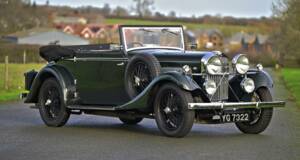
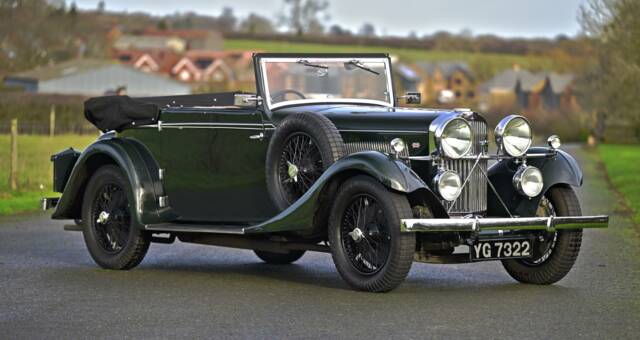

Talbot H75 Classic Cars: Prices & Market Values
History of the Talbot H75
Produced in the mid-to-late 1930s, the Talbot H75 represents a significant period in Talbot's Franco-British history. During this era, Talbot was establishing itself as a premium vehicle manufacturer in both France and the UK, often blending technical innovation with sophisticated styling. The H75 was among the models that underscored Talbot’s transition from the straightforward post-war designs of the 1920s to the more advanced, comfort- and performance-oriented vehicles that defined the pre-war years. Its introduction coincided with Talbot’s efforts to appeal to both private customers seeking luxury and sporting qualities and the professional driver desiring reliability and robust engineering.
Model History
The H75 drew from earlier Talbot six-cylinder models while integrating technical advancements of the mid-1930s. It succeeded models like the Talbot M67, inheriting their proven chassis designs but featuring a newly developed engine and more advanced suspension. While the H75 was eventually followed by the larger and slightly more modern H90, it remains recognised for perfectly capturing the blend of pre-war luxury and technical sophistication that defined Talbot's offerings in that decade. The H-series itself is notable for bridging the gap between the more utilitarian Talbots of the late 1920s and the increasingly exclusive and innovative models immediately preceding World War II.
Highlights of the Talbot H75
Distinctive for its long bonnet, sweeping wings, and streamlined coachwork, the H75 was often bodied by renowned specialists offering a degree of individualisation rare amongst contemporaries. Highlights include the smooth functioning 6-cylinder engine, a notably quiet ride for the era, and hydraulic brakes, which were considered advanced on a 1930s luxury vehicle. This blend of French elegance and British mechanical reliability earned the Talbot H75 a niche following among connoisseurs of interwar automobiles.
Technical data
Special Editions and Collectible Models
The H75 was often supplied as a rolling chassis to be bodied by traditional coachbuilders, such as Figoni & Falaschi or James Young. Special bodied examples from these ateliers, especially custom coupés or cabriolets, are sought after due to their rarity and the craftsmanship involved. Some bespoke bodies included unique trim specifications, two-tone paintwork, and special upholstery materials, further increasing their desirability with collectors and marque specialists.
Weak Spots and Common Issues
While the H75 boasts a reputation for reliable mechanicals, several aspects warrant close inspection. A key concern for prospective owners is the maintenance state of the inline-six engine, which, like many period units, demands regular oil changes and careful monitoring for cylinder head gasket leaks. Hydraulic brake systems, though advanced, can be prone to corrosion if not properly serviced. The model’s coachbuilt bodies are susceptible to rust, particularly in the frame sills and wheel arches, so thorough inspections of structural integrity and evidence of previous restoration are essential for anyone considering purchase or restoration.
Engine and Performance, Transmission and Handling
The Talbot H75’s straight-six engine was engineered for both smoothness and dependable torque, making it especially suited to effortless touring over long distances. The chassis design featured a sturdy frame with semi-elliptical springs, providing comfort over challenging surfaces typical of pre-war European roads. Later examples with independent front suspension exhibited more refined handling characteristics. Manual gearboxes, typically a 4-speed unit, allowed drivers full control over the power band, a trait appreciated by enthusiasts. Coachbuilt coupés and drophead coupé variants are most frequently noted among listed H75s, largely due to their combination of open-air motoring with the model’s signature engineering. Original period conversions and unrestored survivors, when available, are highly regarded by connoisseurs for their authenticity and patina.
Interior, Comfort, Exterior and Design
H75s were renowned for their elegant and often bespoke interiors, with finely upholstered seats, veneered wood dashboards, and art deco instrument clusters. Special materials such as burled walnut trim and mohair headlinings appeared on more luxurious build-to-order bodies. Exterior lines followed the sweeping, aerodynamic cues emerging in 1930s French motoring, with prominent grilles, flowing wings, and occasionally extravagant two-tone paint schemes. Some coachbuilders integrated sunroofs, custom luggage mounts, or unique bumpers to further distinguish their interpretations of the H75. Factory options and bespoke accessories included fitted toolkits, illuminated gauges, and additional driving lamps for long-distance touring.
Other relevant features
Many H75 owners sought period-correct accessories, such as Talbot-branded radiator mascots or Jaeger dashboard clocks, to complete the authentic 1930s motoring experience. Surviving documentation, such as original logbooks or coachbuilder correspondence, adds further historical significance to individual vehicles.
Summary
The Talbot H75 is a testament to the interwar era’s unique blend of technical progress and style. Enthusiasts are drawn to the model for its mechanical reliability, ride quality, and the individualism of its coachbuilt bodies. As a rare piece of pre-war automotive history, the H75 stands out in the classic car world for those seeking originality, bespoke craftsmanship, and a tangible link to Talbot’s golden era.