- Car
- Talbot (5 offers)
Buy Talbot Classic Cars
Talbot is one of the rare marques that can mean two entirely different collector experiences: a coachbuilt Talbot-Lago for concours-level money, or a rally-bred Sunbeam Lotus that suits Australian enthusiasts unusually well. On Classic Trader, you can track Talbot classics across both ends of that spectrum and buy with a clearer view of prices, import costs and local registration realities.
Search results

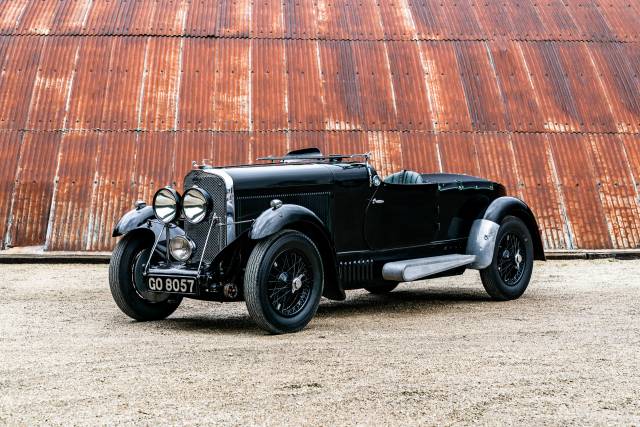
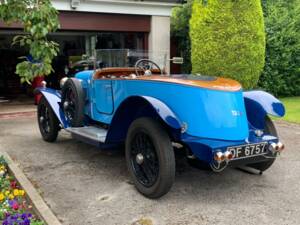
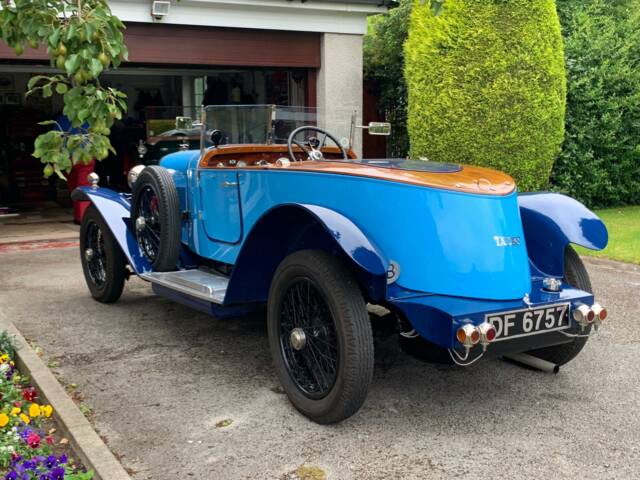
1931 | Talbot AM 90
AO75/90 "GO8057"

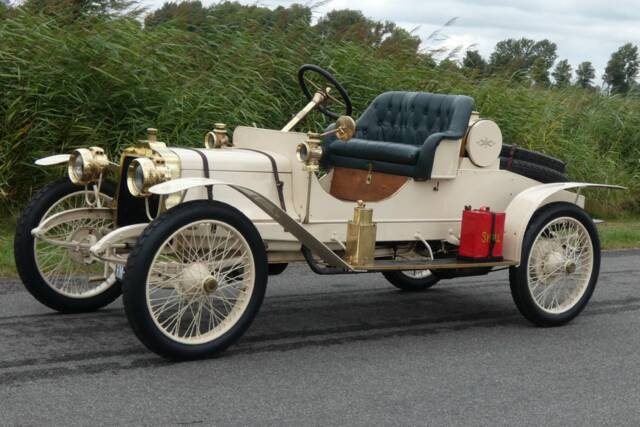
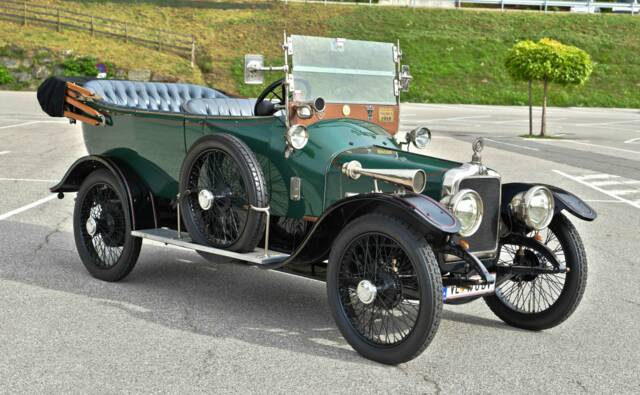
1910 | Talbot 12 hp
Good driving Brass car !


Newsletter
The best Talbot listings, straight to your inbox
Get hand-picked Talbot listings, plus the best of cars, motorbikes, and auctions on Classic Trader — all in one place.

Talbot listing references from Classic Trader
Below you will find listings related to your search that are no longer available on Classic Trader. Use this information to gain insight into availability, value trends, and current pricing for a "Talbot" to make a more informed purchasing decision.

1979 | Talbot Simca 1150
MATRA-SIMCA BAGHEERA S TROFEO (1979) ISCRITTA ASI CON C.R.S. – CONSERVATO – SUPERPREZZO

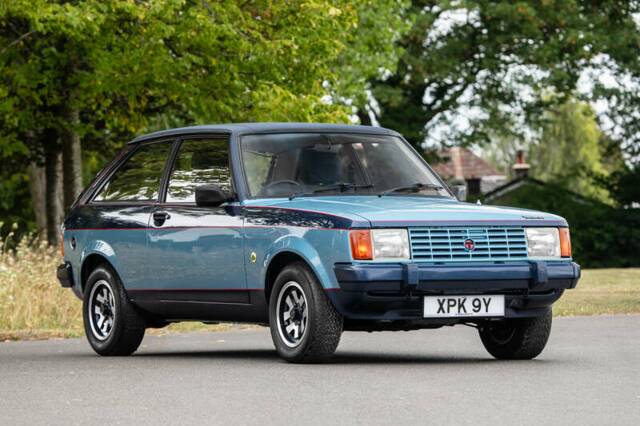
1983 | Talbot Sunbeam Lotus
1983 Talbot Sunbeam Lotus 'Avon Limited Edition'

1961 | Talbot Solara
SIMCA ARONDE MONTHLERY - ISCRITTA FIVA – SICURA RIVALUTAZIONE – RARA (1961)
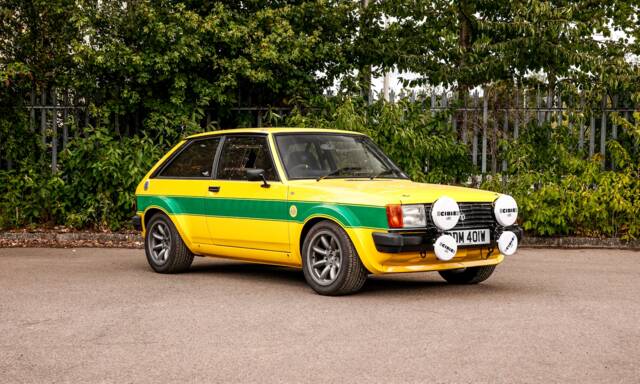
1981 | Talbot Sunbeam Lotus
1981 Talbot Sunbeam Lotus 'Tolman Special'
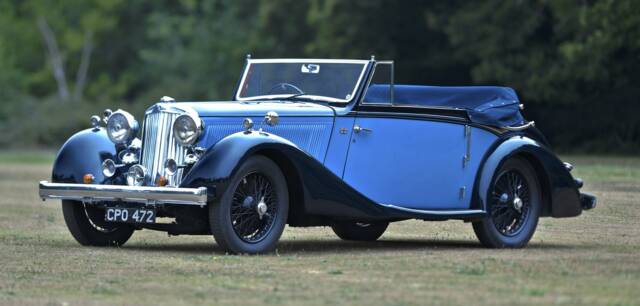
1936 | Talbot T 110
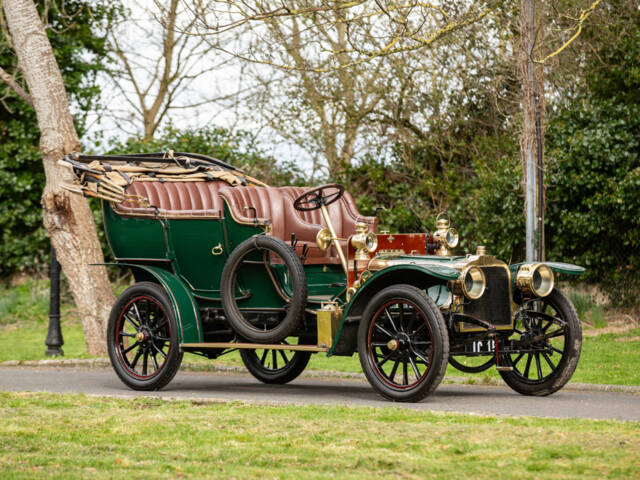
1905 | Talbot 15 HP
1905 Clément-Talbot Model 4VB 15 HP Tourer
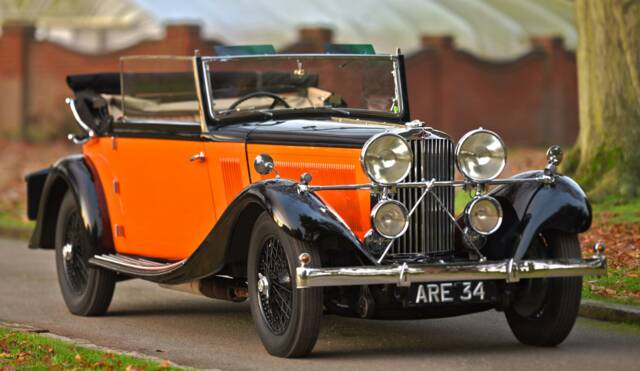
1934 | Talbot BA 105 Sports Tourer
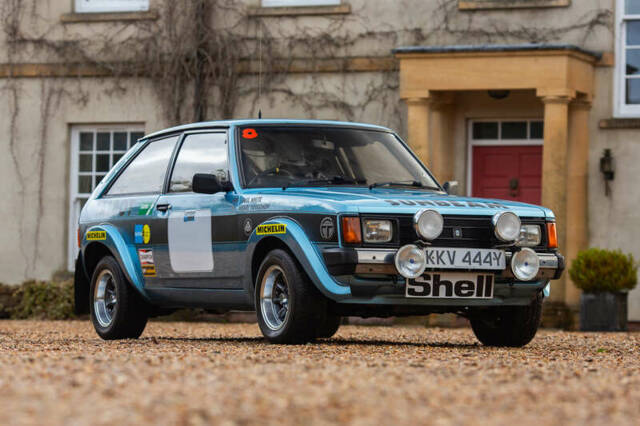
1982 | Talbot Sunbeam Lotus
1982 Talbot Sunbeam Lotus Series 2 'Group 4' Works Tribute
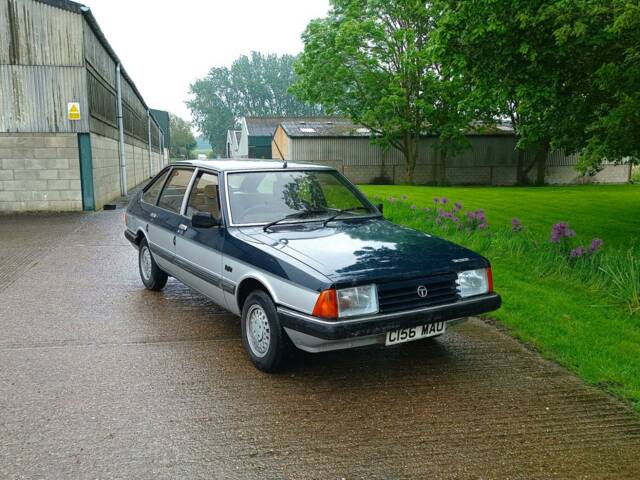
1985 | Talbot Alpine
TALBOT ALPINE
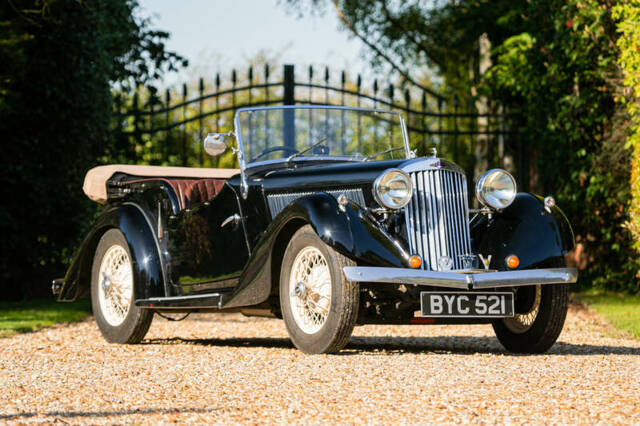
1936 | Talbot T 110
1936 Talbot Ten 10hp Sports Tourer
History & Heritage
For Australian buyers, Talbot is not a simple marque. It is a name that sits across several eras, several countries and several completely different collector logics. That is exactly why it remains interesting. A Talbot search can lead you to a pre-war Art Deco masterpiece, a post-war French grand routière, a British-built World Rally Championship hero, or a clever early-1980s oddball from the last years of the PSA-Talbot experiment.
The story begins in 1903, when cars connected with Clément-Talbot started to establish the Talbot name in Britain. Later, through the Sunbeam-Talbot-Darracq orbit, the marque became tied to a broader Anglo-French industrial history. For collectors today, the decisive turning point came in 1935–1936, when Antonio Lago took over the French Talbot operation at Suresnes. From that moment, Talbot-Lago became one of the great names in high-end French performance motoring.
The first pillar of Talbot collecting is the T150 family. On the right chassis, and with Figoni et Falaschi coachwork, it produced the famous Teardrop Coupés that remain among the most celebrated shapes in car design. Around 16 such Teardrop coupés were built, each handmade and each a little different. For the Australian market this matters because Talbot is not merely another obscure pre-war badge; at its best it occupies the same conversation as Delahaye, Delage and Bugatti, with values to match.
The second pillar is the post-war T26 line, especially the Talbot-Lago T26 Grand Sport. It carried Talbot’s racing credibility into the late 1940s and early 1950s and linked road-going prestige with genuine competition pedigree. The marque’s 1950 Le Mans win gave Talbot-Lago lasting authority. These were not just expensive luxury cars; they were fast, sophisticated, six-cylinder French thoroughbreds with Wilson pre-selector gearboxes, bespoke coachwork and a level of individuality that modern buyers rarely find outside the top tier of collector cars.
Then the narrative changes completely. After Talbot-Lago faded and the name passed through Simca and then Chrysler Europe, PSA Peugeot-Citroën revived Talbot in 1979. This second life produced mainstream hatchbacks and saloons, but for collectors three cars matter far more than the others: the Talbot Sunbeam Lotus, the Talbot Samba Cabriolet, and the Talbot-Matra Murena.
The Sunbeam Lotus is the key Australian Talbot. Built from 1979 to 1981, it combined a short rear-wheel-drive hatch shell with Lotus engineering and a 2.2-litre 16-valve twin-cam. Total production was 2,308 cars, with 1,184 in right-hand drive. That RHD figure is crucial. Many classic Talbots are naturally left-hand drive and therefore more complicated for Australian registration plans, but the Sunbeam Lotus was born with the steering wheel on the correct side for buyers sourcing from the UK. Add the 1981 World Rally Championship for Makes and it becomes obvious why this is the Talbot most likely to find a home in an Australian shed.
The Samba Cabriolet represents the softer side of late Talbot. Designed and built with Pininfarina, it gave the marque a chic, lightweight convertible at the very end of the line. 13,062 cabriolets were built, out of 270,555 Sambas overall. It is not a high-horsepower collector car, but it is a distinctive one: small, elegant, French-Italian in flavour and still affordable enough to tempt buyers who want something unusual rather than obvious.
The Talbot-Matra Murena is the engineer’s Talbot. Mid-engined, three seats abreast, galvanised chassis, composite body, and genuine everyday usability by early-1980s standards. Total Murena production reached 10,680, including 480 examples of the stronger 2.2 S. It is one of those cars that makes experienced enthusiasts smile because the concept is so strange and so rational at once.
At make level, those five cars define the Talbot collector case in Australia: T150 Teardrop, T26 Grand Sport, Sunbeam Lotus, Samba Cabriolet, and Murena. Together they explain why the Talbot badge still attracts serious buyers even though the name itself disappeared from new passenger cars decades ago.
Highlights & Collector Appeal
Talbot works for buyers who like variety but still want authenticity. Most marques become collectible for one reason. Talbot becomes collectible for several.
The Talbot-Lago T150 sits at the top because it offers design prestige few cars can match. These are not merely rare coachbuilt machines; they are museum-grade objects with racing blood, and that combination gives them extraordinary international demand. Australian buyers will rarely shop one casually, but it is important to understand that the Talbot name carries this level of cachet.
The T26 Grand Sport is special for a different reason. It is still elite, still expensive, but more about drivable grand touring than pure sculptural myth. A good T26 combines a large-capacity six, pre-selector gearbox and coachbuilt exclusivity with genuine distance-covering ability. In a market full of obvious post-war exotics, it remains deliciously non-obvious.
The Sunbeam Lotus is the practical collector’s Talbot. It has clear rally history, strong club support, parts pathways through specialist UK suppliers, and a format Australians already understand: compact performance hatch, rear-wheel drive, period motorsport credentials. It is also one of the few Talbots whose RHD supply base is deep enough to make import planning feel realistic rather than heroic.
The Samba Cabriolet appeals because it does not try too hard. It is light, compact, stylish and genuinely uncommon. For Australian buyers who already know the usual small convertibles from the 1980s, the Samba feels fresh. Its Pininfarina link gives it status beyond its modest badge.
The Murena remains the connoisseur choice. Three-abreast seating sounds like a gimmick until you see how neatly it works. The mid-engine layout, low drag body and galvanised structure make it far more technically interesting than its market value still suggests. If you want a Talbot that knowledgeable people will walk across a show field to inspect, the Murena does that.
Across the marque, several strengths repeat:
- Talbot spans both blue-chip and accessible collecting. Very few makes let you choose between a multi-million-dollar concours car and an affordable 1980s homologation special.
- Coachbuilding pedigree is real. Figoni et Falaschi, Saoutchik, Franay, Barou and Pininfarina are not decorative footnotes; they define Talbot value.
- Motorsport history matters. Talbot won at Le Mans and in the WRC, which gives the marque credibility across completely different eras.
- Australian relevance exists. The Sunbeam Lotus is especially well aligned with local historic rally, club and fast-road culture because RHD cars, UK parts support and period competition knowledge are all easier to access than with many continental oddities.
Technical Data
The table below focuses on the Talbot models most relevant to make-level collecting.
For buyers, these numbers tell a useful story. Talbot is not mechanically consistent across eras, so you should buy the kind of Talbot you actually want. The T150 and T26 are coachbuilt six-cylinder prestige machines that demand specialist knowledge and specialist money. The Sunbeam Lotus is the focused driver’s car. The Samba is the lightweight lifestyle classic. The Murena is the technical outsider.
Market Overview & Buying Tips in Australia
For Australian buyers, the Talbot market divides into two lanes: rare European imports with serious landed cost, and UK-sourced RHD performance cars that fit local enthusiast culture much more naturally.
The good news is regulatory. Under Australia’s Road Vehicle Standards framework, vehicles 25 years and older can use the concessional older-vehicle pathway, provided you secure import approval before shipping. That helps every significant Talbot here. The catch is that federal approval is only part of the job. State registration authorities still control the practical outcome, and that is where roadworthy inspections, lighting, belts, tyres, historic reg conditions and left-hand-drive rules matter.
For a Talbot-Lago, the biggest question is rarely whether you can import it. It is whether you want to absorb the total cost. On a high-value French car, freight, marine insurance, customs handling, cleaning and port charges are only the beginning. Australian buyers also need to model 5% duty and 10% GST where applicable, plus restoration or recommissioning risk after arrival. On a car worth seven figures overseas, that arithmetic becomes serious very quickly.
The T150 sits in true blue-chip territory. A 1938 Talbot-Lago T150 C Lago Spéciale Teardrop Coupé by Figoni et Falaschi sold at Broad Arrow Villa d’Este 2025 for US$3,606,250, which is roughly A$5.5 million before import costs. Classic Valuer’s 2026 T150 market guide also records a January 2026 sale at £5,890,360 and an August 2024 result at £5,942,348 for top-level T150 examples. That is Australia-house money before the car even touches a wharf. These are not purchases; they are portfolio decisions.
The T26 Grand Sport is less extreme but still far beyond ordinary collector budgets. Classic Valuer’s 2026 T26 Grand Sport guide records a 1949 T26 Grand Sport Coupé by Jean Barou sold by RM Sotheby’s in July 2024 for £1,931,824. The same source shows a 1954 T26 GSL at £818,985 in 2024. In Australian dollars that means roughly A$1.7 million to A$4.0 million before shipping, taxes and any local compliance work. Even more modest T26 derivatives listed on Classic Trader already sit well into six-figure territory.
For most Australian buyers, the important Talbot is the Sunbeam Lotus, because it is the one where market logic and local usability overlap. Recent public evidence is strong. Iconic Auctioneers sold a 1982 Talbot Sunbeam Lotus for £33,750 in June 2024, a 1983 Series 2 for £58,500 at Race Retro 2025, and a 1983 Avon Limited Edition for £37,688 in November 2025. That roughly translates to about A$69,000, A$120,000 and A$77,000 before landed costs, depending on exchange rate. On Classic Trader, a 1980 Sunbeam Lotus carried a €25,000–30,000 estimate in 2026, and older Classic Trader reference prices on the AU domain show Australian-dollar market visibility as well. The message is clear: the best original or freshly restored Sunbeam Lotus cars are no longer cheap.
Why does the Sunbeam Lotus make particular sense in Australia? First, RHD. Second, the car’s temperament suits local fast-road and historic-rally culture. Third, the knowledge base is unusually healthy. The Sunbeam & Talbot Car Club Victoria explicitly includes Talbot Sunbeams and Lotus cars, while the Sunbeam Owners’ Club of NSW also supports the model. That matters because club knowledge often saves buyers from expensive mistakes.
The Samba Cabriolet remains the entry-level Talbot with style. Classic Valuer’s 2026 Samba guide shows a 1986 Samba Convertible sold for £4,160 in May 2025, while current asking prices in Europe sit around €4,900 to €6,750 for tidy usable cabriolets. Old Classic Trader AU references have shown Samba convertibles around A$7,000–10,000. That sounds attractive, but Australian buyers must remember the trap: a cheap Samba can become expensive once freight, trimming work, hood repairs and missing body fittings enter the picture.
The Murena is still comparatively undervalued. Iconic Auctioneers sold a 1981 Talbot-Matra Murena 2.2 for £7,875 in March 2025, while Aguttes sold a 1984 Murena 2.2 S for £16,329 in October 2025. That is roughly A$16,000 to A$33,000 before import costs. On paper that makes the Murena look affordable, and often it is. But buyers should budget for specialist attention to cooling, electrics, carburation and chassis-adjacent inspection points rather than assuming all the savings are real.
Australian buying realities
For Talbots sourced from the UK or Europe, many Australian importers budget several thousand Australian dollars before taxes just for freight, insurance, cleaning, broker and port-related costs; with container-based European imports, the real outlay often lands far above the headline shipping quote. Add duty and GST where payable, and the smartest approach is to calculate landed cost first, romance second.
The RHD advantage is decisive for the Sunbeam Lotus. A UK-market car can often be imported with fewer registration headaches than an LHD continental Talbot. For Talbot-Lago cars, LHD may be perfectly acceptable for historic use depending on state rules, but buyers should confirm that path before purchase, especially if the plan is anything beyond limited club registration.
Inspection priorities differ by model:
- Talbot-Lago T150 / T26: confirm matching chassis and engine numbers, coachbuilder provenance, restoration invoices, and gearbox health. On top-end French cars, documentation is value.
- Sunbeam Lotus: check for shell corrosion, correct Lotus engine spec, gearbox condition, authenticity of trim and decals, and whether the car has been converted into a tribute or modified ex-rally special.
- Samba Cabriolet: inspect sills, floors, hood frame, water sealing and trim completeness. Mechanical parts are easier than body-specific details.
- Murena: inspect rear suspension arms, cooling system, electrics, carb setup and evidence of proper corrosion prevention, even though the galvanised structure is a major strength.
For Australians, the brand-wide rule is simple: buy the best documented Talbot you can afford. Every missing part is farther away than you think.
Driving Experience
Driving a Talbot is less about one brand character than about choosing which Talbot personality you want to inhabit.
The T150 feels like motion turned into sculpture. Even at low speed, the view down the bonnet, the delicacy of the cabin and the sense of mechanical ceremony make it obvious that this is a pre-war thoroughbred. It is not modern-fast by contemporary standards; it is something better than that. It feels important.
The T26 Grand Sport adds depth and strength. The big six has a muscular, aristocratic delivery and the Wilson pre-selector demands rhythm rather than haste. Once you adapt, the car starts to make sense as a grand touring machine rather than a museum relic. It is one of those rare post-war cars that can feel both imposing and intimate at the same time.
The Sunbeam Lotus is all business. It is compact, alert, noisy in the right way and alive under load. The short wheelbase and rear-drive balance give it the sort of adjustability modern hot hatches largely edited out. In Australia, where a great many enthusiasts already understand Escort RSs, Toranas, Datsun 1600s and homologation-era specials, the Sunbeam Lotus feels immediately legible. It is not soft, and that is the point.
The Samba Cabriolet is the opposite. Light controls, modest power, open roof and small dimensions make it a car for back-road charm rather than attack. If you approach it as a miniature grand tourer with French-Italian style, it is delightful.
The Murena is the surprise. The seating position is low, the visibility good, and the balance far more confidence-inspiring than its rarity suggests. It does not shout for attention like a Lotus-badged hatch; instead it wins people over through cleverness.
Design & Coachwork
Talbot design history is one of the broadest in the collector world.
At the top sit the Figoni et Falaschi Talbot-Lagos, where streamline styling, French luxury and visual daring reach their peak. These cars are not merely elegant; they are foundational to how many historians define the golden age of coachbuilding. A Talbot buyer at this level is also buying into concours culture, provenance and decorative arts history.
The post-war T26 Grand Sport shifts from pure pre-war theatre to a more mature sort of glamour. Cars by Saoutchik, Franay, Dubos Frères and Barou show how Talbot could still give French coachbuilders a canvas for individuality even in a harsher economic moment.
The later cars tell a different design story. The Sunbeam Lotus is not beautiful in the classical sense, but it is exactly right as a homologation-era tool: boxy, compact, aggressive and honest. The Samba Cabriolet is prettier than its origins suggest, because Pininfarina understood proportions and restraint. The Murena, meanwhile, looks like a rolling case study in aerospace-era optimism, which makes sense given Matra’s background.
That evolution is part of Talbot’s appeal. A buyer can move from Art Deco sculpture to square-arch rally attitude without ever leaving the marque.
Motorsport, Clubs & Australian Context
Talbot’s competition record gives the brand far more authority than its modest survival rate in Australia might suggest.
Talbot-Lago mattered in early post-war racing and scored its biggest headline with the 1950 Le Mans victory. That single result still shapes how buyers see the T26: not as a static luxury object, but as a road car tied directly to a meaningful competition story.
The Sunbeam Lotus gave Talbot a completely different kind of glory. Its 1981 WRC manufacturers’ title remains one of the great giant-killing stories of rallying. For Australian enthusiasts, that matters because our local collector culture has always had room for homologation specials, gravel-bred heroes and compact performance cars with a proper reason to exist.
Local support is stronger than many assume. In Victoria, the Sunbeam & Talbot Car Club covers Talbot Sunbeams and Lotus cars. In New South Wales, the Sunbeam Owners’ Club also welcomes the model. For earlier cars, the STD Register Australia helps keep the pre-war and immediate post-war history alive. That club network is important because Australian Talbot ownership is rarely about walking into a local parts counter. It is about relationships, archives, cross-border sourcing and knowing who has already solved the problem you are about to pay for.
There is also a specifically Australian reason the Sunbeam Lotus stands out: it fits the country’s event culture. Historic rallies, regularity events, club runs and period-themed motorsport all reward a car that is compact, charismatic and mechanically understandable. A left-hand-drive Talbot-Lago may be a major collection piece, but a right-hand-drive Sunbeam Lotus is the Talbot you can imagine actually using.
Summary
To buy a Talbot in Australia is to choose between very different but equally legitimate collector paths.
If you want elite French coachbuilt history, the T150 and T26 Grand Sport deliver it at the highest level, but they demand serious capital and equally serious due diligence. If you want the Talbot that best fits Australian enthusiast life, the Sunbeam Lotus is the standout thanks to RHD availability, WRC heritage and strong club support. If you want value with style, the Samba Cabriolet and Murena remain the marque’s most interesting accessible buys.
The central buying lesson is simple: Talbot is a marque where provenance, originality and landed cost matter more than badge familiarity. Get those three right, and a Talbot can be one of the most rewarding non-obvious purchases on the market.