- Car
- Spyker (2 offers)
Buy Spyker Classic Cars
Spyker built some of the most theatrical hand-made supercars of the 2000s: aluminium spaceframes, Audi V8 power, and a cockpit that feels like an aircraft. In Australia they are almost mythical, especially in right-hand drive, which makes every Spyker a true collector’s event.
Search results


2005 | Spyker C8 Spyder
just 6,700 km



2009 | Spyker C8 Laviolette
Spyker C8 4.2 Laviolette LM85 "№ 01 of 14" № 01 of 14 LM85 editions produced, Original factory "new" condition - 7651 kilometres from new, Finished in the unique LM85 livery of Burnt Almond Orange and Gun Metal, Homage to Spyker's Le Mans racing history, Accompanied with the full delivery package and extensive documentation, When quality and perfection almost overrides everything else

Auctions ending soon

Loading…
Loading…
Loading…
Loading…
Spyker listing references from Classic Trader
Below you will find listings related to your search that are no longer available on Classic Trader. Use this information to gain insight into availability, value trends, and current pricing for a "Spyker" to make a more informed purchasing decision.
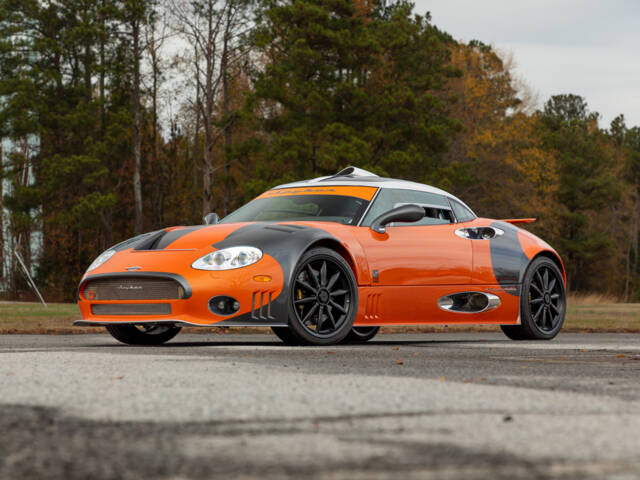
2009 | Spyker C8 Laviolette
2009 Spyker C8 LM85

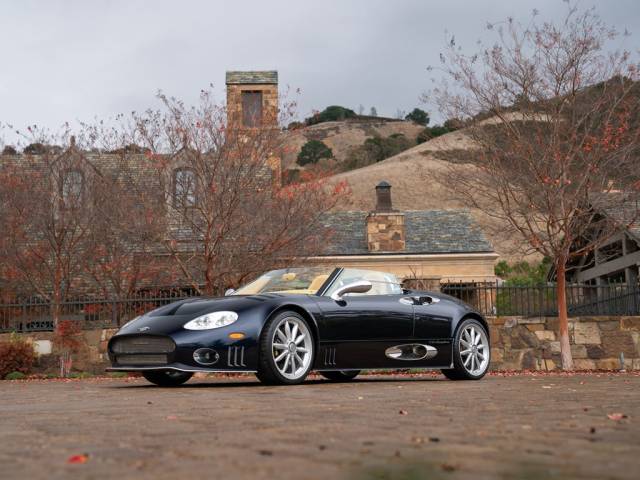
2009 | Spyker C8 Spyder
2009 Spyker C8 Spyder
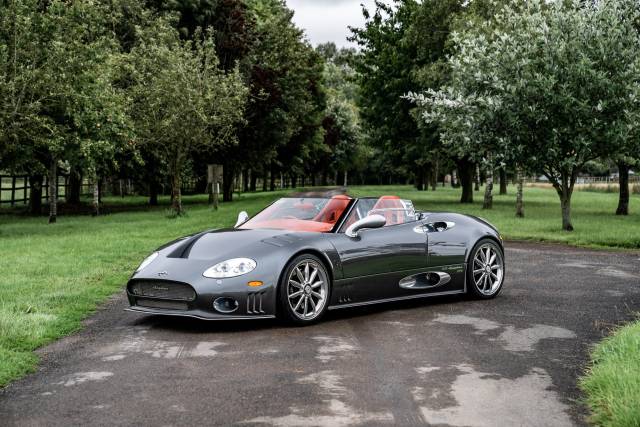
2008 | Spyker C8 Spyder
1 of 8 RHD examples built
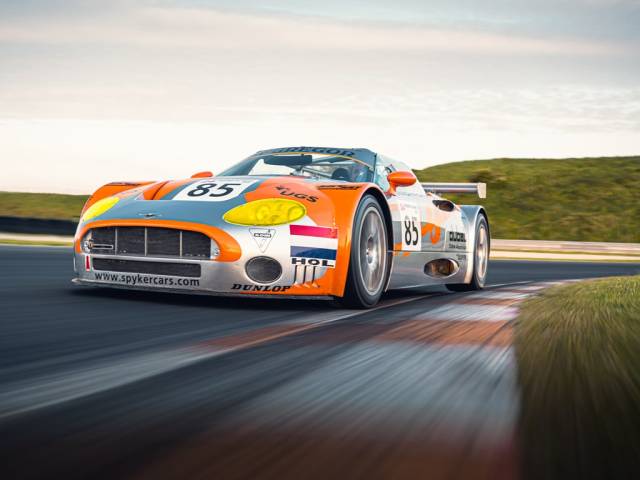
2005 | Spyker GT2-R Spyder
2005 Spyker C8 GT2-R
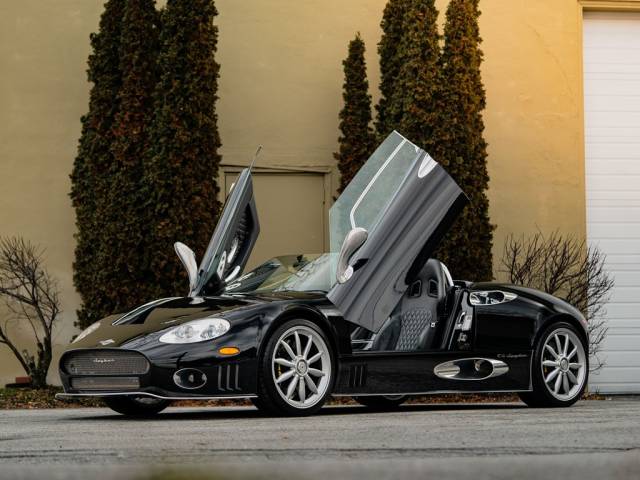
2006 | Spyker C8 Spyder
2006 Spyker C8 Spyder
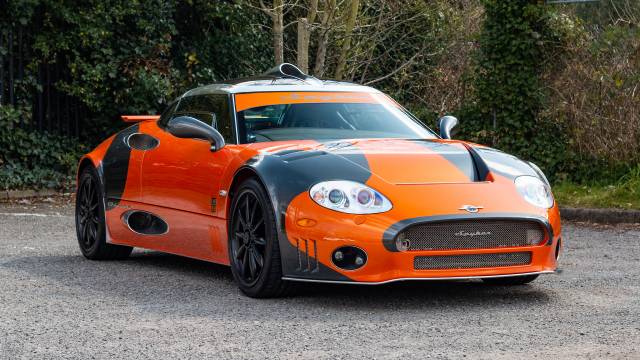
2010 | Spyker C8 Laviolette LM85
LM85 LIMITED EDITION 1 of 15
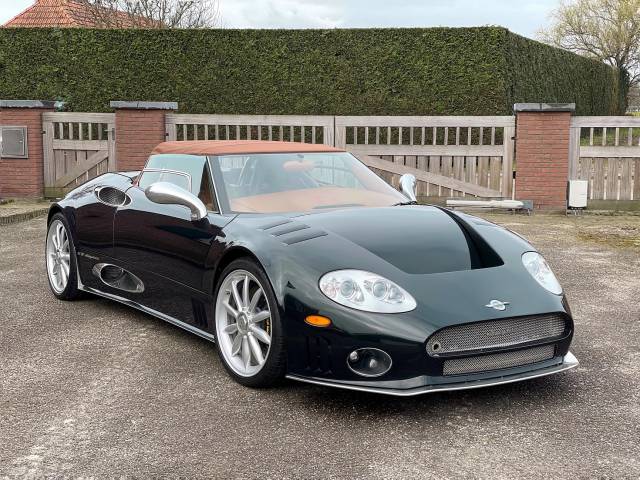
2006 | Spyker C8 Spyder
One-Off - Brand New
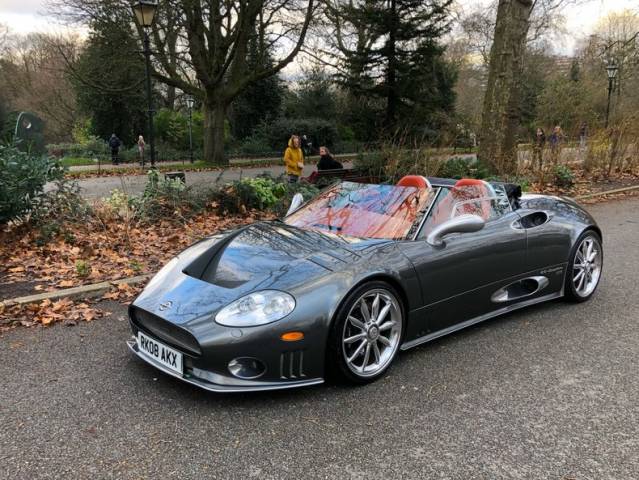
2008 | Spyker C8 Spyder
2008 Spyker C8 Spyder
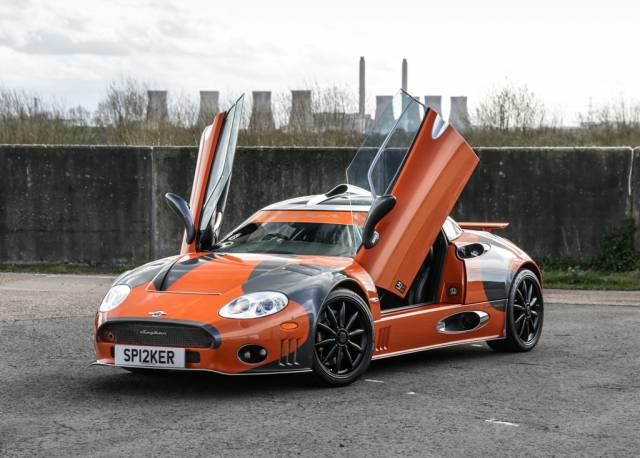
2012 | Spyker C8 Laviolette LM85
Spyker C8 Laviolette LM85
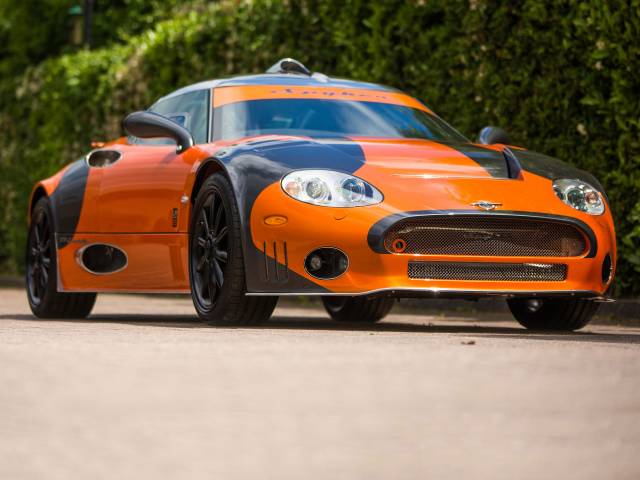
2010 | Spyker C8 Laviolette LM85
2010 Spyker C8 Laviolette LM85
History
Spyker is one of those marques that seems to have been invented by a novelist with a taste for aviation, steam power and silver-screen drama. The name goes back to 1880, when the Spijker brothers founded a coachbuilding business in the Netherlands. By the end of the 19th century they had moved from horse-drawn vehicles to automobiles, and by 1903 Spyker had already written itself into the history books with the 60 HP Grand Prix Racer: a six-cylinder, four-wheel-drive racing car with four-wheel brakes, and one of the first truly advanced performance cars of its era.
That early company did not survive the 1920s, but the name and the emblem endured. The modern Spyker story began when Victor Muller and Maarten de Bruijn revived the brand around 1999/2000, building a new sports car around a strong emotional idea: make a car that looks and feels like a piece of aviation hardware, but delivers the usability of a road car. The result was the C8 Spyder, launched in 2000, followed by the C8 Laviolette in 2001 with its fixed glass roof.
The recipe was instantly distinctive. Spyker used an aluminium spaceframe, hand-formed bodywork and the proven Audi 4.2-litre V8 as the heart of the car. It was a clever move: the engine was familiar enough to support reliability and parts supply, yet the chassis, body and interior were so unusual that the whole car felt like a bespoke creation. The early C8 family built Spyker’s reputation as a tiny, fiercely independent alternative to Ferrari, Lamborghini and Porsche.
Motorsport also mattered. Spyker entered the 24 Hours of Le Mans with the C8 Double 12R, and later returned with GT2 cars. The brand even had a brief and chaotic spell in Formula 1 after buying the Midland team in 2007. That F1 adventure was short-lived, but it reinforced Spyker’s image as a maker of ambitious, uncompromising machines.
The later cars continued the same philosophy. The C8 Aileron arrived in 2009 with a longer wheelbase and more mature surfacing, while the C8 Preliator (revealed in 2016) added a supercharged version of the Audi V8, more carbon fibre, and a more modern cockpit. Spyker’s modern output remained tiny, and the company’s repeated financial struggles only made the cars more desirable as collectibles.
For Australian buyers, the story becomes even more exotic. Spyker is rare anywhere, but in Australia it is almost unseen. A genuine Australian-delivered right-hand-drive Spyker would be exceptionally unusual, because the brand’s production numbers were tiny and most cars were sold into Europe, the UK and North America. That means import planning matters: buyers need to think about compliance, Australian Design Rules (ADR), quarantine, specialist transport, insurance and, depending on the purchase price, Luxury Car Tax (LCT). In short, Spyker ownership in Australia is not a simple purchase; it is a proper collector project.
Highlights
Spyker’s appeal is not subtle. It is a brand for buyers who want their supercar to feel hand-built, unusual and slightly defiant. The cars are all about visible craftsmanship, aircraft-inspired detail and rarity that is almost impossible to replicate.
Key Spyker strengths:
- Hand-built character: Spyker interiors look like jewellery, with turned aluminium switchgear, exposed fasteners and aviation references everywhere.
- Audi V8 foundation: the 4.2-litre V8 gives the cars a solid mechanical base and better parts support than many low-volume exotics.
- Aluminium spaceframe: light, rigid and appropriate for a high-end coachbuilt sports car.
- Scherentüren: the scissor-style doors give every Spyker the kind of theatre buyers expect at this level.
- Tiny production numbers: the modern Spyker run is counted in low hundreds, and some versions were built in only double digits.
- Design originality: there is nothing generic about a Spyker. Even parked among other supercars, it looks like a concept car that escaped into production.
The most important collector-era models are the C8 Spyder, C8 Laviolette, C8 Double 12S, C8 Aileron and C8 Preliator. For many buyers, the first-generation cars are the purest expression of the idea, while the Aileron and Preliator bring more polish and more usable equipment.
For the Australian market, the highlights are slightly different. A Spyker is not a car you buy because it is easy to live with in Sydney traffic or practical for country runs. You buy it because it is a statement piece with genuine engineering depth. In Australia, that matters even more because supply is so scarce. A Spyker in a local collection will stand out at any concours, private club event or Cars and Coffee gathering. It is the kind of car that gets everyone asking the same question: “How on earth did you get that here?”
Technical Data
The core engineering recipe stayed remarkably consistent. Spyker used Audi’s 4.2-litre V8 because it offered a strong blend of performance, sound and parts availability. That matters for ownership: the cars are exotic, but the engine itself is not a one-off science project. The hard part is everything around it — the chassis packaging, cooling, electronics, trim, bodywork and unique Spyker-specific components.
The C8 Spyder is the original statement, with the purest proportions and the least diluted design language. The Laviolette adds the famous glazed roof, which gives the car a more dramatic silhouette and a brighter cabin. The Aileron is larger and more grown-up, while the Preliator adds modern materials and a more contemporary feature set.
For an Australian import, the technical questions go beyond performance figures. The buyer should confirm whether the car is already compliant for local registration, whether it is converted to RHD, how the lighting and seat-belt systems match ADR expectations, and whether the import paperwork is complete. On a car this rare, small errors in documentation can become expensive delays.
Market Overview
Spyker sits in a very unusual market position. It is rare enough to be a collector car, fast enough to be a supercar, and hand-built enough to attract buyers who normally shop for coachbuilt or low-volume exotics. That combination has kept values strong, especially for low-mileage and highly original cars.
Recent public auction and market data from 2024–2026 show just how tight the market is:
- C8 Spyder: roughly €250,000–€575,000. A 2009 car sold at RM Sotheby’s in Arizona in 2024 for about US$401,000. Bonhams sold the last-built C8 Spyder in 2024 for €575,000. Another 2005 example changed hands in 2025 for €333,500.
- C8 Laviolette: roughly €250,000–€582,500. RM Sotheby’s Monterey 2024 produced a result of US$582,500 for a 2008 example with ultra-low mileage, one of the strongest Spyker results on record.
- C8 Aileron: roughly €350,000–€630,000. Public auction data has shown results well above €450,000, and a 2014 Aileron Spyder recorded a high result above US$630,000 in 2024.
- C8 Preliator: roughly €400,000–€550,000+. Market transparency is limited because most cars trade privately.
Converted roughly into Australian dollars, those numbers place the better cars in the A$400,000 to A$950,000+ range depending on model, mileage, provenance and exchange rate. In Australia, the final landed cost can rise further once you include international transport, compliance work, GST, customs clearance, brokerage and possibly LCT.
The local market adds another layer: there are extremely few Spyker cars in Australia, and likely only a handful — if any — in current circulation at a time. That means there is no real domestic price guide. Buyers should expect to shop internationally and budget conservatively. The cost of sourcing an acceptable car from Europe or the UK is only the beginning; the import process can be almost as demanding as the purchase itself.
The best cars are the ones with complete service history, clear chassis documentation and original specification. Because Spyker is so unusual, provenance carries a premium. Mileage matters, but originality and condition matter even more. For a collector, a documented, well-kept car with the right colours and options will usually be worth more than a cheaper car that needs a lot of work.
Australian buying reality
Buying a Spyker in Australia is a specialist exercise. Key factors include:
- Right-hand drive: factory RHD cars are very rare. If the car is LHD, check whether conversion is legal, practical and economically sensible.
- ADR compliance: imported cars may need inspection, modifications and paperwork before registration.
- LCT exposure: on a high-value exotic, Luxury Car Tax can be material, especially when the landed value is high.
- Shipping and insurance: closed transport, marine insurance and secure storage are essential for an extremely rare car.
- Parts and servicing: the Audi engine helps, but Spyker-specific trim and body parts are specialist items.
Driving Feel
A Spyker does not drive like a mass-produced supercar. It drives like a machine designed by people who cared about texture, sound and mechanical theatre first, and lap times second. That is exactly why enthusiasts love it.
The first thing you notice is the cabin. The aluminium switchgear, the visible fasteners and the aviation-style dashboard create a sense of occasion before the engine even starts. Once the V8 fires, the car feels alive in a very physical way. The sound is muscular and metallic, with a sharp-edged intake note and a proper rear-mid-engine urgency under load.
The manual gearbox is a core part of the experience. It is not always as slick as a German dual-clutch setup, but it suits the car’s personality. You work with the Spyker rather than simply operating it. Steering is direct, the chassis feels light on its feet, and the car rewards smooth inputs. It is a machine that asks you to stay involved.
On the road, the C8 family tends to feel more analogue than modern exotics. The car’s limits arrive with clear signals, and the chassis balance is usually neutral before the rear starts to talk. That makes it entertaining on a scenic B-road, a mountain pass or a good Australian country road. The car’s compactness and visibility also help more than many people expect.
Where it can become tricky is in slow traffic and poor surfaces. Heat management, clutch effort and low-speed manoeuvring are not the Spyker’s strongest points. It is happiest when moving, especially at legal road speeds where the engine can breathe and the chassis can settle.
For Australian conditions, that matters. Long distances, hot summers and patchy regional roads mean the car needs a careful owner. It is not a commute weapon. It is a weekend event car, a tourer for special trips, and a rolling sculpture that happens to be fast.
Design
Spyker design is one of the clearest examples of a brand building a coherent identity from the ground up. The theme is aviation, but not in a lazy decorative way. The design language is structural, mechanical and deeply intentional.
The early cars are the purest examples. The C8 Spyder uses visible rivet lines, exposed aluminium surfaces and a cockpit that looks like it belongs in a vintage fighter aircraft. The Laviolette adds the glass roof and introduces a slightly more sculptural roofline. Both cars use their materials honestly: aluminium looks like aluminium, switchgear looks machined, and the cabin refuses to imitate the architecture of ordinary luxury cars.
The Aileron changed the formula without abandoning it. The body became longer and more flowing, the stance more mature, and the details more restrained. Yet even here, the Spyker identity remains obvious. It still looks handmade. It still looks expensive. It still looks like there were very few compromises.
The Preliator adds carbon fibre and more modern cabin technology, but the brand’s signature touches remain: turned metal, aircraft references, and a cockpit that feels more like a bespoke object than a production car interior. It is rare for a car to look both baroque and precise at the same time; Spyker does exactly that.
For collectors, the design is a major part of the value proposition. A Spyker is not just bought for performance or rarity. It is bought because it looks unlike anything else from the 2000s or 2010s. In Australia, where even major supercars can feel common at high-end events, a Spyker has the power to stop traffic. It is not just rare — it is visually unforgettable.
Other
Weak spots and ownership pitfalls
Spyker’s biggest weakness is not one single fatal flaw. It is the accumulation of small, specialist issues that come with any low-volume hand-built car — and some that are specific to the model’s packaging.
Common areas to inspect:
- Heat management: the Audi V8 is durable, but the tight engine bay can build heat. Check cooling hoses, radiator condition and signs of previous overheating.
- Oil leaks: look for seepage around covers, seals and ancillary components.
- Timing-chain wear: listen for startup rattle and check cold behaviour.
- Electrical gremlins: bespoke wiring, age and low battery voltage can create intermittent faults.
- Suspension wear: bushings, joints and dampers can age badly if the car has sat for long periods.
- Brake wear: high performance and low use can both be a problem; stuck calipers and warped discs are worth checking.
- Trim and interior parts: unique Spyker items can be slow and expensive to source.
Because these cars are rare, service quality matters more than odometer reading alone. A well-documented car with proactive maintenance is usually the better buy. A neglected car can quickly turn into a very expensive restoration project.
Parts and servicing
The Audi engine is the Spyker owner’s best friend. Regular V8 service items are easier to source than the exotic body and cabin parts, which is a huge plus. Still, the car should be treated as a specialist item. In Australia, buyers should identify a workshop willing to work on a low-volume supercar before the car lands, not after.
Private ownership also raises storage questions. These are hand-finished cars with expensive interiors, so humidity control, battery maintenance and regular exercise are all important. A Spyker that sits unused for months at a time can become needy very quickly.
Motorsport and culture
Spyker’s brief F1 story, its Le Mans appearances and its strong visual identity have kept the brand alive in enthusiast memory long after production volumes stayed tiny. The cars have also appeared in films and games, which helped cement their cult status. For many buyers, that cultural footprint matters because it adds context to the ownership experience. You are not just buying a rare car; you are buying one of the few modern exotics with a genuinely eccentric brand story.
Spyker in Australia
In Australia, rarity is multiplied. A Spyker is already uncommon in Europe or the US; here it becomes almost mythical. That makes the ownership proposition both exciting and complicated. The upside is exclusivity on a level few other brands can match. The downside is that you must be prepared to manage compliance, support and resale carefully. For the right buyer, though, that is part of the appeal. This is a car for someone who wants to discover now, not later, what true low-volume ownership feels like.
Summary
Spyker is one of the most distinctive modern classic car brands available to collectors. It combines hand-built craftsmanship, aviation-inspired design and a proven Audi V8 foundation in a package that feels genuinely special.
For Australian buyers, the appeal is even stronger because the cars are so rare here. A right-hand-drive Spyker would be an event; even a carefully imported left-hand-drive example would be a landmark in any collection. The purchase process is more complex than for mainstream classics, with ADR, shipping, compliance and LCT all part of the equation, but that is exactly why these cars attract serious enthusiasts.
Market values remain strong, especially for original cars with low mileage and clear history. Whether it is a C8 Spyder, Laviolette, Aileron or Preliator, every Spyker offers a level of theatre that few cars can match. If you want a supercar that feels handcrafted, rare and unmistakably different, Spyker is one of the most compelling names to buy.