Plymouth Gran Fury classic cars for sale
The Plymouth Gran Fury represents an end point in American rear-wheel drive full-size cars, combining traditional V8 powertrains with the brand's engineering evolution between 1975 and 1989. This series embodies Plymouth’s shift through various vehicle classes, adapting to the changing automotive landscape while maintaining a commitment to classic rear-wheel drive architecture.
Resultados de la búsqueda
Actualmente no hay anuncios que coincidan con su búsqueda.
Create search alert
Let yourself be notified as soon as a listing is published that matches your search filters.
Create listing
Do you have a Plymouth Gran Fury that you want to sell? Then create a listing now.
Create listingPlymouth Gran Fury listing references from Classic Trader
Below you will find listings related to your search that are no longer available on Classic Trader. Use this information to gain insight into availability, value trends, and current pricing for a "Plymouth Gran Fury" to make a more informed purchasing decision.
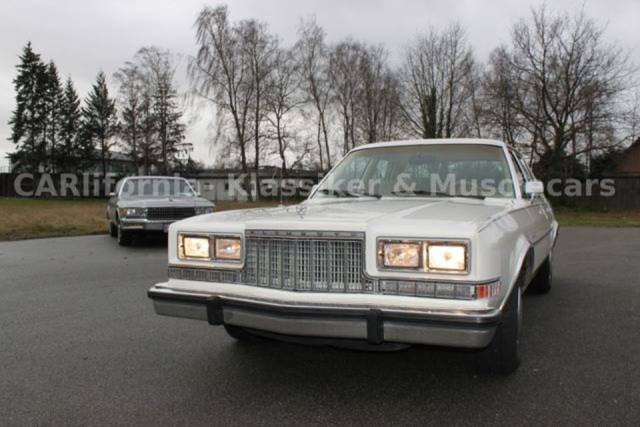
1987 | Plymouth Gran Fury
In gutem Originalzustand
Create search alert
Let yourself be notified as soon as a listing is published that matches your search filters.
Create listing
Do you have a Plymouth Gran Fury that you want to sell? Then create a listing now.
Create listingPlymouth Gran Fury Classic Cars: Prices & Market Values
History of the Plymouth Gran Fury
The Plymouth Gran Fury was introduced in 1975, originally as a full-size offering in the Plymouth lineup. Its introduction came at a time when American carmakers were responding to shifting fuel economy standards and consumer preferences. Repeated downsizings throughout its lifespan shifted the Gran Fury across vehicle segments, reflecting regulatory pressures and the demand for greater efficiency. Despite class repositionings, the model preserved its traditional layout, echoing the classic V8, carbureted, rear-wheel drive formula that had defined the American sedan for decades. Production ran until 1989, marking the end of an era for both the model and for Plymouth’s full-size rear-wheel drive sedans.
Model History
Launched as a response to the demand for more manageable full-size cars, the Gran Fury evolved significantly during its production. The 1975–1977 models were true full-size cars, but by 1980, the Gran Fury was reclassified following industry-wide shifts toward smaller vehicles. In 1982, another downsizing saw the Gran Fury operating in what had previously been considered the intermediate segment. The lineage traces its roots to the earlier Plymouth Fury, with its own badge identity from 1975. The Gran Fury’s discontinuation in 1989 marked not only the end for this model but also for Plymouth rear-wheel drive cars until the introduction of the Prowler roadster in 1997.
Highlights of the Plymouth Gran Fury
A key characteristic of the Gran Fury is its steadfast adherence to a conventional rear-wheel drive and V8 engine setup, long after competitors had begun shifting to front-wheel drive and fuel injection. Later models, especially those utilizing the M-body platform, were among the last American sedans to maintain such classic mechanical configurations. Their robust chassis, straightforward carbureted engines, and traditional drivetrains remain a significant attraction for classic American car enthusiasts.
Technical Data
Special Editions and Collectible Models
Throughout its lifecycle, the Gran Fury was occasionally offered in trim or police packages that have since become points of interest, particularly for collectors of American law enforcement vehicles. However, unlike performance-flagged siblings, the Gran Fury's appeal lies in its standard trim and its status as one of the last of its breed.
Weak Spots and Common Issues
Owing to the robust construction and straightforward mechanics of the Gran Fury, maintenance on powertrains and suspension is generally manageable. However, rust on body panels and the undercarriage can be problematic, especially for vehicles stored in wet climates. Wear on carburetor components and dated emissions equipment may also warrant inspection. Interior plastics and trim may become brittle after decades, and replacement parts can be scarce due to limited production numbers in later years.
Engine, Transmission, and Handling
Driving the Gran Fury offers a quintessentially American experience—ample torque from V8 engines, smooth shifts from classic automatic transmissions, and a suspension tuned more for comfort than precision. Its rear-wheel drive configuration allows for a direct and engaging connection to the road, albeit with the rolling character of American sedans from that era. Handling, while competent for a car of its size, lacks the sharpness of more modern chassis or European contemporaries. Notable versions include the police-package Gran Furys from the 1980s, recognised for their durability and simplicity in service duty. M-body sedans with the 5.2-litre V8 are particularly favoured among those seeking authentic period-correct American sedan dynamics.
Interior, Comfort, Exterior and Design
The Gran Fury’s design evolved with market expectations but retained hallmark elements such as broad bench seating, a no-nonsense dashboard layout, and extensive chrome detailing on early models. Later years shifted towards subtler, more angular bodywork. Upholstery options typically included durable cloths and vinyls. Noteworthy equipment included air conditioning, power windows, and classic AM/FM radios. Exterior paint schemes ranged from stately dark hues to vibrant passenger-car palettes of the era, often complemented by signature Plymouth badging and trim.
Other Features
The Gran Fury also enjoys a degree of recognition among enthusiasts who appreciate its status as one of the last American rear-wheel drive sedans of its class, marking a tangible connection to the engineering ethos of previous decades.
Summary
From 1975 to 1989 the Plymouth Gran Fury charted a distinct path through America’s shifting automotive landscape. Its enduring appeal is strongly tied to its authentic mechanical layout and its role as a transitional model through the end of Chrysler's classic sedan philosophies. Today, the Gran Fury stands as a rare offering for enthusiasts who want to experience traditional V8 power and rear-wheel drive, wrapped in a package that is unmistakably Plymouth.