- Car
- Lomax (4 offers)
Buy Lomax Classic Cars
A Lomax combines the light, serviceable mechanicals of a Citroën 2CV-family donor with the theatre of an open British-style roadster. Find carefully built 223, 224, Lambda and Supertourer examples for distinctive Australian weekend motoring.
Search results


1973 | Lomax Type 224
Citroën - Le Patron



1954 | Lomax Type 224
Citroen Lomax Cabriolet


1981 | Lomax Type 223
Citroen Lomax Cabriolet


1983 | Lomax Type 224
Citroen Lomax | Concoursstaat | Gerestaureerd | 1983
Newsletter
The best Lomax listings, straight to your inbox
Get hand-picked Lomax listings, plus the best of cars, motorbikes, and auctions on Classic Trader — all in one place.
Lomax listing references from Classic Trader
Below you will find listings related to your search that are no longer available on Classic Trader. Use this information to gain insight into availability, value trends, and current pricing for a "Lomax" to make a more informed purchasing decision.
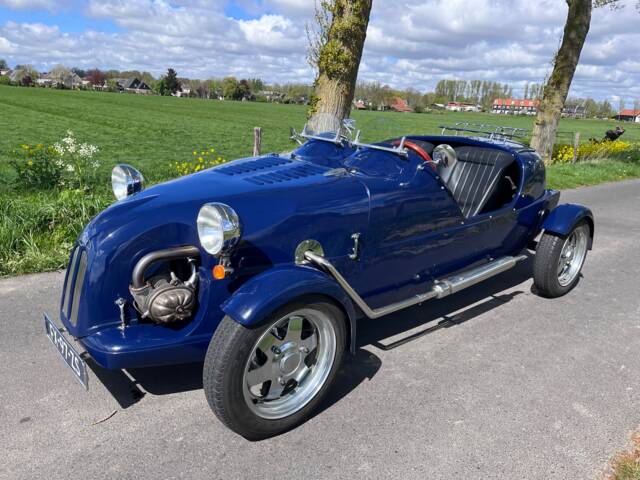
1980 | Lomax Type 224
Een karaktervolle lichtgewicht kitcar in uitstekende rijdende staat.

1979 | Lomax Type 224
Citroën Le Patron Lomax met aanhanger Lomax
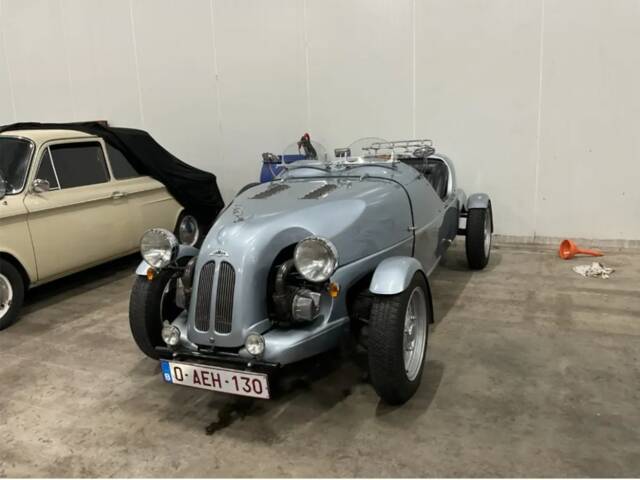
1980 | Lomax Type 224
Citroën Lomax | 1980 | Route 66 Auctions - For sale by auction. Estimate 8500 EUR

1954 | Lomax Type 224
Citroen Lomax Cabriolet

1954 | Lomax Type 224
Citroën - Lomax Lambda - 1954
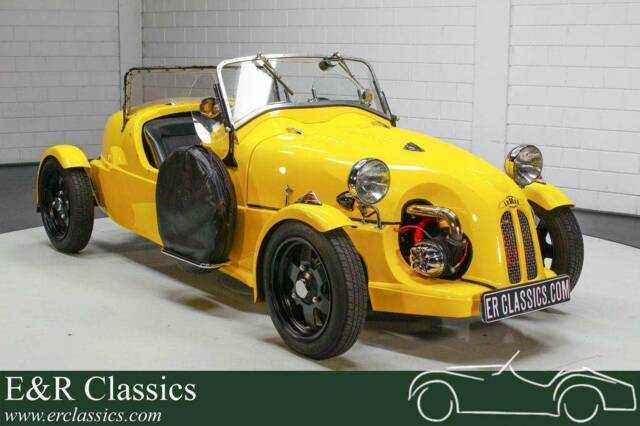
1982 | Lomax Type 224
Citroen Lomax Cabriolet
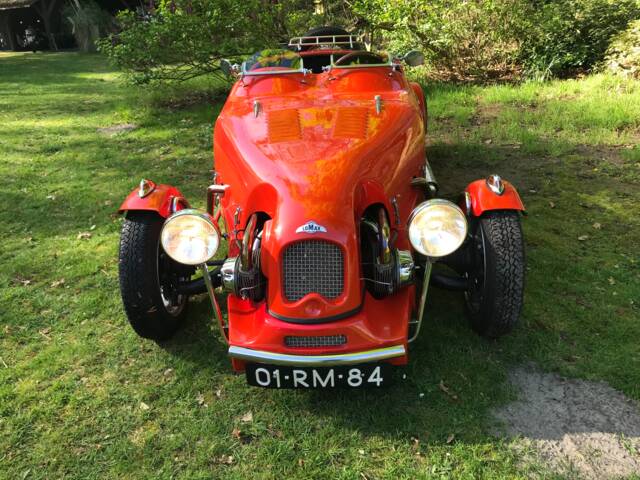
1977 | Lomax Type 224
Zeer goede staat.

1954 | Lomax Type 223
Citroen Lomax Cabriolet

1981 | Lomax Type 224
Citroen Lomax Cabriolet
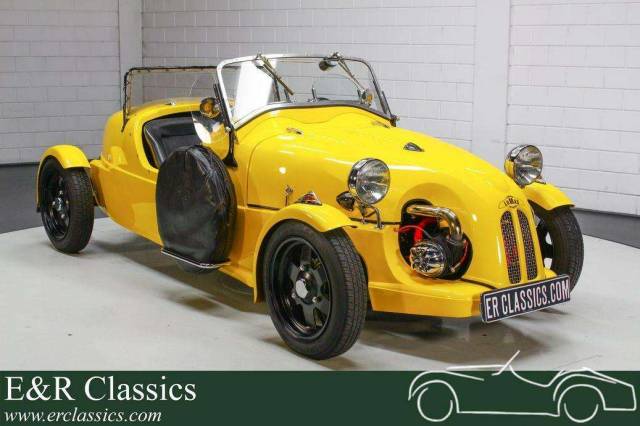
1982 | Lomax Type 224
Citroen Lomax Cabriolet
History of a British kit-car original
Lomax is a rare proposition in Australia: a British kit car whose visual character suggests a pre-war sports car but whose working parts come largely from Citroën’s ingenious A-series family. It is not a small-scale Morgan, nor a rebodied 2CV to be judged only by its donor’s year. It is a separately conceived, owner-built vehicle where the quality of the particular conversion matters as much as its badge. That distinction is especially important here, where a buyer may be considering a scarce locally registered car or the substantial exercise of bringing a right-hand-drive example from the United Kingdom.
Designer Nigel Whall, a fibreglass specialist, introduced the Lomax through Lomax Motor Co. at Willoughton near Gainsborough, Lincolnshire, in 1982. The earliest prototype used a shortened, purpose-made four-wheel chassis and Citroën Ami mechanicals. The production idea was more accessible: supply a glass-reinforced-plastic (GRP) body kit to sit on the floorpan, engine and running gear of a Citroën 2CV, Dyane 6 or Ami 8. A later supplied steel ladder chassis and, later again, tubular-frame developments mean that apparently similar cars can have materially different structures beneath the bodywork.
The model name is a useful piece of due diligence rather than mere folklore. 223 means two cylinders, two seats and three wheels. 224 means two cylinders, two seats and four wheels. Early projects with closely paired rear wheels and subsequent genuine trikes make a physical wheel count, photos of the rear suspension and the registration description essential. The 223’s single rear wheel was partly attractive in Britain because of its historic three-wheeler tax and licensing treatment; Australian buyers must assess it as the vehicle presented, not assume that a UK classification transfers automatically to an Australian register.
Lomax ownership changed hands over its long life, with production moving from Lincolnshire to Mumford Motor Co. in Gloucestershire in the late 1980s, then to Cradley Motor Works. This helps explain variation in kits, manuals, replacement parts and build detail. The common 223 and 224 remain the clearest expression of Whall’s first idea. The Lambda is a fuller, rounder redesign available with three or four wheels, while the Supertourer is a more overtly 1930s-style four-wheel tourer. A small number of 424 cars used a Citroën GS/GSA four-cylinder engine, but they should be treated as a specialist variation rather than the benchmark for the make.
Because a Lomax was built in garages and workshops over many years, its relevant dates can diverge: donor build year, kit invoice, completion date, first registration and dates of later structural work may all differ. A 1983 Citroën can quite properly underpin a Lomax completed in 2000, but the paperwork needs to tell that story cleanly. In the Australian market, that timeline is central to both value and the 25-year older-vehicle import pathway.
Highlights that define Lomax
The attraction begins with low mass and uncomplicated engineering. A typical 602 cc Lomax is quoted at about 430 kg, so the modest Citroën flat-twin has far less body to move than it did in a 2CV, Dyane or Ami. The appeal is not headline acceleration. It is the direct view over separate mudguards, a tiny open cockpit, manual controls and the deliberately unfiltered sound of an air-cooled two-cylinder engine. On an Australian back road at sensible speeds, a well-sorted Lomax makes a short drive feel like an occasion.
The 223 is the most extrovert version. Its single rear wheel gives it a compact, purposeful profile and a different response over cambers, corrugations and mid-corner bumps. It requires a buyer who genuinely wants a three-wheeler, including its loading and tyre-clearance peculiarities, rather than one who has chosen it simply because it looks photogenic. The 224 retains the same open-roadster mood but its four wheels and conventional rear layout will be more familiar to drivers moving from a classic car. Neither is inherently the better collector choice; a documented, carefully engineered example is the better Lomax.
Citroën-based service items are an important practical advantage in a very thin Australian Lomax population. Engine consumables, brake components, suspension parts and many electrical items have an established international supply chain through 2CV specialists. That is not the same as saying every part is local or cheap after freight. GRP panels, screen frames, a specific ladder chassis, hood hardware, wire-wheel adapters and period Lomax fittings are make-specific items. Before buying an incomplete project, establish exactly which parts are present and which supplier can provide the missing pieces.
The kit format also gives the marque its best and worst feature: individuality. A well-positioned windscreen, neatly trimmed cockpit, correctly supported body, sound wiring and sensible weather gear give a Lomax lasting charm. A fresh paint finish cannot compensate for poor bonding, improvised seat mounts or a donor chassis concealed under shiny fibreglass. The original assembly instructions make this clear in their own practical way, repeatedly specifying clearances, secure fasteners, labelled wiring and secondary bonnet retention. This is a car to inspect with a torch and a hoist, not from listing photographs alone.
Technical Data
The usual power unit is Citroën’s air-cooled 602 cc, horizontally opposed two-cylinder engine, commonly around 29 PS in 2CV6 tune; some Ami 8 installations used a stronger 35 bhp twin-choke arrangement. Exact output, carburettor, gearbox ratios and final performance depend on the donor and later work. Ask for the engine number, capacity recorded in documents and invoices rather than accepting a generic specification. Power goes through a four-speed manual gearbox to the front wheels, while Citroën’s interconnected long-travel suspension gives the light car a surprisingly supple ride when correctly maintained.
*Approximate period figures for a light 602 cc car, not a factory guarantee for every individual Lomax.
The 223 is not simply a 224 minus a wheel. Its rear suspension conversion, tank installation and wheel-arch clearance are specific engineering jobs. The factory instructions require checking the rear tyre at full bump with load, retaining at least 25 mm clearance around it, and fitting the tank breather correctly. An Australian car expected to encounter rough rural surfaces, heat and long distances deserves an especially conservative approach to these clearances. A visible rub mark, cracked inner guard or fuel smell is a stop-and-investigate issue.
Market Overview & Buying Tips
Australia has few Lomax cars, so the market is defined by scarcity rather than a stable local price guide. British supply is broader and usually right-hand drive, which is convenient in principle, but a cheap UK purchase is only the beginning of the landed and registered cost. The most useful current hard datum is Anglia Car Auctions’ August 2025 sale of a 1983 Lomax 224 Sports. That 602 cc car, converted from a Citroën 2CV6 Club between 1998 and 2000 and accompanied by V5 documentation, sold for £3,564 including buyer’s premium against a £4,000–£5,000 estimate. At an illustrative exchange rate of £1 = A$2.00, that is approximately A$7,130 before international payment costs, shipping, insurance, biosecurity, taxes, port charges, compliance work or registration. Exchange rates move; this conversion is an indication, not a quote.
That auction result should not be used as a universal Lomax valuation. It reflects one car, condition, auction room and UK title situation. Smartly finished 223s, 224s, Lambdas and Supertourers can carry materially higher asking prices, while unfinished kits or cars with questionable chassis work can consume their apparent discount in a single restoration. In an Australian listing, a car already accepted onto the relevant state register with a traceable import and engineering history may command a rational premium because it has removed uncertainty, delay and transport exposure.
For a UK import, obtain Commonwealth approval before shipping. The Australian Government requires an import approval through ROVER; a vehicle arriving first can remain in customs control while storage costs accumulate. A Lomax with a relevant build date more than 25 years old may fit the concessional older-vehicle RAV-entry route, but a later significant conversion date can matter. Do not assume the donor’s 1980s date alone resolves the question: provide the approval authority with the chassis identity, overseas papers, build evidence and modification dates, and seek written confirmation for the actual car.
Budget beyond the hammer price. The Australian Border Force identifies freight and marine insurance, cleaning and quarantine inspection, asbestos issues, port and delivery fees, broker costs, Customs duty, 10% GST on the value of the taxable importation, potential Luxury Car Tax, modification, inspection, registration and insurance as possible costs. Duty classification and any tariff preference depend on the facts and documentation; obtain a broker’s landed-cost estimate before bidding. A £3,564 / about A$7,130 purchase can therefore be a very different Australian commitment once it is on the road. Never present an approximate currency conversion as a complete import budget.
Registration is state and territory business after Commonwealth approval and RAV entry; approval is not a guarantee of registration. Right-hand drive makes a UK Lomax more straightforward than a left-hand-drive special, but its kit-built identity, seatbelt anchorage, lighting, tyres, windscreen, emissions-era requirements and structural modifications can still require inspection or an engineer’s report. In NSW, for example, historic registration is aimed at vehicles at least 30 years old that are close to original and unmodified; a modified Lomax may instead need assessment under another scheme. Victoria, WA, SA and every other jurisdiction have their own processes. Contact the intended registration authority and an approved engineer before purchase, not after the container is booked.
Inspection: donor chassis and suspension
The GRP body does not rust; the Citroën-derived structure beneath it certainly can. Put the car on a hoist and inspect the floorpan, chassis rails, crossmembers, suspension pick-up points, seat-belt structure and any ladder-frame joints. Look for plated-over perforation, distorted rails, unsupported repairs and water trapped around body mounts. A hard Australian life can add UV exposure, dust and road-surface shock; a recent UK arrival can hide salt corrosion accumulated before export. Tap, probe and inspect from both sides rather than relying on underseal or a glossy chassis paint.
Check kingpins, front wheel bearings, leading and trailing arms, tie rods, suspension canisters, driveshaft splines and steering joints for play, noise and uneven action. The build manual itself calls out front bearings, kingpins and driveshaft splines as donor-car wear points. A leaning wheel, wandering steering or a car that sits oddly is not cosmetic. It may point to worn Citroën parts, incorrect geometry or poor conversion work. On a 223, confirm the modified rear arm, its weld quality, the rear wheel’s centrality and full-bump clearance with particular care.
Inspection: engine, brakes, GRP and build quality
Start a cold engine and listen for excessive mechanical noise, exhaust leaks and crankcase breathing. Confirm oil leaks are understood rather than accepted as character. During a proper road test, the gearbox should select without jumping out of gear, the clutch should not slip, and the engine should pull cleanly without persistent hesitation. Examine engine and gearbox mounts: collapsed rubber allows movement that can strain exhausts, controls and wiring. Assess cooling airflow, oil condition and fuel plumbing in the context of Australian summer use; a small air-cooled engine needs its original ducting, fan arrangement and heat shielding intact, not decorative shortcuts.
Inspect brake pipes for corrosion, chafing and secure routing, then test balanced braking and handbrake operation. Check every lamp, indicator, wiper, horn, instrument and earth point. The original kit instructions specifically caution against running the harness near hot or moving parts and require dependable rear-light earths. A home-built car with intermittent electrics deserves systematic rectification, not a quick fuse-box fix.
At the body, examine gelcoat and paint cracks from inside and out around the bonnet, mudguards, screen frame, hinges, body mounts and floor. GRP cracks may be superficial, but star cracks near a stressed mounting point can disclose movement or a previous impact. Check hood frame, side screens and drain paths for water ingress; Australian sun makes a serviceable hood, UV-stable trim and a sound screen seal more valuable than they first appear. If fitted with wire wheels, inspect splines, tapers, wheel condition and correct left/right spinners. The manual calls for a recheck after 50 miles and again at 500 miles; ask when it was last done.
Finally, reconcile the identity. The chassis or VIN, engine number, wheel count, seating capacity, capacity, build date and make/model on the papers must make sense together. Request kit invoices, build manual, build photographs, donor registration records, UK V5C if applicable, import approval, RAV evidence, engineering certificates, past inspection reports and parts invoices. On a Lomax, a thick, coherent file is often worth more than a highly polished but undocumented finish.
Driving Feel
A Lomax does not drive like a contemporary hatchback merely because its donor was an economy car. You climb down into an exposed cockpit, look along a long bonnet and work a gearbox that asks for a deliberate hand. The flat twin’s beat, induction sounds, wind and road texture arrive without much insulation. At urban speeds it is already an event; on a clear secondary road it rewards momentum, smooth inputs and attention to the weather.
The 223 is the concentrated experience. The front wheels seem to sit in their own viewfinder, and the single rear wheel changes how the driver reads potholes, off-camber corners and loose edges. It is not a car for abrupt steering or casual high-speed testing. Test it over representative city streets and country roads, including bumps, braking and a tight turn, before deciding that its character suits the intended use. The 224 feels more conventional at low speed and when touring, while retaining the same lightness and wonderfully long-legged Citroën suspension.
Australian conditions add practical questions. A Lomax is best planned as an early-morning, temperate-weather touring car rather than an air-conditioned cross-country machine. Heat soak, sun exposure, limited luggage, wind buffeting and sudden rain are part of the ownership proposition. A maintained 602 cc car can be huge fun on quieter roads, but overtaking, motorway speeds and long distances should be approached with realistic mechanical sympathy. The right driver will regard these limits as the point, not a defect.
Design
Whall’s styling is an interpretation rather than a replica. The long bonnet, separate guards, low screen and compact tail recall British pre-war roadsters, most obviously the visual world of the Morgan Three Wheeler, yet the Lomax’s proportions come from Citroën architecture and 1980s kit-car practicality. Its GRP body makes the fantasy affordable and light, while its exposed details invite owners to make the car personal.
The 223 is visually the purest and shortest-looking shape, its single rear wheel leaving a particularly neat tail. The 224 restores the familiar four-wheel roadster balance. Lambda versions soften the original’s angular simplicity with more rounded wings and surfaces, while the Supertourer gives the idea a more formal small-tourer presence. No body style is automatically superior. Straight panel alignment, firm bonnet catches, tidy edges, properly bonded repairs, durable interior trim and competent mounting hardware are the real measures of quality.
Accessories should be read as evidence, not decoration. A Moto-Lita wheel, leather seats, luggage rack or wire wheels may suit the car if their mounts are engineered and documented. Oversized lamps, loosely fitted aeroscreens, badly cut dashboards and ornamental bonnet straps that substitute for a proper secondary catch do not. In harsh sunlight, inspect faded gelcoat and crazing carefully; an honest, well-maintained finish is preferable to new paint hiding rushed repairs.
Summary
To buy a Lomax classic car in Australia is to choose a genuinely unusual mix of British kit-build culture and familiar Citroën A-series mechanical principles. The 223 delivers the distinct three-wheel experience, the 224 offers four-wheel reassurance, and Lambda and Supertourer versions broaden the styling without changing the make’s essential character. Their scarcity makes patience worthwhile.
Prioritise a sound chassis, correctly executed suspension and brakes, secure body and seat-belt mounts, healthy flat twin, convincing documentation and a registration path already checked for your state. If importing from the UK, secure ROVER approval first, treat the about A$7,130 conversion of the 2025 £3,564 auction result as purchase price only, and obtain professional landed-cost and compliance advice. Find a Lomax on Classic Trader that has been built as carefully as it has been presented, and it can become one of the most engaging light classics on an Australian weekend road.