- Car
- Land Rover
- Land Rover 109 (7 offers)
Land Rover 109 Classic Cars for Sale
The Land Rover 109 is the quintessential British long-wheelbase 4x4, famously rugged with a versatile aluminium body, built for everything from farming and military to adventure and expeditions. Its range of petrol and diesel engines, outstanding ground clearance, and near-unmatched utility have made it a favourite in classic vehicle circles. Read more
Search results
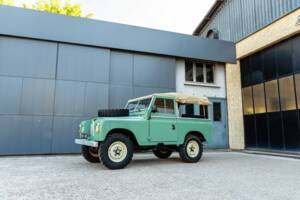
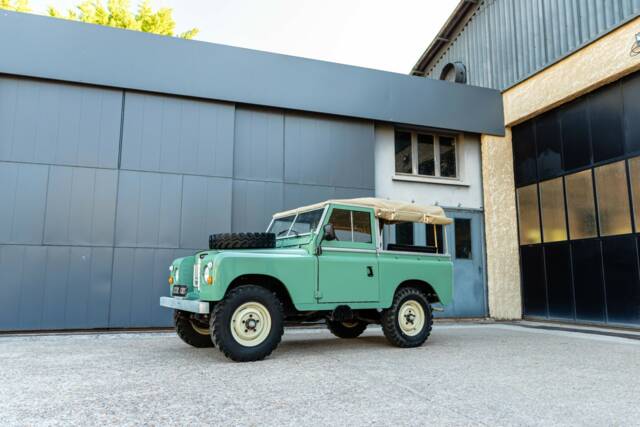
1973 | Land Rover 109
Land Rover Série III

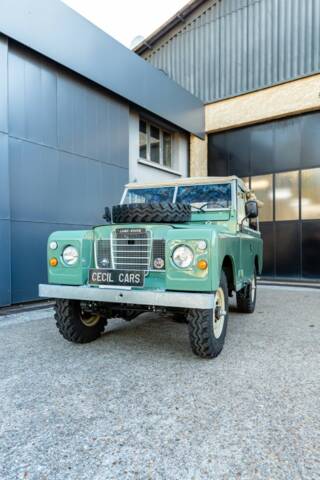
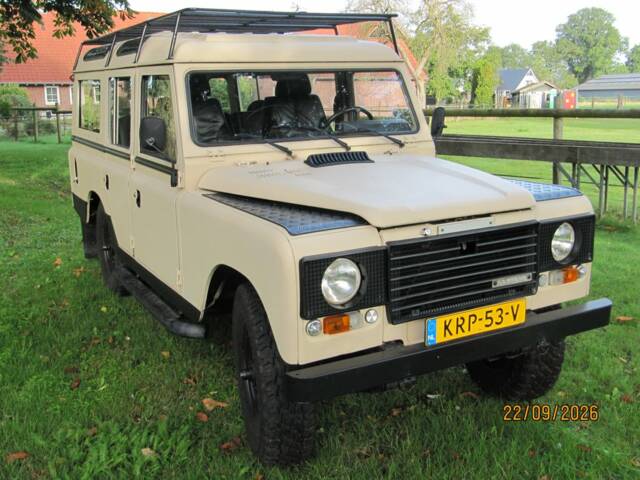
1983 | Land Rover 109
Land Rover Santana 109 Super | 1983 | Route 66 Auctions - For sale by auction. Estimate 10800 EUR

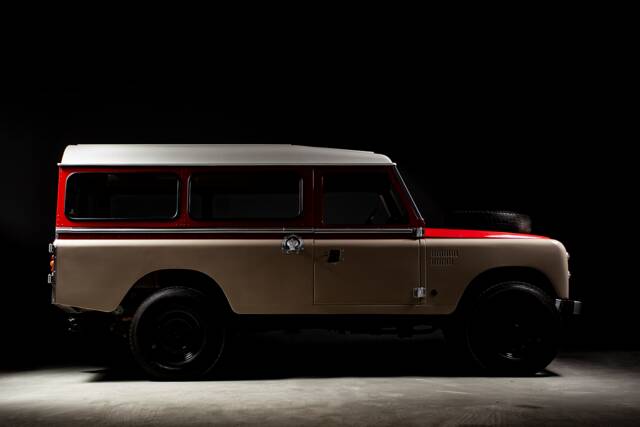
1989 | Land Rover 109
Land Rover Series 3 of 1989 model 109 three-door.

Newsletter
The best Land Rover listings, straight to your inbox
Get hand-picked Land Rover listings, plus the best of cars, motorbikes, and auctions on Classic Trader — all in one place.
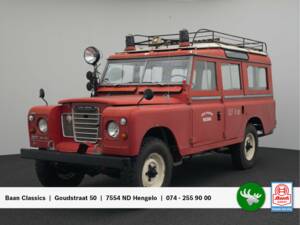
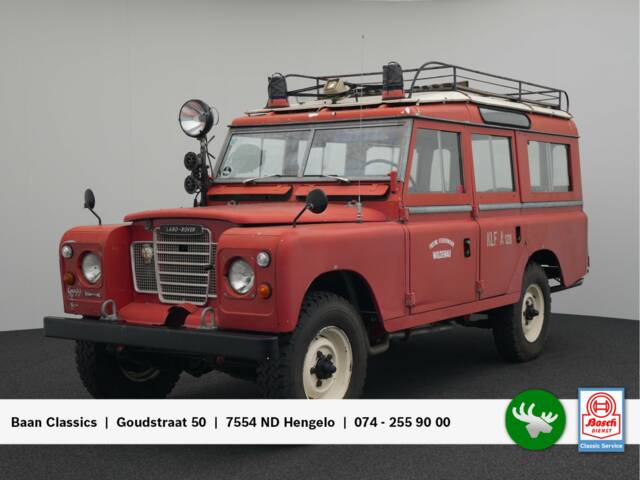
1973 | Land Rover 109
Land Rover 109 MK III 2.6L 83-86 Pk Petrol Kleinlöschfahrzeug
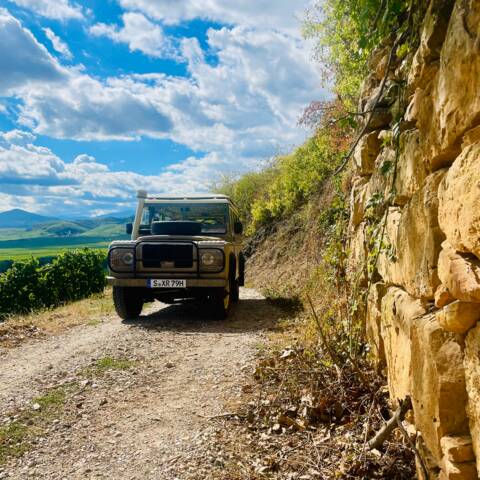
1979 | Land Rover 109
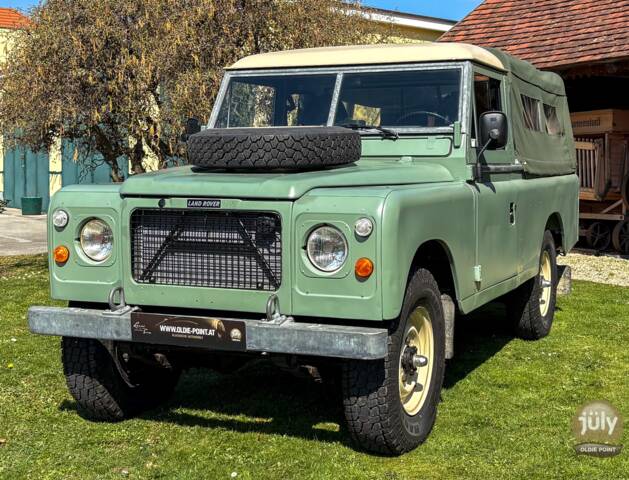
Wunderschöner Land Rover Santana Serie 3, 109er Pick-Up mit 6-Zylinder Diesel-Maschine!

1982 | Land Rover 109
Land Rover Series III 109 V8 Pick-up | restored | rare classic

Land Rover 109 listing references from Classic Trader
Below you will find listings related to your search that are no longer available on Classic Trader. Use this information to gain insight into availability, value trends, and current pricing for a "Land Rover 109" to make a more informed purchasing decision.
1977 | Land Rover 109
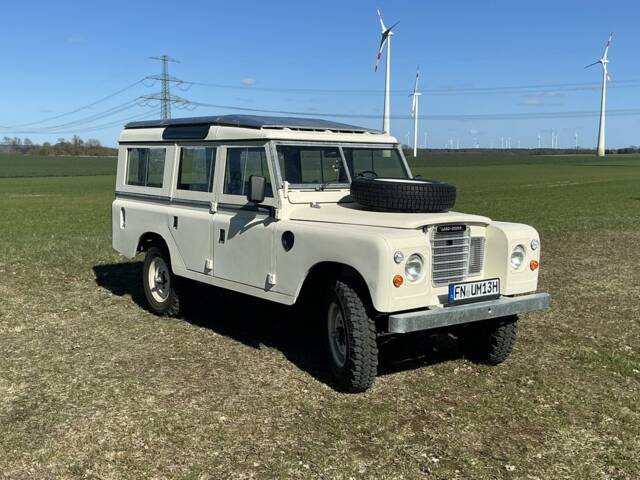
Land Rover 109 Series III | 1977 | Route 66 Auctions - For sale by auction. Estimate 14400 EUR
1958 | Land Rover 109
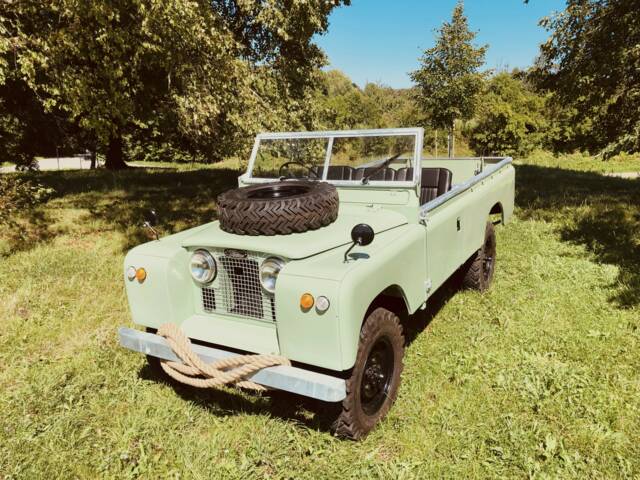
Land Rover Serie 2a
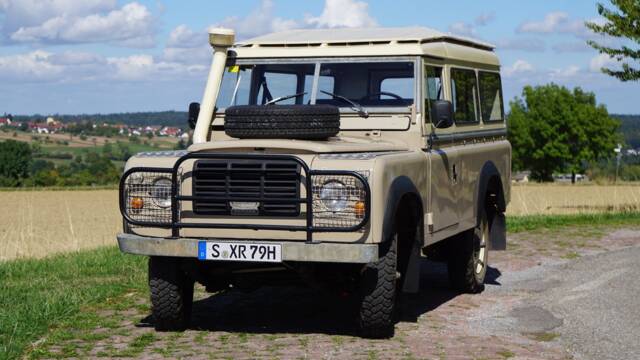
1979 | Land Rover 109
Serie 3, Santana, 6 Zylinder Diesel
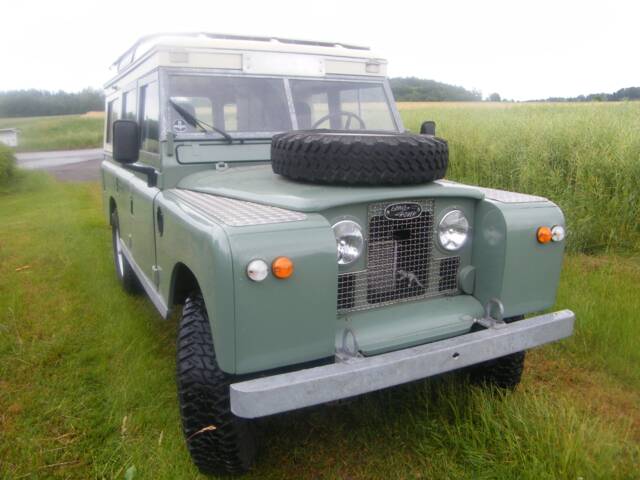
1966 | Land Rover 109
200 TDI Camper
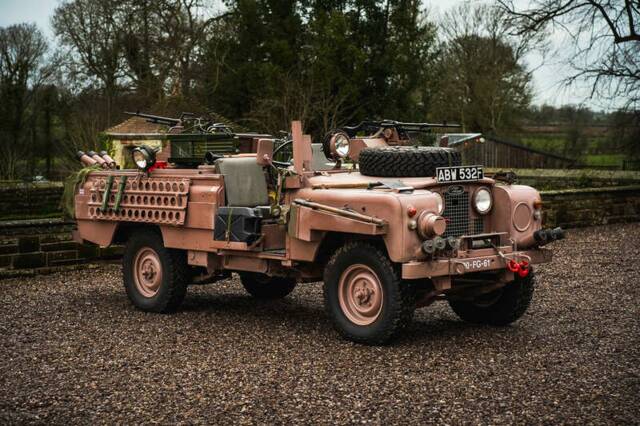
1968 | Land Rover 109
c.1968 Land Rover Series IIA 109" SAS Military 4x4

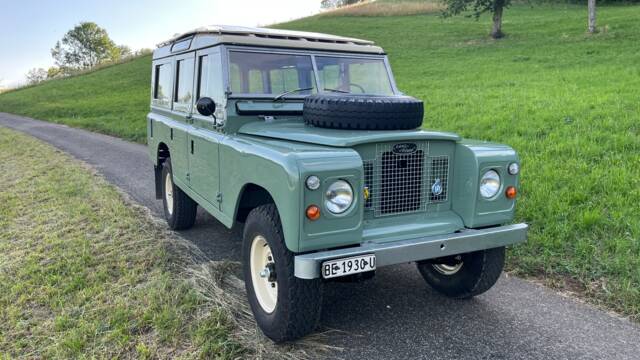
1970 | Land Rover 109
Serie IIa 2.6lt 6-Zylinder 12 Seater - Frame Off Restauriert

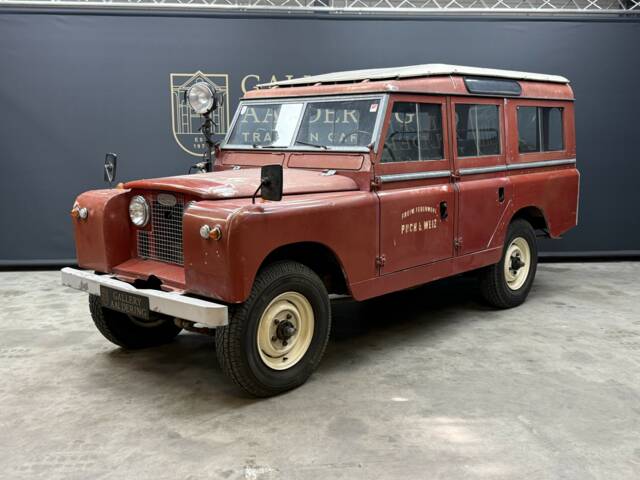
1962 | Land Rover 109
Land Rover 109 Series IIA "Feuerwehr Mannschaftswagen" In highly original condition and immaculately maintained, Chassis completely ice-blasted and waxed, LaRo specialists assume that the mileage of 23.503 km is original, Cool extras like the tropical roof - work/search light and Bosch stand heater, Resided in Styria (Steiermark) - Austria for over 60 years, "You can't beat the original condition"
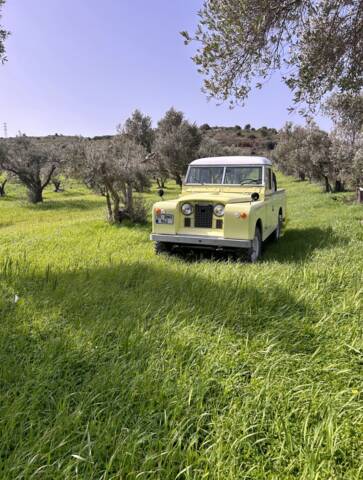
1962 | Land Rover 109
Land rover seriesIIA 109 Pickup
Land Rover 109 Classic Cars: Prices & Market Values
The market value of Land Rover 109 classic cars is primarily determined by the specific manufacturer code and variant, as well as technical condition, originality and mileage. Additional factors include rarity, history and documentation. A well-maintained, largely original vehicle with low, verifiable mileage and complete history including appraisals and documentation typically achieves significantly higher prices than a comparable vehicle with deferred maintenance, many modifications or unclear provenance.
Land Rover 109: Market Prices & Value Trends
Based on sales data from the Classic Trader marketplace, the Land Rover 109 market in Europe has remained broadly stable to slightly firmer over the period from February 2021 to mid-January 2026, with most asking prices clustering in the mid-market despite a handful of very high “restomod” or heavily modified examples. Across recent adverts in the Netherlands, the UK, Spain, Germany and Italy, realistic values for a typical Land Rover 109 (often 1960s–1980s production years) generally sit at around €15,000 to €45,000, depending on originality, chassis condition, drivetrain specification and quality of restoration. Entry-level projects can appear below this band, while top-end builds advertised at €80,000–€90,000+ should be treated as outliers rather than the norm. For today’s buyers, this means good, usable 109s are still attainable without chasing speculative pricing, but well-presented, road-ready examples are holding their value. Continued enthusiasm for classic, utilitarian 4x4s and the model’s iconic Series-era design help underpin demand and support steady pricing.
History of the Land Rover 109
Conceived shortly after the end of WWII and first launched in 1948, the Land Rover 109 evolved from the original agricultural vehicle inspired by the Willys Jeep. It was designed for British post-war life, offering generous utility with accessibility for attachments and ruggedness for work on and off road. Across its lifespan, the 109 moved through Series I, II, IIA and III iterations, each bringing improvements while retaining its mechanic’s simplicity and robustness. Its longevity and global popularity were cemented by adaptability: from simple agricultural use to diverse roles like ambulances, fire engines, and expedition vehicles.
Model History
The Land Rover 109 started as the long-wheelbase (109-inch) version in the Series I lineup by the early 1950s, available as Pickup and Station Wagon. The Series II (1958–71) marked increased dimensions and broader engine choices, including a 2.25L petrol unit and, later, a 2.6L straight-six and diesel variations. The Series IIA featured refinements to bodywork and mechanicals, further boosting reliability. The Series III (1971–1985), the most common, introduced five-bearing engines, plastic dashboards, revised mirror placements, and metric conversions, ultimately ending production as the model transitioned to the Defender 110.
Highlights and Statistical Relevance of the Land Rover 109
The Land Rover 109 distinguishes itself with a fully welded box-section frame, aluminium bodywork resistant to rust, and remarkable load-carrying capacity. Its versatility is proven by a variety of factory and military conversions (ambulance, Dormobile camper, safari vehicle). The Station Wagon variant supported up to 12 passengers, and its all-wheel-drive mechanics set benchmarks for off-road capability. Engine choices included the 2.25L petrol and diesel, powerful 2.6L six-cylinder, and, from 1979, the permanent 4WD V8 version in the Stage One.
Supply and demand in the classic market: Series III 109 variants account for 69% of available Land Rover 109 listings, making them the most supplied series. Demand reflects this dominance, with 65.3% of Land Rover 109 listing views focused on the Series III. Series IIA follows as the next sought after, representing nearly 32% of demand. This highlights sustained interest in the late 1970s and early 1980s models particularly.
Technical Data
Special Editions and Collectible Models
Stand-out versions include the Stage One V8 (1979 onwards), which introduced the 3.5L V8 engine and permanent four-wheel drive, and is highly regarded for its extra power and improved highway capability. Dormobile camper conversions, ambulances, and military variants such as the FFR (Fitted For Radio) and pick-up truck types are prized for their collectability, historical interest, and specialist restoration potential. Many export models featured double fuel tanks, tropical roofs, and reinforced underbodies for challenging climates.
Weak Spots and Maintenance Considerations
While the aluminium body panels resist corrosion, the steel ladder chassis and bulkhead are prone to rust, particularly around suspension mounts and outriggers. Axle pivots, suspension bushes, and electrical systems show wear consistent with vehicle age. Mechanical parts are robust but can suffer from neglect, especially the main bearings in poorly serviced engines and the clutch hydraulics in Series III examples. Upkeep is straightforward due to wide part availability, but a thorough inspection is advisable, mainly looking for chassis repairs, signs of bodged electrical fixes, and originality of mechanical updates.
Engine, Transmission and Off-road Performance
With selectable or permanent four-wheel drive and high/low transfer, the Land Rover 109 is ideal off the paved track. Power ranges from 62 to 105 hp, with top speeds of 100–120 km/h depending on engine. The long wheelbase contributes to load stability, while leaf over live axles offer simplicity and impressive ground clearance, albeit at the cost of ride comfort. Overdrive units, when fitted, reduce high-speed engine noise. Typical fuel economy is modest, reflecting period technology and the 1.6–2 tonne kerbweights. - Series III 109 Station Wagon (1971–1985): Most produced; 2.25L petrol/diesel, up to 12 seats.
- Stage One V8 (from 1979): 3.5L V8, permanent 4WD.
- Series IIA (1958–1971): 2.25L petrol, straight-six, and diesel available; often cited for best reliability.
Design, Accessories and Equipment
Designed originally by Maurice Wilks, the 109 boasts a square, purposeful appearance with flat panels, exposed hinges, and a two-box silhouette prioritising function over form. Aluminium bodywork keeps weight down and prevents rust; steel frame ensures strength. Series III introduced plastic dash, side mirrors on the door, and relocated instruments. Typical finishes included Marine Blue, Limestone, and Pastel Green; ‘Tropical Roof’ and Safari Roof variants feature double panels for summer cooling. Accessories were vast: winches, roof racks, snorkels, additional seating, heater, and rare Dormobile camper conversions. Interiors are spare but highly configurable—a Station Wagon could offer up to 12 seats, while soft tops, hard tops, and custom ambulances were common.
Other Notable Features
Factory and aftermarket upgrades and conversion possibilities are nearly endless, nurtured by a culture of restoration and customization. Many 109s in the market today have upgraded suspension (parabolic leaf springs), modern electrics, auxiliary fuel tanks, and expedition gear. Their utilitarian nature ensured much of the original design ethos survives—with a dedicated enthusiast and support network for parts, restoration, and upgrades.
Summary
The Land Rover 109 stands as the benchmark for practical, robust, and endlessly customisable British classic 4x4s. It shines not for refinement, but for adaptability and mechanical honesty—whether as a family Station Wagon, working pickup, or unique Dormobile camper. Series III models form the backbone of the classic marketplace, while Stage One V8s and special variants attract dedicated followers. Easy to maintain, supported by strong parts supply, and revered in enthusiast circles, the 109 is more than a classic car—it is an institution in British and off-road motoring history.