Ford Ranchero classic cars for sale
The Ford Ranchero stands apart as a unique fusion of American sedan comfort and pickup practicality, produced by Ford from 1957 to 1979. Renowned for combining a car-like ride with pickup utility, Ranchero models span seven generations and are seldom seen on European roads, making them a real head-turner. Thanks to its robust design and good spare parts availability, the Ranchero is prized by collectors and those seeking a classic American workhorse alike.
Search results
Currently, there are no matching listings for your search.
Create search alert
Let yourself be notified as soon as a listing is published that matches your search filters.
Create listing
Do you have a Ford Ranchero that you want to sell? Then create a listing now.
Create listingFord Ranchero listing references from Classic Trader
Below you will find listings related to your search that are no longer available on Classic Trader. Use this information to gain insight into availability, value trends, and current pricing for a "Ford Ranchero" to make a more informed purchasing decision.
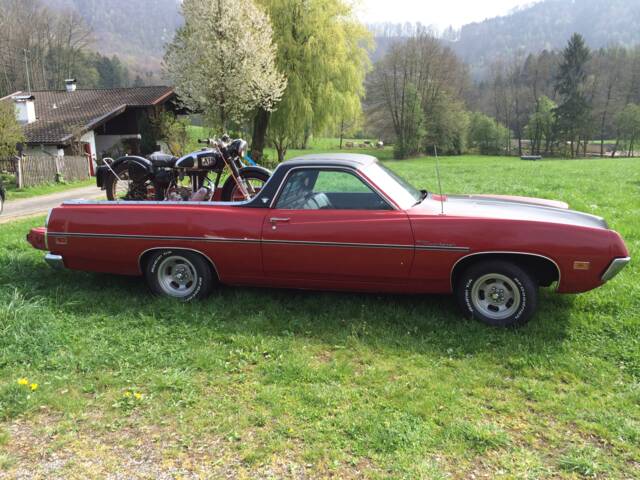
1970 | Ford Ranchero
Ford Ranchero 1970 - ATM überholt - Edelstahl Sidepipes

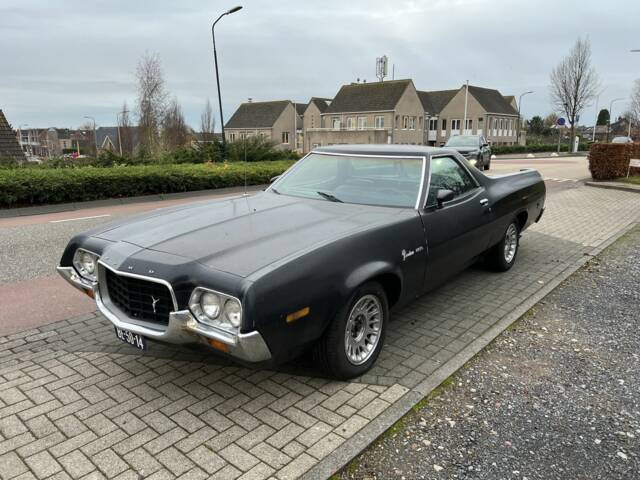
1972 | Ford Ranchero
Ford Ranchero | 1972 | Route 66 Auctions - For sale by auction. Estimate 5500 EUR

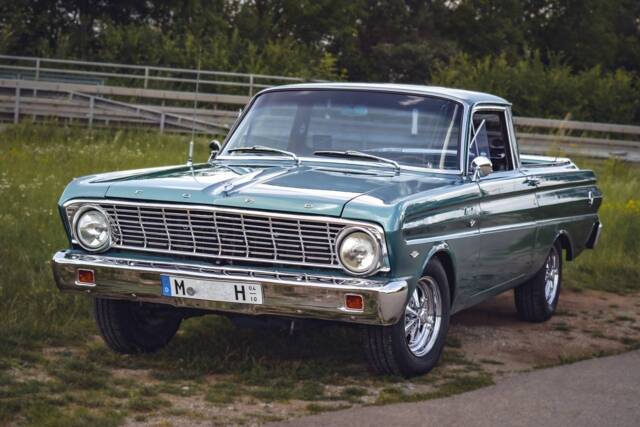
1964 | Ford Ranchero
Top Zustand, Voll Fahrbereit, V8, James Bond Goldfinger
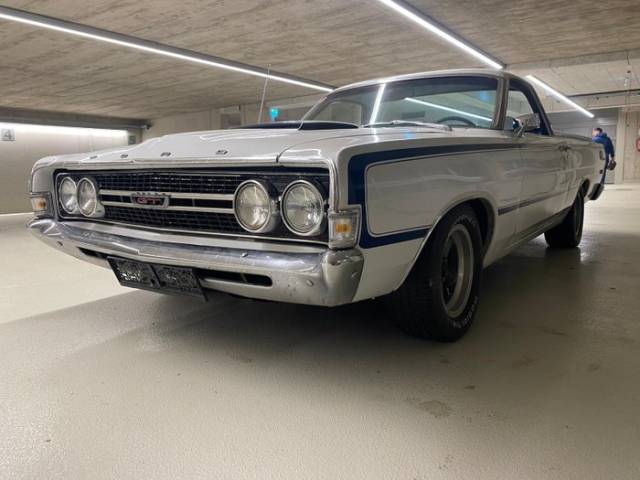
1968 | Ford Ranchero
Ford USA - Ranchero - 1968
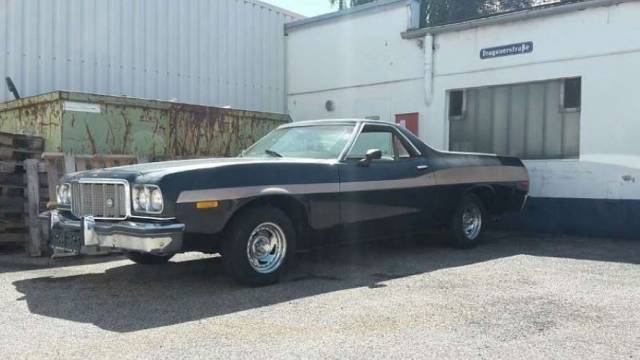
1973 | Ford Ranchero GT

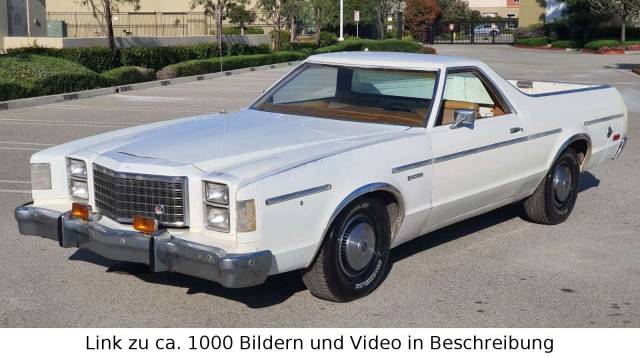
1979 | Ford Ranchero
Ford Ranchero 500 351cu 5.8L Ebay Auktion bis 24.11.
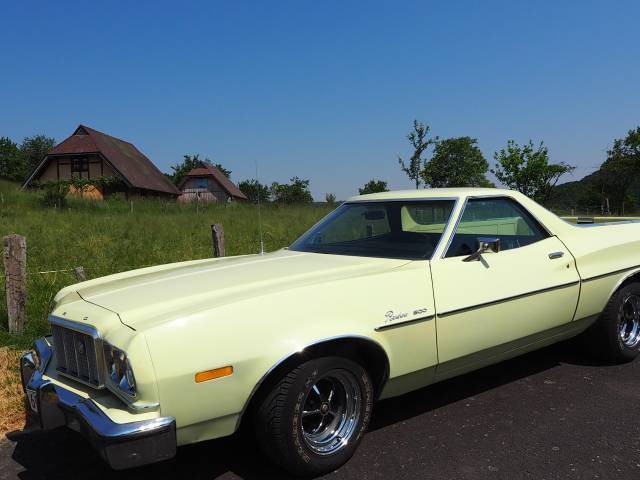
1975 | Ford Ranchero
45 Jahre lang in den USA, Arizona & Nevada, betrieben. Wagen ungeschweisst.
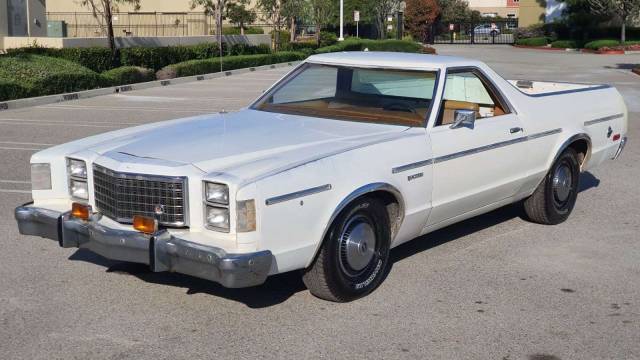
1979 | Ford Ranchero
Ford Ranchero 500 351cu 5.8L V8 California
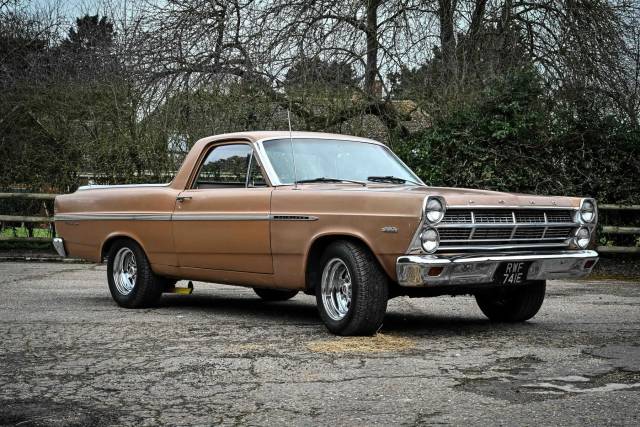
1967 | Ford Ranchero
Cool Pick-Up - Ready for the Summer

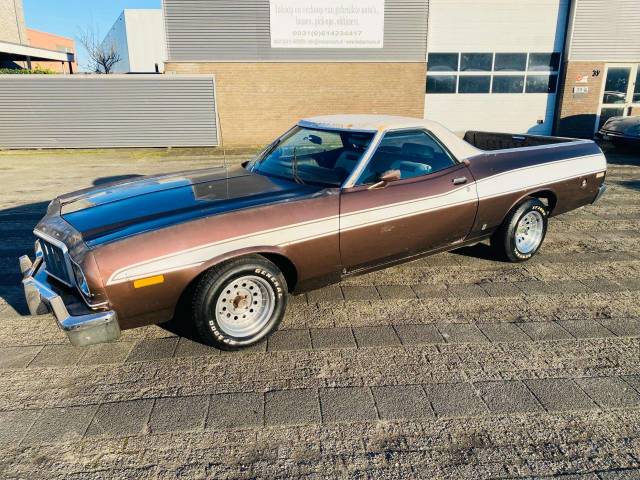
1975 | Ford Ranchero
Ford RANCHERO 1975
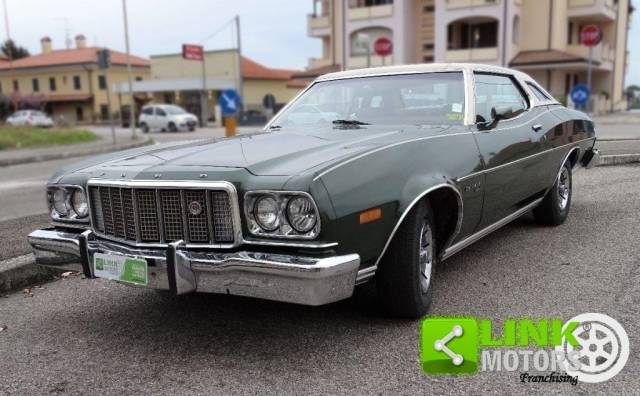
1974 | Ford Ranchero
FORD

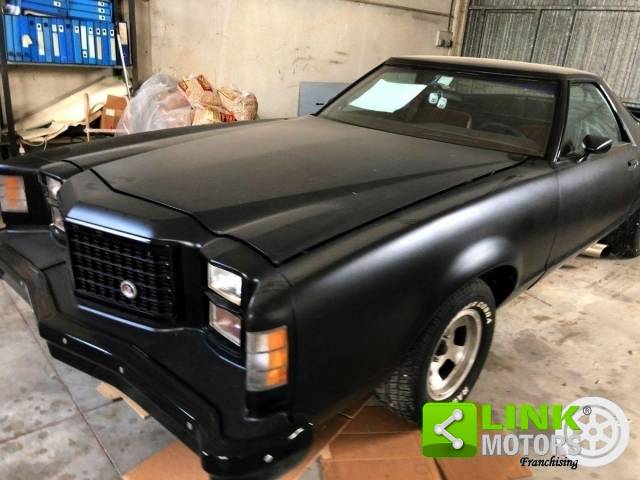
1976 | Ford Ranchero
FORD RANCHERO GT 500 ANNO 1976 | TOTALMENTE RESTAURATA|
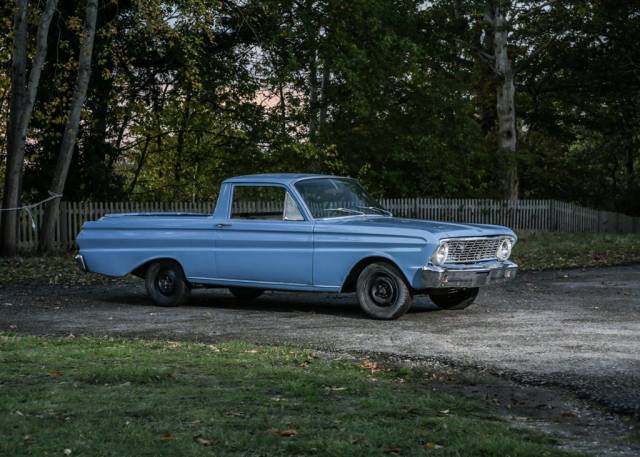
1965 | Ford Ranchero
Ford Ranchero
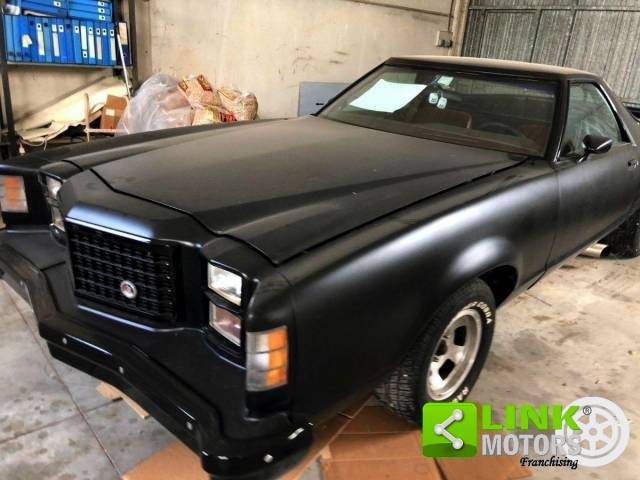
1976 | Ford Ranchero GT
FORD RANCHERO GT 500 ANNO 1976 | TOTALMENTE RESTAURATA|
Create search alert
Let yourself be notified as soon as a listing is published that matches your search filters.
Create listing
Do you have a Ford Ranchero that you want to sell? Then create a listing now.
Create listingFord Ranchero Classic Cars: Prices & Market Values
History of the Ford Ranchero
When Ford introduced the Ranchero in 1957, it pioneered the 'car-truck' segment—a response to the American demand for vehicles versatile enough for both work and leisure. With foundations in Ford's sedan platforms rather than truck chassis, the Ranchero offered the driving finesse of a car with an open bed for cargo. It predated its chief rival, the Chevrolet El Camino, by two years and set the tone for American coupe utilities for more than two decades. Marketed under the slogan 'More than a Car! More than a Truck!', the Ranchero became notable for its comfortable three-seater bench, spacious loading area and the capacity to blend daily driving with utility. Across its seven generations, Ford refined the model using platforms like the Fairlane, Falcon, Torino and ultimately the LTD II, each iteration reflecting changing automotive tastes and technological advancements.
Model history
The first generation (1957–1959) drew on the Fairlane for its underpinnings, targeting farmers and craftsmen with sturdy V8 engines. The shift to the compact Falcon chassis in 1960 aligned with a move towards more manageable urban vehicles. By 1966, the Ranchero was briefly matched again with the Fairlane before swiftly evolving in 1967 to the Torino line, introducing a sleeker look and greater engine variety. The 1968–1969 period brought three versions: standard, 500, and GT, followed by a short-lived fifth generation (1970–1971) limited to a substantial 7.0-litre V8. The sixth (1972–1976) and final (1977–1979) generations were based on the Torino and LTD II, respectively, with options spanning six-cylinder and multiple V8s. Notably, the 1973 model year saw peak production with 45,741 units, and among collectors, the GT and sporty editions hold special regard.
Highlights of the Ford Ranchero
Unlike traditional body-on-frame pickups, the Ranchero’s integrated body provided a smoother ride and better handling—qualities that set it apart from its contemporaries. It featured robust V8 engines (such as the 351 Cleveland or 390 CI), floor or column shift automatics, optional power steering and disc brakes, and plush interiors unusual for pickup-type vehicles. With its European rarity, each Ranchero is a show-stopper, especially models exported from the dry US states that retain rust-free bodies. Period features included factory air conditioning, a removable fibreglass tonneau cover, and the ability to order elaborate trim and wheel packages. Notably, the Ranchero 'Serie 500' enjoys a distinct niche, accounting for 22.7% of listed Rancheros. According to our supply statistics, Ranchero models represent 77.3% of all classic Ford utility listings, with the remaining 22.7% being 'Serie 500' editions, and they attract strong buyer interest, drawing 90.6% of demand for vintage Ford pickups.
Technical data
Special Editions and Collectible Models
Two special editions stand out: the 1969 Ford Ranchero Rio Grande, available in Wimbledon White, Poppy Red, and Calypso Coral, with distinctive stripes and vinyl roofs—fewer than 1,000 believed built. The 1979 Limited Edition featured a full leather interior, marking the series’ close. GT models offered sportier trim and performance gear, cementing their collector value.
Weak Spots and Common Issues
The Ranchero shares many parts with Mustang and Falcon variants, making spare parts unexpectedly accessible, especially for running gear and interior trims. However, buyers should inspect for rust on cars stored outside humid climates. Mechanically, carburettors and ignition systems may need routine attention. As commercial vehicles, many Rancheros experienced heavy loads, so check the frame and suspension for fatigue. Converting the headlights to EU standards may be necessary for use in Europe. Documentation such as historical maintenance records and original workshop manuals (notably from 1975/76) is often available and highly desirable for prospective owners.
Engine and Performance, Transmission and Handling
Most Rancheros came with high-displacement petrol engines typical of 1960s-1970s America, including the 351 Cleveland V8 and the thunderous 390 CI. They offered substantial torque, making them suitable for both commercial and leisure towing. Despite the pickup layout, the car-based chassis delivers superior ride comfort and stability compared to most body-on-frame trucks. Automatics with column shifters are common, alongside manual gearboxes. Disc brakes (often front only) and power steering were standard or optional, enhancing everyday usability.
Popular models include:
- Ranchero GT – Known for its sport-tuned suspension, distinctive stripes, and uprated V8s.
- Serie 500 – Featuring upgraded interiors and exterior trim, accounting for 22.7% of Classic Trader’s listings.
- Standard 351 Cleveland V8 models – Offering the classic American muscle-car driving experience. undefined
Interior, Comfort, Exterior and Design
Designed with American road comfort in mind, the Ranchero’s interior typically features two individual vinyl-upholstered seats and ample cab space. Accessories like upgradable audio systems, air conditioning, and custom or period-correct wheels (e.g., 8x15 or 10x15 inch) were offered. Exteriors could be highly decorated, with two-tone paint, side stripes, chrome accents, and options such as fibreglass tonneau covers. Because Rancheros are often imported from dry US states, original paint and bodywork are especially prized. Accessories from brands like Edelbrock are available for tuning, and the bench-seat configuration (prevalent in early models) allowed for significant storage under the cab. The rear bed could be covered or customized, increasing both practicality and appearance.
Other relevant features
Because the Ranchero is based on passenger car platforms, it offers distinctly car-like comfort and driving dynamics. Many examples are registered in Germany with 'H' classic plates, and period-correct restoration parts as well as customization options are readily available. There is an active workshop and enthusiast scene in Europe, supported by US and local suppliers. Originality and a documented history (including European conversions such as three-point belts or headlights) can further add to the vehicle’s value and usability.
Summary
The Ford Ranchero is one of the few American classics blending sedan comfort with the versatility of a pickup, making it both collectible and usable in contemporary settings. Its rarity on European roads, impressive parts availability, and wide range of powerful American engines distinguish it for buyers seeking something far removed from mainstream classics. Each generation, from Fairlane-based to LTD II, reflects shifts in US automotive history, and well-preserved examples—especially rust-free, documented vehicles—are highly valued. The Ranchero stands today as a testament to American ingenuity and versatility on four wheels.