Chevrolet 150 Classic Cars for Sale
The Chevrolet 150 stands for American automotive tradition: a robust base model, often found as a 2-door saloon, valued today for its honest charm, authentic details, and customisation potential. Its simple construction and reliable technology make it a favourite among classic car restorers and fans of mid-50s domestic vehicles.
Suchergebnisse
Zur Zeit sind keine passenden Inserate zu Ihrer Suche veröffentlicht.
Create search alert
Let yourself be notified as soon as a listing is published that matches your search filters.
Create listing
Do you have a Chevrolet 150 that you want to sell? Then create a listing now.
Create listingChevrolet 150 listing references from Classic Trader
Below you will find listings related to your search that are no longer available on Classic Trader. Use this information to gain insight into availability, value trends, and current pricing for a "Chevrolet 150" to make a more informed purchasing decision.
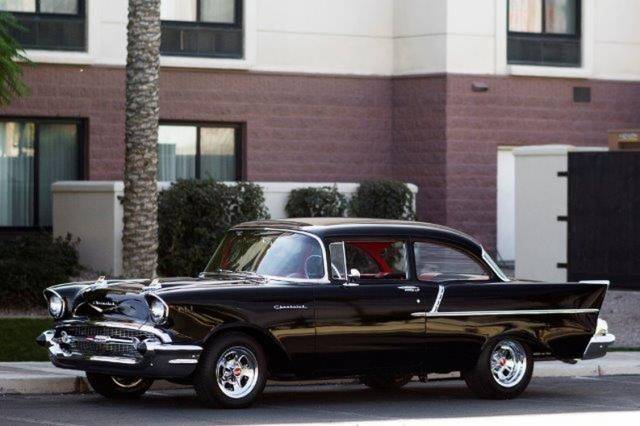
1956 | Chevrolet 150
Create search alert
Let yourself be notified as soon as a listing is published that matches your search filters.
Create listing
Do you have a Chevrolet 150 that you want to sell? Then create a listing now.
Create listingChevrolet 150 Classic Cars: Prices & Market Values
Introduction and History of the Chevrolet 150
The Chevrolet 150, introduced in 1953, was conceived as Chevrolet’s entry-level vehicle for private buyers and fleet customers. The naming, a shorthand for the production series number 1500, reflects a 1950s trend of using numerical designations. Replacing the Styleline Special, the 150 offered stripped-down features, focusing on affordability and utility. It remained in the line-up until 1957, after which the Delray took its role. Despite its economic positioning, the 150 shares platform basics and mechanics with its more lavish siblings, making it a rewarding subject for restoration and modifications today.
Model History
The Chevrolet 150 was produced from 1953 to 1957 in several variants: two- and four-door sedans, business coupes, and station wagons. The predecessor to the 150 was the Styleline Special. Its main market role was to offer an affordable, robust option for private customers and fleet use, such as by police and taxi companies. In 1958, the 150 was succeeded by the Delray, which continued Chevrolet's tradition of reliable, accessible everyday cars.
Highlights of the Chevrolet 150
The 150’s appeal lies in its honest simplicity: little chrome, basic interiors, and sturdy mechanics make it an ideal candidate for modifications or preservation in original condition. Many cars have been fitted with upgraded V8s (such as the 350cui GM Crate Engine), modernised disc brakes (especially up front), or contemporary carburettors and ignition systems. The robust body and minimalist style embody classic 1950s American car philosophy. Interior features remain spartan but functional, with most 150s retaining working original gauges and period details. Frequent restoration and modification have given these cars unique, individual character.
Technical Data
Special Editions and Collectible Models
While officially no special editions were issued for the 150 series, its utilitarian nature has made police, taxi, and fleet configurations an area of collector interest. Some individual cars stand out owing to history, modifications, or rare original equipment. Notably, 'gasser' drag racing conversions based on the 150 are particularly prized in American car circles.
Engine and Performance, Transmission and Handling
Original Chevrolet 150s were designed for durability, with simple, serviceable drivetrains. Many surviving cars retain their original inline-six or V8 engines, but swaps to more powerful units—especially the GM 350 small block—are common and relatively straightforward. Suspension layouts and drum brakes may require updates; popular upgrades include installing disc brakes on the front axle and replacing bushings, ball joints, and shocks to ensure safe handling. Gearbox swaps to robust automatics (like the TH350) are a frequent and accepted modification for improved driving comfort and reliability. Post-restoration, these cars offer solid, predictable driving dynamics in line with the era’s standards. - 1956 Chevrolet 150 2-door: Frequently restored; prized for its clean, distinctive silhouette.
- Conversions with GM Crate Engine or modern disc brakes: Favoured for performance and safety.
Interior, Comfort, Exterior and Design
The Chevrolet 150 is distinctively simple: minimal chrome, basic trim, and plain upholstery defined its original look. Over the years, many examples have received re-chromed bumpers, new seals, or repainted bodies reflecting their era’s original colours or unique custom combinations. Interiors usually retain the basic factory instrumentation, with restorers favouring contemporary, functional upgrades such as improved gauges or period-correct fabrics. Accessories are rare—most comfort features had to be ordered separately or added later. Today, surviving examples can showcase everything from stripped workhorse flair to owner-specific luxury or performance modifications.
Other Noteworthy Features
An important advantage for buyers in Germany is the possibility of H-approval, enabling the use of the coveted historical registration plate and easing attendance at classic car events. The Chevrolet 150 remains a popular baseline for creative restorations, thanks to its accessible construction and ample supply of aftermarket parts. Pre-purchase inspections on lifts are recommended, reflecting the car’s classic underbody structure and potential age-related issues.
Summary
The Chevrolet 150 offers an honest, robust driving experience, whether preserved in its original form or thoughtfully upgraded. As a foundation for personalisation in the classic Chevrolet family, this model appeals to enthusiasts seeking a piece of authentic 1950s motoring. Its straightforward technology and straightforward design allow for impressive versatility, from subtle preservation to radical custom builds.