Maserati Biturbo classic cars for sale
The Maserati Biturbo series, produced from 1981 to 1994, blends compact executive elegance with Italian engineering prowess. Known for its V6 biturbo engines and striking, sharp design by Pierangelo Andreani with influences from Giugiaro, the Biturbo family consists of coupés, saloons, and exclusive spyders by Zagato. Its technical evolution, variety of engines, and rich interior options reflect Maserati’s aim to bring sports luxury to a broader range of drivers.
Résultats de la recherche
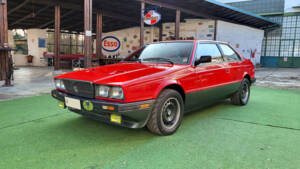
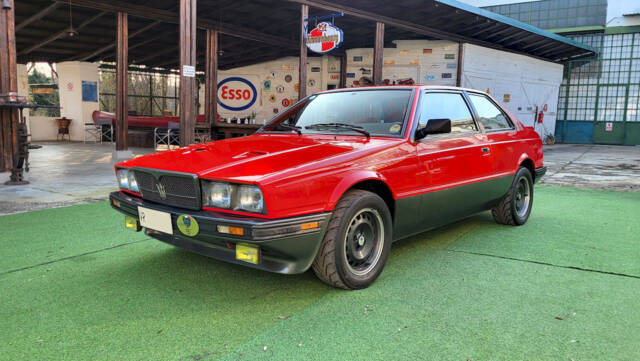
1985 | Maserati Biturbo S
Maserati Biturbo S – 1985
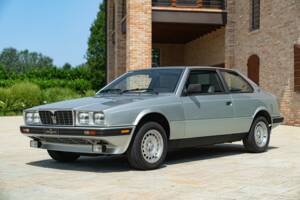
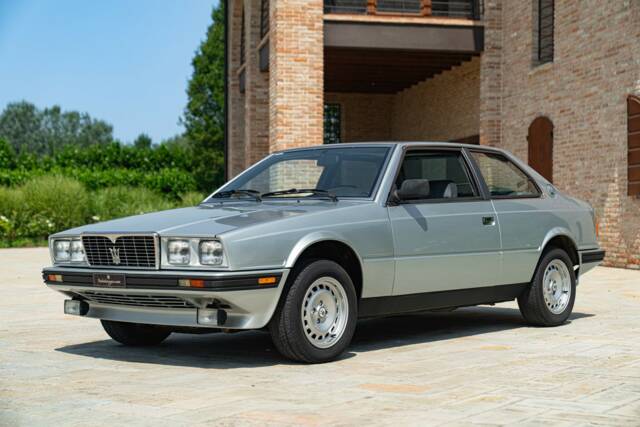
1988 | Maserati Biturbo i
2025-01-18 16:20:48 | Maserati BITURBO I
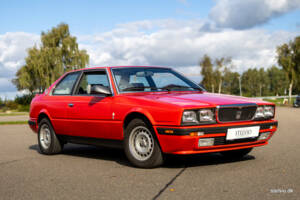
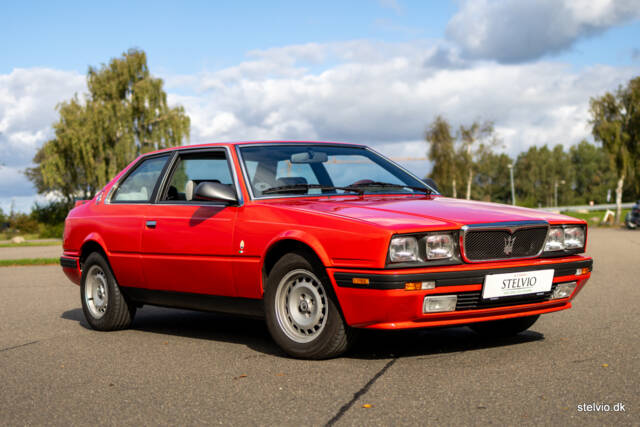
1988 | Maserati 222
NEW PRICE - Stunning red 222, LHD and with new interior
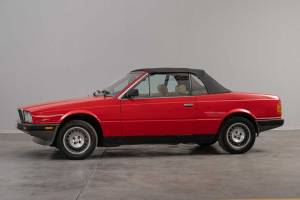
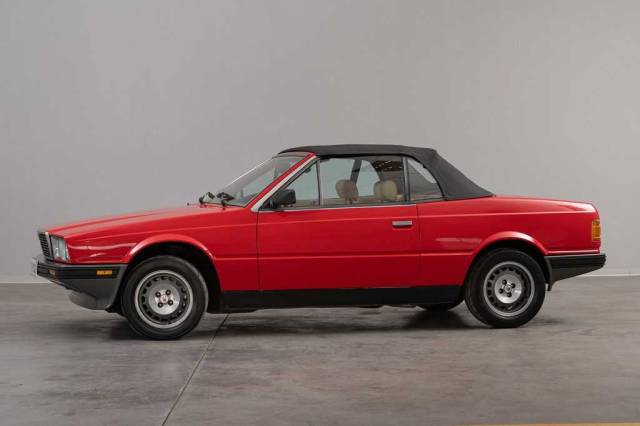
1986 | Maserati Biturbo Spyder
BITURBO SPYDER ZAGATO
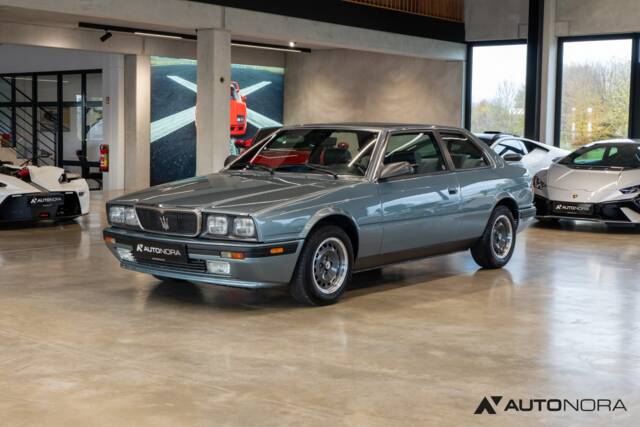
1989 | Maserati 222
Biturbo
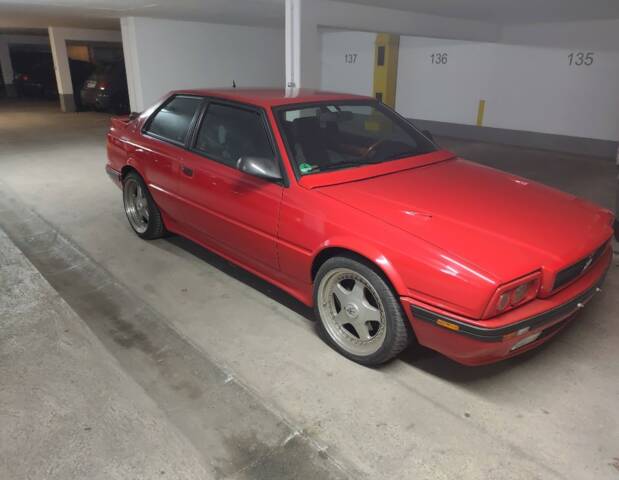
1993 | Maserati Biturbo 2.24V
Shamal Front
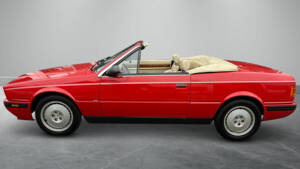
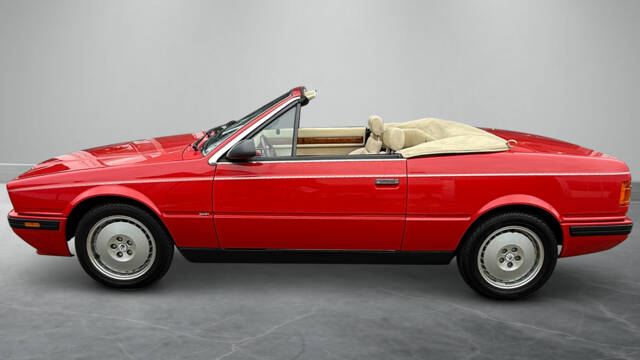
1993 | Maserati Spyder
Lot 22 Maserati Spyder E (1993). Schätzpreis CHF 30'000 bis CHF 38'000
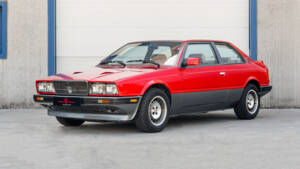
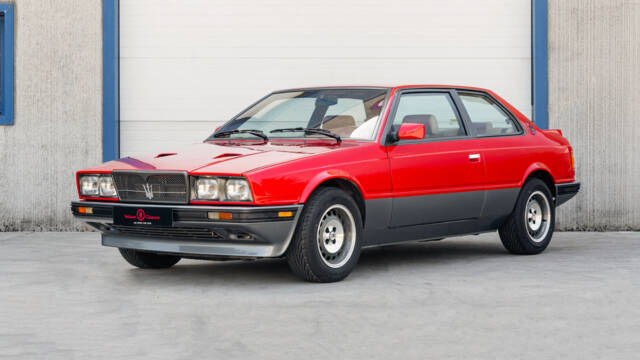
1987 | Maserati Biturbo Si
Original Condition | Italian Registered
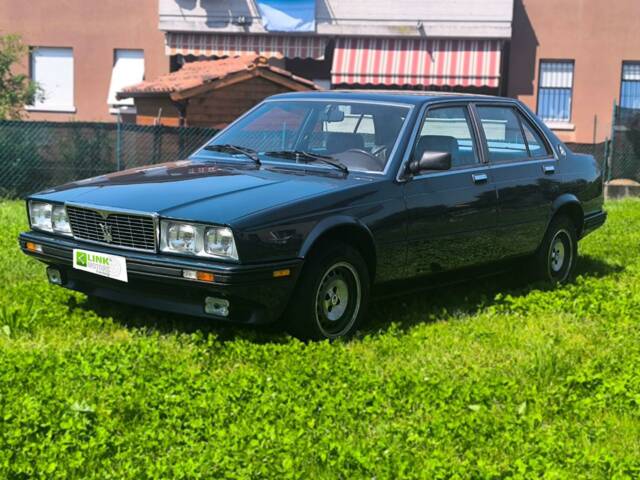
1991 | Maserati 420 i
MASERATI 420 BITURBO MISSONI ISCRITTA ASI
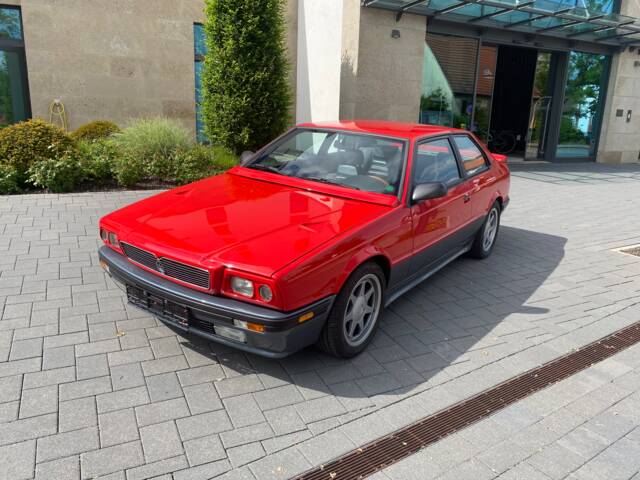
1992 | Maserati Biturbo 2.24V
sehr originales Auto der Serie 2 in Shamal Optik
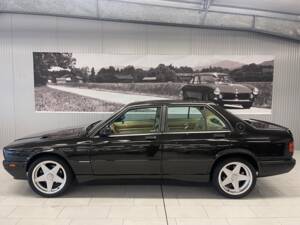
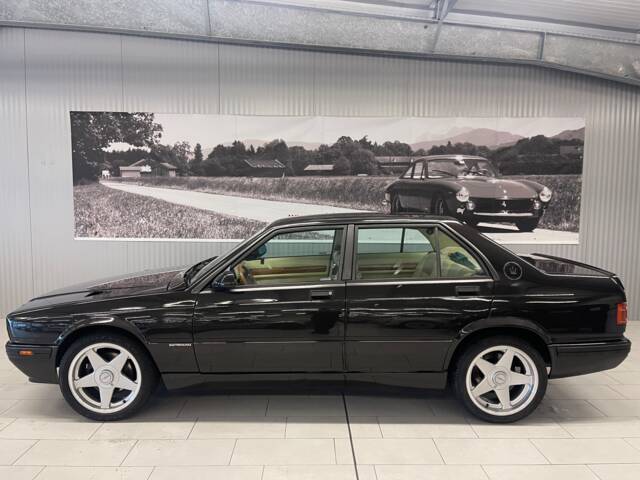
1992 | Maserati 430 4V
430 Quattrovalvole

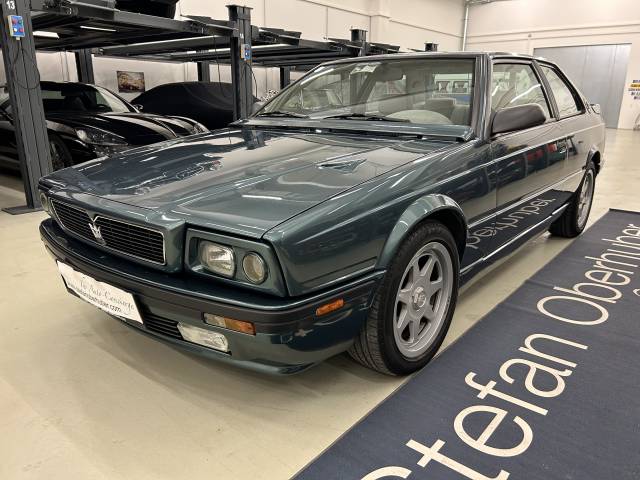
1992 | Maserati Biturbo 2.24V
Nice color combination, fantastic sound!
Maserati Biturbo listing references from Classic Trader
Below you will find listings related to your search that are no longer available on Classic Trader. Use this information to gain insight into availability, value trends, and current pricing for a "Maserati Biturbo" to make a more informed purchasing decision.
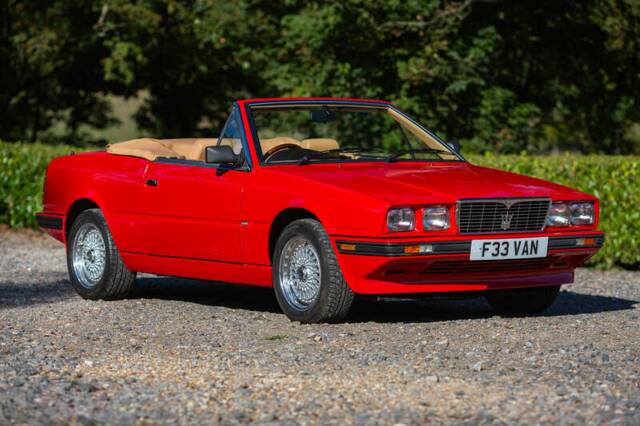
1988 | Maserati Biturbo i
1988 Maserati Biturbo Spyder - 2,672 Miles
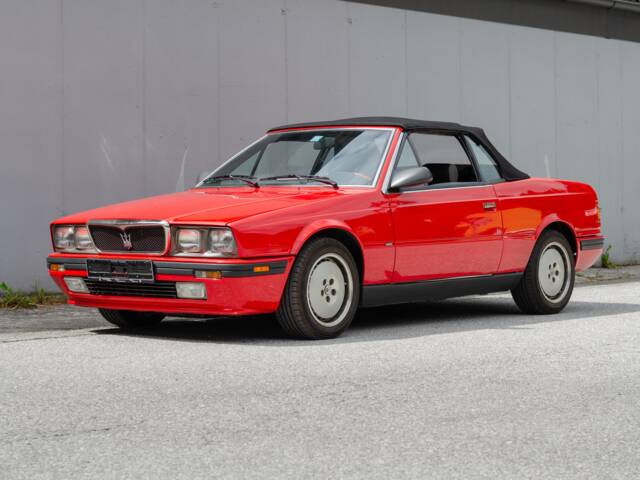
1991 | Maserati Spyder
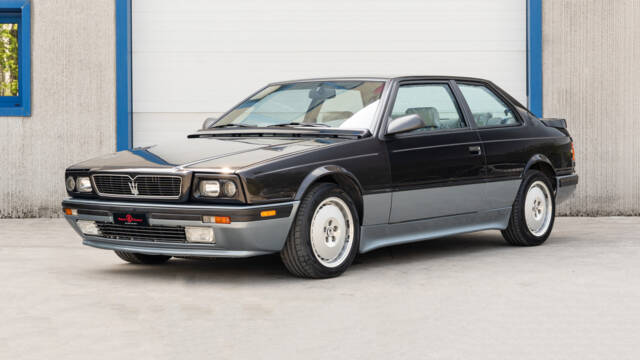
1992 | Maserati Biturbo 2.24V
Original Conditions | First Paint
History of the Maserati Biturbo
Launched in 1981 under Alejandro de Tomaso’s vision, the Maserati Biturbo marked the brand’s entry into the executive car segment, aiming for greater production numbers with a more accessible price. The Biturbo introduced not just a new technical direction—pairing a twin-turbocharged V6 with rear-wheel drive—but also a fresh design language, with sharp lines and a trapezoidal grille. Originating as a two-door coupé with a focus on Italian tax benefits (sub-2L engine), the Biturbo quickly expanded to include larger-displacement models for export. The model underwent regular improvements throughout the ‘80s, with more powerful engines, injection systems, and cosmetic updates. As technology advanced, later Biturbos received ABS, electronic suspension, and four-valve heads. The Biturbo name was eventually phased out in favour of numerical designations (e.g., 222, 430, Spyder) as Maserati further refined both design and engineering up to the Biturbo’s effective replacement by the Ghibli at the start of the ‘90s.
Model Series Evolution
Starting as a two-door coupé, the Maserati Biturbo range quickly grew. The Biturbo S (1983) brought intercooling and more power, followed by the four-door Biturbo 425, boasting a 2.5L V6 (export) or 2.0L (Italy). The Biturbo Spyder, styled and built by Zagato, provided a convertible option with a shorter wheelbase. Regular updates—such as fuel injection in 1986, increased displacement (up to 2.8L for saloons), and four-valve-per-cylinder engines—continued to sharpen performance and reliability. The range also gained saloon offshoots like the 430 and later 4.24v. In 1992, the Biturbo legacy was carried on in the Ghibli II, which retained the twin-turbo V6 formula. Across its lifetime, 2,000–3,000 units were produced annually, with many limited editions enhancing collectability.
Highlights and Key Features
Central to the Biturbo's character is its compact 90° V6 engine, always paired with two turbochargers, giving the car its name and trademark power delivery. Multiple body styles—coupé, saloon, and open-top Spyder—were available, with the Spyders by Zagato gaining particular recognition. Interiors showcased Italian luxury, with leather or velour, real wood accents, and Missoni fabric on select models. The Biturbo stood out for its performance: even early two-litre models achieved over 200km/h and 0–100 km/h in around seven seconds. Later versions included ABS, airbags, and advanced turbo systems. Rarity is boosted by low production numbers and a broad array of limited-run variants.
Technical Data
Special Editions and Collectible Models
A multitude of Biturbo special and limited editions was produced, often in very small numbers. Standout rarities include the 424 (384 units), the 422 4V (131 units), and the Spyder 2800 (only 40 made). Special models often featured unique trim, colours, and equipment. Later models, like the 2.24v, 4.24v, and 424 with ABS, two-tone paintwork, or electronically adjustable dampers, are particularly sought after for their technical refinements and exclusivity.
Weak Spots and Common Issues
Early Biturbos were notorious for reliability issues such as inadequate oil delivery to the camshafts, fragile turbochargers, and cooling challenges, particularly before the adoption of fuel injection and enhanced lubrication. Rust can affect A-pillars, wheel arches, and door bottoms, so thorough inspection is essential. Later models significantly improved in terms of mechanical robustness and corrosion resistance. Regular, specialist maintenance—especially for the turbo system, carburetted engines, and periodic timing belt changes—is critical for longevity.
Engine, Performance and Handling
Maserati Biturbos are recognised for their robust power delivery thanks to their twin-turbo V6 layout. Early models were rated at 180PS for the Italian market, with exports ranging up to 245PS and later up to 280PS for the most advanced 24V variants. Weight remained low (roughly 1,100–1,300kg), leading to lively acceleration—most Biturbos could achieve 0–100km/h in 7 seconds, with top speeds around 215–230 km/h. The handling is sporty, rear-wheel-drive remains the rule, with independent suspension all round and (in later models) adaptive dampers. Gearboxes are typically 5-speed manuals, with rare automatics on some versions for export. - Biturbo Coupé 2.0 (Italy): 180PS, 2.0L V6, 5MT
- Biturbo 425/430 (Saloon): up to 2.8L, 245PS, 5MT
- Biturbo Spyder (By Zagato): lighter, short wheelbase, 2.0–2.8L engines
- 2.24v and 4.24v: 24V engines, ABS, advanced electronics
Design, Interior and Equipment
Pierangelo Andreani’s original angular lines gave the Biturbo its visual punch, with design inspiration from Giugiaro’s Quattroporte. Later cars gained rounder features and integrated bumpers. The Spyder variant, styled and built by Zagato, featured a shorter wheelbase for better agility. Interiors are classically Italian: luxury leather, Missoni velour upholstery, extensive wood trim, and a simple, analog dashboard—eschewing digital displays in favour of classic dials. Equipment was generous, often including climate control, electric windows, high-end stereos, and, for later series, electronically adjustable suspension and two-tone paint. Optional extras included sunroofs, special luggage, bespoke wheel designs, and a broad palette of metallic or dual-tone colours. Most accessories and factory toolkits are now collector items in themselves.
Other Noteworthy Details
Many Biturbos were supplied with original tool rolls, owners’ documentation, and sometimes with certification from ASI or FIVA, which increases their desirability among enthusiasts and eligibility for vintage-car rallies. Italian-market Biturbos benefited from tax laws favouring engines below 2 litres, while export models could be equipped with larger engines. With a relative scarcity (especially for limited production models and Spyders) and original factory features, Biturbos are emerging as significant players in the youngtimer and classic car scenes.
Summary
The Maserati Biturbo series stands as a milestone in Maserati’s engineering and design evolution, offering a distinctive blend of twin-turbo performance, versatile body styles, and true Italian luxury. Wide engine choice, limited editions, and continuous technical development ensure there is a Biturbo to satisfy every classic enthusiast’s preference—from the purist’s coupe to the rarest Spyder. Significant improvements throughout production addressed initial fragility, while consistently strong supply and market interest are evident in today’s classic marketplace.