- Motorcycle
- Triton (0 offers)
Buy Triton Motorcycle
The Triton is the purest expression of the British café racer idea: a Triumph engine, a Norton Featherbed frame, and no factory compromise. Built by riders for riders, it became the machine of the Rocker era and still turns heads at the Ace Café and beyond.
Search results
Currently, there are no matching listings for your search.
Create search alert
Let yourself be notified as soon as a listing is published that matches your search filters.
Triton listing references from Classic Trader
Below you will find listings related to your search that are no longer available on Classic Trader. Use this information to gain insight into availability, value trends, and current pricing for a "Triton" to make a more informed purchasing decision.
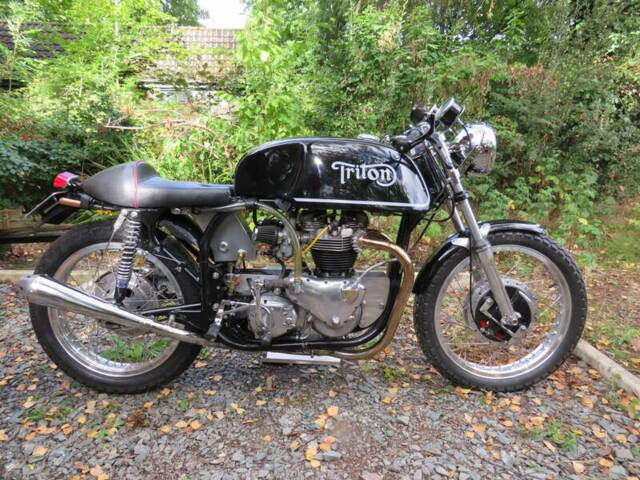
1970 | Triton 650
1970 Norton Triton 648cc
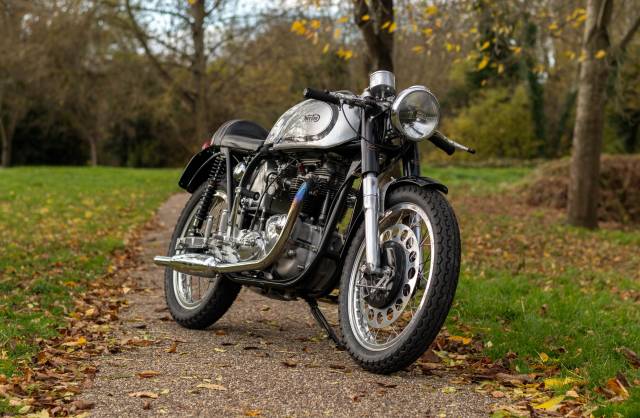
1979 | Triton 650
Fabled Featherbed Frame - Stunning Recreation
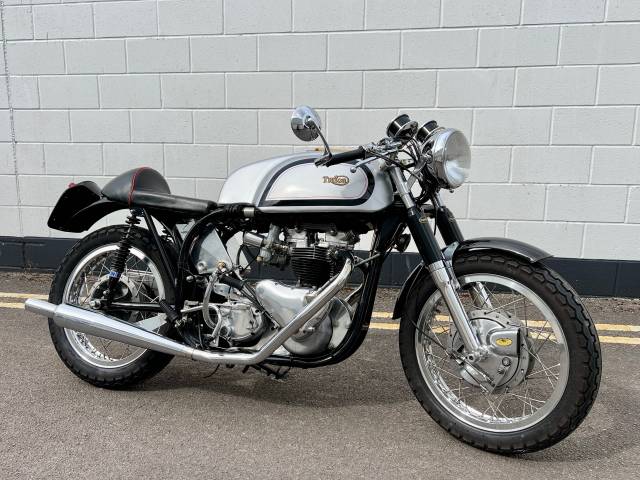
1960 | Triton 650
Triton Cafe Racer 650cc 1960
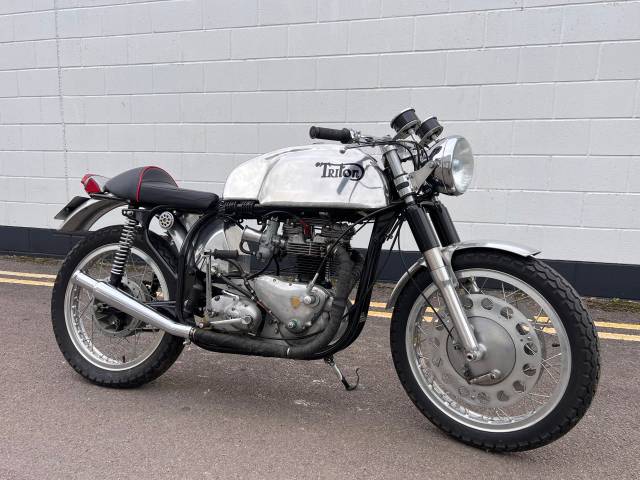
1961 | Triton 650
Triton Cafe Racer 650cc 1961
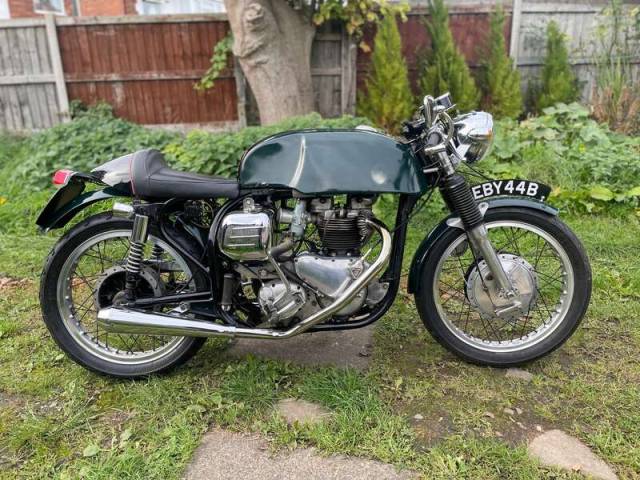
1964 | Triton 650
1964 Norton 'Triton' 650cc
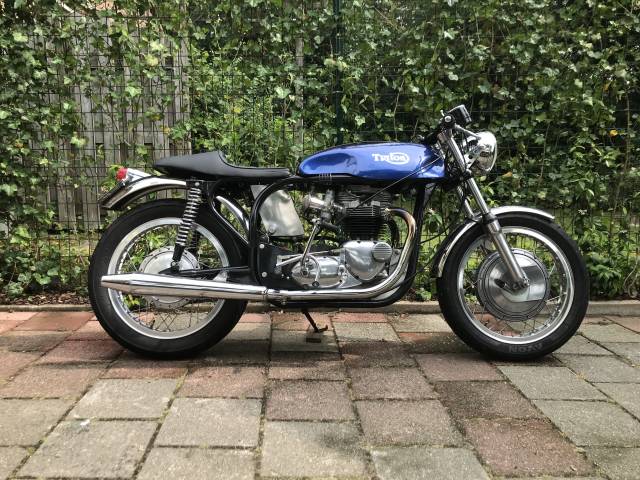
1970 | Triton 750
The Real Thing
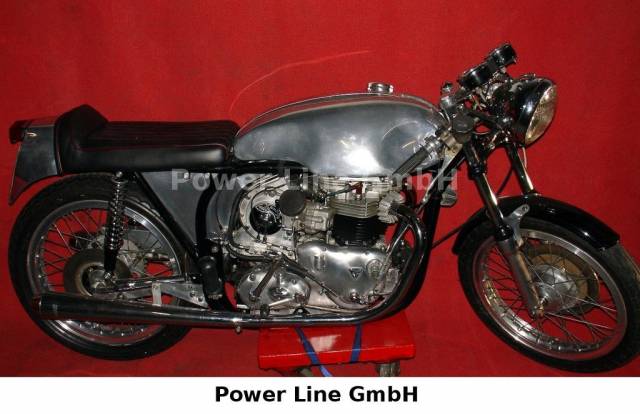
1973 | Triton 750
Norton Manx-Rahmen und Kompressoraufladung

Create search alert
Let yourself be notified as soon as a listing is published that matches your search filters.
History
The Triton was never a factory motorcycle. It was a British answer to a very specific problem: how do you combine the best engine in the country with the best handling chassis in the country? The answer, developed in post-war England and refined through the 1950s and 1960s, was simple and brilliant: take a Triumph parallel-twin and place it in a Norton Featherbed frame.
That pairing mattered because the two big names represented different strengths. Triumph built lively, charismatic twins with plenty of torque and easy tuning potential. Norton, meanwhile, had earned a fearsome reputation for chassis stability. The Featherbed frame, created by the McCandless brothers and introduced in the early 1950s, transformed Norton’s road behaviour and became a benchmark for motorcycle handling. For riders who wanted speed, confidence and a more precise line through corners, it was hard to beat.
The Triton emerged from that culture of ingenious improvisation. British riders and club racers quickly realised that if they could buy a used Featherbed frame and source a Triumph engine, they could create something better suited to hard road use than many contemporary production bikes. In a period when factory motorcycles often forced owners to accept compromises in frame stiffness, weight distribution or outright stability, the Triton gave enthusiasts the freedom to build the machine they actually wanted.
By the mid-1950s, Tritons were becoming part of a broader British custom and racing scene. They were not polished showroom products. They were personal statements, built in sheds, small workshops and specialist garages by riders who understood every bolt and bracket on the machine. That individuality is central to the Triton’s appeal today: each one has a story, and almost none are identical.
The bike became especially important in London’s café racer culture. The Ace Café, the Watling Street runs and later the Brighton gatherings all fed a scene where speed, sound and attitude mattered just as much as engineering. The Triton fit that world perfectly. It was light, narrow, aggressive and fast enough to matter in ton-up folklore. For the Rockers, it was the bike.
A huge part of the Triton legend comes from Dave Degens and Dresda Autos in Putney, London. Degens took the hybrid idea seriously and helped professionalise it, building machines with consistent geometry and better execution than many home-built specials. His success on the track added real credibility. He won the Barcelona 24-hour race in 1965 and again in 1970, turning the Triton from club-racer legend into proven competition machinery.
Today, the Triton sits at the heart of British motorcycle history: not as a factory badge, but as a perfect example of the ingenuity, independence and mechanical confidence that defined the post-war café racer scene.
Highlights
What makes a Triton special is not one detail, but the sum of its parts. It is a motorcycle built around a clear philosophy: keep the best, discard the rest.
The Norton Featherbed frame is the defining element. Buyers will usually encounter two main versions: the Wideline frame from roughly 1957 to 1961, and the narrower Slimline frame from 1961 to 1971. The Wideline offers more room around the engine and remains a favourite for earlier pre-unit builds. The Slimline is more compact and visually cleaner, and it is the version most people imagine when they picture a classic Triton café racer.
The engine choice is equally important. The most desirable and commonly seen units include the Triumph T100 500cc, 6T Thunderbird 650cc, T120 Bonneville 649cc and later T140 750cc engines. Among them, the T120 Bonneville is the classic sweet spot for many buyers: a strong twin with a 71 x 82 mm bore and stroke, twin Amal carburettors, and a lively but tractable character. In period tune, output typically sat around 46-56 bhp, though many bikes were modified well beyond that.
The Triton’s appeal also lies in its weight and proportions. At around 160 kg, it is dramatically lighter than many big British production motorcycles of the era. That low mass, paired with the Featherbed’s handling, gives the bike a sense of alertness that still feels impressive today. It is not just quick in a straight line; it feels eager and responsive when leaned over.
Another highlight is its tunability. Triumph twins have long been valued by racers and road builders because they respond well to careful preparation. Period and later upgrades range from camshaft changes and higher-compression pistons to improved ignition and carburettor set-ups. That means the Triton can be anything from a subtle, original-style road bike to a highly tuned café racer with serious performance credentials.
For collectors, the strongest examples are the ones with clear provenance, well-executed frame work and sympathetic detailing. A genuine, correctly built Triton is not just a parts-bin special; it is a handcrafted expression of British motorcycling culture.
Technical Data
Because the Triton is a hybrid and often a bespoke build, specification varies widely. The table below covers the most typical configurations seen on the market.
There is no single factory standard, so buyers should always inspect the machine as an individual build rather than assume a universal spec. A carefully documented Triton will usually show clear evidence of the frame identity, engine number, build quality and any later modifications.
Market Overview
The Triton market in Great Britain remains niche, but it is active and surprisingly liquid for the right examples. Demand is driven by three buyer groups: purists who want a correct period café racer, riders who want a usable classic with character, and collectors drawn to the Rocker-era story.
Offers & Prices
Current UK market levels in 2024-25 suggest the following broad bands:
- Project bikes / incomplete builds: around £3,500-£4,500
- Decent rider-quality examples: around £7,500
- Very good / show-quality builds: £10,000-£15,000+
Recent auction and sales results back up that picture:
- May 2025, Iconic Auctioneers: 1955 Dresda, sold for £3,680
- July 2025, Iconic Auctioneers: 1965 Triton 745cc, sold for £7,475
- June 2024, Anglia Car Auctions: 1965 Norton Triton, sold for £7,452
- July 2024, H&H: 1960 Triton 650, sold for £5,520
- October 2024, H&H: 1974 Triton 650, sold for £4,140
- June 2025, Bonhams: Triton 650cc café racer, sold for £4,385.59
- Bring a Trailer, 2025: 1961 Triumph Triton, sold for $10,500
For UK buyers, those figures matter because they show that Tritons are not purely trophy bikes. Good riders can still be found at sensible money, especially if the build is honest and the paperwork is clear. By contrast, documented specialist builds, particularly those associated with names such as Dresda Autos, can command significantly more.
What to check before you buy
The first rule is identity. A Triton is often registered as assembled from parts or under the Norton frame identity, with a V5C based on the frame number. That is normal for the type, but it means paperwork has to be checked carefully.
- Frame number: confirm the Featherbed frame stamping and check the period-correct format
- Engine number: verify the Triumph engine against records where possible
- Matching era: make sure the frame, motor and components make sense together
- Build quality: look closely at motor plates, engine mounts, brackets and welding
- Registration history: ask whether the bike has been on a Norton V5C, a special-build record or an older logbook-based registration
Because many Tritons were built by hand, the quality can vary from superb to crude. The best examples have tidy fabrication, sensible geometry and a coherent parts strategy. Poorly assembled bikes can look the part but ride badly.
UK buyer context
The Triton is deeply tied to British café racer culture. If you are buying in the UK, that emotional background matters. The bike speaks to the Mod vs Rocker era, to the Ace Café, to Brighton runs and to the ton-up crowd. Many buyers want not just a machine, but a slice of that history.
Parts support is also a real advantage. Triumph twin components are widely supported by specialists such as Norvil Motorcycle Company and Draganfly, while RGM Norton remains important for Featherbed and Norton-related parts. That means a Triton can be kept on the road more easily than many rarer one-off specials, provided the build is sensible.
Who should buy one?
A Triton suits buyers who value character, engineering and history over factory originality. It is ideal for someone who wants:
- a British café racer with real cultural significance
- a light, lively classic that still rides with intent
- a machine with strong visual presence and high mechanical appeal
- a bike that can be maintained by knowledgeable specialists
It is less suitable for buyers who want effortless ownership, modern braking performance or plug-and-play parts compatibility. A Triton rewards enthusiasm and understanding.
Performance
The Triton is famous because it rides like the idea of a fast British motorcycle should ride. It feels focused, direct and alive. Even at low speeds, the riding position tells you this is a machine built for purpose rather than comfort.
Once under way, the Featherbed frame gives the bike its defining quality: confidence in corners. The steering is light but not nervous. The chassis tracks cleanly through bends and gives the rider a sense of precision that many period rivals simply could not match. That is why the Triton became such a favourite among club racers and fast-road riders.
The Triumph twin adds the emotional layer. Whether in 500cc, 650cc or 750cc form, the engine delivers a familiar British parallel-twin pulse, with a mechanical honesty that is part of the appeal. A well-set-up T120 Bonneville unit has enough torque for real-world road riding, and when tuned properly it can feel surprisingly urgent. With the right gearing and a healthy motor, around 185 km/h is possible, though wind blast and braking limits remind you that this is a classic, not a modern superbike.
In traffic, the Triton can be demanding. Clip-on bars, rear-set pegs and a narrow seat are all part of the package. But once the road opens, the bike comes alive. It feels slim, committed and beautifully mechanical. Every input from the rider seems to translate immediately into movement.
Braking is the one area where period authenticity can become a compromise. Drum brakes, even good ones, need correct adjustment and regular use. A well-sorted Triton can stop adequately, but it asks the rider to plan ahead. That is part of the classic experience and one reason why many owners ride them with respect rather than aggression.
For many enthusiasts, that is exactly the point. The Triton is not about convenience. It is about connection.
Design
The Triton’s design language is pure British café racer: lean, purposeful and visibly handmade. It is a motorcycle with no corporate styling brief and no attempt to please everyone. Instead, it reflects the priorities of its builder and the demands of fast road riding.
The visual centrepiece is the Featherbed frame. Its flowing twin-loop silhouette gives the bike a poised, almost athletic stance. Into that frame sits the Triumph twin, usually displayed rather than hidden. The engine is part of the look, not merely part of the function.
Common period-correct styling cues include:
- aluminium tank
- low clip-on handlebars
- rear-set footrests
- single seat or slim café seat
- polished alloy details
- megaphone silencers
- wire wheels with a purposeful stance
Some builds are beautifully minimal. Others are more elaborate, with polished cases, special tanks, racing numbers or period fairings. The best ones understand balance: enough aggression to capture the café racer spirit, but not so much decoration that the machine loses its honesty.
In the British context, the Triton has always been a style statement as much as a technical solution. It stood apart from the polished factory bikes and from the lighter, more playful scooter culture of the Mods. Where the Mod scene favoured Lambrettas and Vespas, the Rockers wanted noise, speed and presence. The Triton delivered all three.
That design still resonates today. Modern custom builders continue to borrow from the Triton formula because it has proved so durable: a narrow tank, a low stance, mechanical clarity and a frame that looks fast even when standing still.
Other
The Triton’s wider importance goes far beyond simple specification. It became a symbol of British independence, of the home-built racing culture that flourished when enthusiasts were willing to do the work themselves.
Its racing links are particularly strong. Dave Degens and Dresda Autos gave the idea real authority, showing that a well-built Triton could be competitive in serious endurance racing. Winning the Barcelona 24-hour race in 1965 and 1970 was a major statement. It proved that clever engineering, light weight and balance could still beat brute force.
That same spirit shaped the café racer boom. The Triton was not built for showroom polish. It was built for the run to the café, the race back, and the next modification on Monday night. The bike belongs to the era of the Ace Café, the Watling Street, the Brighton run and the ton-up boys who wanted their machines to look as quick as they felt.
For today’s collector, that cultural story is part of the value. A Triton is not just a custom motorcycle. It is a historically important hybrid that helped define a whole British subculture. It sits alongside other famous specials such as the Tribsa and Norvin, but the Triton remains the best known and most desirable of the group.
Another practical point is registration. In the UK, many Tritons are documented under the Norton frame number, and some are recorded as specials assembled from parts. That is not a defect in itself, but buyers should insist on transparent paperwork. A clear V5C, good engine and frame traceability, and club verification from organisations such as the Norton Owners Club or VMCC all help establish confidence.
Because the Triton is such a modular machine, restoration can range from straightforward to expensive. A correct Featherbed frame, a healthy Triumph twin and the right cycle parts are all available, but quality components are not always cheap. Specialist suppliers remain important, and a well-informed buyer will usually budget for fettling even after purchase.
Summary
The Triton is one of the great British motorbike hybrids: a Triumph engine in a Norton Featherbed frame, built to solve a handling problem and transformed into a cultural icon. It is light, quick, charismatic and deeply tied to the Rocker and café racer era.
For buyers in Great Britain, it offers a rare combination of history, usability and individual character. It is not a mainstream classic and it is not a plug-and-play modern machine. It is a rider’s classic with real depth, strong parts support and a market that rewards good examples.
If you are looking for a Triton, focus on the frame identity, the engine number, the quality of the build and the paperwork. Prices today range from around £3,500 for projects to £10,000-£15,000+ for exceptional machines, with specialist Dresda-built examples able to stretch further.
That spread makes the Triton accessible to different kinds of buyers, from hands-on enthusiasts to serious collectors. Above all, it remains what it always was: a brilliant British idea, made real by people who wanted their motorbike to be better than the factory could offer.
Find your Triton on Classic Trader and discover now why this hybrid still defines the café racer dream.