- Motorcycle
- Standard (0 offers)
Buy Standard Motorcycle
Between 1925 and 1955, Standard produced high-end motorcycles in Ludwigsburg and Stuttgart that combined German engineering with British design elements like licensed Brough Superior Castle forks. Rare and technically sophisticated, these machines represent a pinnacle of pre-war craftsmanship that remains a hidden gem for serious UK collectors.
Search results
Currently, there are no matching listings for your search.
Create search alert
Let yourself be notified as soon as a listing is published that matches your search filters.
Create listing
Do you have a Standard that you want to sell? Then create a listing now.
Create listingStandard listing references from Classic Trader
Below you will find listings related to your search that are no longer available on Classic Trader. Use this information to gain insight into availability, value trends, and current pricing for a "Standard" to make a more informed purchasing decision.
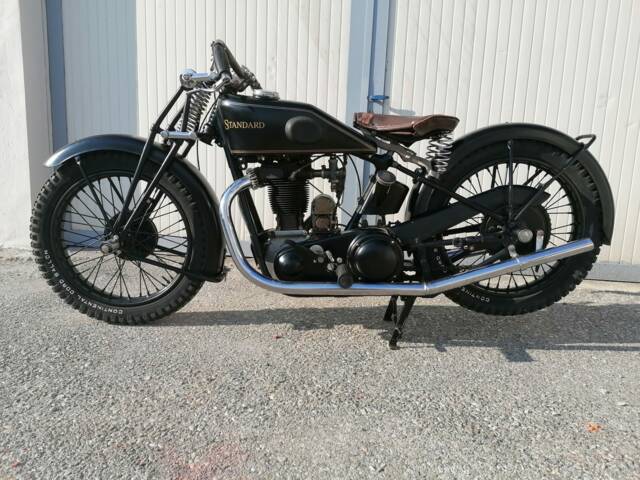
1929 | Standard BS 500
MAG

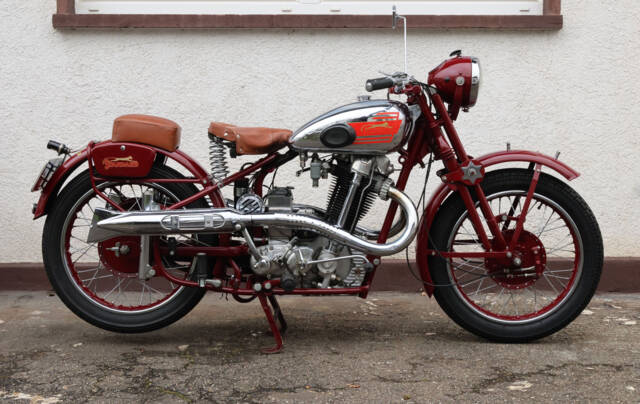
1939 | Standard Rex Sport 500
Standard Rex Sport 500 mit Hinterradfederung

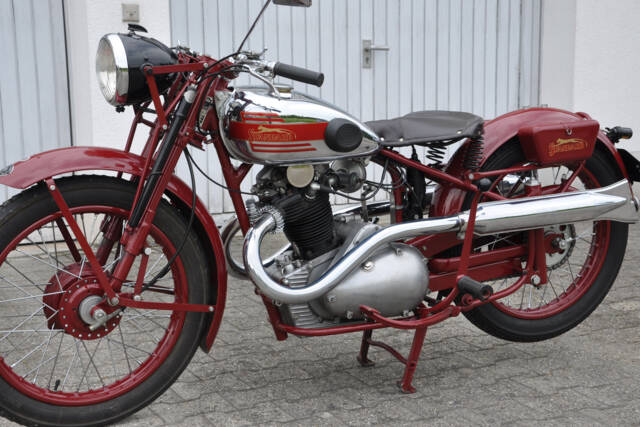
1949 | Standard Rex Sport 350
Eine von 30 Privataschinen
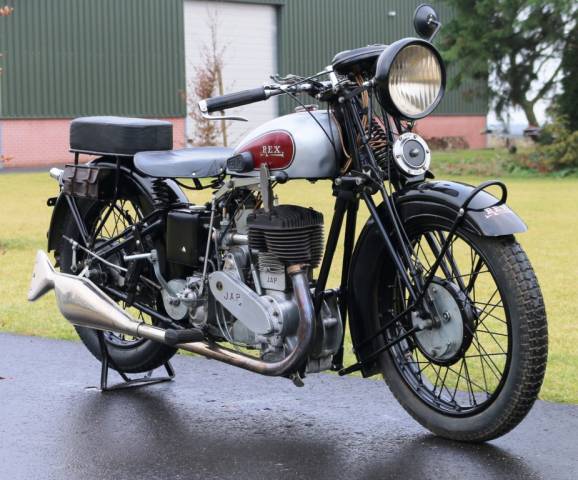
1930 | Standard Rex Sport 500
Rex 500cc sv Jap year 1930

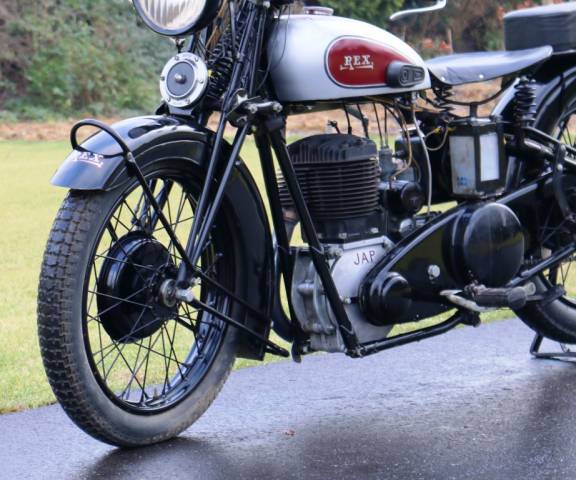
1934 | Standard Rex Sport 350
Rex 500cc Jap year 1934 with swedisch papers
Create search alert
Let yourself be notified as soon as a listing is published that matches your search filters.
Create listing
Do you have a Standard that you want to sell? Then create a listing now.
Create listingHistory & Heritage
The story of Standard Fahrzeugfabrik GmbH is one of ambition, technical excellence, and a unique Anglo-German connection that fascinates collectors to this day. Founded in 1926 by Wilhelm Gutbrod in Ludwigsburg, Germany, the brand quickly established itself as a manufacturer of premium motorcycles that refused to compromise on quality. Gutbrod, an engineer with a vision for high-performance machinery, positioned Standard in the upper echelons of the market, often competing directly with the likes of BMW and the most prestigious British imports.
Production spanned three main locations over three decades: Ludwigsburg (1926–1933), Stuttgart-Feuerbach (1933–1937), and Plochingen am Neckar (1937–1955). From the outset, Gutbrod understood that to compete at the top, he needed the best components available. This led to a significant partnership with the Swiss engine manufacturer MAG (Motosacoche Acacias Genève) and, perhaps most interestingly for the British market, a licensing agreement with George Brough.
The Standard BS500 OHV (1929–1933) was the model that truly put the brand on the map. It featured a 496cc MAG OHV single-cylinder engine producing 22 hp, but its most striking feature was the Castle forks. These leading-link forks were produced under license from Brough Superior, the legendary British "Rolls-Royce of Motorcycles." This connection earned Standard the nickname "the German Brough Superior" among enthusiasts who recognised the shared DNA in front-end design and overall build quality.
Parallel to the 500cc models, Standard produced the gargantuan BT1000 (1930–1933). This luxury tourer was powered by a 992cc MAG IOE V-twin engine and equipped with a four-speed Hurth gearbox. At a time when a worker's annual salary might be less than the cost of the machine, the BT1000 was a statement of wealth and technical appreciation. It was more expensive than the top-of-the-line DKW or Zündapp models of the era, firmly cementing Standard's status as a boutique manufacturer.
As the 1930s progressed and economic pressures mounted, Standard adapted. In 1934, they began introducing their own engine designs, most notably the Rex Sport series with overhead camshaft (OHC) engines in 350cc and 500cc displacements. These were aimed at the sporting rider who demanded modern, high-revving performance. Simultaneously, the Feuergeist (Fire Spirit) series was launched to capture the entry-level market. These lightweight two-stroke models (175cc to 200cc), with names like Kobold, Hexe, and Nixe, offered Standard quality in a more affordable package.
Following Wilhelm Gutbrod's death in 1948, his son Walter took over the company. While post-war production continued in Plochingen, the focus shifted increasingly towards small cars and agricultural machinery (the famous Gutbrod tractors). Motorcycle production eventually ceased in the mid-1950s, leaving behind a legacy of rare, high-quality machines that are today among the most sought-after German pre-war motorcycles.
Highlights & Features
What sets a Standard motorcycle apart from its contemporaries is the uncompromising selection of components. Wilhelm Gutbrod did not believe in reinventing the wheel if a superior solution already existed. This philosophy resulted in motorcycles that were essentially "best-of" compilations of European engineering.
The Brough Superior Castle forks are the undisputed highlight for any collector. Licensed directly from George Brough, these forks were a leading-link design that offered superior stability and comfort compared to the more common girder or parallelogram forks of the 1920s. In the UK, these forks are synonymous with the SS80 and SS100 models; seeing them on a German machine like the BS500 is a testament to Gutbrod's commitment to using the finest technology, regardless of national borders.
The use of MAG engines from Switzerland provided Standard with a level of reliability and performance that few domestic German manufacturers could match. MAG units were known for their precision and were used by other prestigious brands like Motosacoche and Condor. Whether it was the punchy 500cc OHV single or the effortless torque of the 1000cc V-twin, the MAG heart of a Standard was always its strongest selling point.
Technical Innovation and Racing Success: Standard was not just about luxury; they were also formidable on the track. Hermann Lang, who would later become a legendary Formula 1 driver for Mercedes-Benz, began his career racing a Standard sidecar outfit in 1928. Other notable riders like Ernst Burggaller achieved national and international success on Standard machinery. This racing pedigree was reflected in the production models, particularly the Rex Sport OHC bikes, which featured advanced valve train technology for the time.
Key Features of the Standard Range:
- Castle Leading-Link Forks: Licensed British design for unparalleled front-end handling.
- MAG Powerplants: Swiss-made engines ranging from 200cc to 1000cc.
- Hurth Gearboxes: Renowned for their precision and durability.
- High-Quality Finish: Gold pinstriping, deep black enamel, and extensive use of chrome on premium models.
- Exclusivity: Low production numbers compared to mass-market brands like NSU or DKW.
Technical Data
The following tables outline the specifications for the most significant models in the Standard line-up. These figures illustrate the brand's progression from heavy luxury tourers to advanced sporting machines and practical lightweights.
Standard BS500 OHV (1929–1933)
The "German Brough" and the most iconic model for many collectors.
Standard BT1000 (1930–1933)
The flagship V-twin, a rare beast on the modern market.
Standard Rex Sport H 354 (1936–1940)
The advanced OHC model representing the brand's sporting ambitions.
Standard Feuergeist Series (1932–1940)
The "Fire Spirit" range for the broader market.
Market Overview & Buying Tips
Current Market Conditions (2024–2025)
Standard motorcycles are among the rarest German pre-war machines available to collectors today. In the UK market, they are virtually invisible in mainstream auctions. You will rarely find them at Bonhams or H&H; instead, they tend to change hands through specialist networks or high-end European auctions. The connection to Brough Superior via the Castle forks makes them particularly interesting to British collectors who appreciate the "Rolls-Royce" lineage but seek something more unique than a standard British marque.
Because of their rarity, public sales data is sparse. Most transactions occur privately between seasoned collectors of pre-war machinery. However, when they do appear, they command significant attention due to their technical sophistication and the high quality of their components (MAG, Hurth, Castle).
Estimated Price Ranges (2024–2025)
Prices are highly dependent on the model and the originality of the key components (especially the forks and engine).
Note: Flagship models like the BT1000 V-twin are in a different league entirely. If a genuine, well-documented BT1000 were to reach the UK market, prices could easily exceed £50,000–£80,000 depending on provenance.
Buyer Profiles
The Pre-War Connoisseur: Collectors who focus on the "Golden Era" of motorcycling (1920–1939). They value the engineering diversity of the period and the connection to automotive history (Gutbrod's later work with Josef Ganz and the early Volkswagen concepts).
The MAG Engine Enthusiast: There is a dedicated following for Swiss MAG engines. Collectors of Motosacoche or Condor often look to Standard as the premier German application of these legendary powerplants.
The "Alternative Brough" Collector: Enthusiasts who admire the Brough Superior aesthetic and technology but find the prices of Nottingham-built machines (often exceeding £150k) prohibitive. A Standard BS500 offers the same iconic Castle forks and high-end feel for a fraction of the cost.
Brand-Wide Characteristics to Look For
Component Originality: A Standard is only as valuable as its components. Ensure the MAG engine and Castle forks are correct for the model year. Replacing a missing or incorrect Castle fork is an expensive and difficult task, as parts are not interchangeable with standard girder forks.
Parts Availability: This is the greatest challenge for a Standard owner. While Motorrad Stemler GmbH in Germany remains a vital resource for gaskets, exhaust systems, and some rubber parts, many mechanical internals for MAG engines must be custom-fabricated. In the UK, specialists who handle Brough Superior or vintage MAG engines (often found in the stationary engine or early tractor scenes) may be able to assist with mechanical overhauls.
Restoration Costs: Budgeting for a Standard restoration requires patience and deep pockets. A mechanical rebuild of a MAG single can cost between £4,000 and £8,000. A full "concours" restoration can easily run into the £30,000+ range, often exceeding the market value of the finished bike. This is a labour of love, not a quick flip.
Essential Inspection Points
- Castle Forks: Check for play in the leading-link pivots. These require regular greasing; if neglected, the bushes and pins wear, leading to vague steering. Inspect the springs for cracks or sagging.
- MAG Engine Internals: Listen for heavy knocking (big-end bearing) or excessive top-end rattle. MAG engines are precision-built but parts are rare. Check the oil pressure if a gauge is fitted, or look for signs of consistent oiling at the rockers.
- Hurth Gearbox: These are generally robust but check that all gears engage cleanly and don't "jump" out under load. The gear linkage on pre-war models can develop significant play.
- Frame Integrity: Pre-war frames can suffer from stress cracks, especially around the engine mounts and the headstock. Look for signs of poor historical repairs or "botched" welding.
- Magneto and Electrics: Most Standards used Bosch or BTH magnetos. Ensure the spark is strong. Many have been converted from 6V to 12V; check that the wiring is tidy and the conversion was done professionally.
- Carburettion: Original Amal or Fischer carburettors are often worn. Check for "hunting" at idle or difficulty starting, which may indicate a worn slide or body.
Questions for the Seller
- Is there a documented history of the restoration? (Photographs, invoices).
- Are the engine and frame numbers matching or period-correct?
- Where were the replacement parts sourced? (Original, reproduction, or custom-made).
- When were the Castle forks last serviced/rebushed?
- Does the bike come with any original manuals or factory literature?
Riding Experience & Performance
Riding a Standard BS500 OHV is a sensory journey back to the late 1920s. It is not a machine for the hurried; it requires a deliberate, mechanical sympathy that rewards the rider with a unique transparency. When you kick the 496cc MAG single to life, the sound is a rhythmic, authoritative "thump" that speaks of high compression and Swiss precision.
On the road, the 22 hp delivery is linear. It doesn't surge like a modern bike; instead, it pulls with a steady, inevitable momentum. Reaching 60 mph feels like a genuine achievement, and while the factory claimed 75 mph, the machine feels most comfortable cruising at 50–55 mph on modern A-roads. The four-speed Hurth gearbox requires a firm but patient foot (or hand, depending on the model); you must wait for the revs to drop slightly to ensure a smooth, silent engagement.
The Castle forks are the star of the show. Unlike the jarring feedback of many contemporary girder forks, the leading-link design provides a surprisingly supple ride. It "planes" over minor road imperfections, though the steering can feel slightly "slow" or indirect compared to a modern telescopic fork. It is a bike designed for the long-distance touring of its day—stable, comfortable, and dignified.
The BT1000 V-twin offers a different experience entirely. The torque is immense, allowing you to pull away in almost any gear. The vibration is more pronounced—a low-frequency thrum that resonates through the frame—but it never feels stressed. It is a "gentleman's express," designed to eat up miles with a sidecar or a pillion in tow.
In contrast, the Rex Sport OHC models feel much more "modern." The engine is happier to rev, and the chassis feels tighter. It encourages a more spirited riding style, though the drum brakes of the era always serve as a reminder that stopping distances are significantly longer than what we expect today.
Overall Impression: A Standard motorcycle feels like a high-quality instrument. It is heavy, mechanical, and demands your full attention. You don't just ride a Standard; you operate it. For the collector who enjoys the "theatre" of pre-war motorcycling, there are few better stages.
Design & Equipment
The design philosophy of Standard was functional elegance. Wilhelm Gutbrod was not interested in the flamboyant Art Deco flourishes seen on some French or Italian machines of the period. Instead, he focused on classic proportions and a "technical" aesthetic that appealed to the professional classes—doctors, engineers, and successful businessmen.
The visual dominance of the Castle forks cannot be overstated. With their exposed springs and complex linkage, they give the front end a muscular, purposeful look that is instantly recognisable. This is complemented by the deep, lustrous black enamel of the frame and the high-quality chrome on the mudguards and fuel tank of the premium models.
Key Design Elements:
- The Fuel Tank: Often finished in black with delicate gold pinstriping and the "Standard" script in a classic font. It sits low on the frame, contributing to the bike's long, lean silhouette.
- Exposed Engineering: Standard made no effort to hide the mechanicals. The MAG engine, with its beautifully cast cooling fins and external pushrods (on OHV models), is the centrepiece of the design.
- Quality Fittings: From the massive headlamps to the sturdy luggage racks and leather tool rolls, every piece of equipment feels over-engineered for longevity.
The Feuergeist models, while simpler, still carried the family look. They were the "Volkswagen" of the range—pragmatic, well-proportioned, and devoid of unnecessary frills. Even on these entry-level bikes, the paint quality and fit-and-finish remained high, ensuring that a Standard owner always felt they were riding something superior to the mass-produced competition.
Other
The Automotive Connection
The Standard story doesn't end with motorcycles. Wilhelm Gutbrod was a pioneer of the "people's car" concept. In the early 1930s, he produced the Standard Superior, a small car with a rear-mounted engine and a central tube frame—ideas championed by the Jewish engineer Josef Ganz. While history often credits Ferdinand Porsche with the birth of the Volkswagen, many of the core concepts were already being explored by Gutbrod and Ganz. This historical weight adds a layer of intellectual appeal to Standard motorcycles for collectors interested in the broader evolution of transport.
Hermann Lang: From Standard to Silver Arrows
The fact that Hermann Lang began his career on a Standard is a point of pride for the brand's enthusiasts. Lang's transition from a motorcycle mechanic and racer to one of the greatest Grand Prix drivers of all time (winning the 1939 European Championship for Mercedes-Benz) provides a glamorous link to the golden age of motor racing.
Export and Rarity in the UK
Standard was never a major exporter to the UK. During the 1930s, the British motorcycle industry was the strongest in the world, and there was little room for expensive German imports. Most Standards in the UK today are recent imports brought in by collectors who appreciate their unique technical specifications. This makes them a conversation starter at any vintage motorcycle gathering—even the most seasoned BSA or Norton owner will stop to admire the "German Brough."
Summary
Standard motorcycles represent a fascinating chapter of pre-war European motorcycling where German engineering met British design and Swiss power. Wilhelm Gutbrod's refusal to compromise on quality resulted in machines that were technically superior to almost anything else on the road, even if they were produced in much smaller numbers than their rivals.
The BS500 OHV remains the quintessential Standard, offering the iconic Brough Superior Castle forks and a potent MAG engine in a package that exudes quality. The BT1000 is the ultimate prize for the V-twin enthusiast, while the Rex Sport and Feuergeist models show the brand's versatility.
For the UK collector, a Standard is a bold choice. It requires a commitment to sourcing parts from the Continent and a willingness to master the idiosyncrasies of pre-war MAG technology. However, the reward is a machine that offers a riding experience and a level of exclusivity that few other brands can match. It is, quite literally, the "Standard" by which other pre-war motorcycles of the era should be measured.
Buying Recommendation: Best suited for experienced collectors of pre-war machinery. If you value technical rarity, a connection to the Brough Superior legend, and the "over-engineered" feel of premium German manufacturing, a Standard is one of the most rewarding investments you can make in the classic motorcycle market.