- Motorcycle
- Saroléa (0 offers)
Buy Saroléa Motorcycle
From 1903 to 1960, the Herstal factory in Belgium produced motorcycles that blended British engineering with Belgian craftsmanship. Today, these rare machines, once sold in Britain as "Kerry", are among the most sought-after rarities for collectors of European classics.
Search results
Currently, there are no matching listings for your search.
Create search alert
Let yourself be notified as soon as a listing is published that matches your search filters.
Saroléa listing references from Classic Trader
Below you will find listings related to your search that are no longer available on Classic Trader. Use this information to gain insight into availability, value trends, and current pricing for a "Saroléa" to make a more informed purchasing decision.
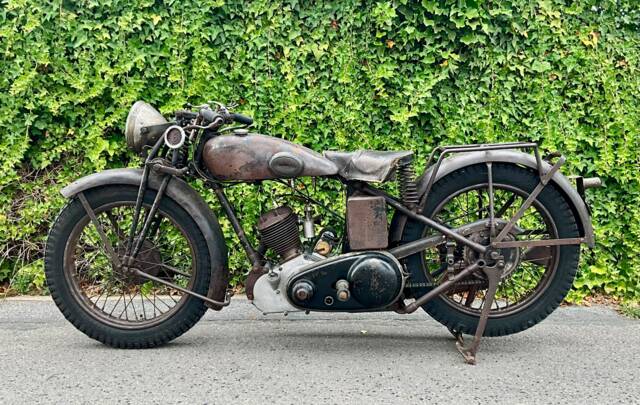
1933 | Saroléa 33A Touriste
matching numbers!!

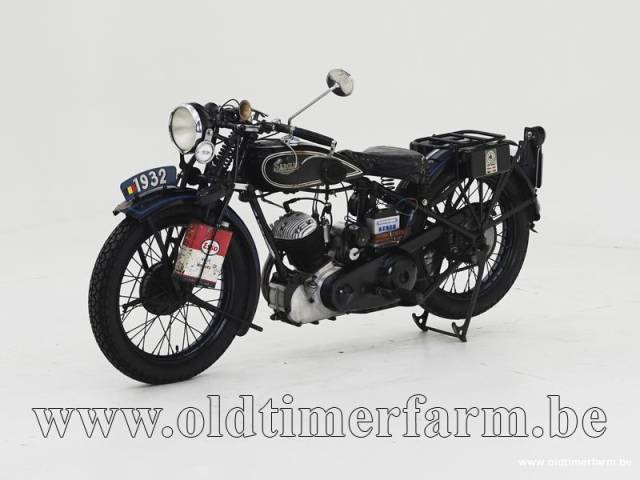
1932 | Saroléa 32A Touriste
1932 Sarolea 32F '32
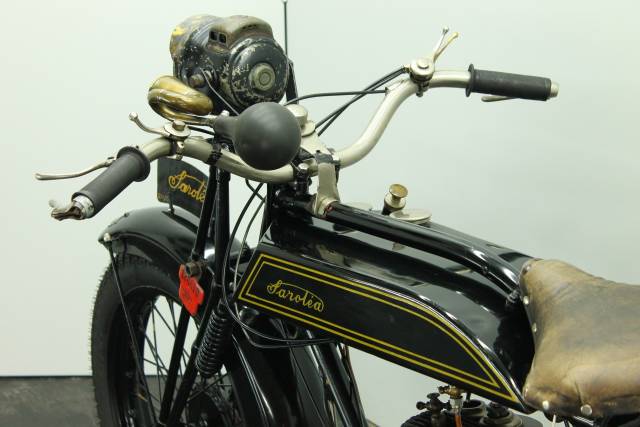
1925 | Saroléa Super Sport 500
Sarolea T23 1925 500cc tourist version
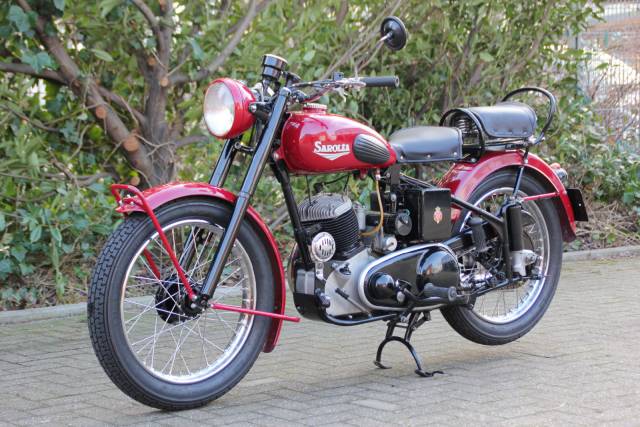
1953 | Saroléa 400 Estafette
Sarolea 400 Estafette

Create search alert
Let yourself be notified as soon as a listing is published that matches your search filters.
History & Heritage
The roots of Saroléa stretch back to 1850, when the company was founded in Herstal, near Liège, as a weapons manufacturer. By 1892, the firm expanded its portfolio to include bicycles, followed by motor tricycles and small cars from 1896. The decisive step occurred in 1903 with the entry into motorcycle production – making Saroléa one of the true pioneers of the Belgian motorcycle industry.
For the British enthusiast, the early history of Saroléa is inextricably linked with the Kerry brand. In the early 20th century, Saroléa motorcycles were exported to the UK and sold under the Kerry name to appeal to local buyers. These machines featured 2.75 hp and 3.5 hp single-cylinder four-stroke engines, known for their solid build quality. By 1906, Saroléa presented a 5 hp V-twin, catapulting the brand into the technical premier league. The designs were so sophisticated that they were not only sold as complete bikes but also supplied as engines to various British manufacturers.
A technical milestone was reached in 1914 with a 546cc side-valve engine. In the following years, Saroléa focused on proven 346cc and 496cc singles, available with either overhead valves (OHV) or side valves (SV). The philosophy was clear: highest quality British components combined with Belgian manufacturing precision. Amal carburettors, Best & Lloyd oil pumps, and Sturmey-Archer gearboxes defined the technical profile, making these bikes surprisingly familiar to those used to Norton or BSA machinery of the era.
The 1930s marked the sporting peak. Saroléa maintained a factory team with OHC racing engines and developed revolutionary singles with bevel-gear drive and double overhead camshafts in 1938 – a construction far ahead of its time that gained international recognition. During this period, the factory in Herstal grew to 6,000 m², producing up to 75 machines a day by 1929.
After the Second World War, Saroléa ventured into larger displacements. Between 1950 and 1959, the Atlantic series was produced with a parallel-twin engine, initially with 500cc and later bored out to 600cc. However, the market was changing: small cars became more affordable, and the motorcycle boom ebbed away. Saroléa sought collaborations with other Belgian brands like FN and Gillet Herstal and experimented with Sachs two-stroke engines, but the decline could not be halted. In 1960, the brand merged into Gillet, and by 1963, classic motorcycle production ended.
A surprising comeback occurred in 2014 with the electric Saroléa SP7, creating a symbolic bridge between tradition and the future, though for the classic collector, the golden era remains the half-century of petrol-powered innovation in Herstal.
Highlights & Features
What distinguishes Saroléa motorcycles is the unique synthesis of Anglo-Belgian engineering. While British brands like Norton or Velocette became household names worldwide, Saroléa remained something of a connoisseur's secret – today a decisive advantage for collectors seeking exclusivity without sacrificing the familiarity of British-sourced components.
The 31A series from the early 1930s is considered the epitome of the robust touring motorcycle. Originally introduced as the Type 250 and renamed in 1931, it served as a mass-market motorcycle for everyday riders. The machine combined reliability with affordable maintenance – virtues that made it the workhorse of its era. For the UK market, these bikes often represented a high-quality alternative to domestic lightweights.
Technically more demanding were the 38AL and 38AS models of 1938/39. The 38AS featured an oval three-speed gearbox, while the 38AL was equipped with a tall rectangular four-speed gearbox – subtle differences that delight experts today. Both variants embody the pinnacle of pre-war construction at Saroléa, offering performance that could challenge many contemporary British 350s.
For motorsport enthusiasts, the 30R from 1930 remains a highlight. As the brand's first dedicated racing motorcycle, it laid the foundation for later successes. In 1937, a model with bevel-gear OHC drive followed – a technical refinement mastered by only a few manufacturers. From the late 1930s, the focus shifted towards motocross, where Saroléa also made its mark, eventually leading to Victor Leloup winning the inaugural FIM European Motocross Championship in 1952.
The Atlantic 500 and 600 of the post-war period represent the last great innovation. The parallel-twin was intended to lead Saroléa into the modern era. Although it did not achieve commercial dominance, the engine still impresses today with its refined smoothness and solid torque.
An often overlooked detail: many Saroléa models carry Belgian identification plates with French or Dutch inscriptions – a charming testament to their multilingual home and a key authenticity feature during restorations.
Technical Data
The technical diversity of Saroléa reflects 57 years of motorcycle construction. Here is an overview of the most important models:
Common features of many pre-war models:
- Rigid rear frame or plunger suspension
- Drum brakes front and rear
- Amal carburettors (British licence/supply)
- Sturmey-Archer gearboxes (British supply)
- Best & Lloyd oil pumps
- Magneto ignition (frequently Lucas or Bosch)
The Atlantic series marked a technological leap: telescopic forks at the front, swingarm at the rear, and a modern chassis for the 1950s.
Market Overview & Buying Tips
Saroléa motorcycles are among the rarest European classics on the UK market – and the price structure reflects this exclusivity. While British or German makes are available in larger numbers, Belgian machines appear only sporadically at auctions or through specialist dealers.
Price ranges by model and condition (Guide values 2024/2025):
- 31A (Touring model, pre-war): Restoration projects from £3,500–£6,000, roadworthy £8,000–£12,000, Concours condition £15,000–£20,000.
- 38AL/38AS (Pre-war, 4-speed): Needing restoration £5,000–£8,000, well-preserved £12,000–£18,000, flawless £20,000–£28,000.
- Racing models (30R, Monotube): Extremely rare, at auctions £18,000–£35,000 depending on racing history and originality.
- Atlantic 500/600 (Post-war): Projects £4,000–£7,000, roadworthy £9,000–£15,000, restored £16,000–£24,000.
Market Trends: Prices for Belgian rarities have been rising steadily since 2020, as collectors increasingly seek alternatives to overpriced British classics. Saroléa benefits from the rediscovery of continental European brands – similar to FN or Gillet. In the UK, the "Kerry" connection adds a layer of local historical interest that can further bolster values.
Buyer Profile: Typical Saroléa buyers are either specialists in Belgian motorcycles or lovers of British technology who want a more exclusive alternative to Triumph or BSA. The high degree of component commonality with British bikes makes them an "easy" entry into the world of continental classics.
What to look for when buying:
- Check Originality: Many Saroléas were "repaired" with parts from other British manufacturers over the decades – this reduces value. Check frame number, engine number, and ID plate for matching.
- Test the Gearbox: Sturmey-Archer gearboxes are robust, but specific internal spares can be rare. Heavy shifting or neutral problems indicate wear. A professional overhaul can cost £800–£1,500.
- Inspect the Engine Block: Single-cylinder engines tend to leak oil at the pushrod tube guides. Check for moisture and oil traces. Cylinder head gaskets are available, but custom-made ones are expensive.
- Check Electrics: Lucas or Bosch magnetos are durable but often need refurbishment after 70+ years. Functional originals are worth their weight in gold – overhauls cost £300–£600.
- Examine Frame for Cracks: Belgian steel frames are stable, but welds at the headstock and rear swingarm should be crack-free. Restoration costs start from £1,200.
- Clarify Part Availability: Wear parts like piston rings, valves, or bearings are available through specialists or Belgian enthusiast groups. Specific casing parts often require custom fabrication (from £500).
- Demand Documentation: Original brochures, manuals, or Belgian registration papers significantly increase value. A seamless ownership history is crucial for such rare machines.
Restoration Costs: A complete restoration of a 31A or 38AL typically ranges between £12,000 and £20,000, depending on the starting condition. Atlantic models can reach £15,000–£25,000 due to the more complex twin technology.
Investment Perspective: Saroléa motorcycles are collector's items with appreciation potential. The low production numbers and growing recognition of continental brands suggest stable to rising prices – however, the market is illiquid. Sales can take months to find the right buyer.
Riding Experience & Performance
Riding a Saroléa is to experience British character with Belgian composure. The single-cylinder models like the 31A or 38AL convey that unmistakable flair of pre-war motorcycles: a rhythmic thumping that travels through the rigid frame directly into the rider's spine. The power delivery is predictable and friendly – perfect for relaxed cruising on British B-roads.
The 38AL with its four-speed gearbox reveals sportier ambitions. Shifting requires feel and timing, but those who master the Sturmey-Archer box are rewarded with precise gear changes. The braking performance of the drum brakes requires foresight – modern discs are a different world. But it is precisely this deceleration that constitutes the charm.
The Atlantic models of the 1950s feel significantly more modern. The parallel-twin runs more smoothly than a single, with fewer vibrations and more pull in the mid-range. The telescopic forks and rear swingarm offer comfort that can compete with contemporary British twins like the Triumph Thunderbird or BSA A7, albeit without the same level of chrome-plated glamour.
Racing models like the 30R are naturally more uncompromising: hard suspension, spartan seating position, but an agility that impresses even on modern vintage racing circuits. The OHV engine revs willingly but demands frequent oil changes and attentive maintenance.
Overall, Saroléa motorcycles are character machines for connoisseurs, not for acceleration hunters. They demand active riding, anticipation, and a delicate touch – and reward with a riding experience that modern perfection lacks.
Design & Equipment
Saroléa motorcycles follow the classic design language of British constructors, characterised by functionality and reduction. The tanks are bulbous and set high, often painted in understated colours like black, dark green, or maroon. The Saroléa logo – a stylised script with a flourish – sits proudly on the tank sides, signalling its heritage.
Characteristic of the pre-war models are the black frame constructions with nickel-plated or chromed components: handlebars, mudguards, lamp brackets. The attention to detail is evident in handcrafted leather straps for tool bags and sprung saddles with brass rivets. Every element tells of an era when motorcycles were still handcrafted masterpieces.
The Atlantic series marked a stylistic break: streamlined tanks, integrated seats, and chromed side covers. The design was influenced by American and Italian trends – an attempt to capture the zeitgeist of the 1950s. For purists, it was perhaps too modern; for post-war fans, it was just right.
Target Group: Saroléa always aimed at solid middle-class buyers – tradesmen, merchants, and rural dwellers. It was not a luxury brand, but solid and trustworthy. This down-to-earth nature is reflected in the design: no playful details, just clear lines and robust materials.
A special feature: many Saroléa models carry multilingual ID plates (French/Dutch) – a silent witness to Belgium's linguistic diversity and a sought-after feature for collectors today.
Racing & Successes
Saroléa was not a pure racing brand like Norton or Velocette, but the Belgians certainly held their own. In the 1920s and 1930s, Saroléa machines competed in Grand Prix races and at the Isle of Man TT – while they didn't achieve overall victories there, they secured respectable finishes.
The 30R and the Monotube model with bevel-gear OHC were technical masterpieces that won numerous national races in private hands. Particularly in Belgium and France, Saroléa riders dominated regional championships.
From the late 1930s, the focus shifted to motocross – a discipline where Belgian brands truly shone. Saroléa developed robust off-road machines that convinced through durability and ease of maintenance. In the 1950s, they achieved local successes, but international competition from the likes of CZ and Husqvarna eventually became overwhelming.
Today, Saroléa racing motorcycles are coveted exhibits at vintage racing events like the Chimay Classic in Belgium – the very place where the brand once contested its home races.
Mod Culture & The British Connection
While Saroléa is primarily a pre-war and early post-war brand, its connection to the British market through the Kerry name is a fascinating piece of social history. In the early 1900s, the Kerry-Saroléa was a common sight, representing the first wave of motorised transport for many Britons.
Regarding the Mod culture of the 1960s, the connection is more tangential. By the time the Mod scene peaked, Saroléa was already ceasing production. However, the brand's later experiments with lightweight two-strokes and scooters (often in collaboration with other makes) occasionally found their way into the hands of budget-conscious young riders. While a Mod would almost certainly prefer a Vespa or Lambretta, the rare Saroléa scooter remains a curious "what if" in the history of British youth subcultures.
The real "Mod" connection lies in the spirit of individuality. Just as a Mod would customise their scooter to stand out, a modern collector chooses a Saroléa to distinguish themselves from the sea of Triumphs and Nortons at a classic meet. It is the ultimate "insider" choice.
Summary
Saroléa motorcycles are hidden gems of European motorcycle history. Those who appreciate British engineering but seek exclusivity will find a fascinating alternative in these Belgian machines. The combination of solid construction, historical depth, and relative rarity makes them rewarding collector's items – although they require patience in the search and expertise in restoration.
The pre-war models (31A, 38AL/AS) impress with their robustness and character, the Atlantic twins represent the transition to modernity, and the racing models delight technical enthusiasts. What they all share is that they tell the story of a brand that was never quite in the global spotlight – and is all the more fascinating today because of it.
Find your Saroléa motorcycle on Classic Trader – and become part of an exclusive community of collectors.