- Motorcycle
- Progress (0 offers)
Buy Progress Motorcycle
From the Stuttgart-born Strolch to the British-built Anglian, Progress scooters defined a decade of post-war mobility. Built with robust Fichtel & Sachs or Villiers engines, these rare machines blend German engineering with unique UK heritage.
Search results
Currently, there are no matching listings for your search.
Create search alert
Let yourself be notified as soon as a listing is published that matches your search filters.
Create listing
Do you have a Progress that you want to sell? Then create a listing now.
Create listingProgress listing references from Classic Trader
Below you will find listings related to your search that are no longer available on Classic Trader. Use this information to gain insight into availability, value trends, and current pricing for a "Progress" to make a more informed purchasing decision.
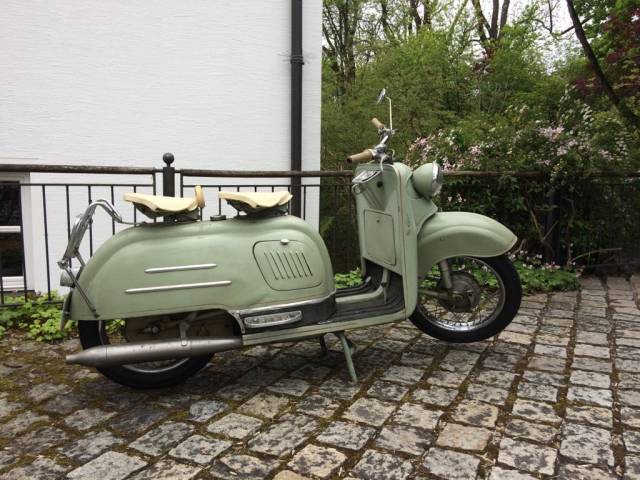
1954 | Progress Strolch 150
Progress Strochl Original BJ 1954

Create search alert
Let yourself be notified as soon as a listing is published that matches your search filters.
Create listing
Do you have a Progress that you want to sell? Then create a listing now.
Create listingHistory & Heritage
The story of Progress is a fascinating journey of post-war ingenuity that spans from the industrial heart of Stuttgart-Untertürkheim to the suburban garages of Purley, Surrey. Founded in 1950 by the visionary designer Gottlieb Gaßmann, the brand initially gained fame with the Strolch (Vagabond) scooter. While Germany was rebuilding, Gaßmann saw the need for a practical, sturdy, and reliable alternative to the delicate Italian scooters that were beginning to flood the market.
The first Strolch models featured small 75cc and 98cc Fichtel & Sachs engines. However, the brand truly hit its stride in 1954 when production moved to the ProgressWerk Oberkirch AG. This partnership allowed for mass production and the introduction of the more powerful Progress Strolch 175. These machines were known for their large 16-inch wheels, which offered significantly better stability on the potholed roads of 1950s Europe compared to the 8-inch or 10-inch wheels found on many competitors.
For the UK market, the Progress story took a unique turn. Carr Brothers Ltd of Purley, operating as the Progress Supreme Co. Ltd, became the sole concessionaires for Great Britain. Recognising the British preference for home-grown powerplants, they didn't just import German bikes; they re-engineered them. The British variants, such as the 175 Anglian, 200 Briton, and the electric-start 200 Britannia, swapped the German Sachs units for reliable Villiers two-stroke engines.
A defining feature of the British Progress scooters was the use of fibreglass bodywork. While the original German Strolch used pressed steel, the Progress Supreme Co. utilised reinforced plastic (fibreglass) for the body shells of the Anglian and Briton models. This not only made them lighter but also impervious to the rust that plagued metal scooters in the damp British climate. Progress even showcased these unique variants at the prestigious Earls Court Show in 1956, cementing their place in British scootering history.
Despite their innovative designs and high build quality, the rise of the small car eventually claimed the brand. Progress ceased production in 1960, with the final stocks being sold through 1963. Today, whether in original German steel or British fibreglass, these scooters remain a prized rarity for collectors who appreciate 1950s "micro-mobility" before the term even existed.
Highlights & Features
The Progress Strolch and its British cousins stood out from the crowd through a combination of engineering pragmatism and forward-thinking features. Unlike the monocoque construction of the Vespa, Progress utilised a sturdy frame that allowed for easier access to the mechanical components.
The 16-inch wheel design was a stroke of genius in an era when most manufacturers were shrinking wheel sizes to save on weight and cost. While most contemporary scooters felt twitchy and nervous at speed—particularly when hitting mid-corner bumps—the Progress rode more like a conventional motorcycle. The large diameter wheels provided a gyroscopic stability that made it a favourite for long-distance touring and serious commuting. This was further enhanced by a sophisticated suspension system, featuring a telescopic front fork and a rear swinging arm with integrated dampers, which provided a much more refined ride than the simple trailing links found on many competitors. This setup allowed the Progress to maintain its line through corners where smaller-wheeled rivals would have been bounced offline, a quality that earned it high praise in period road tests by the British motorcycling press.
Innovation wasn't limited to the chassis. The Progress 175 ES (and later the Britannia) featured an electric starter—a luxury almost unheard of on mid-sized scooters in the mid-1950s. At a time when most riders were struggling with kick-starts on cold mornings, the Progress owner could simply press a button and go. This was achieved using a Bosch Dynastart system on German models and a similar Siba or Lucas setup on some British variants. This dual-purpose unit served as both the generator for the electrics and the starter motor for the engine, a compact and ingenious solution that pre-dated the widespread adoption of electric starts by decades. It made the Progress particularly appealing to professional commuters and female riders who appreciated the clean, fuss-free operation.
The British-built models brought their own set of highlights:
- Villiers Engines: The use of the 2H and 9E Villiers engines meant that UK owners had access to a vast network of service agents and readily available spare parts.
- Fibreglass Bodies: The move to fibreglass for the Anglian and Briton models was a pioneering use of composite materials in the scooter industry, offering a rust-free life and easier repairs for minor knocks.
- Serviceability: The "quick-release" bodywork on the later 200cc models allowed the entire rear section to be removed or tilted, providing unprecedented access to the engine and gearbox for maintenance.
Technical Data
The technical evolution of Progress reflects the rapid development of the scooter market in the 1950s. Below are the key specifications for the most popular models found in the UK and Germany.
Note: UK models (Anglian, Briton, Britannia) featured fibreglass bodywork and Villiers engines, whereas the German Strolch models utilised pressed steel and Fichtel & Sachs units.
Market Overview & Buying Tips
Finding a Progress scooter for sale in the UK is a challenge that requires patience and a keen eye. Because they were imported and later built in relatively small numbers by Progress Supreme, they appear far less frequently than Lambrettas or Vespas. However, for the serious collector, they represent excellent value for money and a guaranteed conversation starter at any vintage rally.
Current Market Prices (2024-2025)
The market for Progress scooters is currently stable, with prices reflecting their rarity rather than mass-market demand.
- Project Condition: Non-running examples or "barn finds" typically fetch between £800 and £1,500. Ensure the bodywork (especially if fibreglass) is mostly intact, as sourcing replacement shells is nearly impossible.
- Good/Original Condition: Running bikes with a valid V5C and decent paintwork generally sell for £2,500 to £4,500. UK-built Briton or Anglian models often command a slight premium due to their domestic heritage.
- Concours/Restored: Fully restored examples, particularly the electric-start Britannia or a German Progress 200 in exceptional condition, can reach £5,500 to £7,500.
- Sidecar Outfits: A Progress paired with a period-correct Steib LS 200 sidecar is the ultimate find. These outfits are highly sought after and can exceed £10,000 for a well-sorted combination.
What to Look For
When inspecting a Progress, the first priority is determining whether it is a German import or a UK-built model.
- Body Integrity: For German models, check the pressed steel for rot, particularly at the floorboards and the rear wheel arch. For UK models, inspect the fibreglass for "star crazing" or delamination. While fibreglass doesn't rust, it can become brittle with age.
- Engine Originality: Ensure the engine matches the model. A Sachs engine in a British Anglian might indicate a later swap, which could affect the value. The Villiers units in UK bikes are incredibly robust, but check for "four-stroking" (uneven firing) which usually indicates a worn carburettor.
- Electric Starter: If you are buying a Britannia or an ES model, verify the starter motor works. Parts for these early Dynastart systems can be expensive and difficult to refurbish.
- Trim and Brightwork: Items like the specific Progress badges, original light surrounds, and the unique handlebar castings are very difficult to replace. If they are missing, expect a long search for "New Old Stock" (NOS) parts from Germany.
Performance & Riding Experience
Riding a Progress is a vastly different experience from riding a small-wheeled Italian scooter. The first thing you notice is the stability. Thanks to the 16-inch wheels, the Progress doesn't "hunt" for ruts in the road; it glides over them with a composure that is much closer to a 1950s motorcycle like a BSA Bantam or a Triumph Terrier.
The Sachs 175cc and 200cc engines are remarkably smooth for two-strokes. They provide a linear power delivery that makes city riding effortless. The Villiers engines found in British models have a more utilitarian character—noisier and perhaps a bit more vibratory, but with a "thumping" torque that makes them surprisingly capable on hills, even with a pillion passenger.
The handling is predictable and forgiving. While you won't be flicking it through corners like a modern Zip, the Progress rewards a smooth, deliberate riding style. The brakes—expanding drum types front and rear—are adequate for the speeds the bike is capable of, provided they are well-maintained and the cables are fresh.
Perhaps the most enjoyable aspect of the performance is the weather protection. The wide front leg shields and the generous front mudguard do an excellent job of keeping the rider dry, a feature that made them popular with the "suits" of the 1950s who wanted to arrive at the office without being covered in road grime.
Design & Aesthetics
The design philosophy of Progress was one of functional elegance. While the Italians were focused on the "Dolce Vita" curves of the Vespa and Lambretta, Progress embraced a more industrial, streamlined look that spoke of reliability and German efficiency. Every curve had a purpose, from the deeply valanced front mudguard that protected the rider from road spray to the ventilated side panels that ensured the air-cooled engines remained at their optimum temperature during long climbs. The use of lightweight alloys for the handlebar castings and various trim pieces added a touch of premium quality that was often missing from more mass-produced rivals, reinforcing the brand's position as a "connoisseur's choice" in the booming scooter market of the fifties.
The visual signature of the brand is the sweeping rear bodywork that fully encloses the engine. On the later models, the lines flow smoothly from the front leg shields to the rear light, giving the bike a "heavy-tail" look that was very much in vogue during the mid-1950s. The designer Louis Lepoix, who worked on many influential German vehicles of the era, is often credited with refining the later Progress silhouettes, introducing a more aerodynamic and integrated look.
Color schemes were typically understated. You will often find Progress scooters in:
- Two-tone combinations: Such as Dove Grey and Midnight Blue, or Pale Green and Cream.
- Metallic finishes: Later 200cc models often featured elegant metallic silver or maroon.
- Minimalist Chrome: Chrome was used sparingly, usually restricted to the handlebars, light surrounds, and the occasional decorative strip on the side panels.
The cockpit is a model of simplicity. A large, clear speedometer is usually the only instrument, often mounted in a cast aluminum handlebar assembly that also houses the switches and the ignition. The seating is typically a "bench" style, though early Strolch models often featured individual sprung "Denfeld" saddles, which are now highly prized by restorers for their comfort and period-correct look.
Summary
The Progress motorcycle and scooter range represents a high-water mark for the European "bubble" of post-war mobility. For the British collector, the brand offers a fascinating cross-cultural history—a German design reborn in Surrey with a British heart and a fibreglass skin.
Whether you choose a German-built Strolch 175 for its Teutonic precision or a Progress Briton for its unique UK heritage, you are buying into an era of engineering where quality and durability were the primary goals. While they may not have the fame of a Vespa, the Progress offers a superior ride, a more exclusive ownership experience, and a direct link to the innovative spirit of the 1950s. If you find a well-preserved example, don't hesitate—these "Strolchs" don't stay on the market for long.