- Motorcycle
- Motosacoche (0 offers)
Buy Motosacoche Motorcycles
From the "engine in a bag" that revolutionised early transport to the world-record-breaking V-twins tuned by the Wizard of Brooklands, Motosacoche represents the pinnacle of Swiss precision and British racing grit. As the powerhouse behind legendary marques like Brough Superior and Royal Enfield, these Geneva-built machines remain some of the most sophisticated and sought-after treasures on the classic market.
Search results
Currently, there are no matching listings for your search.
Create search alert
Let yourself be notified as soon as a listing is published that matches your search filters.
Create listing
Do you have a Motosacoche that you want to sell? Then create a listing now.
Create listingMotosacoche listing references from Classic Trader
Below you will find listings related to your search that are no longer available on Classic Trader. Use this information to gain insight into availability, value trends, and current pricing for a "Motosacoche" to make a more informed purchasing decision.
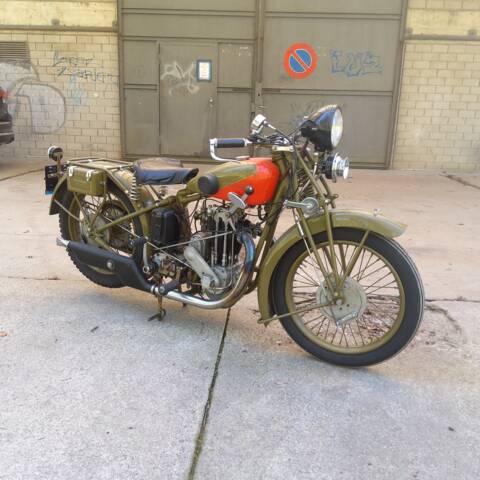
1932 | Motosacoche 350 Sport
Modell Grand Sport

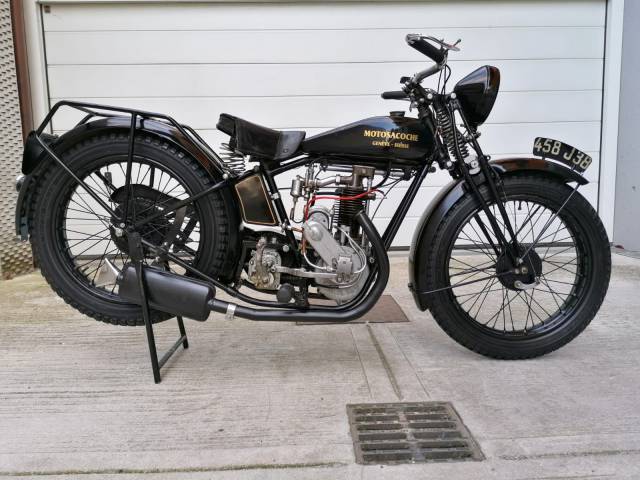
1929 | Motosacoche 350 Sport

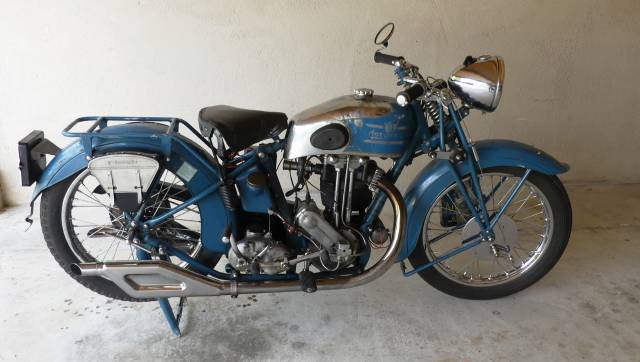
1938 | Motosacoche 350 Tourisme

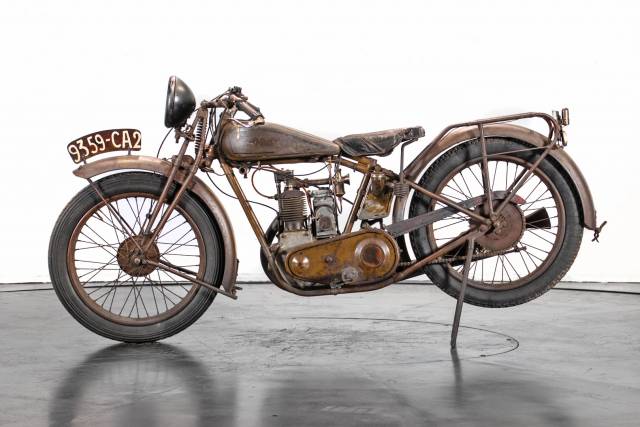
1940 | Motosacoche 212 Twin
-
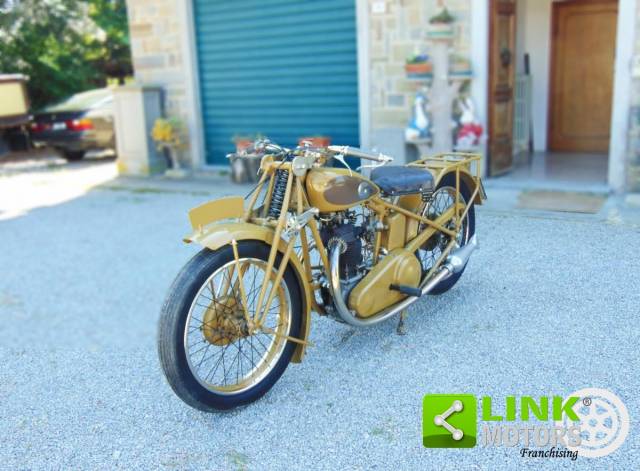
1928 | Motosacoche 350 Tourisme
MOTOSACOCHE 350 SS, anno 1928, produzione svizzera, restaurata
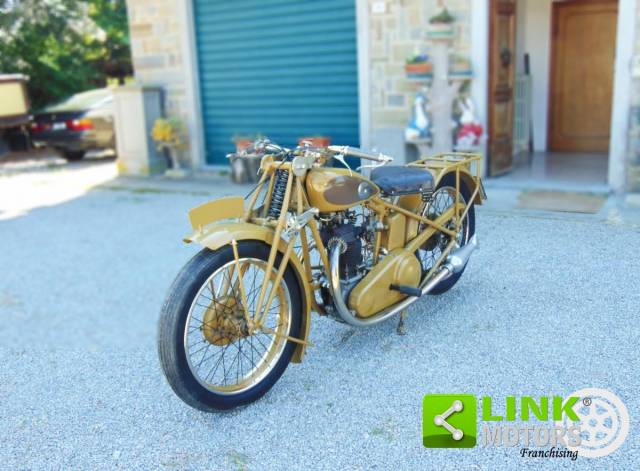
1928 | Motosacoche 350 Sport
MOTOSACOCHE 350 SS, anno 1928, produzione svizzera, restaurata
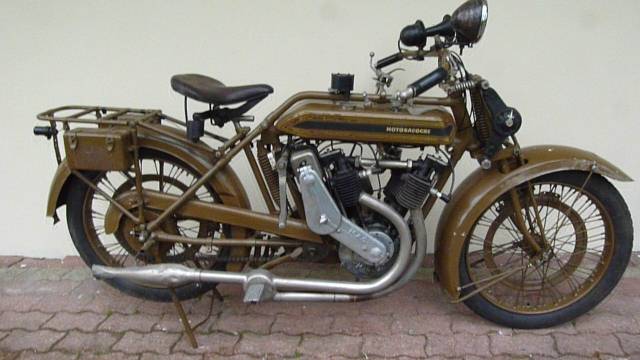
1920 | Motosacoche 2 C 9
1000 CC Bicylindre en V modèle moulin à café
Create search alert
Let yourself be notified as soon as a listing is published that matches your search filters.
Create listing
Do you have a Motosacoche that you want to sell? Then create a listing now.
Create listingThe name Motosacoche, literally translating to "motorcycle in a bag", might sound modest, but the history of this Geneva-based manufacturer is one of unparalleled engineering dominance. Founded in 1899 by the brothers Henri and Armand Dufaux, the firm transitioned from producing ingenious clip-on bicycle engines to becoming the world's most significant supplier of proprietary powerplants. Under the MAG (Motosacoche Acacias Genève) brand, their engines powered the golden era of European motorcycling, finding a spiritual home in Great Britain through collaborations with legendary figures and world-class manufacturers.
History & Heritage
The Motosacoche story began when Henri Dufaux, a painter, and his brother Armand, an engineer, decided to motorise the bicycle. Their solution was a self-contained power unit – including the engine, carburettor, fuel tank, and ignition – housed within a subframe that could be bolted into a standard diamond bicycle frame in under twenty minutes. To protect the rider’s clothing and keep the machinery clean, the entire unit was enclosed in metal side panels. This "engine in a bag" was an instant sensation, offering a clean and reliable alternative to the crude motor-pacing machines of the day.
By 1908, the brothers had established H & A Dufaux England Ltd at 65 Holborn Viaduct in London. British interest was so high that by 1912, a dedicated subsidiary, Motosacoche Ltd (GB), was formed with Osborne Louis De Lissa at the helm. This British connection was not merely a sales office; it was a conduit for engineering exchange that would eventually see Motosacoche engines powering the most prestigious British marques. Royal Enfield was one of the first major clients, using Motosacoche 344cc V-twins for their successful 2¾ hp models from 1910 onwards. Soon, names like Matchless, Ariel, Triumph, and even the early efforts of George Brough relied on MAG power.
The 1920s marked the high-water mark for the brand’s racing and technical prestige. The arrival of the British engineer Dougal Marchant in 1927 shifted the company's focus towards high-performance overhead-camshaft (OHC) designs. Marchant, who had cut his teeth at JAP and Chater-Lea, brought a level of racing sophistication that transformed Motosacoche into a dominant force on the track. This era also saw the recruitment of Bert le Vack, the legendary "Wizard of Brooklands". Le Vack was more than a rider; he was a master tuner whose expertise with MAG engines helped push the boundaries of speed. In 1923, a 500cc Motosacoche V-twin set a world record of 153.551 km/h, a testament to the potency of the Geneva engines.
Success continued at the 1928 Grand Prix of Europe in Geneva, where the British rider Wal Handley secured a historic double victory in both the 350cc and 500cc classes aboard OHC Motosacoche machines. These bikes, known for having the magneto mounted behind the cylinder rather than in front, became the blueprint for high-performance motorcycles across Europe, with the design being licensed to firms like Triumph (TWN) and Standard in Germany.
Tragedy struck in 1931 when Bert le Vack was killed in a testing accident near Bern while demonstrating an A50 racing machine to the Swiss Army. His death marked the beginning of a gradual decline for the brand. While the 1930s saw the release of sophisticated models like the Jubilé series and the massive 720 Grand Luxe V-twin, the global economic depression and the rising dominance of British manufacturers like Norton on the racetrack squeezed the Swiss firm. Production shifted towards stationary engines and industrial equipment, which sustained the company through the Second World War. Although a final attempt at a motorcycle comeback was made in the early 1950s with a parallel-twin designed by Richard Küchen, production finally ceased in 1956.
Highlights & Features
Motosacoche occupies a unique position in the pantheon of motorcycle history, defined by a series of technical and cultural milestones that set it apart from its contemporaries.
The MAG Engine Legacy: Perhaps the most significant highlight is the role of MAG (Motosacoche Acacias Genève) as the premier supplier of proprietary engines. Before the First World War, MAG was the world's largest manufacturer of motorcycle engines, outstripping even the British giant JAP in sheer volume and variety. Their V-twins, particularly the 2C10 and later 2C12 series, were renowned for their smoothness, reliability, and precision. When you buy a Motosacoche, you are buying the source material for the most prestigious motorcycles of the era.
British Racing DNA: Despite being a Swiss company, the soul of Motosacoche’s performance was deeply British. The influence of Dougal Marchant, Wal Handley, and Bert le Vack cannot be overstated. These men brought the "Brooklands mindset" to Geneva, ensuring that Swiss manufacturing precision was married to the cutting edge of racing technology. The OHC racers of the late 1920s are widely considered some of the most beautiful and technically advanced motorcycles of the vintage period.
Pioneer Run Eligibility: For collectors in the United Kingdom, the early "engine in a bag" models (Type A) are highly coveted due to their eligibility for the Sunbeam MCC Pioneer Run. Any machine produced before 1 January 1915 can participate in this prestigious event from Epsom to Brighton. A Motosacoche Type A or a Model V from the 1901-1914 period is a ticket to one of the most exclusive and rewarding events in the classic calendar.
The Jubilé and 720 Grand Luxe: In the 1930s, Motosacoche proved they could build world-class luxury tourers. The 500cc Jubilé series, introduced to mark the company's 30th anniversary, featured an innovative oil sump cast directly into the crankcase, a feature that significantly improved cooling and reliability. The 720 Grand Luxe, an 846cc side-valve V-twin, represented the ultimate in Swiss motorcycle luxury, often used as a high-speed sidecar mount and even adopted by the Swiss military for reconnaissance duties.
Engineering Purity: Influenced by the watchmaking traditions of Geneva, Motosacoche machines exhibited a level of fit and finish that was often superior to their British and German rivals. The casting quality, the precision of the valve gear, and the overall robustness of the chassis reflected a philosophy of "quality without compromise". This makes them a joy to restore and maintain for the modern enthusiast who appreciates fine mechanical craftsmanship.
Technical Data
The technical evolution of Motosacoche moved from simple bicycle attachments to complex OHC racing engines and massive V-twins. The following table highlights the key specifications for some of the most important collector models.
The diversity of engine configurations—from the simple atmospheric inlet valve of the early Type A to the sophisticated overhead camshafts of the A50—demonstrates the company's technical versatility. The 50-degree V-angle of their twins became a signature characteristic of MAG engines, providing a balance of torque and smoothness that made them ideal for both solo and sidecar applications.
Market Overview & Buying Tips
Owning a Motosacoche is a mark of a discerning collector. In the United Kingdom, the market for these machines is small but highly active, often centred around major events like the Bonhams Stafford Sale and the National Motor Museum auctions. Because of their Swiss origins and extensive use in French racing, many of the best examples are found on the Continent, but a healthy number of "British" Motosacoches—those originally sold through the London branch or powered by MAG engines—remain in the UK.
Pricing and Availability
Motosacoche motorcycles are genuinely rare. Unlike mass-produced Triumphs or Nortons, they appear at auction only a few times a year globally. This scarcity keeps prices stable and generally protects the investment value of a well-documented machine.
Typical Price Ranges (2024-2025 Market Data):
- Pioneer-era (1901–1914): These are the most sought-after in the UK for the Pioneer Run. A running, registered Type A (the original "bag" engine) typically fetches between £7,000 and £12,000. A more substantial Model V single or early V-twin can reach £15,000 to £20,000 depending on its condition and history. Recent results at Bonhams Stafford have seen a 1907 1½ hp model sell for £8,050 and a 1913 290cc Model V for £7,475, both showing strong interest for original, Cotswold-found machines.
- Vintage V-twins (1920s): The 500cc and 600cc V-twins are the "holy grails" for many. A restored 2C10 or similar sport model can command £18,000 to £30,000. Exceptional racing-provenance bikes or those with rare OHC engines can easily exceed £50,000.
- Post-Vintage Singles (1930s): The Jubilé and Tourisme models offer a more accessible entry point. Expect to pay between £10,000 and £18,000 for a roadworthy 500cc single. The rare 720 Grand Luxe V-twin is valued higher, often between £22,000 and £35,000, particularly if it has a documented military history.
- Projects: Due to the extreme difficulty of finding parts, project bikes are risky. A "basket case" might sell for £3,000 to £6,000, but only a buyer with extensive machining capabilities or a deep network in the Swiss/French veteran scene should consider this.
Critical Inspection Points
When viewing a Motosacoche, the standard "classic bike" checks apply, but several marque-specific issues require your attention.
1. Authenticity and Engine Numbers: This is the most critical check. Many machines sold as "Motosacoche" are actually hybrids—British or French frames fitted with MAG engines. While a Matchless-MAG or Royal Enfield-MAG is a legitimate and valuable machine, it is not a Motosacoche. Check that the frame numbering follows the Geneva factory patterns. MAG engine numbers usually start with a code (e.g., 1C for single, 2C for twin) followed by the model number and serial. Verify these against factory records or consult the Vintage Motor Cycle Club (VMCC) archives.
2. The Magneto and Ignition: Early Swiss machines often used Bosch or BTH magnetos. On the OHC racing models (M35, A50), the magneto is mounted behind the cylinder, an unusual position that can make it susceptible to heat and oil mist. Rewinding a vintage magneto is a specialist job that can cost upwards of £500. Ensure the spark is strong and the timing gear is not excessively worn.
3. Belt and Chain Drives: Machines prior to 1914 almost exclusively used belt drive. Finding the correct grade of leather or modern rubber-composite belt is possible, but ensure the pulleys aren't worn to a sharp edge. For later chain-drive models, check the condition of the primary drive; spares for the separate gearboxes of the 1920s are virtually non-existent.
4. Casting Integrity: The aluminum used in the 1920s and 30s was high quality, but look for "zinc pest" or hairline cracks around mounting points. The integrated oil sumps of the Jubilé models are prone to leaks if the mating surfaces have been warped by over-tightening or heat.
5. Parts Availability: There is no "Motosacoche spares" shop. You will be relying on the Condor Club in Switzerland, specialist veterans like Yesterdays in the Netherlands, and your own ability to have parts machined. If a bike is missing its original carburettor (often Amac or Gurtner) or its unique instrumentation, you may spend years searching for replacements.
Performance & Riding Experience
Riding a Motosacoche is an exercise in mechanical empathy and historical immersion. The experience varies wildly depending on whether you are aboard a featherweight Pioneer bike or a fire-breathing OHC racer.
The Pioneer Sensation: A Type A or Model V feels less like a motorcycle and more like a bicycle with a mind of its own. With only 1.25 to 2.5 horsepower on tap, you don't so much "accelerate" as "gain momentum". The atmospheric inlet valve creates a hypnotic, rhythmic tuff-tuff sound. There is no clutch on the earliest models—you pedal to start, and the engine takes over. Stopping requires planning, as the rim brakes are merely a suggestion in the wet. At 25 mph, the world seems to move at a perfect pace, and the simplicity of the machine creates a profound connection between rider and road.
The V-twin Surge: Stepping onto a 2C10 or a 720 Grand Luxe is a different world. The MAG V-twin is defined by its torque. From very low revs, the engine pulls with a relentless, throaty growl. The 50-degree V-angle gives it a character distinct from the 45-degree Harley or the 90-degree Ducati; it is smooth and refined, lacking the "chatter" of many contemporary British singles. On a 1920s sport model, the speed is surprising. These bikes were built for the Alpine passes of Switzerland, meaning they have excellent climbing power and a chassis that feels planted, if firm. The rigid rear end means you feel every pebble, but the parallelogram forks do an admirable job of soaking up the worst of the British B-roads.
The OHC Challenge: Riding a Wal Handley-style A50 is for the experienced veteran only. The OHC engine is a thoroughbred; it wants to rev, and it demands constant attention to lubrication and timing. The sound is a sharp, metallic bark that clears the lungs and the streets. It feels light, aggressive, and fast—uncomfortably fast for a bike with narrow tyres and drum brakes. It is an emotional experience, a reminder of why Bert le Vack was so enamoured with these Geneva-built rockets.
Across all models, there is a sense of mechanical solidity. The controls—often including levers for ignition advance/retard and air-bleed—require a busy mind, but once you find the "sweet spot", a Motosacoche hums with a precision that justifies its watchmaker heritage.
Design & Accessories
The design language of Motosacoche is a masterclass in functional elegance. It avoided the gaudy ornamentation of some American brands and the "built-in-a-shed" look of some early British manufacturers.
The "In-Bag" Aesthetic: The early enclosures were a stroke of genius. Not only did they look neat, but they were a practical solution to the oil-flinging nature of early total-loss lubrication systems. The shape of the enclosure became the brand's first icon, and even as engines grew, the "triangular" theme remained in the way the tanks and frames were proportioned.
The MAG Branding: The MAG logo cast into the timing covers and crankcases is one of the most respected marks in motorcycling. It represents a seal of quality that was recognised from the Isle of Man to the workshops of Lyon and Milan. For a collector, seeing an original, unmolested MAG engine is a highlight of the machine’s visual appeal.
The 1930s Modernism: By the mid-1930s, Motosacoche had embraced a more streamlined look. The Jubilé models featured teardrop tanks, deeply valanced mudguards, and a more integrated appearance. The finish was usually a high-quality black enamel with subtle gold or red lining, reflecting a sober, Swiss sense of luxury.
Ephemera and Memorabilia: For the Motosacoche enthusiast, the hunt doesn't end with the motorcycle. Original instruction manuals, advertising posters (especially the iconic Edouard Elzingre artwork), and enamel signs are highly collectible. In 2024, a rare original Motosacoche poster sold at auction for over £4,000, highlighting the brand's cross-over appeal into the world of fine art. The recently published (2021) book by Sandra Ansanay-Alex, Motosacoche: The Story of the Legendary Swiss Motorcycle, is already out of print and considered an essential accessory for any owner, often selling for double its original price on the second-hand market.
Summary
Motosacoche is a brand for the connoisseur, a name that resonates with the history of European engineering at its most ambitious. From the pioneers who pedalled their "bag-engines" across the dusty roads of Edwardian England to the speed kings of Brooklands who tuned MAG V-twins to breaking point, the company’s legacy is defined by a relentless pursuit of quality.
For the modern collector, a Motosacoche offers something that a mainstream vintage bike cannot: a direct link to the heart of European motorcycle development. Whether you are seeking a Type A for the Pioneer Run, a 2C10 for vintage sprints, or a Jubilé for long-distance touring, you are investing in a machine that was built to the standards of a Geneva watch.
The challenges of ownership—the scarcity of parts, the need for specialist knowledge, and the rare appearance of bikes on the market—only serve to heighten the reward. To own a Motosacoche is to be a custodian of a mechanical masterpiece, a Swiss-made powerhouse that once dictated the pace of the world's most famous racing circuits. In the world of classic motorcycling, the "engine in a bag" remains one of the greatest secrets waiting to be rediscovered.
Key Takeaways for Buyers:
- Identify First: Ensure it's a genuine Motosacoche, not just a MAG-powered hybrid.
- Pioneer Potential: Early models are top-tier tickets for the Epsom-to-Brighton run.
- Precision Matters: Respect the Swiss engineering; use specialist restorers who understand pre-war tolerances.
- Market Rarity: When a good one appears, especially at Stafford or through the VMCC, move quickly—it may not appear again for years.