- Motorcycle
- Motom (1 offer)
Buy Motom Motorcycle
Discover the innovative world of Motom, the Italian marque that revolutionised the lightweight motorcycle market with its 48cc four-stroke engines. Explore our range of classic Motom motorcycles for sale and find your piece of Milanese engineering history.
Search results
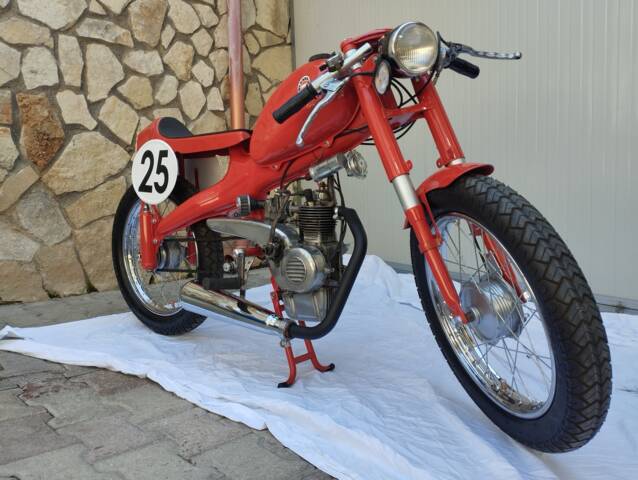
1968 | Motom 48
1968 Motom 48 – fully restored, 48 cc four-stroke with 3-speed gearbox and original period booklet
Current bid

Motom listing references from Classic Trader
Below you will find listings related to your search that are no longer available on Classic Trader. Use this information to gain insight into availability, value trends, and current pricing for a "Motom" to make a more informed purchasing decision.
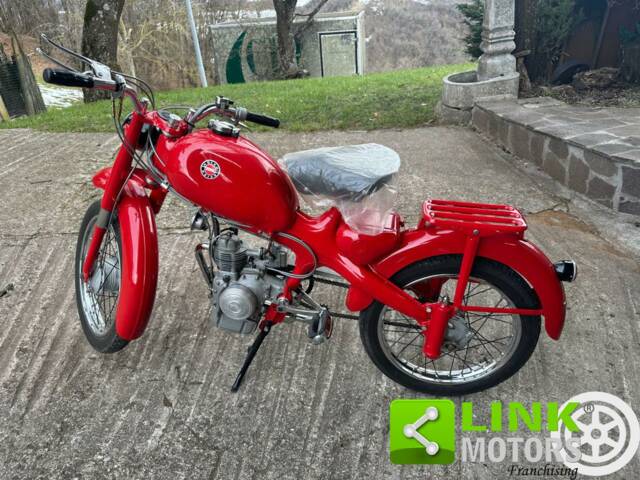
1962 | Motom 48
MOTOM 48 4T 48cc 4 Tempi
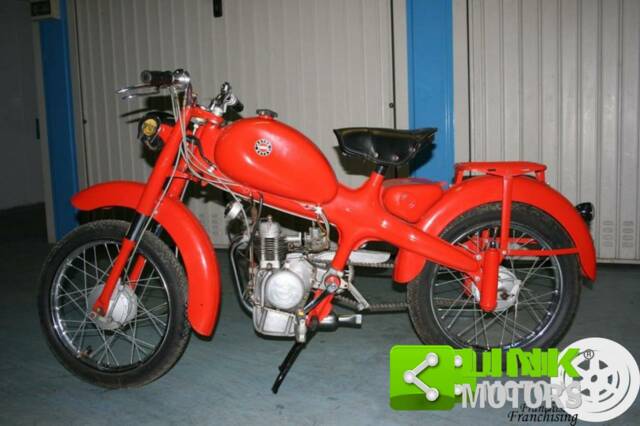
1962 | Motom 48
MOTOM Sam 50 Sam-50
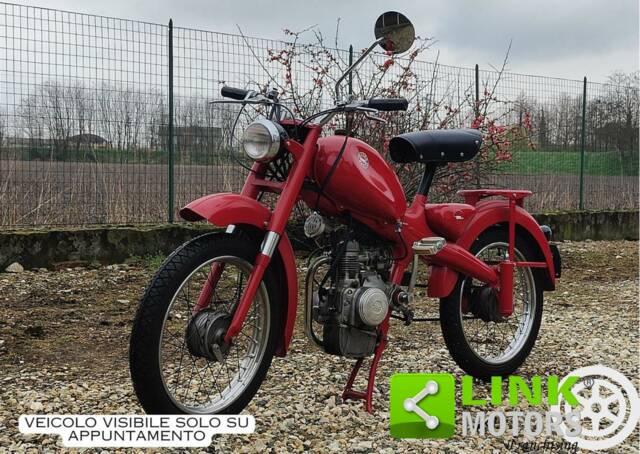
1950 | Motom 48
MOTOM 48
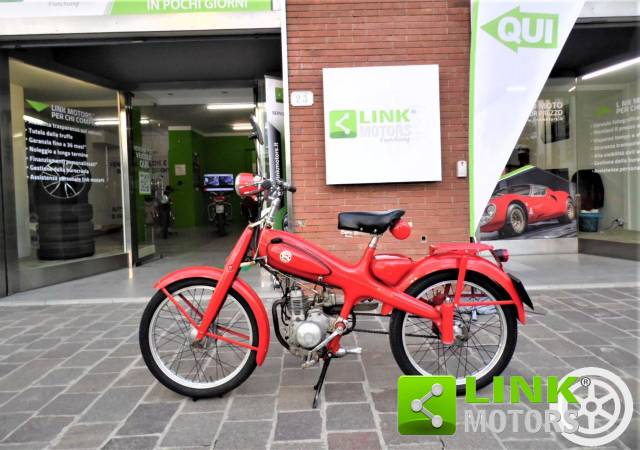
1959 | Motom 48
MOTOM 48 4T Bacchetta
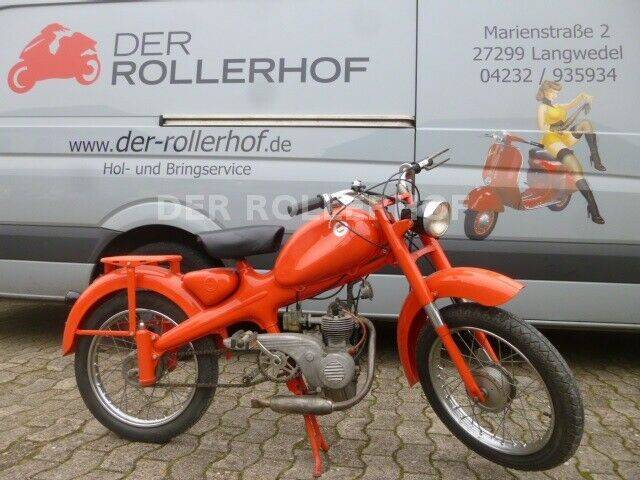
1957 | Motom 48
Andere Moto Motom 50 Nr. 92

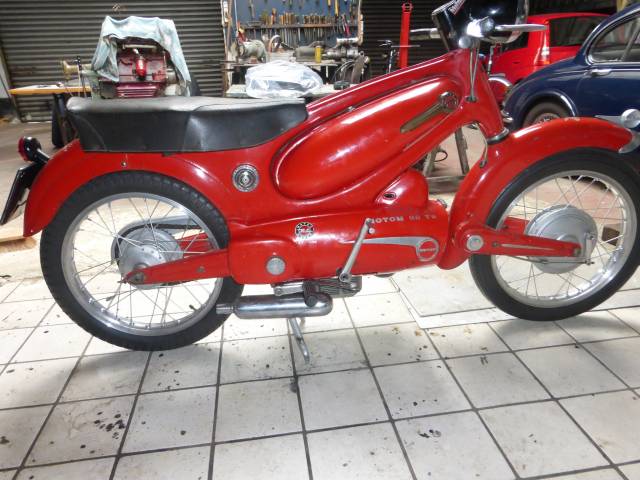
1959 | Motom 98

History & Heritage
The story of Motom is a fascinating chapter in the annals of Italian post-war industrial recovery, a tale of bold engineering choices and rapid commercial success that briefly propelled a newcomer to the heights of the domestic motorcycle industry. Founded in 1947 in Milan, Motom was not the product of a traditional motorcycle workshop but rather the ambitious venture of the De Angelis-Frua family, prominent industrialists in the textile sector. Looking to diversify their interests in a country desperate for affordable mobility, they sought the expertise of Battista Falchetto, a brilliant engineer whose pedigree lay not in two wheels but in the sophisticated world of Lancia automobiles.
Falchetto’s background was instrumental in shaping the Motom identity. Having worked on some of Lancia’s most innovative designs, he approached the problem of the lightweight motorcycle with an automotive designer's mindset. At a time when the Italian market was flooded with cheap, noisy, and often unreliable two-stroke clip-on motors and mopeds, Falchetto proposed something radically different: a purpose-built lightweight motorcycle powered by a sophisticated four-stroke engine.
The first fruit of this collaboration, the "Motomic" (a portmanteau of Moto and Atomica, reflecting the optimism of the early atomic age), was unveiled at the 1947 Geneva Salon. It was a revelation. While competitors like Garelli with the Mosquito or Ducati with the Cucciolo were essentially selling engines to be attached to bicycles, Motom presented a complete, integrated vehicle. The heart of the Motomic was a 48cc Overhead Valve (OHV) four-stroke engine, a choice that set the brand apart for the duration of its existence. This tiny power plant featured a 39mm bore and 40mm stroke, producing approximately 1.5 to 1.75 bhp. It was refined, quiet, and remarkably fuel-efficient, qualities that immediate appealed to a middle class looking for dignified transportation.
The construction of the Motom was equally unconventional. Instead of a traditional tubular steel frame, Falchetto designed an X-shaped monocoque chassis made from pressed steel. This construction method was borrowed directly from the automotive world, providing a lightweight yet rigid structure that also served as the mounting point for the fuel tank and seat. It gave the Motom a clean, futuristic look that stood in stark contrast to the spindly, bicycle-derived machines of its rivals.
Production began in earnest at the company's factory in Bollate, a suburb of Milan. The brand's rise was meteoric. By the mid-1950s, Motom had eclipsed many established names to become Italy's third-largest motorcycle manufacturer by volume, trailing only the giants Moto Guzzi and Garelli. This success was built on a series of evolutionary models: the 12/A, 12/C, 12/D, and the ubiquitous 12/E. Each iteration brought refinements to the suspension, styling, and engine internals, cementing Motom’s reputation for reliability and technical excellence.
In 1953, the company briefly benefited from the genius of Piero Remor, the designer responsible for the legendary multi-cylinder racing engines of Gilera and MV Agusta. Although his tenure was short, Remor’s influence was felt in the move towards more sporting aesthetics and improved performance, leading to the development of the 48 Sport and eventually the 48 SS (Sport Special).
However, the late 1950s brought challenges. Motom attempted to move upmarket with the 98T in 1957, a beautiful and technically advanced 98cc machine designed by Remor. Despite its elegance and the novelty of its "twin-block" cylinder design, it was too expensive for the typical lightweight buyer and lacked the performance to compete with larger 125cc and 175cc machines. As the 1960s progressed, the Italian market began to shift towards small cars like the Fiat 500, and the lightweight motorcycle industry faced increasing pressure from Japanese imports. Motom struggled to innovate in this new landscape, and after years of declining sales, production finally ceased in 1970.
Today, Motom is remembered as a pioneer of the four-stroke moped, a marque that brought automotive-level engineering to the masses. For the classic enthusiast, a Motom represents a unique blend of Italian style, mechanical sophistication, and a tangible link to the vibrant spirit of post-war Milan.
Highlights & Features
The Motom range, while concentrated on the small-capacity segment, produced several models that are today considered icons of Italian design and engineering. Understanding these highlights is key for any prospective buyer looking to find the right machine.
The Motom 48E (1954-1958) is perhaps the quintessential Motom. It represents the brand at its commercial peak, offering a perfect balance of the original Falchetto design with improved practicality. The 48E featured the signature pressed steel X-frame, but with a more robust parallelogram rear suspension that significantly improved ride comfort over the earlier rigid or plunger-style frames. Its 48cc OHV engine, producing 1.75 bhp, was paired with a three-speed gearbox operated via a handlebar-mounted twist grip—a feature known as the "manubrium." The 48E was the workhorse of Milan, seen in thousands on the city's streets, and remains the most accessible entry point for collectors today.
For those seeking more performance, the Motom 48 SS (Sport Special) is the holy grail of the 50cc range. Emerging in the late 1950s and continuing through the 60s, the SS took the basic 48cc architecture and breathed on it. Higher compression ratios, larger Dell'Orto carburettors, and more aggressive valve timing allowed this tiny engine to punch well above its weight. Visually, the 48 SS is distinguished by its low-slung handlebars (clip-ons or "ace" bars), a longer, more streamlined fuel tank, and often a dedicated speedometer—a luxury not found on many basic mopeds of the era. It captured the "Café Racer" spirit in miniature and is highly sought after for its spirited riding characteristics.
The Motom 98T (1957-1960) represents the brand's most ambitious failure. Designed under the influence of Piero Remor, it was a 98cc OHV machine that aimed to provide a "big bike" experience in a compact package. Its engine was a work of art, featuring a distinctive cylinder head with separate cooling fin blocks for the intake and exhaust areas. The frame was a more substantial evolution of the pressed steel theme, and the styling was exceptionally elegant, reflecting the best of Italian industrial design. However, its high price tag meant it found few buyers. Today, its rarity and unique aesthetic make it a prized possession for serious collectors of Italian machinery.
Another notable mention is the 48 GG (Gran Gran), a model that introduced further refinements in the 1960s, including a move towards foot-operated gear changes on some variants, reflecting changing rider preferences. The late-model Motom Junior and Delfino scooters also show the brand's attempts to diversify, though they never quite matched the iconic status of the 48cc motorcycles.
Key features common across most Motom models include:
- The OHV Four-Stroke Engine: Far more refined than the "ring-ding" two-strokes of the era, providing a distinctive four-stroke "thump" even in miniature.
- Pressed Steel Monocoque Frame: A rigid and stylish alternative to tubular steel.
- Handlebar Gear Change: On most early and mid-period models, a quirk that defines the Motom riding experience.
- Pedal Start: Most 48cc models retain bicycle-style pedals for starting and occasional "assistance" on steep hills, though they are true motorcycles in every other sense.
Technical Data
The technical specifications of Motom motorcycles highlight the consistency of their design philosophy over two decades. Below is a summary of the core models found in the UK and European markets.
Note: Motom was known for small production runs and frequent minor specification changes based on parts availability from suppliers like Dell'Orto and CEV (electrics). Always verify the specific components on an individual machine.
Market Overview & Buying Tips
The market for Motom motorcycles in the UK is niche but active, often populated by enthusiasts of Italian "Giro" style events and collectors who appreciate the brand's unique four-stroke engineering. Unlike many of its contemporaries, the Motom has a dedicated following that values its technical distinction.
Current Pricing & Valuation (UK Market 2024/2025): Prices for Motom motorcycles have remained relatively stable, offering an affordable entry into the world of Italian classics.
- Project Bikes / Barn Finds: Expect to pay between £500 and £900 for a complete but non-running 48cc model. Recent UK auction results, such as the H&H sale in July 2024, saw a 1950s Motom S48 sell for £460 (no reserve), demonstrating that bargains are still available for those willing to do the work.
- Restored / Good Running Condition (48E / 12/E): These typically fetch between £1,500 and £2,500. A well-presented 48E with UK registration is a desirable item for local events.
- Motom 48 SS (Sport Special): Due to its rarity and "mini-racer" appeal, prices for the SS are higher, ranging from £2,500 to £3,800 for top-tier restorations.
- Motom 98T: Extremely rare in the UK. When they do appear, expect prices to start at £4,000, with exceptional examples reaching significantly more due to their collector status.
What to Look for When Buying:
- Engine Health: The OHV four-stroke is robust but requires precision. Listen for excessive tappet noise or smoke, which can indicate worn valve guides or seats. Parts for a full top-end rebuild are available but usually need to be sourced from Italy. Check compression; it should be at least 85-90 psi for healthy operation.
- Frame Integrity: The pressed steel frame is the soul of the bike. Inspect the X-junction and the edges of the "shells" for cracks or signs of fatigue. While repairable by a skilled welder, distorted or heavily rusted frames are a major headache.
- Gear Change Mechanism: The twist-grip gear change (manubrium) is a complex linkage. Ensure it moves smoothly and that all three gears engage positively. Slack in the cables or worn internal detents can make gear selection frustrating.
- Completeness: Because many Motom parts are unique (especially the frame-integrated tanks and specific engine castings), buying a "basket case" missing key items is risky. Prioritise bikes that are visually complete.
- Documentation: If the bike is an import, ensure it has the original Italian "libretto" (logbook) or proof of Nova registration. Registering an old Italian moped with the DVLA without papers can be a time-consuming process involving owners' club dating certificates.
Sourcing Parts: Parts supply in the UK is limited. You will likely become well-acquainted with Italian marketplaces like Subito.it or specialised vendors in the Milan and Bergamo regions. Consumables like Dell'Orto carburettor jets and CEV ignition points are relatively easy to find, but body panels and specific engine internals require patience and a bit of Italian translation.
Riding Experience
Riding a Motom 48 is an exercise in "slow-motion" motorcycling, where the joy is found in mechanical harmony rather than outright speed. It is a completely different experience from the frenetic, high-pitched buzz of a modern or even period two-stroke moped.
When you start a Motom, the first thing you notice is the sound. There is no smoky "ring-ding-ding." Instead, after a couple of vigorous kicks of the pedals, the tiny OHV engine settles into a rhythmic, almost clock-like "tick-tick-tick." It is remarkably civilised. The four-stroke cycle provides a smoother power delivery and a broader, if modest, torque curve than a comparable two-stroke.
Setting off requires a unique technique. You pull in the clutch (usually on the right) and rotate the left handlebar grip to find first gear. The "manubrium" system feels mechanical and tactile. As you release the clutch, the 48cc engine pulls away with surprising dignity. Acceleration is leisurely; you won't be winning any drag races against modern scooters, but on a flat road, the Motom finds its stride beautifully.
The three-speed gearbox is well-spaced for city use. Third gear is essentially an overdrive for cruising at the bike's top speed of around 30-35 mph (45-50 km/h). In this "sweet spot," the Motom feels incredibly stable. The pressed steel frame provides a level of rigidity that many tube-framed mopeds lack, giving the rider a sense of being "on" a motorcycle rather than "on" a bicycle.
The suspension, particularly on models with the parallelogram rear swingarm, is surprisingly effective at soaking up small bumps, though deep potholes will remind you of the bike's lightweight nature. The 18-inch wheels provide good gyroscopic stability, making the Motom feel sure-footed in corners. Braking from the small drums is adequate for the speeds involved, but it requires a firm hand and foot, and modern traffic conditions require a healthy dose of anticipation.
Ultimately, riding a Motom is about the sensory details: the mechanical click of the gear change, the smell of warm oil from the four-stroke sump, and the admiring glances from people who recognise the unique Italian silhouette. It is a machine that encourages you to take the scenic route and enjoy the journey at 30 mph.
Design & Style
The design of the Motom is its greatest legacy. Battista Falchetto brought a level of sophistication to the lightweight motorcycle that was decades ahead of its time. To look at a Motom is to see the influence of Italian modernism and the transition from utilitarian post-war transport to stylish industrial object.
The centerpiece is, of course, the X-frame. By using two symmetrical shells of pressed steel welded together, Falchetto created a structure that was both the chassis and the bodywork. This eliminated the need for separate fuel tanks and side panels, resulting in a "monolithic" look. The way the fuel filler cap sits flush within the frame and the seat bridges the gap between the two arms of the X is a masterclass in integrated design.
The aesthetic is one of smooth, flowing lines. There are very few sharp edges on a Motom. The mudguards are wide and deeply valanced, the headlight nacelle (on later models) blends into the forks, and the engine is neatly tucked into the lower crook of the frame. Even the cooling fins on the cylinder are designed with a certain geometric elegance.
Colour played a significant role in the Motom's appeal. While many utilitarian machines of the era were drab, Motoms were frequently finished in a vibrant "Rosso Corsa" (Racing Red), often paired with cream or silver accents. The chrome work on the wheel rims, exhaust, and handlebars provided a touch of luxury that made the owner feel they were riding something special, not just a cheap commuter.
The Motom logo itself—a stylized galloping horse—is a subtle nod to Italian speed and grace. It’s often found as a delicate decal on the frame or a cast emblem on the engine cases.
In the 48 SS, this design language was pushed towards the "Sport" end of the spectrum. The addition of a "humped" racing seat and lower bars transformed the friendly commuter into a purposeful-looking speed machine. Conversely, the 98T showed a more "space-age" influence, with its futuristic twin-block engine and more elongated, sweeping lines.
For the modern collector, the Motom isn't just a motorcycle; it's a piece of 1950s Italian sculpture. It looks just as good on a plinth in a gallery as it does on a sun-drenched Italian piazza.
Summary
Motom remains one of Italy's most distinctive and technically interesting motorcycle manufacturers. By choosing the "difficult" path of four-stroke engineering for the lightweight market, they created a range of machines that offered refinement, reliability, and a unique character that their two-stroke competitors could never match.
For the UK enthusiast, a Motom offers:
- A unique technical talking point at any classic gathering.
- The charm of a four-stroke engine in a compact, manageable package.
- A design that is genuinely iconic and represents the best of post-war Italian industrial art.
- An affordable entry into Italian classic ownership, with prices that remain accessible compared to the multi-cylinder giants of the era.
While parts sourcing requires some effort and the riding experience is best suited to quiet B-roads and vintage events, the rewards of Motom ownership are significant. It is a brand for those who appreciate the details, who value engineering "soul," and who want to experience a truly different side of motorcycling history. Whether you are drawn to the practical 48E or the sporty 48 SS, a Motom is a guaranteed way to bring a touch of Milanese flair to your collection.
Three Reasons to Buy a Motom:
- Technical Distinction: Own a pioneer of the four-stroke lightweight class.
- Iconic Design: The X-frame is a landmark of 20th-century industrial styling.
- Event Eligibility: Perfect for the MotoGiro d'Italia and similar classic "small bike" rallies.
Three Things to Consider:
- Parts Availability: Most specialized items must be sourced from Italy.
- Performance: These are 50cc machines; they are not suited for modern fast-moving A-roads.
- Niche Knowledge: You will often find yourself explaining what the bike is to other enthusiasts.
In the end, the Motom is a testament to the idea that greatness doesn't require a large displacement. It is a "small" motorcycle that leaves a very large impression.