- Motorcycle
- Hesketh (0 offers)
Buy Hesketh Motorcycle
Lord Hesketh's dream of a British superbike: the V1000 with its hand-built 992cc Weslake V-twin is one of the rarest and most eccentric motorcycles from the British Isles. Only around 150 originals were built, marking a bold attempt to revive the UK's motorcycle industry with aristocratic flair and Formula 1 engineering roots.
Search results
Currently, there are no matching listings for your search.
Create search alert
Let yourself be notified as soon as a listing is published that matches your search filters.
Hesketh listing references from Classic Trader
Below you will find listings related to your search that are no longer available on Classic Trader. Use this information to gain insight into availability, value trends, and current pricing for a "Hesketh" to make a more informed purchasing decision.
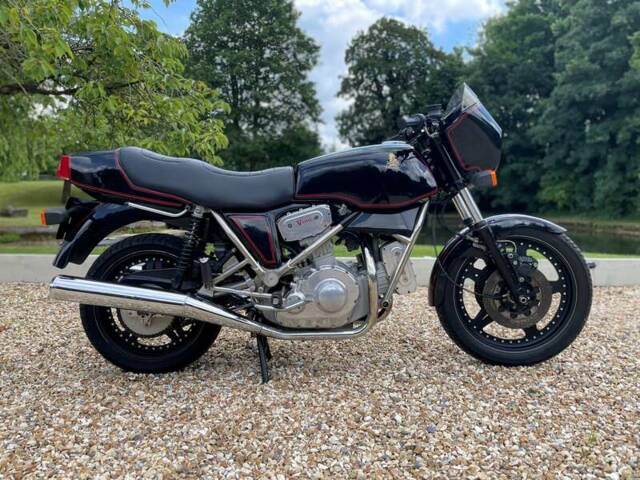
1982 | Hesketh V 1000
1982 Hesketh V1000 992cc

Create search alert
Let yourself be notified as soon as a listing is published that matches your search filters.
History
The story of Hesketh Motorcycles is inextricably linked to Alexander Fermor-Hesketh, 3rd Baron Hesketh – an eccentric British aristocrat who famously entered Formula 1 as a privateer in the 1970s. Lord Hesketh was the man who gave James Hunt his F1 debut, and the team became legendary for its flamboyant approach to racing. Champagne flowed regardless of the result, and the team was more likely to be found in a five-star hotel than a budget motel. The Hesketh Racing Bear became a symbol of a team that won against the odds, including a victory at the 1975 Dutch Grand Prix.
When Lord Hesketh withdrew from F1 racing, he turned his considerable energy and resources toward a new project: a motorcycle that would save the British motorcycle industry. By the late 1970s, the once-dominant British brands like BSA, Triumph, and Norton were in terminal decline or had already collapsed. Hesketh’s vision was to create a hand-built luxury motorcycle that would serve as the Rolls-Royce of motorcycles, filling the void left by the industry's giants.
In 1977, development began on a new V-twin engine with specialist firm Weslake. By 1981, Hesketh Motorcycles PLC was established, and a purpose-built factory was set up in Daventry, Northamptonshire. The production of the V1000 commenced that same year. The bike was intended to be a high-end superbike, featuring an air-cooled 90-degree V-twin with 992cc, four valves per cylinder, and double overhead cams. The styling was handled by John Mockett, who would later design the Triumph Rocket III.
However, the launch was fraught with difficulty. The V1000 entered the market with 86 bhp and a dry weight of 244 kg. While powerful, it was heavy and expensive. Early production models suffered from a range of issues, including gearbox failures, electrical problems (often attributed to the Lucas components of the era), and significant overheating of the rear cylinder. The press reviews were a mixture of admiration for the bike's character and scathing criticism of its reliability and price.
Only 149 V1000 machines were manufactured before Hesketh Motorcycles went into receivership in August 1982. Despite the commercial failure, Lord Hesketh remained undeterred. He formed Hesleydon Ltd in 1983 to produce an updated version: the Hesketh Vampire. This was a full-fairing tourer based on the V1000. Unfortunately, the Vampire faced its own set of challenges, including a fairing that limited the steering lock and persistent gearbox issues.
The survival of the marque is largely thanks to Mick Broom, the former chief development engineer and test rider at Hesketh. He founded Broom Development Engineering in 1982 and took over the development and refinement of the machines. Operating out of Turweston Aerodrome, Broom spent decades improving the V1000 and Vampire, fixing the original design flaws. He added oil coolers, refined the gearboxes, and introduced electronic ignition. Broom produced roughly a dozen bikes a year and built over 300 Heskeths in total, including the EN10 and the Vulcan.
In 2010, the brand was sold to entrepreneur Paul Sleeman, who moved production to Surrey. Since then, Hesketh has released limited-edition models like the Hesketh 24 (a tribute to James Hunt's racing number), the Sonnet, and the Valiant. While these modern iterations keep the name alive, for collectors, the primary interest remains the original Daventry-built V1000s and the highly refined Broom-built machines.
Highlights
The Hesketh V1000 and its derivatives represent a unique chapter in British motoring history. The defining feature of any Hesketh is the Weslake-designed 992cc V-twin. It was a sophisticated engine for its time, featuring a one-piece forged crankshaft, four valves per cylinder, and a semi-dry sump lubrication system. The engineering was intended to be top-tier, utilizing high-quality materials and innovative solutions like the coaxial swingarm pivot, which ensures constant chain tension.
One of the most distinctive visual elements is the Astralite wheels. Unlike traditional cast or wire-spoked wheels, these were constructed from two aluminium pressings riveted together. This gave the bike a unique aesthetic that was both modern and industrial. The frame itself was often nickel-plated, a finish that has become highly sought after by collectors today.
The Vampire fairing was a significant addition, designed to turn the V1000 into a serious grand tourer. Produced by John Mockett, the fairing offered excellent weather protection, though it did add to the bike's already substantial weight. The Vampire was one of the first British motorcycles to offer such a comprehensive touring package, even if it arrived just as the company was struggling for survival.
Every Hesketh is essentially a hand-built machine. This means that no two bikes are exactly alike, particularly those built or maintained by Mick Broom. Buyers could specify different finishes, seat heights, and technical upgrades. This level of bespoke manufacturing is rare for the early 1980s and adds a layer of exclusivity that few other bikes from the period can match.
For the modern collector, a Hesketh isn't just a motorcycle; it's a conversation piece. Whether it's the connection to Lord Hesketh’s F1 team or the story of a small British factory trying to take on the world, there is a narrative depth to the brand that makes it stand out at any classic bike meet or auction.
Technical Data
The technical specifications of the Hesketh V1000 and Vampire highlight the ambitious nature of the project. While the figures might seem modest compared to modern superbikes, in 1981, they placed the Hesketh in the upper echelons of the market.
Note: Later Broom-built models like the EN10 and Vulcan featured numerous technical improvements, including oil coolers for the rear cylinder, improved gearbox internals, and updated electronics. The 2014 Hesketh 24 used a much larger 1,917cc S&S V-twin, producing around 125 bhp.
Market Overview
The market for Hesketh motorcycles is small but dedicated. Given the low production numbers, these bikes don't come up for sale frequently, and when they do, they often attract significant interest from collectors of British machinery.
V1000 Pricing and Availability
The original Daventry-built V1000s are the most common (if one can use that word for a bike with only 149 units produced). Prices in the UK typically range from £8,000 to £20,000 depending on condition and history.
- Project bikes: Occasionally, neglected examples appear for around £5,000 to £7,000, but buyers should be wary of the high cost of engine parts.
- Good condition: A well-maintained runner with some history will usually fetch between £10,000 and £14,000.
- Pristine/Low Mileage: Exceptional examples, such as those sold at Bonhams or H&H Classics, can reach £18,000 to £25,000. A notable sale in 2011 saw a one-owner V1000 with 4,197 miles sell for £6,325, but prices have risen significantly since then. In 2024, an example at Iconic Motorbike Auctions achieved $15,000 (approx. £11,500).
Vampire and Broom Models
The Vampire is even rarer, with only about 40–50 produced. Prices are generally similar to the V1000, though some collectors prefer the "naked" look of the original. A Vampire in good condition might sell for £10,000 to £16,000.
Broom-built bikes (often referred to as "Series 2" or having the "Broom modifications") are highly desirable for those who actually intend to ride the bikes. Mick Broom’s improvements addressed almost all the original reliability issues. These bikes can command a premium, often selling in the £15,000 to £25,000 range because they are considered "sorted."
Buying Tips and Inspection Points
When looking to buy a Hesketh, the following points are critical:
- Engine History: Has the bike had the "Broom mods"? Specifically, look for the external oil line and cooler for the rear cylinder. Without this, the rear cylinder is prone to overheating and premature wear.
- Gearbox: The original gearbox was notorious for "false neutrals" and heavy shifting. Test the bike thoroughly through all five gears. If it has been upgraded by Broom, the shift should be much more positive.
- Electrical System: Check if the original Lucas ignition and charging system have been replaced with modern electronic alternatives.
- Wheels: Inspect the Astralite wheels for any signs of corrosion or loosening of the rivets. While generally robust, they are difficult to repair.
- Documentation: Given the low production numbers, a clear paper trail is vital. Look for service records from Broom Development Engineering or evidence of membership in the Hesketh Owners Club.
- Parts Availability: This is the biggest challenge. Weslake is no longer in business, and many parts were bespoke to Hesketh. The Hesketh Owners Club is an essential resource for keeping these bikes on the road.
Performance
Riding a Hesketh V1000 is an experience steeped in character. It does not feel like a Japanese bike from the same era; it feels more substantial, more mechanical, and distinctly British.
The Weslake V-twin is the heart of the experience. It produces a deep, rhythmic thrum that is quite different from a Ducati or a Harley-Davidson. The power delivery is smooth and linear, with plenty of torque available from low down in the rev range. It’s a "lazy" engine that doesn't need to be wrung out to make progress. At 70 mph, the engine is barely breaking a sweat, making it a very capable long-distance cruiser.
However, the 244 kg weight is always present. At low speeds, the V1000 can feel top-heavy and cumbersome. The steering is slow, requiring a firm hand to initiate turns. Once on the move, the weight translates into exceptional stability. The long wheelbase and low centre of gravity mean the bike tracks beautifully on the motorway or through long, sweeping A-road bends. It is not a bike for tight, technical backroads, but on a fast B-road, it finds its rhythm.
The Brembo brakes were excellent for the early 80s and still provide decent stopping power today, though they require more lever pressure than modern systems. The Marzocchi suspension is on the firmer side, which helps with the handling but can be tiring on poor road surfaces.
The Vampire offers a slightly different experience. The fairing provides a massive increase in comfort at high speeds, effectively removing wind blast from the rider. However, the added weight of the fairing and the slightly restricted steering lock make it even more of a handful in slow-speed manoeuvres. It truly is a "Gentleman's Express" – designed for crossing continents with dignity rather than carving up a racetrack.
For the rider, the Hesketh offers a unique sense of occasion. Every time you start the bike, you are aware of the engineering and the history behind it. It vibrates just enough to let you know it's alive, and the sound from the twin exhausts is one of the best in the motorcycling world.
Design
The design of the Hesketh V1000 is a masterclass in classic British aesthetics, blended with the industrial look of the early 1980s. John Mockett succeeded in creating a bike that looked expensive and exclusive.
The engine is the visual centrepiece. The polished aluminium cases and the prominent V-angle of the cylinders give the bike a powerful, muscular appearance. The way the frame wraps around the engine is both functional and stylish. The nickel-plated frame option adds a touch of brilliance that contrasts beautifully with the British Racing Green or Metallic Red paintwork.
The Astralite wheels are perhaps the most controversial design element. To some, they look dated and overly complex; to others, they are a fascinating piece of engineering art. They certainly make the Hesketh instantly recognisable. The gold-anodised finish found on many models adds to the "Rolls-Royce" feel that Lord Hesketh was aiming for.
Inside the cockpit, the Smiths instruments provide a direct link to the golden age of British motorcycling. The white-faced dials are clear and elegant, housed in a simple but effective dashboard. The switchgear is typical of the period – functional if a little clunky.
The Vampire’s design was more utilitarian. While the fairing was aerodynamically efficient, it did hide much of the beautiful Weslake engine. It gave the bike a much bulkier profile, moving it away from the sleek superbike look of the V1000 and into the realm of the heavy tourer. Today, the "naked" V1000 is generally considered the more attractive of the two, though the Vampire has a certain retro-futuristic charm of its own.
One of the most pleasing aspects of Hesketh design is the quality of the materials. From the machined aluminium fork yokes to the hand-painted pin-striping on the tank, there is a sense of craftsmanship that was absent from many mass-produced bikes of the era. It is a design that has aged remarkably well, looking every bit the "modern classic" it was predicted to be.
Summary
The Hesketh V1000 is a fascinating anomaly in motorcycle history. It represents the last gasp of the traditional British motorcycle industry before its eventual rebirth under John Bloor’s Triumph. It was a project born of passion, aristocratic ambition, and a genuine desire to build the best motorcycle in the world.
While it failed as a commercial venture, the Hesketh succeeded in creating a cult following that remains strong today. Thanks to the dedication of Mick Broom and the Hesketh Owners Club, these machines are not just museum pieces; they are living, breathing motorcycles that can still be enjoyed on the road.
For the collector, a Hesketh offers:
- Exclusivity: With only a few hundred produced, you are unlikely to see another one on your Sunday ride.
- History: The connection to Lord Hesketh and James Hunt’s F1 team provides a rich backstory.
- Character: The Weslake V-twin is one of the most charismatic engines ever put into a motorcycle.
- Potential for Appreciation: As the story of Hesketh becomes more widely known, and as pristine examples become harder to find, prices are likely to continue their upward trend.
Buying a Hesketh is not a decision made with the head; it’s a decision made with the heart. It requires a certain amount of patience and a willingness to engage with a small community of specialists. But for those who appreciate British eccentricity and the beauty of a hand-built machine, there is nothing else quite like it. Whether it's the raw elegance of the V1000 or the touring capability of the Vampire, owning a Hesketh is about more than just transport – it's about being a custodian of a unique piece of British motoring heritage.
The Modern Era and Beyond
While the original Daventry era ended in the early 80s, the Hesketh name has continued to evolve. Under Paul Sleeman's ownership, the brand has attempted to reinvent itself for the 21st century.
The Hesketh 24, launched in 2014, was a bold statement. Limited to just 24 units, it was a high-performance machine that leaned heavily into the James Hunt connection, featuring the same red, white, and blue livery as his 1975 Hesketh 308 F1 car. Powered by a massive 1,917cc S&S V-twin, it was a very different beast from the original Weslake-powered bikes, but it kept the spirit of "excess and exclusivity" alive.
Following the 24, Hesketh announced the Sonnet, a café racer, and the Valiant, a supercharged monster claimed to produce over 200 bhp. These bikes are produced in extremely small numbers and occupy the very top end of the boutique motorcycle market. They are essentially modern customs built around the Hesketh name, appealing to a different demographic than the collectors of the original V1000.
For most enthusiasts, however, the "real" Heskeths will always be those with the Weslake heart. Whether it's an original PLC bike from the Daventry factory or a later machine built by Mick Broom at Turweston, these bikes represent a specific moment in time. They are the physical manifestation of a dream that, while flawed, was magnificent in its scope.
The Hesketh Owners Club continues to be the lifeblood of the marque, providing technical support, organising rallies, and ensuring that the knowledge required to maintain these complex machines is passed down to new owners. Their dedication ensures that the rumble of the Weslake V-twin will be heard on British roads for many years to come. In an age of increasingly digital and sanitised motorcycles, the Hesketh remains gloriously mechanical, stubbornly British, and utterly unique.